Lecture 13 Operations in Graphics and Geometric Modeling

- Slides: 30
Lecture 13 Operations in Graphics and Geometric Modeling I: Projection, Rotation, and Reflection Shang-Hua Teng
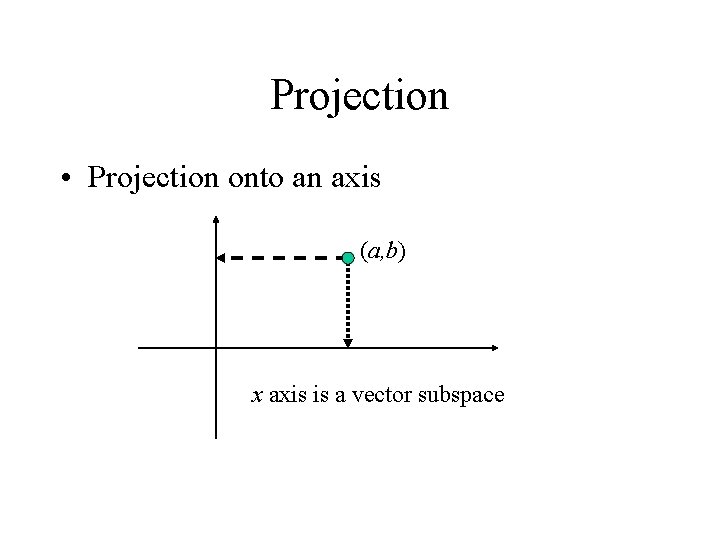
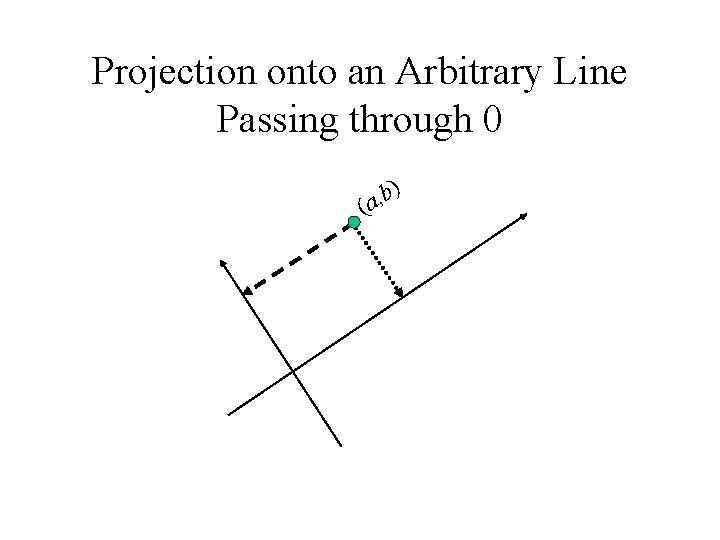
Projection • Projection onto an axis (a, b) x axis is a vector subspace
Projection onto an Arbitrary Line Passing through 0 ) b , (a
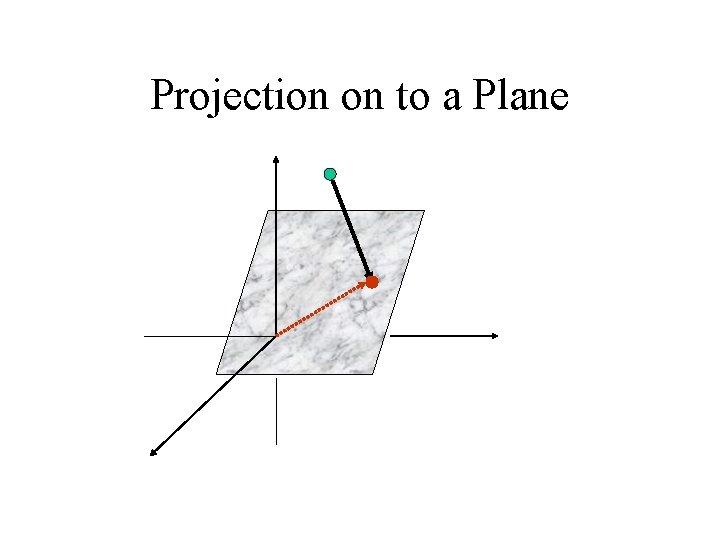
Projection on to a Plane
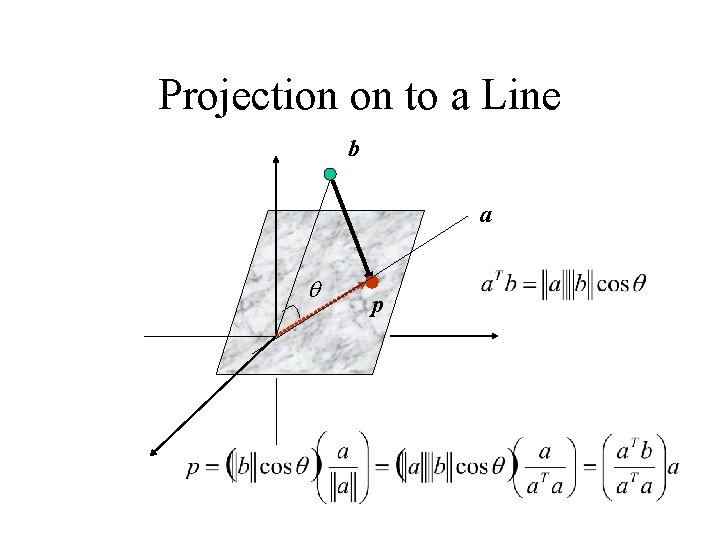
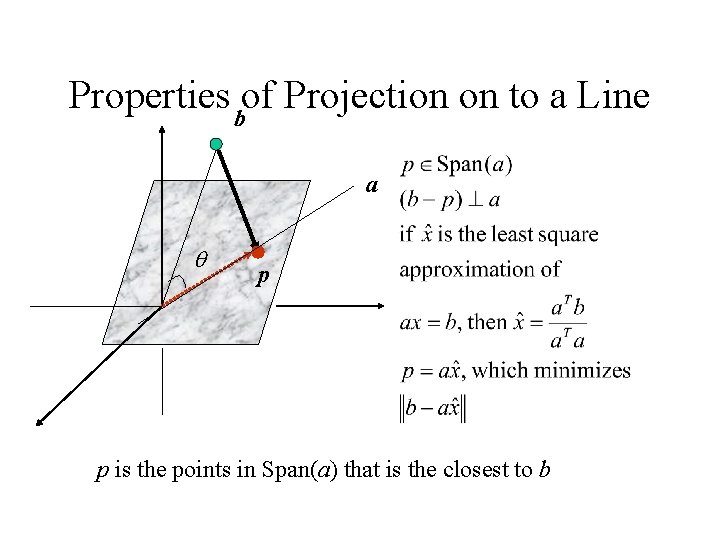
Projection on to a Line b a q p
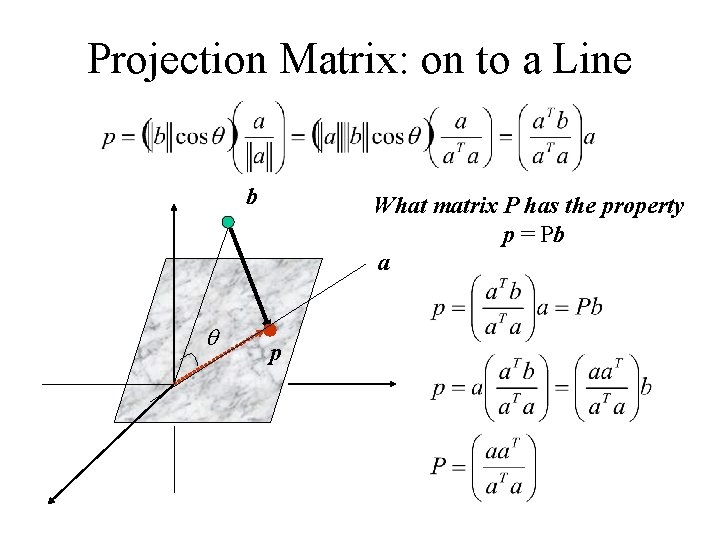
Projection Matrix: on to a Line b q What matrix P has the property p = Pb a p
Properties bof Projection on to a Line a q p p is the points in Span(a) that is the closest to b
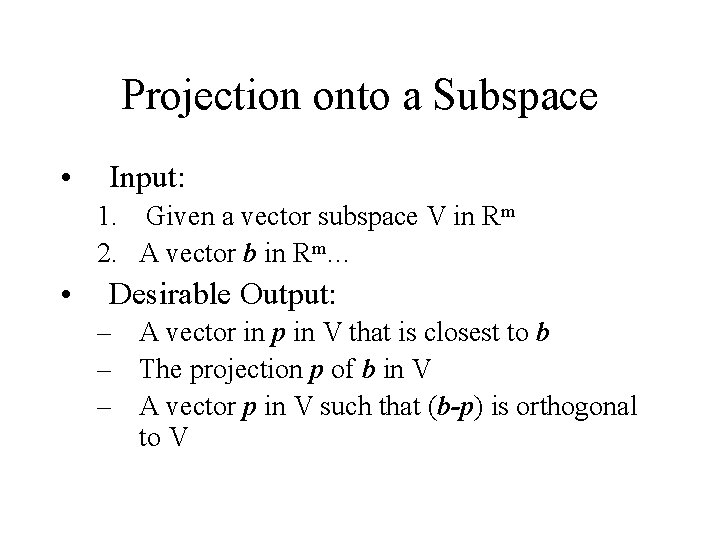
Projection onto a Subspace • Input: 1. Given a vector subspace V in Rm 2. A vector b in Rm… • Desirable Output: – A vector in p in V that is closest to b – The projection p of b in V – A vector p in V such that (b-p) is orthogonal to V
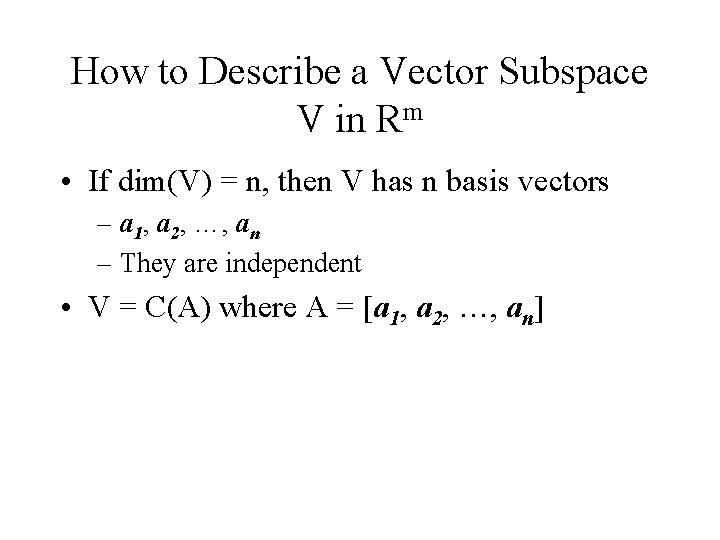
How to Describe a Vector Subspace V in Rm • If dim(V) = n, then V has n basis vectors – a 1, a 2, …, an – They are independent • V = C(A) where A = [a 1, a 2, …, an]
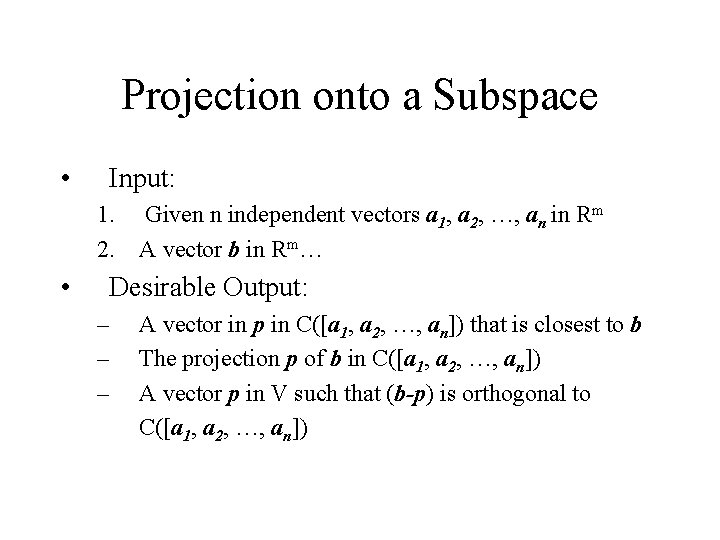
Projection onto a Subspace • Input: 1. Given n independent vectors a 1, a 2, …, an in Rm 2. A vector b in Rm… • Desirable Output: – – – A vector in p in C([a 1, a 2, …, an]) that is closest to b The projection p of b in C([a 1, a 2, …, an]) A vector p in V such that (b-p) is orthogonal to C([a 1, a 2, …, an])
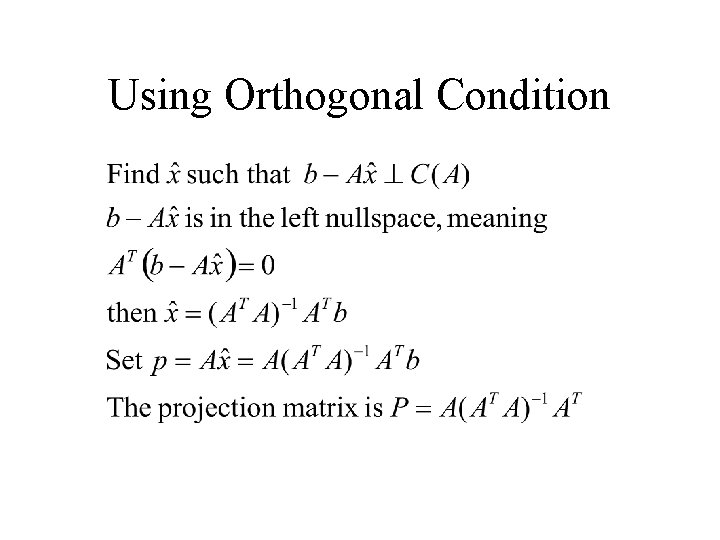
Using Orthogonal Condition
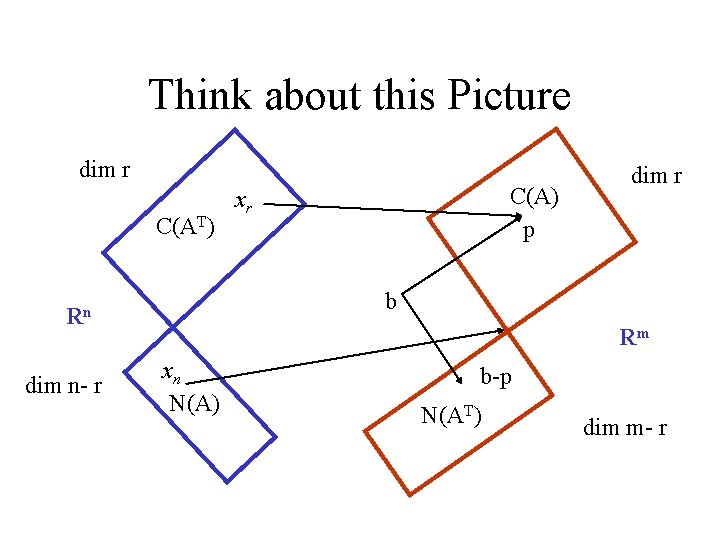
Think about this Picture dim r C(AT) b Rn dim n- r C(A) p xr dim r Rm xn N(A) b-p N(AT) dim m- r
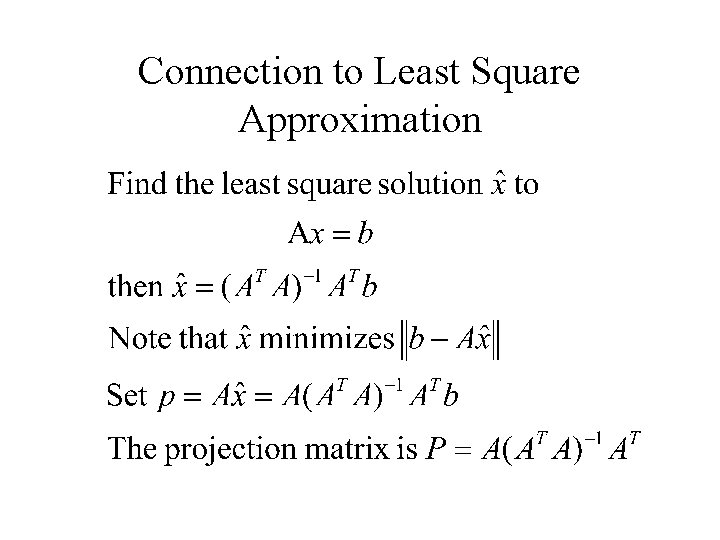
Connection to Least Square Approximation
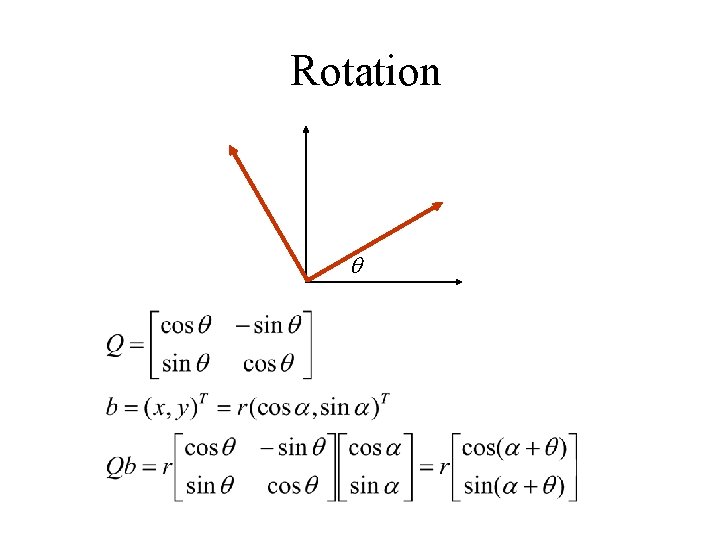
Rotation q
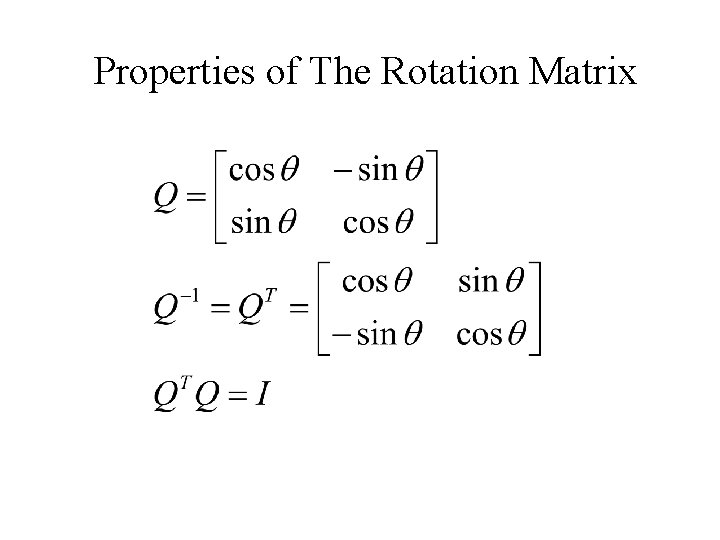
Properties of The Rotation Matrix
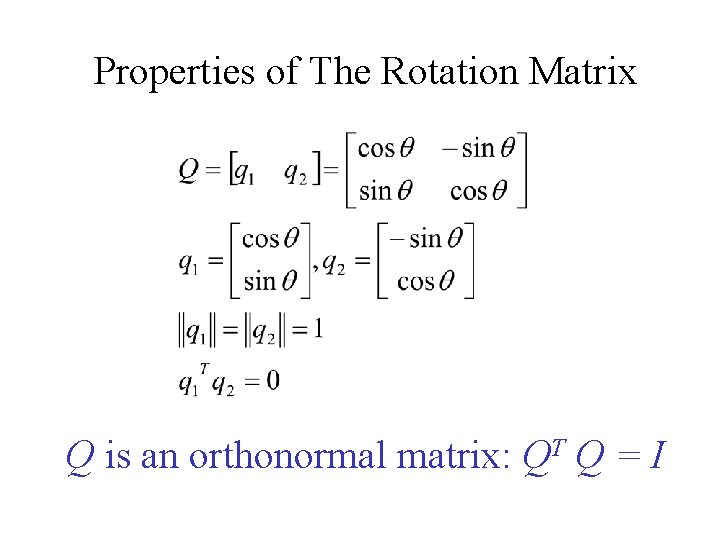
Properties of The Rotation Matrix Q is an orthonormal matrix: QT Q = I
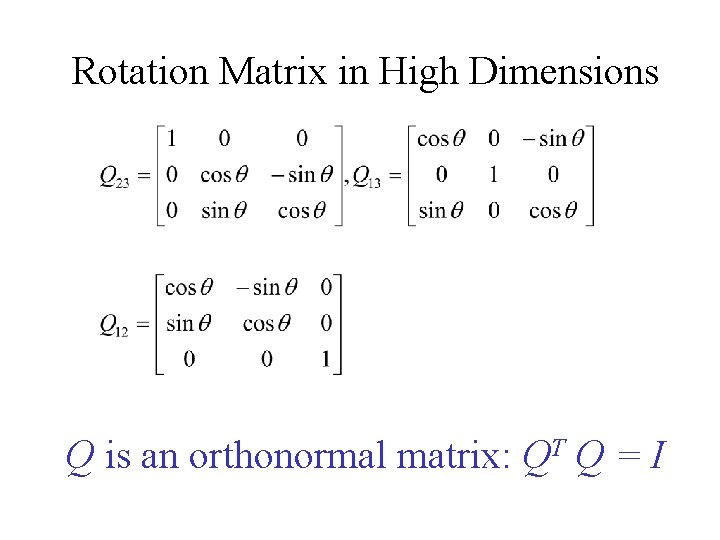
Rotation Matrix in High Dimensions Q is an orthonormal matrix: QT Q = I
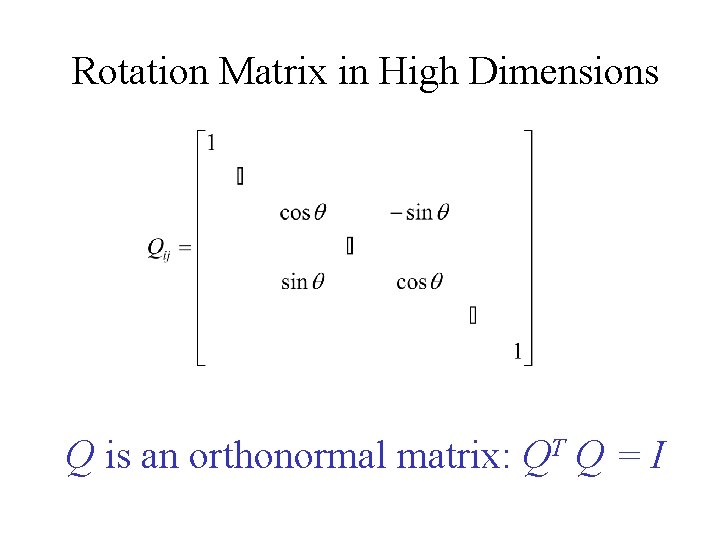
Rotation Matrix in High Dimensions Q is an orthonormal matrix: QT Q = I
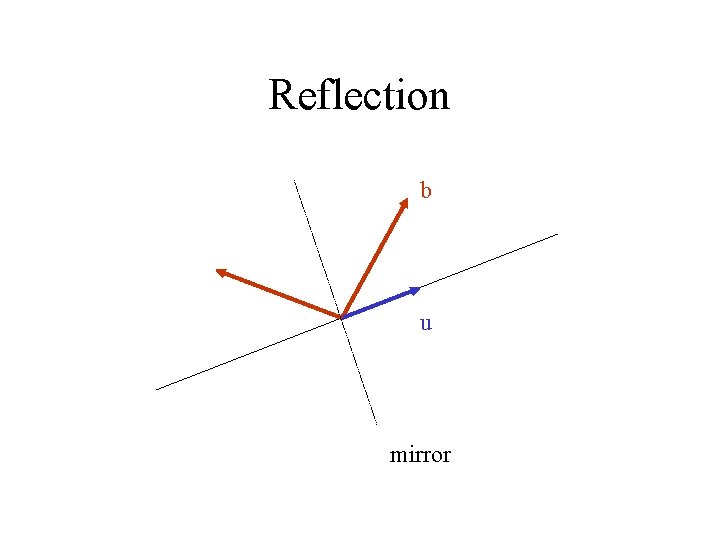
Reflection b u mirror
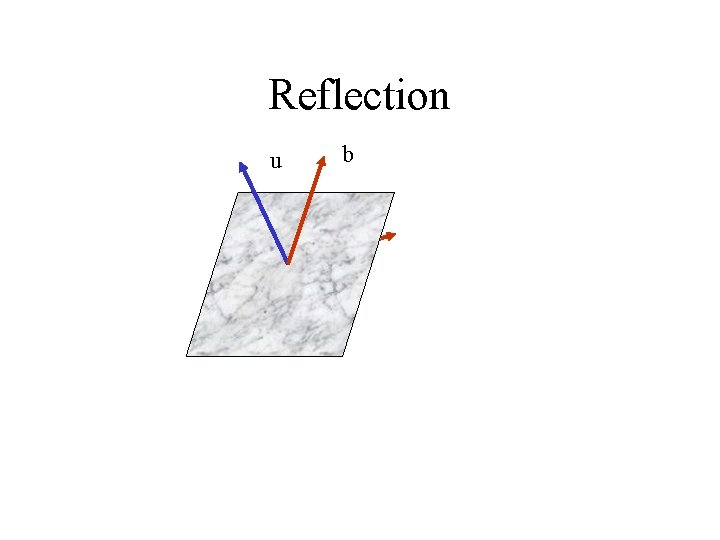
Reflection u b
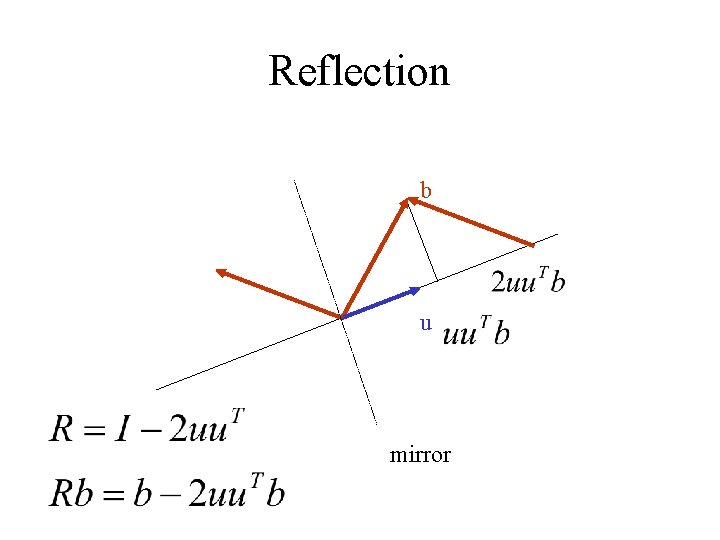
Reflection b u mirror
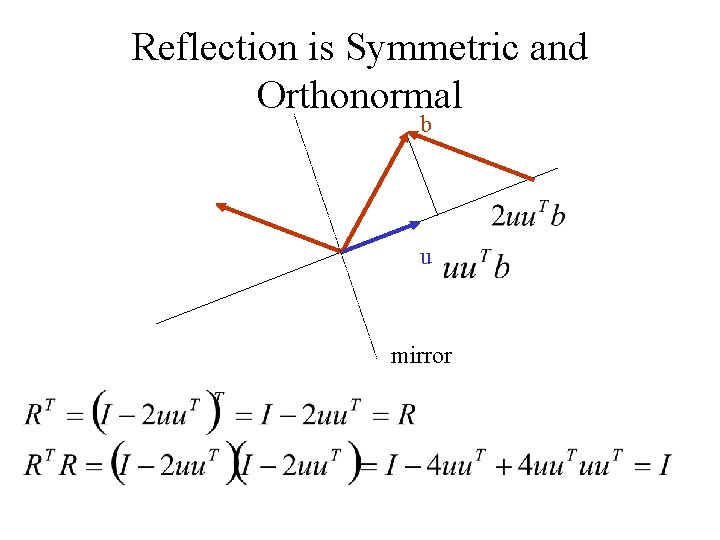
Reflection is Symmetric and Orthonormal b u mirror
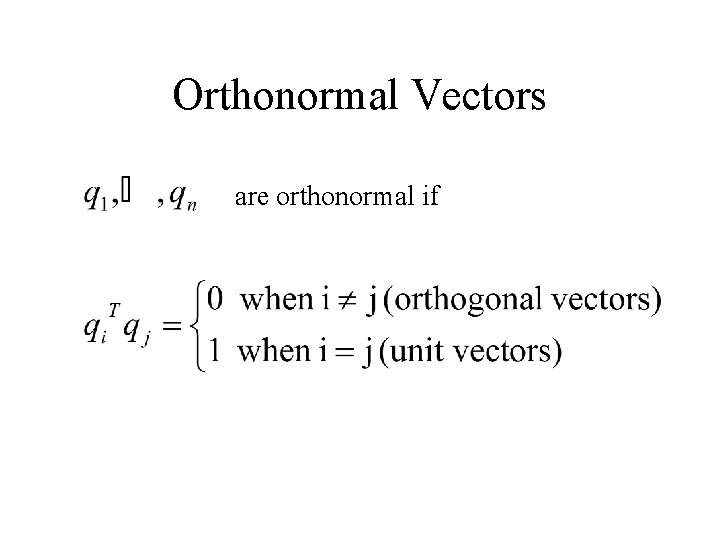
Orthonormal Vectors are orthonormal if
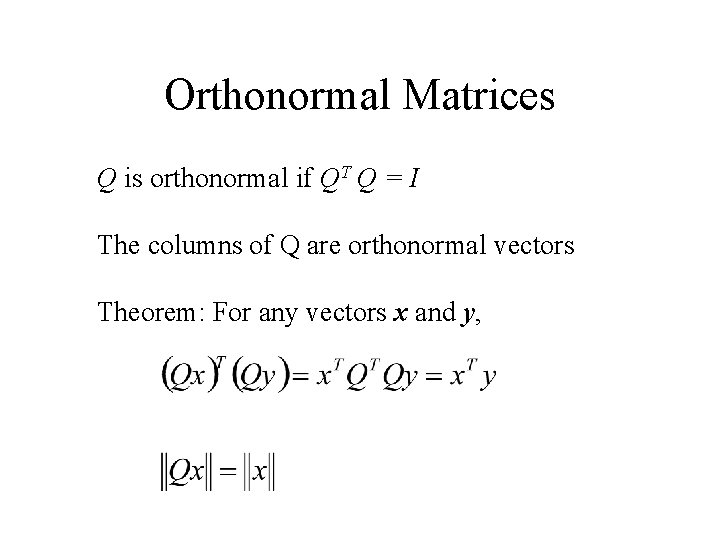
Orthonormal Matrices Q is orthonormal if QT Q = I The columns of Q are orthonormal vectors Theorem: For any vectors x and y,
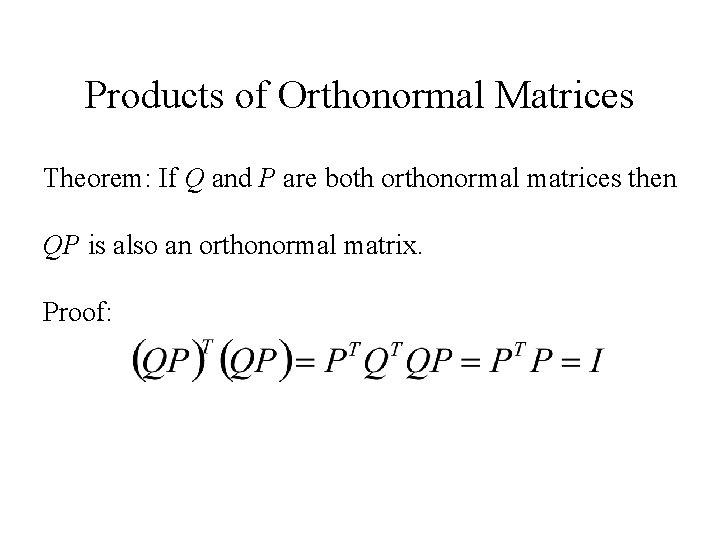
Products of Orthonormal Matrices Theorem: If Q and P are both orthonormal matrices then QP is also an orthonormal matrix. Proof:
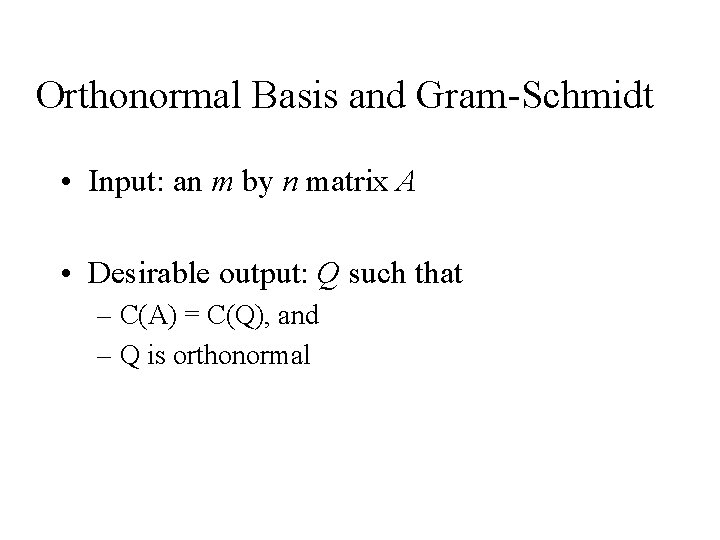
Orthonormal Basis and Gram-Schmidt • Input: an m by n matrix A • Desirable output: Q such that – C(A) = C(Q), and – Q is orthonormal
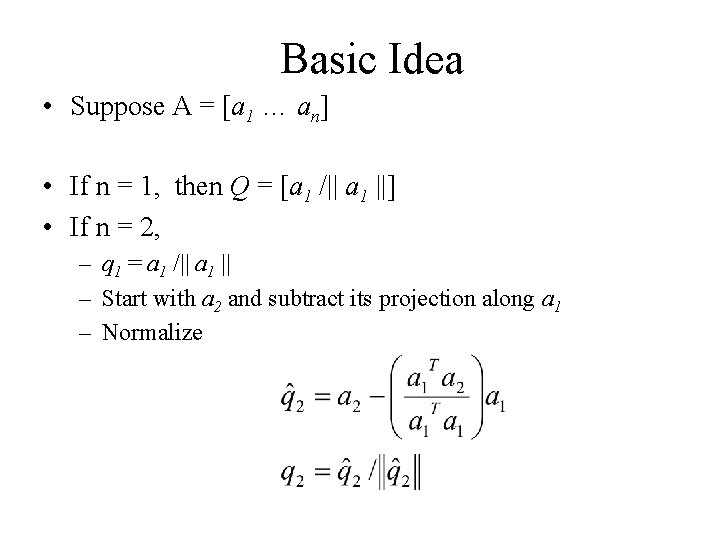
Basic Idea • Suppose A = [a 1 … an] • If n = 1, then Q = [a 1 /|| a 1 ||] • If n = 2, – q 1 = a 1 /|| a 1 || – Start with a 2 and subtract its projection along a 1 – Normalize
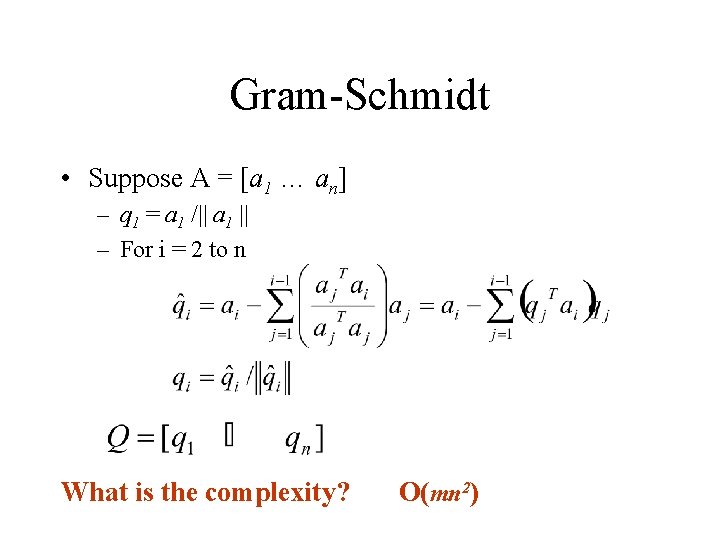
Gram-Schmidt • Suppose A = [a 1 … an] – q 1 = a 1 /|| a 1 || – For i = 2 to n What is the complexity? O(mn 2)
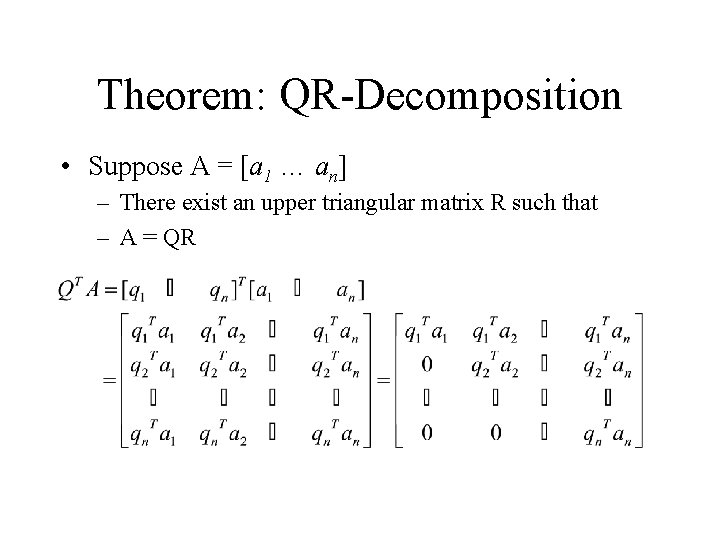
Theorem: QR-Decomposition • Suppose A = [a 1 … an] – There exist an upper triangular matrix R such that – A = QR
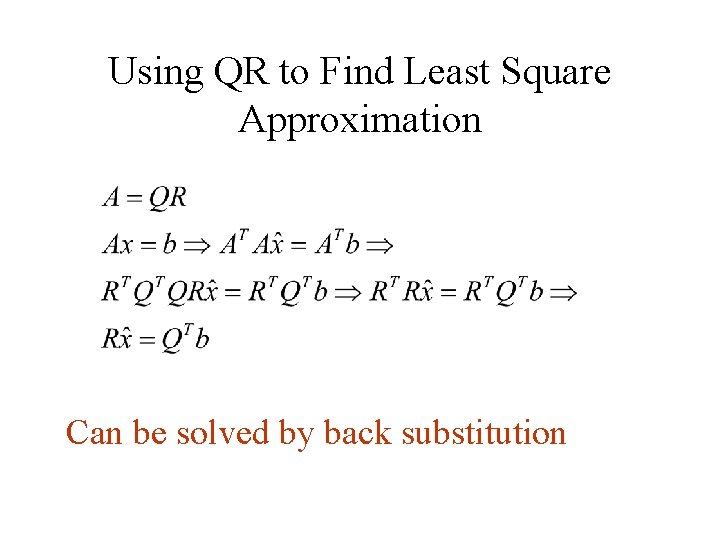
Using QR to Find Least Square Approximation Can be solved by back substitution