LEARNING DIFFERENCES Multiple Intelligences Dr Howard Gardner theory

- Slides: 15
LEARNING DIFFERENCES: Multiple Intelligences (Dr. Howard Gardner theory) Learning Styles Dr. Mary Custureri
Who are we? Where do we fit? • We were created equal • Yet, each of us is unique • We have multiple intelligences, different abilities, different backgrounds. • Yet, we affect one another as we live in a world that is constantly changing.
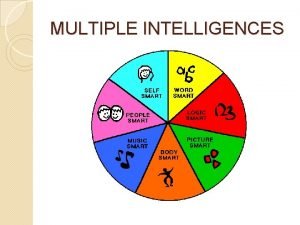
8 Multiple Intelligences • Linguistic intelligence: writers (Byron) • Logical mathematical: scientists (Einstein) • Spatial/visual: architects, painters, physicists • Musical/rhythmic: musicians, singers, composers • Kinesthetic: athletes, dancers, actors, surgeons • Interpersonal intelligence: Oprah Winfrey, psychologists • Intrapersonal intelligence: to know oneself: philosophers, counselors, Teresa of Avila • Naturalist: environmentalist, gardner, biologist
Two major academic intelligences • LINGUISTIC – – – – Verbal fluency Authors Teachers Speakers Writers Public relations Talk show hosts • MATHEMATICAL – Logical mathematical – Mathematicians – Scientists – Math teachers – Researchers – statisticians
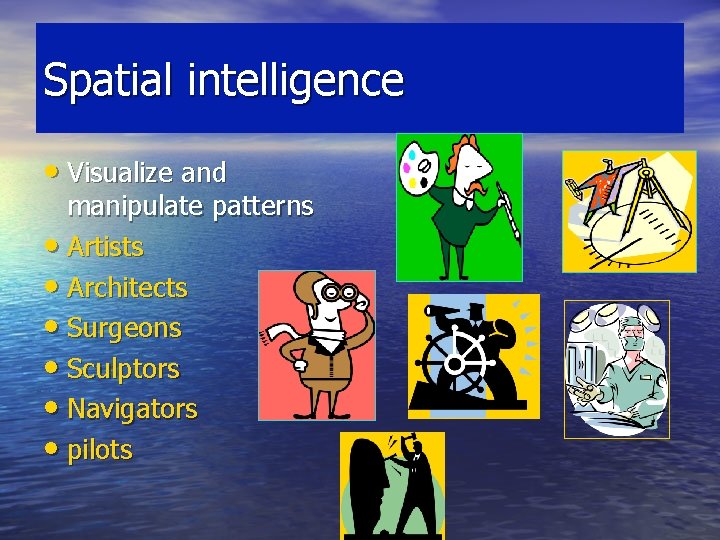
Spatial intelligence • Visualize and manipulate patterns • Artists • Architects • Surgeons • Sculptors • Navigators • pilots
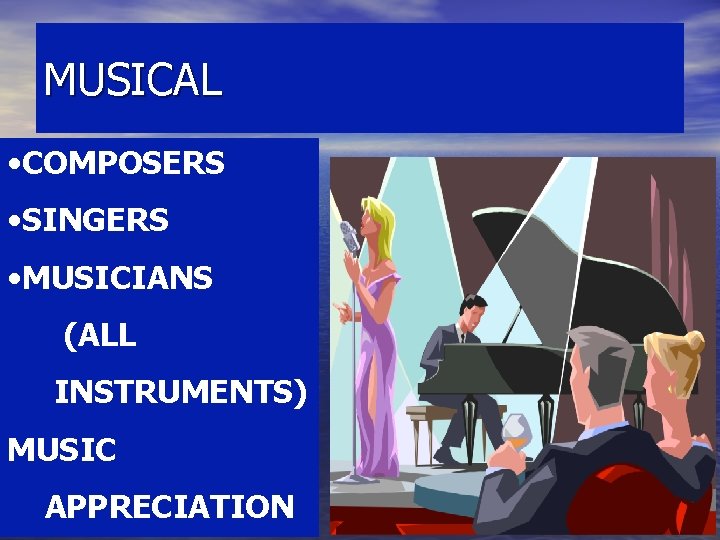
MUSICAL • COMPOSERS • SINGERS • MUSICIANS (ALL INSTRUMENTS) MUSIC APPRECIATION
Bodily kinesthetic intelligence • Using one’s whole • • • body Sports Dancing Acting Technical people Craftspeople
INTERPERSONAL INTELLIGENCE • Understands people and how to work with them • Teachers • Clinicians • Politicians • Leaders • Actors • psychologists
INTRAPERSONAL INTELLIGENCE • Understanding the • • SELF and being able to self-discipline to reach goals and sometimes to act as models for others Philosophers Counselors Winners Mother Teresa
NATURALIST • Environmentalist • Biologist • Gardner • Landscape artist • Conservationist
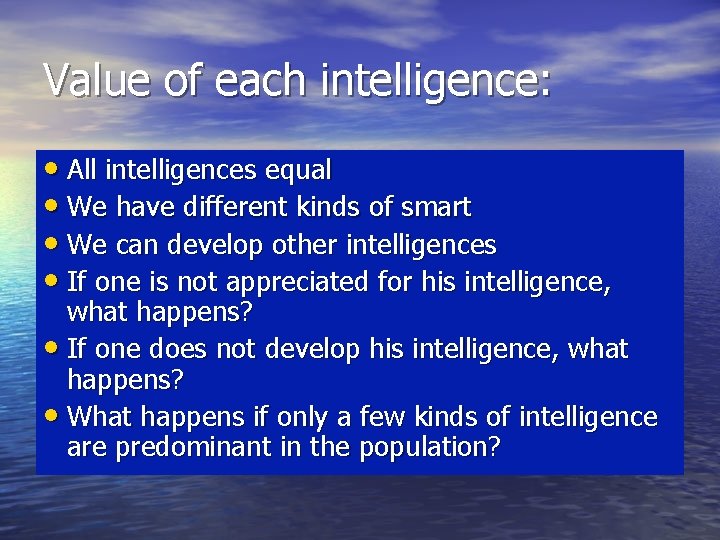
Value of each intelligence: • All intelligences equal • We have different kinds of smart • We can develop other intelligences • If one is not appreciated for his intelligence, what happens? • If one does not develop his intelligence, what happens? • What happens if only a few kinds of intelligence are predominant in the population?
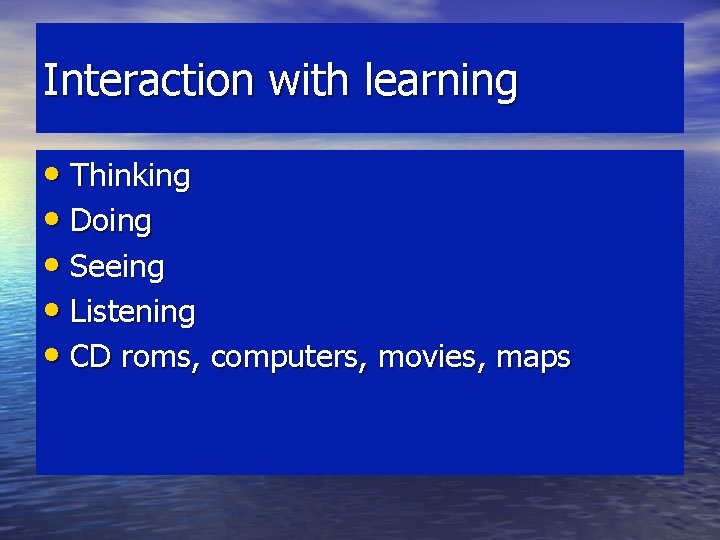
Interaction with learning • Thinking • Doing • Seeing • Listening • CD roms, computers, movies, maps
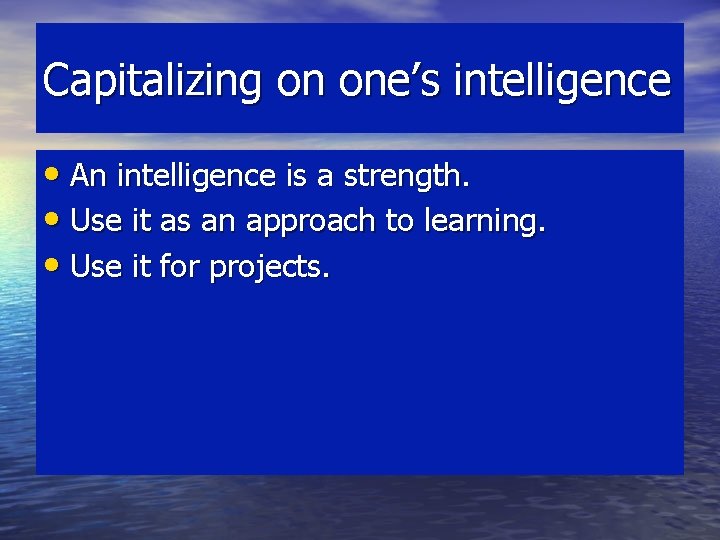
Capitalizing on one’s intelligence • An intelligence is a strength. • Use it as an approach to learning. • Use it for projects.
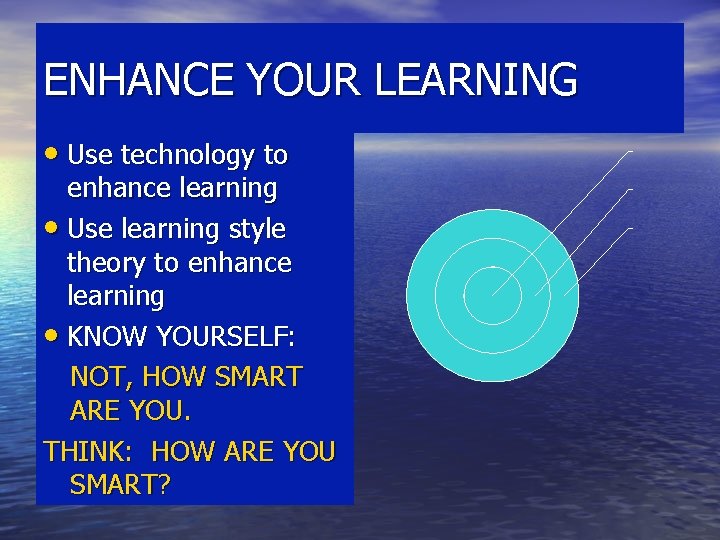
ENHANCE YOUR LEARNING • Use technology to enhance learning • Use learning style theory to enhance learning • KNOW YOURSELF: NOT, HOW SMART ARE YOU. THINK: HOW ARE YOU SMART?
COMBINE ALL YOUR INTELLIGENCES. WIN!