Lawrence Molnar Calvin College Professor of Physics and
- Slides: 10
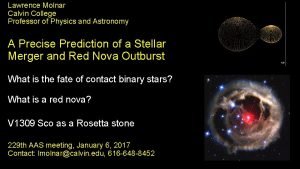
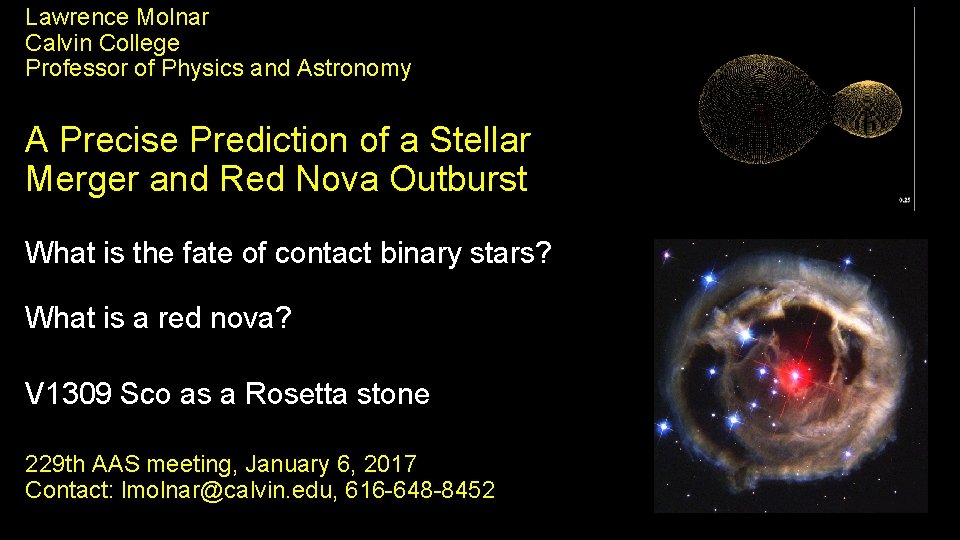
Lawrence Molnar Calvin College Professor of Physics and Astronomy A Precise Prediction of a Stellar Merger and Red Nova Outburst What is the fate of contact binary stars? What is a red nova? V 1309 Sco as a Rosetta stone 229 th AAS meeting, January 6, 2017 Contact: lmolnar@calvin. edu, 616 -648 -8452
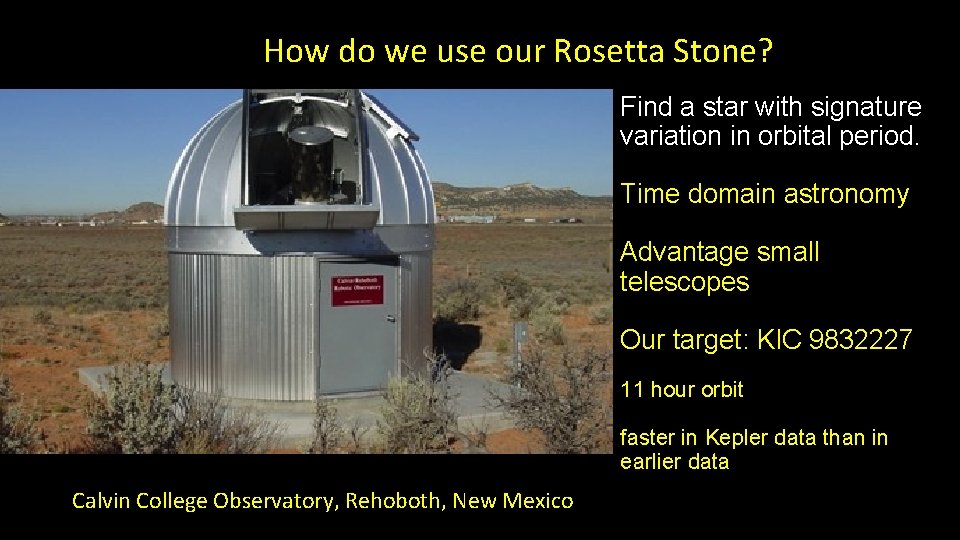
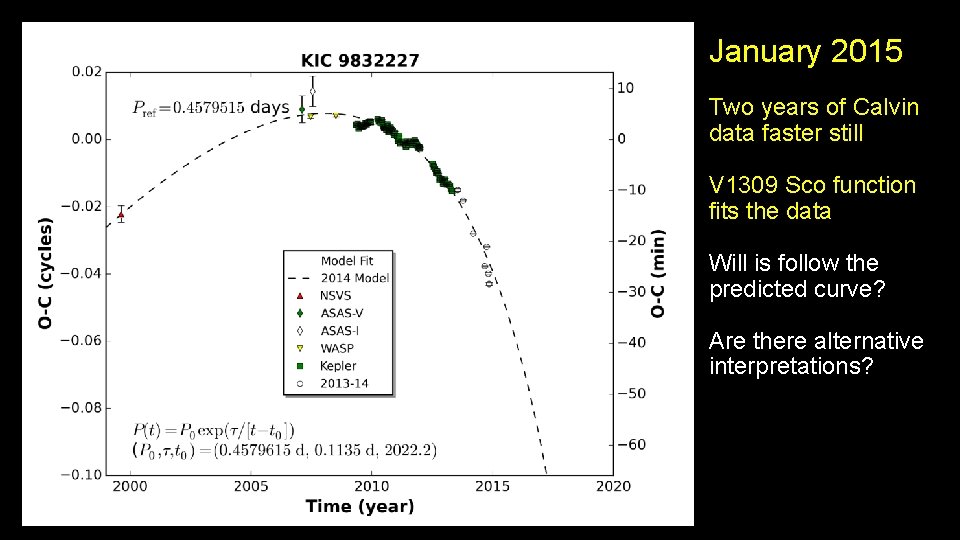
How do we use our Rosetta Stone? Find a star with signature variation in orbital period. Time domain astronomy Advantage small telescopes Our target: KIC 9832227 11 hour orbit faster in Kepler data than in earlier data Calvin College Observatory, Rehoboth, New Mexico
January 2015 Two years of Calvin data faster still V 1309 Sco function fits the data Will is follow the predicted curve? Are there alternative interpretations?
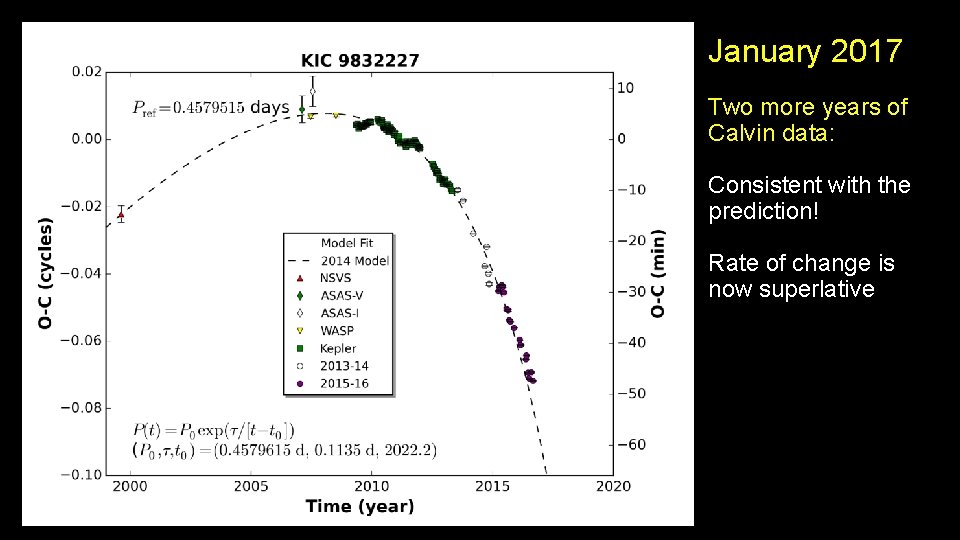
January 2017 Two more years of Calvin data: Consistent with the prediction! Rate of change is now superlative
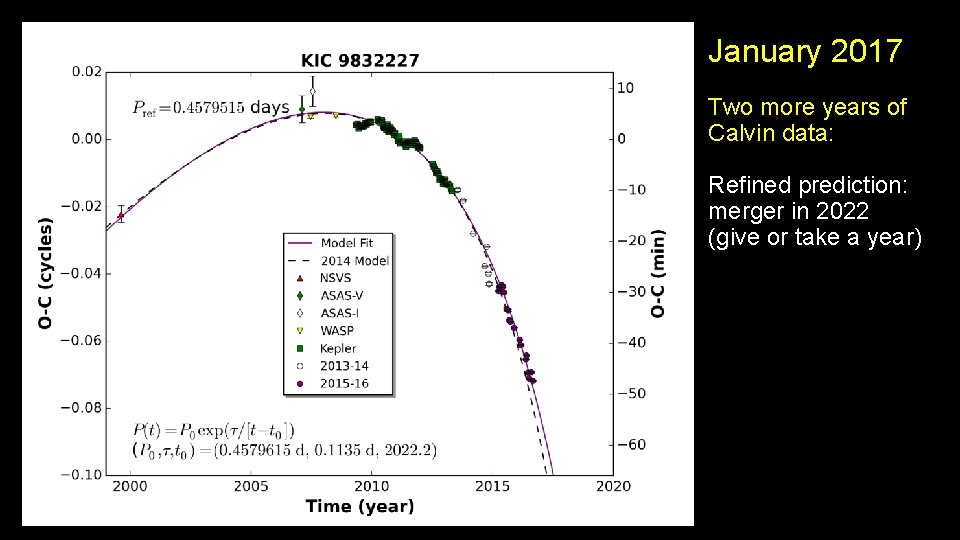
January 2017 Two more years of Calvin data: Refined prediction: merger in 2022 (give or take a year)
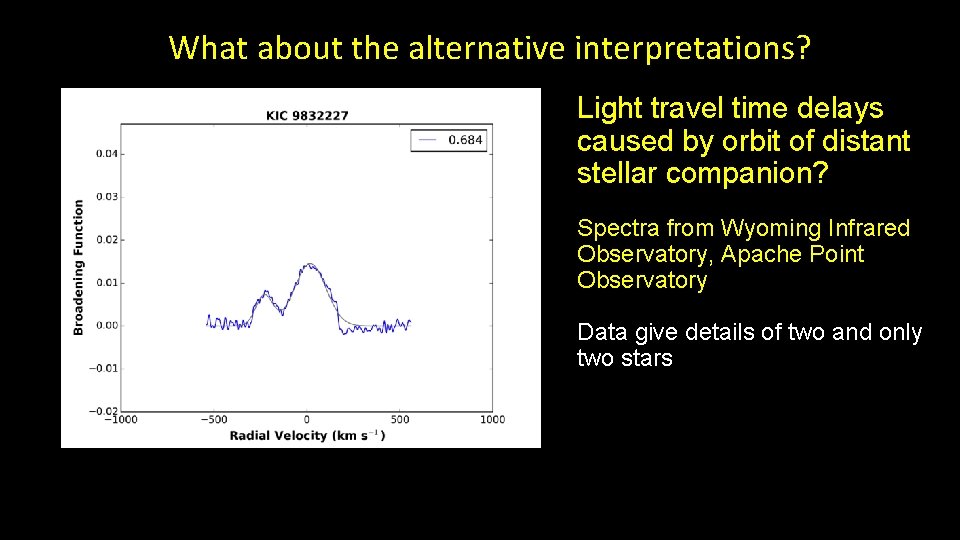
What about the alternative interpretations? Light travel time delays caused by orbit of distant stellar companion? Spectra from Wyoming Infrared Observatory, Apache Point Observatory Data give details of two and only two stars
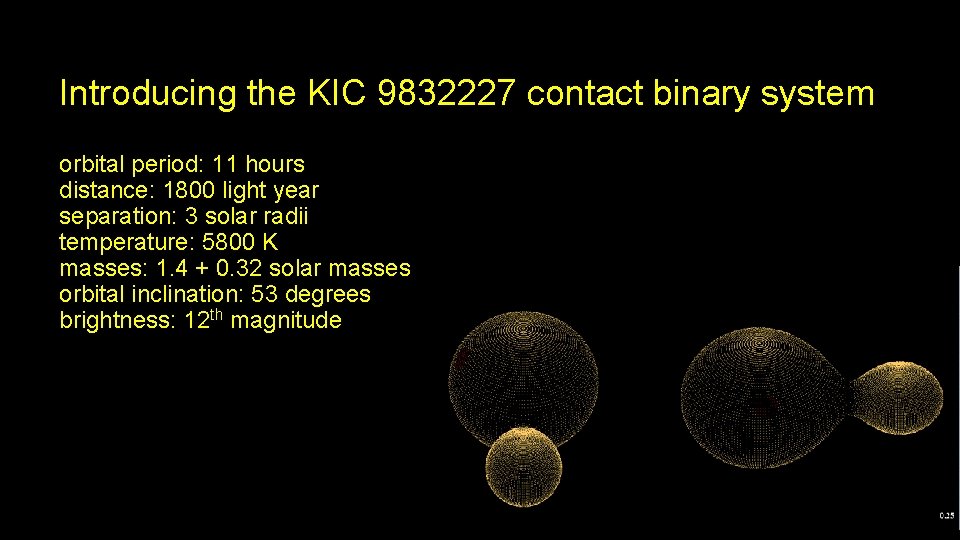
Introducing the KIC 9832227 contact binary system orbital period: 11 hours distance: 1800 light year separation: 3 solar radii temperature: 5800 K masses: 1. 4 + 0. 32 solar masses orbital inclination: 53 degrees brightness: 12 th magnitude
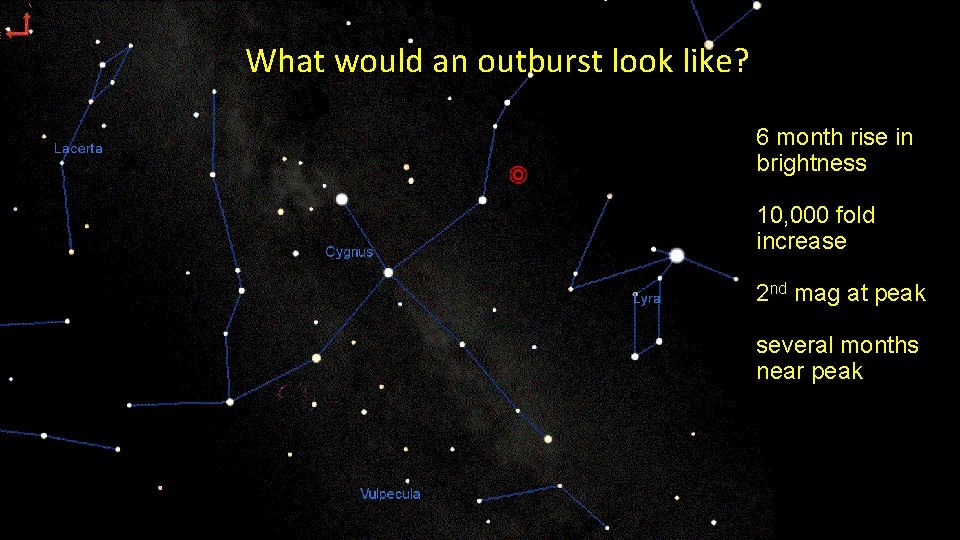
What would an outburst look like? 6 month rise in brightness 10, 000 fold increase 2 nd mag at peak several months near peak
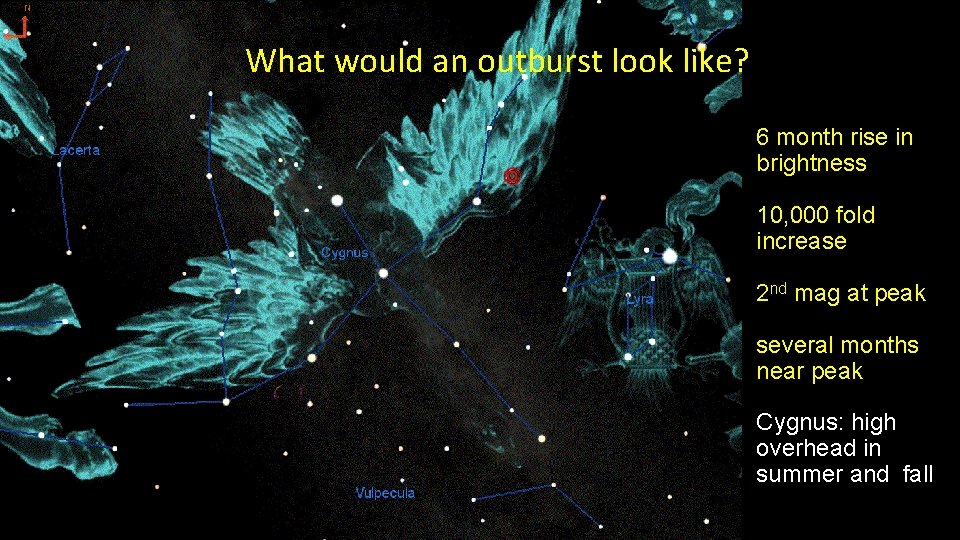
What would an outburst look like? 6 month rise in brightness 10, 000 fold increase 2 nd mag at peak several months near peak Cygnus: high overhead in summer and fall
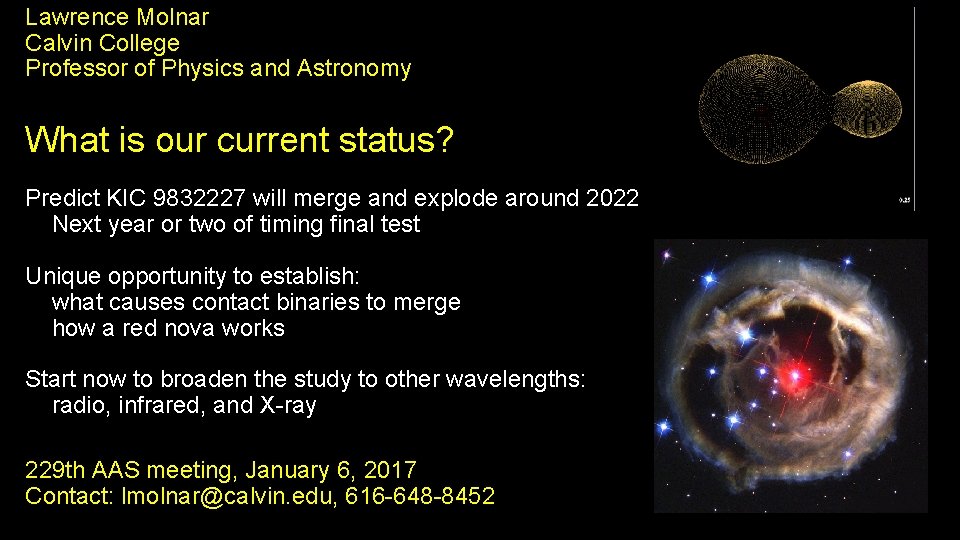
Lawrence Molnar Calvin College Professor of Physics and Astronomy What is our current status? Predict KIC 9832227 will merge and explode around 2022 Next year or two of timing final test Unique opportunity to establish: what causes contact binaries to merge how a red nova works Start now to broaden the study to other wavelengths: radio, infrared, and X-ray 229 th AAS meeting, January 6, 2017 Contact: lmolnar@calvin. edu, 616 -648 -8452