Knowledge of Language Competence Sound system Phonetics Phonology

- Slides: 12
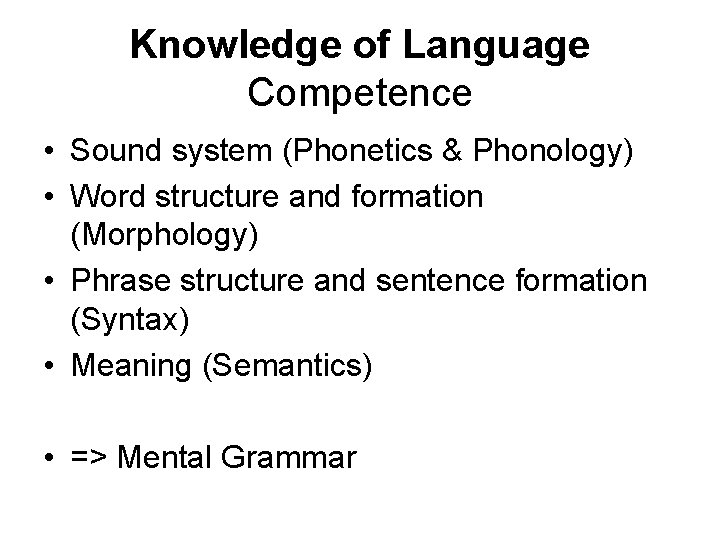
Knowledge of Language Competence • Sound system (Phonetics & Phonology) • Word structure and formation (Morphology) • Phrase structure and sentence formation (Syntax) • Meaning (Semantics) • => Mental Grammar
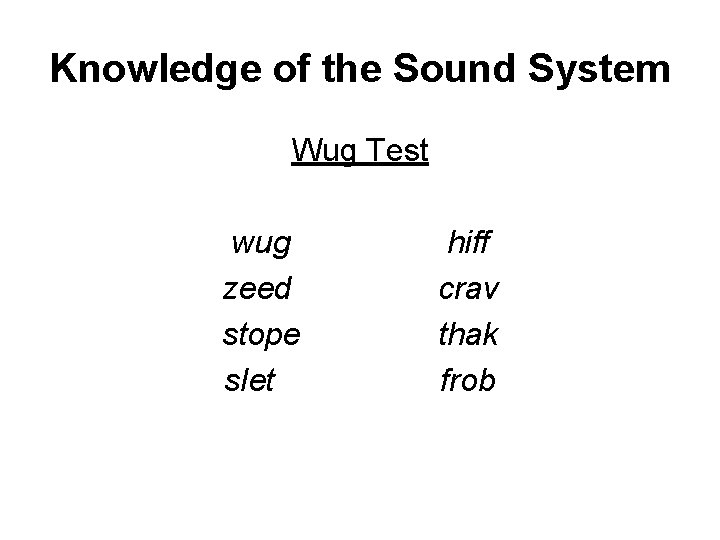
Knowledge of the Sound System Wug Test wug zeed stope slet hiff crav thak frob
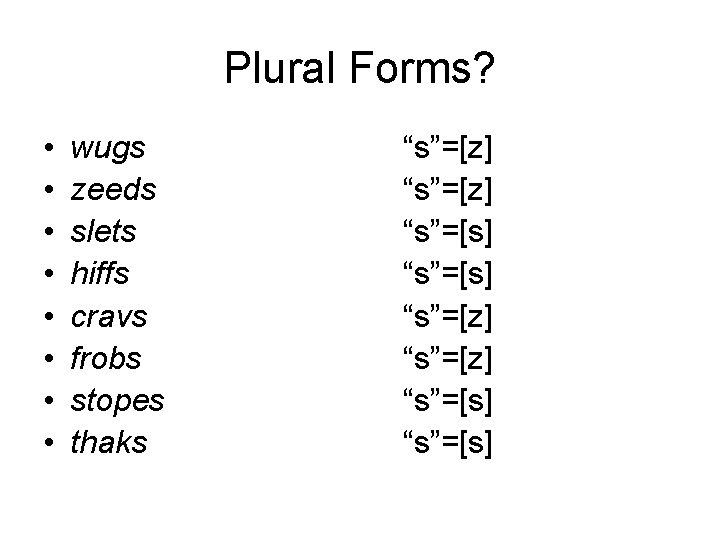
Plural Forms? • • wugs zeeds slets hiffs cravs frobs stopes thaks “s”=[z] “s”=[s]
Rules • Plural form is [z] after [g, d, b, v] • Plural form is [s] after [k, t, p, f] • Plural = [z] after voiced sounds • Plural = [s] after unvoiced sounds • Knowledge of language includes phonological rules.
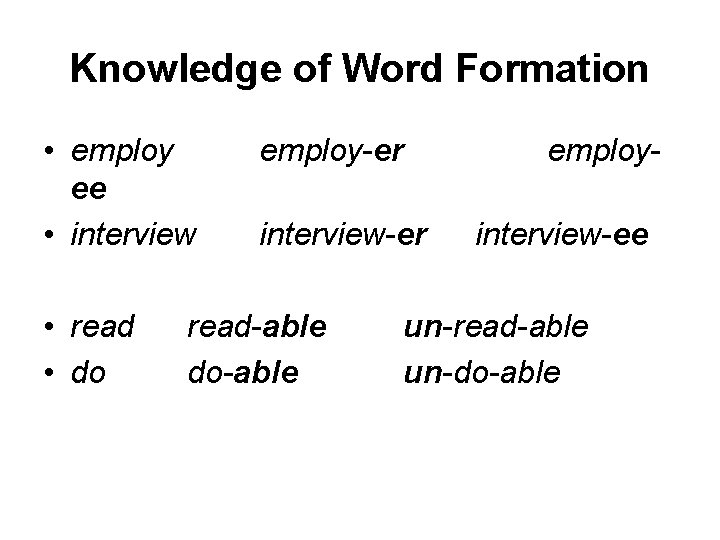
Knowledge of Word Formation • employ ee • interview • read • do employ-er interview-er read-able do-able employinterview-ee un-read-able un-do-able
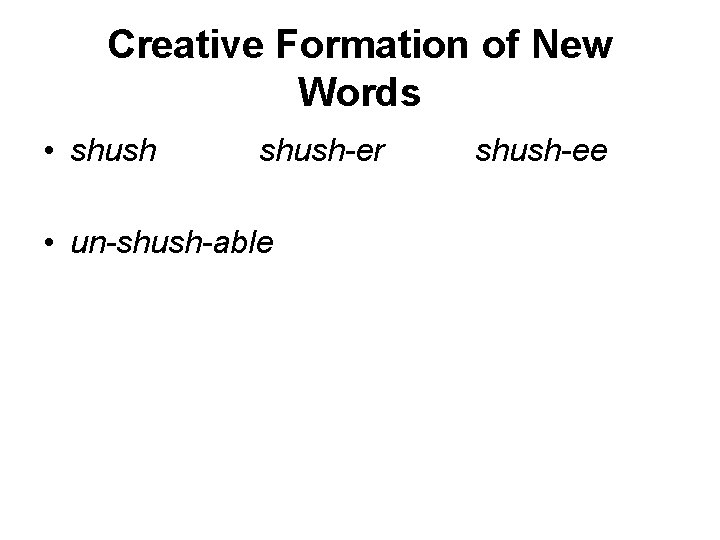
Creative Formation of New Words • shush-er • un-shush-able shush-ee
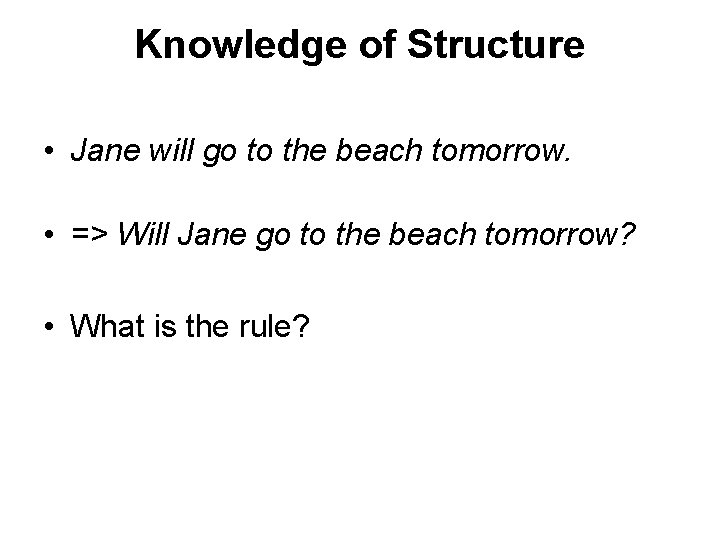
Knowledge of Structure • Jane will go to the beach tomorrow. • => Will Jane go to the beach tomorrow? • What is the rule?
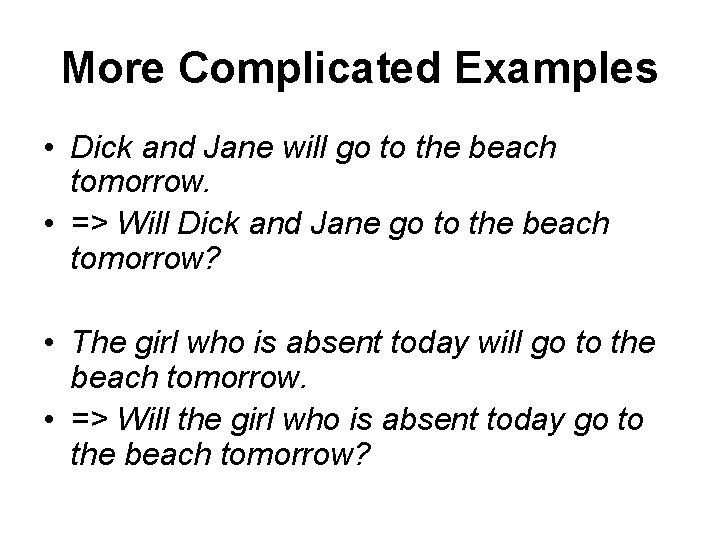
More Complicated Examples • Dick and Jane will go to the beach tomorrow. • => Will Dick and Jane go to the beach tomorrow? • The girl who is absent today will go to the beach tomorrow. • => Will the girl who is absent today go to the beach tomorrow?
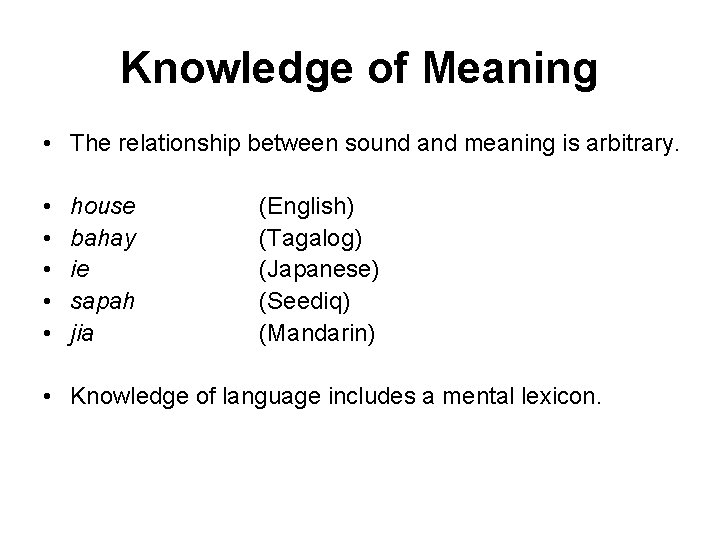
Knowledge of Meaning • The relationship between sound and meaning is arbitrary. • • • house bahay ie sapah jia (English) (Tagalog) (Japanese) (Seediq) (Mandarin) • Knowledge of language includes a mental lexicon.
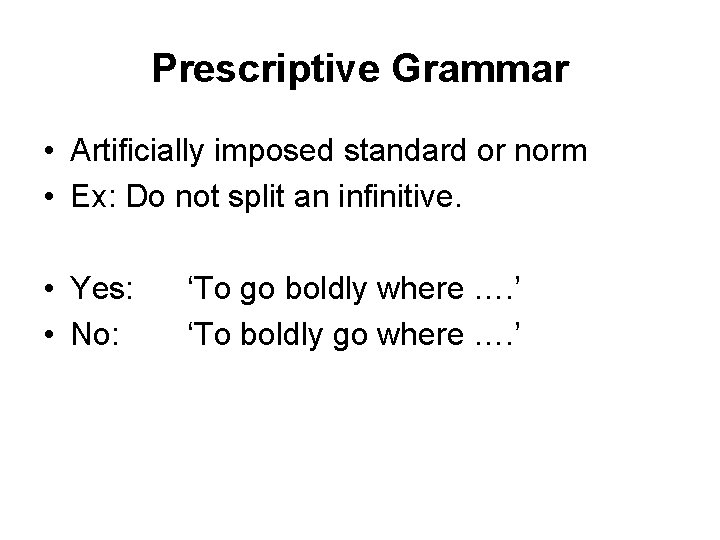
Prescriptive Grammar • Artificially imposed standard or norm • Ex: Do not split an infinitive. • Yes: • No: ‘To go boldly where …. ’ ‘To boldly go where …. ’
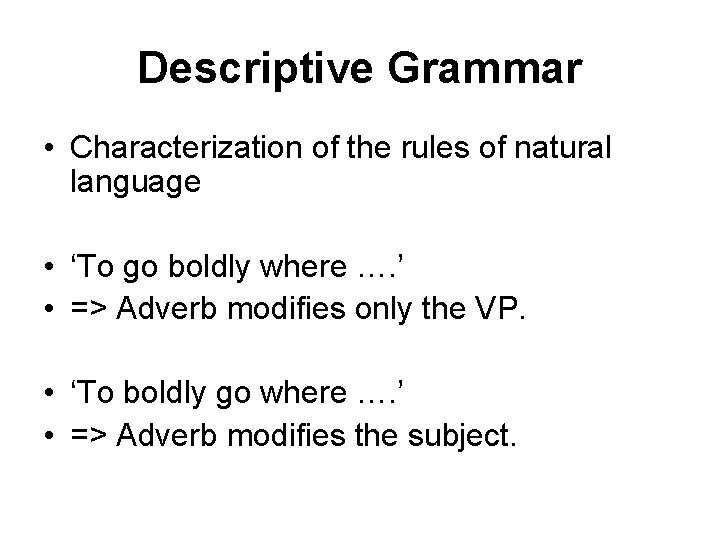
Descriptive Grammar • Characterization of the rules of natural language • ‘To go boldly where …. ’ • => Adverb modifies only the VP. • ‘To boldly go where …. ’ • => Adverb modifies the subject.
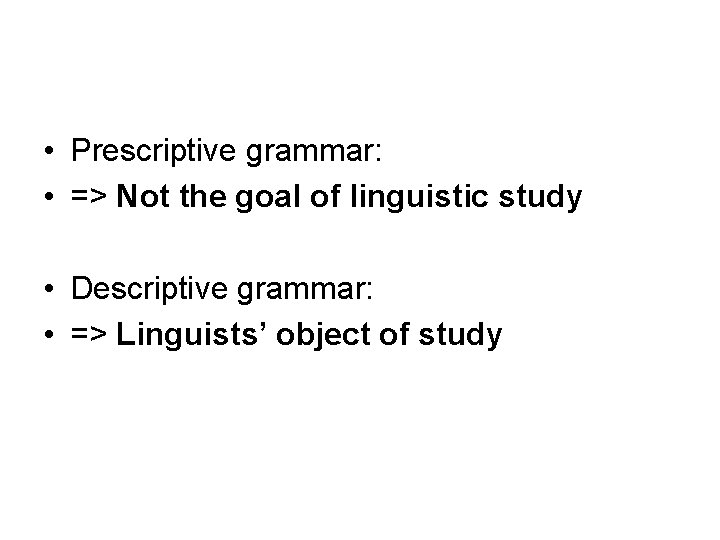
• Prescriptive grammar: • => Not the goal of linguistic study • Descriptive grammar: • => Linguists’ object of study