INTRODUCTION TO ZOOLOGY copyright cmassengale 1 Species of



- Slides: 22
INTRODUCTION TO ZOOLOGY copyright cmassengale 1
Species of Organisms • There are 13 billion known species of organisms • This is only 5% of all organisms that ever lived!!!!! • New organisms are still being found and identified copyright cmassengale 2
What is Classification? ■ Classification is the arrangement of organisms into orderly groups based on their similarities ■ Classification is also known as taxonomy ■ Taxonomists are scientists that identify & name organisms copyright cmassengale 3
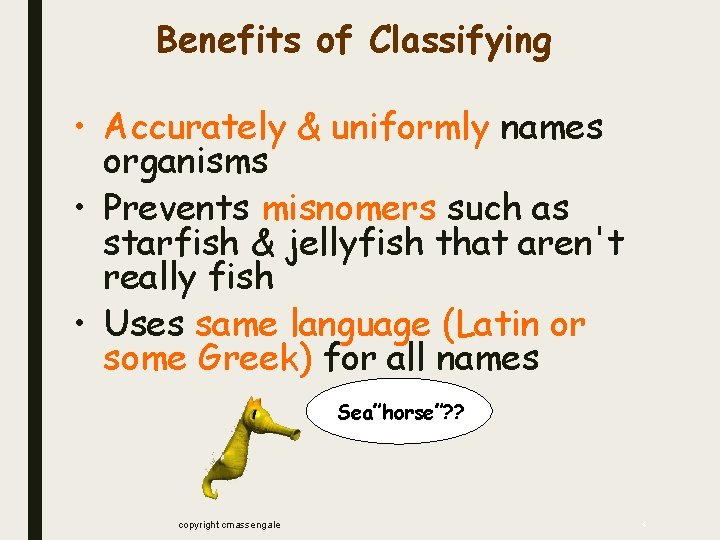
Benefits of Classifying • Accurately & uniformly names organisms • Prevents misnomers such as starfish & jellyfish that aren't really fish • Uses same language (Latin or some Greek) for all names Sea”horse”? ? copyright cmassengale 4
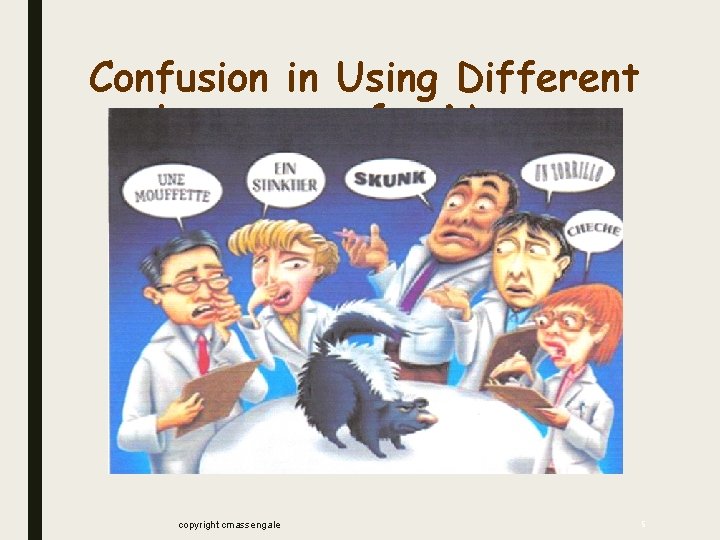
Confusion in Using Different Languages for Names copyright cmassengale 5
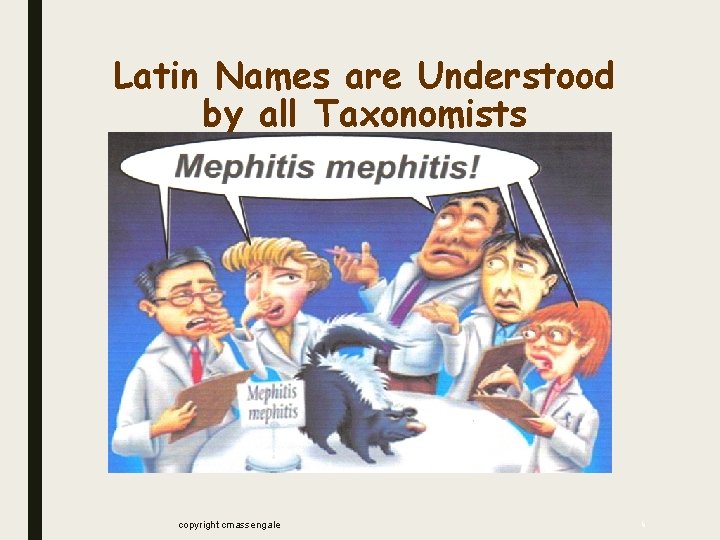
Latin Names are Understood by all Taxonomists copyright cmassengale 6
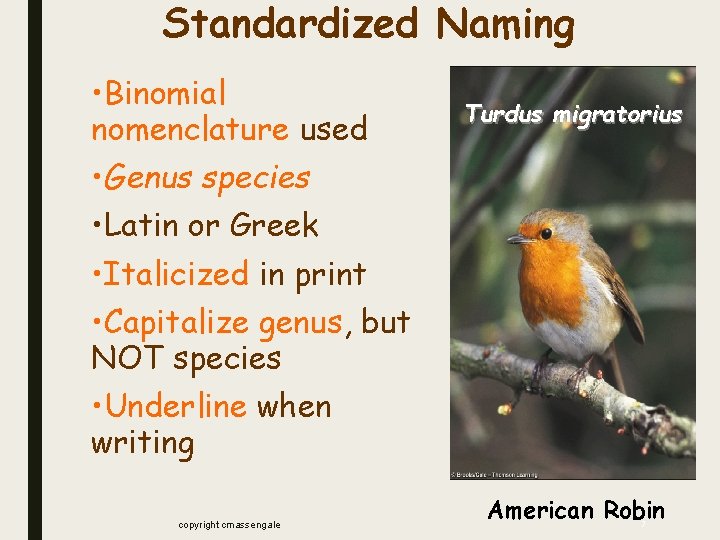
Standardized Naming • Binomial nomenclature used • Genus species • Latin or Greek • Italicized in print • Capitalize genus, but NOT species • Underline when writing copyright cmassengale Turdus migratorius American Robin 7
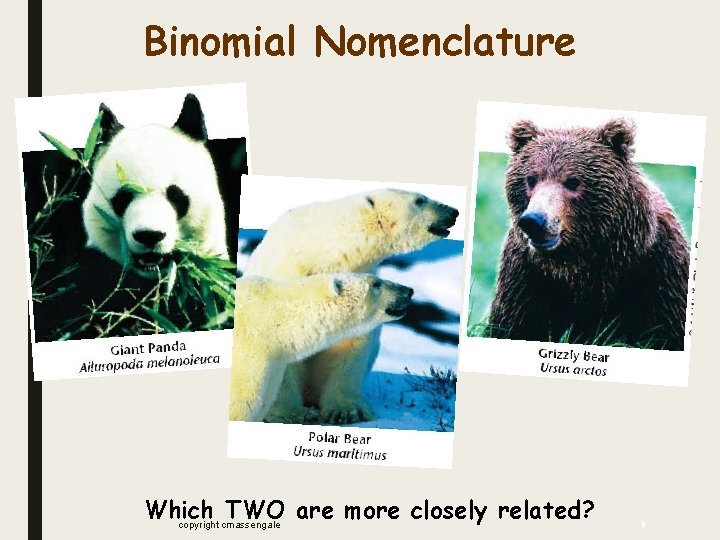
Binomial Nomenclature Which TWO are more closely related? copyright cmassengale 8
Rules for Naming Organisms • The International Code for Binomial Nomenclature contains the rules for naming organisms • All names must be approved by International Naming Congresses (International Zoological Congress) • This prevents duplicated names copyright cmassengale 9
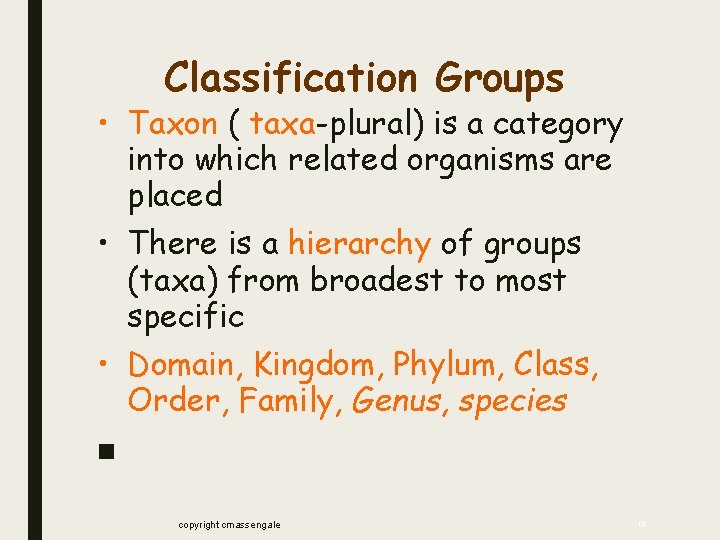
Classification Groups • Taxon ( taxa-plural) is a category into which related organisms are placed • There is a hierarchy of groups (taxa) from broadest to most specific • Domain, Kingdom, Phylum, Class, Order, Family, Genus, species ■ copyright cmassengale 10
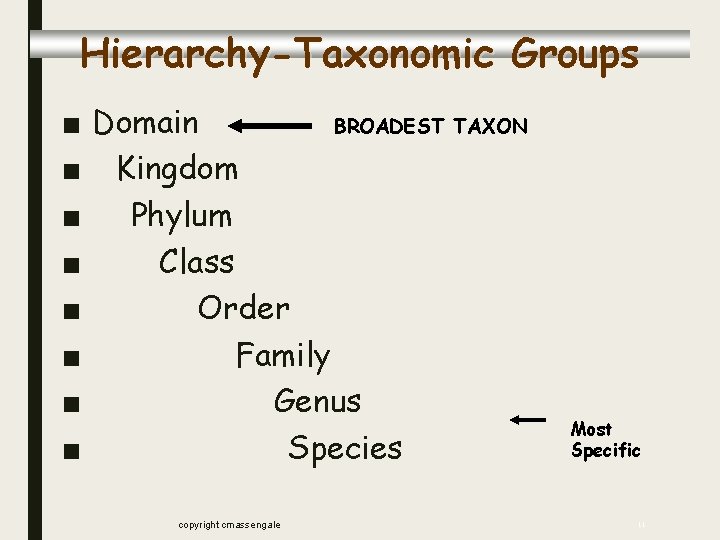
Hierarchy-Taxonomic Groups ■ Domain BROADEST TAXON ■ Kingdom ■ Phylum ■ Class ■ Order ■ Family ■ Genus ■ Species copyright cmassengale Most Specific 11
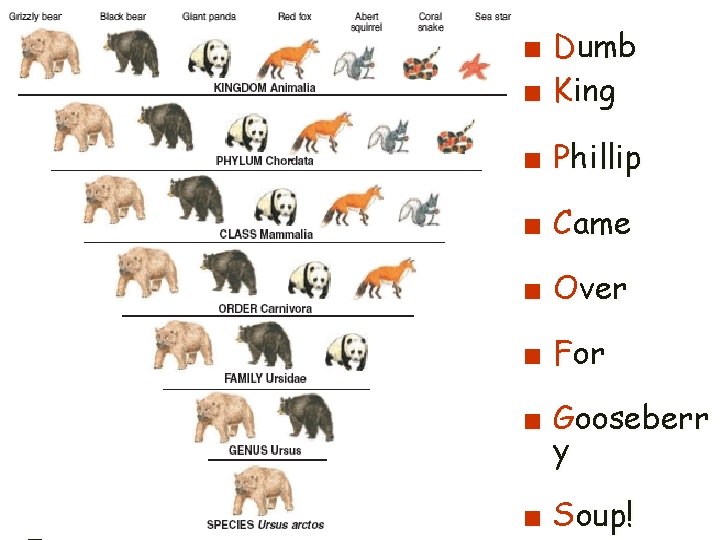
■ Dumb ■ King ■ Phillip ■ Came ■ Over ■ For ■ Gooseberr y copyright cmassengale ■ Soup! 12
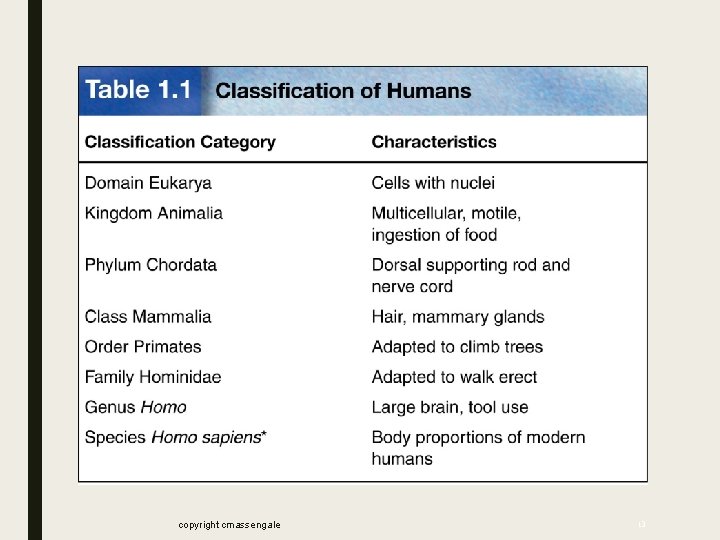
copyright cmassengale 13
SPECIES ■ Group of organisms that resemble closely in structure and function ■ Most specific classification unit ■ Like species breed with like species ■ Written in italics and is lower case
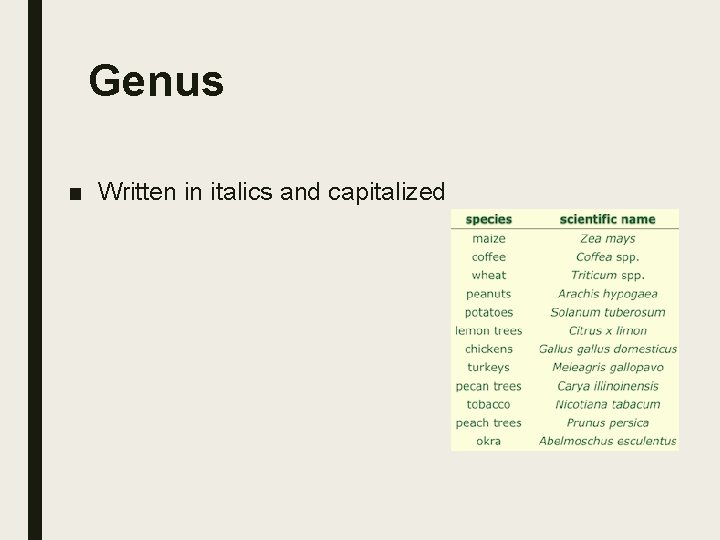
Genus ■ Written in italics and capitalized
FAMILY
ORDER
Class
Phylum ■ Animal kingdom contains about 35 phyla (9 contain the most) ■ Plant kingdom contains about 12 phyla (or divisions) *THIS IS THE MOST IMPORTANT TAXON IN ZOOLOGY*
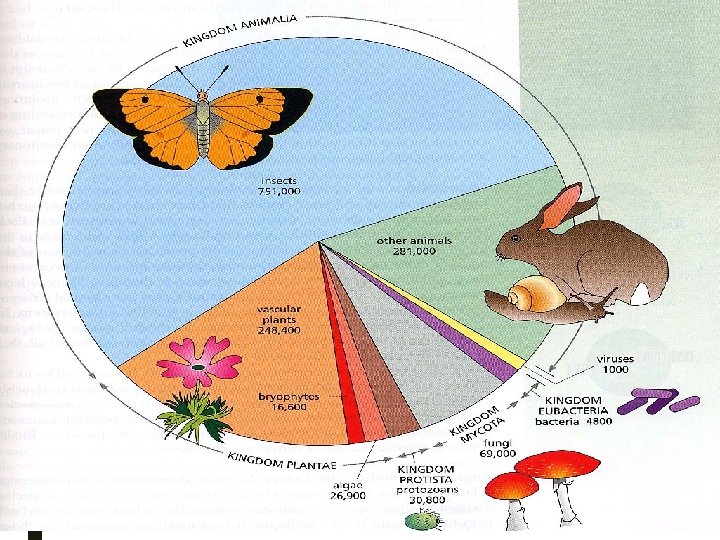
KINGDOMS of EUKARYA Protista (the single-celled eukaryotes) Fungi (fungus and related organisms) Plantae (the plants) Animalia (the animals) Archaebacteria (ancient bacteria) Eubacteria (true bacteria)
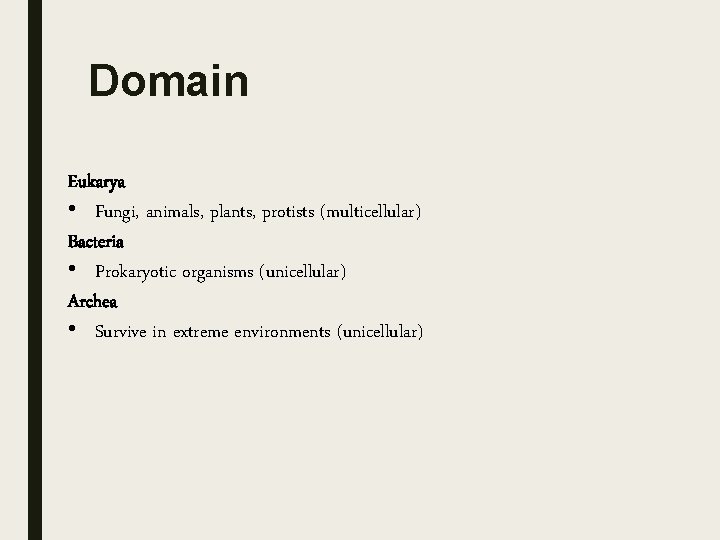
Domain Eukarya • Fungi, animals, plants, protists (multicellular) Bacteria • Prokaryotic organisms (unicellular) Archea • Survive in extreme environments (unicellular)
copyright cmassengale 22