INTRODUCTION TO HEALTH POLICY ANALYSIS Moises Cruz Neil
- Slides: 27
INTRODUCTION TO HEALTH POLICY ANALYSIS Moises Cruz Neil Chawla Elizabeth Kuilanoff 5/6/19
Overview ■ – – Purpose Think critically about public health issues Be able to read health policy literature Use the knowledge you learned here Collaborate and share information ■ – – – Structure 20 minute presentation 10 minute Q&A Equal participation from all members
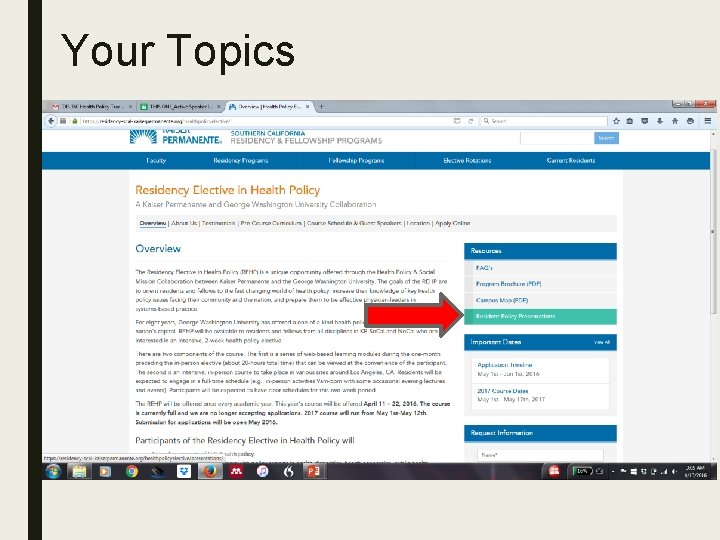
Your Topics
Your Teams! ■ Team 1: Vaccine Exemption Law – Duy Nguyen, Elizabeth Pelayo, Tarek Salih, Rima Shah ■ Team 2: Tobacco Access – Sofia Hu, Romina Kim, Ebony King, Maureen Yu, Esther Zarecki ■ Team 3: Drug Pricing – Gbemi Daniyan, Benjamin Pezeshki, Reshma Ramachandran, Kellie Tafet, David Wee ■ Team 4: Opioid Addiction – Jennifer Chao, Christopher Chung, Maria Sturchler, Karolyna Suarez, Andrea Yanez
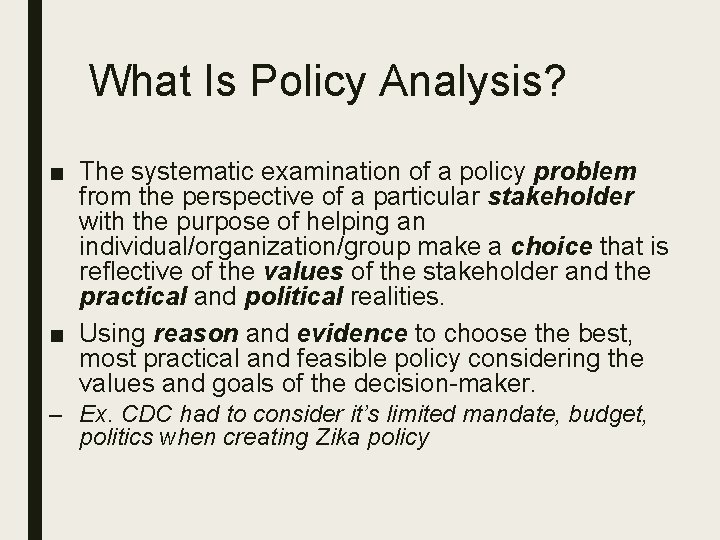
What Is Policy Analysis? ■ The systematic examination of a policy problem from the perspective of a particular stakeholder with the purpose of helping an individual/organization/group make a choice that is reflective of the values of the stakeholder and the practical and political realities. ■ Using reason and evidence to choose the best, most practical and feasible policy considering the values and goals of the decision-maker. – Ex. CDC had to consider it’s limited mandate, budget, politics when creating Zika policy
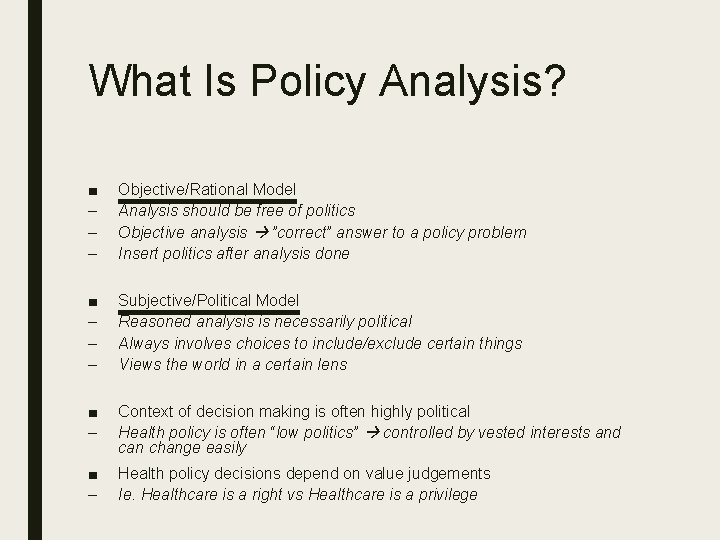
What Is Policy Analysis? ■ – – – Objective/Rational Model Analysis should be free of politics Objective analysis ”correct” answer to a policy problem Insert politics after analysis done ■ – – – Subjective/Political Model Reasoned analysis is necessarily political Always involves choices to include/exclude certain things Views the world in a certain lens ■ – Context of decision making is often highly political Health policy is often “low politics” controlled by vested interests and can change easily ■ – Health policy decisions depend on value judgements Ie. Healthcare is a right vs Healthcare is a privilege
Why Health Policy Analysis? ■ Should action be taken to address a given problem? – Sometimes the best action is inaction ■ If so, what type of action?
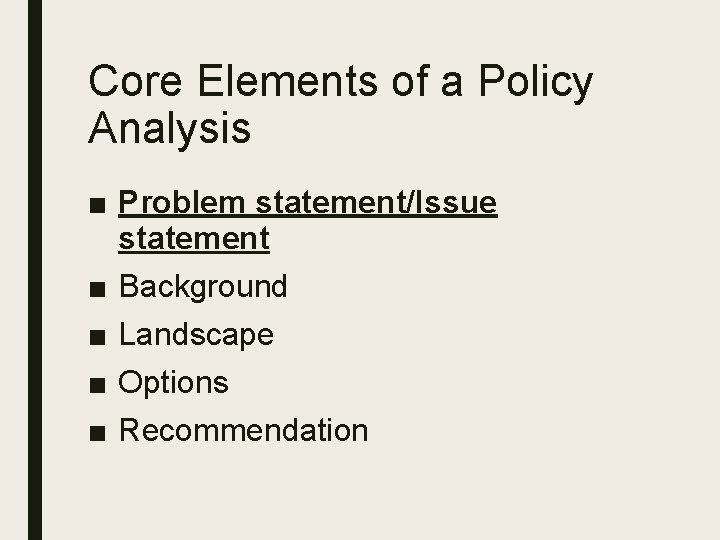
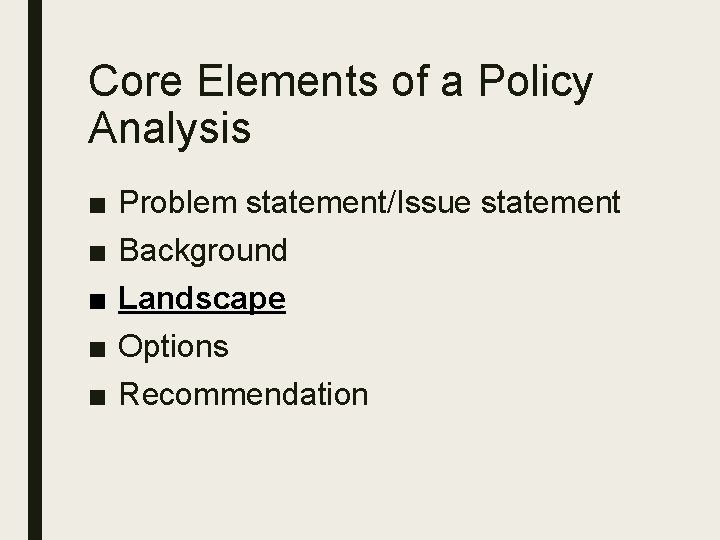
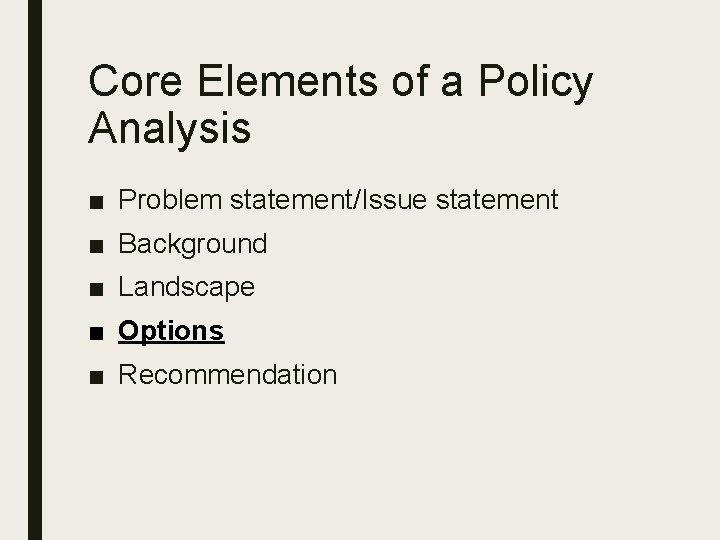
Core Elements of a Policy Analysis ■ Problem statement/Issue statement ■ Background ■ Landscape ■ Options ■ Recommendation
Problem Statement ■ Provided for you! ■ Broad or narrow? – e. g. What recommendations would you advise to this committee to more closely safeguard Protected Health Information (PHI) in light of recent security breaches? Vs. making recommendations on a specific bill ■ Should be a discrepancy between what exists and the ideal situation ■ Reason for the difference should be unclear ■ There should be more than one possible solution
Problem Statement ■ Question: National funding for Planned Parenthood is at risk and women’s reproductive health continues to be a debated topic. What recommendations would you provide to an Independent State Governor (i. e. not Republican or Democrat) to maintain or improve available resources for women?
Core Elements of a Policy Analysis ■ ■ ■ Problem statement/Issue statement Background Landscape Options Recommendation
Background ■ Detailed description of the problem – Assess the nature and extent of the problem ■ Provides fact base ■ Summarize evidence ■ Review ‘best practices’ ■ Determine magnitude of the problem – Why is this important?
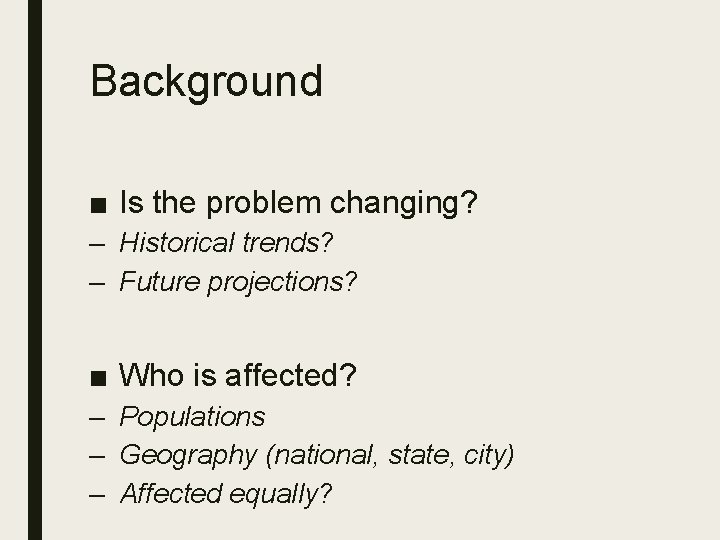
Background ■ Is the problem changing? – Historical trends? – Future projections? ■ Who is affected? – Populations – Geography (national, state, city) – Affected equally?
Core Elements of a Policy Analysis ■ ■ ■ Problem statement/Issue statement Background Landscape Options Recommendation
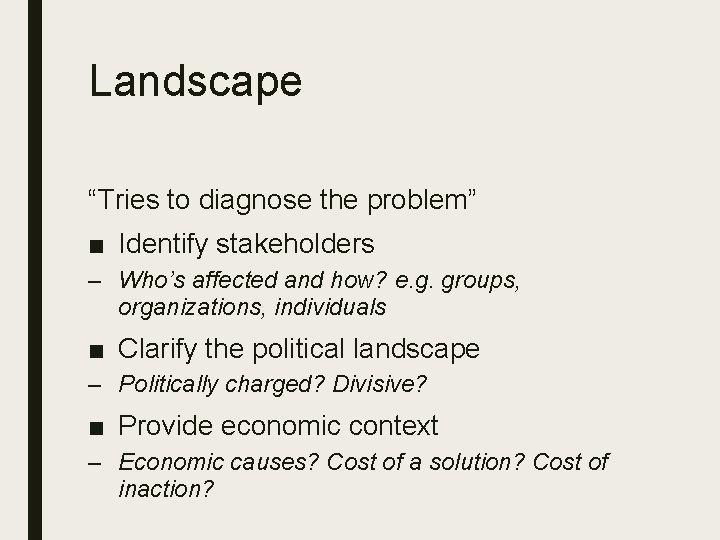
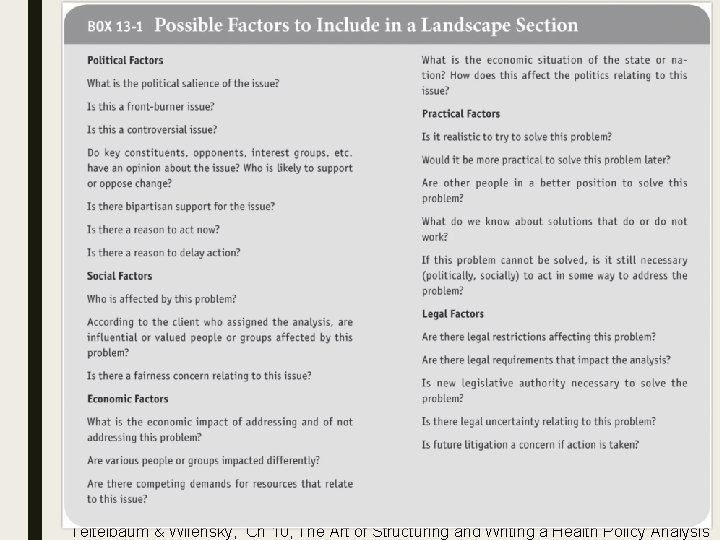
Landscape “Tries to diagnose the problem” ■ Identify stakeholders – Who’s affected and how? e. g. groups, organizations, individuals ■ Clarify the political landscape – Politically charged? Divisive? ■ Provide economic context – Economic causes? Cost of a solution? Cost of inaction?
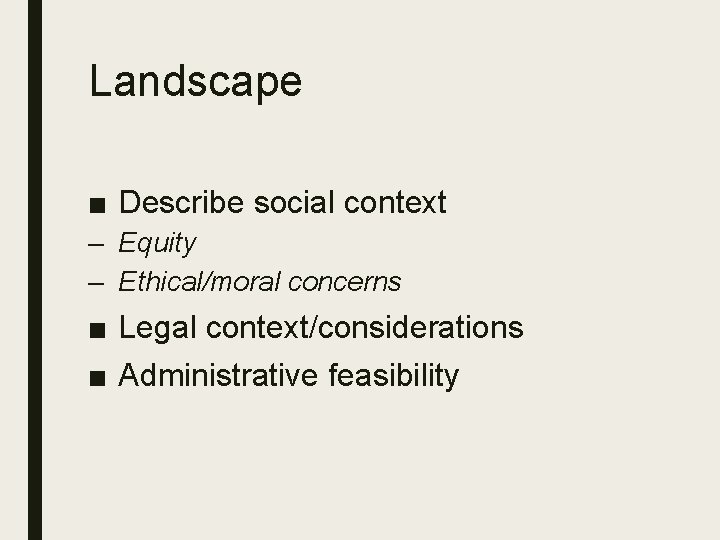
Landscape ■ Describe social context – Equity – Ethical/moral concerns ■ Legal context/considerations ■ Administrative feasibility
Teitelbaum & Wilensky, Ch 10, The Art of Structuring and Writing a Health Policy Analysis
Core Elements of a Policy Analysis ■ Problem statement/Issue statement ■ Background ■ Landscape ■ Options ■ Recommendation
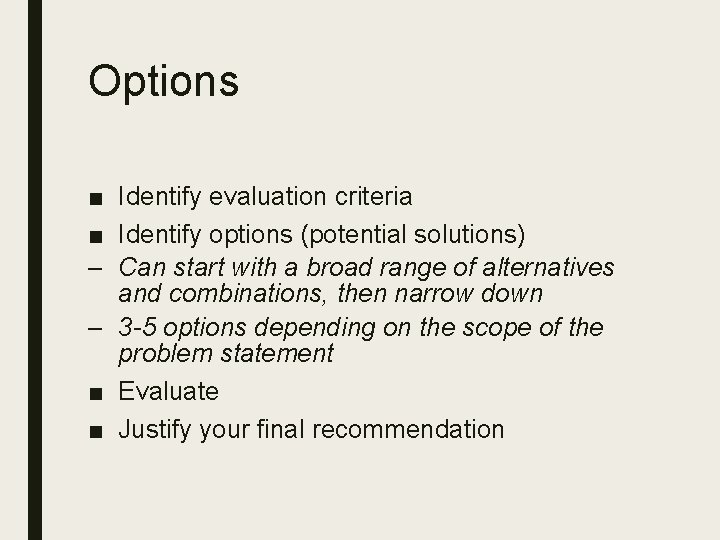
Options ■ Identify evaluation criteria ■ Identify options (potential solutions) – Can start with a broad range of alternatives and combinations, then narrow down – 3 -5 options depending on the scope of the problem statement ■ Evaluate ■ Justify your final recommendation
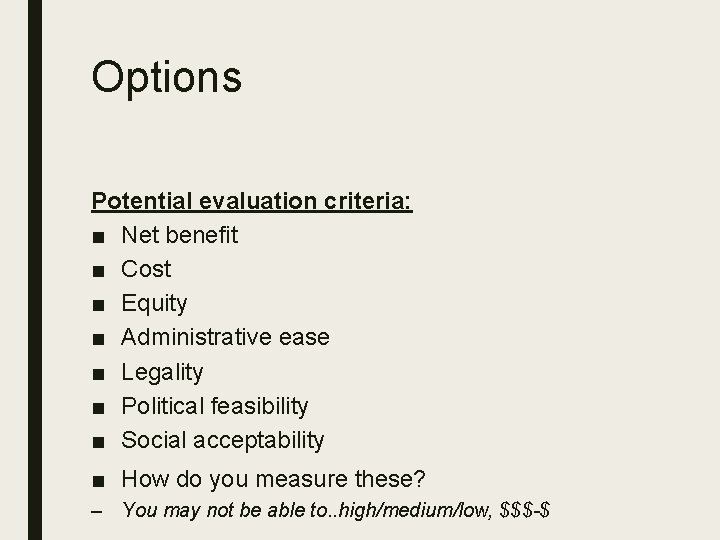
Options Potential evaluation criteria: ■ Net benefit ■ Cost ■ Equity ■ Administrative ease ■ Legality ■ Political feasibility ■ Social acceptability ■ How do you measure these? – You may not be able to. . high/medium/low, $$$-$
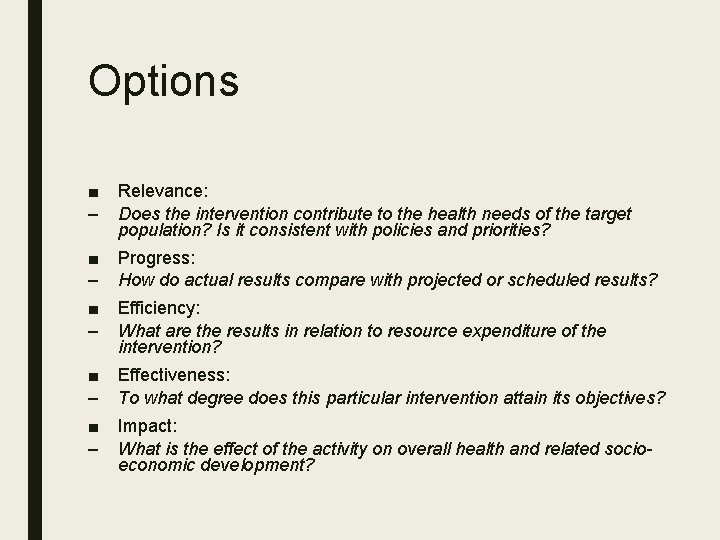
Options ■ – Relevance: Does the intervention contribute to the health needs of the target population? Is it consistent with policies and priorities? ■ – Progress: How do actual results compare with projected or scheduled results? ■ – Efficiency: What are the results in relation to resource expenditure of the intervention? ■ – Effectiveness: To what degree does this particular intervention attain its objectives? ■ – Impact: What is the effect of the activity on overall health and related socioeconomic development?
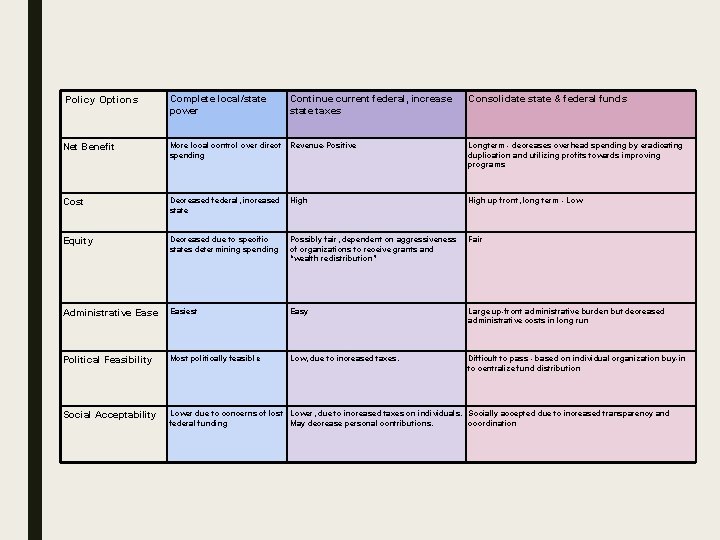
Options ■ In identifying options – – Be creative Do some research We want you to think! Some typical options: education, mandates, taxation, subsidies. . ■ In evaluating options, consider building a chart/grid for side-by-side comparisons
Policy Options Complete local/state power Continue current federal, increase state taxes Consolidate state & federal funds Net Benefit More local control over direct Revenue-Positive spending Longterm - decreases overhead spending by eradicating duplication and utilizing profits towards improving programs Cost Decreased federal, increased High state High up front, long term - Low Equity Decreased due to specific states determining spending Possibly fair, dependent on aggressiveness of organizations to receive grants and “wealth redistribution” Fair Administrative Easiest Easy Large up-front administrative burden but decreased administrative costs in long run Political Feasibility Most politically feasible Low, due to increased taxes. Difficult to pass - based on individual organization buy-in to centralize fund distribution Social Acceptability Lower due to concerns of lost Lower, due to increased taxes on individuals. Socially accepted due to increased transparency and federal funding May decrease personal contributions. coordination
Core Elements of a Policy Analysis ■ Problem statement/Issue statement ■ Background ■ Landscape ■ Options ■ Recommendation
Recommendation ■ Choose a single option – May be a combination of options, but needs to have been presented & evaluated as a combination – Don’t choose between alternatives consider projected outcomes – Why is the best course of action? – $20 Bill Test: Why hasn’t this been done already? ■ “Analysis not advocacy” – Don’t be political
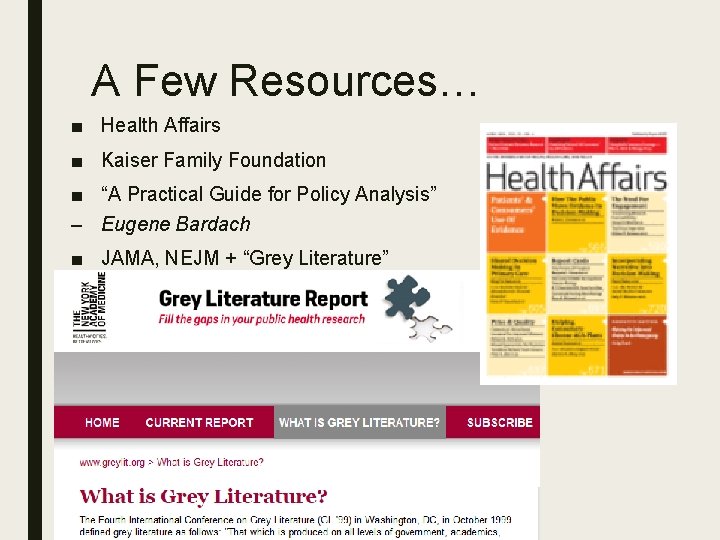
A Few Resources… ■ Health Affairs ■ Kaiser Family Foundation ■ “A Practical Guide for Policy Analysis” – Eugene Bardach ■ JAMA, NEJM + “Grey Literature”
Questions?