Introduction to Computational Thinking Welcome C Dennis Kafura


- Slides: 24
Introduction to Computational Thinking Welcome!! (C) Dennis Kafura 2017 1
CT@VT The Cast n Instructors q q n n n Dennis Kafura (TR 5 PM section) Cory Bart (MW 5: 30 PM section) GTA UTAs You q q 42 different majors Seniors (21), Juniors (27), Sophomores (39), Freshman (28) (C) Dennis Kafura 2017 Slide 2
CT@VT Support n During class q q n Staff – instructor, GTA, UTAs Your cohort Outside of class q q Office hours on request Contact n n n Dennis Kafura (kafura@vt. edu) Cory Bart (acbart@vt. edu) Or your UTA (C) Dennis Kafura 2017 Slide 3
CT@VT Day by day Log in to: canvas. vt. edu Class Day Slides Class/Home work Reading Quiz Closing Date!! (C) Dennis Kafura 2017 Slide 4
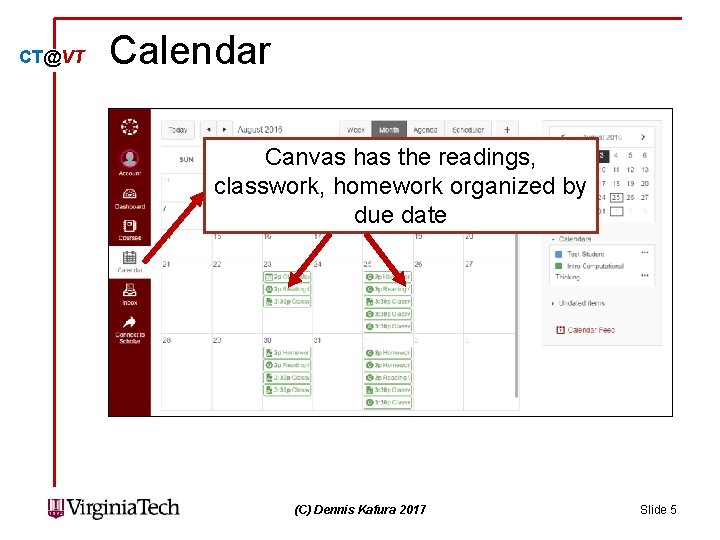
CT@VT Calendar Canvas has the readings, classwork, homework organized by due date (C) Dennis Kafura 2017 Slide 5
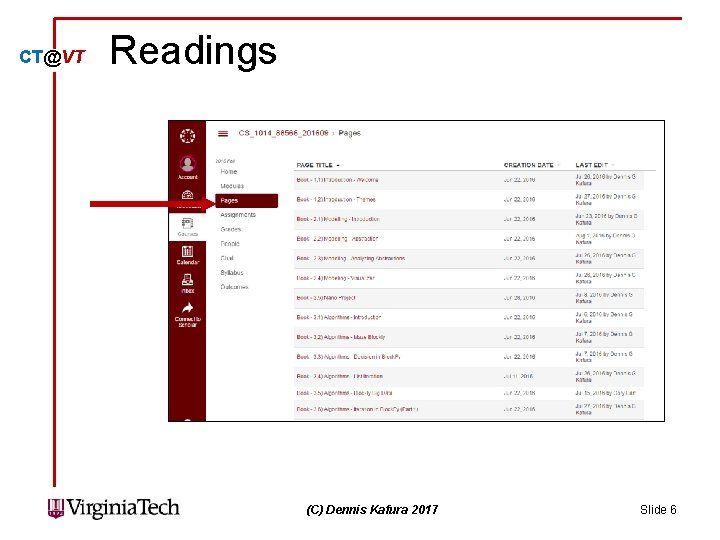
CT@VT Readings (C) Dennis Kafura 2017 Slide 6
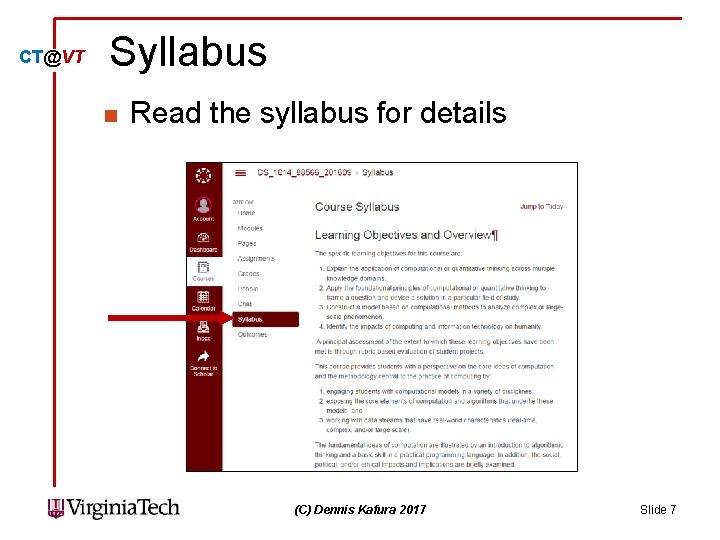
CT@VT Syllabus n Read the syllabus for details (C) Dennis Kafura 2017 Slide 7
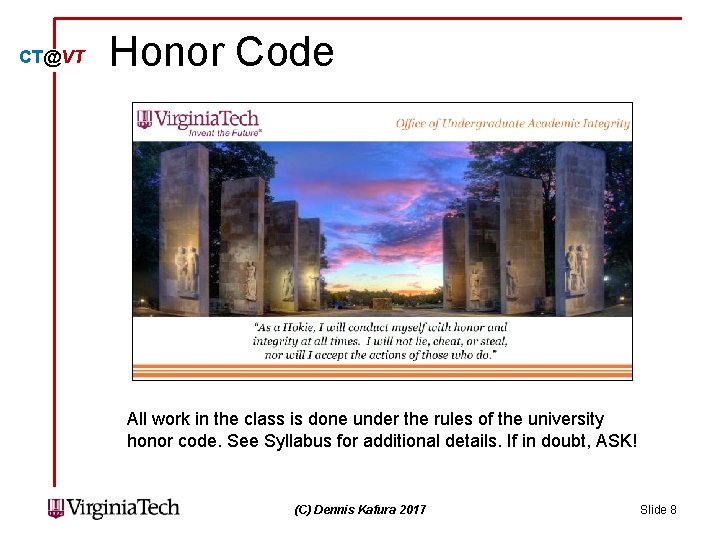
CT@VT Honor Code All work in the class is done under the rules of the university honor code. See Syllabus for additional details. If in doubt, ASK! (C) Dennis Kafura 2017 Slide 8
CT@VT Lets Get Started n n Take Reading Quiz 1 Reading Quizzes q q This first “reading” quiz ask for some initial thoughts on the class Future quizzes will ask questions about the assigned reading for the day. (C) Dennis Kafura 2017 Slide 9
CT@VT First class work n n At your table discuss and answer together the questions distributed on paper. Nominate someone at your table to report for your table. Report back in 25 minutes. (C) Dennis Kafura 2017 Slide 10
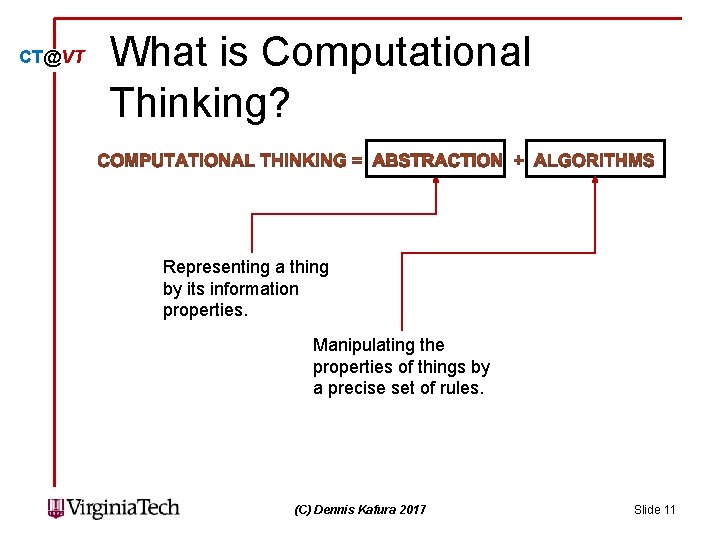
CT@VT What is Computational Thinking? Representing a thing by its information properties. Manipulating the properties of things by a precise set of rules. (C) Dennis Kafura 2017 Slide 11
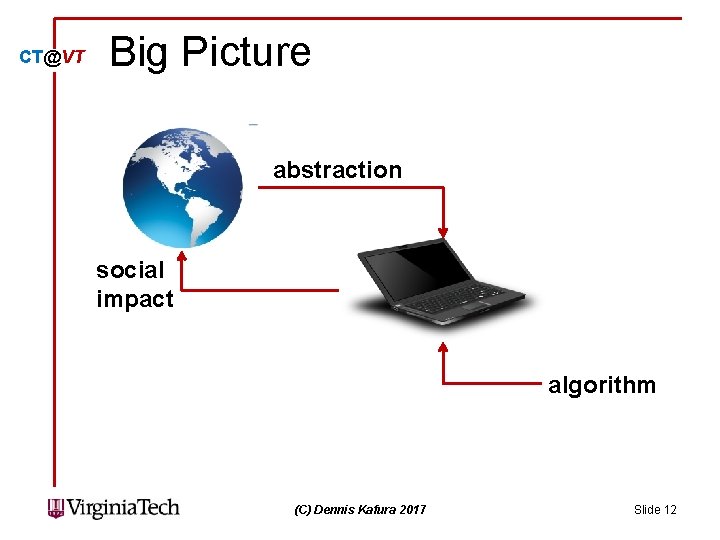
CT@VT Big Picture abstraction social impact algorithm (C) Dennis Kafura 2017 Slide 12
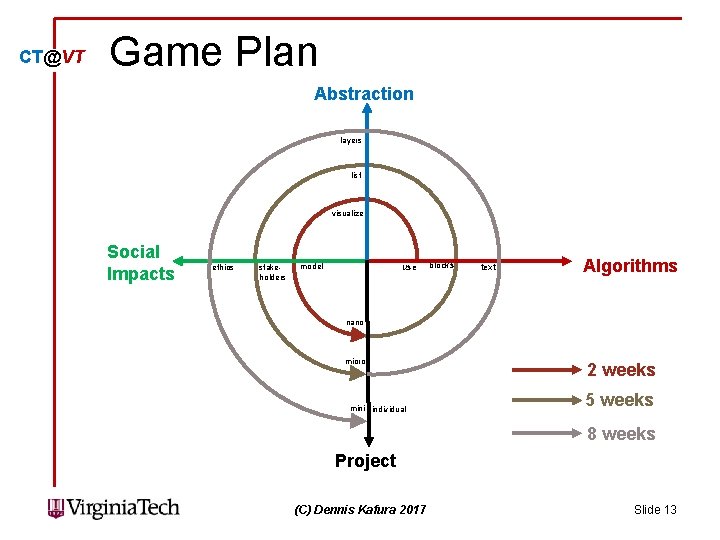
CT@VT Game Plan Abstraction layers list visualize Social Impacts ethics stakeholders model use blocks text Algorithms nano micro mini individual 2 weeks 5 weeks 8 weeks Project (C) Dennis Kafura 2017 Slide 13
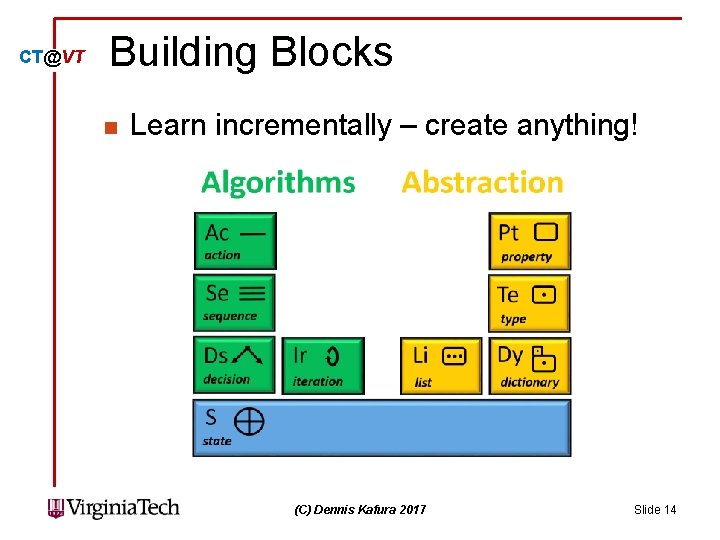
CT@VT Building Blocks n Learn incrementally – create anything! (C) Dennis Kafura 2017 Slide 14
CT@VT Learning Objectives 1. Explain the application of computational or quantitative thinking across multiple knowledge domains. 2. Apply the foundational principles of computational or quantitative thinking to frame a question and devise a solution in a particular field of study. 3. Construct a model based on computational methods to analyze complex or large-scale phenomenon. 4. Identify the impacts of computing and information technology on humanity. The principal means of assessing attainment of these learning objectives are the four projects, especially the three week final course project. (C) Dennis Kafura 2017 Slide 15
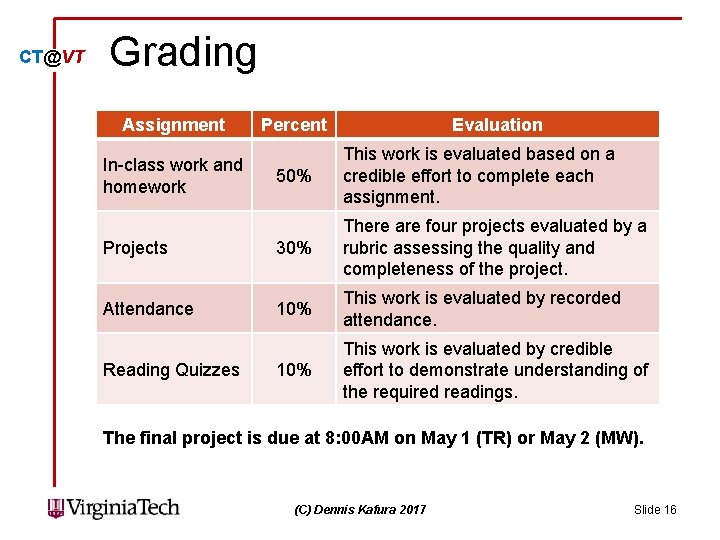
CT@VT Grading Assignment Percent Evaluation 50% This work is evaluated based on a credible effort to complete each assignment. Projects 30% There are four projects evaluated by a rubric assessing the quality and completeness of the project. Attendance 10% This work is evaluated by recorded attendance. 10% This work is evaluated by credible effort to demonstrate understanding of the required readings. In-class work and homework Reading Quizzes The final project is due at 8: 00 AM on May 1 (TR) or May 2 (MW). (C) Dennis Kafura 2017 Slide 16
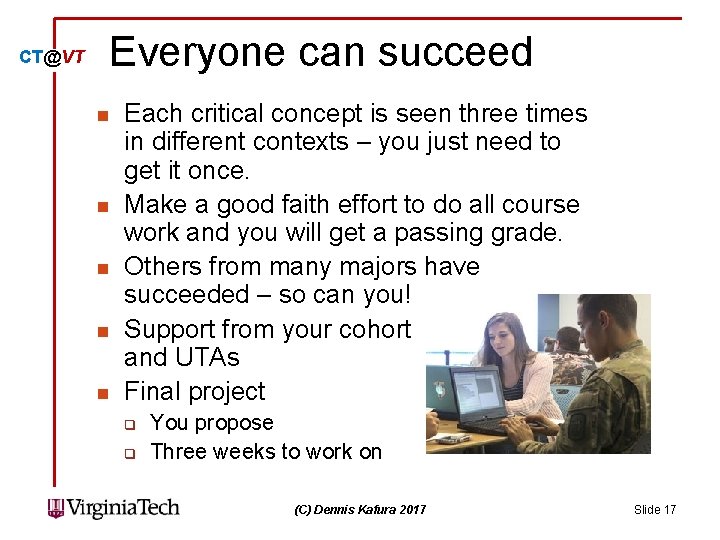
CT@VT Everyone can succeed n n n Each critical concept is seen three times in different contexts – you just need to get it once. Make a good faith effort to do all course work and you will get a passing grade. Others from many majors have succeeded – so can you! Support from your cohort and UTAs Final project q q You propose Three weeks to work on (C) Dennis Kafura 2017 Slide 17
What it takes to succeed CT@VT n Be conscientious and consistent in q q Take the Reading Quiz before each class! Meet due dates for homework for best learning. Homework assigned in one class is due by the start of the next class. Complete assigned work before close of each module. Attend class to engage in active learning. We will keep attendance. (C) Dennis Kafura 2017 Slide 18
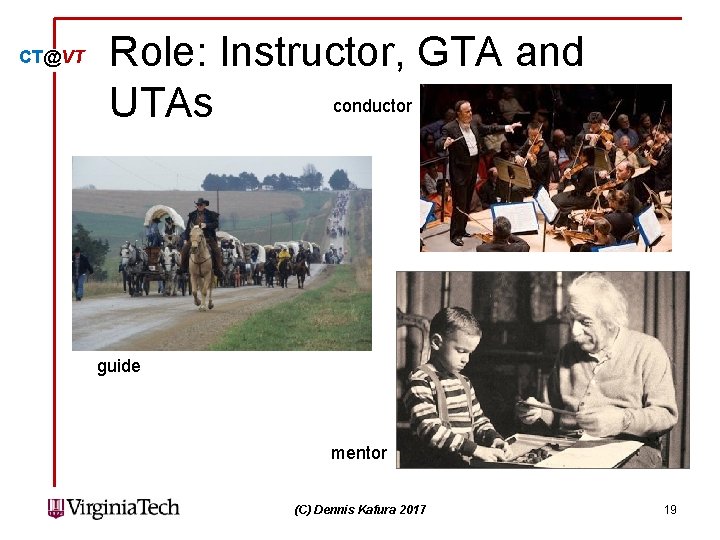
CT@VT Role: Instructor, GTA and conductor UTAs guide mentor (C) Dennis Kafura 2017 19
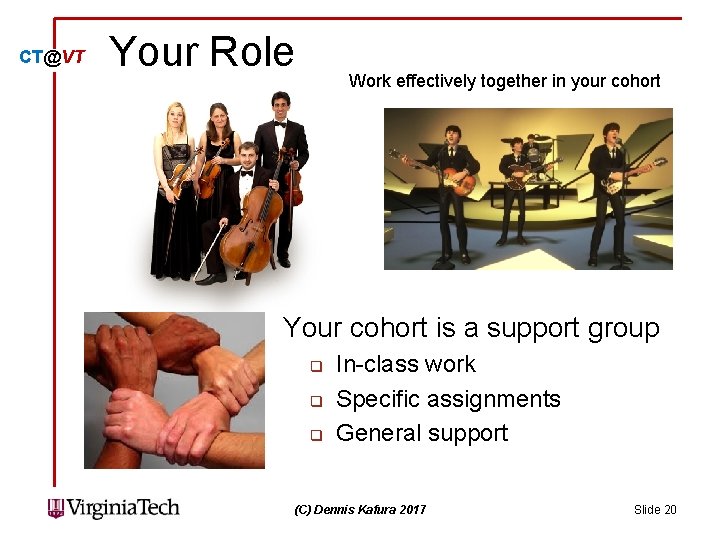
CT@VT Your Role Work effectively together in your cohort Your cohort is a support group q q q In-class work Specific assignments General support (C) Dennis Kafura 2017 Slide 20
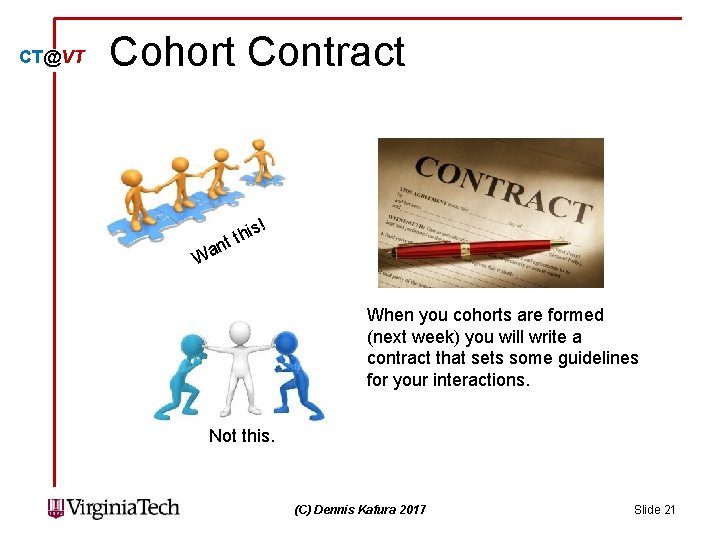
CT@VT Cohort Contract ! is t th n Wa When you cohorts are formed (next week) you will write a contract that sets some guidelines for your interactions. Not this. (C) Dennis Kafura 2017 Slide 21
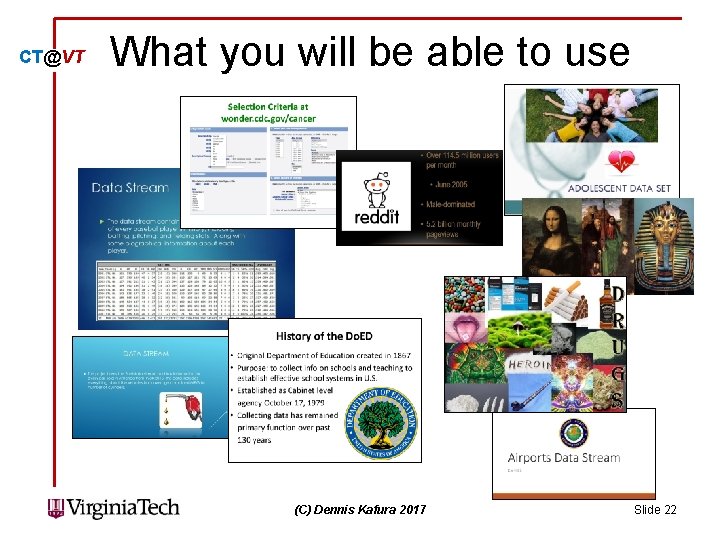
CT@VT What you will be able to use (C) Dennis Kafura 2017 Slide 22
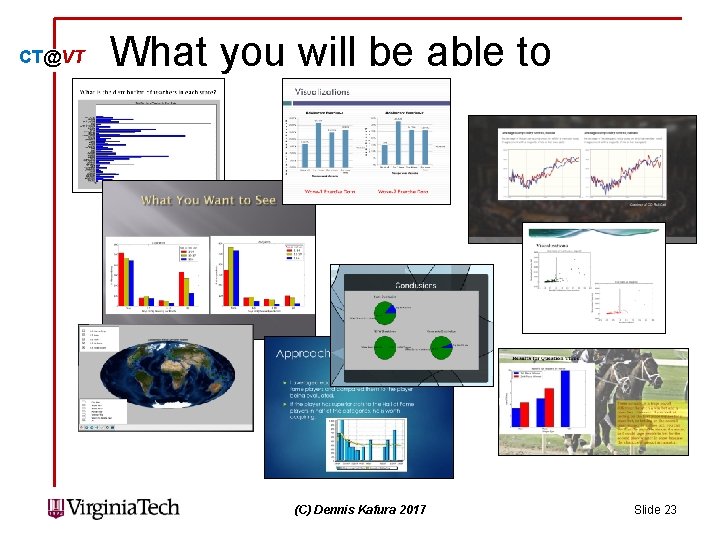
CT@VT What you will be able to create (C) Dennis Kafura 2017 Slide 23
CT@VT Prepare for next class n n Do homework and reading Take Reading Quiz 2 before the next class (C) Dennis Kafura 2017 Slide 24