Information Systems Why Do People Need Information w


- Slides: 15
Information Systems ü Why Do People Need Information? w Individuals - Entertainment and enlightenment w Businesses - Decision making, problem solving and control Engineering Staff College of India
Data, Information, and Systems ü Data vs. Information w Data A “given, ” or fact; a number, a statement, or a picture Represents something in the real world The raw materials in the production of information w Information Data that have meaning within a context Data in relationships Data after manipulation Engineering Staff College of India
Data, Information, and Systems ü Data Manipulation w Example: customer survey Reading through data collected from a customer survey with questions in various categories would be time-consuming and not very helpful. When manipulated, the surveys may provide useful information. Engineering Staff College of India
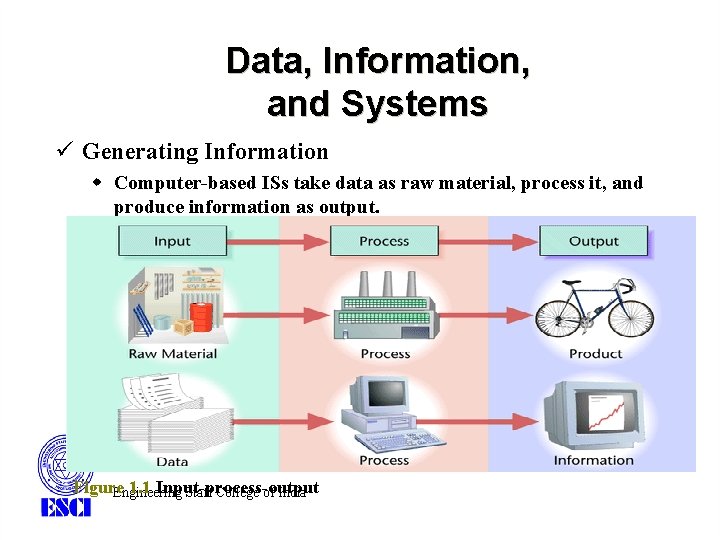
Data, Information, and Systems ü Generating Information w Computer-based ISs take data as raw material, process it, and produce information as output. Figure 1. 1 Input-process-output Engineering Staff College of India
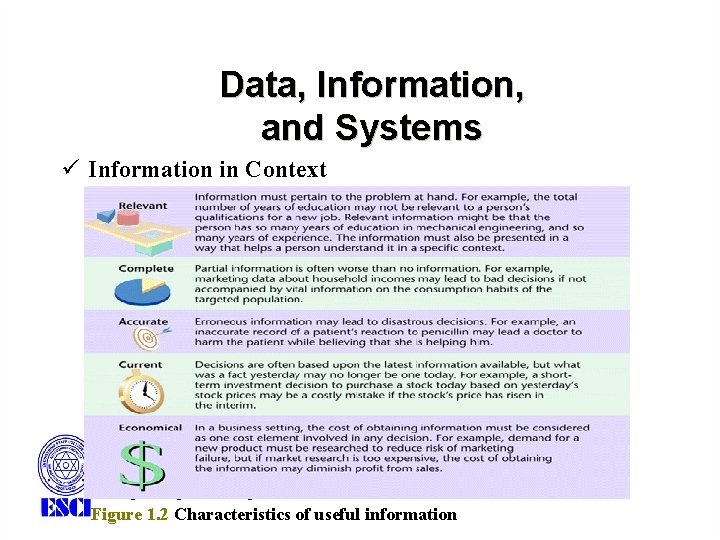
Data, Information, and Systems ü Information in Context Engineering Staff College of India Figure 1. 2 Characteristics of useful information
Data, Information, and Systems ü What Is a System? w System: A set of components that work together to achieve a common goal w Subsystem: One part of a system where the products of more than one system are combined to reach an ultimate goal w Closed system: Stand-alone system that has no contact with other systems w Open system: System that interfaces with other systems Engineering Staff College of India
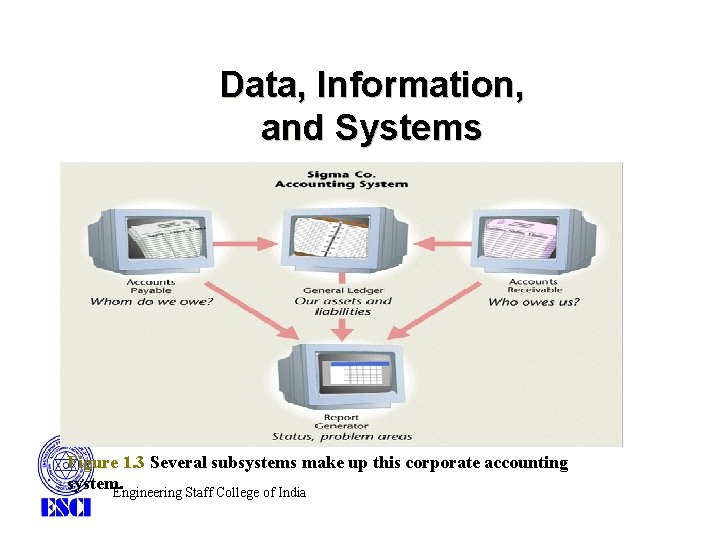
Data, Information, and Systems Figure 1. 3 Several subsystems make up this corporate accounting system. Engineering Staff College of India
Data, Information, and Systems ü Information and Managers w Systems thinking Creates a framework for problem solving and decision making. Keeps managers focused on overall goals and operations of business. Engineering Staff College of India
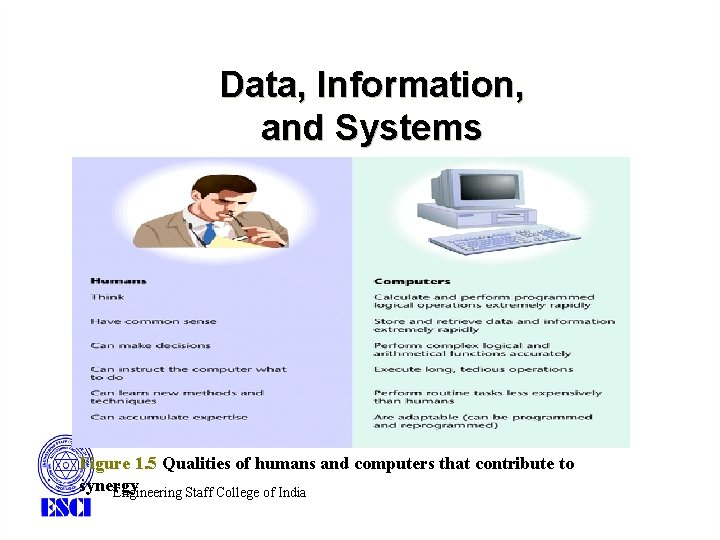
Data, Information, and Systems Figure 1. 5 Qualities of humans and computers that contribute to synergy Engineering Staff College of India
Data, Information, and Systems ü The Benefits of Human-Computer Synergy w Synergy When combined resources produce output that exceeds the sum of the outputs of the same resources employed separately w Allows human thought to be translated into efficient processing of large amounts of data Engineering Staff College of India
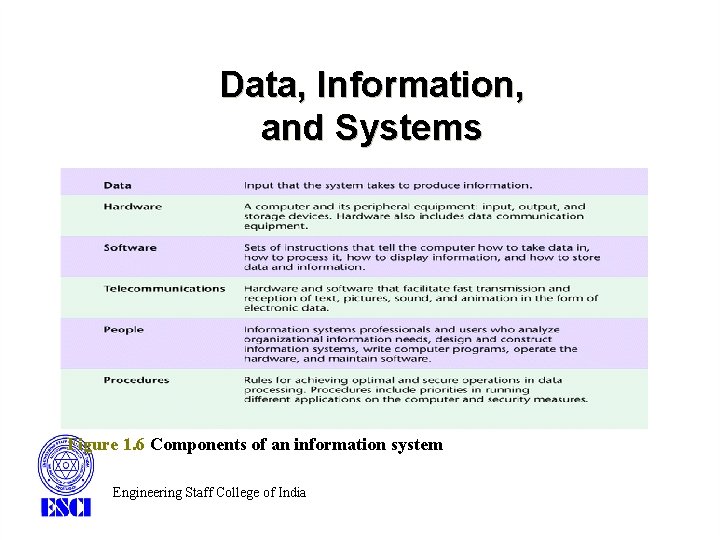
Data, Information, and Systems Figure 1. 6 Components of an information system Engineering Staff College of India
Data, Information, and Systems ü The Four Stages of Data Processing w Input: Data is collected and entered into computer. w Data processing: Data is manipulated into information using mathematical, statistical, and other tools. w Output: Information is displayed or presented. w Storage: Data and information are maintained for later use. Engineering Staff College of India
Why Study IS? ü Information Systems Careers w Systems analyst, specialist in enterprise resource planning (ERP), database administrator, telecommunications specialist, consulting, etc. ü Knowledge Workers w Managers and non-managers w Employers seek computer-literate professionals who know how to use information technology. ü Computer Literacy Replacing Traditional Literacy w Key to full participation in western society Engineering Staff College of India
Ethical and Societal Issues The Not-So-Bright Side ü Consumer Privacy w Organizations collect (and sometimes sell) huge amounts of data on individuals. ü Employee Privacy w IT supports remote monitoring of employees, violating privacy and creating stress. Engineering Staff College of India
Ethical and Societal Issues The Not-So-Bright Side ü Freedom of Speech w IT increases opportunities for pornography, hate speech, intellectual property crime, an d other intrusions; prevention may abridge free speech. ü IT Professionalism w No mandatory or enforced code of ethics for IT professionals--unlike other professions. ü Social Inequality w Less than 20% of the world’s population have ever used a PC; less than 3% have Internet access. Engineering Staff College of India