Improving Student Learning One Teacher at a Time

- Slides: 16
Improving Student Learning One Teacher at a Time Jane E. Pollock, Ph. D. 720. 985. 1137 www. learninghorizon. net
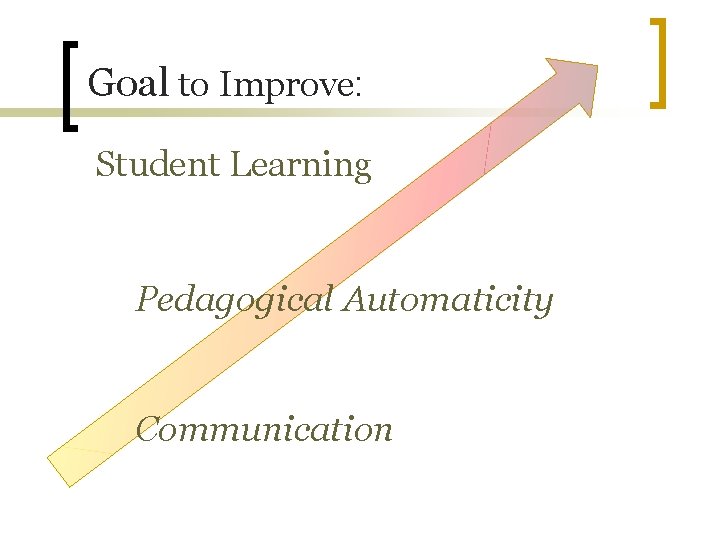
Goal to Improve: Student Learning Pedagogical Automaticity Communication
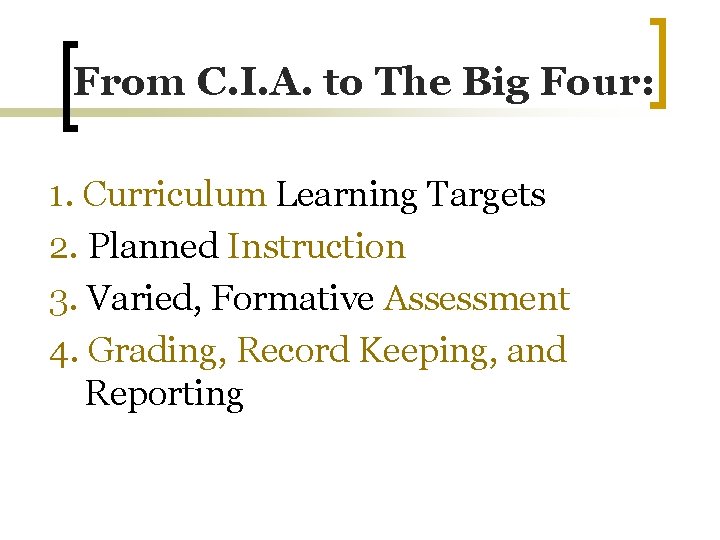
From C. I. A. to The Big Four: 1. Curriculum Learning Targets 2. Planned Instruction 3. Varied, Formative Assessment 4. Grading, Record Keeping, and Reporting
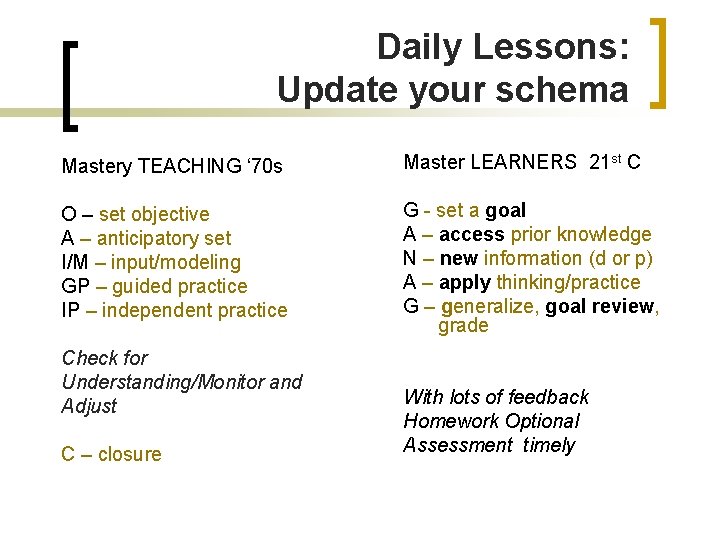
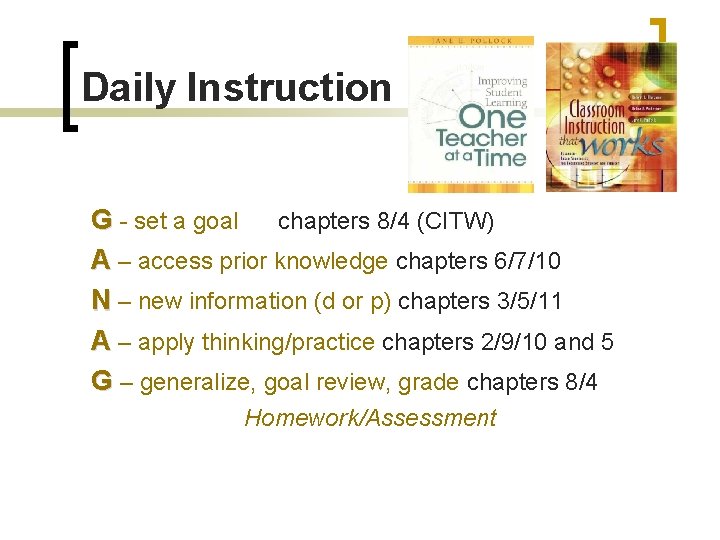
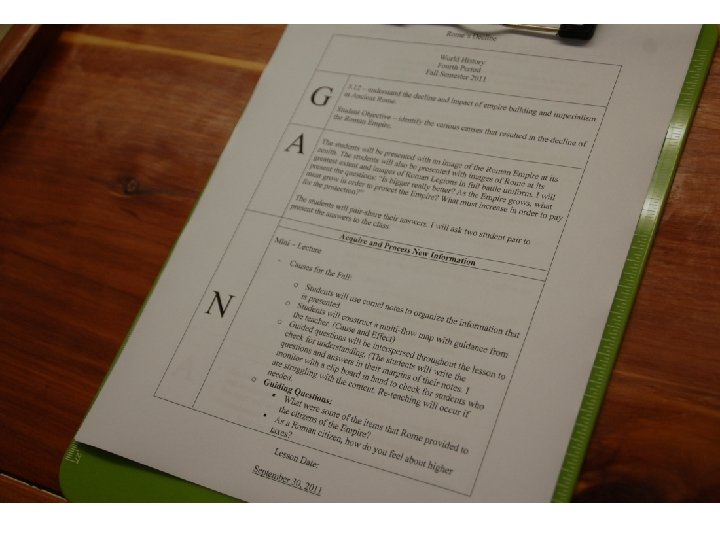
Daily Lessons: Update your schema Mastery TEACHING ‘ 70 s O – set objective A – anticipatory set I/M – input/modeling GP – guided practice IP – independent practice Check for Understanding/Monitor and Adjust C – closure Master LEARNERS 21 st C G - set a goal A – access prior knowledge N – new information (d or p) A – apply thinking/practice G – generalize, goal review, grade With lots of feedback Homework Optional Assessment timely
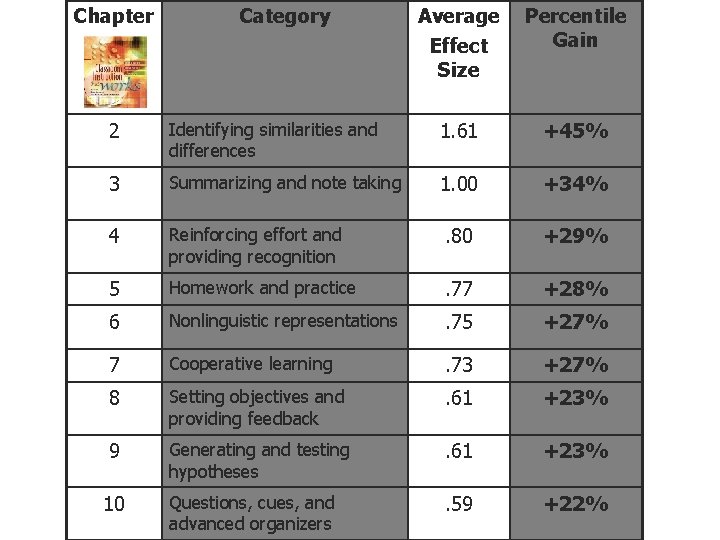
Chapter Category Average Effect Size Percentile Gain 2 Identifying similarities and differences 1. 61 +45% 3 Summarizing and note taking 1. 00 +34% 4 Reinforcing effort and providing recognition . 80 +29% 5 Homework and practice . 77 +28% 6 Nonlinguistic representations . 75 +27% 7 Cooperative learning . 73 +27% 8 Setting objectives and providing feedback . 61 +23% 9 Generating and testing hypotheses . 61 +23% Questions, cues, and advanced organizers . 59 +22% 10
Daily Instruction G - set a goal chapters 8/4 (CITW) A – access prior knowledge chapters 6/7/10 N – new information (d or p) chapters 3/5/11 A – apply thinking/practice chapters 2/9/10 and 5 G – generalize, goal review, grade chapters 8/4 Homework/Assessment
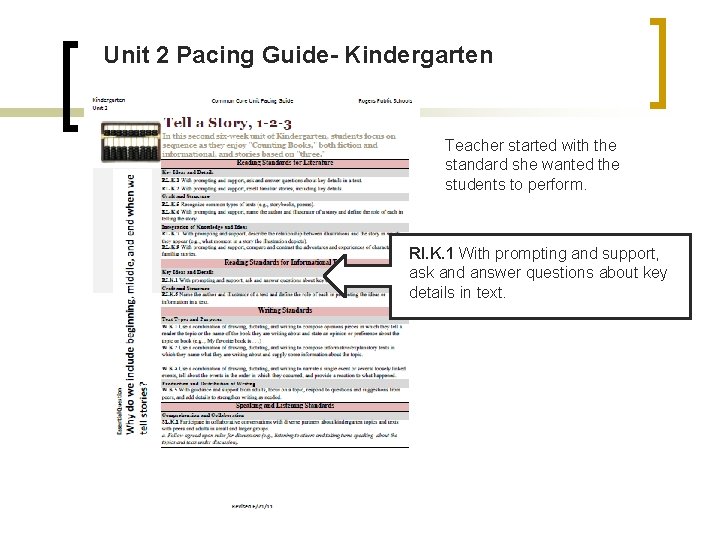
Unit 2 Pacing Guide- Kindergarten Teacher started with the standard she wanted the students to perform. RI. K. 1 With prompting and support, ask and answer questions about key details in text.
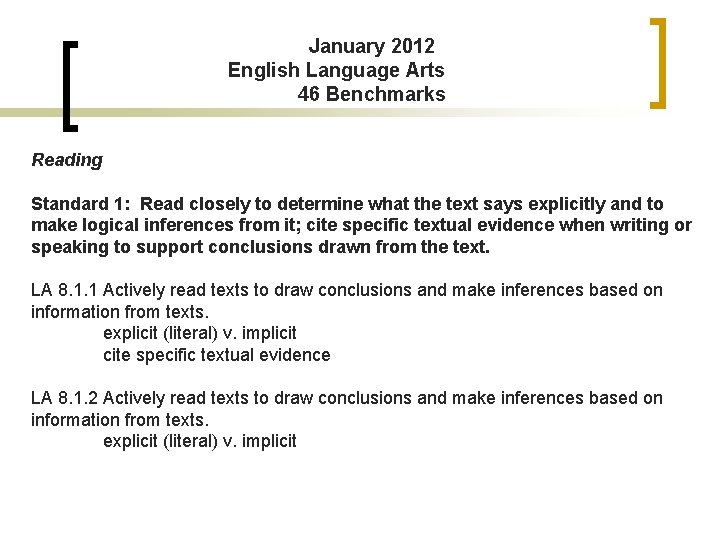
January 2012 English Language Arts 46 Benchmarks Reading Standard 1: Read closely to determine what the text says explicitly and to make logical inferences from it; cite specific textual evidence when writing or speaking to support conclusions drawn from the text. LA 8. 1. 1 Actively read texts to draw conclusions and make inferences based on information from texts. explicit (literal) v. implicit cite specific textual evidence LA 8. 1. 2 Actively read texts to draw conclusions and make inferences based on information from texts. explicit (literal) v. implicit
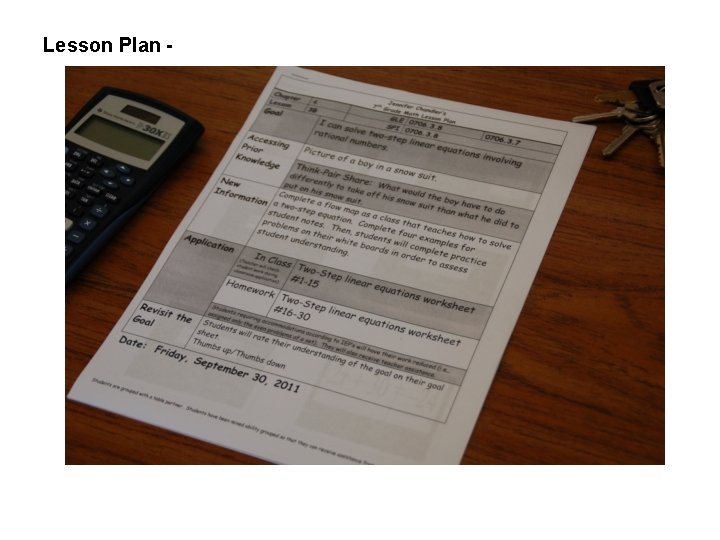
Lesson Plan -
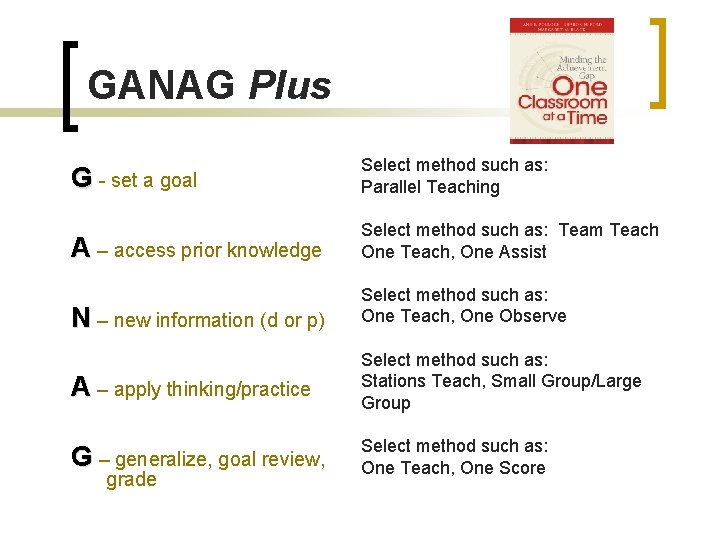
GANAG Plus G - set a goal Select method such as: Parallel Teaching A – access prior knowledge Select method such as: Team Teach One Teach, One Assist N – new information (d or p) Select method such as: One Teach, One Observe A – apply thinking/practice Select method such as: Stations Teach, Small Group/Large Group G – generalize, goal review, Select method such as: One Teach, One Score grade
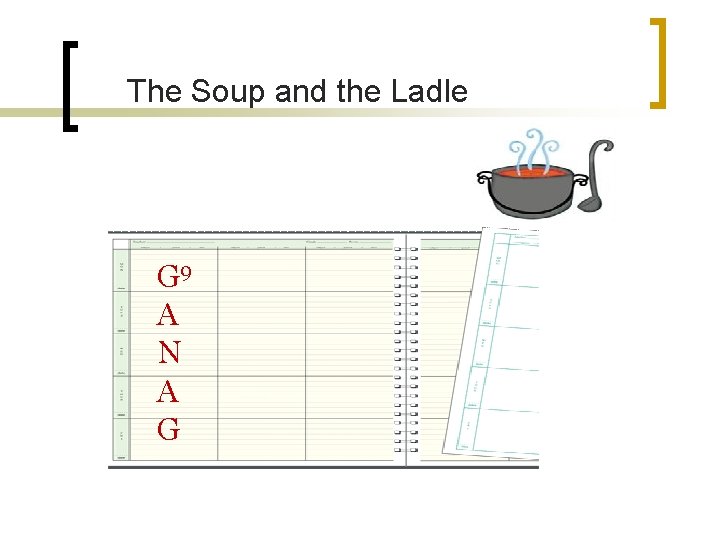
The Soup and the Ladle G 9 A N A G
Good luck with GANAG!
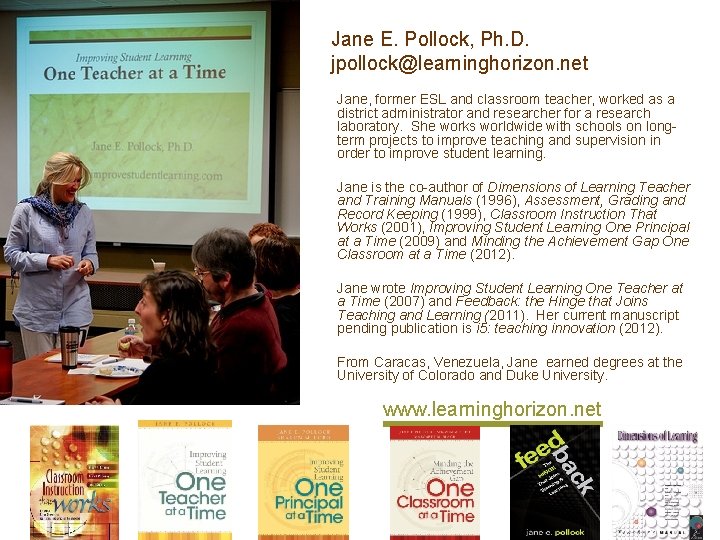
Jane E. Pollock, Ph. D. jpollock@learninghorizon. net Jane, former ESL and classroom teacher, worked as a district administrator and researcher for a research laboratory. She works worldwide with schools on longterm projects to improve teaching and supervision in order to improve student learning. Jane is the co-author of Dimensions of Learning Teacher and Training Manuals (1996), Assessment, Grading and Record Keeping (1999), Classroom Instruction That Works (2001), Improving Student Learning One Principal at a Time (2009) and Minding the Achievement Gap One Classroom at a Time (2012). Jane wrote Improving Student Learning One Teacher at a Time (2007) and Feedback: the Hinge that Joins Teaching and Learning (2011). Her current manuscript pending publication is i 5: teaching innovation (2012). From Caracas, Venezuela, Jane earned degrees at the University of Colorado and Duke University. www. learninghorizon. net