Identity Development Tatum 1997 p 94 n According

- Slides: 26
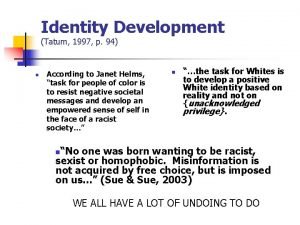
Identity Development (Tatum, 1997, p. 94) n According to Janet Helms, “task for people of color is to resist negative societal messages and develop an empowered sense of self in the face of a racist society…” n “…the task for Whites is to develop a positive White identity based on reality and not on {unacknowledged privilege}. “No one was born wanting to be racist, sexist or homophobic. Misinformation is not acquired by free choice, but is imposed on us…” (Sue & Sue, 2003) n WE ALL HAVE A LOT OF UNDOING TO DO
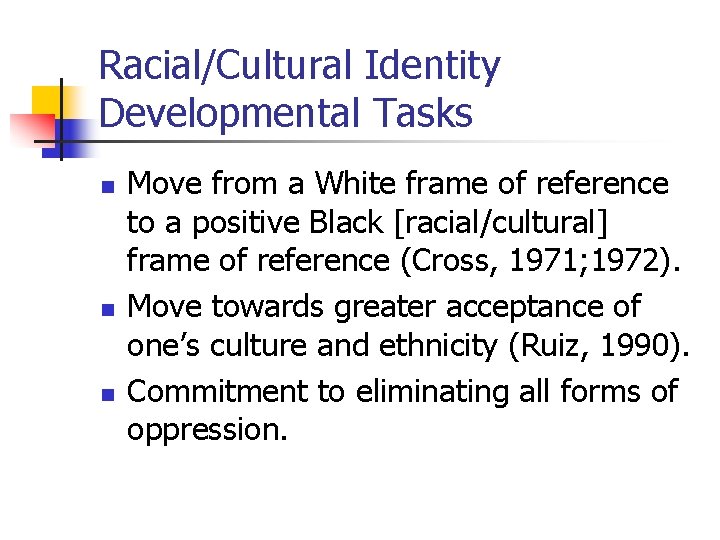
Racial/Cultural Identity Developmental Tasks n n n Move from a White frame of reference to a positive Black [racial/cultural] frame of reference (Cross, 1971; 1972). Move towards greater acceptance of one’s culture and ethnicity (Ruiz, 1990). Commitment to eliminating all forms of oppression.
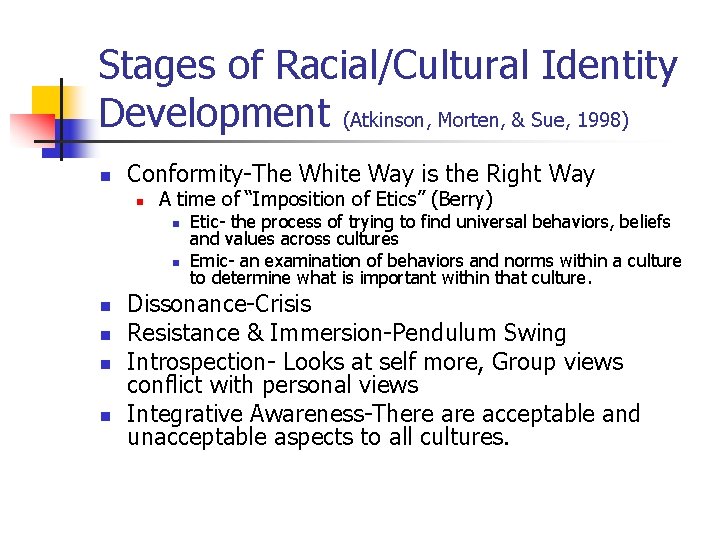
Stages of Racial/Cultural Identity Development (Atkinson, Morten, & Sue, 1998) n Conformity-The White Way is the Right Way n A time of “Imposition of Etics” (Berry) n n n Etic- the process of trying to find universal behaviors, beliefs and values across cultures Emic- an examination of behaviors and norms within a culture to determine what is important within that culture. Dissonance-Crisis Resistance & Immersion-Pendulum Swing Introspection- Looks at self more, Group views conflict with personal views Integrative Awareness-There acceptable and unacceptable aspects to all cultures.
White Racial Identity Development n Two Developmental Tasks: n Abandon individual racism n Recognize and oppose institutional and cultural racism.
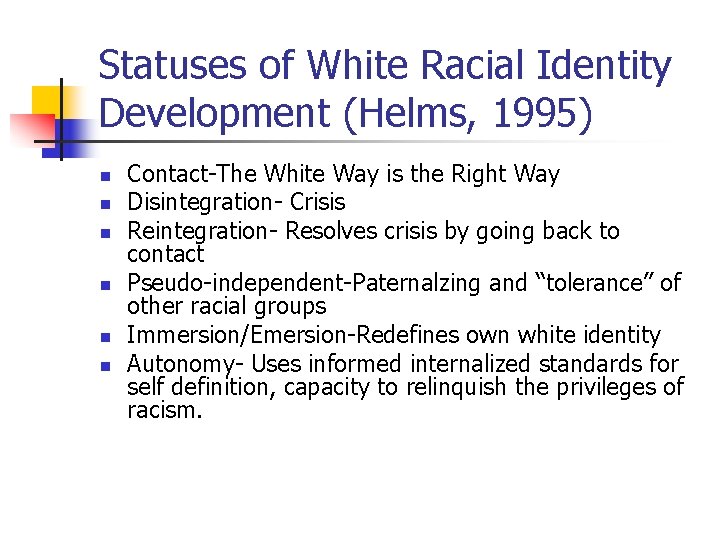
Statuses of White Racial Identity Development (Helms, 1995) n n n Contact-The White Way is the Right Way Disintegration- Crisis Reintegration- Resolves crisis by going back to contact Pseudo-independent-Paternalzing and “tolerance” of other racial groups Immersion/Emersion-Redefines own white identity Autonomy- Uses informed internalized standards for self definition, capacity to relinquish the privileges of racism.
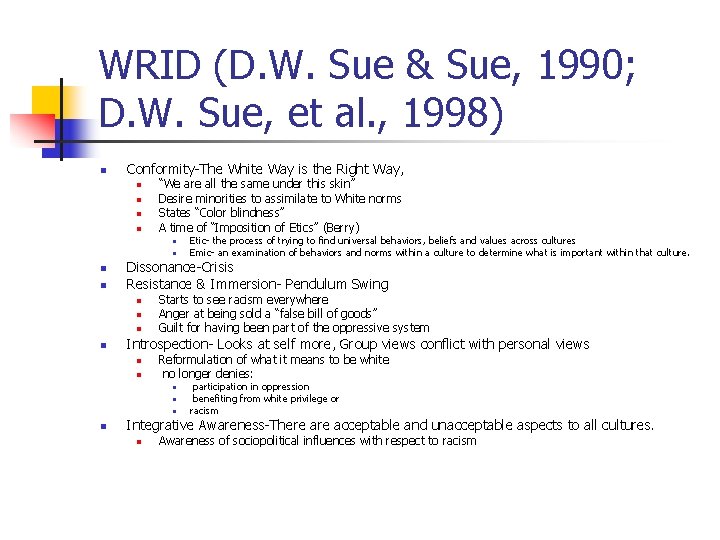
WRID (D. W. Sue & Sue, 1990; D. W. Sue, et al. , 1998) n Conformity-The White Way is the Right Way, n n “We are all the same under this skin” Desire minorities to assimilate to White norms States “Color blindness” A time of “Imposition of Etics” (Berry) n n Dissonance-Crisis Resistance & Immersion- Pendulum Swing n n Starts to see racism everywhere Anger at being sold a “false bill of goods” Guilt for having been part of the oppressive system Introspection- Looks at self more, Group views conflict with personal views n n Reformulation of what it means to be white no longer denies: n n Etic- the process of trying to find universal behaviors, beliefs and values across cultures Emic- an examination of behaviors and norms within a culture to determine what is important within that culture. participation in oppression benefiting from white privilege or racism Integrative Awareness-There acceptable and unacceptable aspects to all cultures. n Awareness of sociopolitical influences with respect to racism
Latino Dimensions of Family and Personal Identity
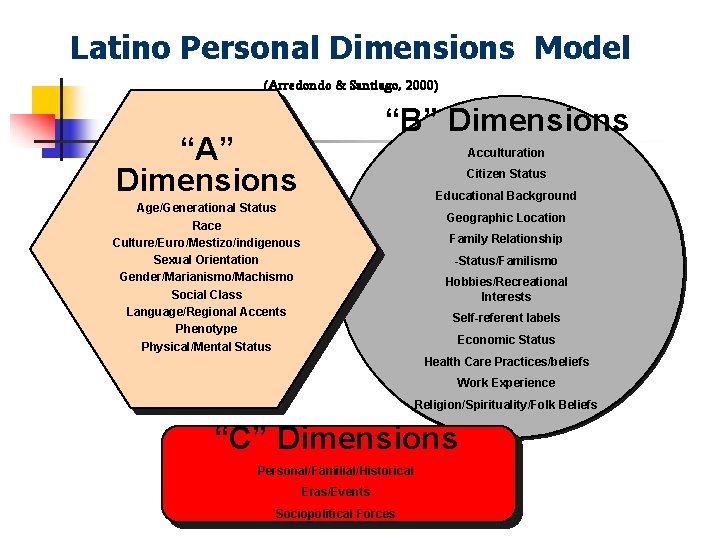
Latino Personal Dimensions Model (Arredondo & Santiago, 2000) “B” Dimensions “A” Dimensions Acculturation Citizen Status Educational Background Age/Generational Status Race Culture/Euro/Mestizo/indigenous Sexual Orientation Gender/Marianismo/Machismo Social Class Language/Regional Accents Phenotype Physical/Mental Status Geographic Location Family Relationship -Status/Familismo Hobbies/Recreational Interests Self-referent labels Economic Status Health Care Practices/beliefs Work Experience Religion/Spirituality/Folk Beliefs “C” Dimensions Personal/Familial/Historical Eras/Events Sociopolitical Forces
Biracial Identity Development Root, Maria (1990). Resolving “other” status: Identity development of biracial individuals. Women & Therapy, 9, 185 -205.
Assumptions n n U. S. Culture divided into white and nonwhite White is considered superior to nonwhite Privileges and power assumed by whites are desired by non-whites Racial hierarchy based on similarity to “norm”
U. S. Culture Oppressive to biracial people n n n Biracial persons given little choice as to how they identify Society is silent on biracialism Similarity to whites may foster isolation from communities of color because of history of racism perpetrated by whites.
It is the marginal status imposed by society rather than the objective mixed race of biracial individuals which poses a severe stress to positive identity development (p. 188).
Developmental Challenges n n Childhood Awareness of race and the response of people in a child’s environment Impact influenced by social relationships and the positive/negative messages communicated by family.
n n n Adolescence and search for identity may result in increased feelings of alienation Dating is complicated Passing becomes an issue Tokenism (used by white organizations) Stereotypes (exotic, threatening)
Strategies for Resolution of Other Status n n Acceptance of identity society assigns Identification with both racial groups Identification with a single racial group Identification with a new racial group
Themes Common to Resolution – Biracial person: n n n Accepts both sides of her or his racial heritage Has the right to declare how they wish to identify themselves – even if this is discrepant from others’ views Develops strategies for coping with social resistance or questions about racial identity so that external bias is not internalized.
n n Resolution strategies can change over a lifetime Looking for acceptance outside of oneself keeps the biracial person trying to live by ‘irrational’ racial classification rules which may keep her or him marginal in any group (p. 203).
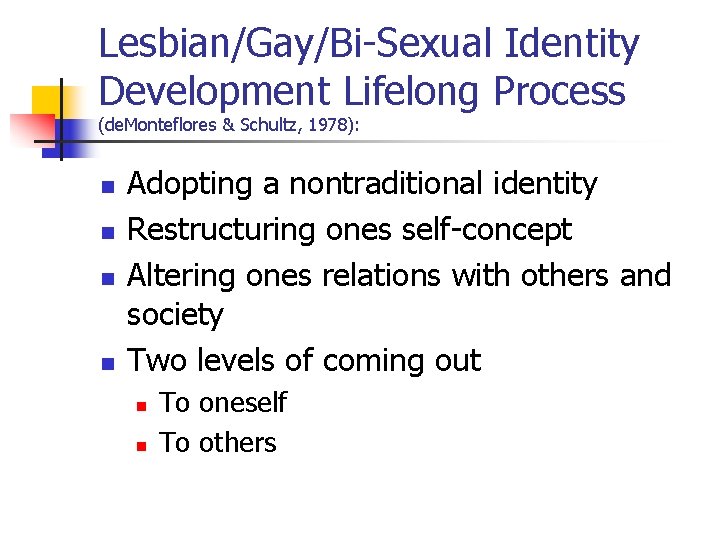
Lesbian/Gay/Bi-Sexual Identity Development Lifelong Process (de. Monteflores & Schultz, 1978): n n Adopting a nontraditional identity Restructuring ones self-concept Altering ones relations with others and society Two levels of coming out n n To oneself To others
All aspects of identity will have development that accompany them. Peter Russell and Theo Burns plan to come and speak to you more about working with GBLT clients. For now, let’s look at some of the models available
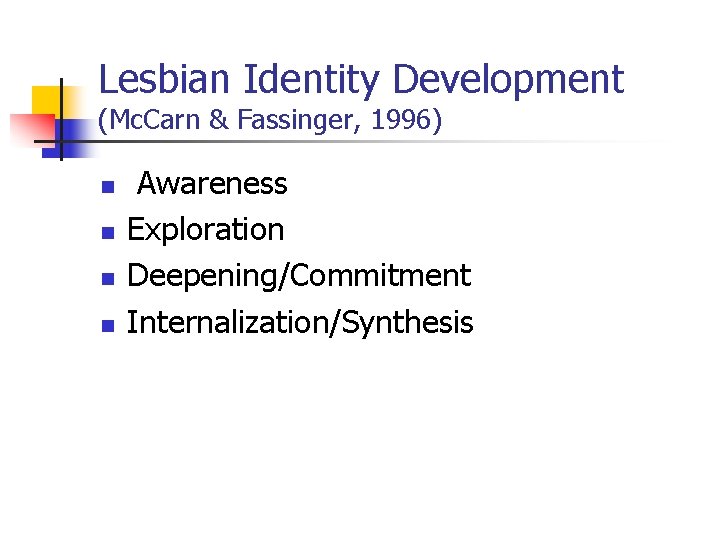
Lesbian Identity Development (Mc. Carn & Fassinger, 1996) n n Awareness Exploration Deepening/Commitment Internalization/Synthesis
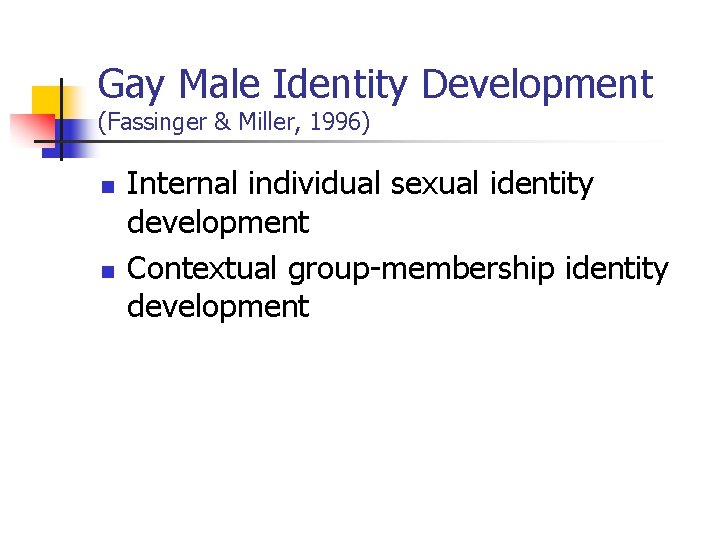
Gay Male Identity Development (Fassinger & Miller, 1996) n n Internal individual sexual identity development Contextual group-membership identity development
Bi-Sexual Identity Development ? n A Proposed Model of Bisexual Identity Development the Elaborates on Experiential Differences of Women and Men Page Range: 68 - 91 DOI: 10. 1300/J 159 v 02 n 04_05 Tom Brown Bisexuals have experiences that make them unique as a group. Thus, it would seem reasonable to have a model of identity development for this group. This article reviews theoretical and empirical models of lesbian, gay, and bisexual identity development. A new model of bisexual identity development is then proposed, containing research from lesbian and gay identity development models to serve as hypotheses. These hypotheses serve to help better understand how women and men might experience the bisexual identity development process differently.
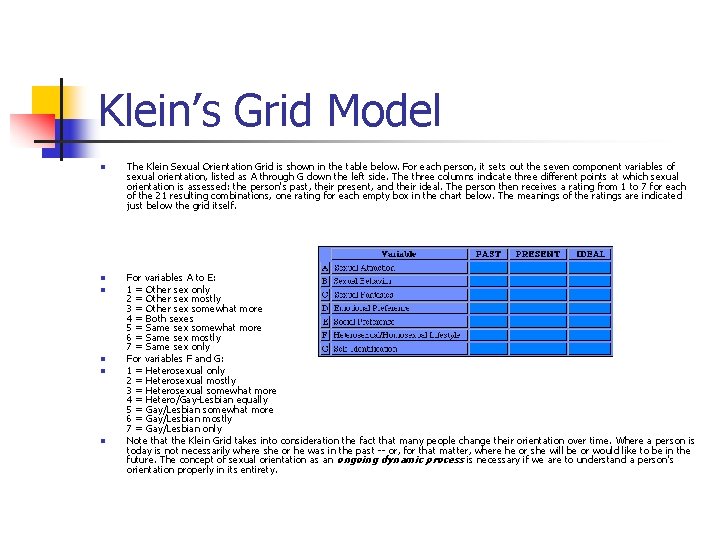
Klein’s Grid Model n n n The Klein Sexual Orientation Grid is shown in the table below. For each person, it sets out the seven component variables of sexual orientation, listed as A through G down the left side. The three columns indicate three different points at which sexual orientation is assessed: the person's past, their present, and their ideal. The person then receives a rating from 1 to 7 for each of the 21 resulting combinations, one rating for each empty box in the chart below. The meanings of the ratings are indicated just below the grid itself. For variables A to E: 1 = Other sex only 2 = Other sex mostly 3 = Other sex somewhat more 4 = Both sexes 5 = Same sex somewhat more 6 = Same sex mostly 7 = Same sex only For variables F and G: 1 = Heterosexual only 2 = Heterosexual mostly 3 = Heterosexual somewhat more 4 = Hetero/Gay-Lesbian equally 5 = Gay/Lesbian somewhat more 6 = Gay/Lesbian mostly 7 = Gay/Lesbian only Note that the Klein Grid takes into consideration the fact that many people change their orientation over time. Where a person is today is not necessarily where she or he was in the past -- or, for that matter, where he or she will be or would like to be in the future. The concept of sexual orientation as an ongoing dynamic process is necessary if we are to understand a person's orientation properly in its entirety.
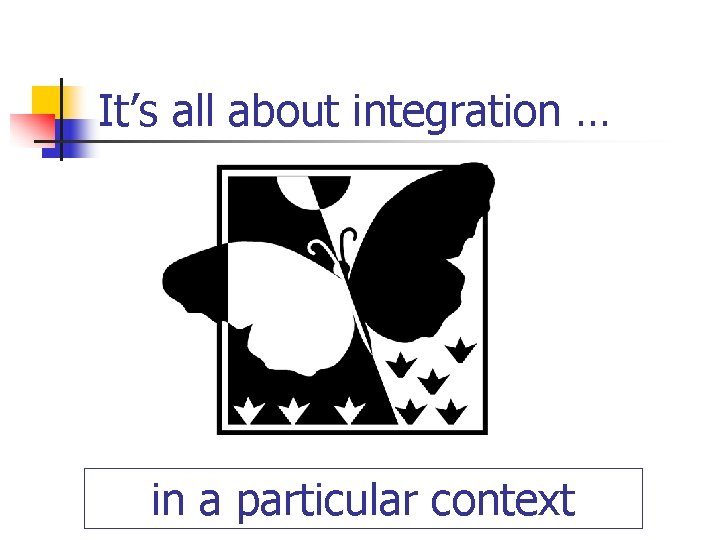
It’s all about integration … in a particular context
Therapist/Client Identity Development Interactions n n It is therapist’s job to advance their own identity development in the areas of the isms, since they are in the position of power and ethically mandated to be not only competent, but culturally (which integrates all forms of diversity) competent. And what does Spiderman say comes with power? ?
What if a therapist does not? n n n Let’s consider a case in which therapist is at the conformity stage and the client is at the resistance state. Let’s move beyond the current literature that speaks as if all therapists are of the dominant culture of identities. OK let’s play with some more combinations….