I hear and I forget I see and
- Slides: 36
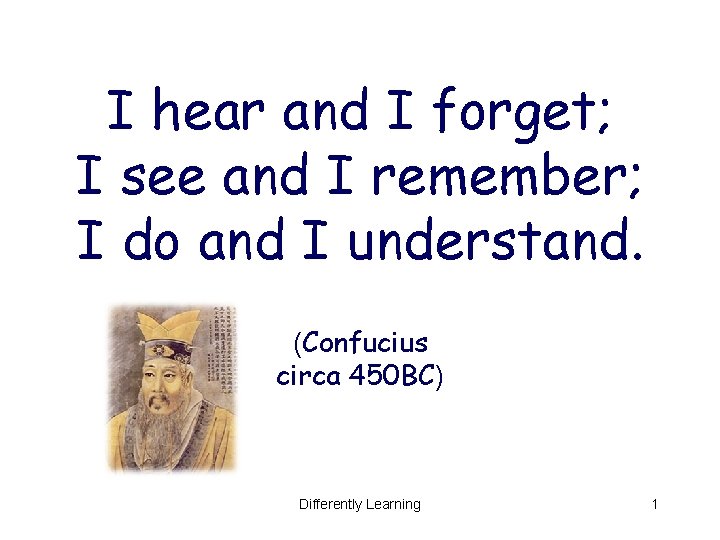
I hear and I forget; I see and I remember; I do and I understand. (Confucius circa 450 BC) Differently Learning 1
Learning differently Plan of session Individual activity Learning Styles Case studies in group work Differently Learning
Outcomes for this session • To define learning styles and learning strategies • To explore multisensory methods of teaching delivery • To relate multisensory learning to different contexts. • To emphasize good memory strategies Differently Learning 3
The teacher who influenced me most • Take a few minutes to think of one particular teacher who brought learning to life at any point in your education • How do you remember that person? • What special features did that teacher possess? Differently Learning 4
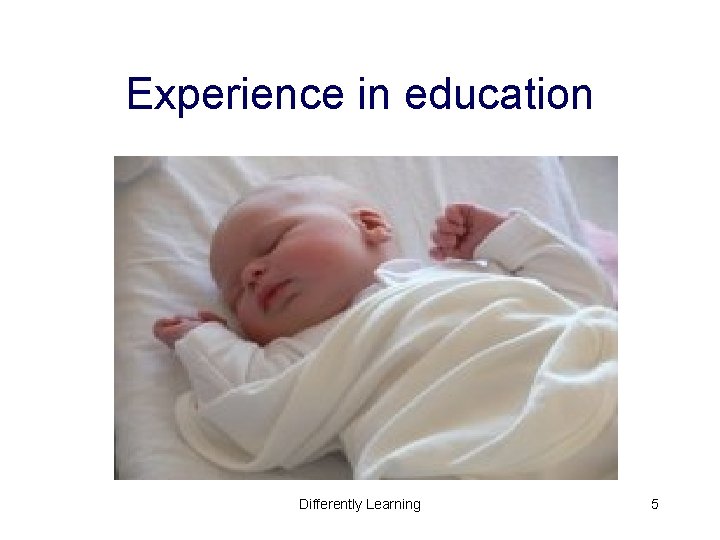
Experience in education Differently Learning 5
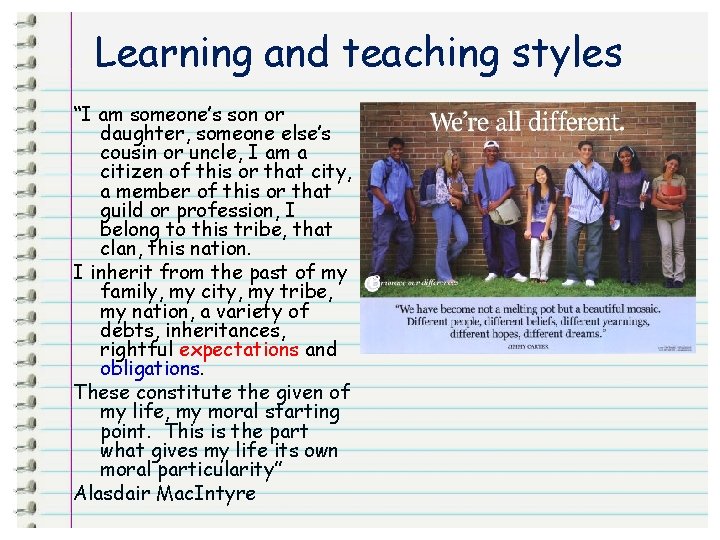
Learning and teaching styles “I am someone’s son or daughter, someone else’s cousin or uncle, I am a citizen of this or that city, a member of this or that guild or profession, I belong to this tribe, that clan, this nation. I inherit from the past of my family, my city, my tribe, my nation, a variety of debts, inheritances, rightful expectations and obligations. These constitute the given of my life, my moral starting point. This is the part what gives my life its own moral particularity” Alasdair Mac. Intyre
What is learning? r u o i v a h e b f o n o i t a c i f i r d o o e m c i e t c a Th r p , g n i a r t h g u o r h t e c n e i r expe Department of Materials Science and Engineering
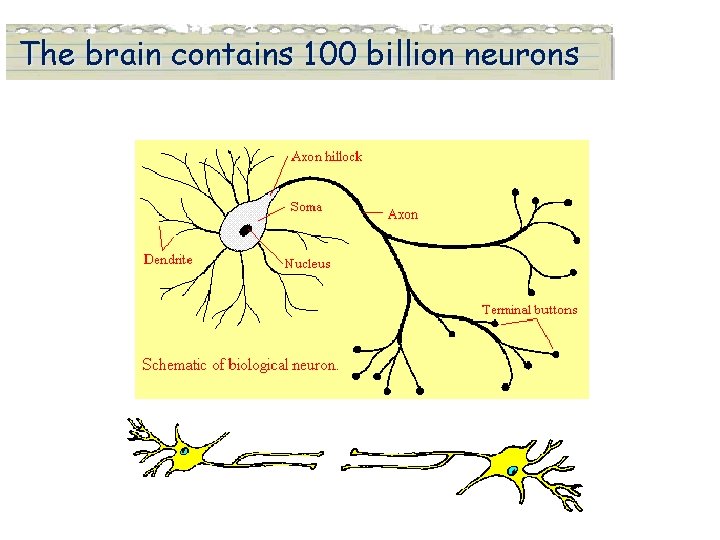
The brain contains 100 billion neurons
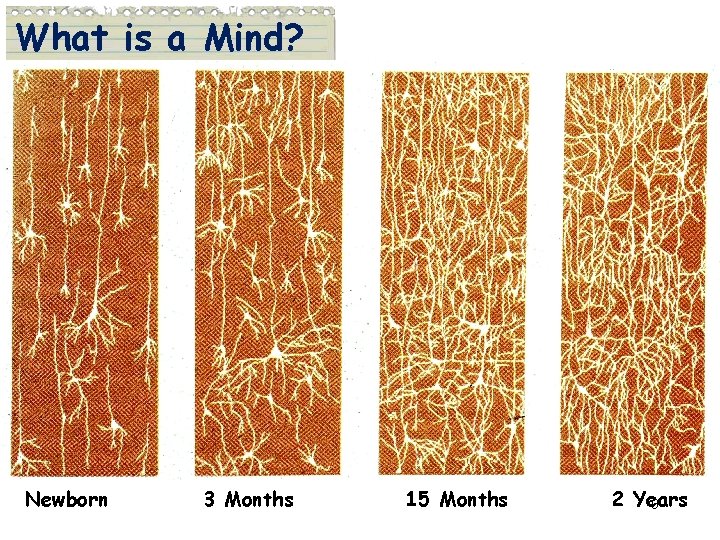
What is a Mind? Newborn 3 Months 15 Months 2 Years 9
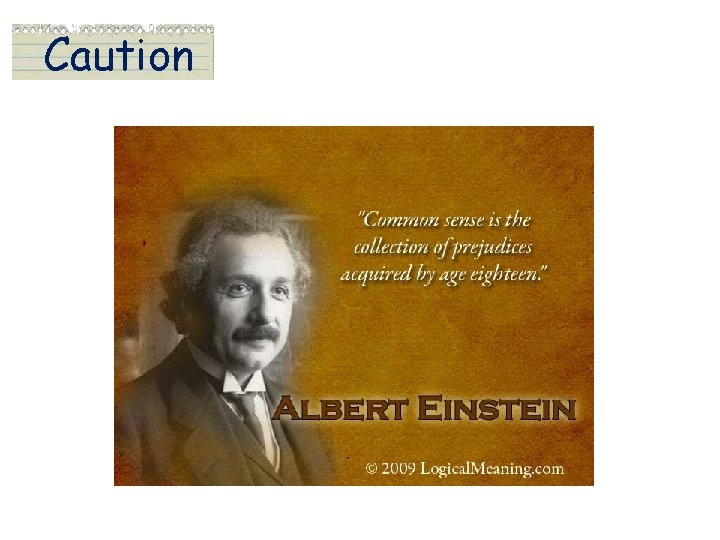
Caution
Learning Styles • Visual • Auditory • Kinaesthetic • Wholistic Differently Learning 11
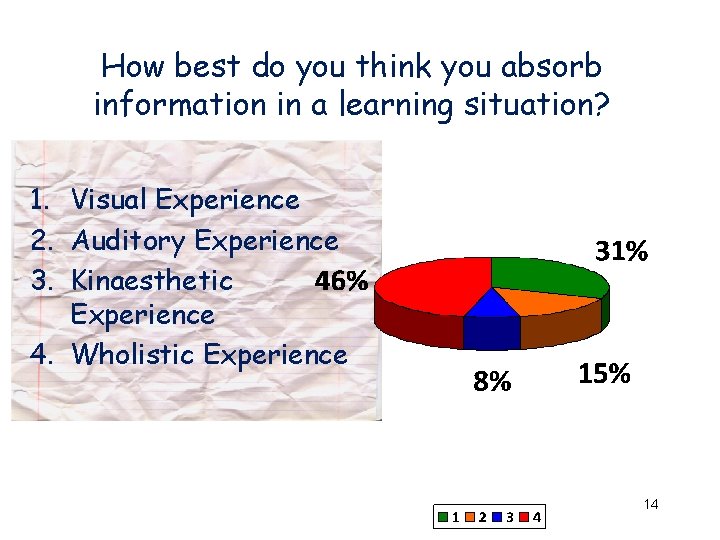
How best do you think you absorb information in a learning situation? 1. Visual Experience 2. Auditory Experience 3. Kinaesthetic Experience 4. Wholistic Experience 14
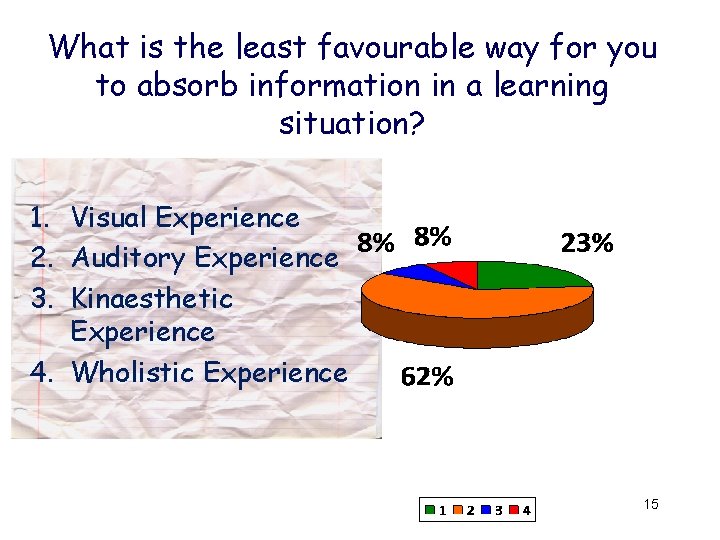
What is the least favourable way for you to absorb information in a learning situation? 1. Visual Experience 2. Auditory Experience 3. Kinaesthetic Experience 4. Wholistic Experience 15
30 SECONDS! 16
Learning Styles & Multisensory Techniques • Visual • Auditory • Kinaesthetic • Wholistic Differently Learning 17
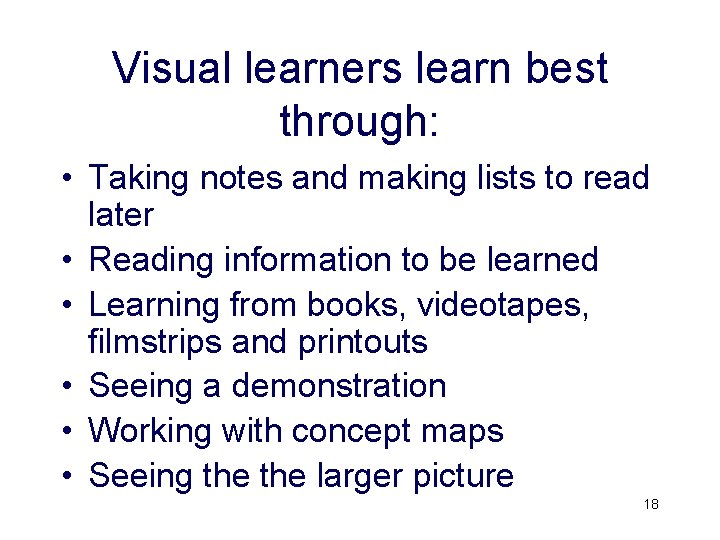
Visual learners learn best through: • Taking notes and making lists to read later • Reading information to be learned • Learning from books, videotapes, filmstrips and printouts • Seeing a demonstration • Working with concept maps • Seeing the larger picture 18
Strategies for visual learners Create concept maps /flow charts • Use videos and photos • Format texts and notes • Use colours, underline and circle texts • Visualisation • Use models, actual or virtual • Use symbols to back up verbally-presented information 19
Activity to demonstrate Visual Learning Differently Learning 20
Auditory learners learn best through: • • • Listening to lectures and audio sources Debating and discussing ideas Preparing oral presentations for others Using speech recognition software Finding alternative ways of accessing texts 21
Strategies for auditory learners • Recording notes through speech recognition software • Recording lectures to listen again • Reading aloud or singing information • Revising by recording and replaying information • Making a list of keywords • Compiling a subject-specific vocabulary 22
Activity to demonstrate auditory techniques Differently Learning 23
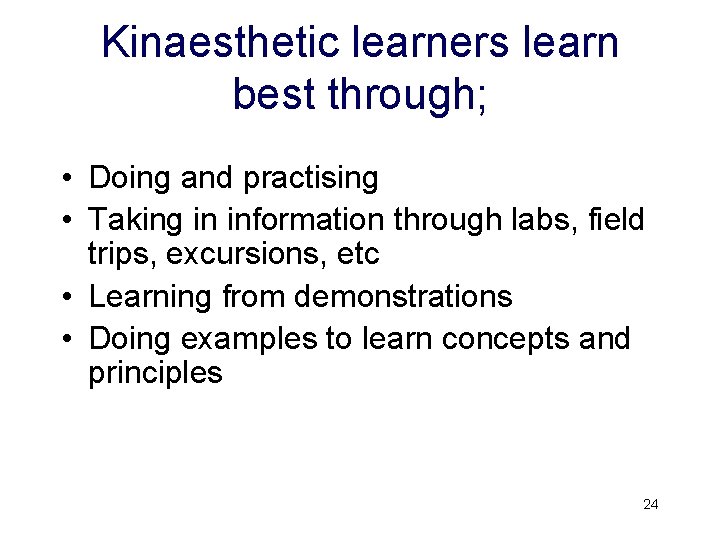
Kinaesthetic learners learn best through; • Doing and practising • Taking in information through labs, field trips, excursions, etc • Learning from demonstrations • Doing examples to learn concepts and principles 24
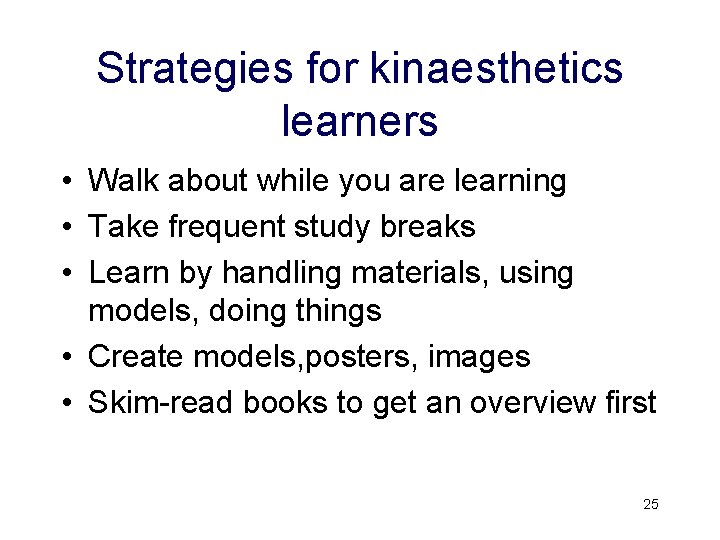
Strategies for kinaesthetics learners • Walk about while you are learning • Take frequent study breaks • Learn by handling materials, using models, doing things • Create models, posters, images • Skim-read books to get an overview first 25
Activity to demonstrate kinaesthetic Differently Learning 26
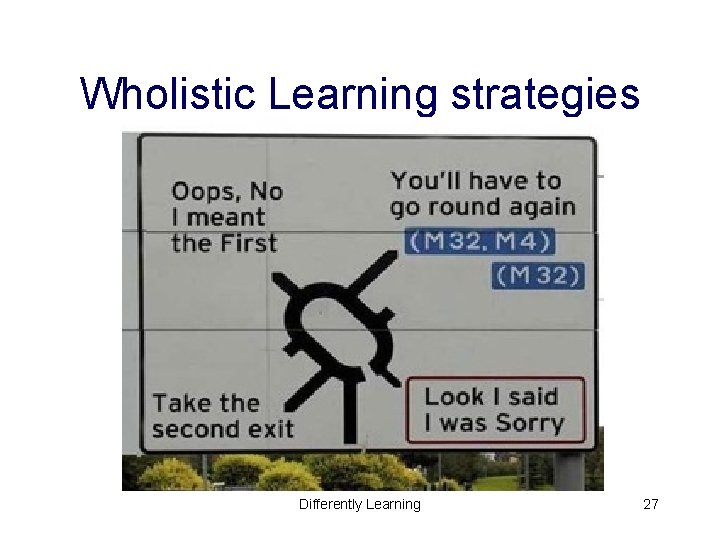
Wholistic Learning strategies Differently Learning 27
28
Case Studies • In your groups, consider the case study and suggest a solution Differently Learning 29
Useful websites • www. mindtools. com/memory. html • http: //www. speedreading. com/ • http: //www. brainhe. com/students/types/dyslexia. html • www. premiumhealth. com/memory/tip. html • http: //www. mathcentre. ac. uk • http: //www. bbc. co. uk/skillswise/ • http: //www. lumosity. com/app/v 4/personalization Differently Learning 30
Bibliography • Mc. Kissock, C. Great Ways to Learn Anatomy and Physiology (2009)Palgrave Macmillan, Basingstoke. • Maier P. , Anna Barney & Geraldine Price, Study Skills for Science, Engineering & Technology Students (2009) Pearson, Harlow. • Cottrell, Stella. The Study Skills Handbook, 3 rd Ed (2008) Palgrave Macmillan, Basingstoke. • Mortimore , T. Dyslexia and Learning Style - a Practitioner’s Handbook, 2 nd Ed. (2008) Wiley, Chichester. Differently Learning 31
Case Study 2 Physics Differently Learning
Case study 3 Biomedical Science
Case Study 4 • Engineering 34
Case Study 5 • English Literature 35
Acknowledgements Thanks are due to Professor Suzan Greenfield for the use of slide no 9. Learning Differently 36