Human Resource Management Gaining a Competitive Advantage Chapter
- Slides: 21
Human Resource Management: Gaining a Competitive Advantage Chapter 10 Employee Separation and Retention Mc. Graw-Hill/Irwin Copyright © 2010 by the Mc. Graw-Hill Companies, Inc. All rights reserved.
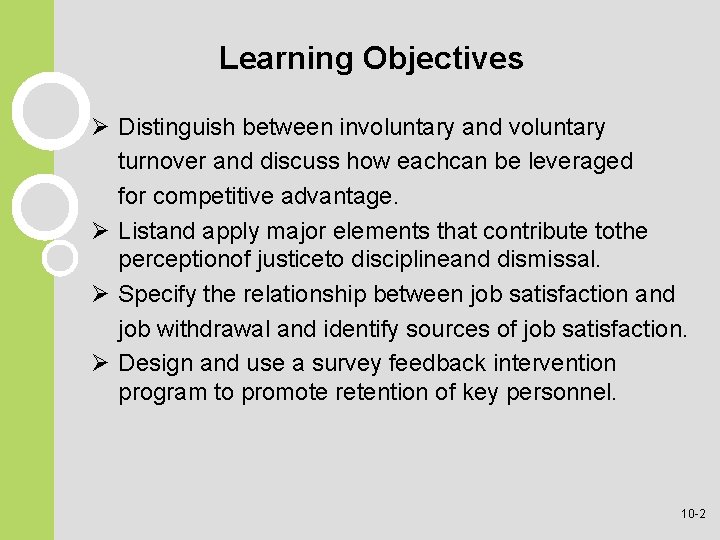
Learning Objectives Ø Distinguish between involuntary and voluntary turnover and discuss how eachcan be leveraged for competitive advantage. Ø Listand apply major elements that contribute tothe perceptionof justiceto disciplineand dismissal. Ø Specify the relationship between job satisfaction and job withdrawal and identify sources of job satisfaction. Ø Design and use a survey feedback intervention program to promote retention of key personnel. 10 -2
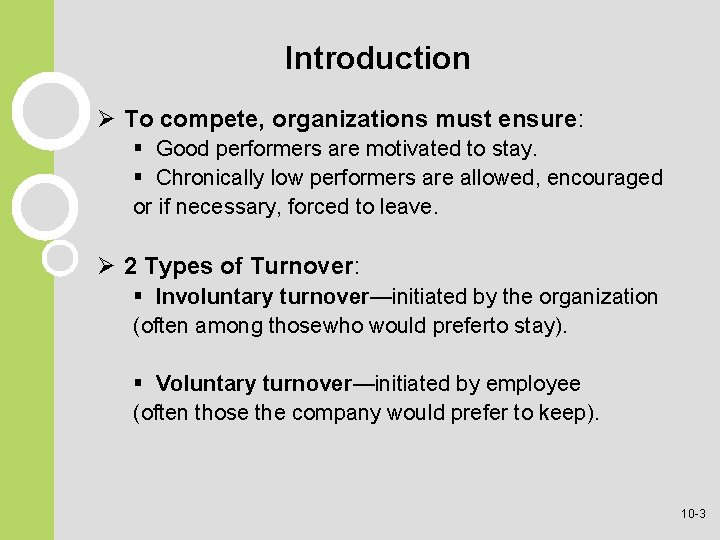
Introduction Ø To compete, organizations must ensure: § Good performers are motivated to stay. § Chronically low performers are allowed, encouraged or if necessary, forced to leave. Ø 2 Types of Turnover: § Involuntary turnover—initiated by the organization (often among thosewho would preferto stay). § Voluntary turnover—initiated by employee (often those the company would prefer to keep). 10 -3
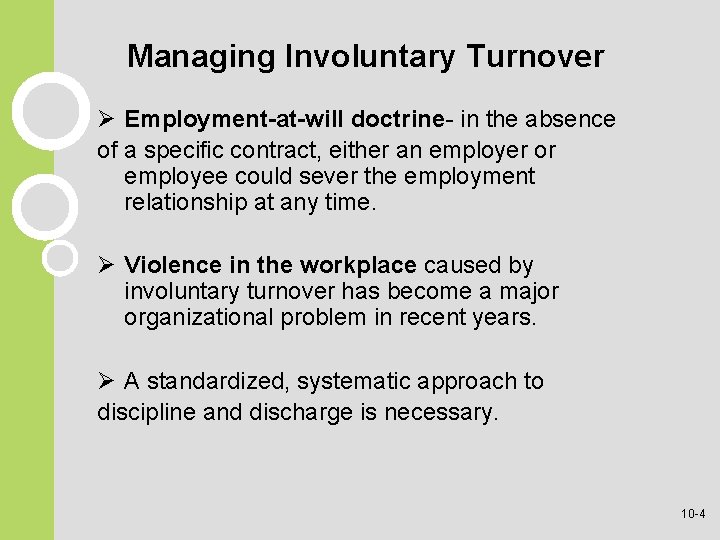
Managing Involuntary Turnover Ø Employment-at-will doctrine- in the absence of a specific contract, either an employer or employee could sever the employment relationship at any time. Ø Violence in the workplace caused by involuntary turnover has become a major organizational problem in recent years. Ø A standardized, systematic approach to discipline and discharge is necessary. 10 -4
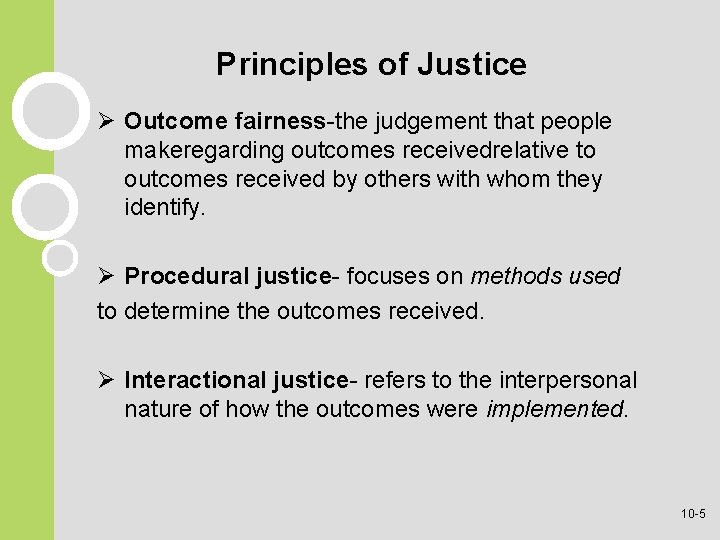
Principles of Justice Ø Outcome fairness-the judgement that people makeregarding outcomes receivedrelative to outcomes received by others with whom they identify. Ø Procedural justice- focuses on methods used to determine the outcomes received. Ø Interactional justice- refers to the interpersonal nature of how the outcomes were implemented. 10 -5
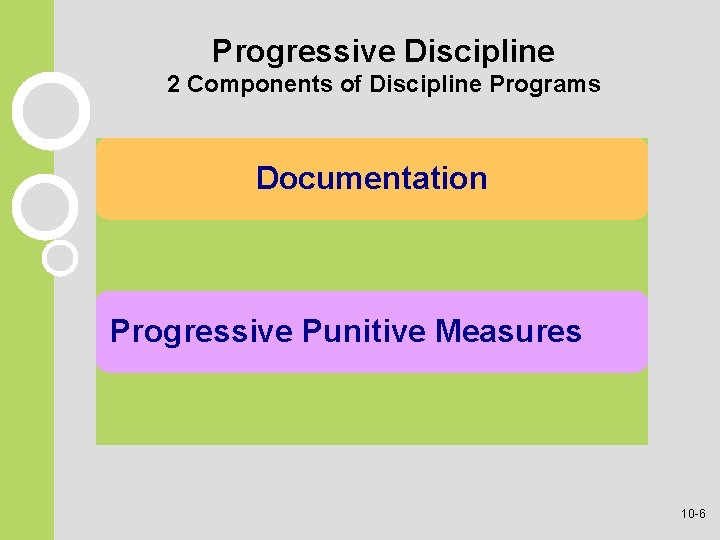
Progressive Discipline 2 Components of Discipline Programs Documentation Progressive Punitive Measures 10 -6
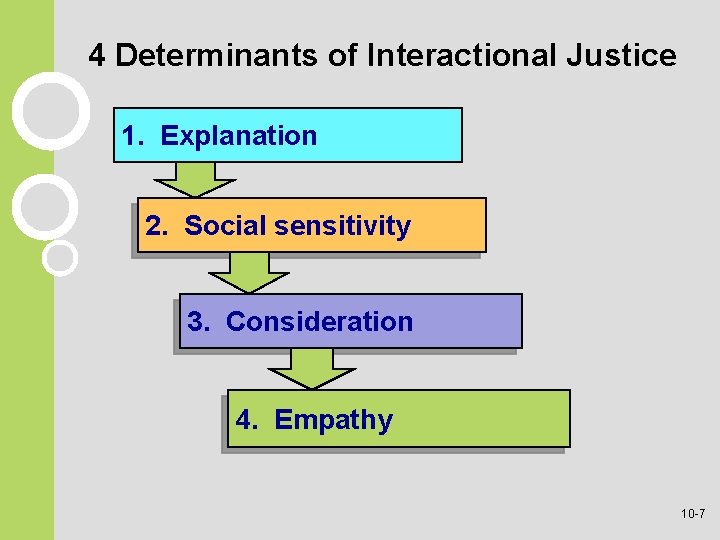
4 Determinants of Interactional Justice 1. Explanation 2. Social sensitivity 3. Consideration 4. Empathy 10 -7
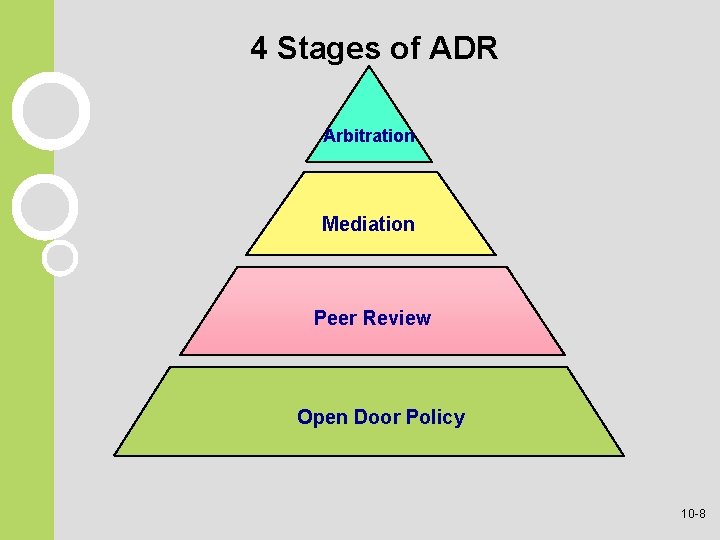
4 Stages of ADR Arbitration Mediation Peer Review Open Door Policy 10 -8
Employee Assistance Programs Ø EAPs attempt to ameliorate problems encountered by workers who are drug dependent, alcoholic, or psychologically troubled. § EAPs are usually identified in official documents published by the employer. § There are several issues in controversy regarding EAPs. 10 -9
Outplacement Counseling Ø Helps displaced employees manage the transition from one job to another. Ø Services such as job search support, résumé critiques, job interviewing training and networking opportunities may be provided in-house or through an outside source. Ø Aimed at helping people realize that other opportunities exist. 10 -10
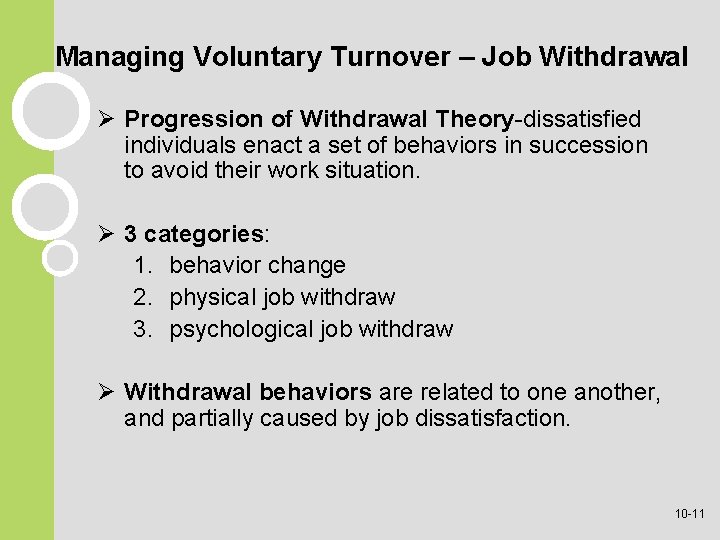
Managing Voluntary Turnover – Job Withdrawal Ø Progression of Withdrawal Theory-dissatisfied individuals enact a set of behaviors in succession to avoid their work situation. Ø 3 categories: 1. behavior change 2. physical job withdraw 3. psychological job withdraw Ø Withdrawal behaviors are related to one another, and partially caused by job dissatisfaction. 10 -11
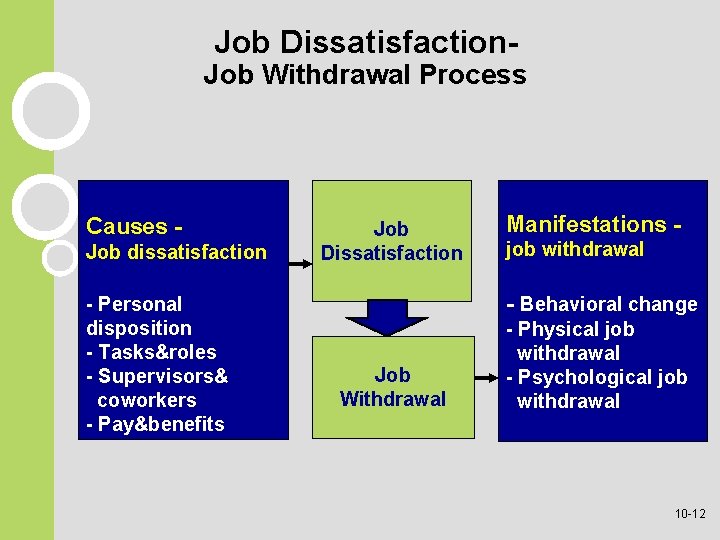
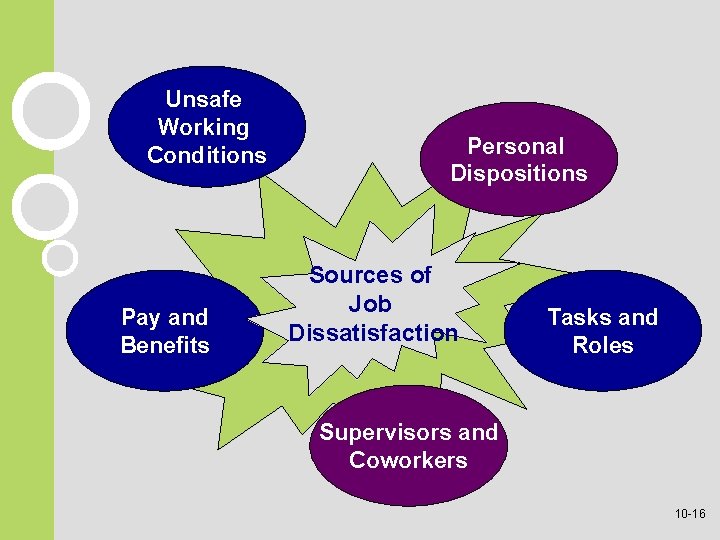
Job Dissatisfaction- Job Withdrawal Process Causes Job dissatisfaction - Personal disposition - Tasks&roles - Supervisors& coworkers - Pay&benefits Job Dissatisfaction Manifestations job withdrawal - Behavioral change Job Withdrawal - Physical job withdrawal - Psychological job withdrawal 10 -12
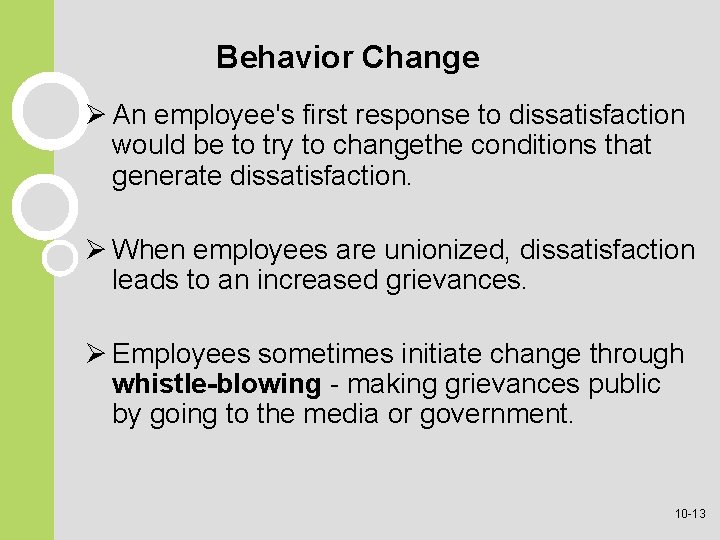
Behavior Change Ø An employee's first response to dissatisfaction would be to try to changethe conditions that generate dissatisfaction. Ø When employees are unionized, dissatisfaction leads to an increased grievances. Ø Employees sometimes initiate change through whistle-blowing - making grievances public by going to the media or government. 10 -13
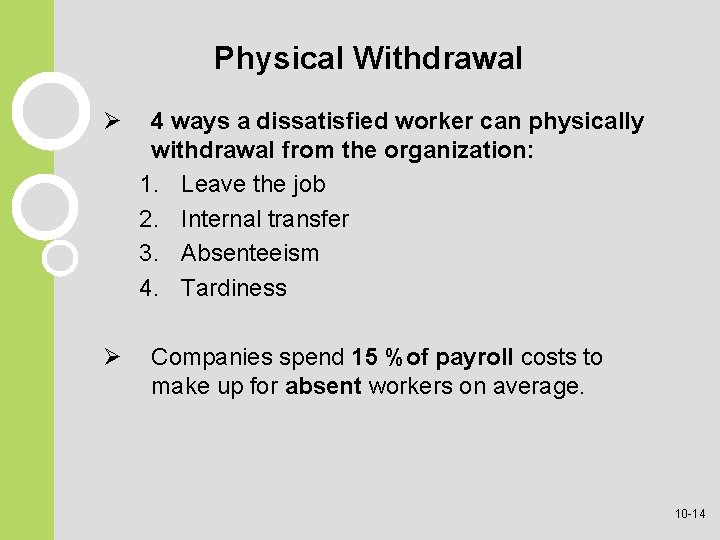
Physical Withdrawal Ø Ø 4 ways a dissatisfied worker can physically withdrawal from the organization: 1. Leave the job 2. Internal transfer 3. Absenteeism 4. Tardiness Companies spend 15 %of payroll costs to make up for absent workers on average. 10 -14
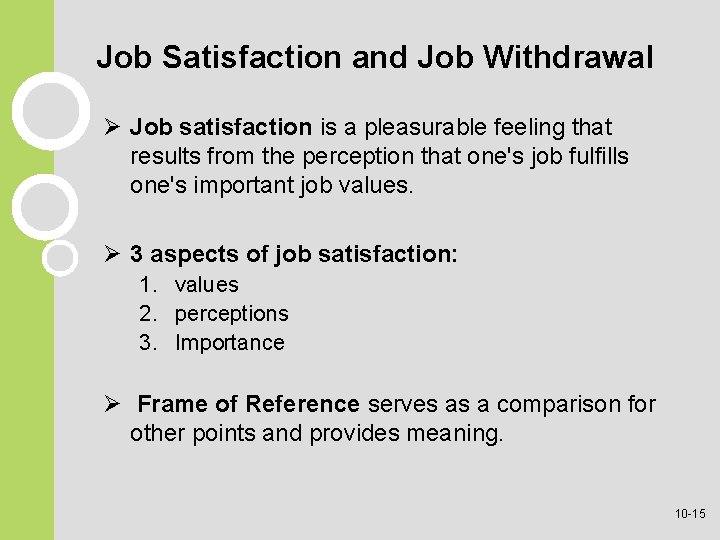
Job Satisfaction and Job Withdrawal Ø Job satisfaction is a pleasurable feeling that results from the perception that one's job fulfills one's important job values. Ø 3 aspects of job satisfaction: 1. values 2. perceptions 3. Importance Ø Frame of Reference serves as a comparison for other points and provides meaning. 10 -15
Unsafe Working Conditions Pay and Benefits Personal Dispositions Sources of Job Dissatisfaction Tasks and Roles Supervisors and Coworkers 10 -16
Unsafe Working Conditions Ø Each employee has a right to safe working conditions under the Occupational Safety and Health Act of 1970 (OSHA). Ø Financial bonuses linked to specific safety related goals help keep employees focused and pay for themselves over time. Ø Firms that emphasize safety send workers a clear signal that they care about them. 10 -17
Sources of Job Dissatisfaction Ø Personal Dispositions § Negative affectivity is a dispositional dimensionthat reflects pervasive individual differences in satisfaction with any and all aspects of life. Ø Tasks and Roles § The nature of the task itself is the key predictor of job dissatisfaction. § Job Rotation § Prosocial Motivation 10 -18
Sources of Job Dissatisfaction Ø Supervisors and Coworkers § A person may be satisfied withhis or her supervisor and coworkersdue to: – shared values, attitudes, and philosophies, – strong social support Ø Pay and Benefits § For many people, pay is a reflection of self worth, so pay satisfaction takes on critical significance when it comes to retention. 10 -19
Survey Feedback Interventions Ø Surveys: § emphasize overall satisfaction. § assess the impact ofpolicy changes. § allow the company to compare itself with others in the same industry. § allow the company to check for differences between units and benchmark “best practices. ” Ø If people fail to see timely actions taken on matters identified as problems in the survey, satisfaction is likely to be lower than it would be in the absence of a survey. Ø Any strategic retention policy has to consider surveying people who are about to become ex-employees. 10 -20
Summary Ø Involuntary turnover reflects a separation initiated by the organization. Ø Voluntary turnover reflects a separation initiated by the individual. It can be minimized by measuring, monitoring and surveying, then addressing problems found in the surveys. Ø Organizations can gain competitive advantage by strategically managing the separation process. Ø Retaliatory reactions to organizational discipline and dismissal decisions can be minimized. 10 -21