HOLOCAUST THE THREE STAGES OF NAZI PERSECUTION OF
- Slides: 23
HOLOCAUST THE THREE STAGES OF NAZI PERSECUTION OF THE JEWS
Background Anti-Semitism (words or actions that are anti-Jewish) goes back thousands of years to the times of the Israelites During the Middle Ages, Jews in Europe were restricted to certain sections of cities called ghettoes Anti-Semitism was not limited to Nazi Germany during the 20 th century
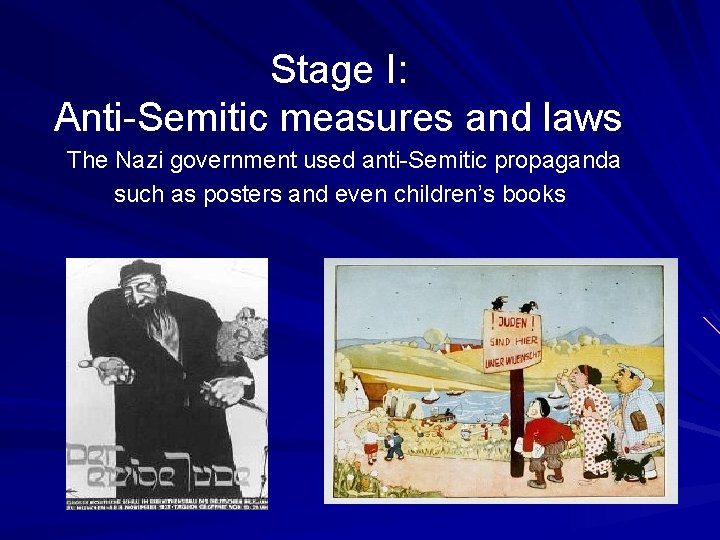
Stage I: Anti-Semitic measures and laws The Nazi government used anti-Semitic propaganda such as posters and even children’s books
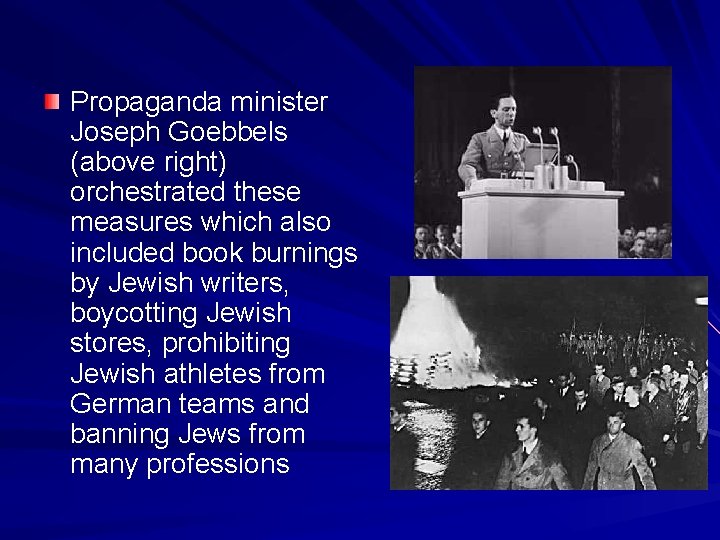
Propaganda minister Joseph Goebbels (above right) orchestrated these measures which also included book burnings by Jewish writers, boycotting Jewish stores, prohibiting Jewish athletes from German teams and banning Jews from many professions
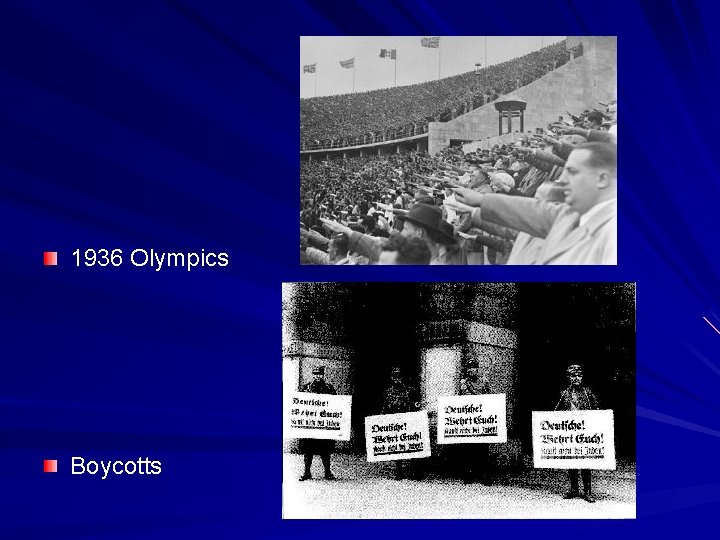
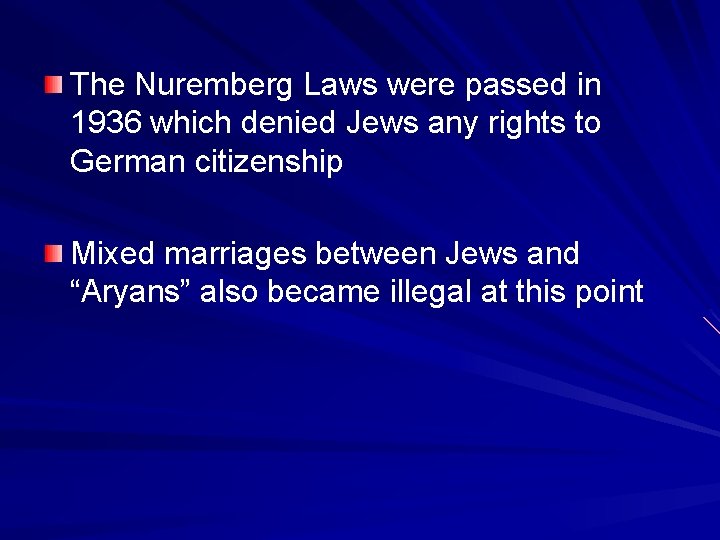
1936 Olympics Boycotts
The Nuremberg Laws were passed in 1936 which denied Jews any rights to German citizenship Mixed marriages between Jews and “Aryans” also became illegal at this point
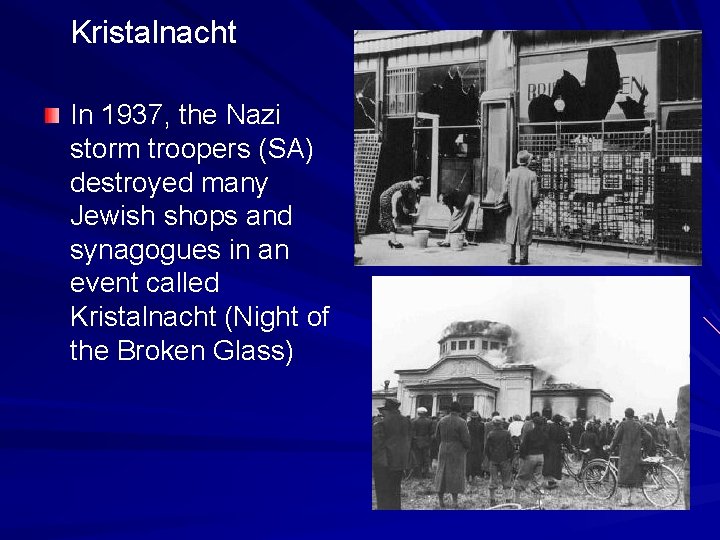
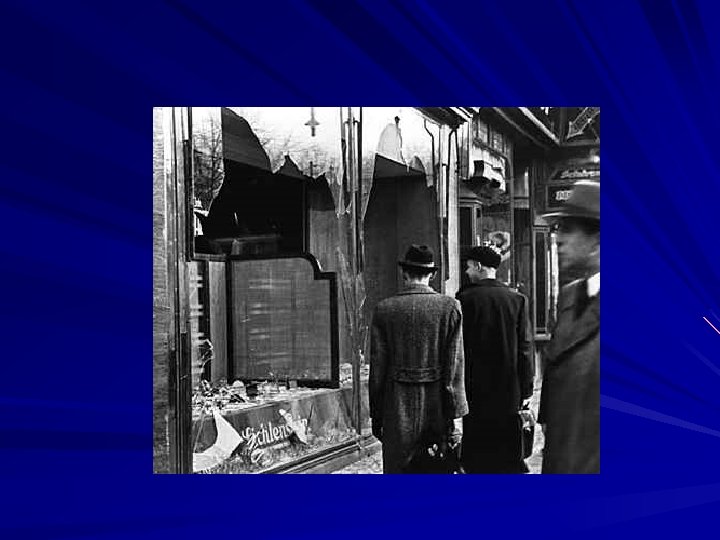
Kristalnacht In 1937, the Nazi storm troopers (SA) destroyed many Jewish shops and synagogues in an event called Kristalnacht (Night of the Broken Glass)
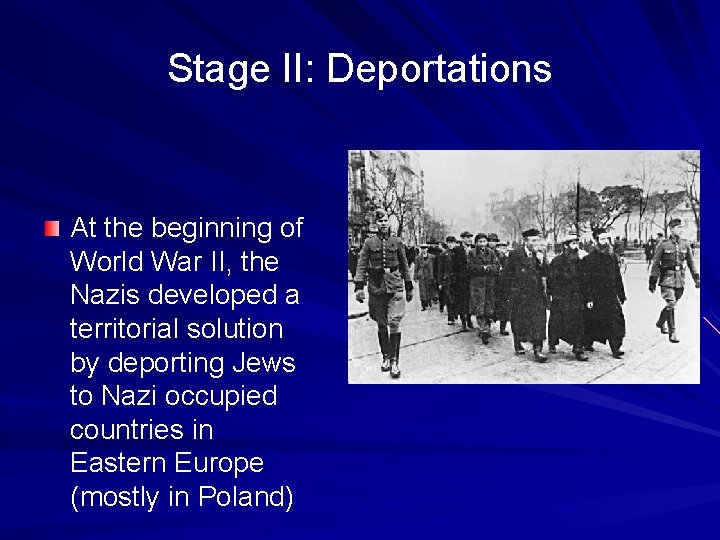
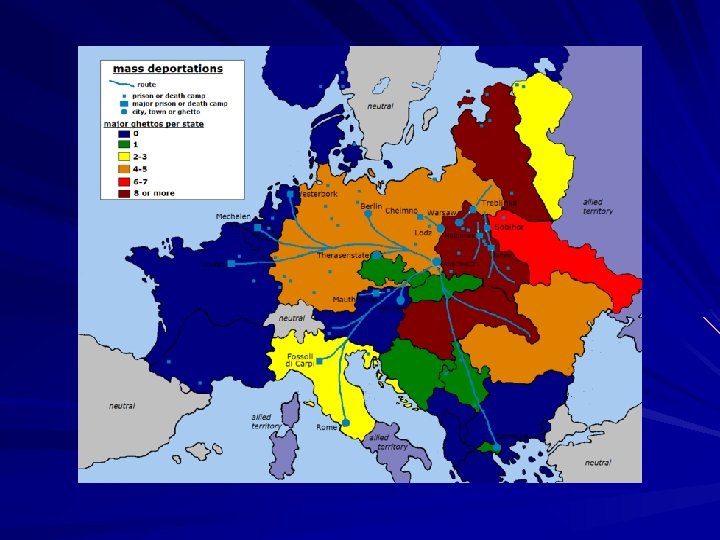
Stage II: Deportations At the beginning of World War II, the Nazis developed a territorial solution by deporting Jews to Nazi occupied countries in Eastern Europe (mostly in Poland)
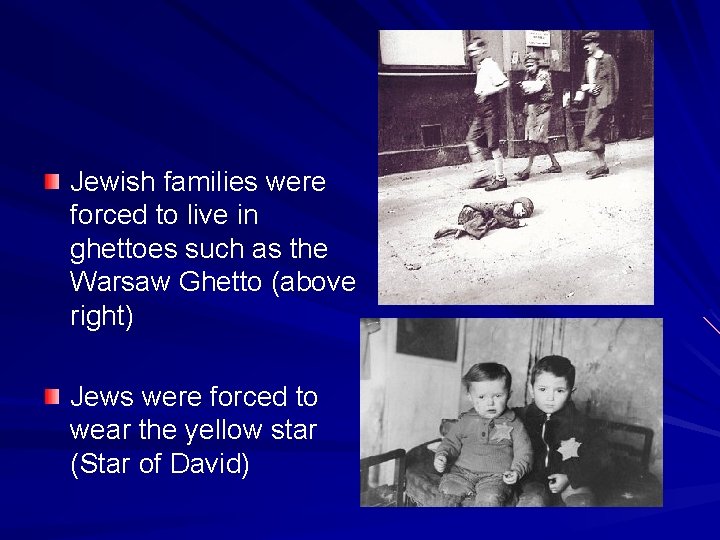
Jewish families were forced to live in ghettoes such as the Warsaw Ghetto (above right) Jews were forced to wear the yellow star (Star of David)
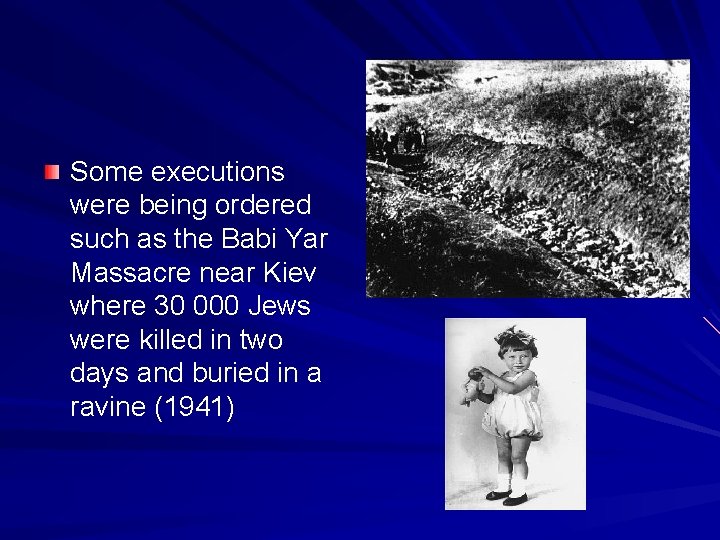
Some executions were being ordered such as the Babi Yar Massacre near Kiev where 30 000 Jews were killed in two days and buried in a ravine (1941)
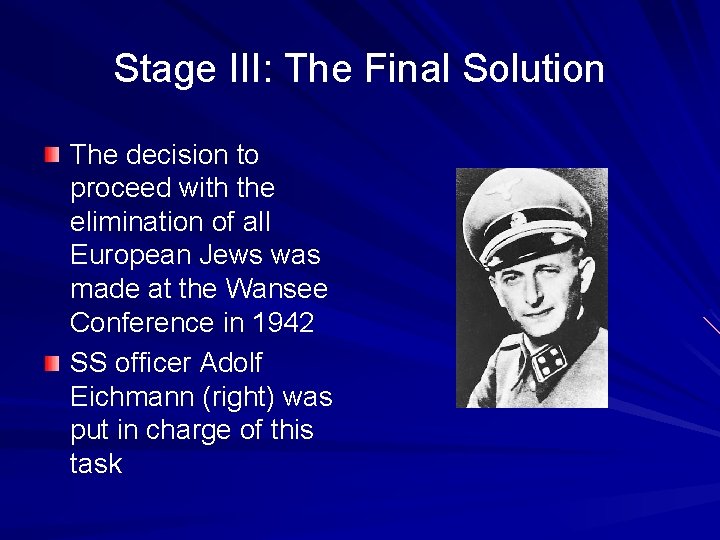
Stage III: The Final Solution The decision to proceed with the elimination of all European Jews was made at the Wansee Conference in 1942 SS officer Adolf Eichmann (right) was put in charge of this task
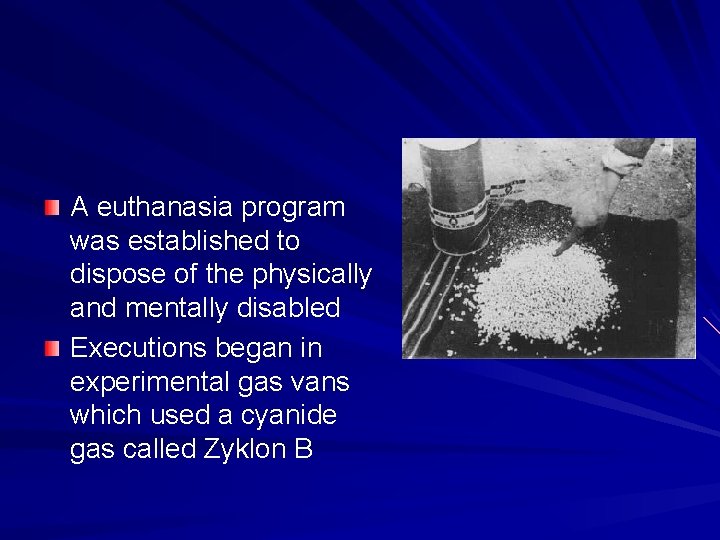
A euthanasia program was established to dispose of the physically and mentally disabled Executions began in experimental gas vans which used a cyanide gas called Zyklon B
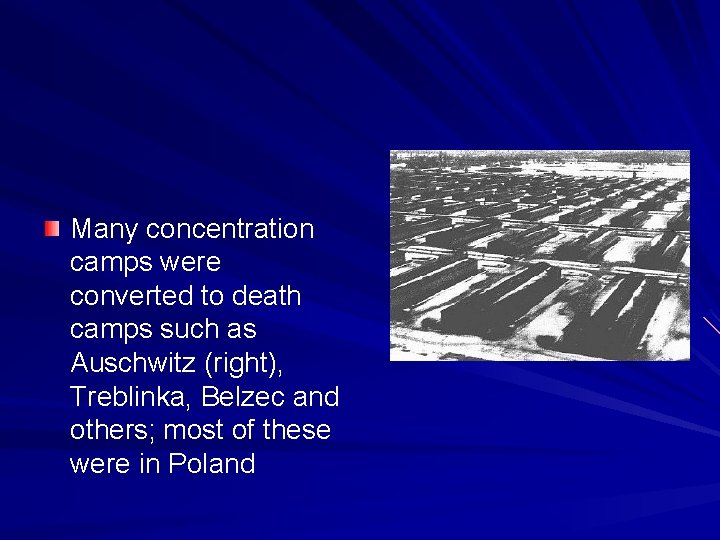
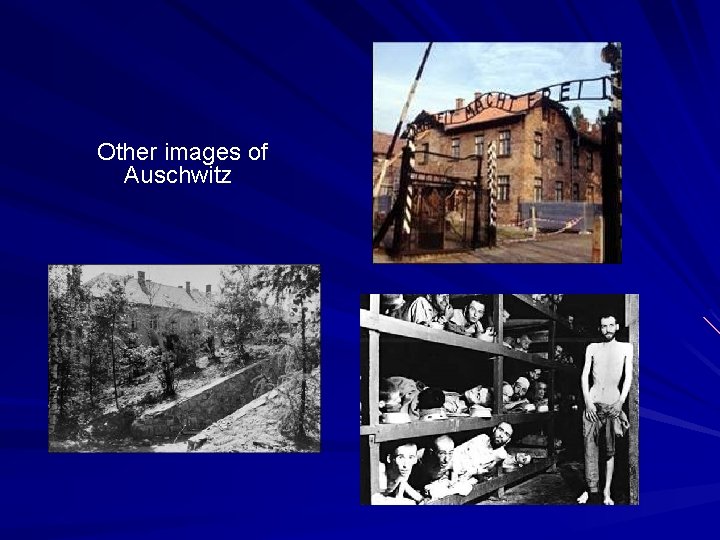
Many concentration camps were converted to death camps such as Auschwitz (right), Treblinka, Belzec and others; most of these were in Poland
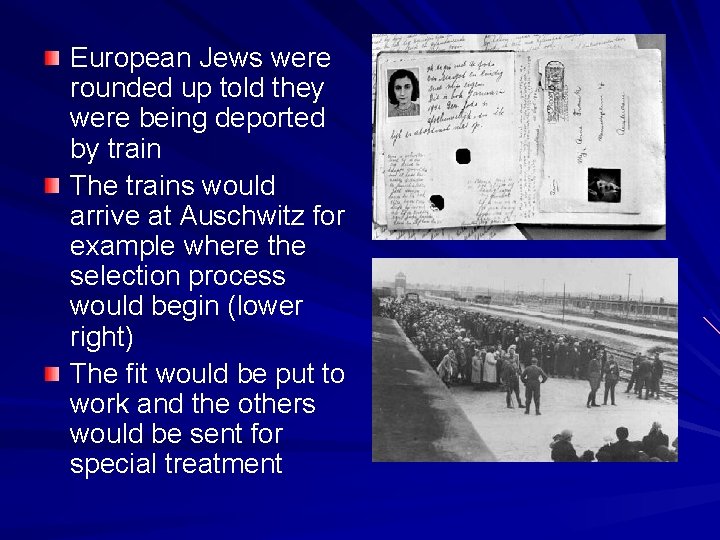
European Jews were rounded up told they were being deported by train The trains would arrive at Auschwitz for example where the selection process would begin (lower right) The fit would be put to work and the others would be sent for special treatment
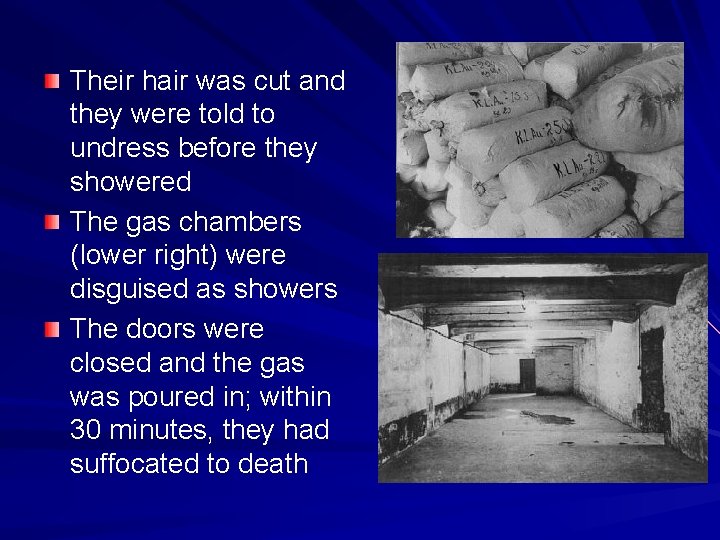
Their hair was cut and they were told to undress before they showered The gas chambers (lower right) were disguised as showers The doors were closed and the gas was poured in; within 30 minutes, they had suffocated to death
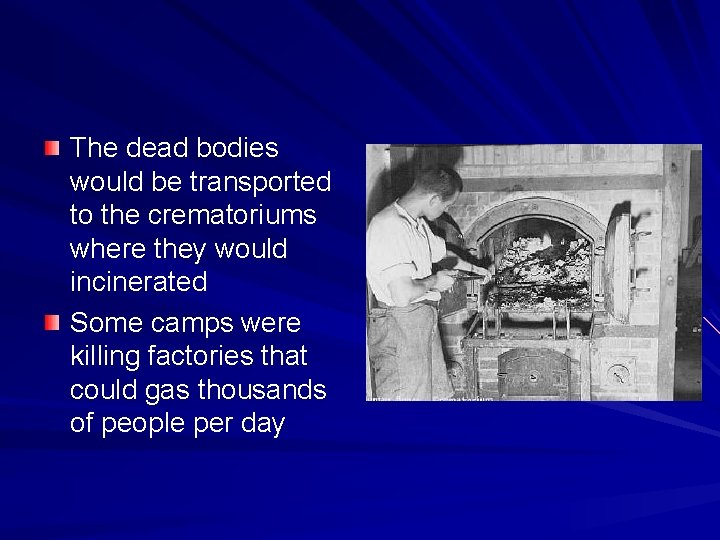
The dead bodies would be transported to the crematoriums where they would incinerated Some camps were killing factories that could gas thousands of people per day
Other images of Auschwitz
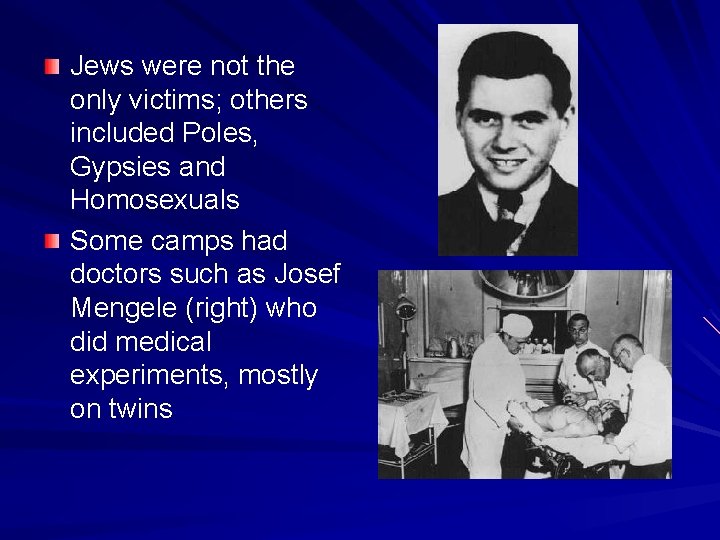
Jews were not the only victims; others included Poles, Gypsies and Homosexuals Some camps had doctors such as Josef Mengele (right) who did medical experiments, mostly on twins
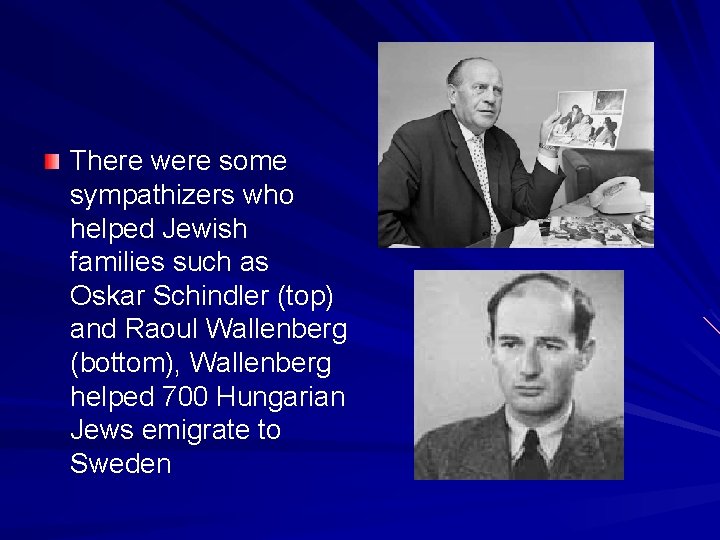
There were some sympathizers who helped Jewish families such as Oskar Schindler (top) and Raoul Wallenberg (bottom), Wallenberg helped 700 Hungarian Jews emigrate to Sweden
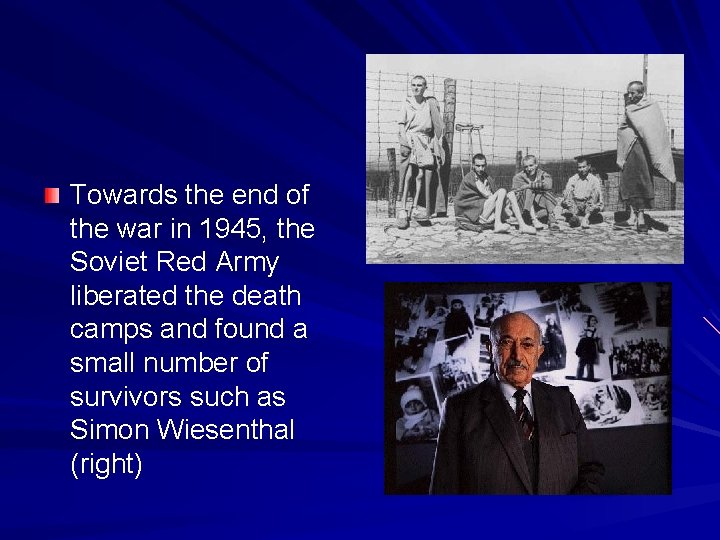
Towards the end of the war in 1945, the Soviet Red Army liberated the death camps and found a small number of survivors such as Simon Wiesenthal (right)
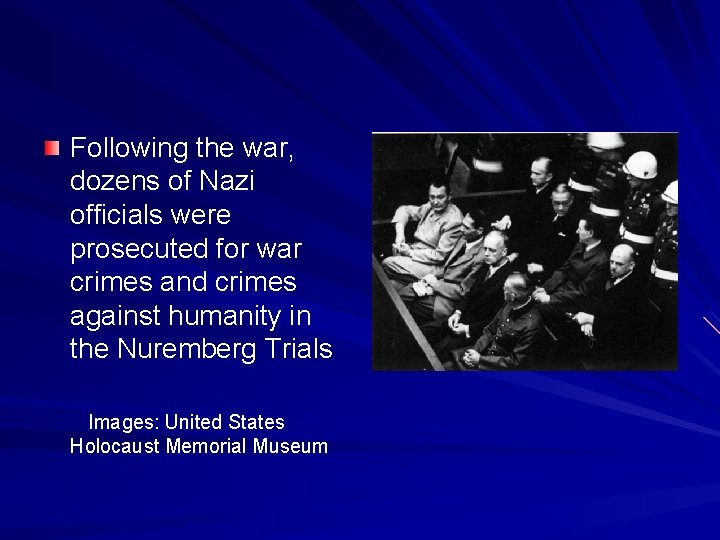
Following the war, dozens of Nazi officials were prosecuted for war crimes and crimes against humanity in the Nuremberg Trials Images: United States Holocaust Memorial Museum