Giving Up the Ghost Cherrie Moraga Pages 1
- Slides: 7
“Giving Up the Ghost” Cherrie Moraga Pages 1 -17
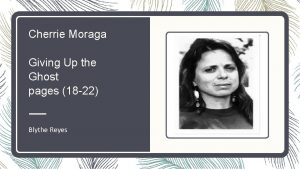
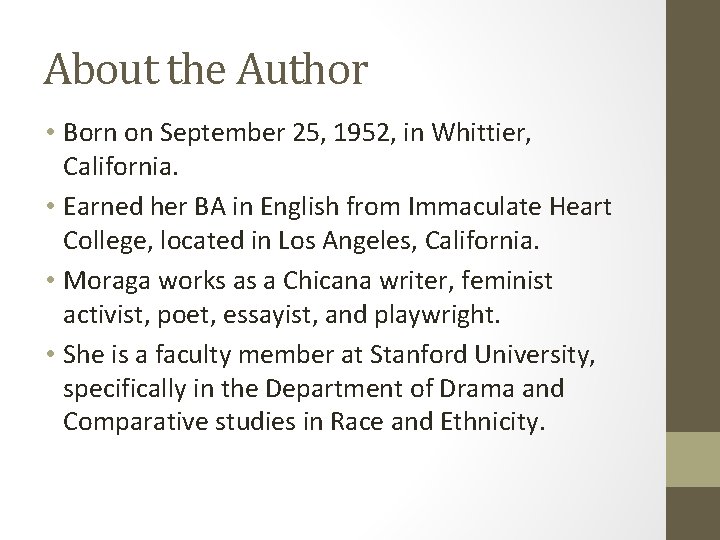
About the Author • Born on September 25, 1952, in Whittier, California. • Earned her BA in English from Immaculate Heart College, located in Los Angeles, California. • Moraga works as a Chicana writer, feminist activist, poet, essayist, and playwright. • She is a faculty member at Stanford University, specifically in the Department of Drama and Comparative studies in Race and Ethnicity.
Cont. • Also a co-editor of “This Bride Called My Back”, which is often referred to as laying the foundation for third wave feminism. • Moraga has won countless awards for literature, theatre, and activisim from multiple communities but most notable are;
Summary of “Giving Up the Ghost” • A play involving the complications of a young woman’s life who is finding her identity. • This play involves the characters Marisa, Corcky (Marisa as a teenager), Amalia, and The People. • The play is an artistic and obscure take on what goes on in a mind of young Mexican girl dealing with her sexuality. • Opens with Corky’s poetic description of herself and the life she lives. • Goes on to Amalia contemplating a girl she obviously has feelings for, remnants of her past self
Cont. • Followed by Marisa venting about the unfairness sexuality, nations, gender, and wealth can bring. • Corky walks us through an upsetting memory she and her friend had molested a young neighbor girl. • She does feel guilt and resents the fact she let this crime happen. • The play irregularly switches between characters and assumedly moments in the main character’s life. • Marisa describes her first experience with Amalia, in which Marisa required Amalia’s help for work.
Themes • Sexuality • Realism • Expressive • Naivety
Personal Thoughts • The play has a very poetic and unconventional in it’s storytelling. • The explicit content is very engaging for readers who enjoy realism. • Moraga is giving viewers/readers a glimpse into different life troubles that young Mexican-American children are living. • Marisa symbolizes a homosexual woman who struggles to find a relationship and affection. • While Corky symbolizes an adolescent Mexican-American getting used to the fact that life is unfair, difficult, and just as confusing as everything else.