Geometry Section 2 3 Deductive Reasoning If an

- Slides: 29
Geometry Section 2. 3 – Deductive Reasoning
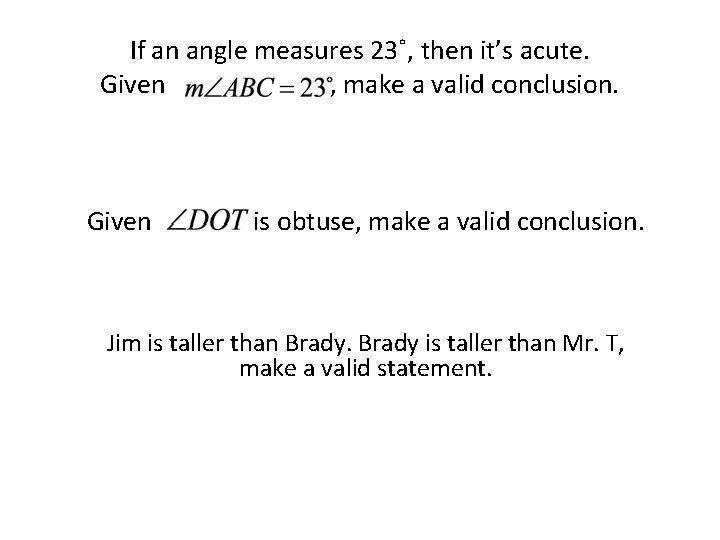
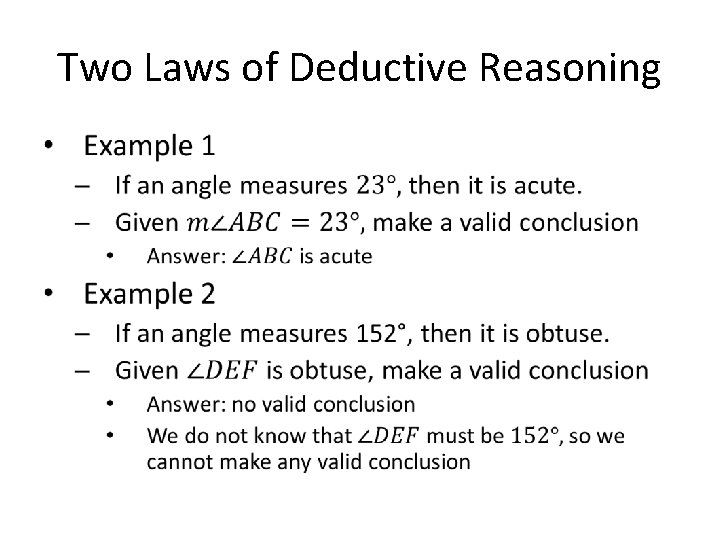
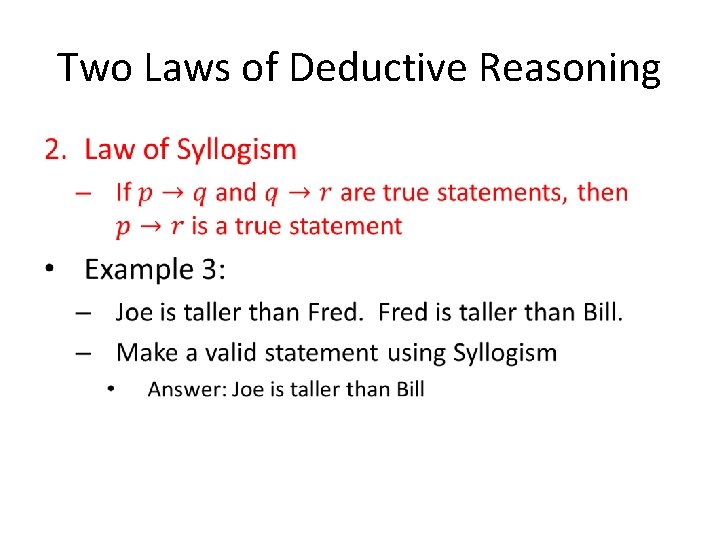
If an angle measures 23˚, then it’s acute. Given , make a valid conclusion. Given is obtuse, make a valid conclusion. Jim is taller than Brady is taller than Mr. T, make a valid statement.
Note-Taking Guide • I suggest to write down things written in red • (Tonight, you should read the section and supplement your notes where needed!)
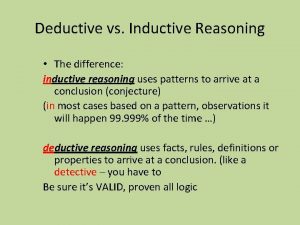
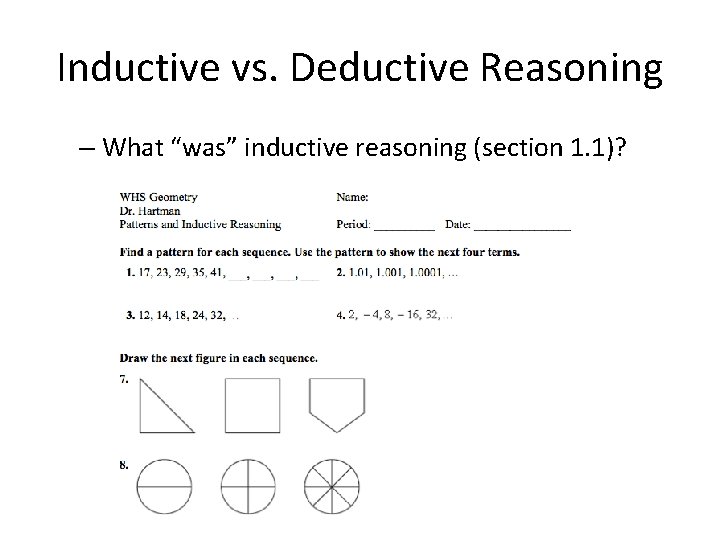
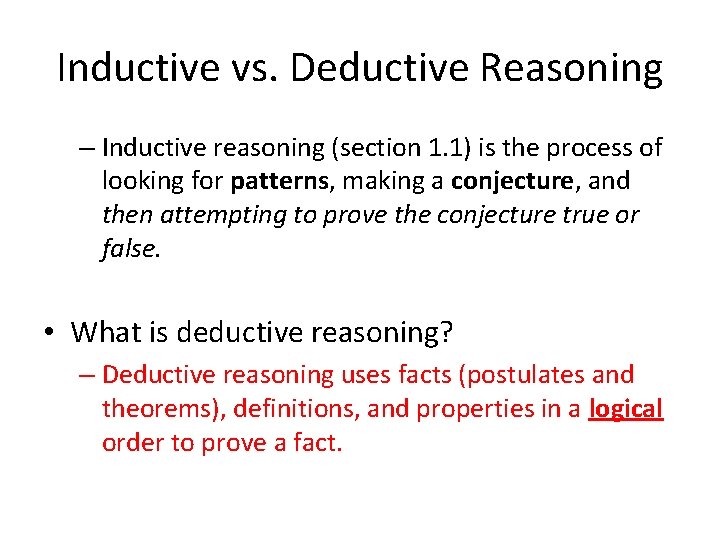
Inductive vs. Deductive Reasoning – What “was” inductive reasoning (section 1. 1)?
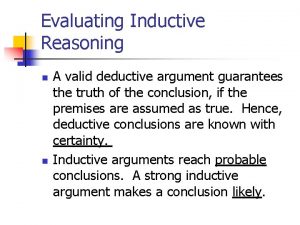
Inductive vs. Deductive Reasoning – Inductive reasoning (section 1. 1) is the process of looking for patterns, making a conjecture, and then attempting to prove the conjecture true or false. • What is deductive reasoning? – Deductive reasoning uses facts (postulates and theorems), definitions, and properties in a logical order to prove a fact.
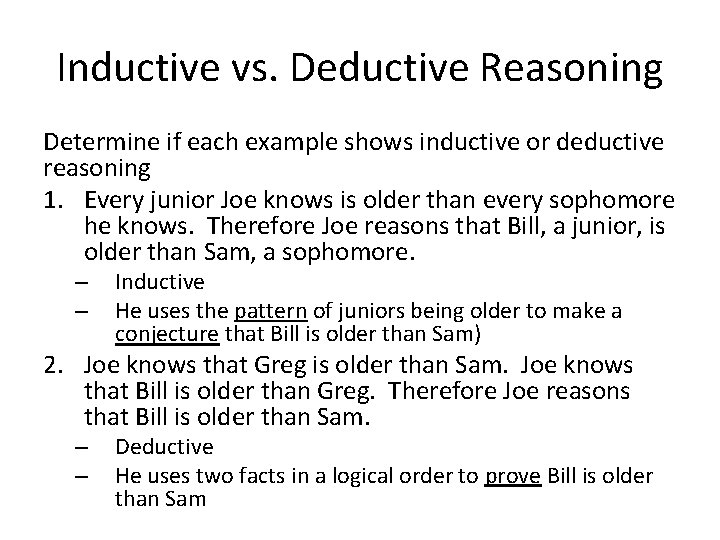
Inductive vs. Deductive Reasoning Determine if each example shows inductive or deductive reasoning 1. Every junior Joe knows is older than every sophomore he knows. Therefore Joe reasons that Bill, a junior, is older than Sam, a sophomore. – – Inductive He uses the pattern of juniors being older to make a conjecture that Bill is older than Sam) 2. Joe knows that Greg is older than Sam. Joe knows that Bill is older than Greg. Therefore Joe reasons that Bill is older than Sam. – – Deductive He uses two facts in a logical order to prove Bill is older than Sam
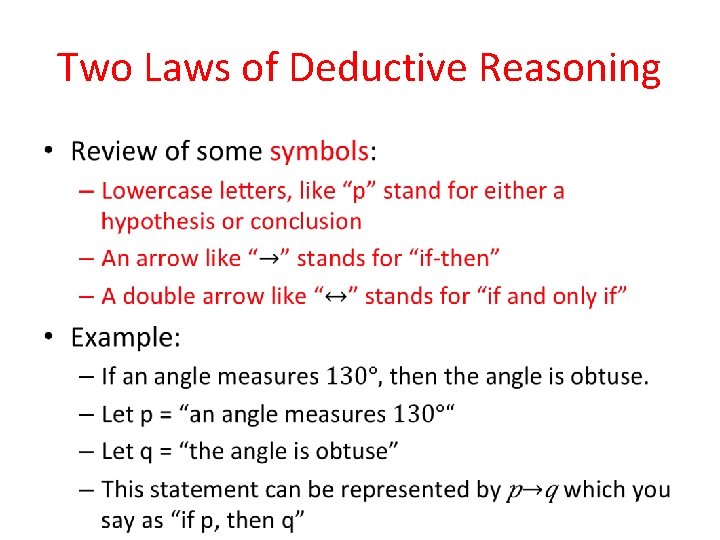
Two Laws of Deductive Reasoning •
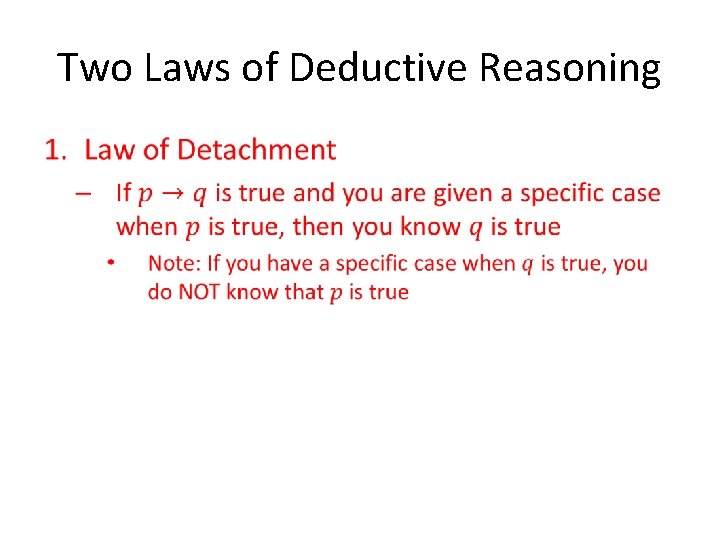
Two Laws of Deductive Reasoning •
Two Laws of Deductive Reasoning •
Two Laws of Deductive Reasoning •
Two Laws of Deductive Reasoning • Example 4 – If you give a mouse a cookie…
If You Give A Mouse a Cookie Written by : Laura Joffe Numeroff Illustrated by: Felicia Bond
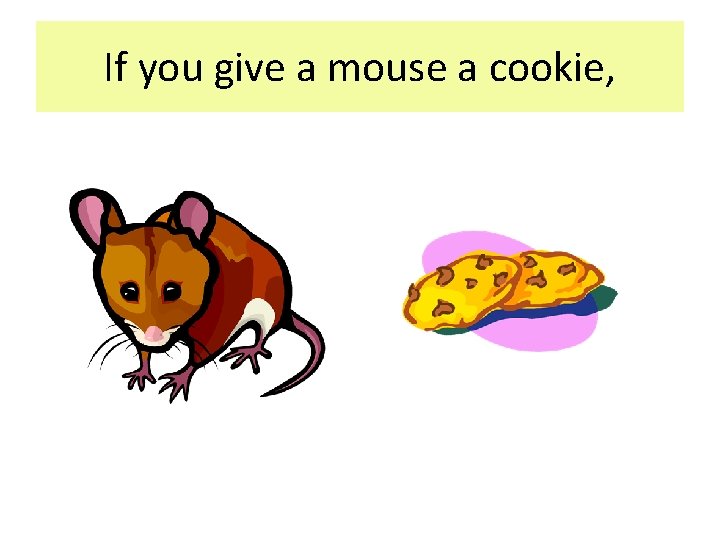
If you give a mouse a cookie,
He’s going to ask for a glass of milk.
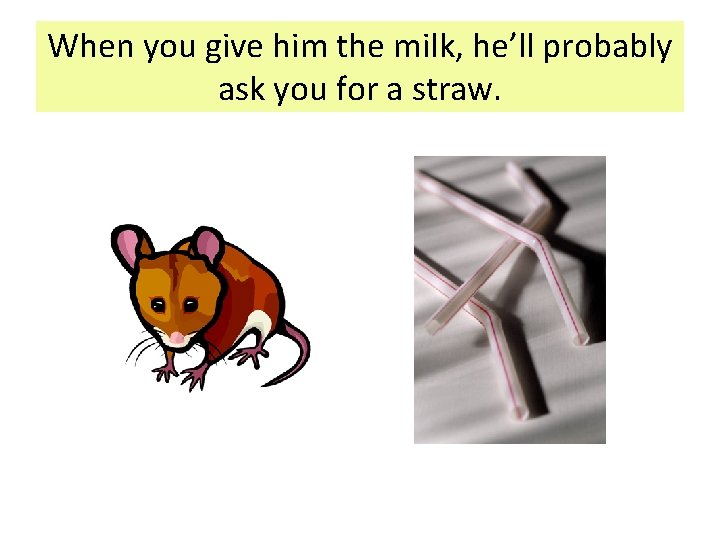
When you give him the milk, he’ll probably ask you for a straw.
When he’s finished, he’ll ask for a napkin.
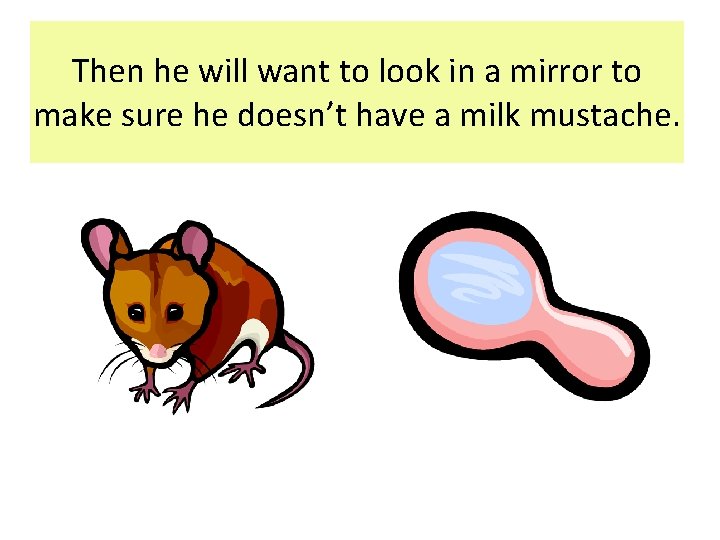
Then he will want to look in a mirror to make sure he doesn’t have a milk mustache.
When he looks into the mirror, he might notice his hair needs a trim. So he will probably ask for a pair of scissors.
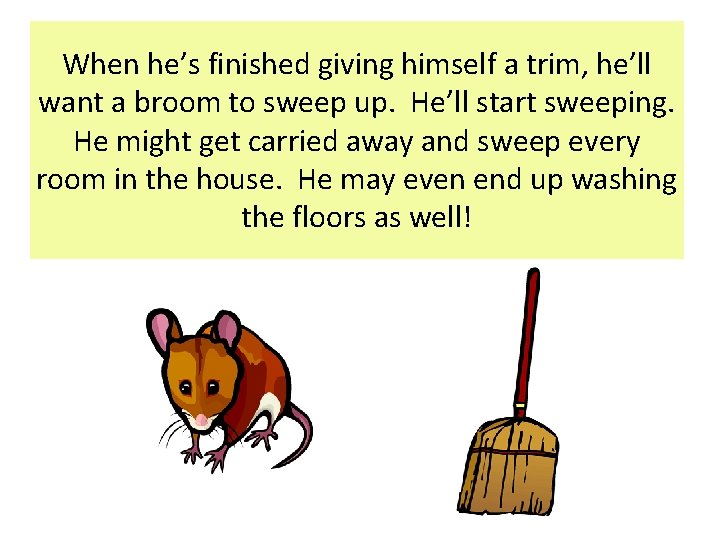
When he’s finished giving himself a trim, he’ll want a broom to sweep up. He’ll start sweeping. He might get carried away and sweep every room in the house. He may even end up washing the floors as well!
When he’s done, he’ll probably want to take a nap. You will have to fix a little box for him with a blanket and a pillow. He’ll crawl in, make himself comfortable and fluff the pillow a few times.
He’ll probably ask you to read him a story. So you’ll read him one from one of your books, and he’ll ask to see the pictures. When he looks at the pictures, he’ll get so excited he’ll want to draw one of his own. He’ll ask for paper and crayons.
He’ll draw a picture. When the picture is finished, he’ll want to sign his name with a pen.
Then he’ll want to hang his picture on your refrigerator. Which means he will need…scotch tape.
He’ll hang up his drawing and stand back to look at it. Looking at the refrigerator will remind him that he’s thirsty so…he’ll ask for a glass of milk.
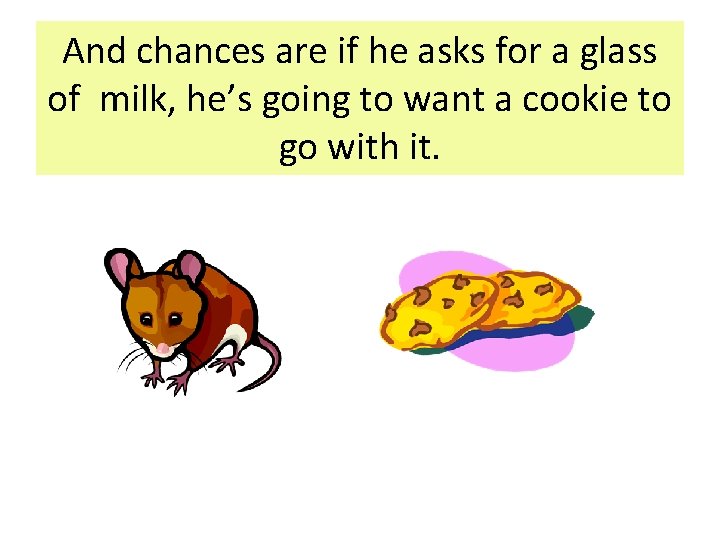
And chances are if he asks for a glass of milk, he’s going to want a cookie to go with it.
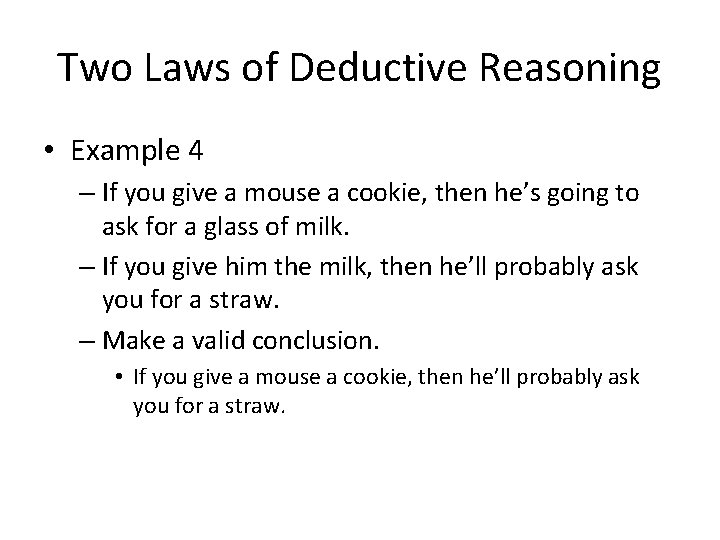
Two Laws of Deductive Reasoning • Example 4 – If you give a mouse a cookie, then he’s going to ask for a glass of milk. – If you give him the milk, then he’ll probably ask you for a straw. – Make a valid conclusion. • If you give a mouse a cookie, then he’ll probably ask you for a straw.
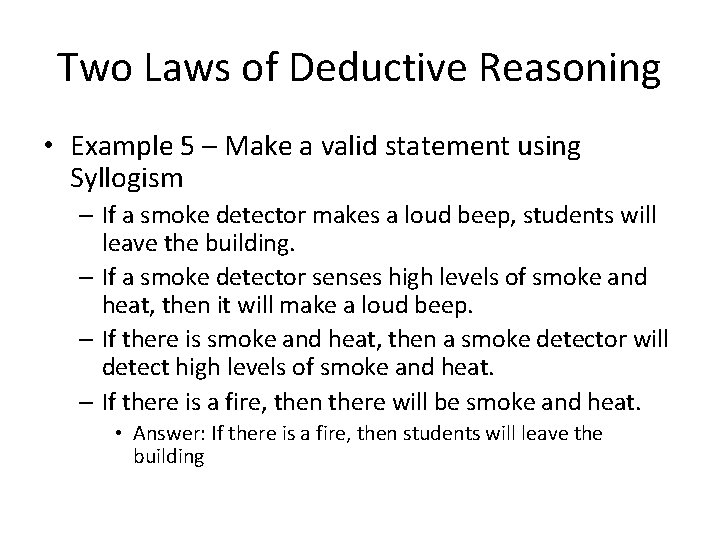
Two Laws of Deductive Reasoning • Example 5 – Make a valid statement using Syllogism – If a smoke detector makes a loud beep, students will leave the building. – If a smoke detector senses high levels of smoke and heat, then it will make a loud beep. – If there is smoke and heat, then a smoke detector will detect high levels of smoke and heat. – If there is a fire, then there will be smoke and heat. • Answer: If there is a fire, then students will leave the building
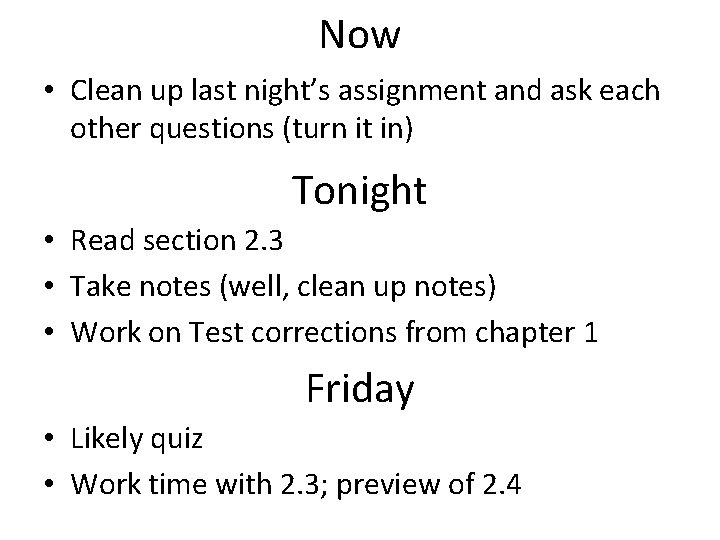
Now • Clean up last night’s assignment and ask each other questions (turn it in) Tonight • Read section 2. 3 • Take notes (well, clean up notes) • Work on Test corrections from chapter 1 Friday • Likely quiz • Work time with 2. 3; preview of 2. 4