Forecasting Earthquakes Thailand Training Program in Seismology and



- Slides: 49
Forecasting Earthquakes Thailand Training Program in Seismology and Tsunami Warnings, May 2006
Forecasting Earthquakes ・ Difference between Predictions and Forecasts ・ Early Efforts in Earthquake Prediction ・ Long-term Forecasting
Earthquake Predictions versus Forecasts Predictions have specific times, locations, and magnitudes for future earthquakes. Forecasts are more long-term estimates of earthquake occurrences with probability information.
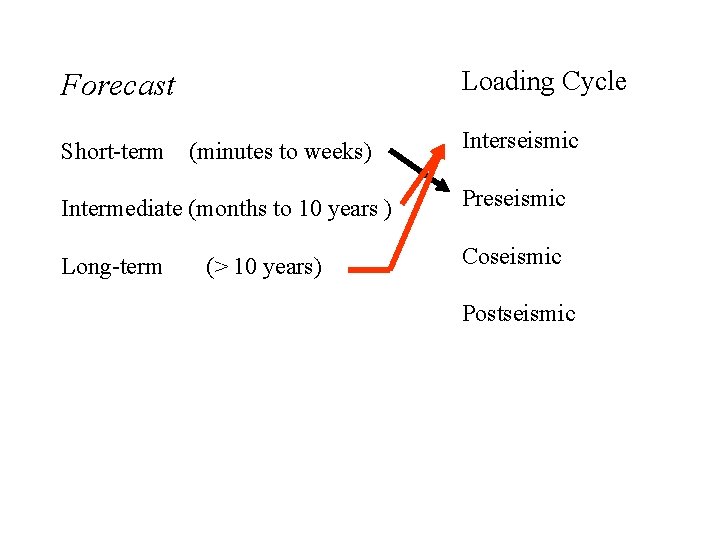
Loading Cycle Forecast Short-term (minutes to weeks) Interseismic Intermediate (months to 10 years ) Preseismic Long-term Coseismic (> 10 years) Postseismic
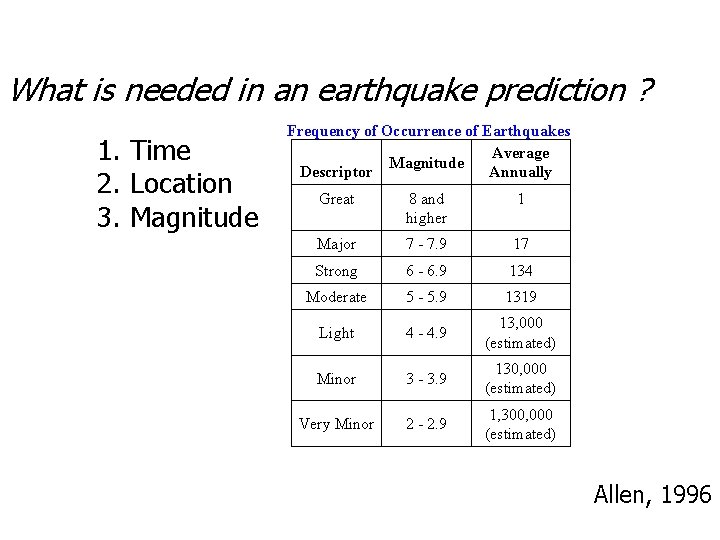
What is needed in an earthquake prediction ? 1. Time 2. Location 3. Magnitude Frequency of Occurrence of Earthquakes Average Magnitude Descriptor Annually Great 8 and higher 1 Major 7 - 7. 9 17 Strong 6 - 6. 9 134 Moderate 5 - 5. 9 1319 Light 4 - 4. 9 13, 000 (estimated) Minor 3 - 3. 9 130, 000 (estimated) Very Minor 2 - 2. 9 1, 300, 000 (estimated) Allen, 1996
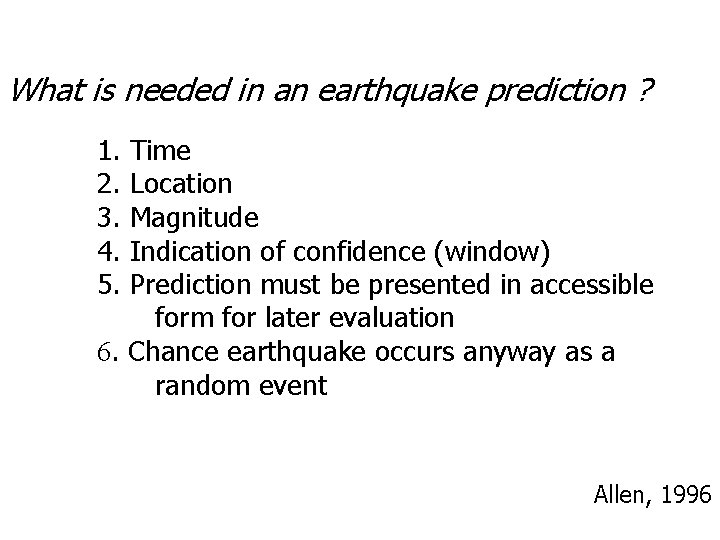
What is needed in an earthquake prediction ? 1. Time 2. Location 3. Magnitude 4. Indication of confidence (window) 5. Prediction must be presented in accessible form for later evaluation 6. Chance earthquake occurs anyway as a random event Allen, 1996
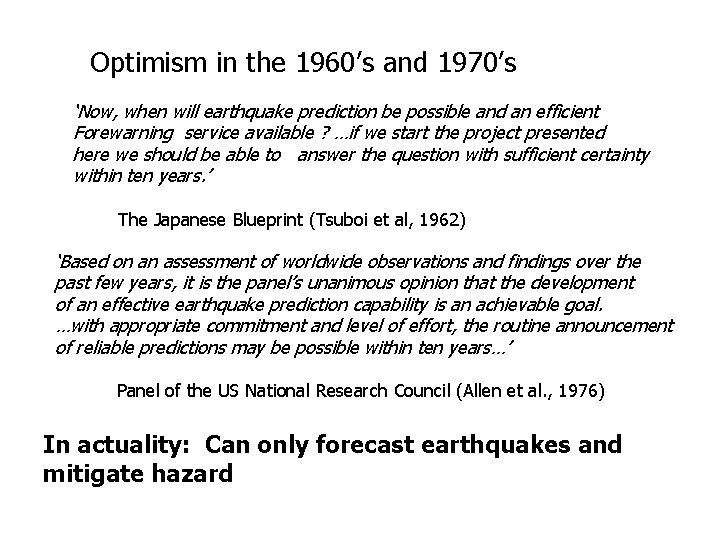
Optimism in the 1960’s and 1970’s ‘Now, when will earthquake prediction be possible and an efficient Forewarning service available ? …if we start the project presented here we should be able to answer the question with sufficient certainty within ten years. ’ The Japanese Blueprint (Tsuboi et al, 1962) ‘Based on an assessment of worldwide observations and findings over the past few years, it is the panel’s unanimous opinion that the development of an effective earthquake prediction capability is an achievable goal. …with appropriate commitment and level of effort, the routine announcement of reliable predictions may be possible within ten years…’ Panel of the US National Research Council (Allen et al. , 1976) In actuality: Can only forecast earthquakes and mitigate hazard
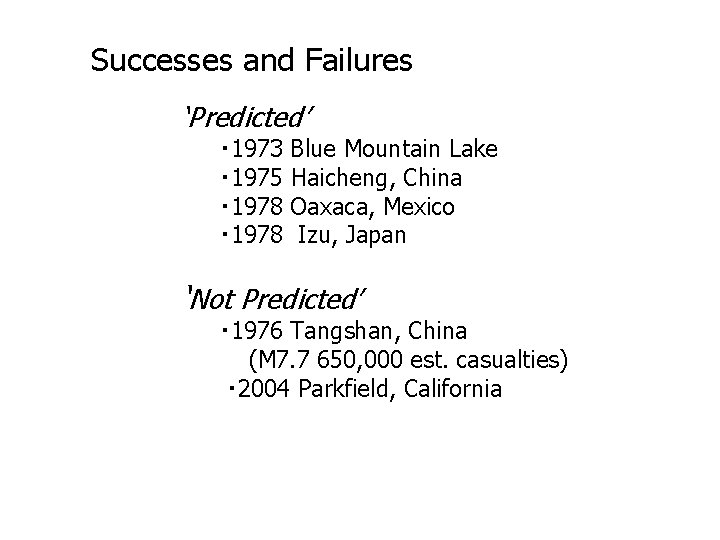
Successes and Failures ‘Predicted’ ・ 1973 Blue Mountain Lake ・ 1975 Haicheng, China ・ 1978 Oaxaca, Mexico ・ 1978 Izu, Japan ‘Not Predicted’ ・ 1976 Tangshan, China (M 7. 7 650, 000 est. casualties) ・ 2004 Parkfield, California
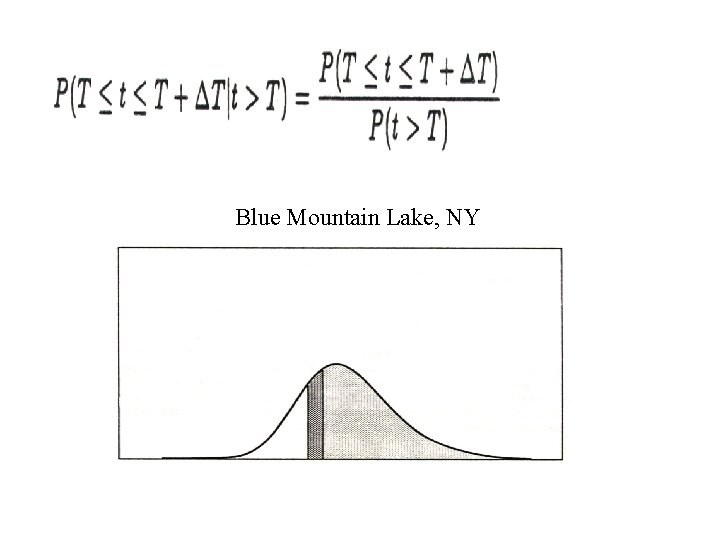
Blue Mountain Lake, NY
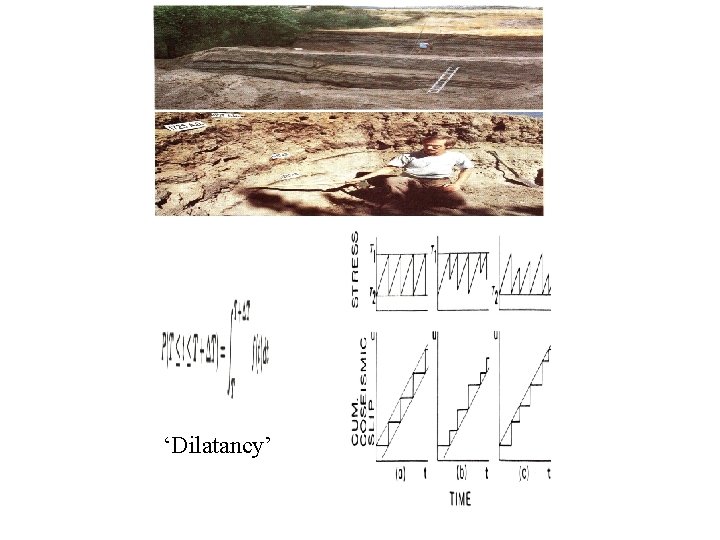
‘Dilatancy’
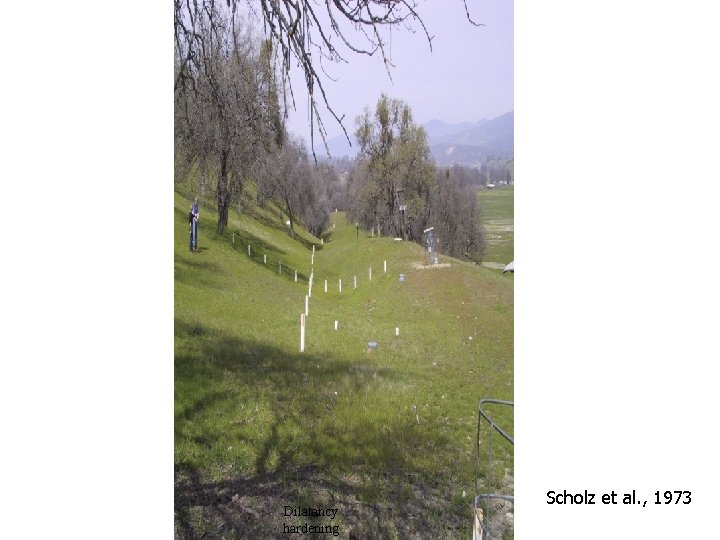
Dilatancy hardening Scholz et al. , 1973
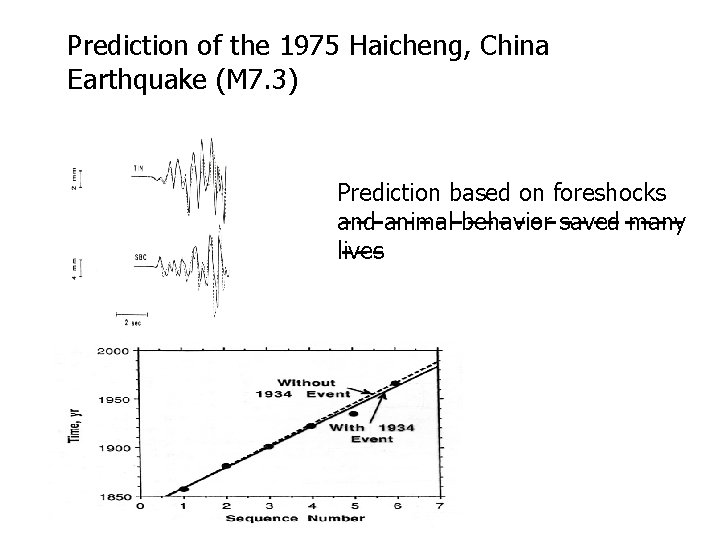
Prediction of the 1975 Haicheng, China Earthquake (M 7. 3) Prediction based on foreshocks and animal behavior saved many lives
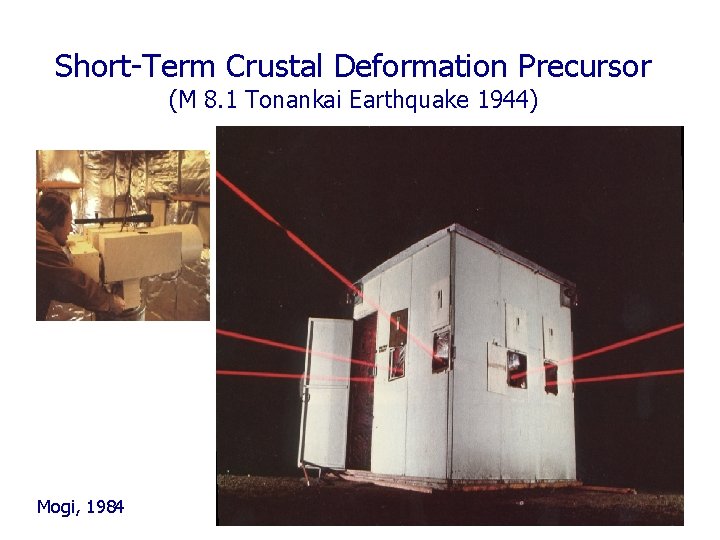
Short-Term Crustal Deformation Precursor (M 8. 1 Tonankai Earthquake 1944) Mogi, 1984
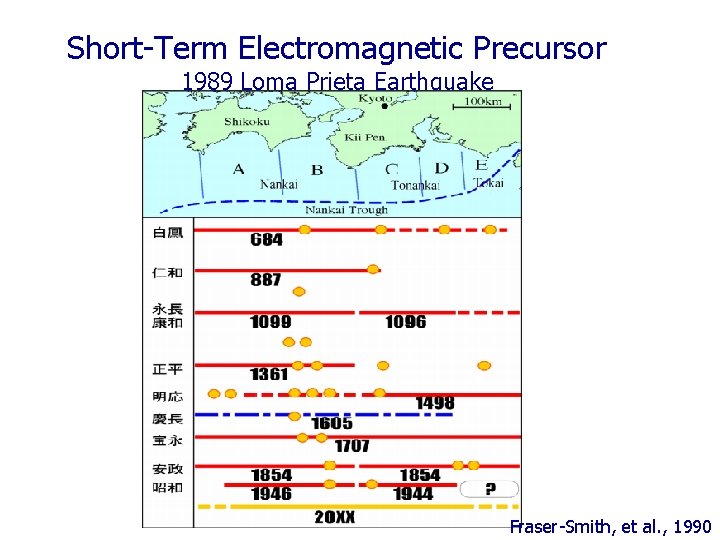
Short-Term Electromagnetic Precursor 1989 Loma Prieta Earthquake Fraser-Smith, et al. , 1990
Intermediate-Term: Seismicity Patterns 1978 Oaxaca, Mexico (Ohtake et al. , 1981) ‘Mogi Doughnut’ Dilatancy Hardening
Intermediate-Term: Crustal Deformation 1964 Niigata earthquake Mogi, 1985
Intermediate-Term: Water and Chemical M 7. 0 Izu earthquake 1978 Wakita, 1981
‘Successfully’ Predicted ・ 1973 Blue Mountain Lake ・ 1975 Haicheng, China ・ 1978 Oaxaca, Mexico ・ 1978 Izu, Japan
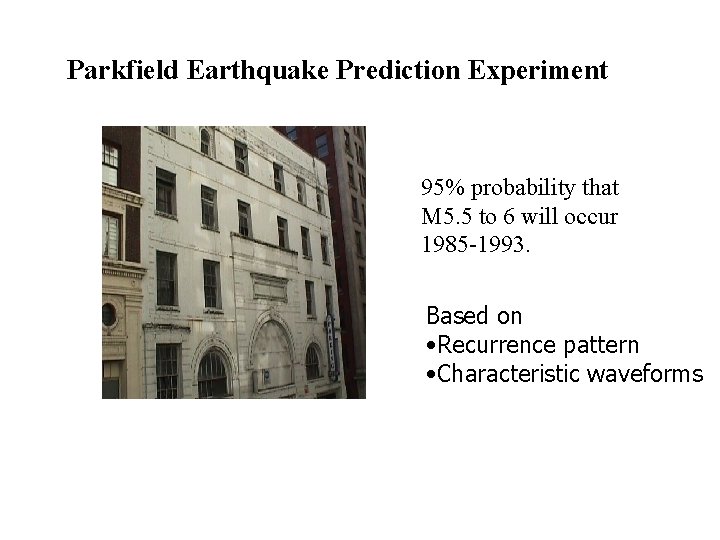
Parkfield Earthquake Prediction Experiment 95% probability that M 5. 5 to 6 will occur 1985 -1993. Based on • Recurrence pattern • Characteristic waveforms
Bakun and Mc. Evilly, 1979 - Repeating Characteristic Earthquakes - M 5 foreshock 17 minutes before 1934 and 1966 events
For short-term prediction, there have been more negative results than positive results: Not Predicted ・ 1976 Tangshan, China (M 7. 7 650, 000 est. casualties) ・ 2004 Parkfield, California Other precursors have not been consistently seen
Why has there been lack of continued success in observing precursors? • Animal experiments have failed • Original observations were hindsight • Instrumentation • Geology dependent (including lights and piezoelectric effects) • Predictive algorithms have not worked (at least short-term) • Earthquakes may be non-characteristic • No connection to tides or planetary alignment • No psychics have made consistent predictions
Earthquake Forecasting Short-term minutes to weeks Intermediate-term months to 10 years Long-term > 10 years
Recurrence times of earthquakes to forecast future earthquakes • Using historic data • Using geologic data
Earthquake Cycle Periodic Time-predictable Slip-predic Shimazaki and Nakata, 1980
History of Nankai Earthquakes
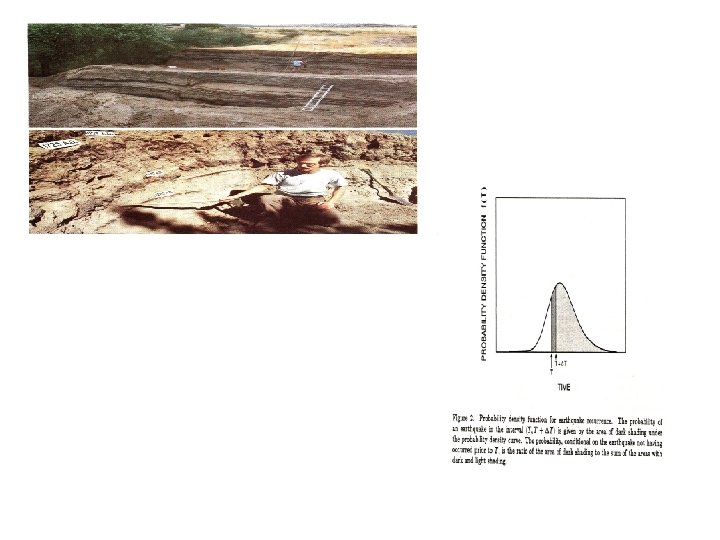
PALEOSEISMOLOGY Trenching faults to find geological evidence of past earthquakes Pallet Creek site on the San Andreas fault
Earthquake Cycle Periodic Time-predictable Slip-predictable Shimazaki and Nakata, 1980
Probability Conditional Probability 100 years
Variability in Repeating Earthquakes Well defined recurrence interval (Small variability) Wide range of recurrence intervals (Large variability)
Probabilistic Earthquake Forecasting for California Loma Prieta 1989 Parkfield 2004 Hector Mines Landers 1992
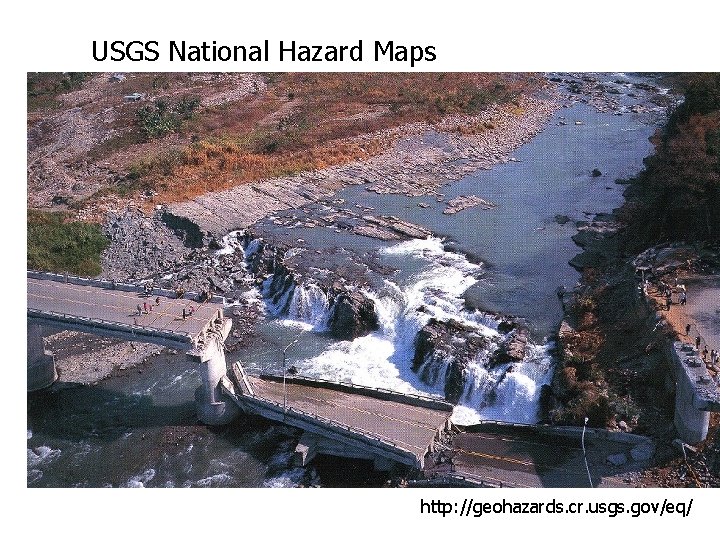
USGS National Hazard Maps http: //geohazards. cr. usgs. gov/eq/
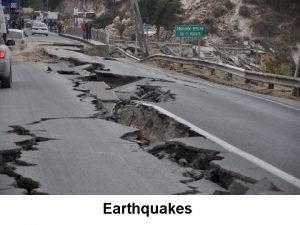
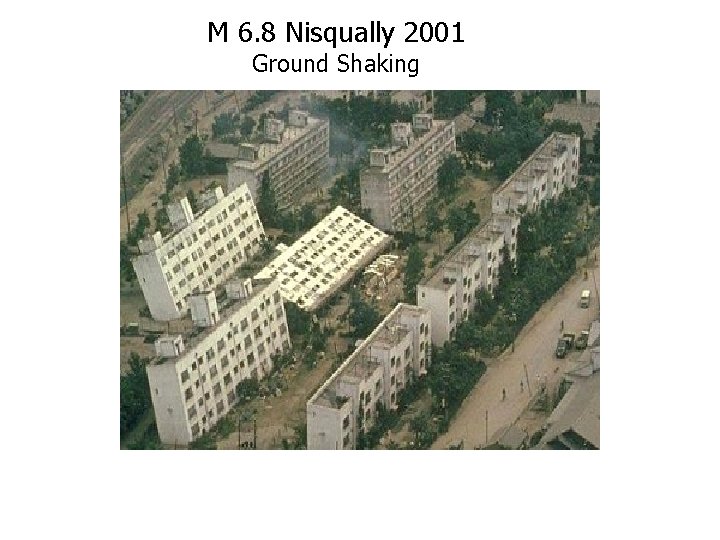
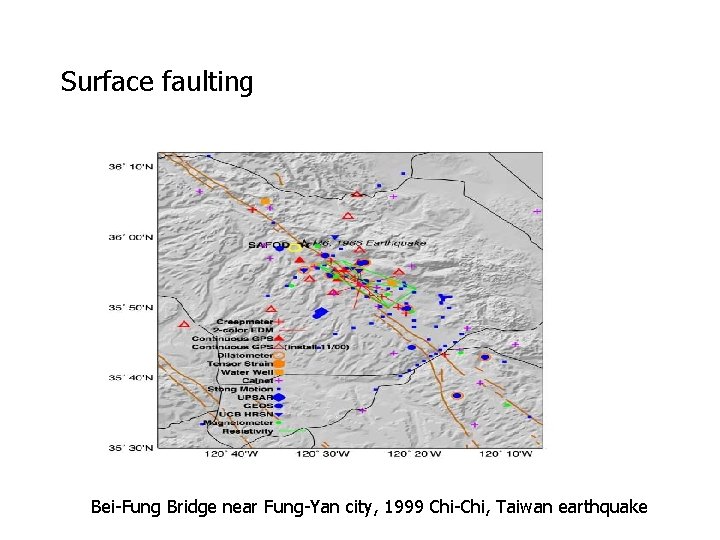
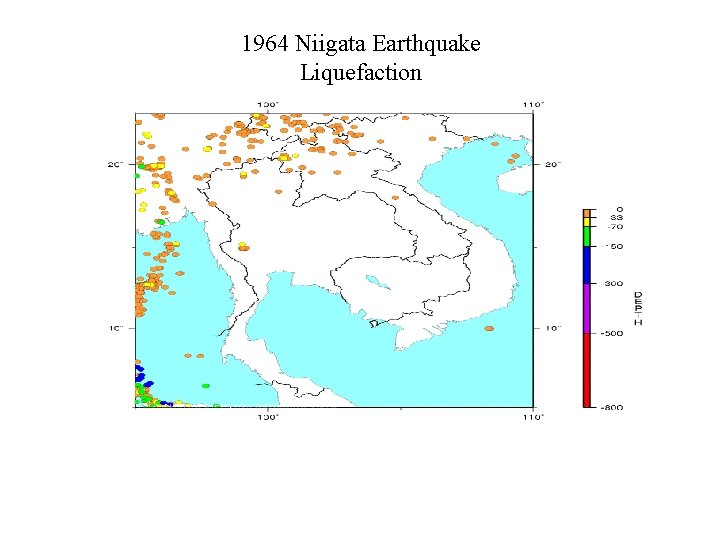
Earthquake Hazards • • Ground Shaking Surface Faulting Landslides and Liquefaction Avalanches and soil (mud flows)
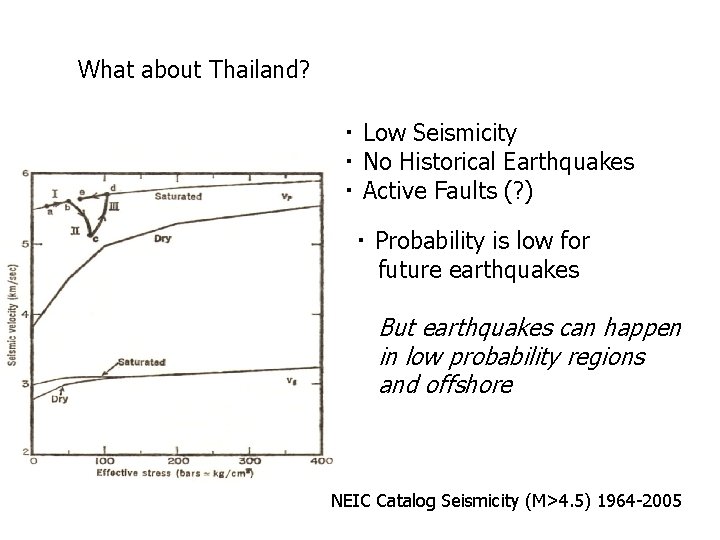
What about Thailand? ・ Low Seismicity ・ No Historical Earthquakes ・ Active Faults (? ) ・ Probability is low for future earthquakes But earthquakes can happen in low probability regions and offshore NEIC Catalog Seismicity (M>4. 5) 1964 -2005
Future Outlook Will we be able to predict earthquakes in the future ? Long-term: Probably Intermediate term: Maybe Short-term: Maybe
Don’t forget that the precursor to a tsunami is the earthquake.
Parkfield Earthquake Prediction Experiment
Loading or deformation cycle – Four phases • Interseismic • Preseismic • Coseismic • Postseismic
For short-term precursors, there are currently more ‘negative’ results than ‘positive’results. Johnston and Linde, 2002 Kanamori et al. , 1996
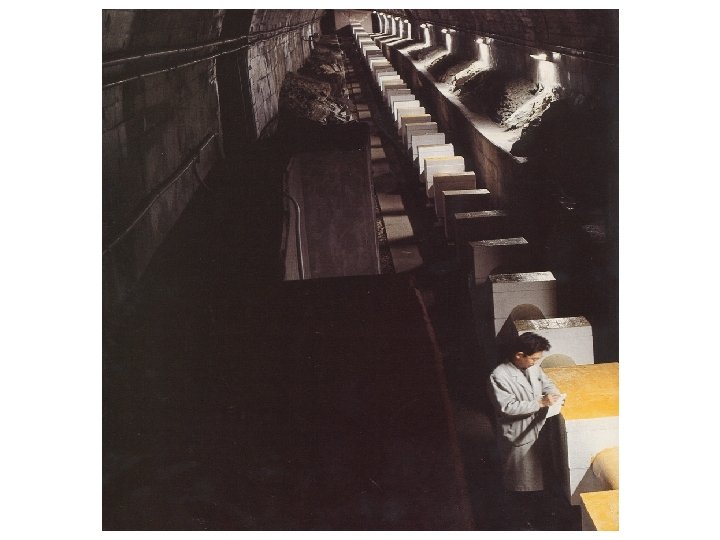
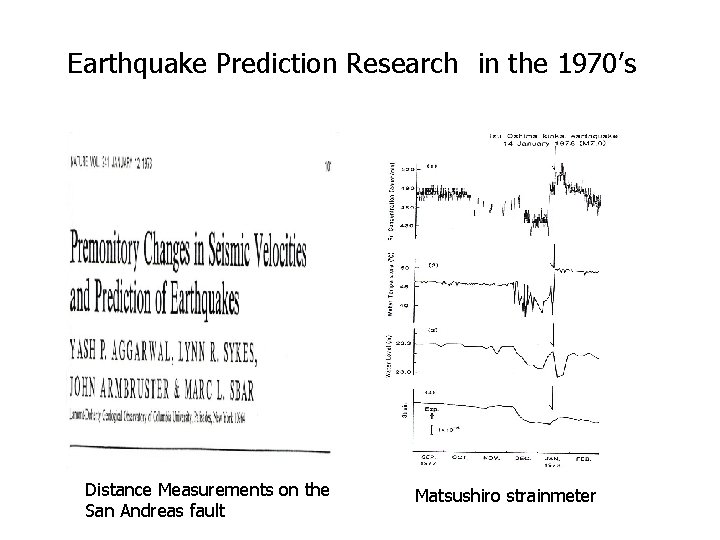
Earthquake Prediction Research in the 1970’s Distance Measurements on the San Andreas fault Matsushiro strainmeter
Laser Distance Measurements
M 6. 8 Nisqually 2001 Ground Shaking
Surface faulting Bei-Fung Bridge near Fung-Yan city, 1999 Chi-Chi, Taiwan earthquake
1964 Niigata Earthquake Liquefaction