Financing PACE Development in Rural Areas Peter Fitzgerald
- Slides: 33
Financing PACE Development in Rural Areas Peter Fitzgerald National PACE Association August 19, 2004
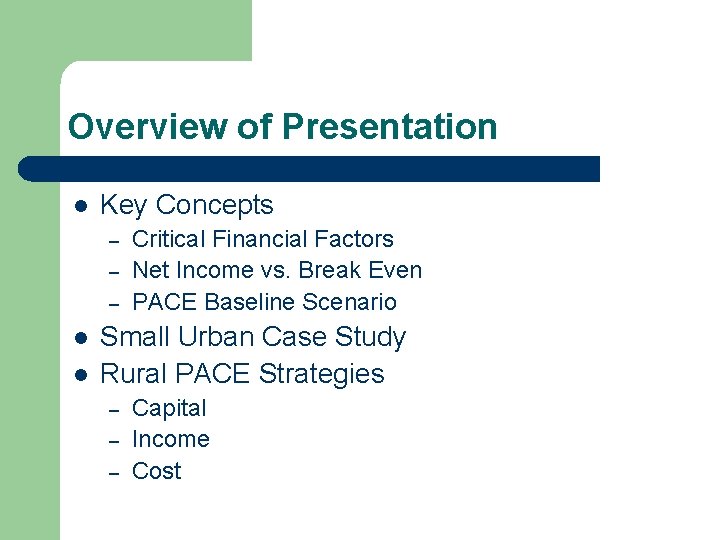
Overview of Presentation l Key Concepts – – – l l Critical Financial Factors Net Income vs. Break Even PACE Baseline Scenario Small Urban Case Study Rural PACE Strategies – – – Capital Income Cost
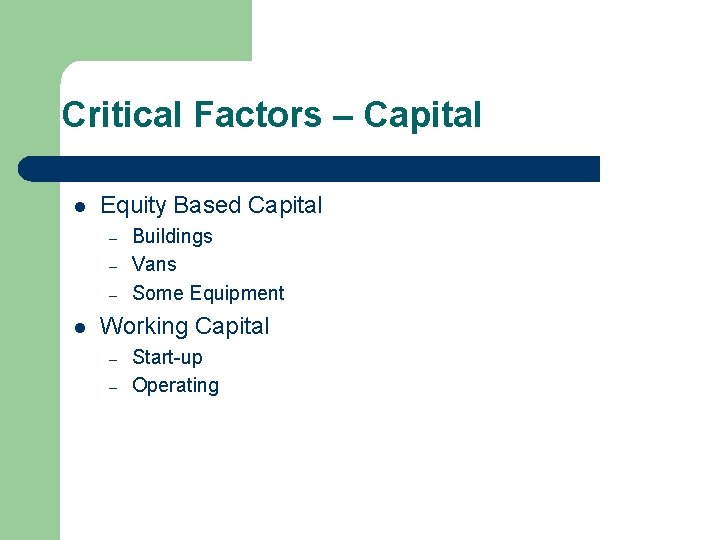
Critical Factors – Capital l Equity Based Capital – – – l Buildings Vans Some Equipment Working Capital – – Start-up Operating
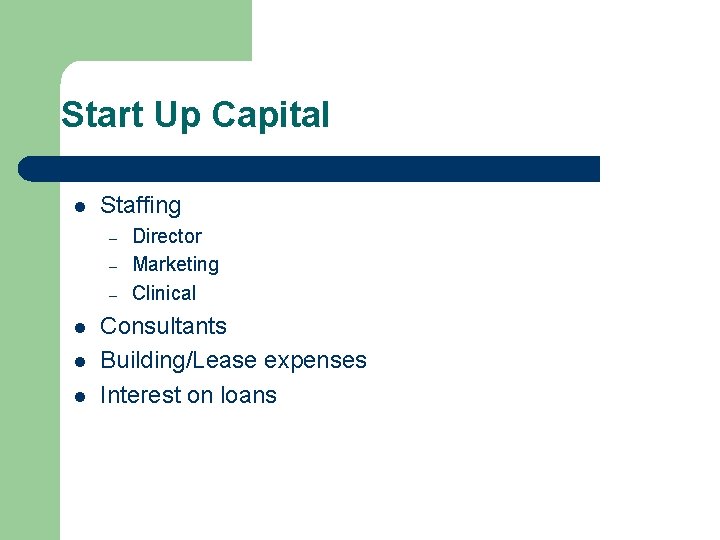
Start Up Capital l Staffing – – – l l l Director Marketing Clinical Consultants Building/Lease expenses Interest on loans
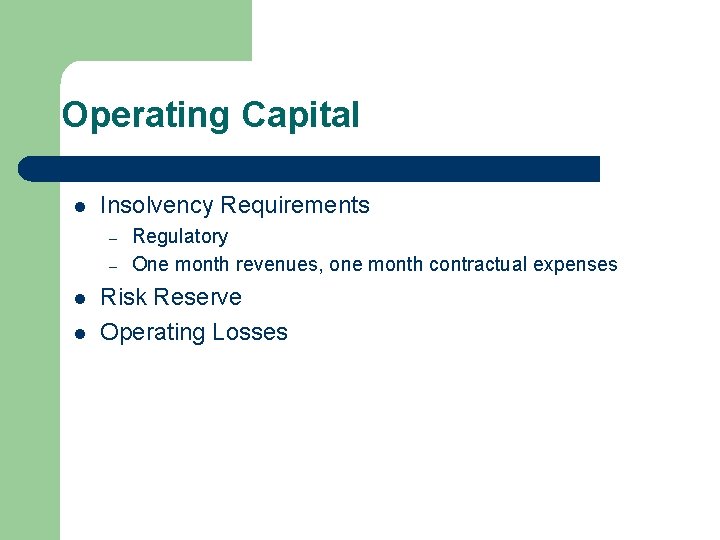
Operating Capital l Insolvency Requirements – – l l Regulatory One month revenues, one month contractual expenses Risk Reserve Operating Losses
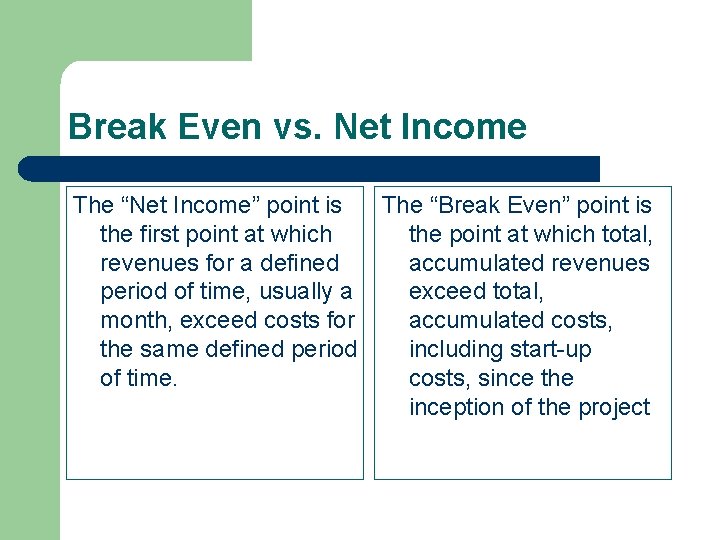
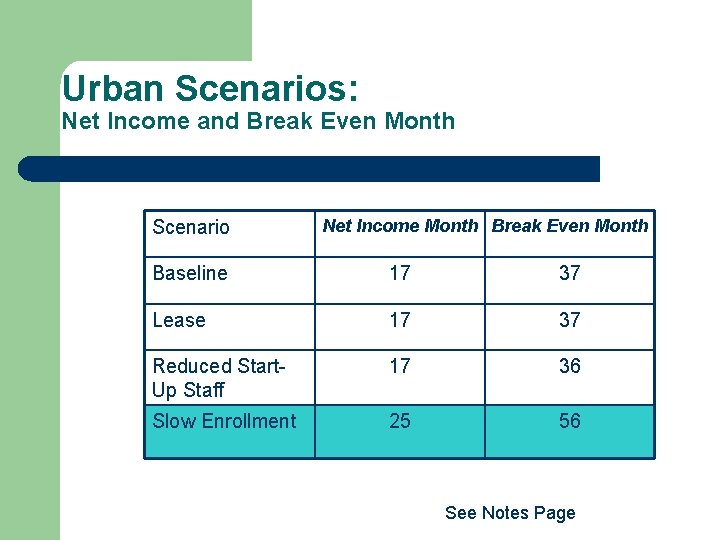
Break Even vs. Net Income The “Net Income” point is the first point at which revenues for a defined period of time, usually a month, exceed costs for the same defined period of time. The “Break Even” point is the point at which total, accumulated revenues exceed total, accumulated costs, including start-up costs, since the inception of the project
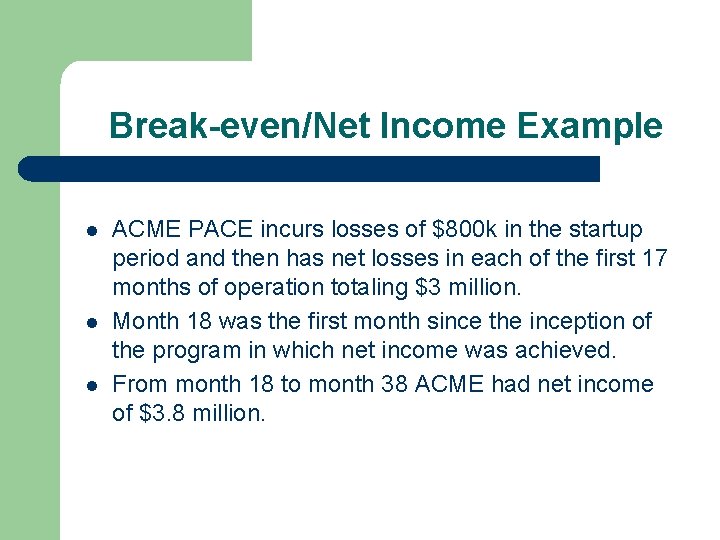
Break-even/Net Income Example l l l ACME PACE incurs losses of $800 k in the startup period and then has net losses in each of the first 17 months of operation totaling $3 million. Month 18 was the first month since the inception of the program in which net income was achieved. From month 18 to month 38 ACME had net income of $3. 8 million.
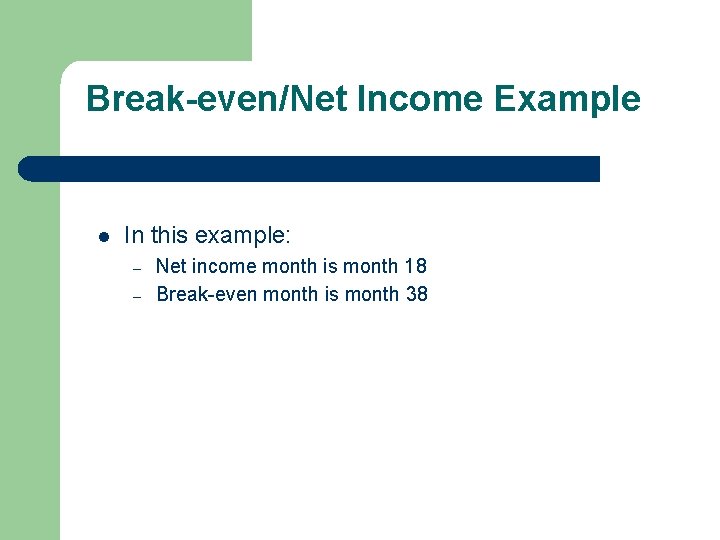
Break-even/Net Income Example l In this example: – – Net income month is month 18 Break-even month is month 38
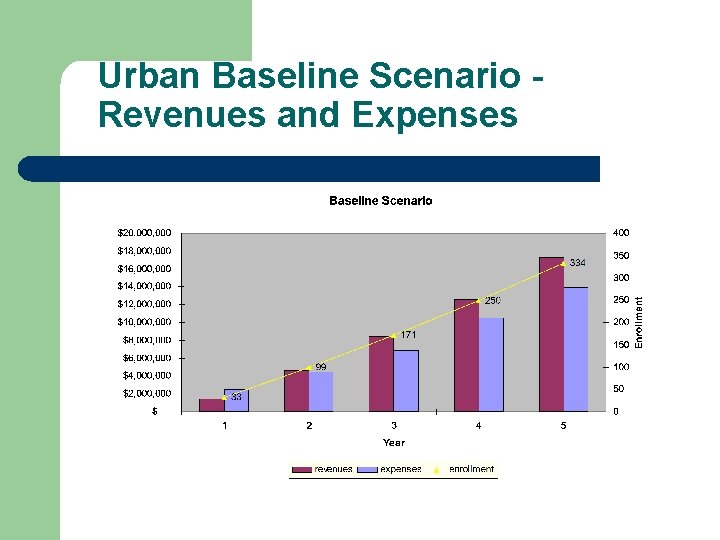
Urban PACE Baseline Scenario l l Reflects actual experience of two successful urban PACE programs Detailed review of financials from startup through current operations Compared key cost and revenue drivers and statistics to identify key relationships Blended with market data to determine a “baseline” scenario.
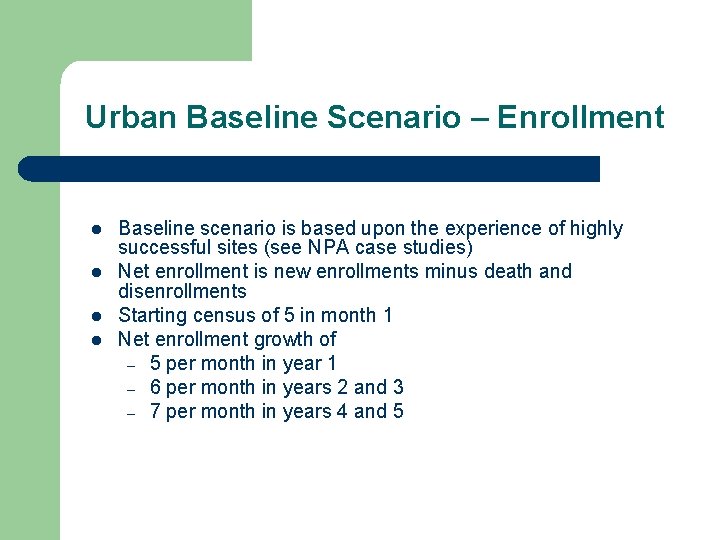
Urban Baseline Scenario – Enrollment l l Baseline scenario is based upon the experience of highly successful sites (see NPA case studies) Net enrollment is new enrollments minus death and disenrollments Starting census of 5 in month 1 Net enrollment growth of – 5 per month in year 1 – 6 per month in years 2 and 3 – 7 per month in years 4 and 5
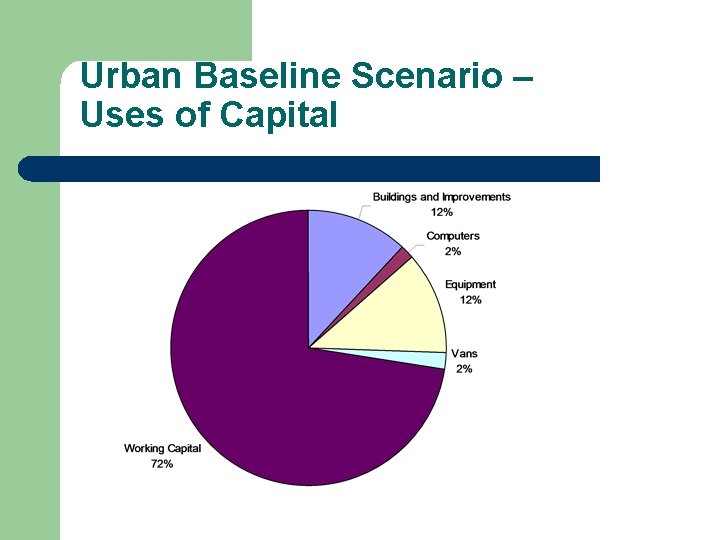
Urban Baseline Scenario – Uses of Capital
Urban Baseline Scenario Revenues and Expenses
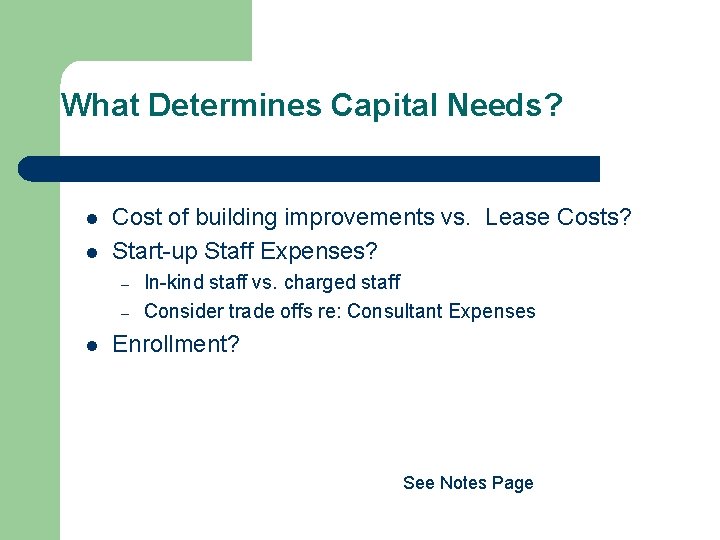
What Determines Capital Needs? l l Cost of building improvements vs. Lease Costs? Start-up Staff Expenses? – – l In-kind staff vs. charged staff Consider trade offs re: Consultant Expenses Enrollment? See Notes Page
Urban Scenarios: Net Income and Break Even Month Scenario Net Income Month Break Even Month Baseline 17 37 Lease 17 37 Reduced Start. Up Staff 17 36 Slow Enrollment 25 56 See Notes Page
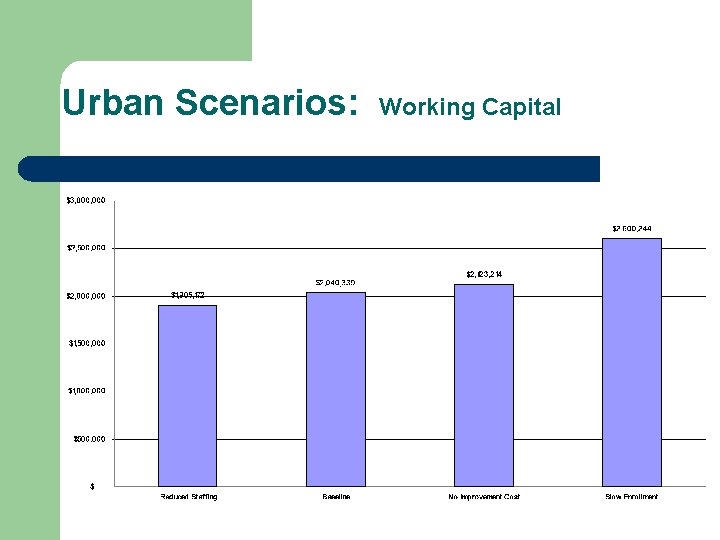
Urban Scenarios: Working Capital
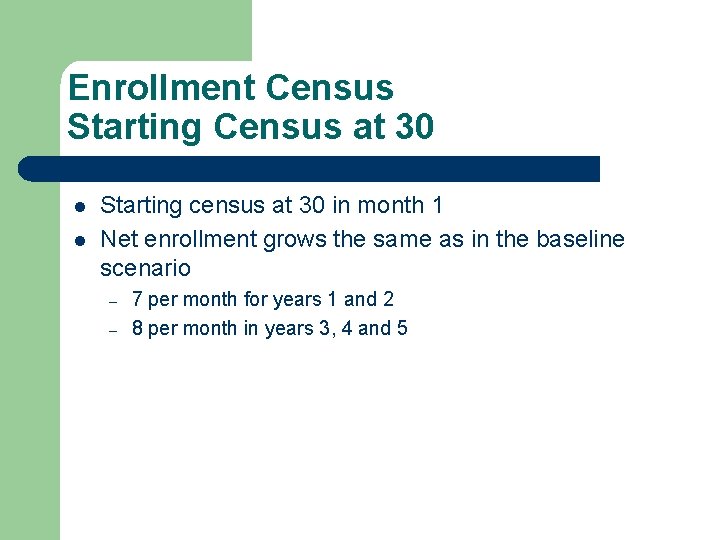
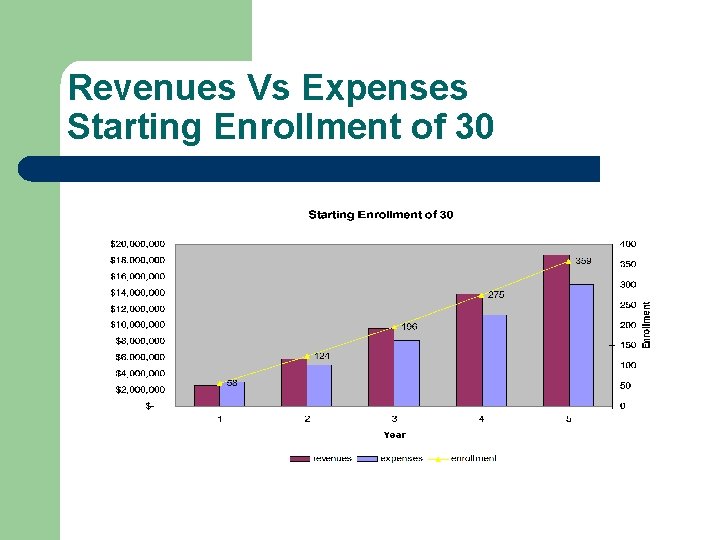
Enrollment Census Starting Census at 30 l l Starting census at 30 in month 1 Net enrollment grows the same as in the baseline scenario – – 7 per month for years 1 and 2 8 per month in years 3, 4 and 5
Revenues Vs Expenses Starting Enrollment of 30
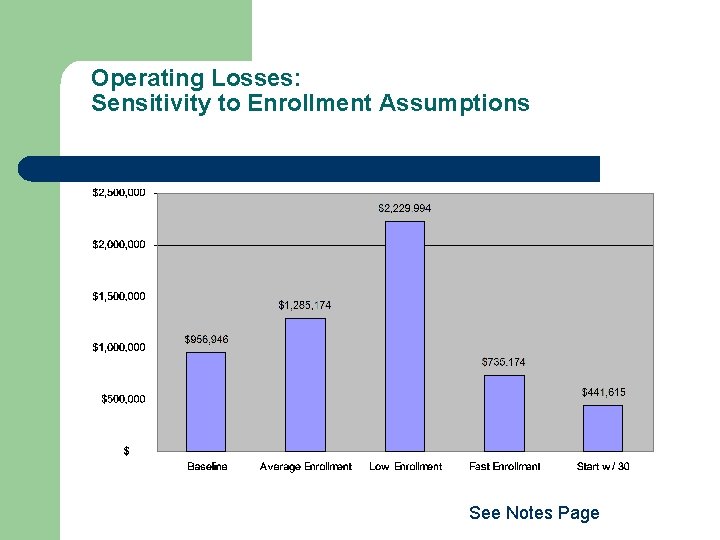
Operating Losses: Sensitivity to Enrollment Assumptions See Notes Page
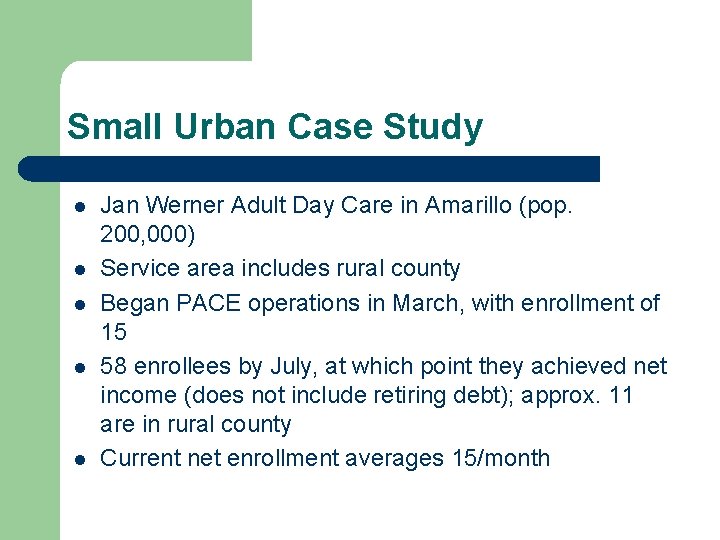
Small Urban Case Study l l l Jan Werner Adult Day Care in Amarillo (pop. 200, 000) Service area includes rural county Began PACE operations in March, with enrollment of 15 58 enrollees by July, at which point they achieved net income (does not include retiring debt); approx. 11 are in rural county Current net enrollment averages 15/month
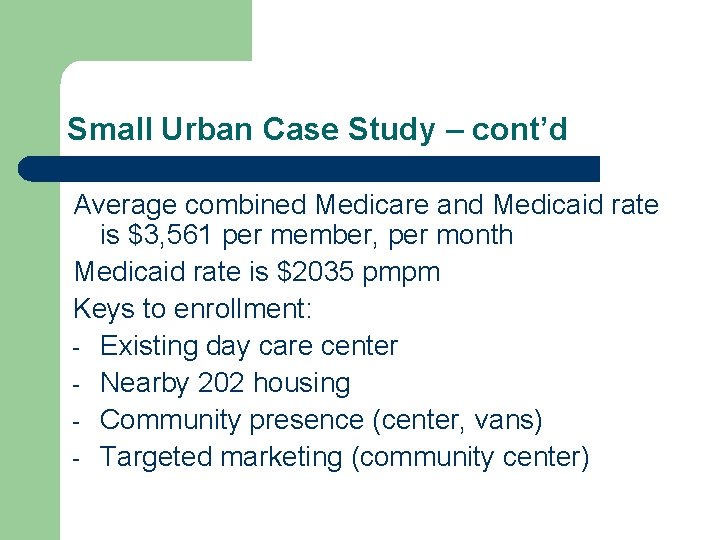
Small Urban Case Study – cont’d Average combined Medicare and Medicaid rate is $3, 561 per member, per month Medicaid rate is $2035 pmpm Keys to enrollment: - Existing day care center - Nearby 202 housing - Community presence (center, vans) - Targeted marketing (community center)
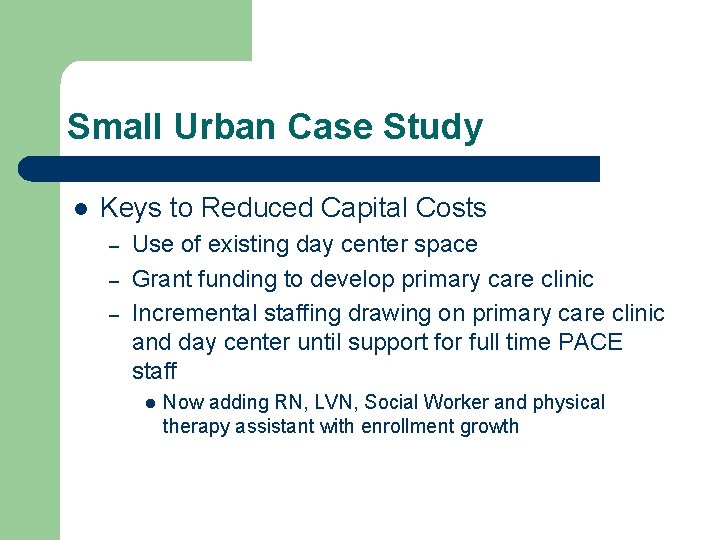
Small Urban Case Study l Keys to Reduced Capital Costs – – – Use of existing day center space Grant funding to develop primary care clinic Incremental staffing drawing on primary care clinic and day center until support for full time PACE staff l Now adding RN, LVN, Social Worker and physical therapy assistant with enrollment growth
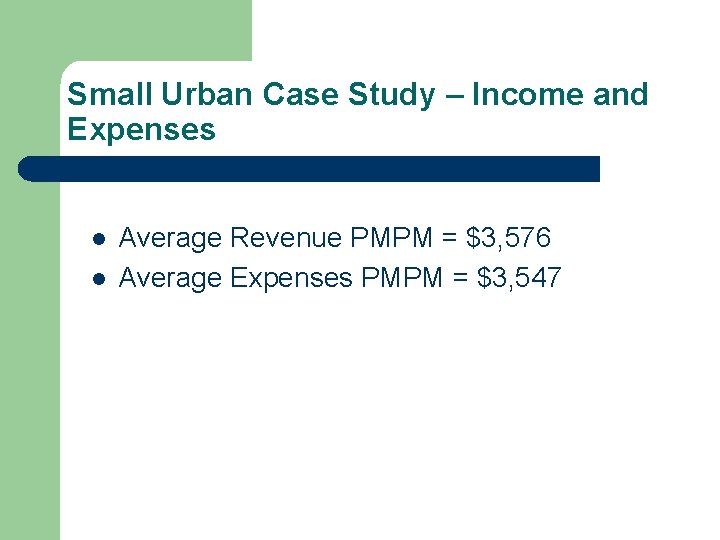
Small Urban Case Study – Income and Expenses l l Average Revenue PMPM = $3, 576 Average Expenses PMPM = $3, 547
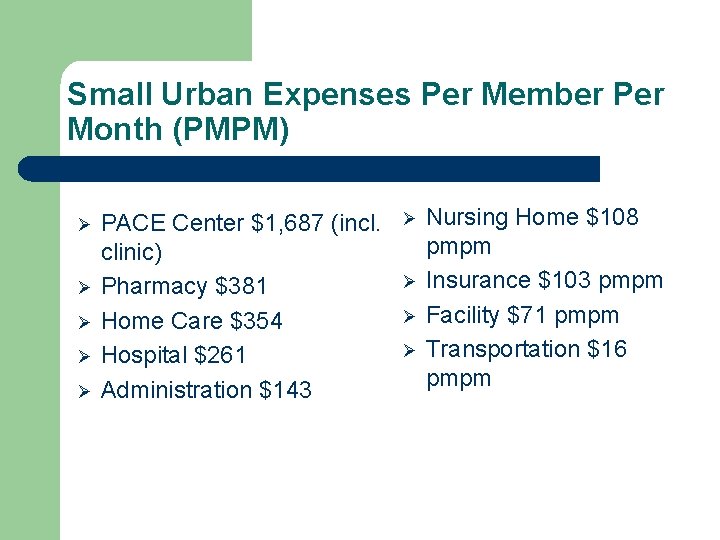
Small Urban Expenses Per Member Per Month (PMPM) Ø Ø Ø PACE Center $1, 687 (incl. clinic) Pharmacy $381 Home Care $354 Hospital $261 Administration $143 Ø Ø Nursing Home $108 pmpm Insurance $103 pmpm Facility $71 pmpm Transportation $16 pmpm
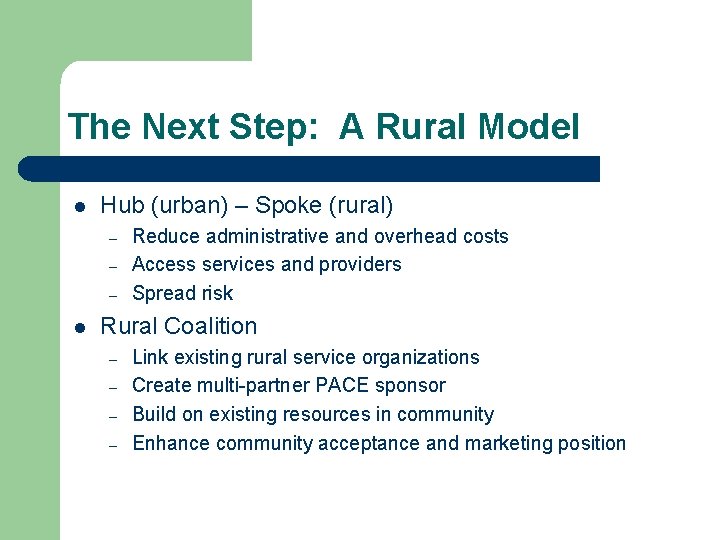
The Next Step: A Rural Model l Hub (urban) – Spoke (rural) – – – l Reduce administrative and overhead costs Access services and providers Spread risk Rural Coalition – – Link existing rural service organizations Create multi-partner PACE sponsor Build on existing resources in community Enhance community acceptance and marketing position
Rural PACE Strategies l l l Capital needs Income Cost
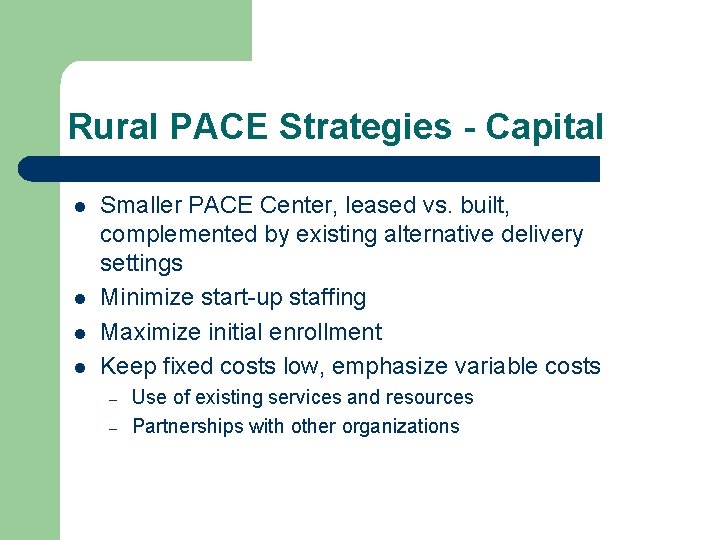
Rural PACE Strategies - Capital l l Smaller PACE Center, leased vs. built, complemented by existing alternative delivery settings Minimize start-up staffing Maximize initial enrollment Keep fixed costs low, emphasize variable costs – – Use of existing services and resources Partnerships with other organizations
Rural PACE Strategies - Income l l l Private Pay Veteran’s Administration Indian Health Service
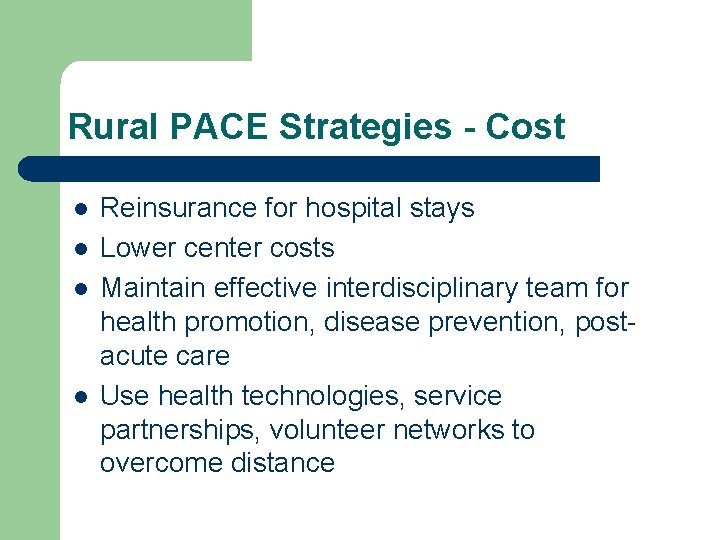
Rural PACE Strategies - Cost l l Reinsurance for hospital stays Lower center costs Maintain effective interdisciplinary team for health promotion, disease prevention, postacute care Use health technologies, service partnerships, volunteer networks to overcome distance
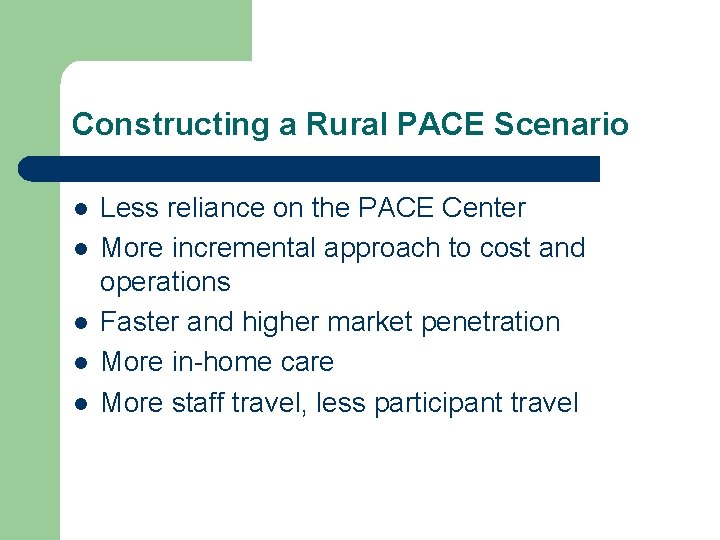
Constructing a Rural PACE Scenario l l l Less reliance on the PACE Center More incremental approach to cost and operations Faster and higher market penetration More in-home care More staff travel, less participant travel
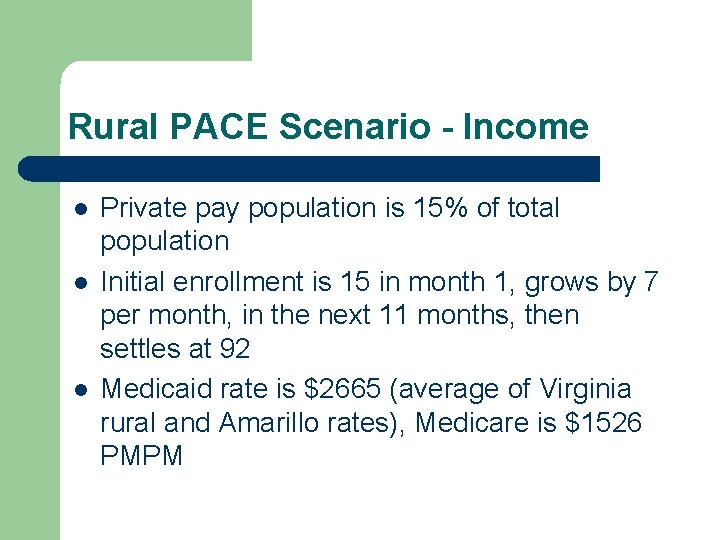
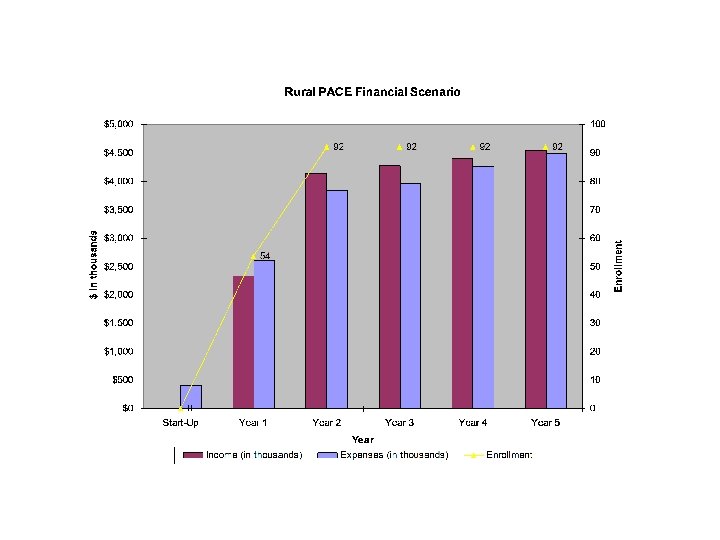
Rural PACE Scenario - Income l l l Private pay population is 15% of total population Initial enrollment is 15 in month 1, grows by 7 per month, in the next 11 months, then settles at 92 Medicaid rate is $2665 (average of Virginia rural and Amarillo rates), Medicare is $1526 PMPM
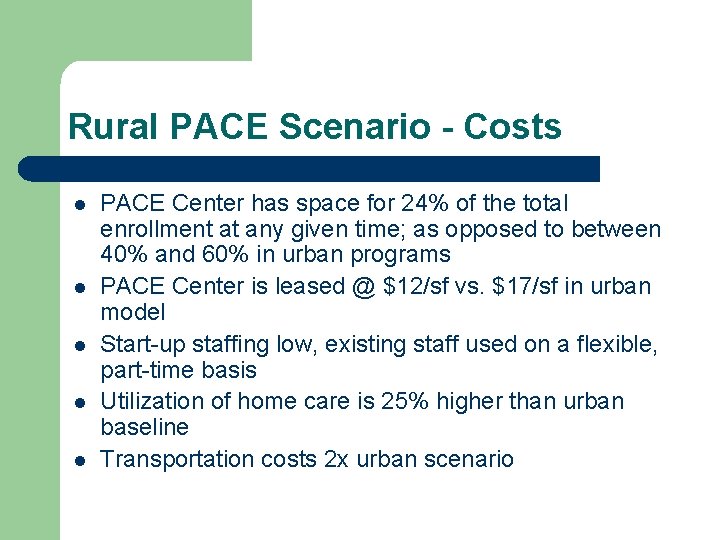
Rural PACE Scenario - Costs l l l PACE Center has space for 24% of the total enrollment at any given time; as opposed to between 40% and 60% in urban programs PACE Center is leased @ $12/sf vs. $17/sf in urban model Start-up staffing low, existing staff used on a flexible, part-time basis Utilization of home care is 25% higher than urban baseline Transportation costs 2 x urban scenario
Questions and Assistance l l www. npaonline. org Peter Fitzgerald – peterf@npaonline. org or 703/535 -1521