Feeding and Eating Disorders Dr Amna Khawar Assistant


- Slides: 22
Feeding and Eating Disorders Dr. Amna Khawar Assistant Professor Department of Applied Psychology LCWU
What Are Eating Disorders? � Eating disorders are illnesses in which the people experience severe disturbances in their eating behaviours and related thoughts and emotions. People with eating disorders typically become pre-occupied with food and their body weight.
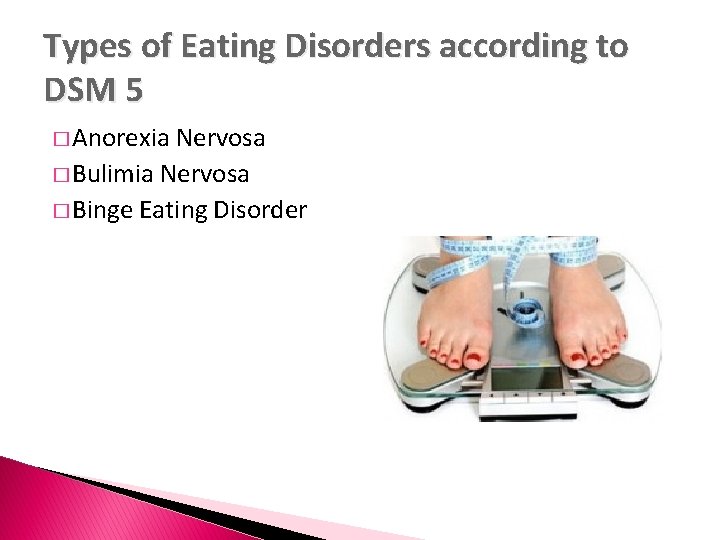
Types of Eating Disorders according to DSM 5 � Anorexia Nervosa � Bulimia Nervosa � Binge Eating Disorder
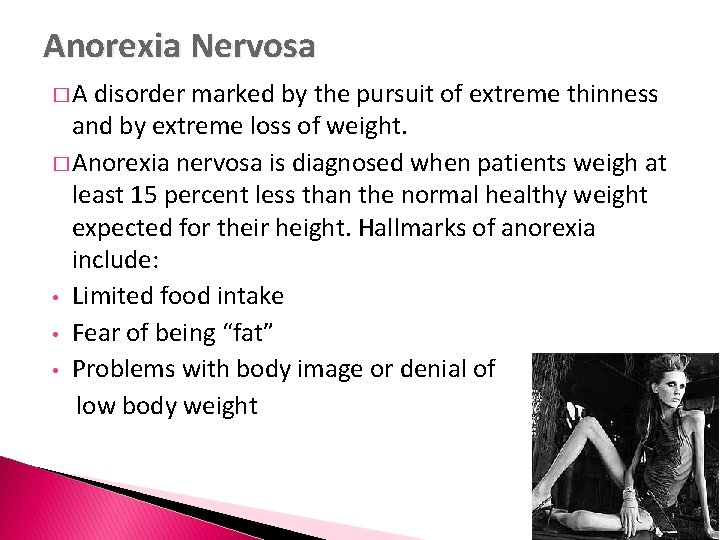
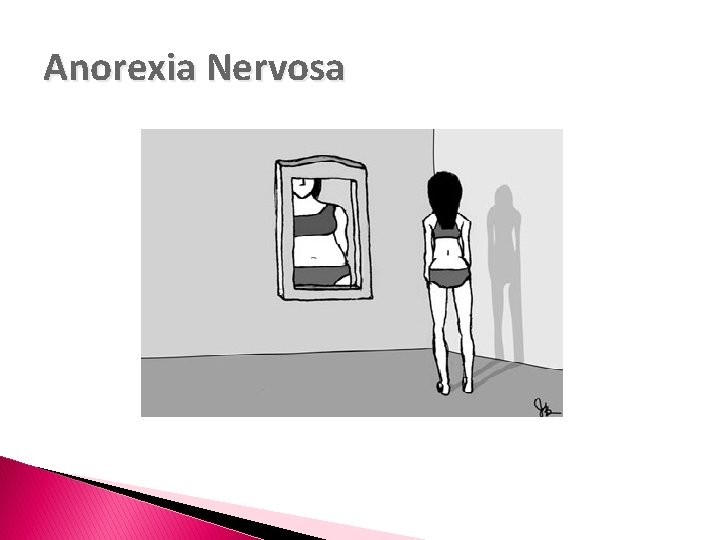
Anorexia Nervosa � A disorder marked by the pursuit of extreme thinness and by extreme loss of weight. � Anorexia nervosa is diagnosed when patients weigh at least 15 percent less than the normal healthy weight expected for their height. Hallmarks of anorexia include: • Limited food intake • Fear of being “fat” • Problems with body image or denial of low body weight
Anorexia Nervosa
Proposed DSM-5 criteria for Anorexia Nervosa � Restriction of food to promote healthy weight; body weight is significantly below normal � Intense fear of weight gain � Body image disturbance
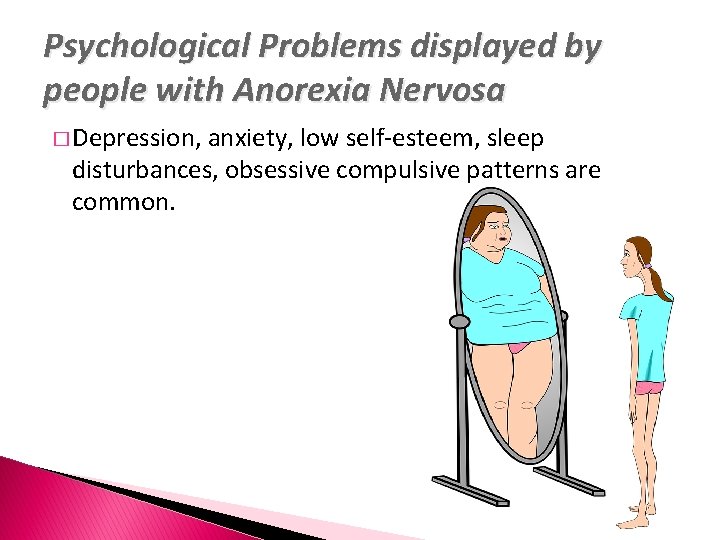
Clinical features of Anorexia Nervosa. � Fear of gaining weight or becoming obese � Preoccupation with food. They may spend considerable thinking and even reading about food and planning their limited meals. Many report that their dreams are filled with food and eating. � Persons with anorexia nervosa think in distorted ways. They usually have a low opinion about their body shape, consider themselves as unattractive. They are likely to overestimate their actual body proportion.
Psychological Problems displayed by people with Anorexia Nervosa � Depression, anxiety, low self-esteem, sleep disturbances, obsessive compulsive patterns are common.
Medical Problems in people with Anorexia Nervosa � Amenorrhea: The absences of menstrual cycle � Lowered body temperature � Low blood pressure � Body swelling � Reduced bone mineral densit- Osteopenia or osteoporosis (thinning of the bones) through loss of calcium � Severe constipation � Slow heart rate � Metabolic and electrolyte imbalances � Mild anaemia; and muscles, including the heart muscle, waste away � Lead to death by heart failure
Poor nutrition of people with anorexia nervosa may also cause � Skin to become rough, dry and cracked � Nails to become brittle � hands and feet to be cold blue � Hair loss � Some may grow lanugo (the fine silky hair that covers some newborns body) on their trunk, extremities and face
Types of Anorexia Nervosa � Restricting type: weight loss is achieved by severely limiting food intake. The person has not regularly engaged in binge eating or purging. � Binge eating/ purging type: person has also regularly engaged in binge eating and purging.
Bulimia Nervosa � A disorder marked by frequent eating binges that are followed by forced vomiting or other compensatory behaviors to avoid gaining weight also known as Binge -purge syndrome. � Bulimia is from a Greek word meaning “ox hunger”. Bulimia nervosa (or simply bulimia) is an eating disorder characterized by binge eating followed by purging.
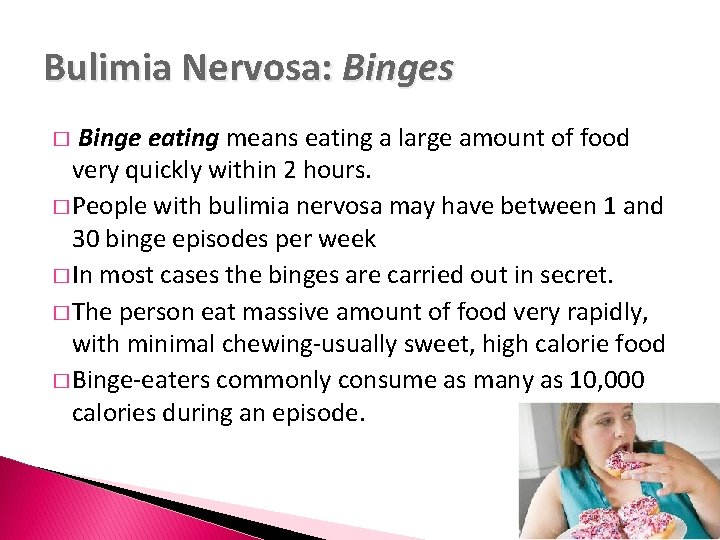
Bulimia Nervosa: Binges � Binge eating means eating a large amount of food very quickly within 2 hours. � People with bulimia nervosa may have between 1 and 30 binge episodes per week � In most cases the binges are carried out in secret. � The person eat massive amount of food very rapidly, with minimal chewing-usually sweet, high calorie food � Binge-eaters commonly consume as many as 10, 000 calories during an episode.
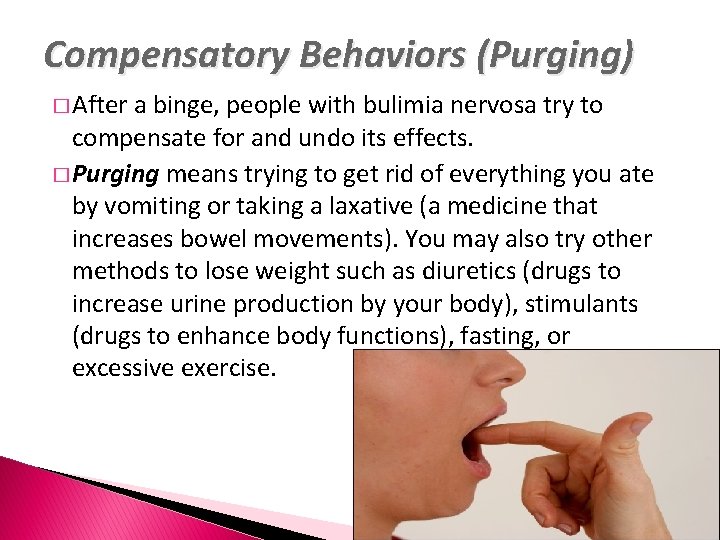
Compensatory Behaviors (Purging) � After a binge, people with bulimia nervosa try to compensate for and undo its effects. � Purging means trying to get rid of everything you ate by vomiting or taking a laxative (a medicine that increases bowel movements). You may also try other methods to lose weight such as diuretics (drugs to increase urine production by your body), stimulants (drugs to enhance body functions), fasting, or excessive exercise.
Proposed DSM-5 criteria for Bulimia Nervosa � Recurrent episode of binge eating. � Recurrent compensatory behaviors to prevent weight gain, for example; vomiting. � Body shape and weight are extremely important for self-evaluation.
Physical consequences of bulimia nervosa � Chronically inflamed and sore throat � Salivary glands in the neck and below the jaw become swollen; cheeks and face often become puffy, causing sufferers to develop a “chipmunk” looking face � Tooth enamel wears off; teeth begin to decay from exposure to stomach acids � Constant vomiting causes gastroesophageal reflux disorder � Laxative abuse causes irritation, leading to intestinal problems � Diuretics (water pills) cause kidney problems � Severe dehydration from purging of fluids � Bulimia can lead to rare but potentially fatal complications including esophageal tears, gastric rupture, and cardiac arrhythmias.
Physical signs and symptoms � Frequent weight fluctuations. � Puffy cheeks caused by repeated vomiting. � Scars under knuckles or hands caused by sticking your finger down your throat to induce vomiting. � Discolored teeth due to stomach acid from vomiting.
Common symptoms of bulimia nervosa: � Being overly concerned with your body shape and weight. � Constant fear of gaining weight. � Being unable to control your eating behavior. � Eating until you feel sick. � Eating a lot more food in a binge episode than in a normal meal. � Forcing you to vomit, or exercise too much to keep from gaining weight. � Misusing laxatives, diuretics etc. after eating. � Using dietary supplements for weight loss.
Difference between Anorexia nervosa and Bulima Nervosa � Extreme weight loss in anorexia nervosa � People with bulimia nervosa tend to be more concerned about pleasing others, being attractive to others and having intimate relationships. They are more sexually active than people with anorexia nervosa � People with bulimia nervosa have long histories of mood swings, easy to become frustrated or bored, have trouble coping or controlling their impulses. Personality disorders particularly borderline personality disorder is common in bulimia nervosa. � Dental problem more common in bulimia nervosa because of frequent vomiting.
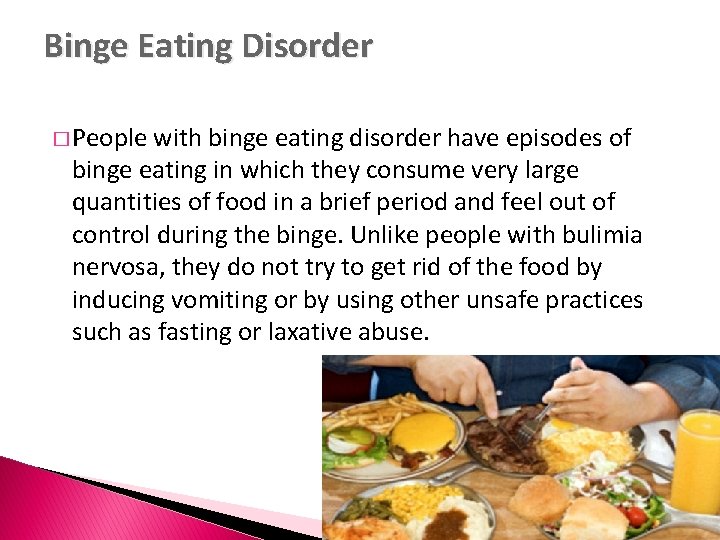
Binge Eating Disorder � People with binge eating disorder have episodes of binge eating in which they consume very large quantities of food in a brief period and feel out of control during the binge. Unlike people with bulimia nervosa, they do not try to get rid of the food by inducing vomiting or by using other unsafe practices such as fasting or laxative abuse.
PROPOSED DSM-5 CRITERIA FOR BINGE EATING DISORDER � Reported Binge eating episodes � Binge eating episodes include at least three of the following symptoms must be present � eating much more rapidly than normal � eating until uncomfortably full � eating large amounts without feeling hungry � eating alone due to feelings of embarrassment and shame � feeling of guilt or disgust with oneself � No compensatory behavior is present
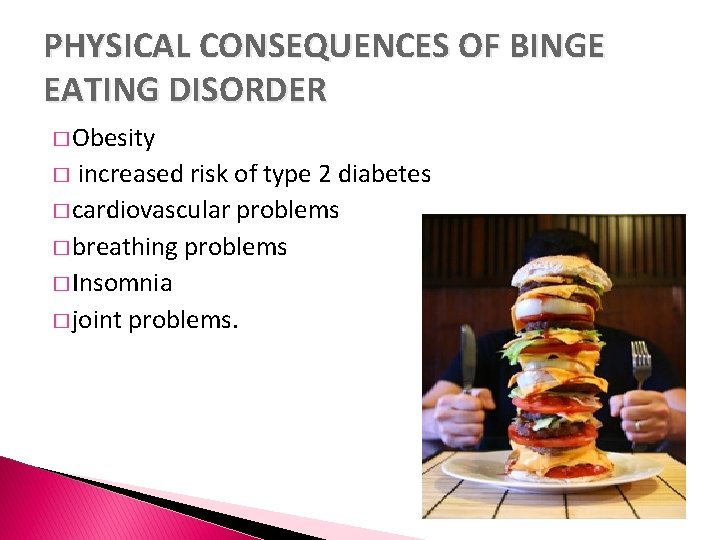
PHYSICAL CONSEQUENCES OF BINGE EATING DISORDER � Obesity � increased risk of type 2 diabetes � cardiovascular problems � breathing problems � Insomnia � joint problems.