FEDERALISM Or How I learned to stop worrying
- Slides: 21
FEDERALISM Or, How I learned to stop worrying and love the layers
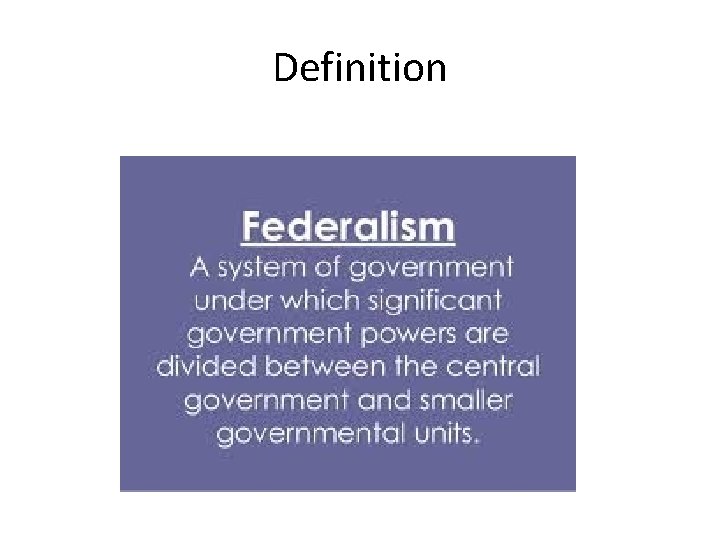
Definition
When It Doesn’t Work KATRINA • First responders: state & local (overwhelmed) • Clash over federalizing LA National Guard – state feared loosing authority • State leaders made open-ended pleas; fed waited for specific requests
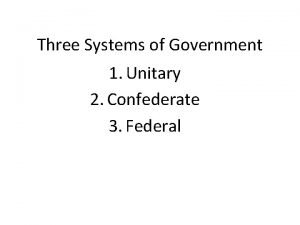
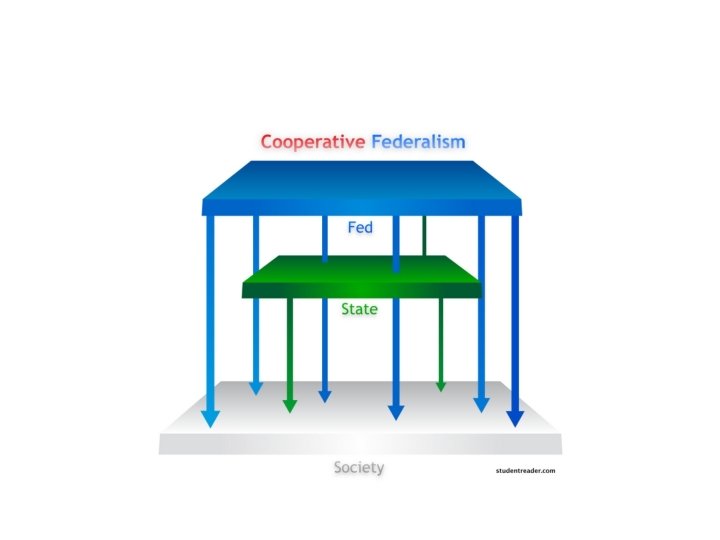
Different Layers • Federalism: two or more levels with authority over same area and people • Unitary: all power resides in central gov’t • Confederate: weak nat’l gov’t; most power help by component parts (i. e. , states)
Importance of Federalism • 1. Decentralizes politics – More layers means more opportunities for participation – Enhances judicial power – more players means more controversies • 2. Decentralizes policies – There lies the rub: tension over who decides what it should be and who controls implementation – Historically state issues have become federal issues – States are policy innovators
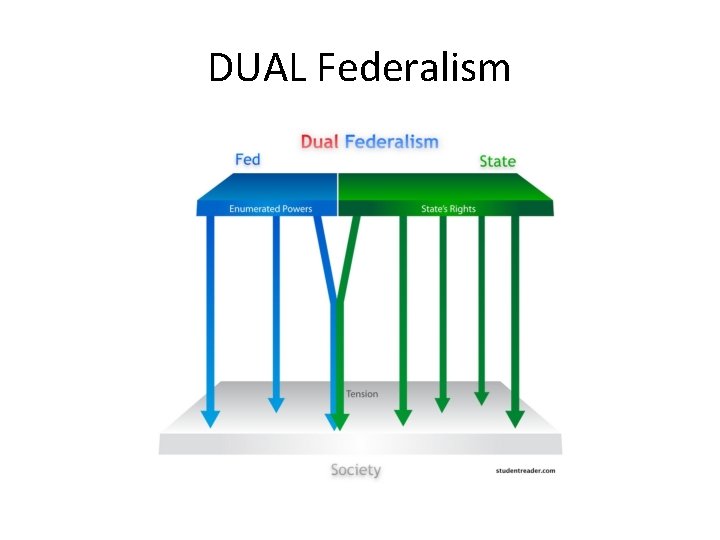
DUAL Federalism
Article VI, Sec. 2: Supremacy Clause “This Constitution, and the Laws of the United States which shall be made in Pursuance thereof; and all Treaties made, or which shall be made, under the Authority of the United States, shall be the supreme Law of the Land; and the Judges in every State shall be bound thereby, any Thing in the Constitution or Laws of any State to the contrary notwithstanding. ”
But… Federal Gov’t can only operate within its own sphere, and cannot usurp states’ powers. What are the boundaries of that sphere?
Tenth Amendment • For states’ rights advocates, 10 th means fed only has those powers specifically assigned, i. e. , enumerated powers • Supreme Court has vacillated, sometimes saying Congress went too far, sometimes saying 10 th did not give states power that is superior to nat’l gov’t for activities which are not enumerated
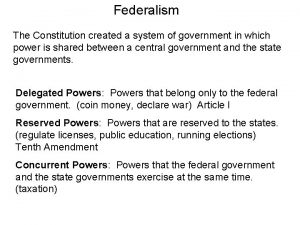
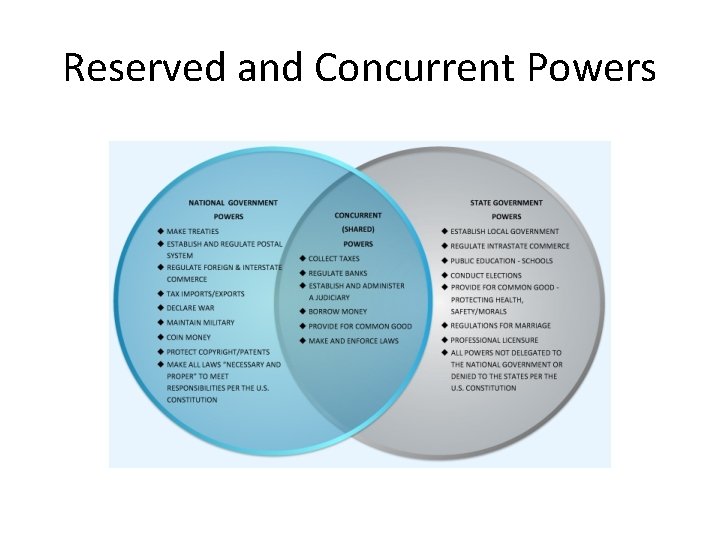
Reserved and Concurrent Powers
We interrupt your regularly scheduled program: • • Eleventh Amendment Prohibits damages suits against state officials; protects against being sued without consent BUT: Cases under 14 th Amendment excluded Cases under 1871 law excluded RESULT: Most cases against states and local gov’t not barred
Getting to National Supremacy • Implied Powers • Commerce Power • Civil War • Racial Equality Struggle
Implied Powers: Mc. Culloch v Maryland • Luther Martin for Mc. Culloch: Congress has only enumerated powers • Daniel Webster for MD: broad interpretation under “Necessary and Proper” Clause • John Marshall, Chief Justice: – Supremacy of National Govt: as long as nat’l gov’t did not violate Constitution, it could act, and its acts would preempt state or local laws – Implied Powers: congress can legislate beyond enumerated powers, as long as such action is necessary and proper for carrying out enumerated powers
Commerce Clause: Gibbons v Ogden • Supreme Court went with very broad interpretation • Result was that nearly all every form of commercial activity came into federal sphere • As long as power was for economic development, it was constitutional • Legal question, today, is what constitutes commercial activity
Civil War The rule the judicial branch set out in Mc. Cullough, the Civil War settled militarily.
Racial Equality • Education (Brown v Bd of Education I and II) • Public Accommodation (Heart of Atlanta Motel) • Public Housing • Voting • Jobs
Constitutional Obligations of States • Extradition • Privileges and Immunities • Full Faith and Credit
Extradition • Requires states to return people charged with a crime or serving time for one to the state where offense was committed • Usually not an issue, as states don’t want to keep criminals and want their own criminals returned to them
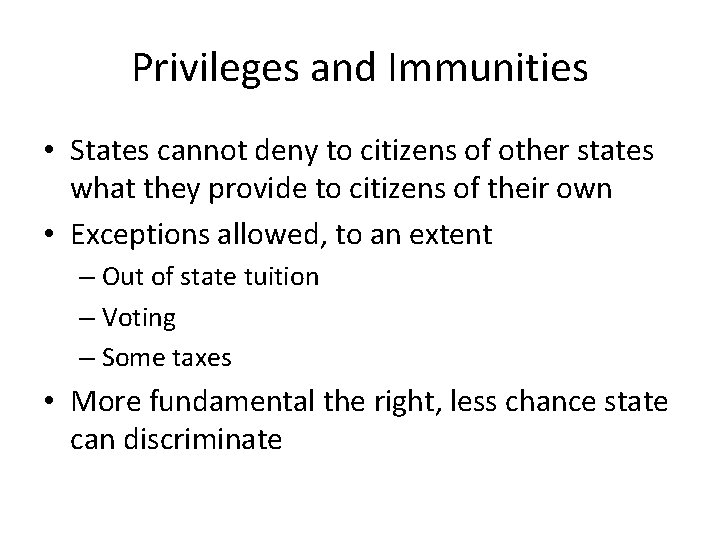
Privileges and Immunities • States cannot deny to citizens of other states what they provide to citizens of their own • Exceptions allowed, to an extent – Out of state tuition – Voting – Some taxes • More fundamental the right, less chance state can discriminate
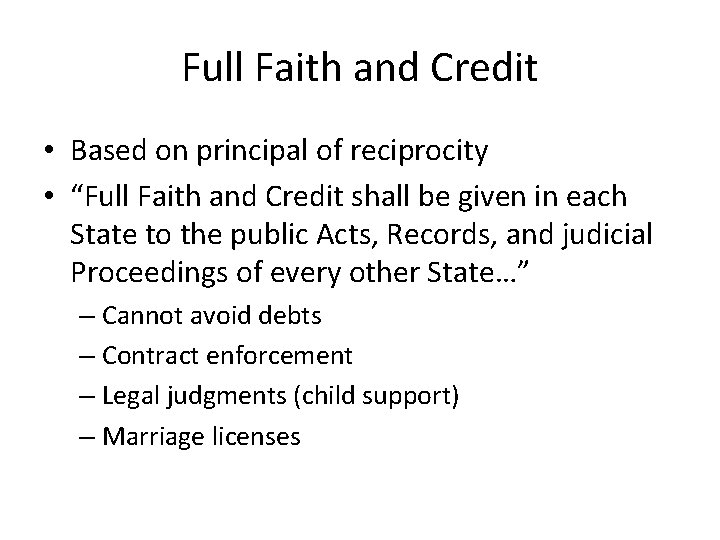
Full Faith and Credit • Based on principal of reciprocity • “Full Faith and Credit shall be given in each State to the public Acts, Records, and judicial Proceedings of every other State…” – Cannot avoid debts – Contract enforcement – Legal judgments (child support) – Marriage licenses