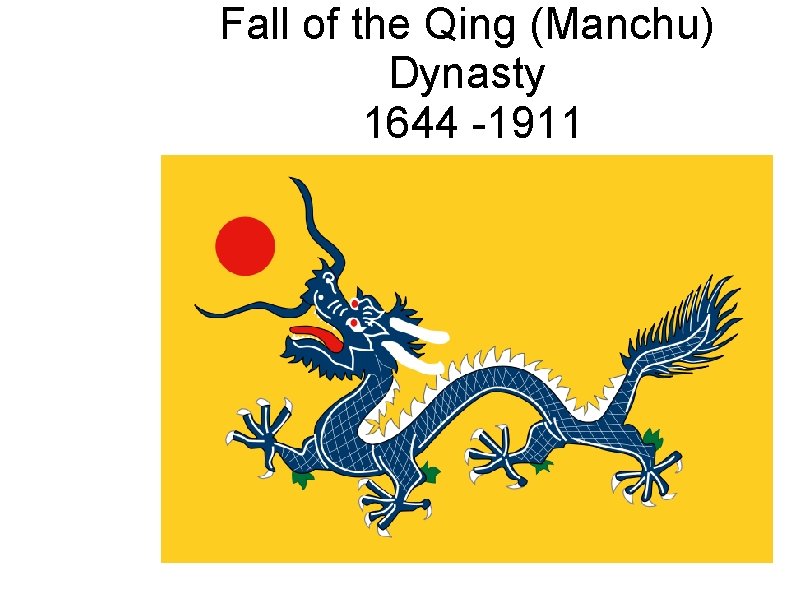
Fall of the Qing Manchu Dynasty 1644 1911


- Slides: 17
Fall of the Qing (Manchu) Dynasty 1644 -1911 Qing 1644 -1911
Domestic Problems 1. Political Inequality 2. Internal Rebellions 3. Weak Leadership 4. Resistance to Reforms
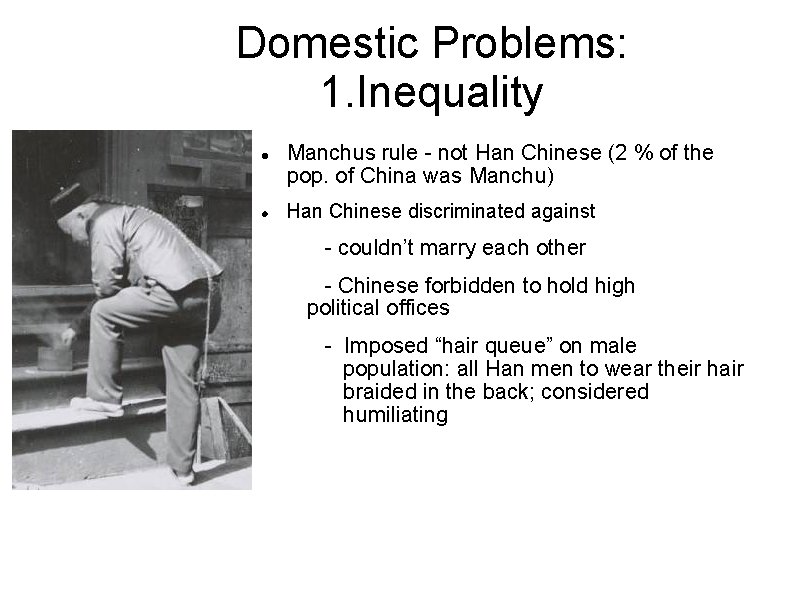
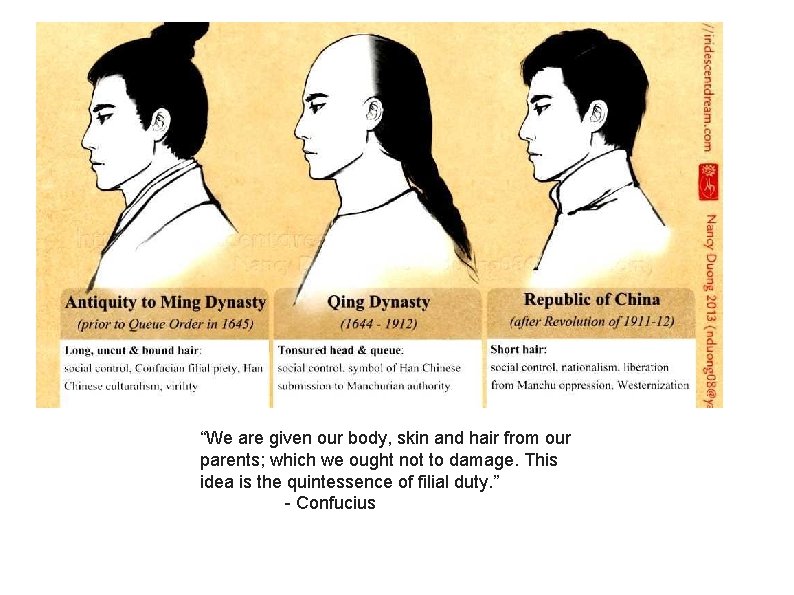
Domestic Problems: 1. Inequality Manchus rule - not Han Chinese (2 % of the pop. of China was Manchu) Han Chinese discriminated against - couldn’t marry each other - Chinese forbidden to hold high political offices - Imposed “hair queue” on male population: all Han men to wear their hair braided in the back; considered humiliating
“We are given our body, skin and hair from our parents; which we ought not to damage. This idea is the quintessence of filial duty. ” - Confucius
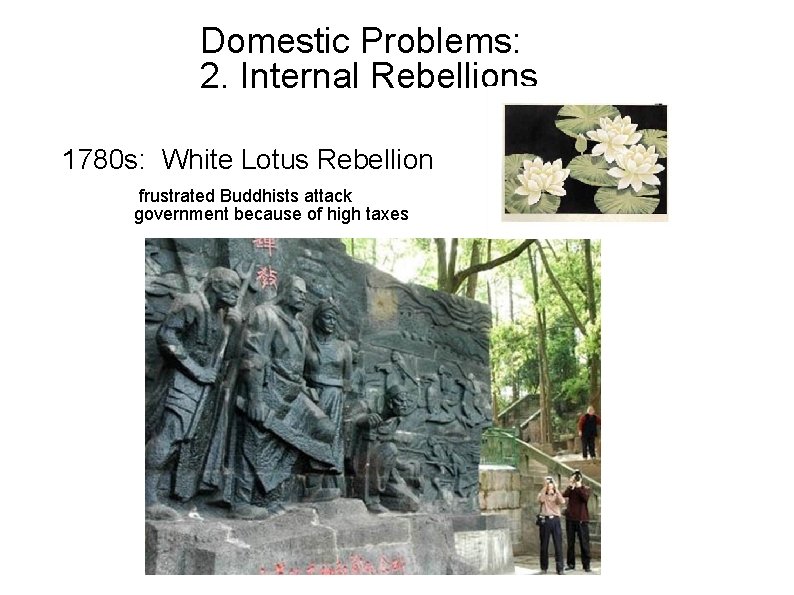
Domestic Problems: 2. Internal Rebellions 1780 s: White Lotus Rebellion frustrated Buddhists attack government because of high taxes
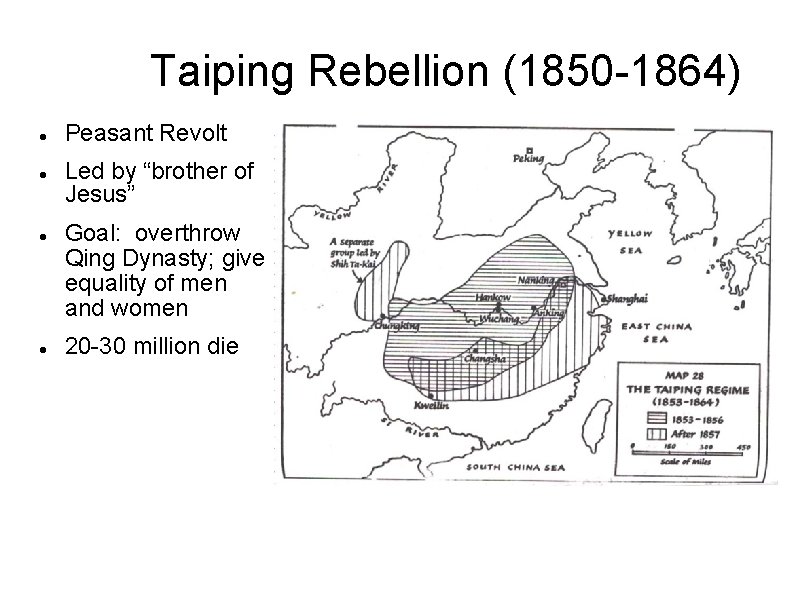
Taiping Rebellion (1850 -1864) Peasant Revolt Led by “brother of Jesus” Goal: overthrow Qing Dynasty; give equality of men and women 20 -30 million die
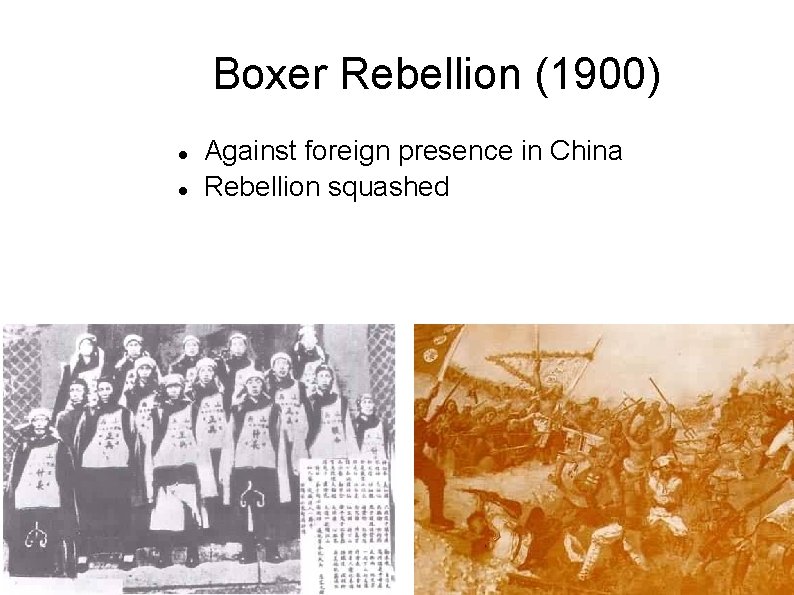
Boxer Rebellion (1900) Against foreign presence in China Rebellion squashed
Domestic Problems: Weak Leadership • Emperors of late 1800 s controlled by others: Tongzhi Emperor Guangxu Emperor
Empress Dowager Cixi • Essentially controls dynasty from late 1800 s until 1908 • Known for her resistance to reforms • Corruption grows under reign • Resented by many
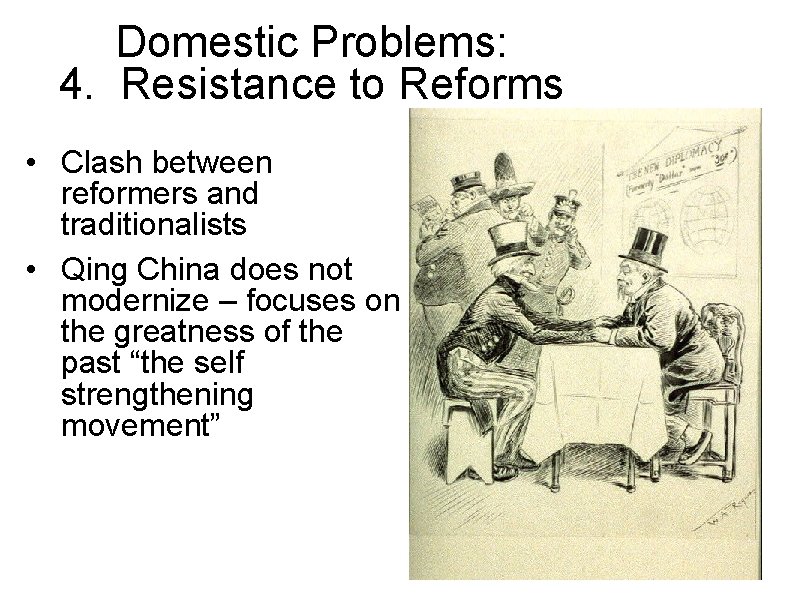
Domestic Problems: 4. Resistance to Reforms • Clash between reformers and traditionalists • Qing China does not modernize – focuses on the greatness of the past “the self strengthening movement”
Foreign Problems 1. European and American Imperialism 2. Disastrous Wars
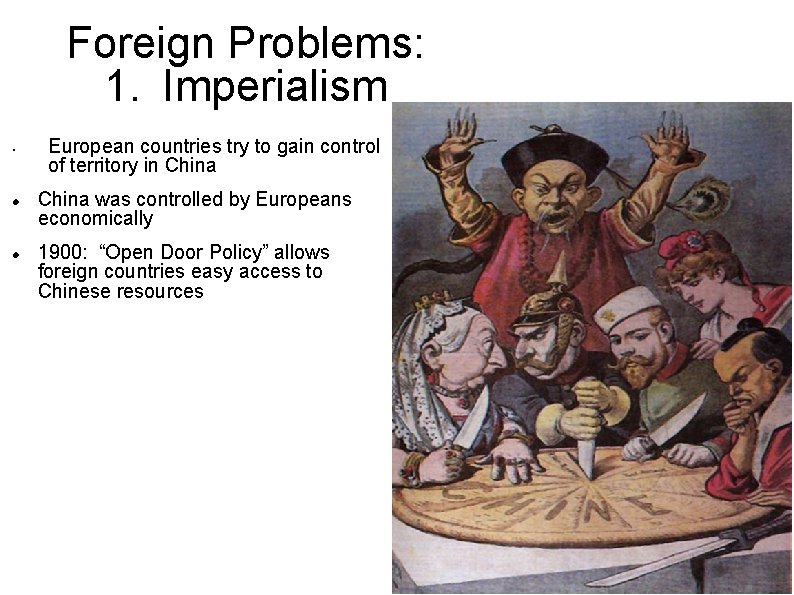
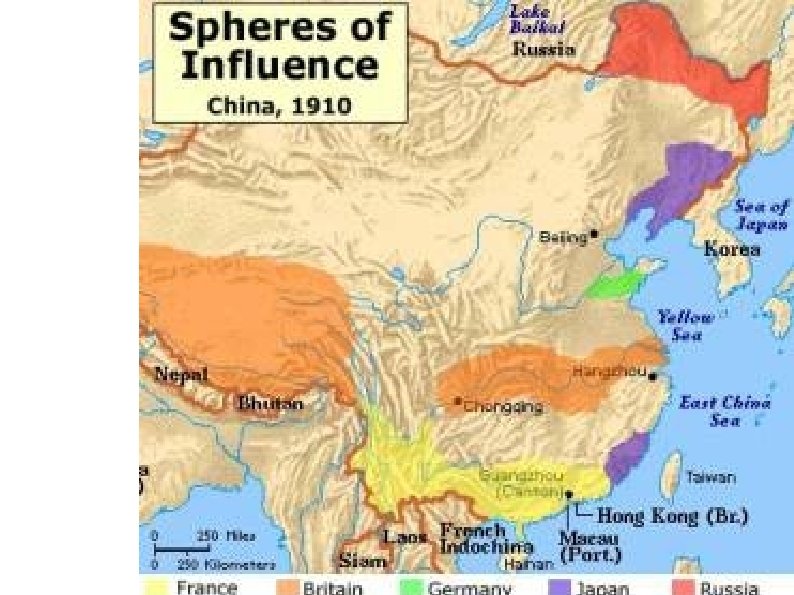
Foreign Problems: 1. Imperialism • European countries try to gain control of territory in China was controlled by Europeans economically 1900: “Open Door Policy” allows foreign countries easy access to Chinese resources
is cooll
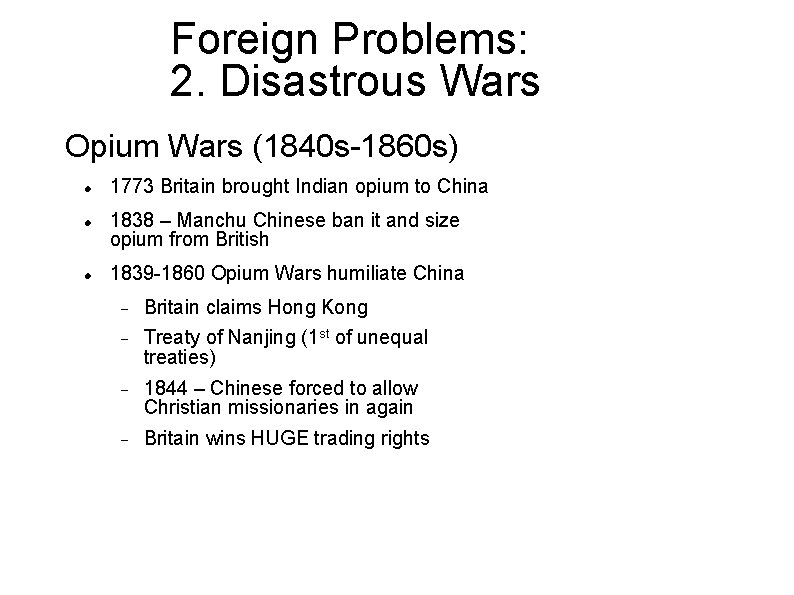
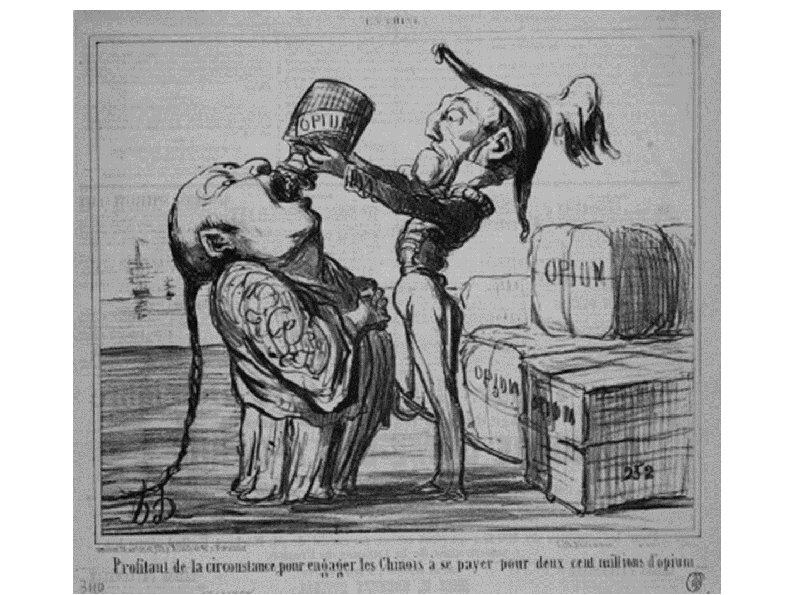
Foreign Problems: 2. Disastrous Wars Opium Wars (1840 s-1860 s) 1773 Britain brought Indian opium to China 1838 – Manchu Chinese ban it and size opium from British 1839 -1860 Opium Wars humiliate China Britain claims Hong Kong Treaty of Nanjing (1 st of unequal treaties) 1844 – Chinese forced to allow Christian missionaries in again Britain wins HUGE trading rights
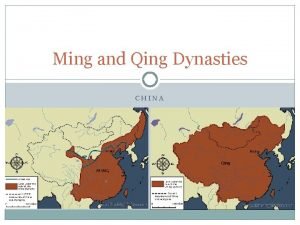
Qing 1644 -1910
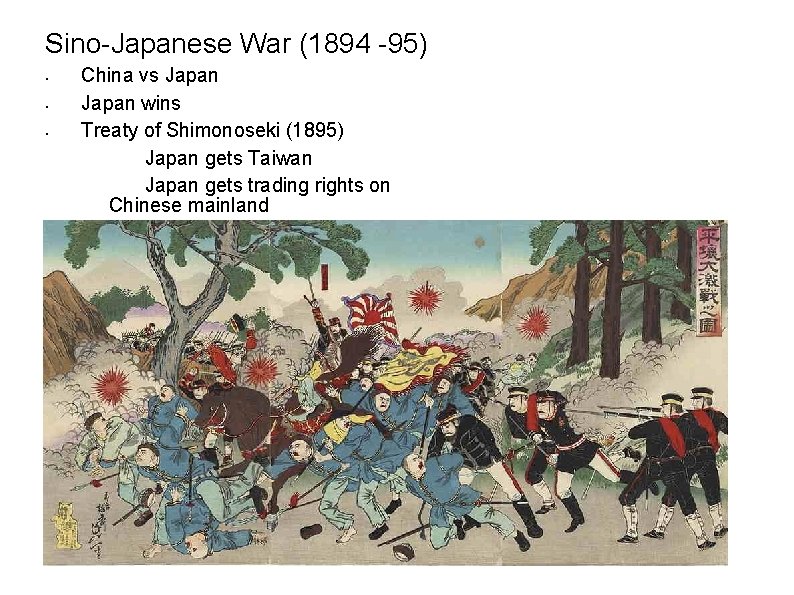
Sino-Japanese War (1894 -95) • • • China vs Japan wins Treaty of Shimonoseki (1895) Japan gets Taiwan Japan gets trading rights on Chinese mainland
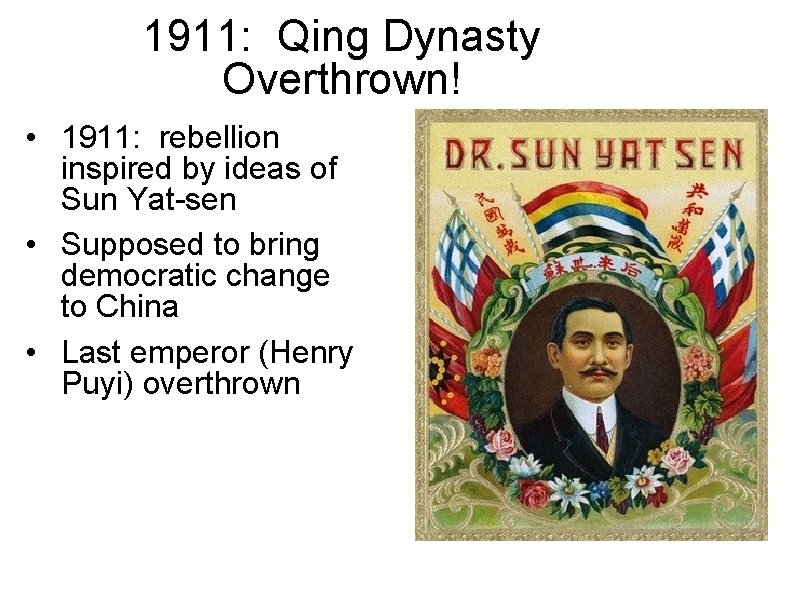
1911: Qing Dynasty Overthrown! • 1911: rebellion inspired by ideas of Sun Yat-sen • Supposed to bring democratic change to China • Last emperor (Henry Puyi) overthrown