FAKE NEWS Paul Faulkner Department of Philosophy University
- Slides: 12
FAKE NEWS! Paul Faulkner, Department of Philosophy, University of Sheffield
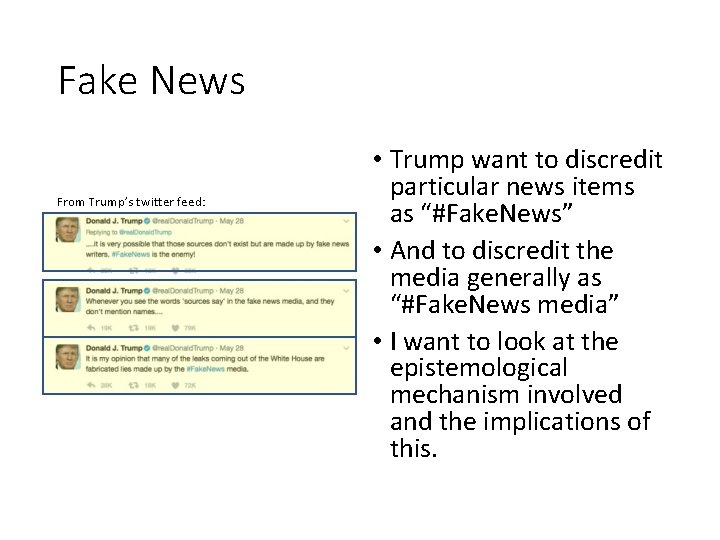
Fake News From Trump’s twitter feed: • Trump want to discredit particular news items as “#Fake. News” • And to discredit the media generally as “#Fake. News media” • I want to look at the epistemological mechanism involved and the implications of this.
What is needed for knowledge? • Epistemologists argue about what it is to know something, and so about what is needed for knowledge. • But nearly everyone agrees that KNOWLEDGE requires that: • YOU GOT IT RIGHT • IT NOT BE LIKELY THAT YOU GOT IT WRONG • YOU NOT THINK THAT YOU’RE LIKELY TO HAVE GOT IT WRONG • Let me look at these 3 conditions, and then apply them to the #Fake. News issue.
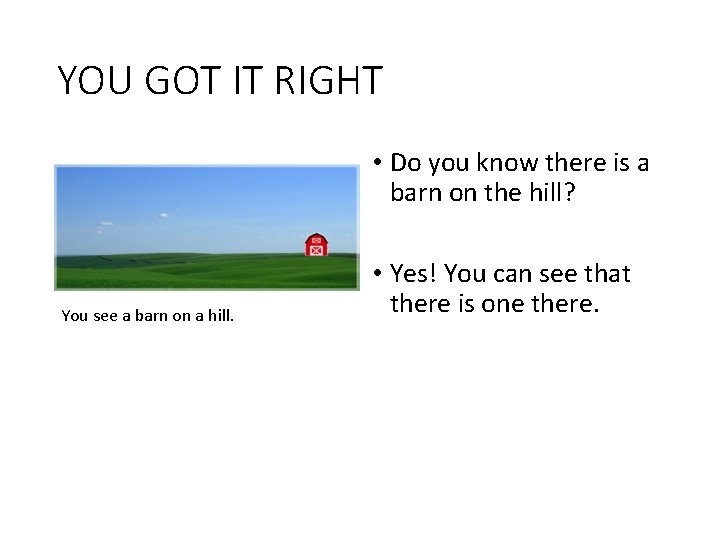
YOU GOT IT RIGHT • Do you know there is a barn on the hill? You see a barn on a hill. • Yes! You can see that there is one there.
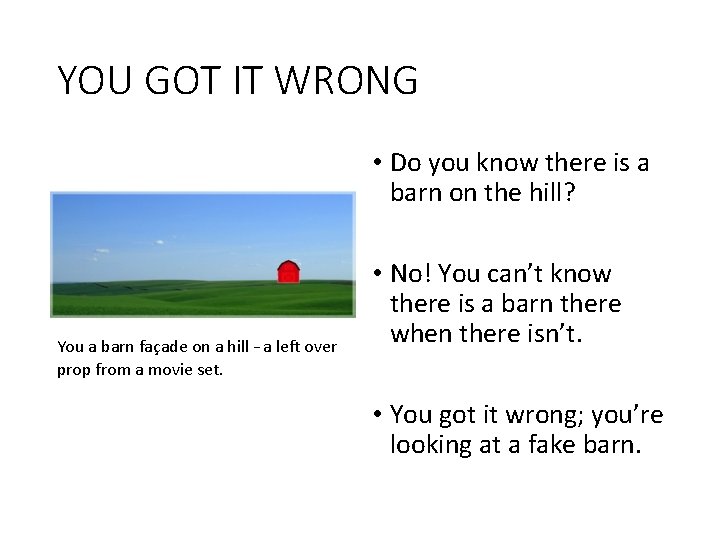
YOU GOT IT WRONG • Do you know there is a barn on the hill? You a barn façade on a hill – a left over prop from a movie set. • No! You can’t know there is a barn there when there isn’t. • You got it wrong; you’re looking at a fake barn.
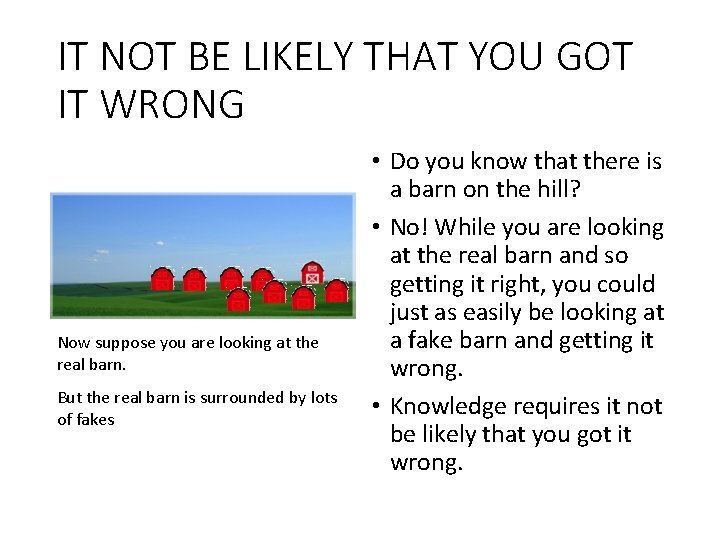
IT NOT BE LIKELY THAT YOU GOT IT WRONG Now suppose you are looking at the real barn. But the real barn is surrounded by lots of fakes • Do you know that there is a barn on the hill? • No! While you are looking at the real barn and so getting it right, you could just as easily be looking at a fake barn and getting it wrong. • Knowledge requires it not be likely that you got it wrong.
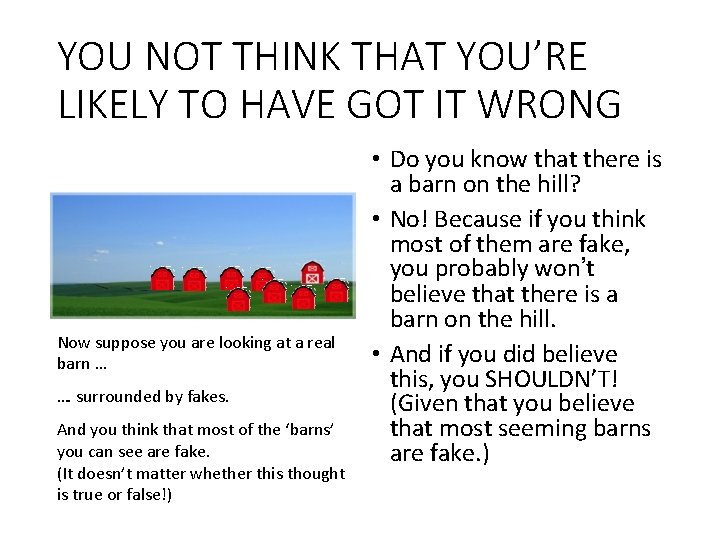
YOU NOT THINK THAT YOU’RE LIKELY TO HAVE GOT IT WRONG Now suppose you are looking at a real barn … …. surrounded by fakes. And you think that most of the ‘barns’ you can see are fake. (It doesn’t matter whether this thought is true or false!) • Do you know that there is a barn on the hill? • No! Because if you think most of them are fake, you probably won’t believe that there is a barn on the hill. • And if you did believe this, you SHOULDN’T! (Given that you believe that most seeming barns are fake. )
Testimony • Knowing that there is a barn on a hill by looking at the hill and seeing what appears to be a barn is knowledge based on perception. • We are interested in knowledge based on testimony. • Knowing that something is so because someone tells you that it is so. • However, the same points hold because these are general points about knowledge.
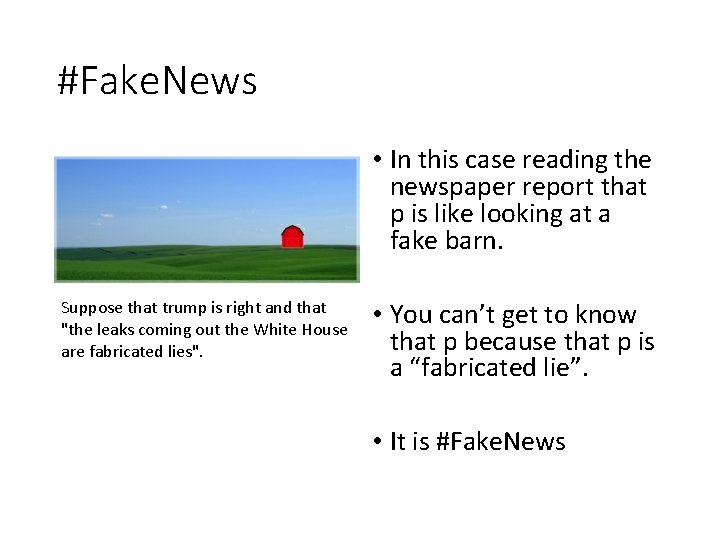
#Fake. News • In this case reading the newspaper report that p is like looking at a fake barn. Suppose that trump is right and that "the leaks coming out the White House are fabricated lies". • You can’t get to know that p because that p is a “fabricated lie”. • It is #Fake. News
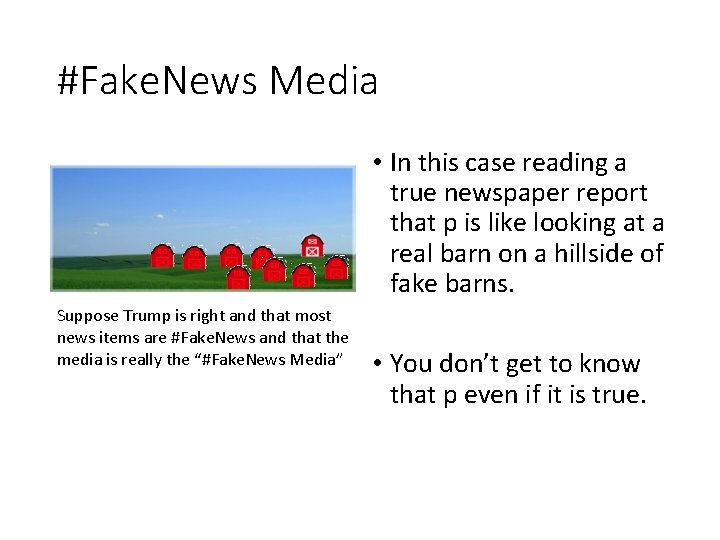
#Fake. News Media • In this case reading a true newspaper report that p is like looking at a real barn on a hillside of fake barns. Suppose Trump is right and that most news items are #Fake. News and that the media is really the “#Fake. News Media” • You don’t get to know that p even if it is true.
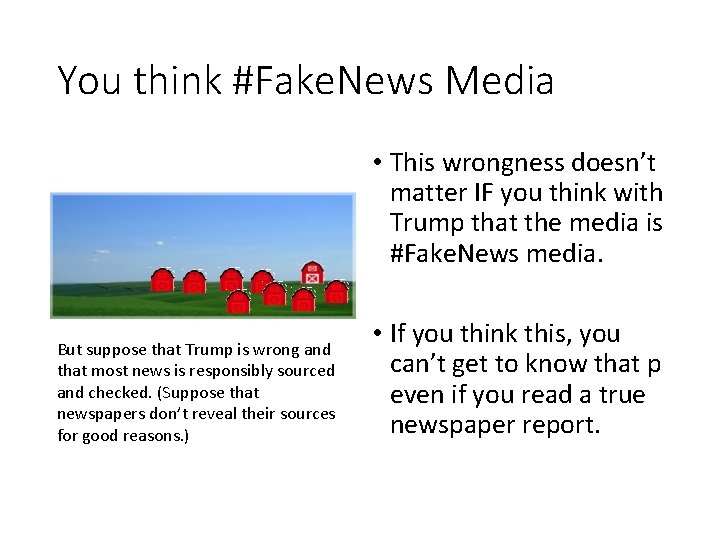
You think #Fake. News Media • This wrongness doesn’t matter IF you think with Trump that the media is #Fake. News media. But suppose that Trump is wrong and that most news is responsibly sourced and checked. (Suppose that newspapers don’t reveal their sources for good reasons. ) • If you think this, you can’t get to know that p even if you read a true newspaper report.
Undercutting Trust, Undercuts Knowledge • So by continually asserting that the news media is #Fake. News media, Trump insinuates the thought that this is so. • And if you think this, you lose your capacity to gain any knowledge from the news media. This is the epistemological mechanism. • The epistemological implications: if you criticise me on the basis of something you don’t know, your ciritism is neutered. • So Trump thereby aims to disable criticism from the vehicle most in a position to do this. And Trump quite selfconscious about this!