Exploring Marketing Demand Pricing Strategies for Agritourism in



- Slides: 43
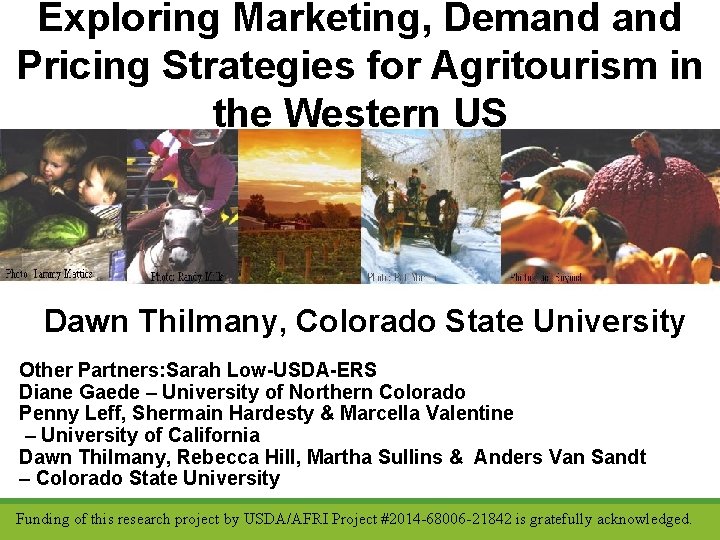
Exploring Marketing, Demand Pricing Strategies for Agritourism in the Western US Dawn Thilmany, Colorado State University Other Partners: Sarah Low-USDA-ERS Diane Gaede – University of Northern Colorado Penny Leff, Shermain Hardesty & Marcella Valentine – University of California Dawn Thilmany, Rebecca Hill, Martha Sullins & Anders Van Sandt – Colorado State University Funding of this research project by USDA/AFRI Project #2014 -68006 -21842 is gratefully acknowledged.
Overview v. Strategic Planning for Agritourism Enterprises ◦ Mission/Vision and Goals v. Marketing Principles ◦ The 4 P’s v. Making Decisions --CSU Research ◦ Comparing National Travelers to Western Travelers that Have been Agritourists Recently
Enterprise Diversification Many agriculture enterprises are complementary ◦ Independent or counter cyclical returns… ◦ What about commodities and travel? Too much dependency on one market is risky ◦ Reducing risk must be weighed against “overextending” management capacity of the farm or ranch Do new customers and markets help manage risk in other ways?
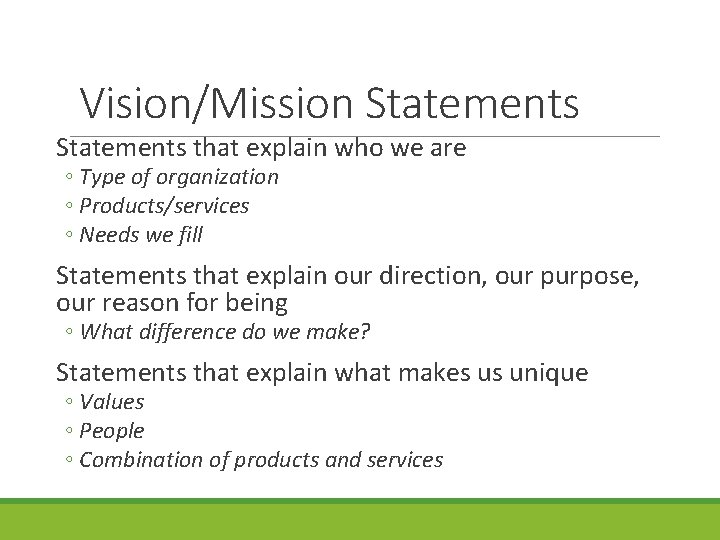
Vision/Mission Statements that explain who we are ◦ Type of organization ◦ Products/services ◦ Needs we fill Statements that explain our direction, our purpose, our reason for being ◦ What difference do we make? Statements that explain what makes us unique ◦ Values ◦ People ◦ Combination of products and services
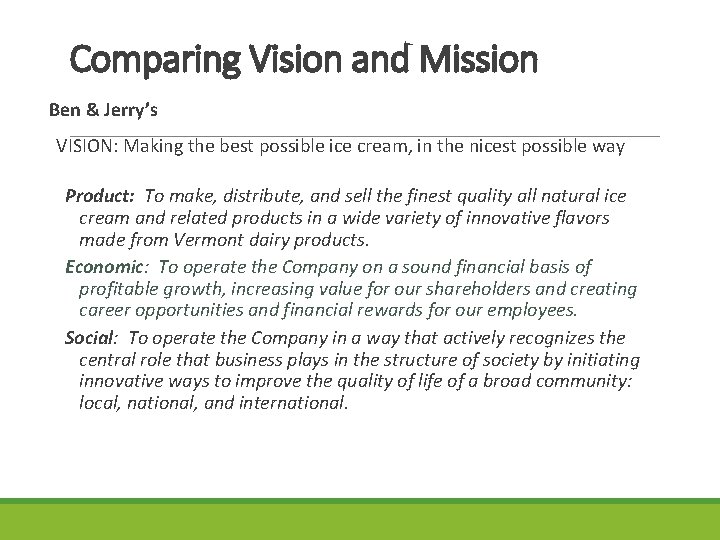
Comparing Vision and Mission Ben & Jerry’s VISION: Making the best possible ice cream, in the nicest possible way Product: To make, distribute, and sell the finest quality all natural ice cream and related products in a wide variety of innovative flavors made from Vermont dairy products. Economic: To operate the Company on a sound financial basis of profitable growth, increasing value for our shareholders and creating career opportunities and financial rewards for our employees. Social: To operate the Company in a way that actively recognizes the central role that business plays in the structure of society by initiating innovative ways to improve the quality of life of a broad community: local, national, and international.
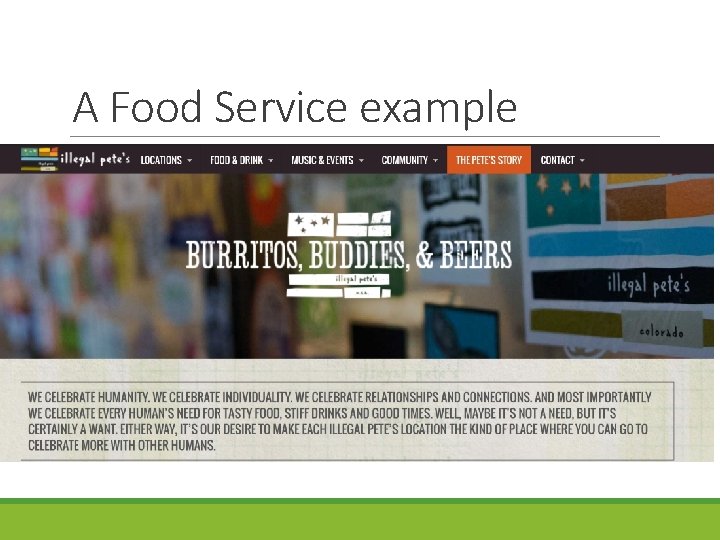
A Food Service example
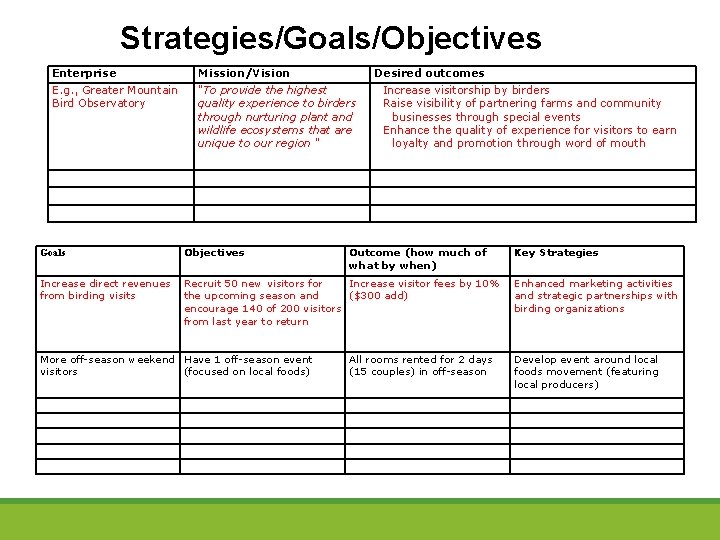
Strategies/Goals/Objectives Enterprise Mission/Vision Desired outcomes E. g. , Greater Mountain Bird Observatory "To provide the highest quality experience to birders through nurturing plant and wildlife ecosystems that are unique to our region " Increase visitorship by birders Raise visibility of partnering farms and community businesses through special events Enhance the quality of experience for visitors to earn loyalty and promotion through word of mouth Goals Objectives Increase direct revenues from birding visits Recruit 50 new visitors for Increase visitor fees by 10% the upcoming season and ($300 add) encourage 140 of 200 visitors from last year to return More off-season weekend Have 1 off-season event visitors (focused on local foods) Outcome (how much of what by when) All rooms rented for 2 days (15 couples) in off-season Key Strategies Enhanced marketing activities and strategic partnerships with birding organizations Develop event around local foods movement (featuring local producers)
Long-term Business Goals Directional -- Moves you toward the general objectives of our vision statement Reasonable -- Are practical and obtainable; not extreme Inspiring -- Challenging; affects you positively Visible -- Easy to visualize Eventual -- Will be fulfilled at a future time
Short-term Objectives Specific -- The objective achieves a particular, detailed result Measurable -- There is a means to determine the objective Attainable -- Within economic and physical capabilities Rewarding -- Profitable and self-satisfying Timed -- Have a deadline
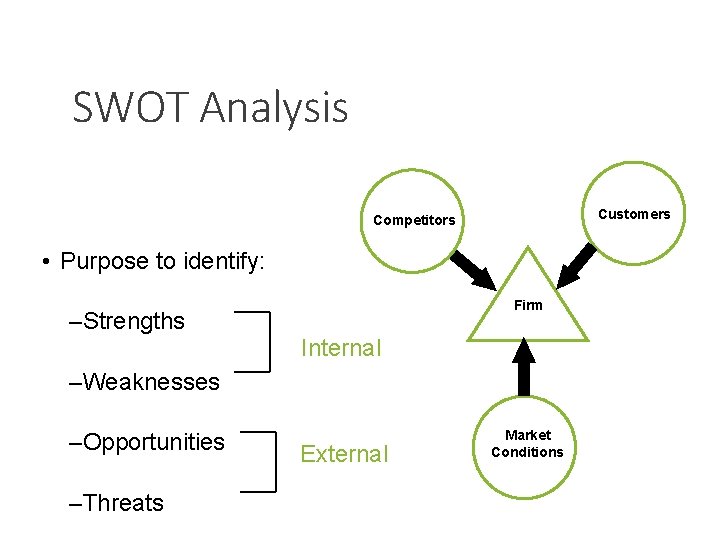
SWOT Analysis Customers Competitors • Purpose to identify: Firm –Strengths Internal –Weaknesses –Opportunities –Threats External Market Conditions
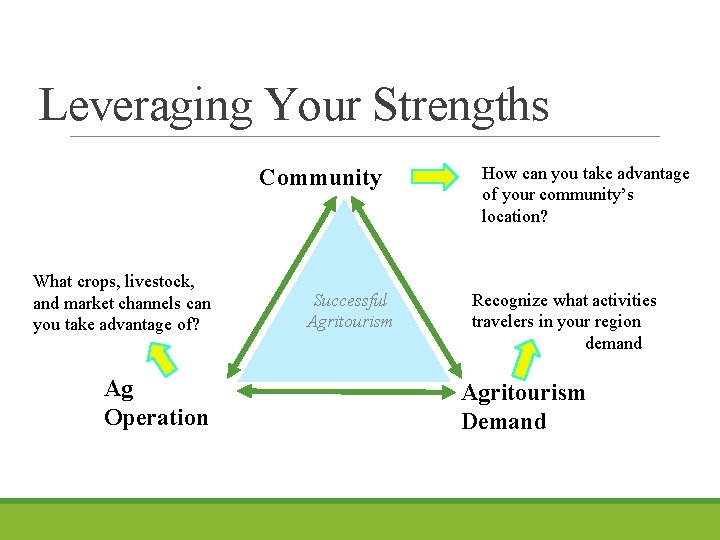
Leveraging Your Strengths Community What crops, livestock, and market channels can you take advantage of? Ag Operation Successful Agritourism How can you take advantage of your community’s location? Recognize what activities travelers in your region demand Agritourism Demand
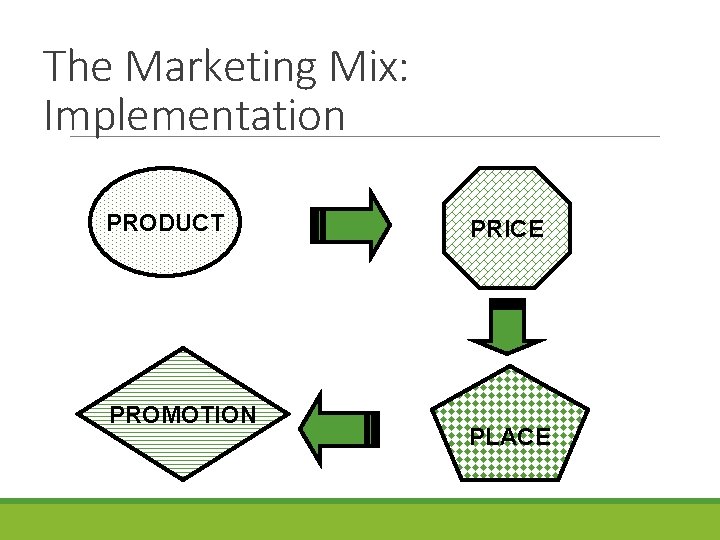
The Marketing Mix: Implementation PRODUCT PROMOTION PRICE PLACE
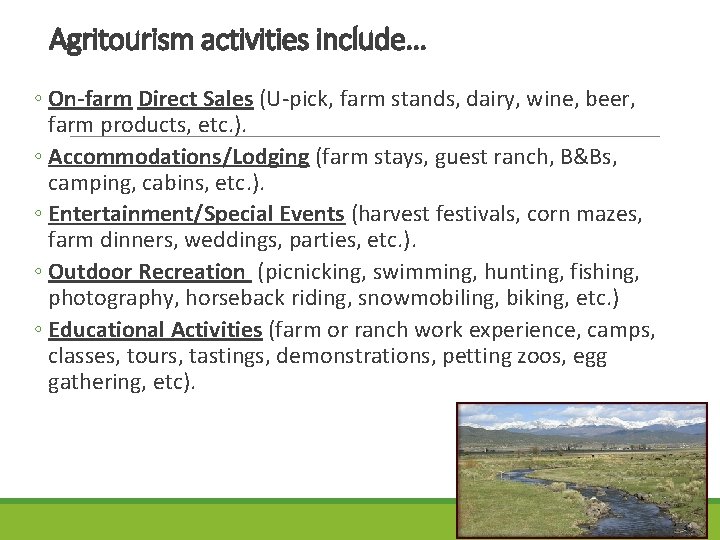
Agritourism activities include… ◦ On-farm Direct Sales (U-pick, farm stands, dairy, wine, beer, farm products, etc. ). ◦ Accommodations/Lodging (farm stays, guest ranch, B&Bs, camping, cabins, etc. ). ◦ Entertainment/Special Events (harvest festivals, corn mazes, farm dinners, weddings, parties, etc. ). ◦ Outdoor Recreation (picnicking, swimming, hunting, fishing, photography, horseback riding, snowmobiling, biking, etc. ) ◦ Educational Activities (farm or ranch work experience, camps, classes, tours, tastings, demonstrations, petting zoos, egg gathering, etc).
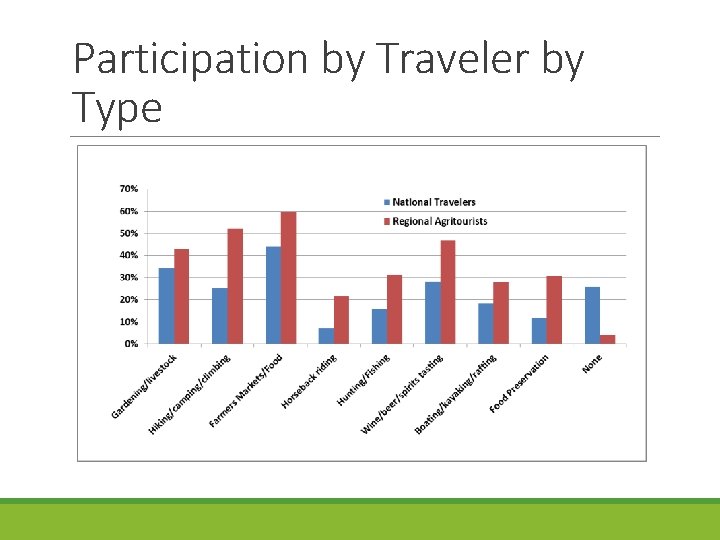
Participation by Traveler by Type
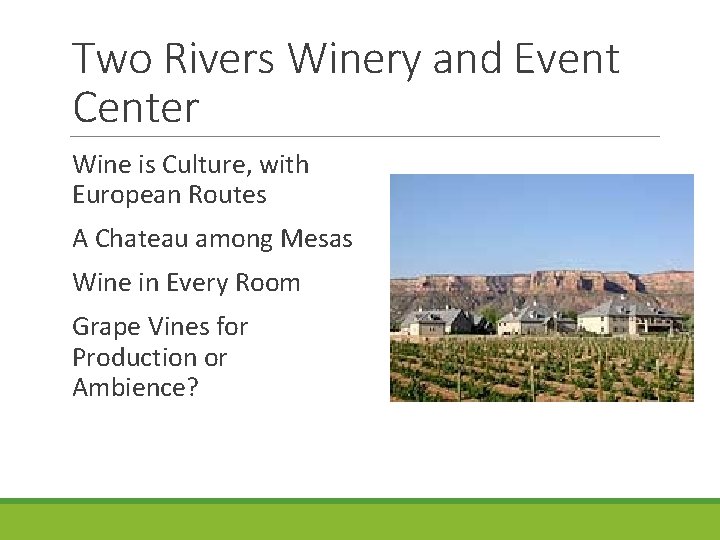
Two Rivers Winery and Event Center Wine is Culture, with European Routes A Chateau among Mesas Wine in Every Room Grape Vines for Production or Ambience?
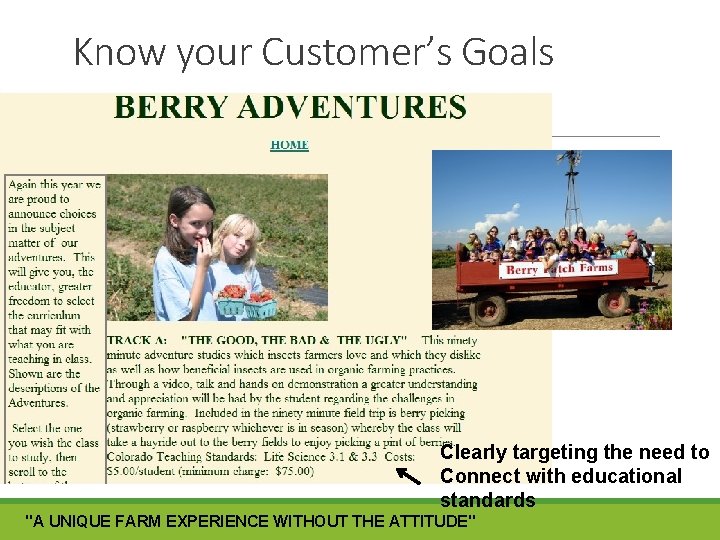
Know your Customer’s Goals Clearly targeting the need to Connect with educational standards "A UNIQUE FARM EXPERIENCE WITHOUT THE ATTITUDE"
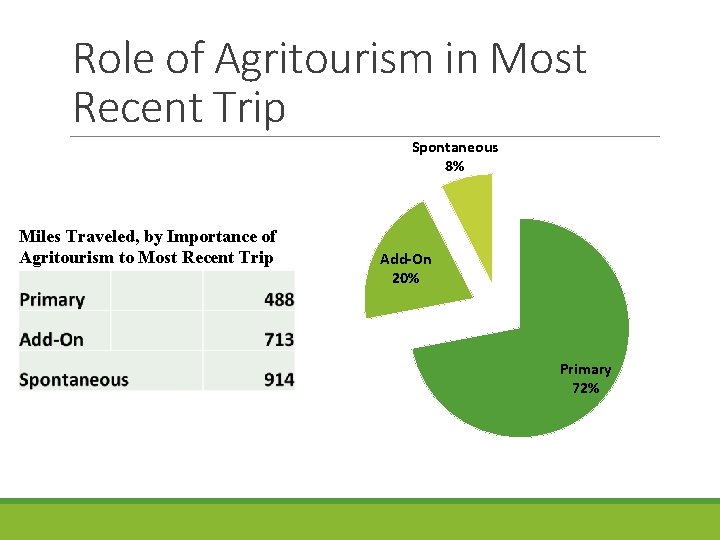
Role of Agritourism in Most Recent Trip Spontaneous 8% Miles Traveled, by Importance of Agritourism to Most Recent Trip Add-On 20% Primary 72%
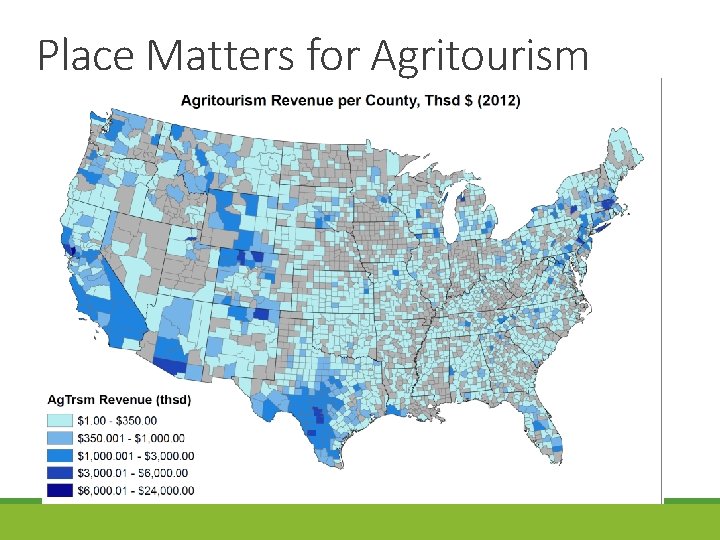
Place Matters for Agritourism
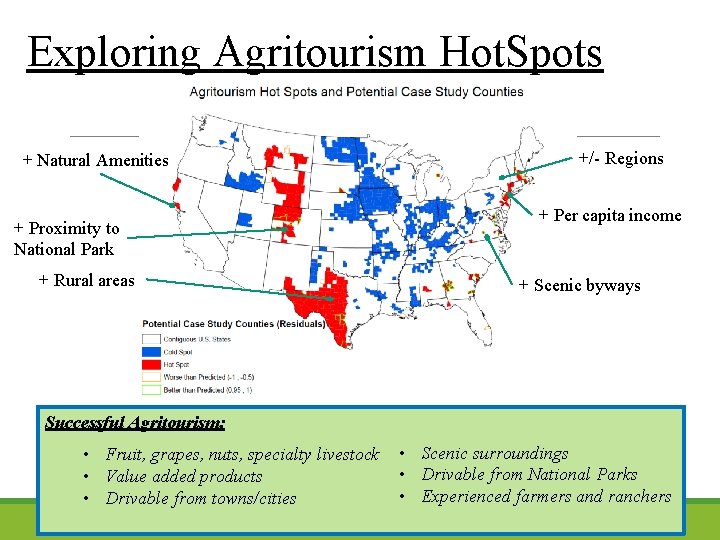
Exploring Agritourism Hot. Spots + Natural Amenities + Proximity to National Park + Rural areas +/- Regions + Per capita income + Scenic byways Successful Agritourism: • Fruit, grapes, nuts, specialty livestock • Value added products • Drivable from towns/cities • Scenic surroundings • Drivable from National Parks • Experienced farmers and ranchers
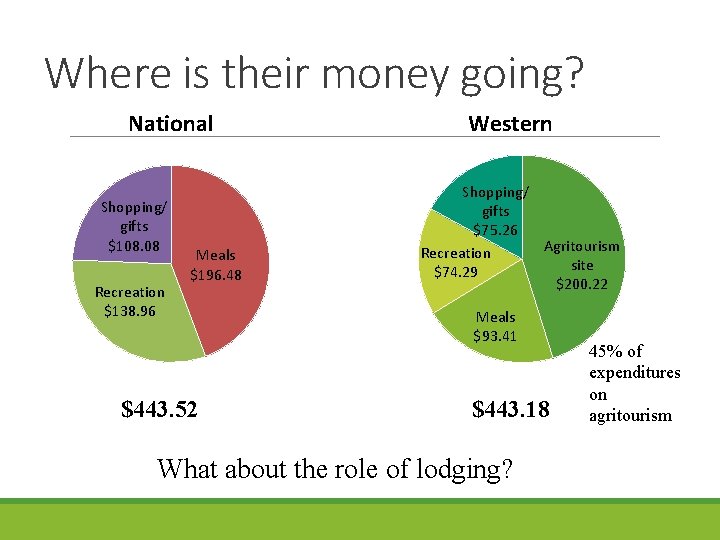
Where is their money going? National Shopping/ gifts $108. 08 Recreation $138. 96 Meals $196. 48 $443. 52 Western Shopping/ gifts $75. 26 Agritourism Recreation site $74. 29 $200. 22 Meals $93. 41 $443. 18 What about the role of lodging? 45% of expenditures on agritourism
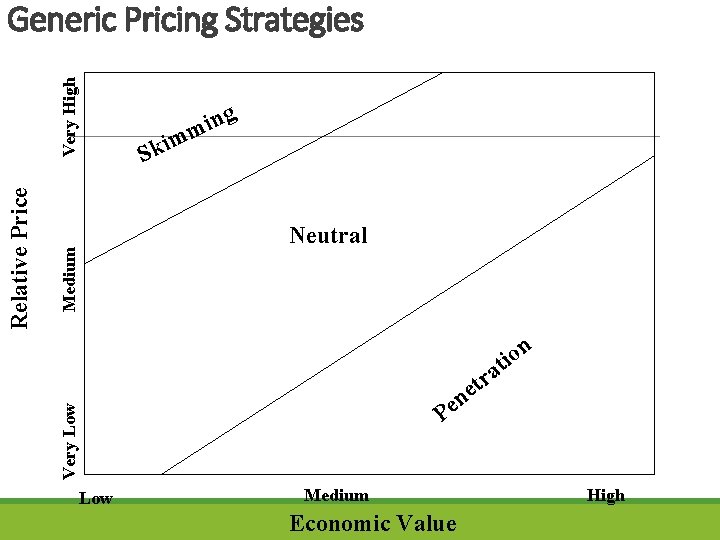
g n i m m i Sk Medium Neutral it on a r t e n e P Very Low Relative Price Very High Generic Pricing Strategies Low Medium Economic Value High
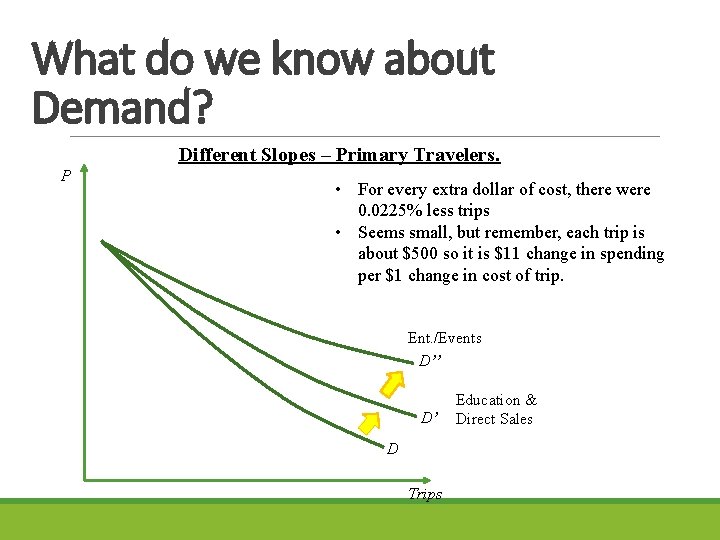
What do we know about Demand? Different Slopes – Primary Travelers. P • For every extra dollar of cost, there were 0. 0225% less trips • Seems small, but remember, each trip is about $500 so it is $11 change in spending per $1 change in cost of trip. Ent. /Events D’’ D’ D Trips Education & Direct Sales
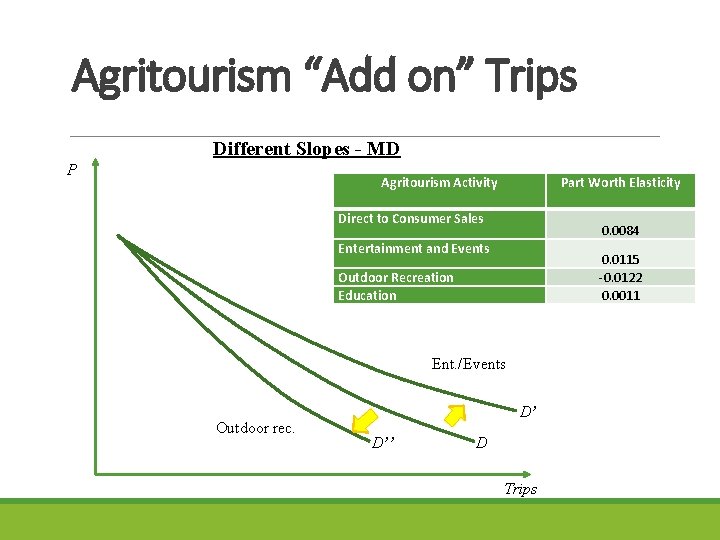
Agritourism “Add on” Trips Different Slopes - MD P Agritourism Activity Part Worth Elasticity Direct to Consumer Sales 0. 0084 Entertainment and Events 0. 0115 -0. 0122 0. 0011 Outdoor Recreation Education Ent. /Events Outdoor rec. D’ D’’ D Trips
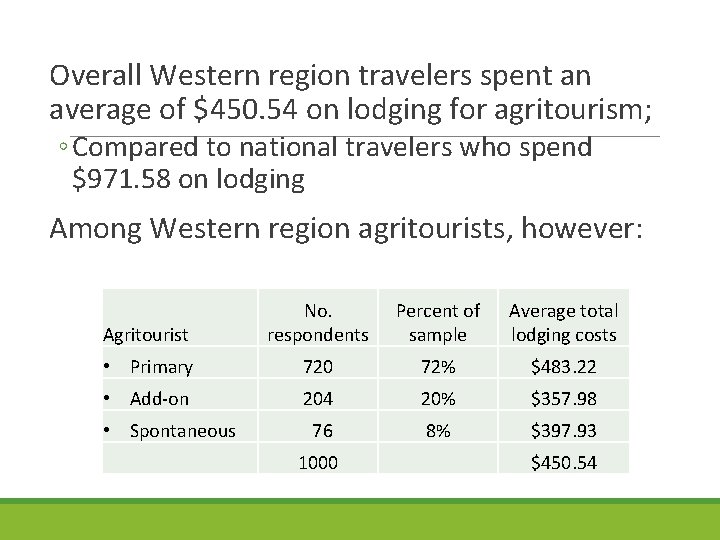
Overall Western region travelers spent an average of $450. 54 on lodging for agritourism; ◦ Compared to national travelers who spend $971. 58 on lodging Among Western region agritourists, however: Agritourist No. respondents Percent of sample Average total lodging costs • Primary 720 72% $483. 22 • Add-on 204 20% $357. 98 76 8% $397. 93 • Spontaneous 1000 $450. 54
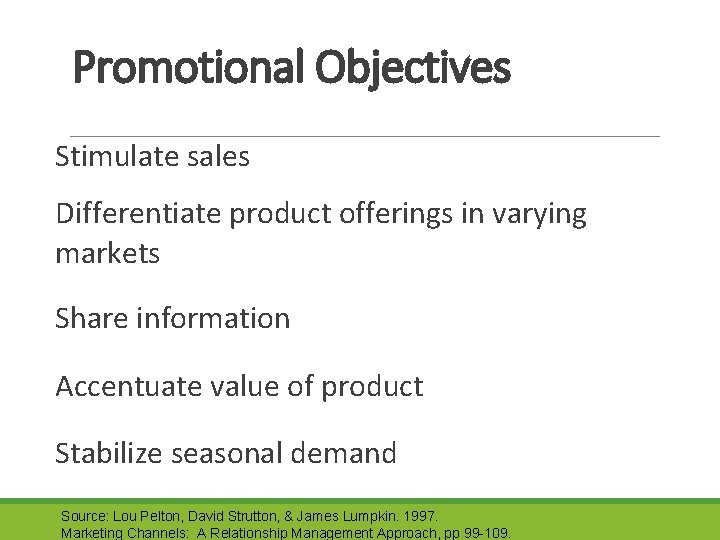
Promotional Objectives Stimulate sales Differentiate product offerings in varying markets Share information Accentuate value of product Stabilize seasonal demand Source: Lou Pelton, David Strutton, & James Lumpkin. 1997. Marketing Channels: A Relationship Management Approach, pp 99 -109.
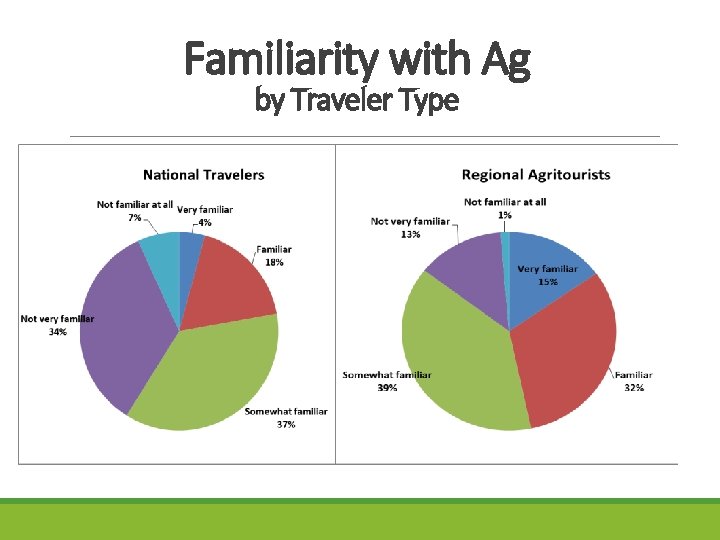
Familiarity with Ag by Traveler Type
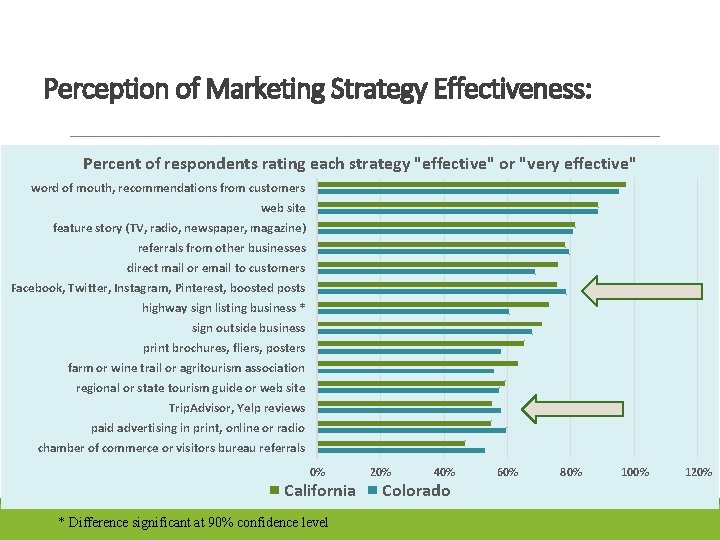
Perception of Marketing Strategy Effectiveness: Percent of respondents rating each strategy "effective" or "very effective" word of mouth, recommendations from customers web site feature story (TV, radio, newspaper, magazine) referrals from other businesses direct mail or email to customers Facebook, Twitter, Instagram, Pinterest, boosted posts highway sign listing business * sign outside business print brochures, fliers, posters farm or wine trail or agritourism association regional or state tourism guide or web site Trip. Advisor, Yelp reviews paid advertising in print, online or radio chamber of commerce or visitors bureau referrals 0% California * Difference significant at 90% confidence level 20% 40% Colorado 60% 80% 100% 120%
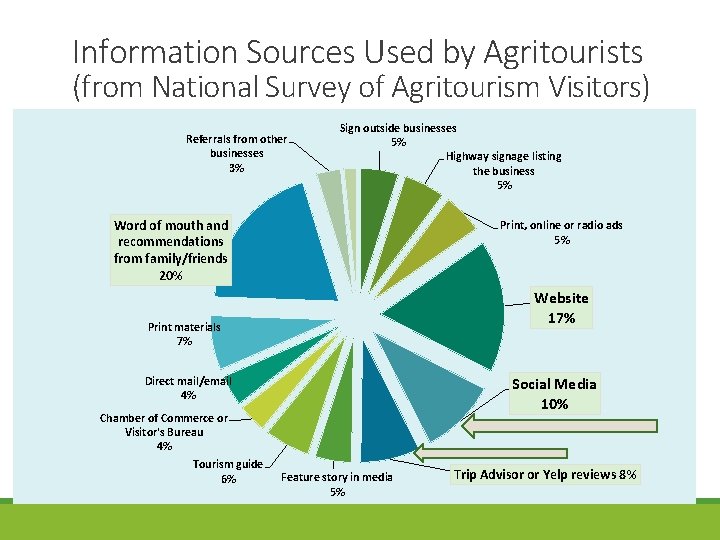
Information Sources Used by Agritourists (from National Survey of Agritourism Visitors) Referrals from other businesses 3% Sign outside businesses 5% Highway signage listing the business 5% Word of mouth and recommendations from family/friends 20% Print, online or radio ads 5% Website 17% Print materials 7% Direct mail/email 4% Social Media 10% Chamber of Commerce or Visitor's Bureau 4% Tourism guide 6% Feature story in media 5% Trip Advisor or Yelp reviews 8%
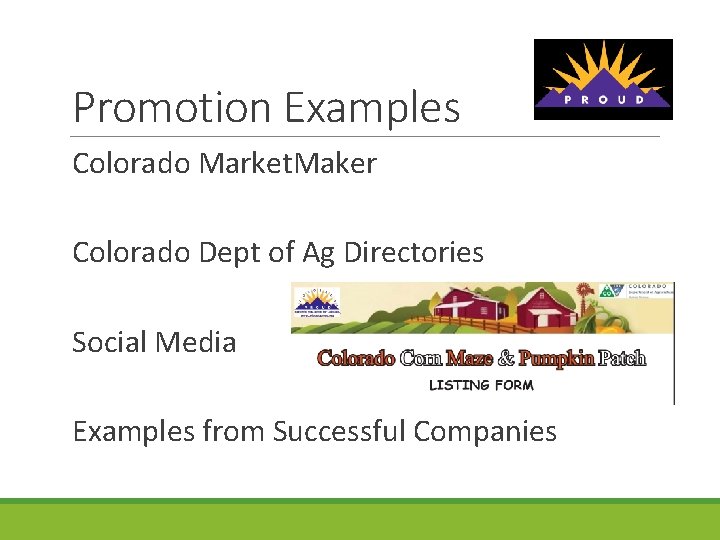
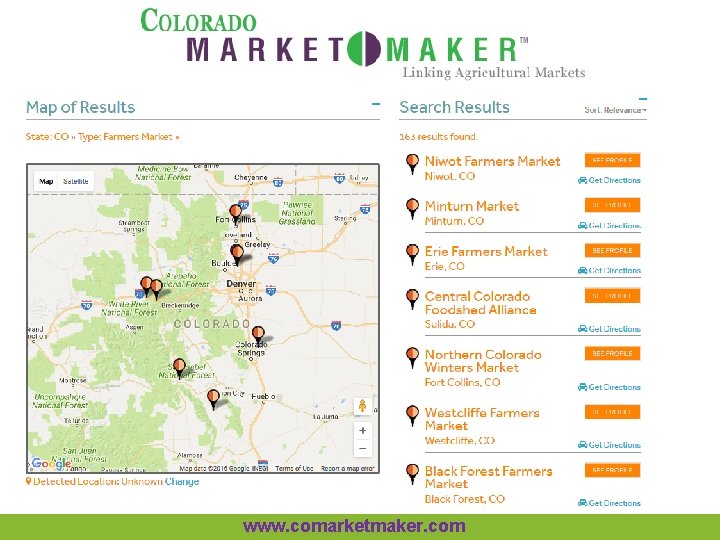
Promotion Examples Colorado Market. Maker Colorado Dept of Ag Directories Social Media Examples from Successful Companies
Promotional Resource Market. Maker is a free tool that: § Helps consumers find producers § Aides producers in promoting their operations and products § Assesses the food and agriculture of an area by providing an inventory and a networking resource
Use the map to find Colorado companies! www. comarketmaker. com
How Effective is Social Networking? Pros ◦ Cost Effective, Free to start… ◦ Build Community, Social Network ◦ Word-of-Mouth Promotion of Direct Experiences through words, pictures, videos Cons ◦ Small Markets ◦ May be ineffective if business is not tech savvy ◦ Weekly/daily time requirement
Where to Begin if you are a Small Agricultural Business New customers can’t find you IF they can’t find you ◦ Establish a website ◦ Create a Facebook profile ◦ Register with many related directories Let someone else work for you ◦ Invest in your local business and/or agriculture alliance Collaborate with similar businesses Establish and maintain a continual conversation with current customers
Utilize different platforms for different purposes Door to Door Organics realized that it saw greater rewards when it used different social media platforms for different purposes and refocused efforts in that way. Linked. In — Jacobs said the company was able to focus on the B 2 B side of messaging and address the "business and trade" side of the business. " Facebook — This platform is used as a type of customer service with Door to Door Organics being able to quickly respond to customers and maintain strong fan engagement. Jacobs said that, with Facebook, it is important to not be "overly aggressive, " but rather stay helpful to customers. Pinterest — Pinterest helps Door to Door Organics share recipes with followers but also helps to create brand awareness. Instagram — The "best brand ambassadors" for the company are found on Instagram as customers share pictures of their Door to Door Organics boxes. Instagram, according to Jacobs, is a great way to visually engage with customers and leverage user-generated content.
Results for Door to Door As a result of this social media strategy and working to engage with those prospects who are not yet customers, Door to Door Organics has achieved: 26% new customers acquired from field marketing tactics ◦ ◦ ◦ 25% growth year-over-year In the last 24 months, a jump from 80, 000 to 300, 000 Facebook followers Since joining Instagram in 2014, gaining 8, 000 followers Nine months on Pinterest with 4, 000 followers Almost 4, 000 Twitter followers Jacobs said that it is important to learn from every post when a company is looking to strengthen its social media strategy and to stay connected with what is resonating with customers. Source: https: //www. marketingsherpa. com/article/case-study/door-to-door-social-media-marketing
Your Marketing Plan Double Check: ◦ Possible with Current Resources? ◦ Addresses a Market Opportunity ◦ Balanced between Loose and Tight ◦ Visionary, but Pragmatic ◦ Clear Objectives and Vision Behind Each Market Strategy Choice Which P will guide your Initial Energy?
Appendices
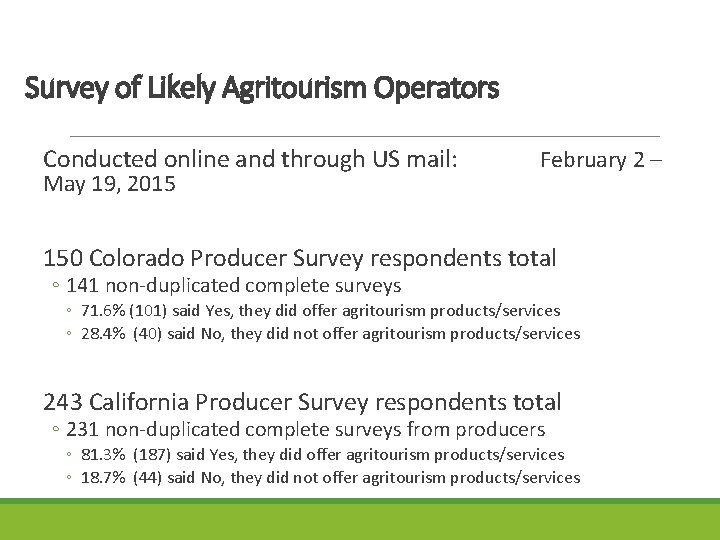
Survey of Likely Agritourism Operators Conducted online and through US mail: May 19, 2015 February 2 – 150 Colorado Producer Survey respondents total ◦ 141 non-duplicated complete surveys ◦ 71. 6% (101) said Yes, they did offer agritourism products/services ◦ 28. 4% (40) said No, they did not offer agritourism products/services 243 California Producer Survey respondents total ◦ 231 non-duplicated complete surveys from producers ◦ 81. 3% (187) said Yes, they did offer agritourism products/services ◦ 18. 7% (44) said No, they did not offer agritourism products/services
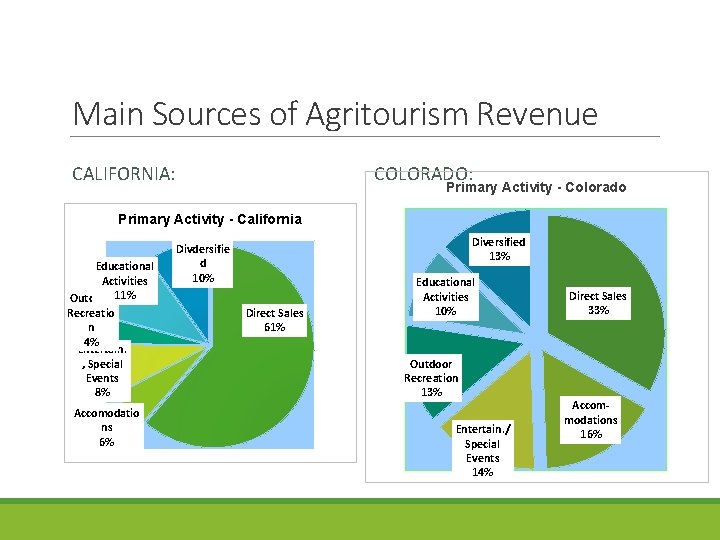
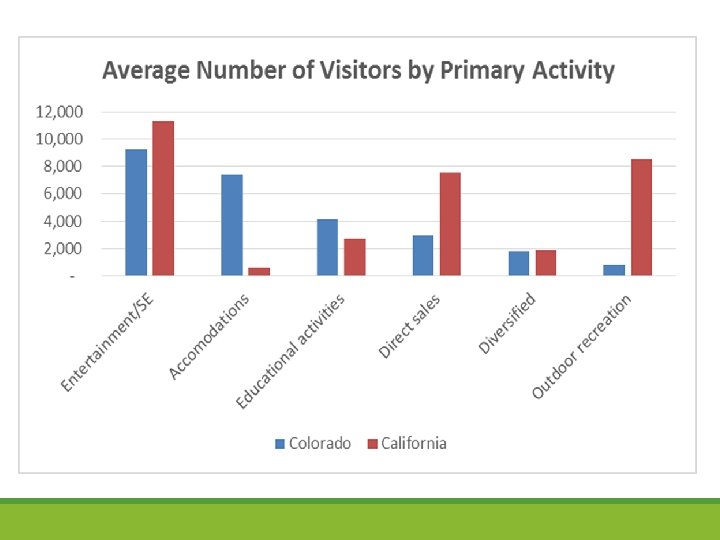
Main Sources of Agritourism Revenue CALIFORNIA: COLORADO: Primary Activity - Colorado Primary Activity - California Educational Activities Outdoor 11% Recreatio n 4% Entertain. , Special Events 8% Accomodatio ns 6% Diversified 13% Divdersifie d 10% Direct Sales 61% Educational Activities 10% Outdoor Recreation 13% Entertain. / Special Events 14% Direct Sales 33% Accommodations 16%
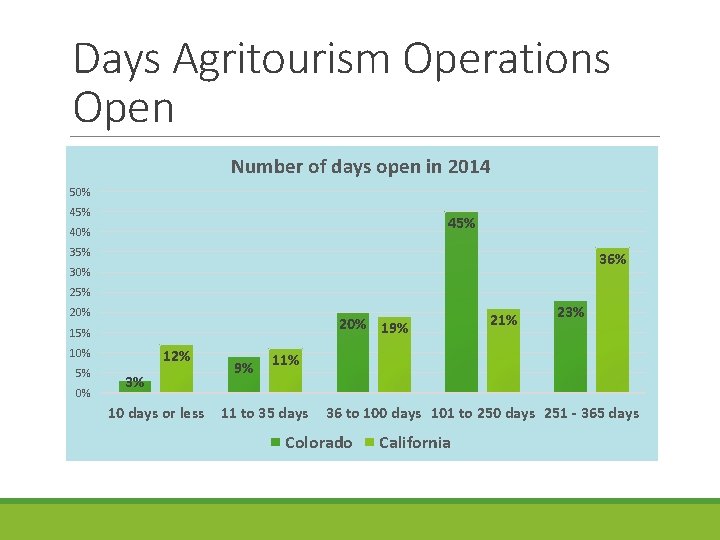
Days Agritourism Operations Open Number of days open in 2014 50% 45% 40% 35% 36% 30% 25% 20% 19% 15% 10% 5% 0% 12% 3% 10 days or less 9% 21% 23% 11 to 35 days 36 to 100 days 101 to 250 days 251 - 365 days Colorado California