European Union Water Initiative plus for Eastern Partnership
- Slides: 22
European Union Water Initiative plus for Eastern Partnership Protocol on Water and Health as a tool to implement Sustainable Development Goals at the national level NPD Steering Committee meeting Baku, 4 July 2018 UNECE
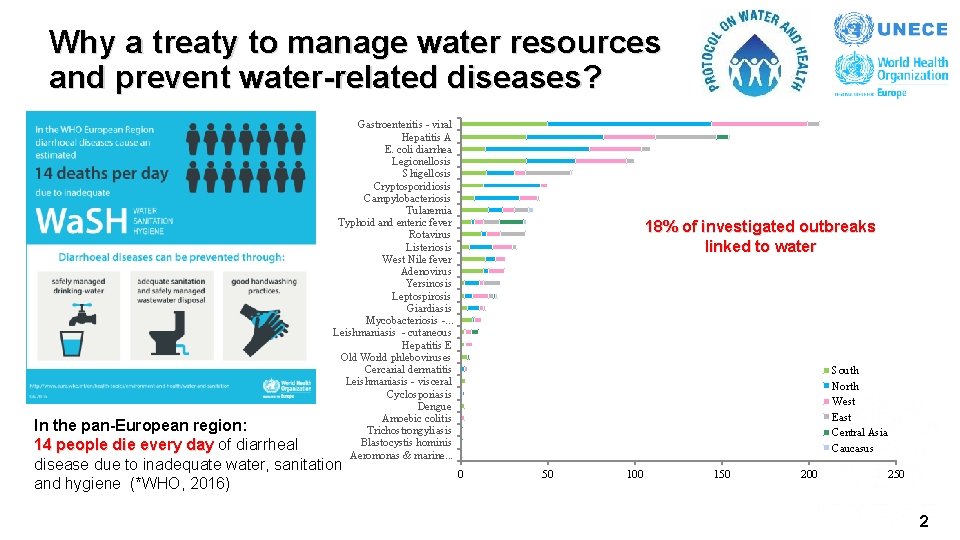
Why a treaty to manage water resources and prevent water-related diseases? Gastroenteritis - viral Hepatitis A E. coli diarrhea Legionellosis Shigellosis Cryptosporidiosis Campylobacteriosis Tularemia Typhoid and enteric fever Rotavirus Listeriosis West Nile fever Adenovirus Yersinosis Leptospirosis Giardiasis Mycobacteriosis -. . . Leishmaniasis - cutaneous Hepatitis E Old World phleboviruses Cercarial dermatitis Leishmaniasis - visceral Cyclosporiasis Dengue Amoebic colitis Trichostrongyliasis Blastocystis hominis Aeromonas & marine. . . In the pan-European region: 14 people die every day of diarrheal disease due to inadequate water, sanitation and hygiene (*WHO, 2016) 18% of investigated outbreaks linked to water South North West East Central Asia Caucasus 0 50 100 150 200 250 2
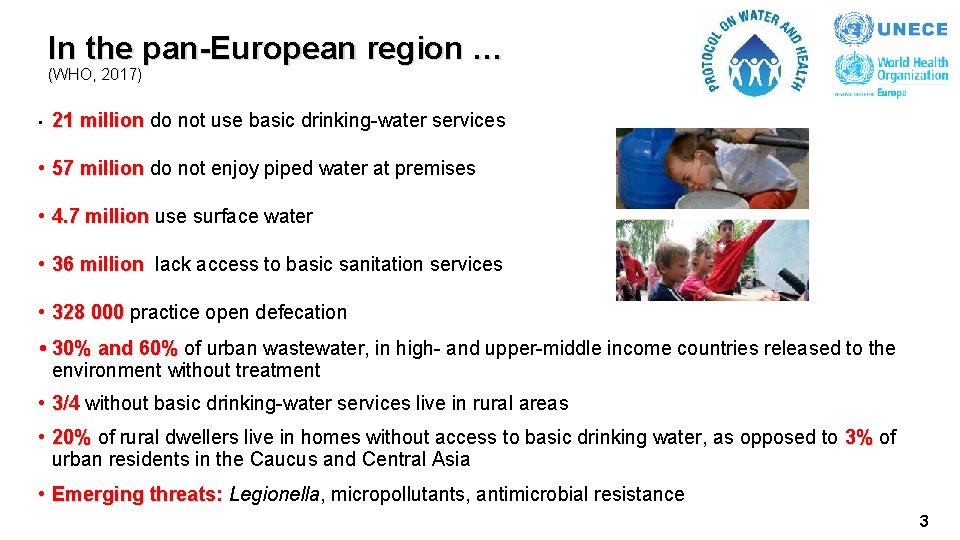
In the pan-European region … (WHO, 2017) • 21 million do not use basic drinking-water services • 57 million do not enjoy piped water at premises • 4. 7 million use surface water • 36 million lack access to basic sanitation services • 328 000 practice open defecation • 30% and 60% of urban wastewater, in high- and upper-middle income countries released to the environment without treatment • 3/4 without basic drinking-water services live in rural areas • 20% of rural dwellers live in homes without access to basic drinking water, as opposed to 3% of urban residents in the Caucus and Central Asia • Emerging threats: Legionella, micropollutants, antimicrobial resistance 3
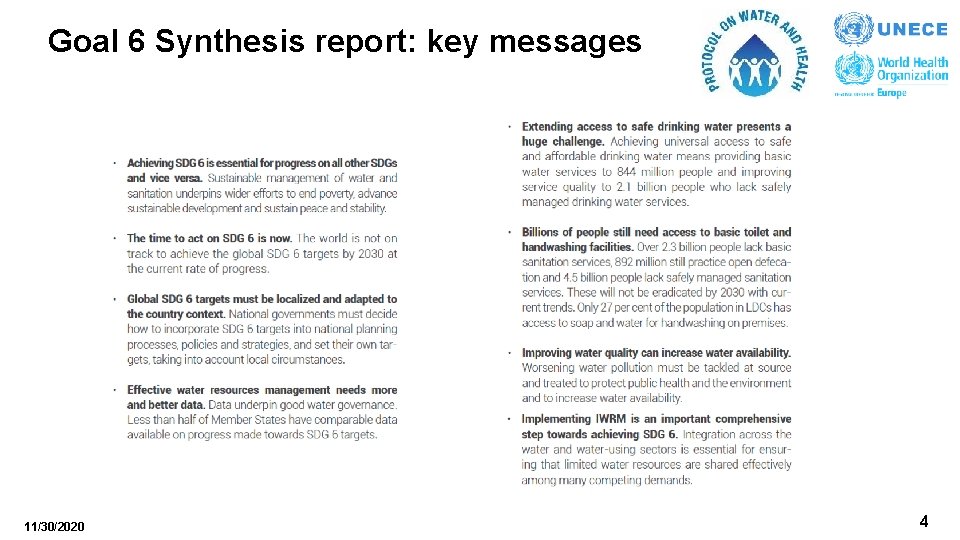
Goal 6 Synthesis report: key messages 11/30/2020 4
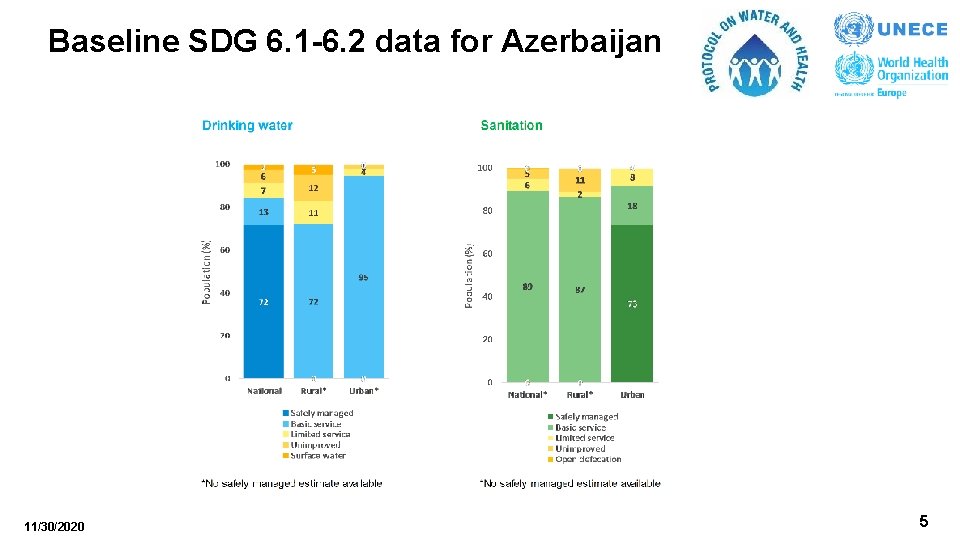
Baseline SDG 6. 1 -6. 2 data for Azerbaijan 11/30/2020 5
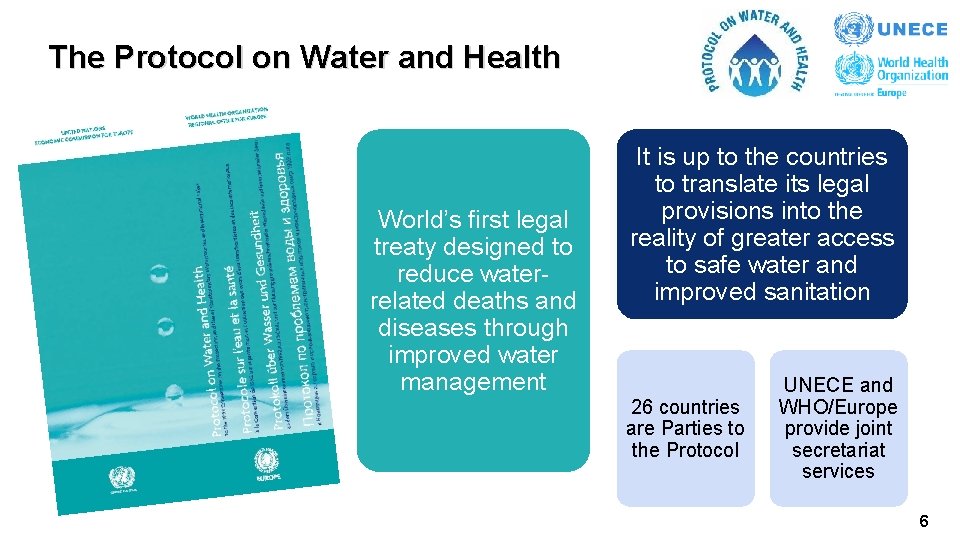
The Protocol on Water and Health World’s first legal treaty designed to reduce waterrelated deaths and diseases through improved water management It is up to the countries to translate its legal provisions into the reality of greater access to safe water and improved sanitation 26 countries are Parties to the Protocol UNECE and WHO/Europe provide joint secretariat services 6
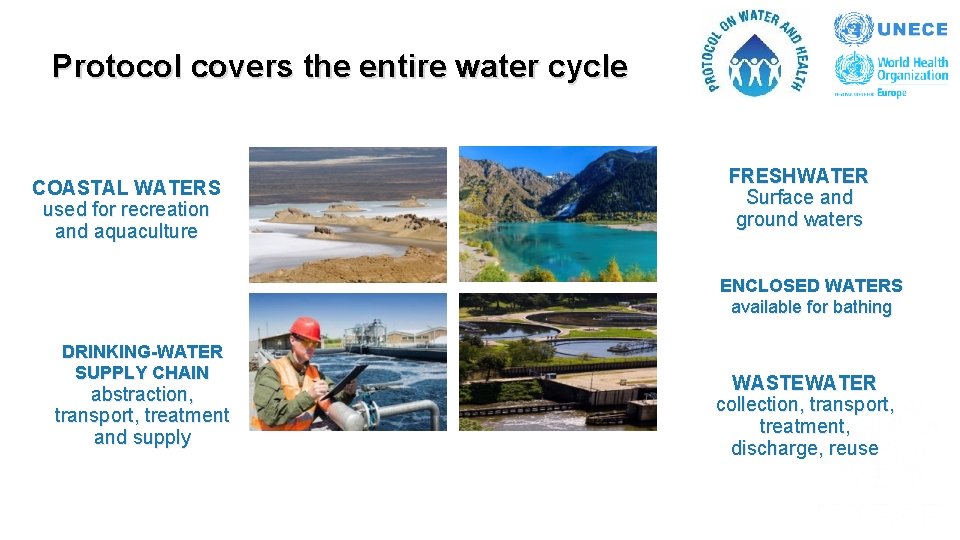
Protocol covers the entire water cycle @ MED action plan FRESHWATER Surface and ground waters COASTAL WATERS used for recreation and aquaculture ENCLOSED WATERS available for bathing @ UNEP photo collection DRINKING-WATER SUPPLY CHAIN abstraction, transport, treatment and supply @ WHO EURO photo collection WASTEWATER collection, transport, treatment, discharge, reuse
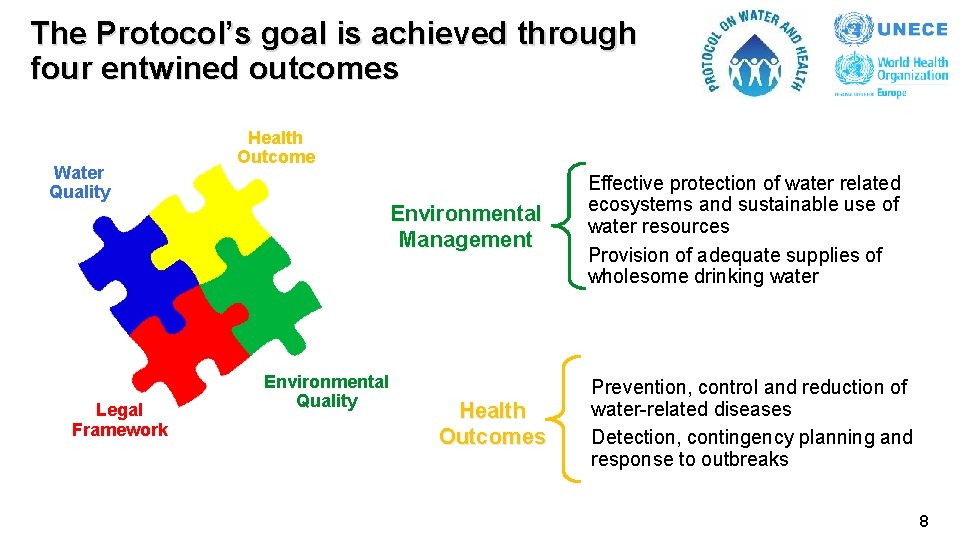
The Protocol’s goal is achieved through four entwined outcomes Water Quality Legal Framework Health Outcome Environmental Management Environmental Quality Health Outcomes Effective protection of water related ecosystems and sustainable use of water resources Provision of adequate supplies of wholesome drinking water Prevention, control and reduction of water-related diseases Detection, contingency planning and response to outbreaks 8
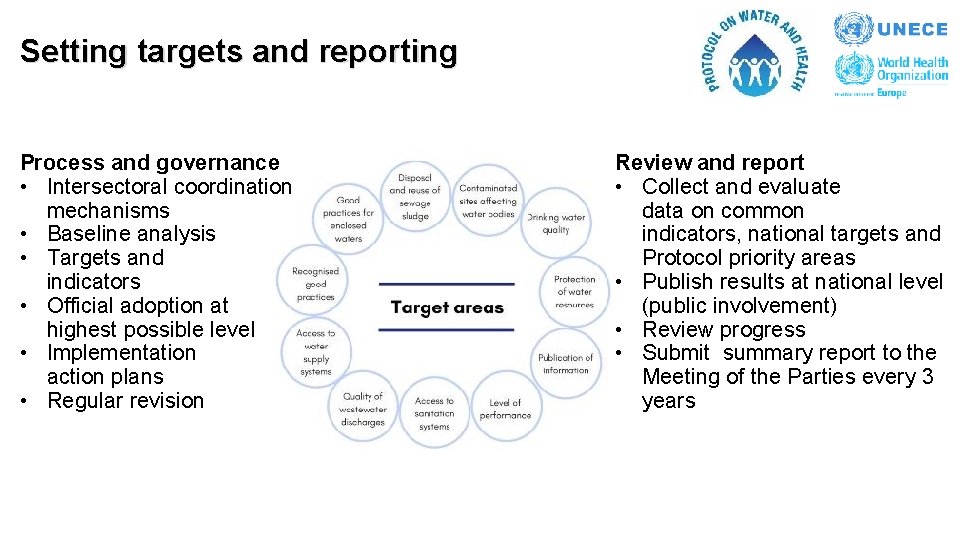
Setting targets and reporting Process and governance • Intersectoral coordination mechanisms • Baseline analysis • Targets and indicators • Official adoption at highest possible level • Implementation action plans • Regular revision Review and report • Collect and evaluate data on common indicators, national targets and Protocol priority areas • Publish results at national level (public involvement) • Review progress • Submit summary report to the Meeting of the Parties every 3 years
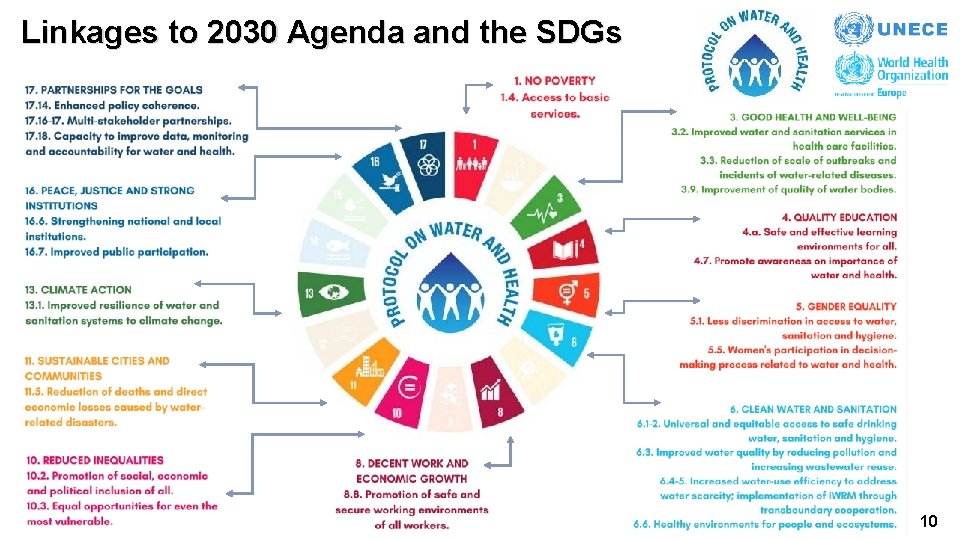
Linkages to 2030 Agenda and the SDGs 11/30/2020 10
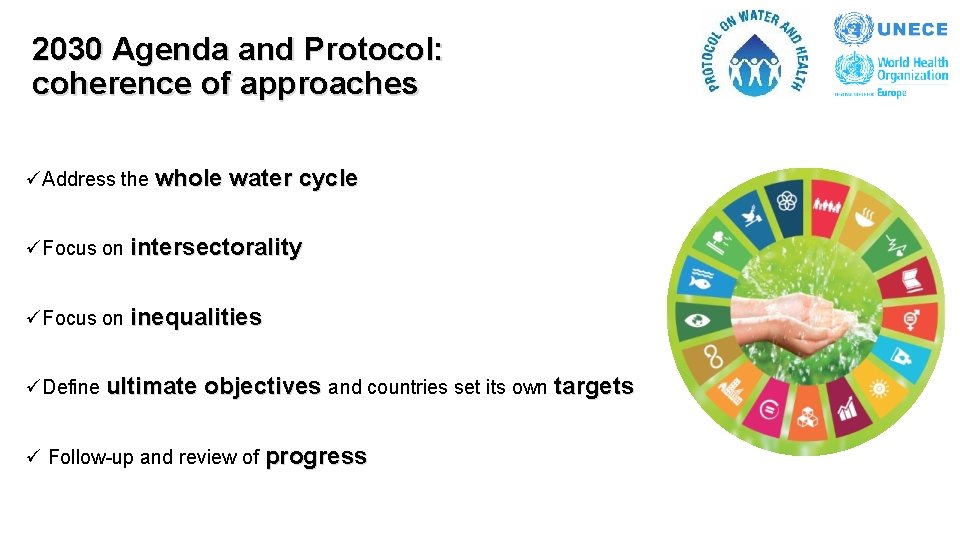
2030 Agenda and Protocol: coherence of approaches üAddress the whole water cycle üFocus on intersectorality üFocus on inequalities üDefine ultimate objectives and countries set its own targets ü Follow-up and review of progress
What could it mean in practice? At the national and regional levels: üSet coherent targets under the two frameworks üUse the same national platform for the Protocol and relevant SDGs implementation üExchange good practices and lessons learned on the process and specific thematic issues üBuild capacity on the Protocol and 2030 Agenda together (forthcoming publication: Protocol on Water and Health and the 2030 Agenda: a practical guide for joint implementation)
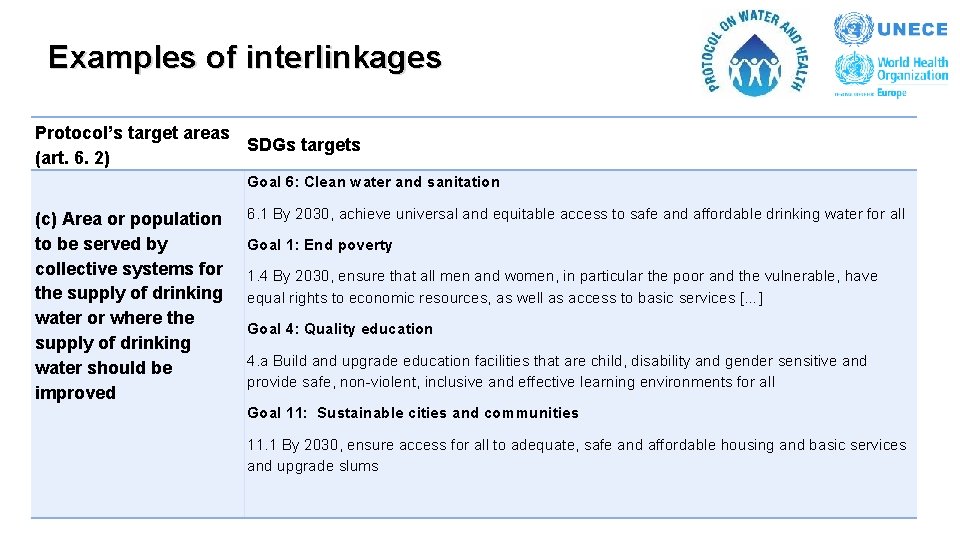
Examples of interlinkages Protocol’s target areas SDGs targets (art. 6. 2) Goal 6: Clean water and sanitation (c) Area or population to be served by collective systems for the supply of drinking water or where the supply of drinking water should be improved 6. 1 By 2030, achieve universal and equitable access to safe and affordable drinking water for all Goal 1: End poverty 1. 4 By 2030, ensure that all men and women, in particular the poor and the vulnerable, have equal rights to economic resources, as well as access to basic services […] Goal 4: Quality education 4. a Build and upgrade education facilities that are child, disability and gender sensitive and provide safe, non-violent, inclusive and effective learning environments for all Goal 11: Sustainable cities and communities 11. 1 By 2030, ensure access for all to adequate, safe and affordable housing and basic services and upgrade slums
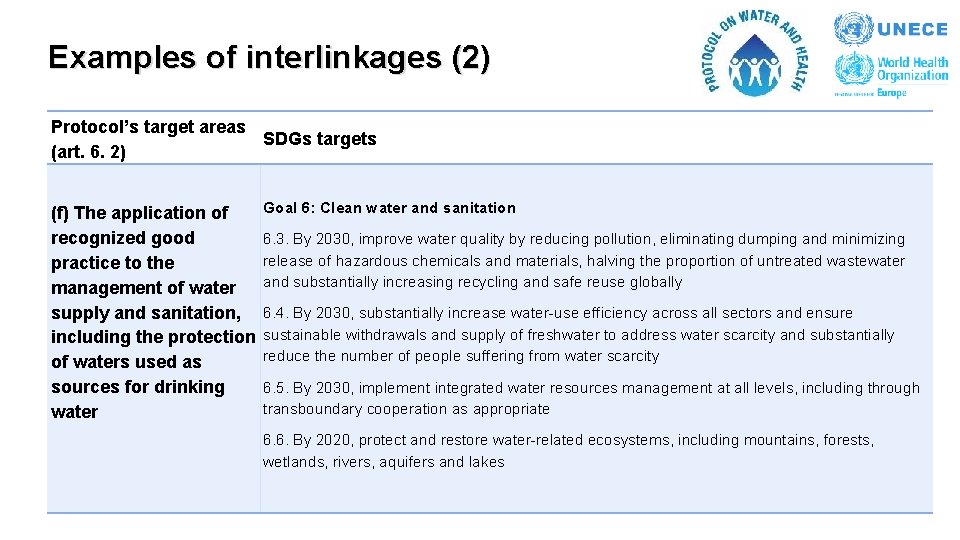
Examples of interlinkages (2) Protocol’s target areas SDGs targets (art. 6. 2) (f) The application of recognized good practice to the management of water supply and sanitation, including the protection of waters used as sources for drinking water Goal 6: Clean water and sanitation 6. 3. By 2030, improve water quality by reducing pollution, eliminating dumping and minimizing release of hazardous chemicals and materials, halving the proportion of untreated wastewater and substantially increasing recycling and safe reuse globally 6. 4. By 2030, substantially increase water-use efficiency across all sectors and ensure sustainable withdrawals and supply of freshwater to address water scarcity and substantially reduce the number of people suffering from water scarcity 6. 5. By 2030, implement integrated water resources management at all levels, including through transboundary cooperation as appropriate 6. 6. By 2020, protect and restore water-related ecosystems, including mountains, forests, wetlands, rivers, aquifers and lakes
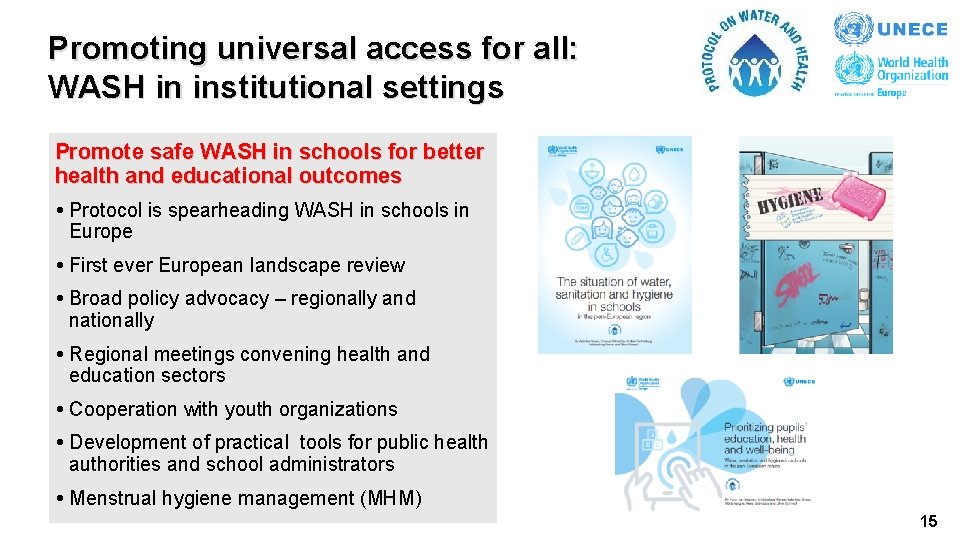
Promoting universal access for all: WASH in institutional settings Promote safe WASH in schools for better health and educational outcomes • Protocol is spearheading WASH in schools in Europe • First ever European landscape review • Broad policy advocacy – regionally and nationally • Regional meetings convening health and education sectors • Cooperation with youth organizations • Development of practical tools for public health authorities and school administrators • Menstrual hygiene management (MHM) 15
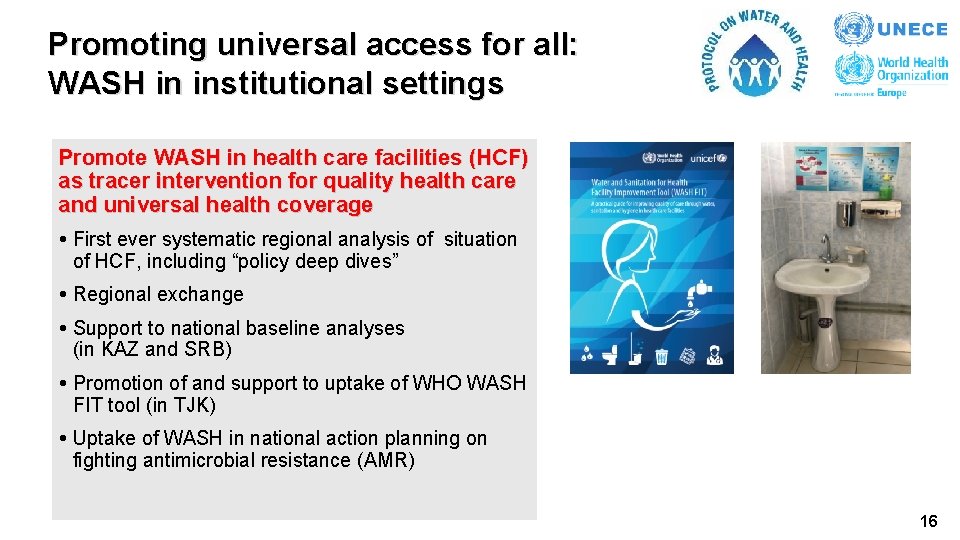
Promoting universal access for all: WASH in institutional settings Promote WASH in health care facilities (HCF) as tracer intervention for quality health care and universal health coverage • First ever systematic regional analysis of situation of HCF, including “policy deep dives” • Regional exchange • Support to national baseline analyses (in KAZ and SRB) • Promotion of and support to uptake of WHO WASH FIT tool (in TJK) • Uptake of WASH in national action planning on fighting antimicrobial resistance (AMR) 16
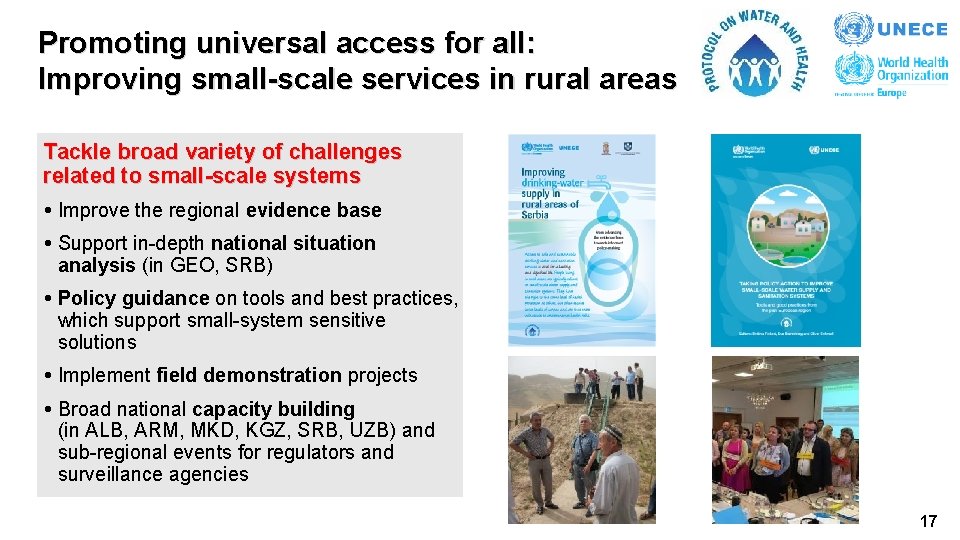
Promoting universal access for all: Improving small-scale services in rural areas Tackle broad variety of challenges related to small-scale systems • Improve the regional evidence base • Support in-depth national situation analysis (in GEO, SRB) • Policy guidance on tools and best practices, which support small-system sensitive solutions • Implement field demonstration projects • Broad national capacity building (in ALB, ARM, MKD, KGZ, SRB, UZB) and sub-regional events for regulators and surveillance agencies 17
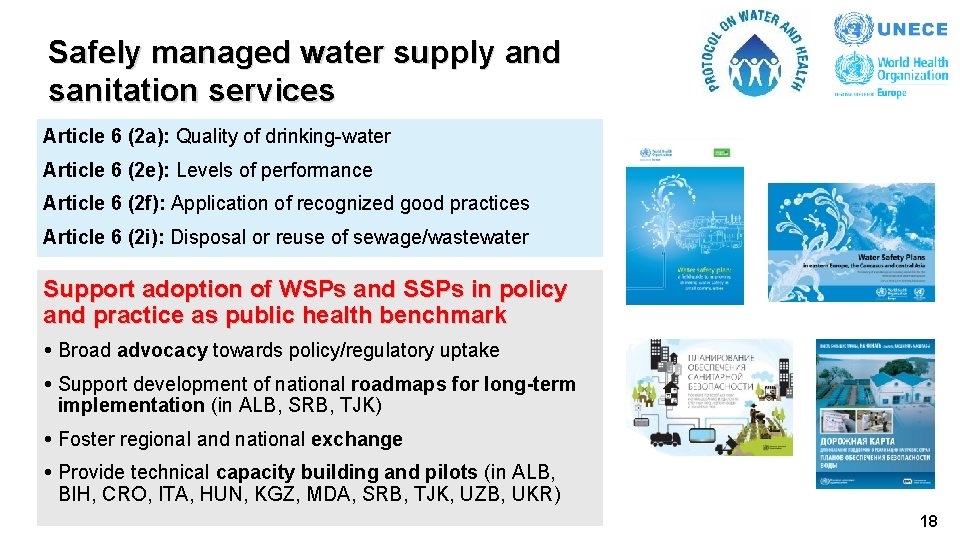
Safely managed water supply and sanitation services Article 6 (2 a): Quality of drinking-water Article 6 (2 e): Levels of performance Article 6 (2 f): Application of recognized good practices Article 6 (2 i): Disposal or reuse of sewage/wastewater Support adoption of WSPs and SSPs in policy and practice as public health benchmark • Broad advocacy towards policy/regulatory uptake • Support development of national roadmaps for long-term implementation (in ALB, SRB, TJK) • Foster regional and national exchange • Provide technical capacity building and pilots (in ALB, BIH, CRO, ITA, HUN, KGZ, MDA, SRB, TJK, UZB, UKR) 18
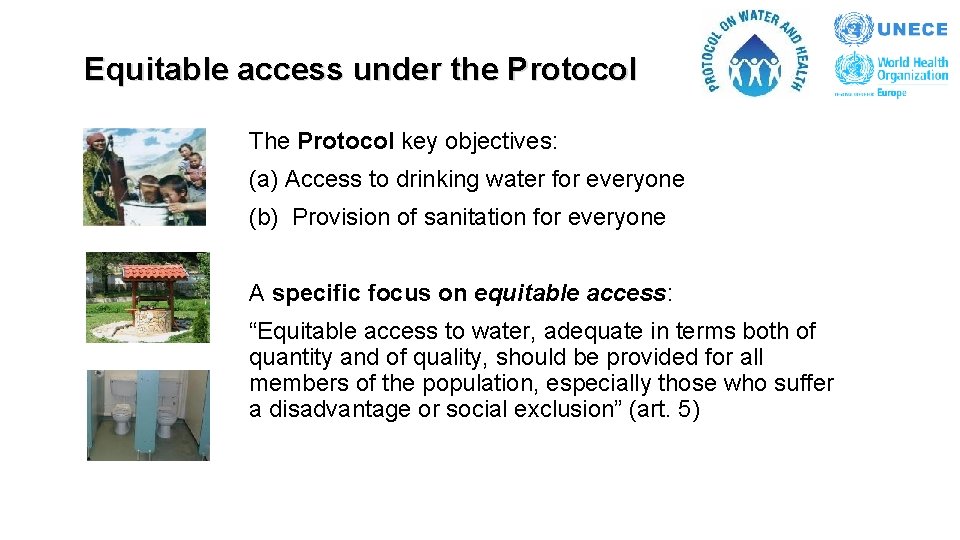
Equitable access under the Protocol The Protocol key objectives: (a) Access to drinking water for everyone (b) Provision of sanitation for everyone A specific focus on equitable access: “Equitable access to water, adequate in terms both of quantity and of quality, should be provided for all members of the population, especially those who suffer a disadvantage or social exclusion” (art. 5)
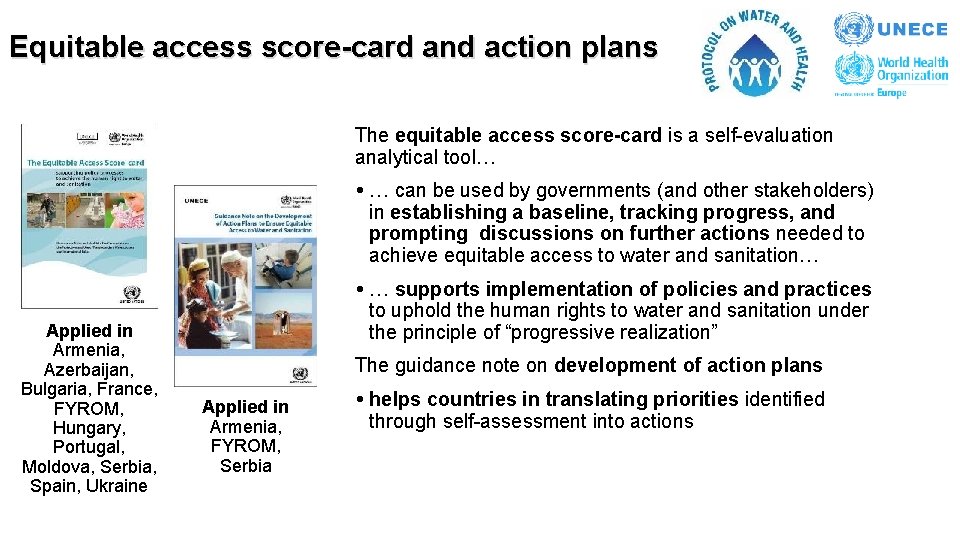
Equitable access score-card and action plans The equitable access score-card is a self-evaluation analytical tool… • … can be used by governments (and other stakeholders) in establishing a baseline, tracking progress, and prompting discussions on further actions needed to achieve equitable access to water and sanitation… Applied in Armenia, Azerbaijan, Bulgaria, France, FYROM, Hungary, Portugal, Moldova, Serbia, Spain, Ukraine • … supports implementation of policies and practices to uphold the human rights to water and sanitation under the principle of “progressive realization” The guidance note on development of action plans Applied in Armenia, FYROM, Serbia • helps countries in translating priorities identified through self-assessment into actions
Examples of National targets in Azerbaijan • Access to water and sanitation: - By 2030 Ensure 100% uninterrupted access in cities and 80% in rural areas - By 2030 Ensure 100% access to improved water sources in educational and medical facilities - By 2035 Ensure access to safely managed sanitation in 100% urban and 75% rural areas 11/30/2020 Francesca Bernardini - Programme of work 2017 -2019 21
Thank you! www. unece. org/env/water. html www. euro. who. int/en/health-topics/environment-andhealth/water-and-sanitation 22