Electronic mail security Pretty Good Privacy CSUTC 1
- Slides: 21
Electronic mail security -- Pretty Good Privacy CS@UTC 1
Pretty Good Privacy • Philip R. Zimmerman is the creator of PGP. • PGP provides a confidentiality and authentication service that can be used for electronic mail and file storage applications. CS@UTC 2
Why Is PGP Popular? • It is availiable free on a variety of platforms. • Based on well known algorithms. • Wide range of applicability • Not developed or controlled by governmental or standards organizations CS@UTC 3
Operational Description • Consist of five services: – – – Authentication Confidentiality Compression E-mail compatibility Segmentation CS@UTC 4
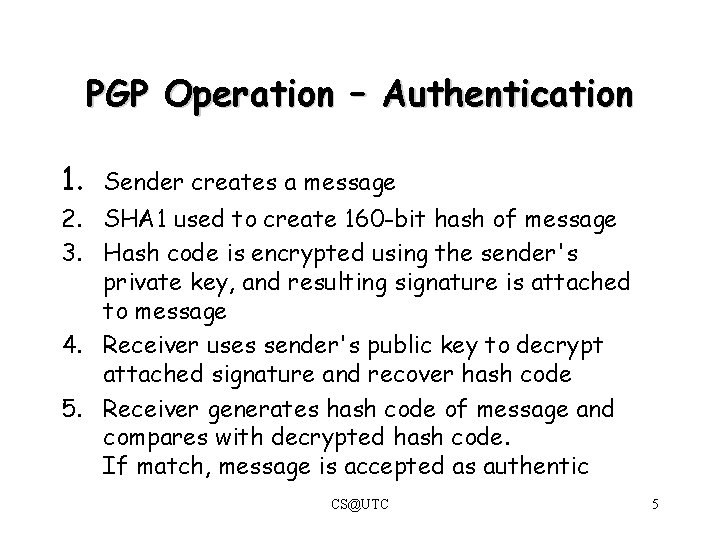
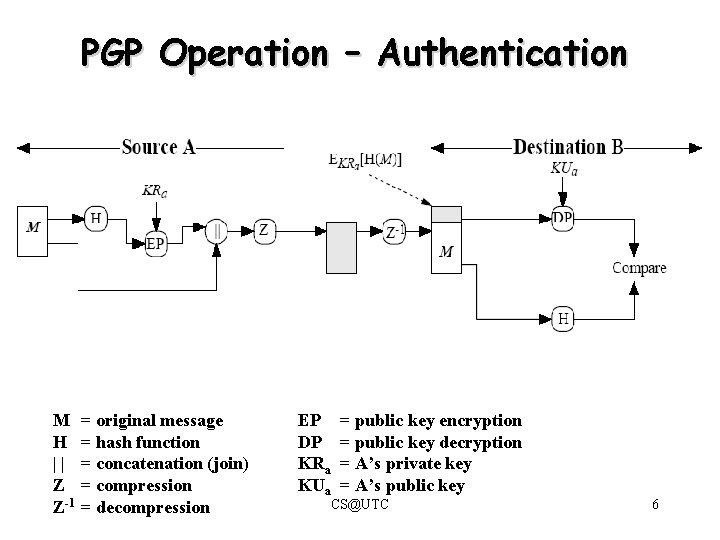
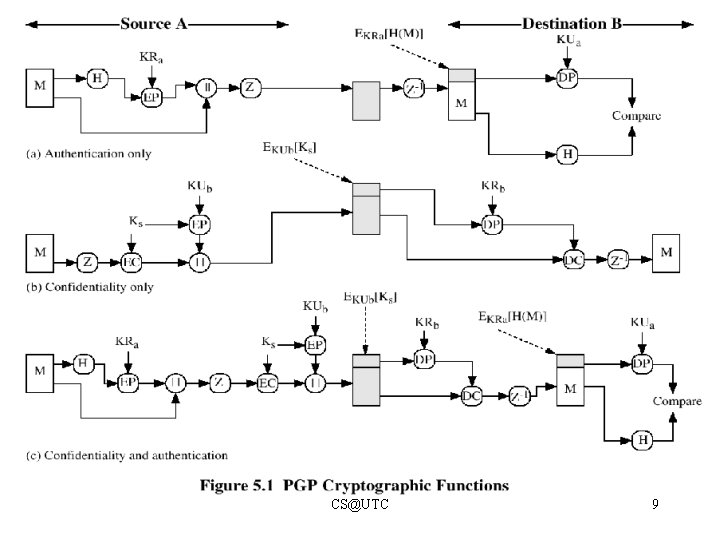
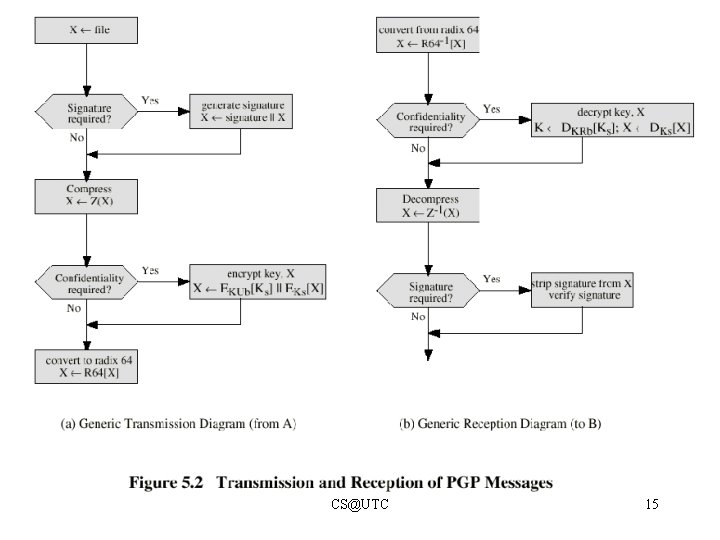
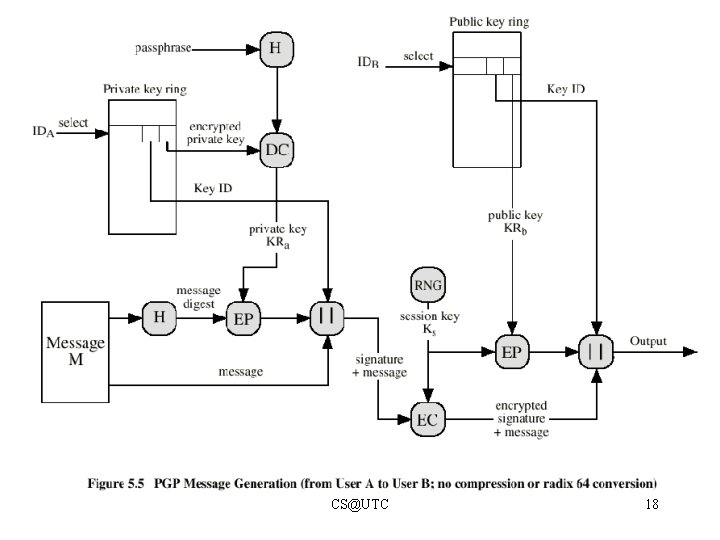
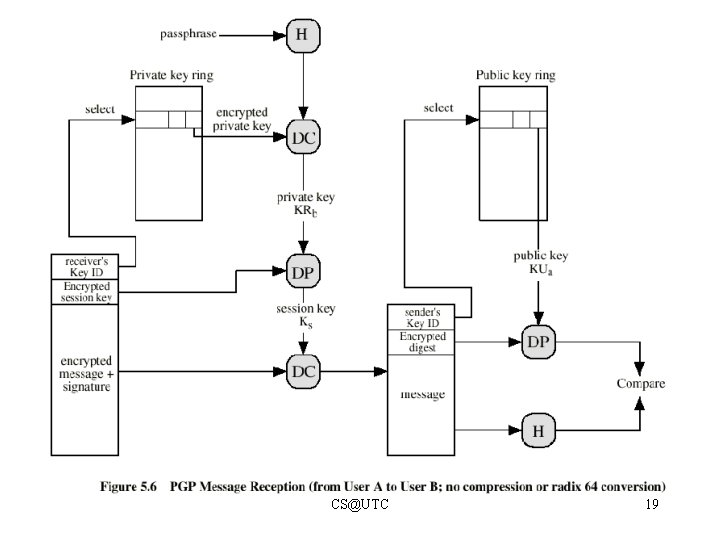
PGP Operation – Authentication 1. Sender creates a message 2. SHA 1 used to create 160 -bit hash of message 3. Hash code is encrypted using the sender's private key, and resulting signature is attached to message 4. Receiver uses sender's public key to decrypt attached signature and recover hash code 5. Receiver generates hash code of message and compares with decrypted hash code. If match, message is accepted as authentic CS@UTC 5
PGP Operation – Authentication M H || Z Z-1 = original message = hash function = concatenation (join) = compression = decompression EP DP KRa KUa = public key encryption = public key decryption = A’s private key = A’s public key CS@UTC 6
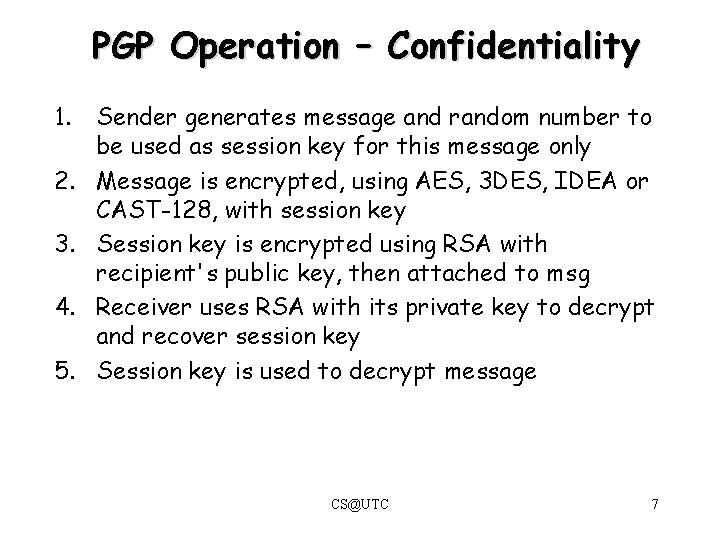
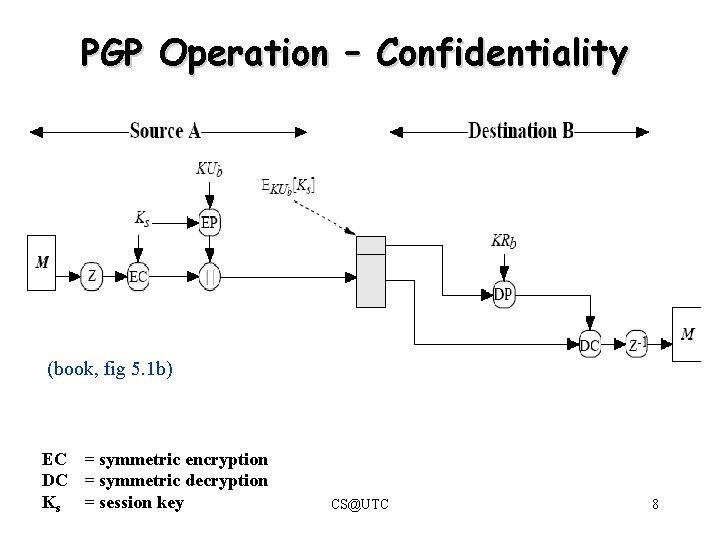
PGP Operation – Confidentiality 1. 2. 3. 4. 5. Sender generates message and random number to be used as session key for this message only Message is encrypted, using AES, 3 DES, IDEA or CAST-128, with session key Session key is encrypted using RSA with recipient's public key, then attached to msg Receiver uses RSA with its private key to decrypt and recover session key Session key is used to decrypt message CS@UTC 7
PGP Operation – Confidentiality (book, fig 5. 1 b) EC = symmetric encryption DC = symmetric decryption Ks = session key CS@UTC 8
CS@UTC 9
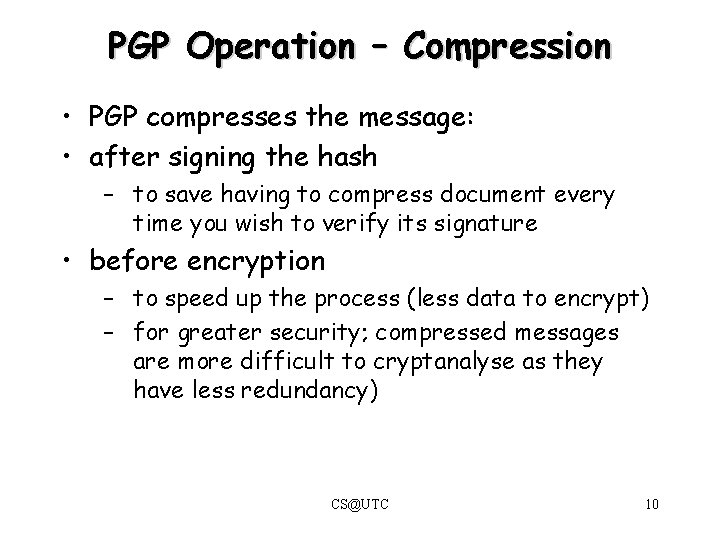
PGP Operation – Compression • PGP compresses the message: • after signing the hash – to save having to compress document every time you wish to verify its signature • before encryption – to speed up the process (less data to encrypt) – for greater security; compressed messages are more difficult to cryptanalyse as they have less redundancy) CS@UTC 10
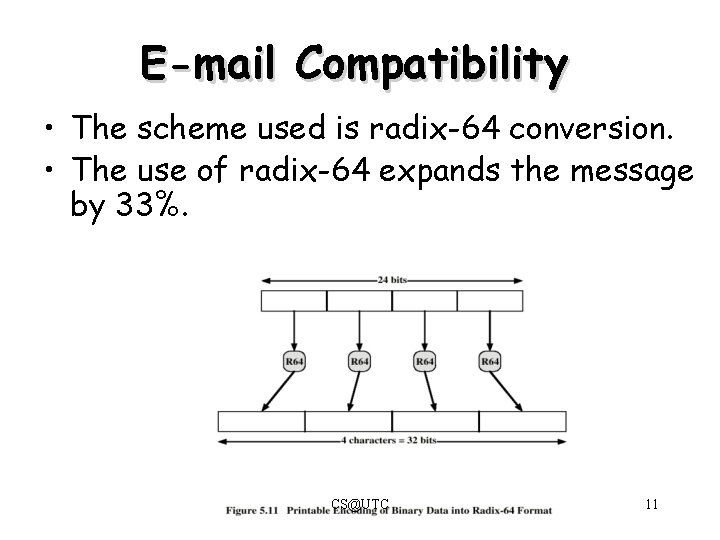
E-mail Compatibility • The scheme used is radix-64 conversion. • The use of radix-64 expands the message by 33%. CS@UTC 11
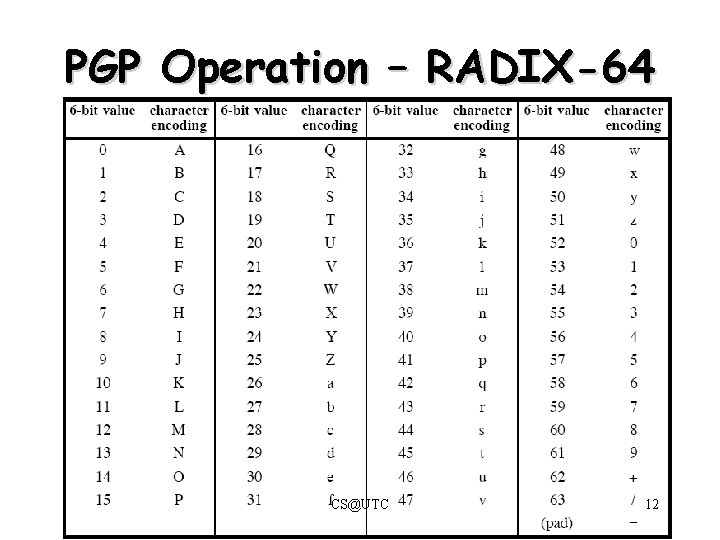
PGP Operation – RADIX-64 encoding CS@UTC 12
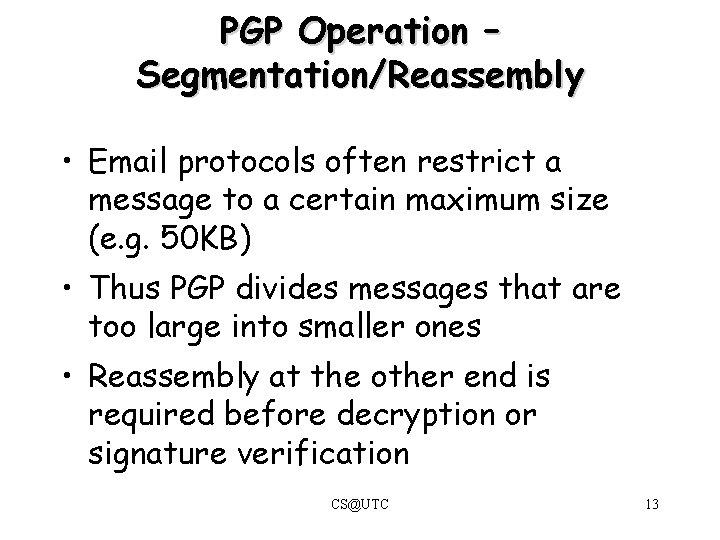
PGP Operation – Segmentation/Reassembly • Email protocols often restrict a message to a certain maximum size (e. g. 50 KB) • Thus PGP divides messages that are too large into smaller ones • Reassembly at the other end is required before decryption or signature verification CS@UTC 13
Summary of PGP Services CS@UTC 14
CS@UTC 15
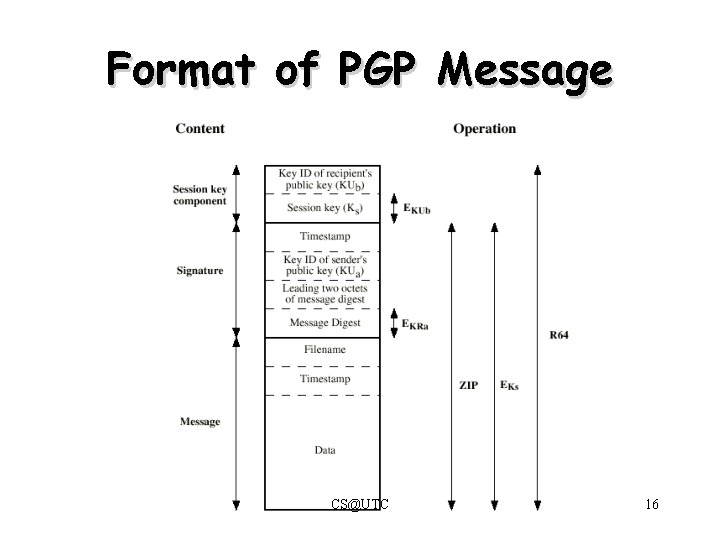
Format of PGP Message CS@UTC 16
CS@UTC 17
CS@UTC 18
CS@UTC 19
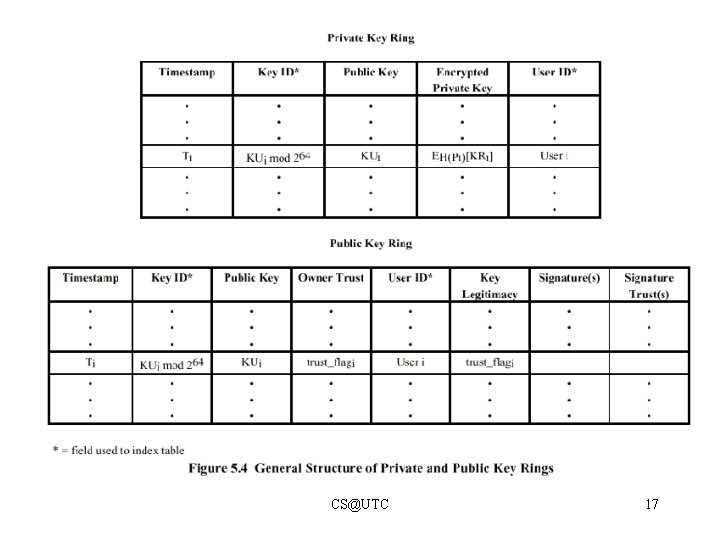
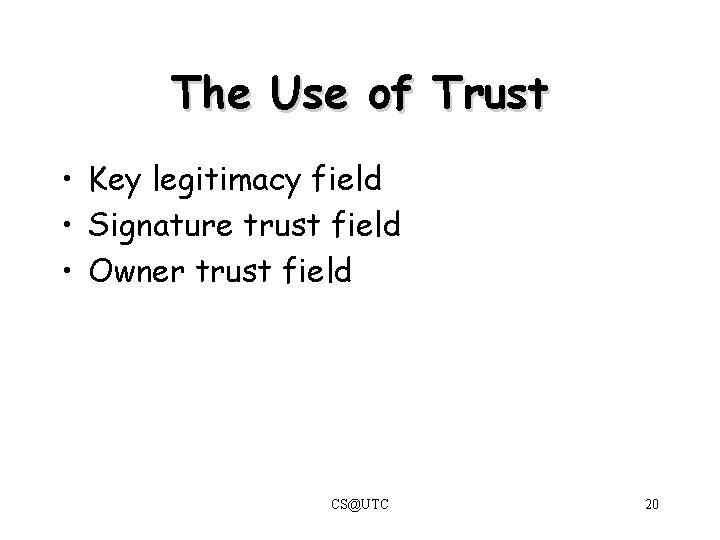
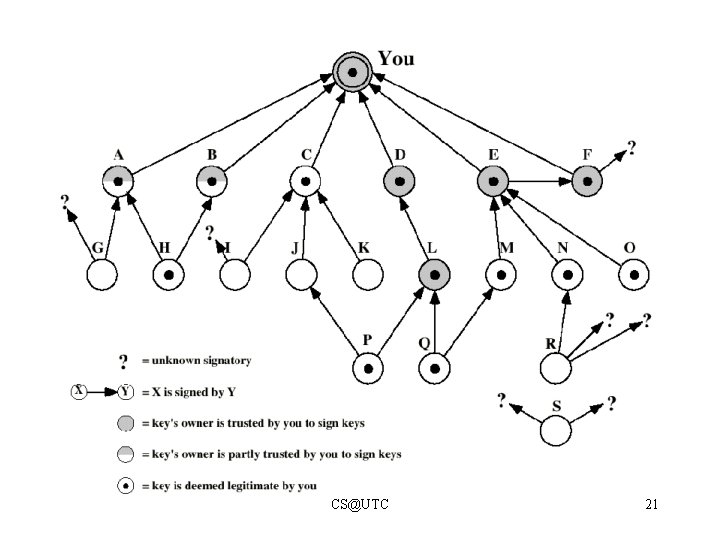
The Use of Trust • Key legitimacy field • Signature trust field • Owner trust field CS@UTC 20
CS@UTC 21