Effects of on gut health in elderly and





- Slides: 29
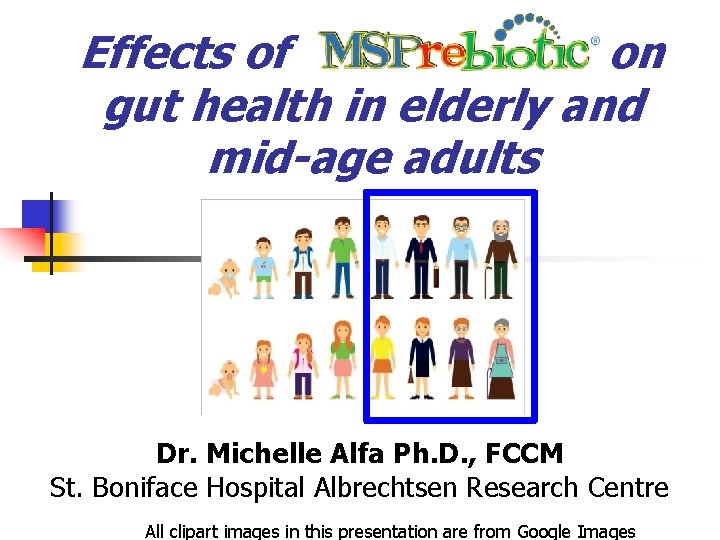
Effects of on gut health in elderly and mid-age adults Dr. Michelle Alfa Ph. D. , FCCM St. Boniface Hospital Albrechtsen Research Centre All clipart images in this presentation are from Google Images
Clinical Study on n Funded by MSPrebiotics Inc. , Carberry, MB (and the National Research Council Canada) Research at St. Boniface Hospital Albrechtsen Research Centre, Winnipeg, MB Participants recruited from Winnipeg, MB “MADE IN MANITOBA”
It takes a “Village” to do a Clinical Study! Pat De. Gagne Nancy Olson Michelle Alfa Deer Lodge Dr. David Strang (Co-PI, Study Physician) Michael Kaan, Joanne Lapointe-Mckenzie, Daryl Dyck St. Boniface Hospital Albrechtsen Research Centre: Bram Ramjiawan: Office of Clinical Research (Lorie Forbes, Angela Ramjiawan) Pram Tappia: Clinical co-ordinator Brenda-Lee Murray, David Bray: Research Technologists Nila Mc. Farlane, Betty Taylor: Study nurses Brett Hiebert: Statistical analysis National Microbiology Laboratory: Gary Van Domselaar, Morag Graham, Vanessa Laminman, Jessica Forbes University of Manitoba (Statistical analysis): Lisa Lix, Brenden Dufault
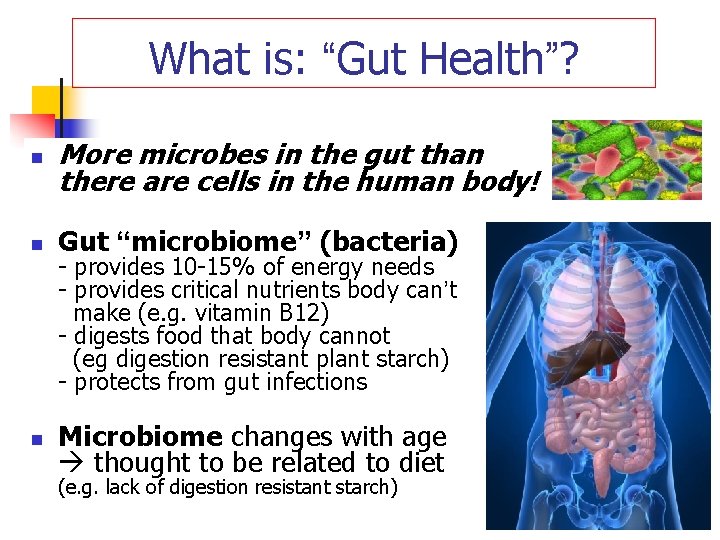
What is: “Gut Health”? n More microbes in the gut than there are cells in the human body! n Gut “microbiome” (bacteria) n Microbiome changes with age thought to be related to diet - provides 10 -15% of energy needs - provides critical nutrients body can’t make (e. g. vitamin B 12) - digests food that body cannot (eg digestion resistant plant starch) - protects from gut infections (e. g. lack of digestion resistant starch)
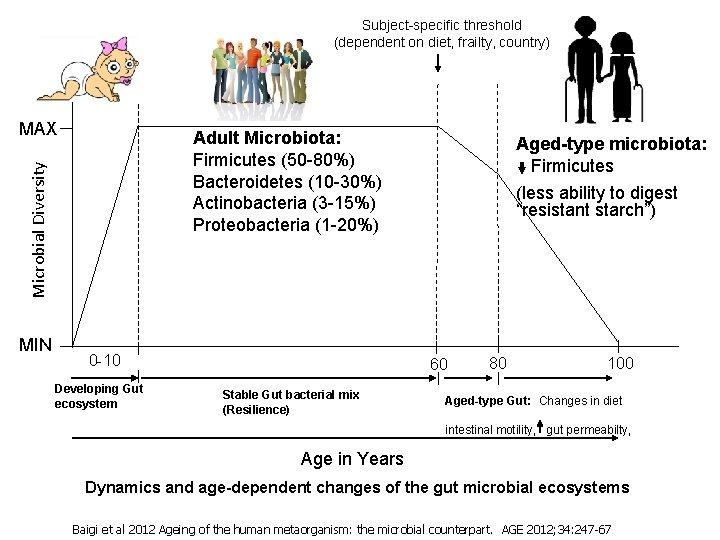
Subject-specific threshold (dependent on diet, frailty, country) MAX Microbial Diversity Adult Microbiota: Firmicutes (50 -80%) Bacteroidetes (10 -30%) Actinobacteria (3 -15%) Proteobacteria (1 -20%) MIN 0 -10 Developing Gut ecosystem Aged-type microbiota: Firmicutes (less ability to digest “resistant starch”) 60 Stable Gut bacterial mix (Resilience) 80 100 Aged-type Gut: Changes in diet intestinal motility, gut permeabilty, Age in Years Dynamics and age-dependent changes of the gut microbial ecosystems Baigi et al 2012 Ageing of the human metaorganism: the microbial counterpart. AGE 2012; 34: 247 -67
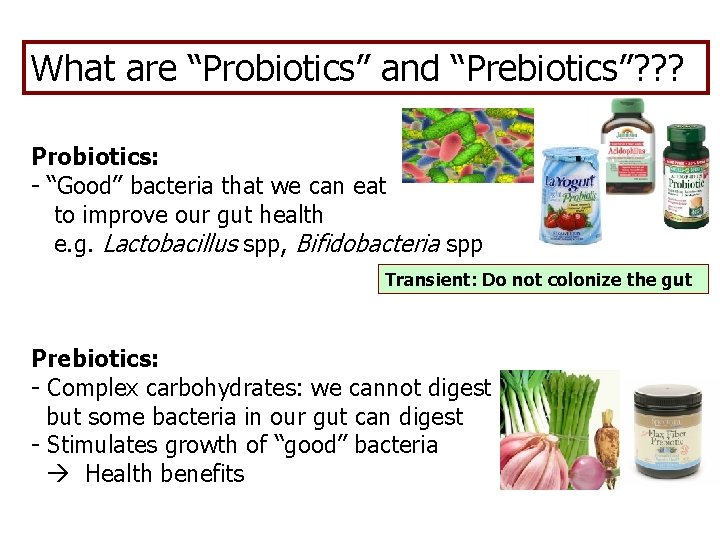
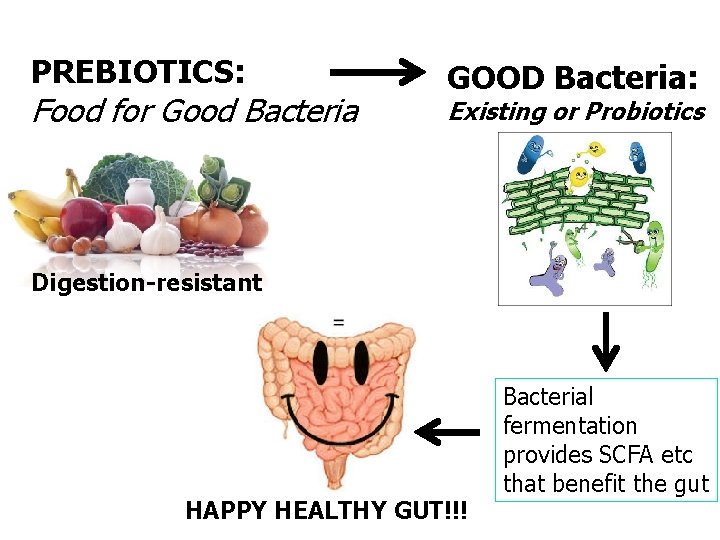
What are “Probiotics” and “Prebiotics”? ? ? Probiotics: - “Good” bacteria that we can eat to improve our gut health e. g. Lactobacillus spp, Bifidobacteria spp Transient: Do not colonize the gut Prebiotics: - Complex carbohydrates: we cannot digest but some bacteria in our gut can digest - Stimulates growth of “good” bacteria Health benefits
PREBIOTICS: Food for Good Bacteria GOOD Bacteria: Existing or Probiotics Digestion-resistant HAPPY HEALTHY GUT!!! Bacterial fermentation provides SCFA etc that benefit the gut
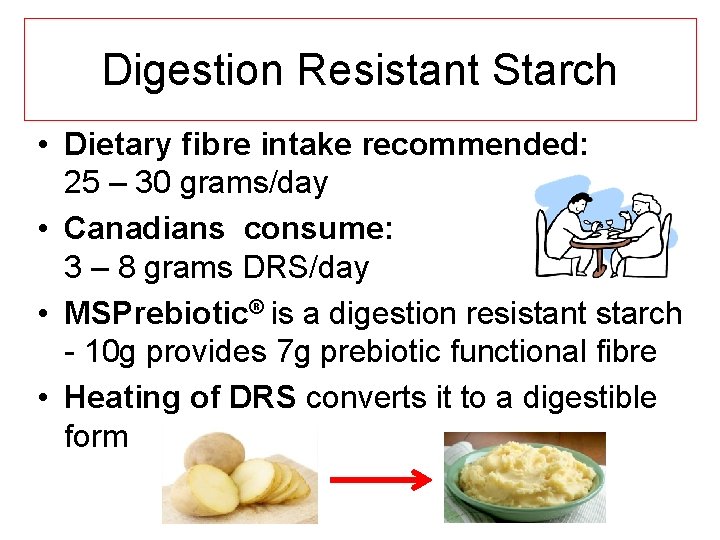
Digestion Resistant Starch • Dietary fibre intake recommended: 25 – 30 grams/day • Canadians consume: 3 – 8 grams DRS/day • MSPrebiotic® is a digestion resistant starch - 10 g provides 7 g prebiotic functional fibre • Heating of DRS converts it to a digestible form
Clinical Study n n Impact on Gut Health when MSPrebiotic® is added to diet of elderly (> 70 yrs): - Bacterial changes in stool samples - Glucose & inflammatory markers in blood Compare to effect of MSPrebiotic® on younger adults (30 -50 yrs)
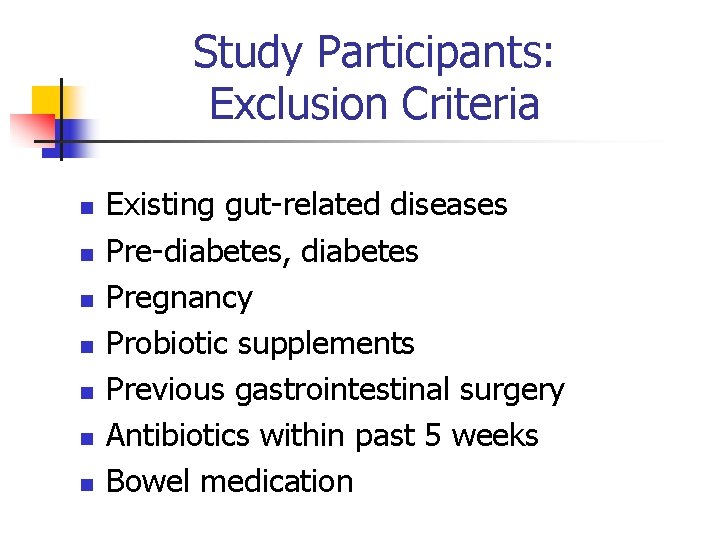
Study Participants: Exclusion Criteria n n n n Existing gut-related diseases Pre-diabetes, diabetes Pregnancy Probiotic supplements Previous gastrointestinal surgery Antibiotics within past 5 weeks Bowel medication
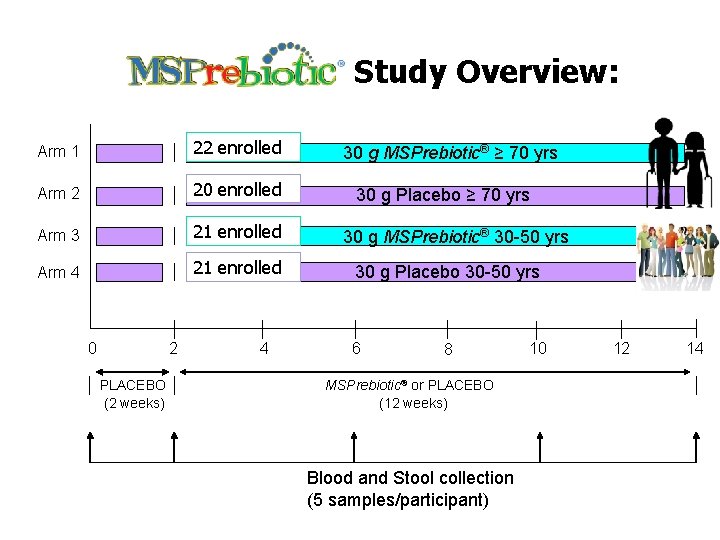
Study Overview: Arm 1 22 enrolled Arm 2 20 enrolled Arm 3 21 enrolled Arm 4 21 enrolled 0 2 PLACEBO (2 weeks) 4 30 g MSPrebiotic® ≥ 70 yrs 30 g Placebo ≥ 70 yrs 30 g MSPrebiotic® 30 -50 yrs 30 g Placebo 30 -50 yrs 6 8 MSPrebiotic® or PLACEBO (12 weeks) Blood and Stool collection (5 samples/participant) 10 12 14
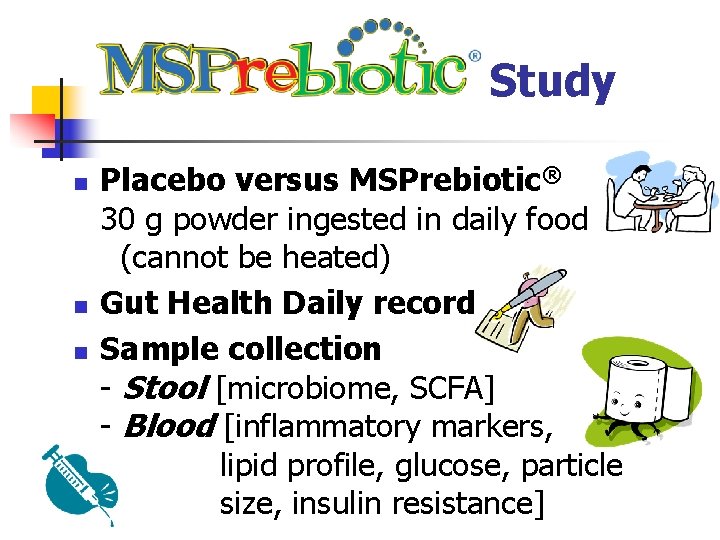
Study n n n Placebo versus MSPrebiotic® 30 g powder ingested in daily food (cannot be heated) Gut Health Daily record Sample collection - Stool [microbiome, SCFA] - Blood [inflammatory markers, lipid profile, glucose, particle size, insulin resistance]
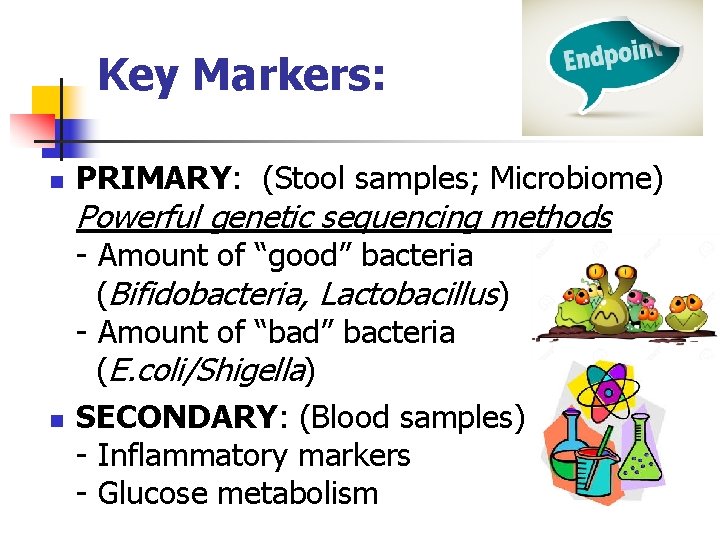
Key Markers: n PRIMARY: (Stool samples; Microbiome) Powerful genetic sequencing methods n - Amount of “good” bacteria (Bifidobacteria, Lactobacillus) - Amount of “bad” bacteria (E. coli/Shigella) SECONDARY: (Blood samples) - Inflammatory markers - Glucose metabolism
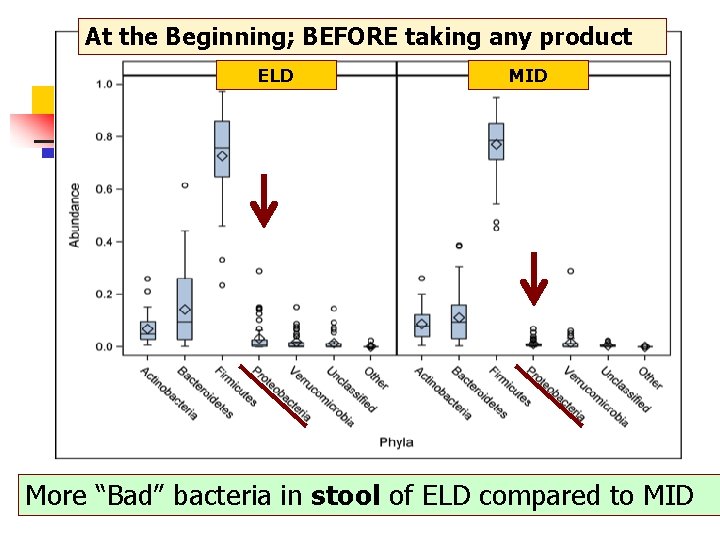
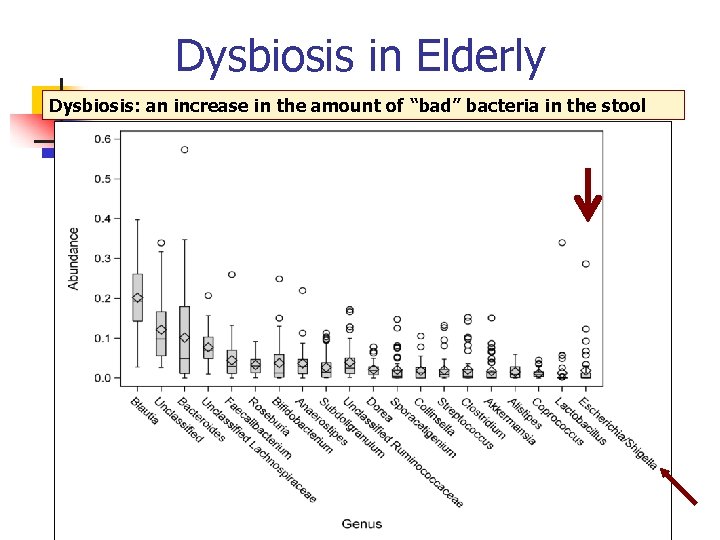
At the Beginning; BEFORE taking any product ELD MID More “Bad” bacteria in stool of ELD compared to MID
Dysbiosis in Elderly Dysbiosis: an increase in the amount of “bad” bacteria in the stool
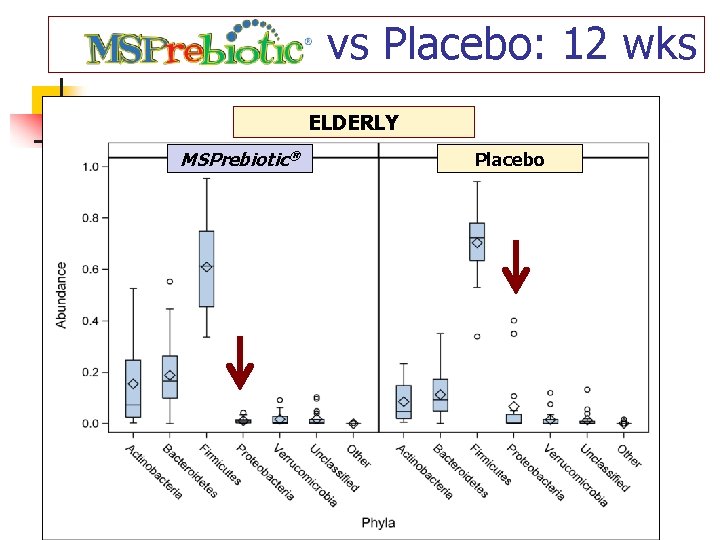
vs Placebo: 12 wks ELDERLY MSPrebiotic® Placebo
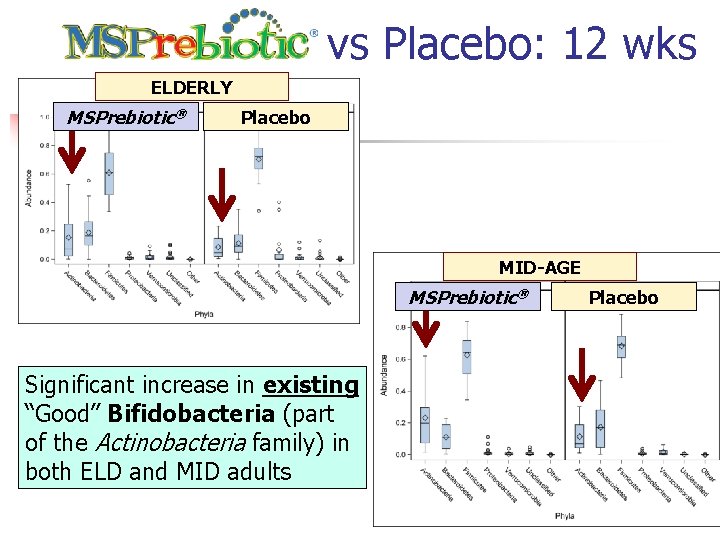
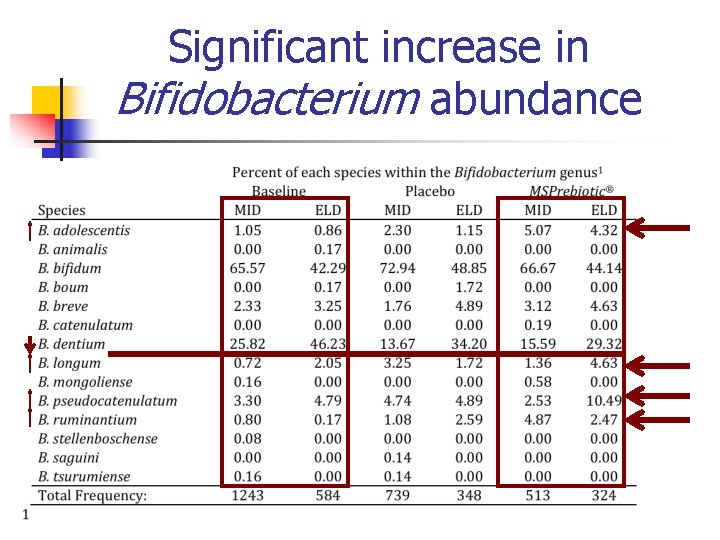
vs Placebo: 12 wks ELDERLY MSPrebiotic® Placebo MID-AGE MSPrebiotic® Significant increase in existing “Good” Bifidobacteria (part of the Actinobacteria family) in both ELD and MID adults Placebo
Significant increase in Bifidobacterium abundance
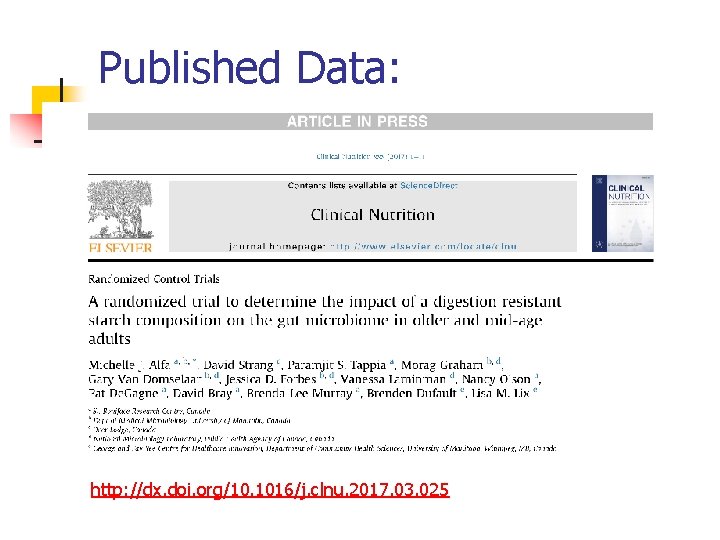
Published Data: http: //dx. doi. org/10. 1016/j. clnu. 2017. 03. 025
Key Markers: n SECONDARY: (Blood samples) - Inflammatory markers - Glucose metabolism
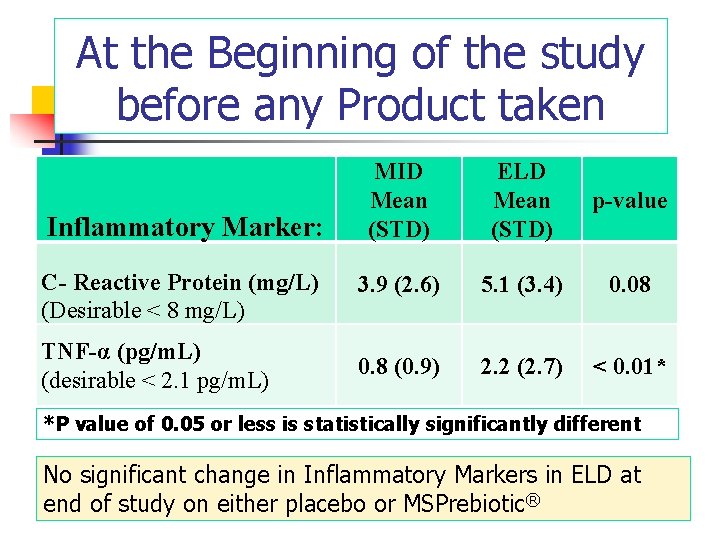
At the Beginning of the study before any Product taken Inflammatory Marker: C- Reactive Protein (mg/L) (Desirable < 8 mg/L) TNF-α (pg/m. L) (desirable < 2. 1 pg/m. L) MID Mean (STD) ELD Mean (STD) p-value 3. 9 (2. 6) 5. 1 (3. 4) 0. 08 0. 8 (0. 9) 2. 2 (2. 7) < 0. 01* *P value of 0. 05 or less is statistically significantly different No significant change in Inflammatory Markers in ELD at end of study on either placebo or MSPrebiotic®
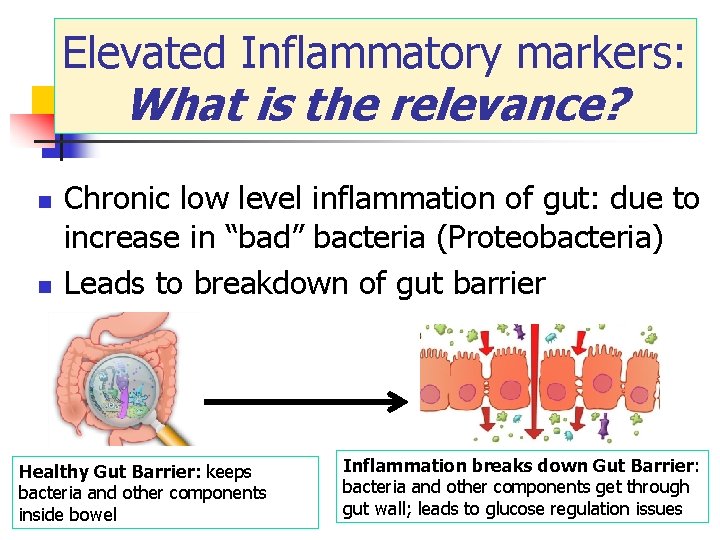
Elevated Inflammatory markers: What is the relevance? n n Chronic low level inflammation of gut: due to increase in “bad” bacteria (Proteobacteria) Leads to breakdown of gut barrier Healthy Gut Barrier: keeps bacteria and other components inside bowel Inflammation breaks down Gut Barrier: bacteria and other components get through gut wall; leads to glucose regulation issues
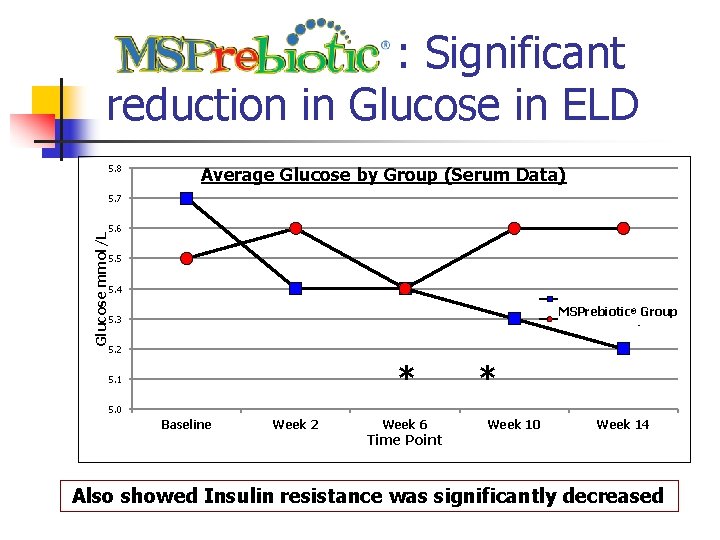
: Significant reduction in Glucose in ELD 5. 8 Average Glucose by Group (Serum Data) Glucose mmol/L 5. 7 5. 6 5. 5 5. 4 MS Prebiotic Group MSPrebiotic® Group Control Group 5. 3 5. 2 * 5. 1 * 5. 0 Baseline Week 2 Week 6 Time Point Week 10 Week 14 Also showed Insulin resistance was significantly decreased
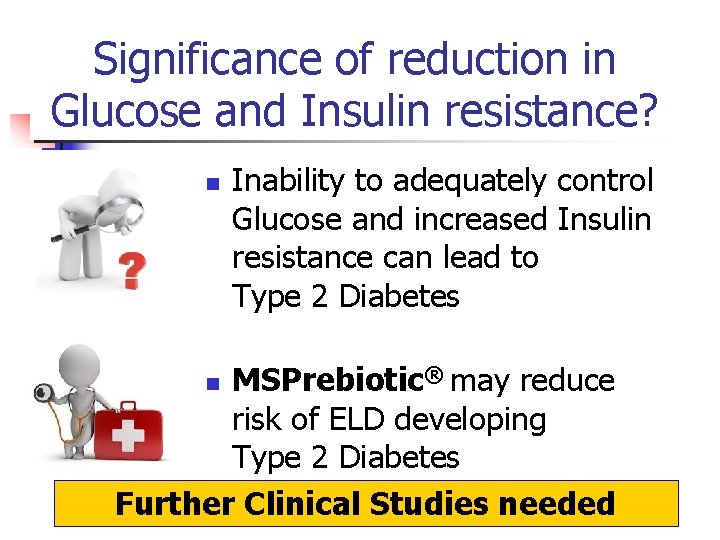
Significance of reduction in Glucose and Insulin resistance? n Inability to adequately control Glucose and increased Insulin resistance can lead to Type 2 Diabetes MSPrebiotic® may reduce risk of ELD developing Type 2 Diabetes Further Clinical Studies needed n
Publication: n Alfa MJ, Strang D, Tappia PS, Olson N, De. Gagne P, Bray D, Murray BP, Hiebert B A randomized placebo controlled clinical trial showed that digestion resistant starch MSPrebiotic® reduced glucose, insulin and insulin resistance in elderly compared to midage adults n Manuscript has been submitted to PLOSone for consideration - currently being reviewed
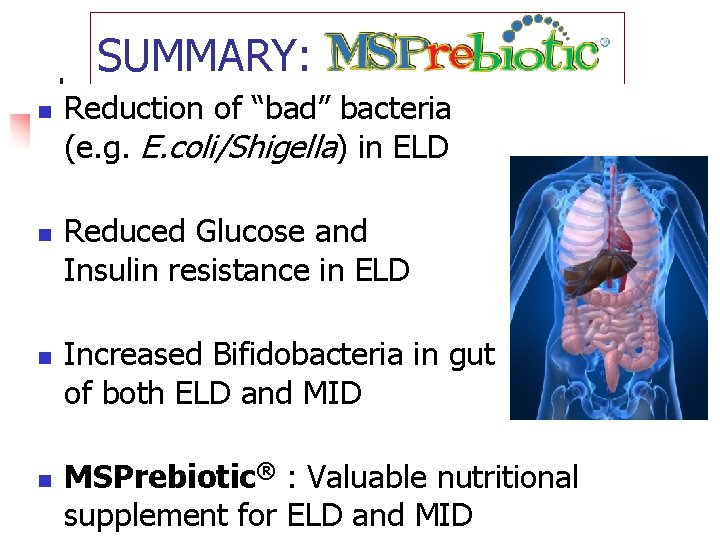
SUMMARY: n n Reduction of “bad” bacteria (e. g. E. coli/Shigella) in ELD Reduced Glucose and Insulin resistance in ELD Increased Bifidobacteria in gut of both ELD and MID MSPrebiotic® : Valuable nutritional supplement for ELD and MID
First commercial product from a CCARM Functional Food Clinical Trial! 454 g Pouch 10 g Travel Packs More information: www. MSPrebiotic. ca
REMEMBER…… …HAPPY GUT BACTERIA …HAPPY HEALTHY PEOPLE!
THANKYOU!!!! To ALL the PARTICIPANTS who volunteered for this study!