EE 206 Introduction to Electrical Systems and Computations

- Slides: 10
EE 206 Introduction to Electrical Systems and Computations Communications
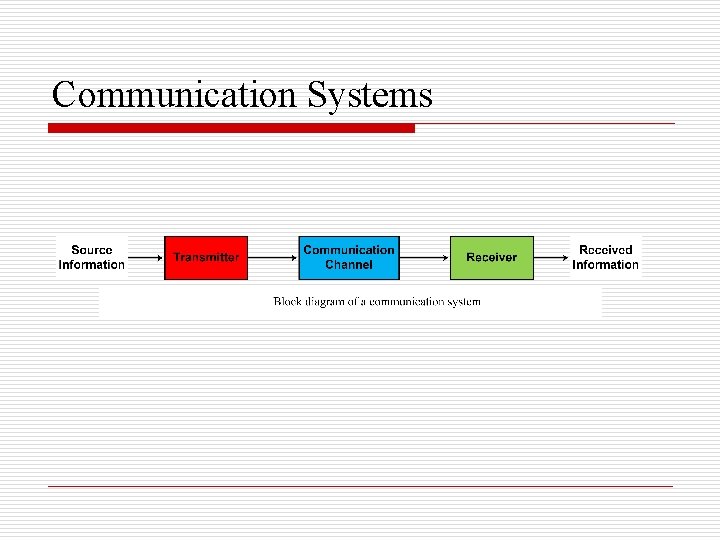
Communication Systems
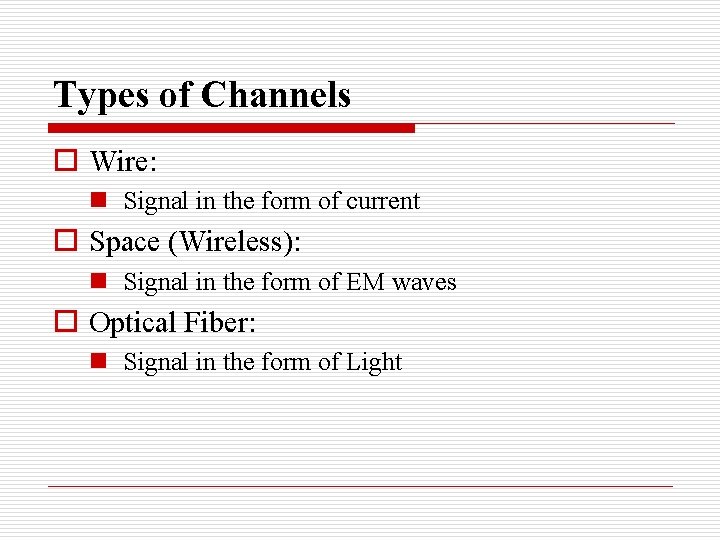
Types of Channels o Wire: n Signal in the form of current o Space (Wireless): n Signal in the form of EM waves o Optical Fiber: n Signal in the form of Light
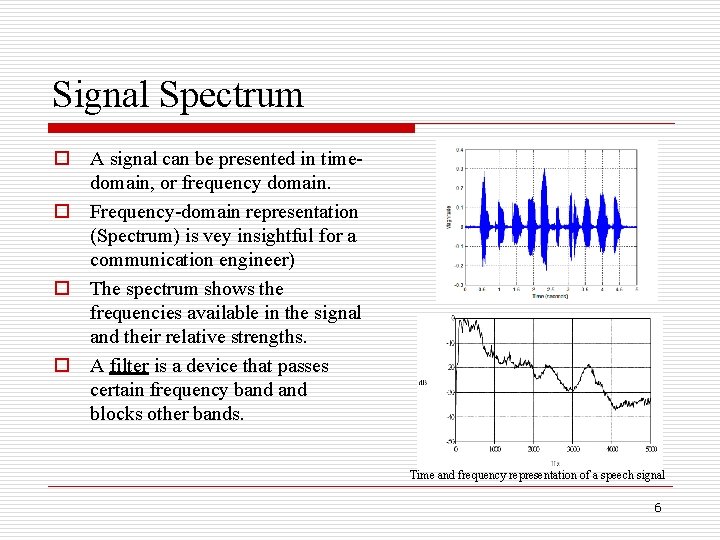
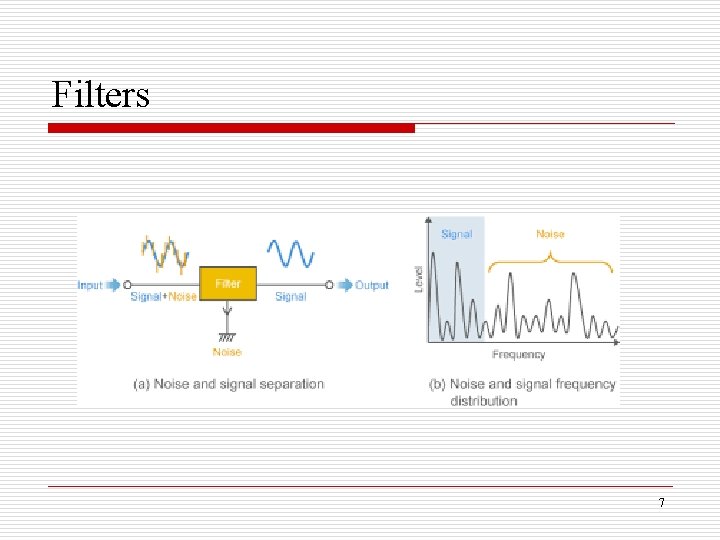
Signal Spectrum o A signal can be presented in timedomain, or frequency domain. o Frequency-domain representation (Spectrum) is vey insightful for a communication engineer) o The spectrum shows the frequencies available in the signal and their relative strengths. o A filter is a device that passes certain frequency band blocks other bands. Time and frequency representation of a speech signal 6
Filters 7
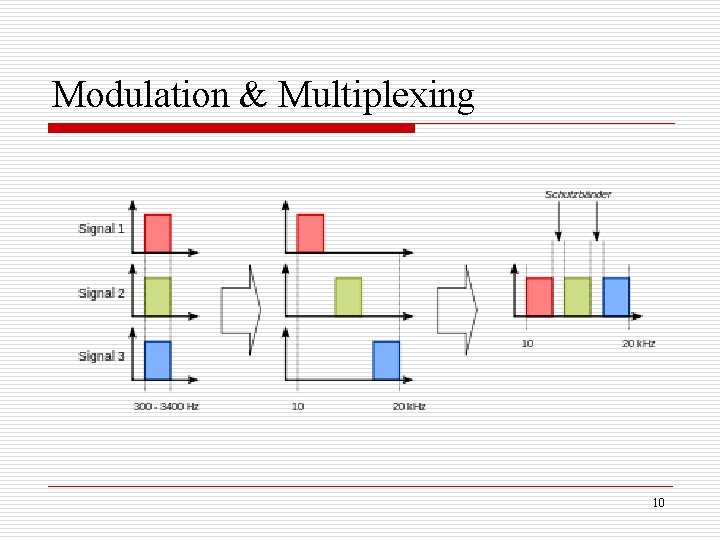
Modulation o Can we send two voice signals on the same channel simultaneously (Multiplexing)? o For the signals not to overlap and be separable by filters, they must be modulated. o Modulation is the process of shifting the baseband signal to passband range. o The process of shifting the passband signal to baseband frequency range is called Demodulation. o One devise can do both. It is called MODEM. o Modulation is also necessary in wireless communications. Why? 8
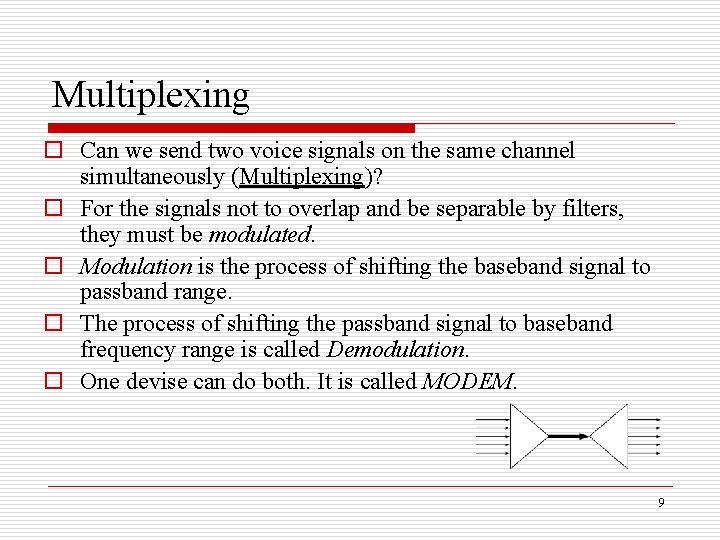
Multiplexing o Can we send two voice signals on the same channel simultaneously (Multiplexing)? o For the signals not to overlap and be separable by filters, they must be modulated. o Modulation is the process of shifting the baseband signal to passband range. o The process of shifting the passband signal to baseband frequency range is called Demodulation. o One devise can do both. It is called MODEM. 9
Modulation & Multiplexing 10
Types of Modulation o In modulation, one characteristic of a signal (generally a sinusoidal wave) known as the carrier is changed based on the information signal that we wish to transmit (modulating signal). o That could be the amplitude or frequency, which result in Amplitude modulation (AM) or Frequency modulation (FM). 11
AM & FM 12