Economic Exclusion and Poverty Linkages Concept Consequence and
- Slides: 19
Economic Exclusion and Poverty Linkages – Concept, Consequence and Remedies in the Asian Context Sukhadeo Thorat Professor, Jawaharlal Nehru University Professor, Jawaharlal Nehru and Chairman University Grant Commission, India
Purpose Ø Discuss Concept of Economic Exclusion, Ø Its consequences on poverty and growth, Ø Policies - Insight from theories, Ø Economic Discrimination - Indian Context, Ø Situation of the Excluded Groups, Ø Policies against Economic Discrimination in the Asian context.
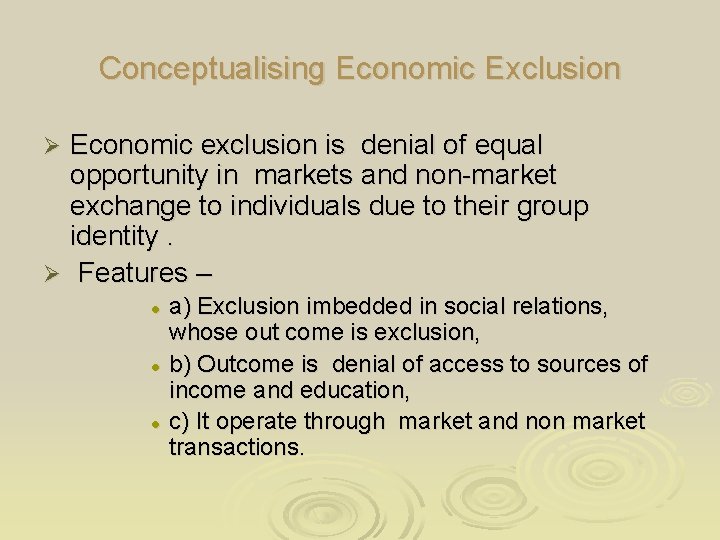
Conceptualising Economic Exclusion Economic exclusion is denial of equal opportunity in markets and non-market exchange to individuals due to their group identity. Ø Features – Ø l l l a) Exclusion imbedded in social relations, whose out come is exclusion, b) Outcome is denial of access to sources of income and education, c) It operate through market and non market transactions.
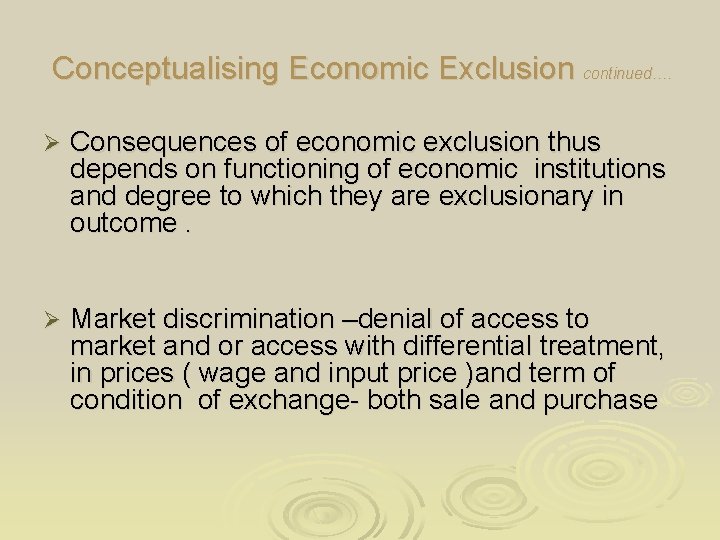
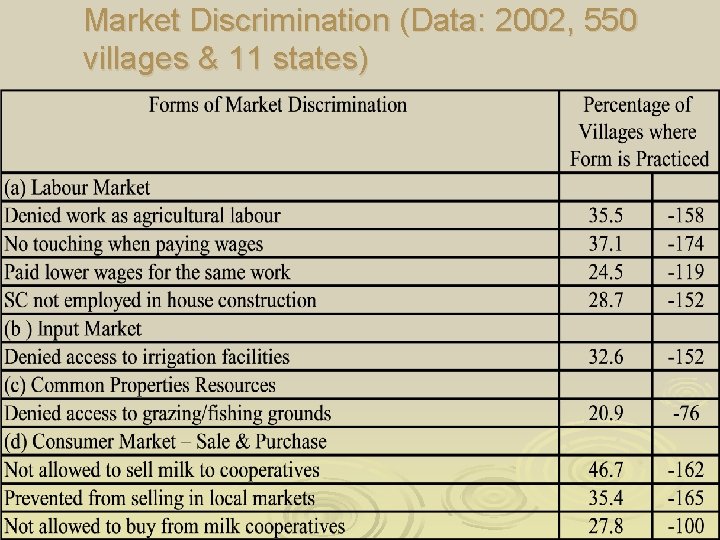
Conceptualising Economic Exclusion continued…. Ø Consequences of economic exclusion thus depends on functioning of economic institutions and degree to which they are exclusionary in outcome. Ø Market discrimination –denial of access to market and or access with differential treatment, in prices ( wage and input price )and term of condition of exchange- both sale and purchase
Consequences-Growth and Poverty Ø Economic growth, inequality/poverty and intergroup conflict. • On Economic Growth: Market discrimination adversely affect resource allocation, • Less than optimal allocation of labour and investment among firms. Imperfect market situation. Ø On Poverty: denial of access to market and or differential treatment , leads to unemployment, low wage earning, higher price for inputs and lower price for products bring low income.
Caste and Economic Discrimination: Ø In Caste based Economy, occupation (or property rights), are fixed hereditary, and endogamous. (Akerlof, Scoville, Lal and Ambedkar) Ø Entitlement of rights across caste is unequal and hierarchal, Ø Some occupations are considered socially inferior with low social status for those engaged in them, Ø Caste Economy is maintained through instrument of social ostracism
Caste and Economic Exclusion Ø The caste system's fundamental characteristics of fixed economic rights for each caste, with restrictions for change implies "forced exclusion" of one caste from the rights of other caste, or from undertaking the occupations of other castes. Ø Economic Exclusion in occupation and employment, is therefore, internal to the system, and a necessary outcome of its governing principles.
Asian context Ø Studies indicate identification of groups. Ø Facing exclusion based on religion, ethnic and social origin, colour, race in Asia-Specific. Ø Countries developed equal opportunity policies, Known example include, Ø Malaysia, Japan, China, Pakistan, India, New Zealand, Nepal, Srilanka, and others
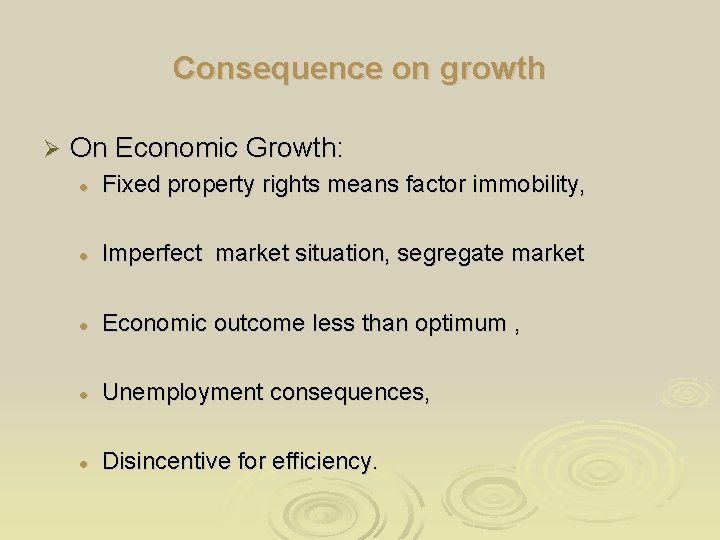
Consequence on growth Ø On Economic Growth: l Fixed property rights means factor immobility, l Imperfect market situation, segregate market l Economic outcome less than optimum , l Unemployment consequences, l Disincentive for efficiency.
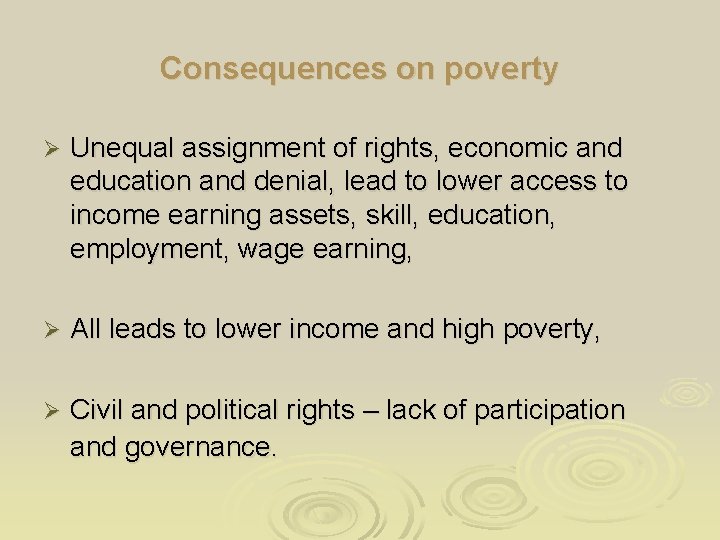
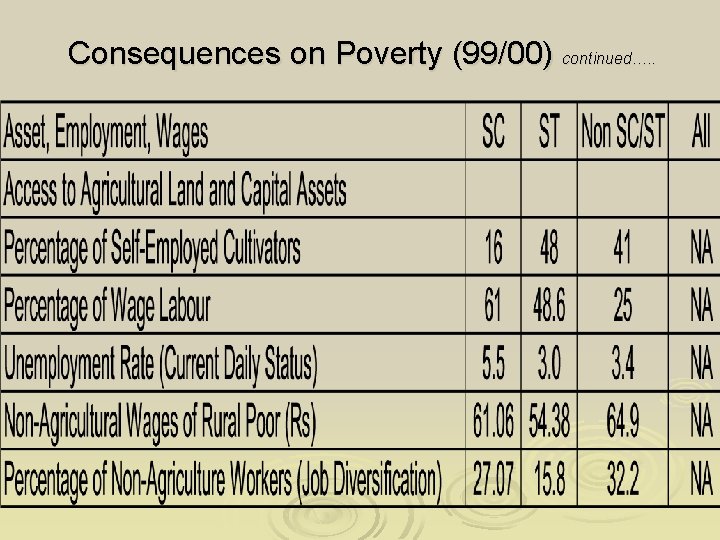
Consequences on poverty Ø Unequal assignment of rights, economic and education and denial, lead to lower access to income earning assets, skill, education, employment, wage earning, Ø All leads to lower income and high poverty, Ø Civil and political rights – lack of participation and governance.
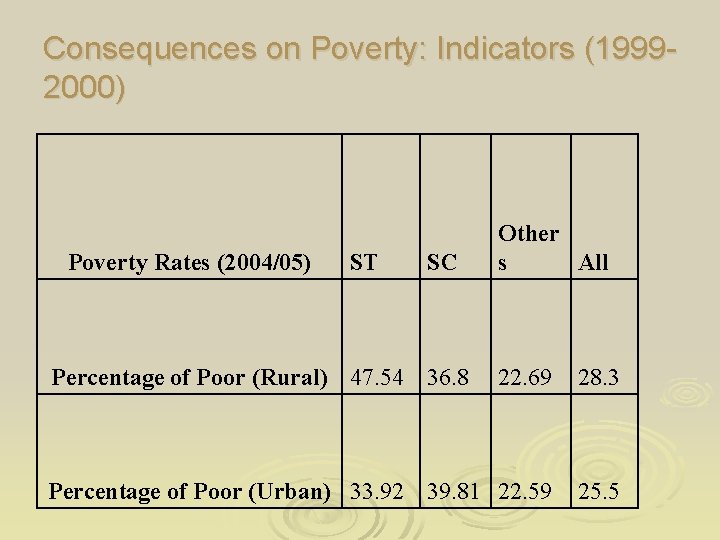
Consequences on Poverty: Indicators (19992000) Poverty Rates (2004/05) ST SC Percentage of Poor (Rural) 47. 54 36. 8 Other s All 22. 69 28. 3 Percentage of Poor (Urban) 33. 92 39. 81 22. 59 25. 5
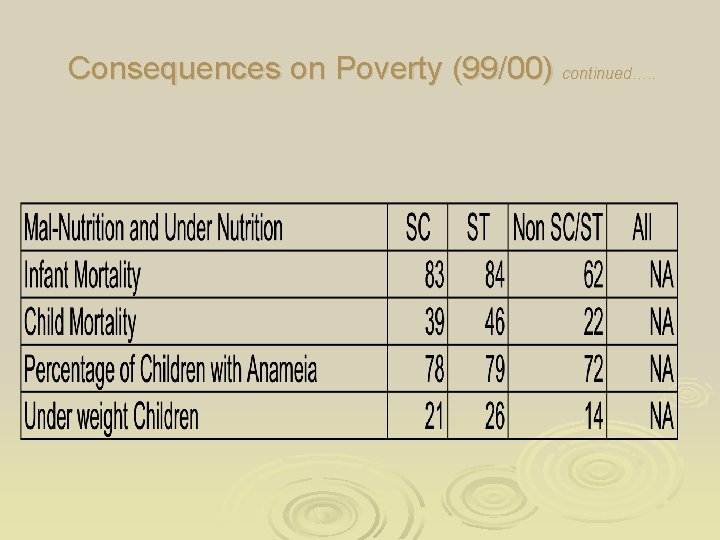
Consequences on Poverty (99/00) continued…. .
Consequences on Poverty (99/00) continued…. .
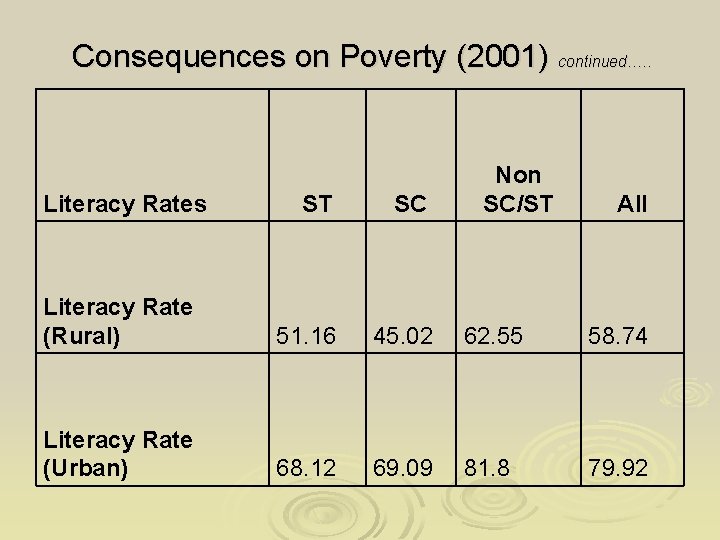
Consequences on Poverty (2001) continued…. . Literacy Rates Non SC/ST ST SC All Literacy Rate (Rural) 51. 16 45. 02 62. 55 58. 74 Literacy Rate (Urban) 68. 12 69. 09 81. 8 79. 92
Market Discrimination (Data: 2002, 550 villages & 11 states)
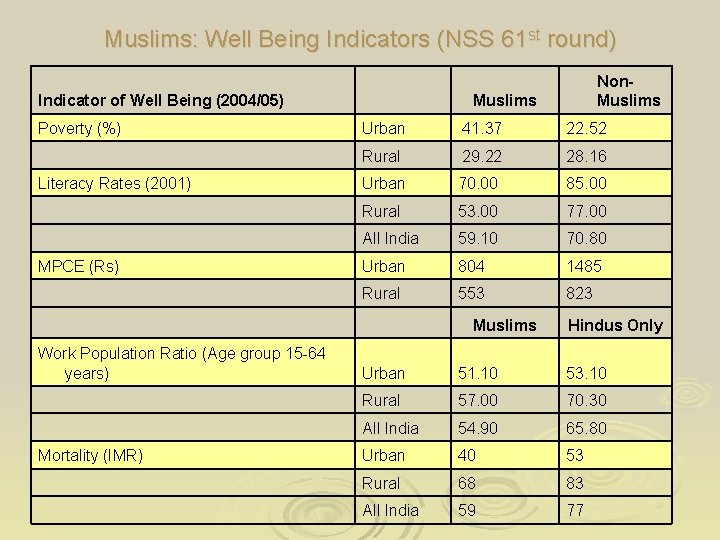
Muslims: Well Being Indicators (NSS 61 st round) Non. Muslims Indicator of Well Being (2004/05) Poverty (%) Urban 41. 37 22. 52 Rural 29. 22 28. 16 Literacy Rates (2001) Urban 70. 00 85. 00 Rural 53. 00 77. 00 All India 59. 10 70. 80 MPCE (Rs) Urban 804 1485 Rural 553 823 Muslims Work Population Ratio (Age group 15 -64 years) Urban 51. 10 53. 10 Rural 57. 00 70. 30 All India 54. 90 65. 80 Mortality (IMR) Urban 40 53 Rural 68 83 All India 59 77 Muslims Hindus Only
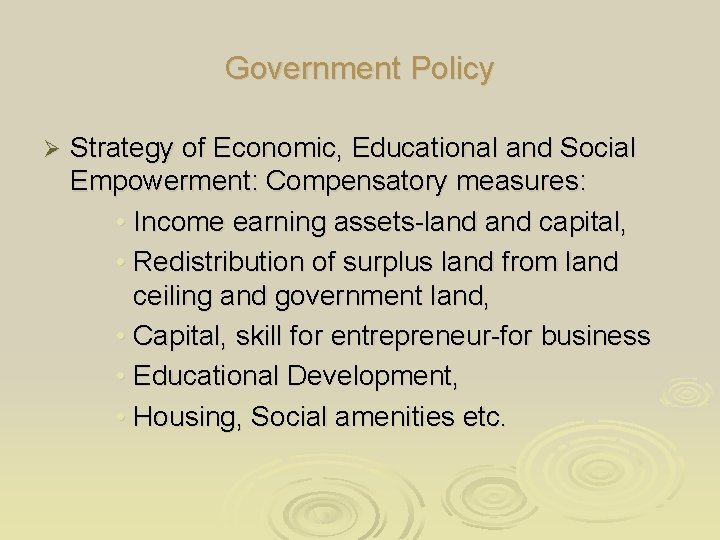
Government Policy Ø Strategy of Economic, Educational and Social Empowerment: Compensatory measures: • Income earning assets-land capital, • Redistribution of surplus land from land ceiling and government land, • Capital, skill for entrepreneur-for business • Educational Development, • Housing, Social amenities etc.
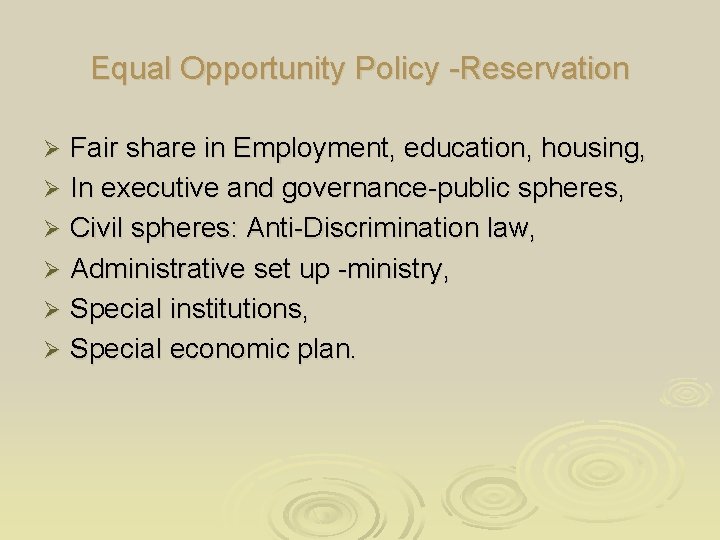
Equal Opportunity Policy -Reservation Fair share in Employment, education, housing, Ø In executive and governance-public spheres, Ø Civil spheres: Anti-Discrimination law, Ø Administrative set up -ministry, Ø Special institutions, Ø Special economic plan. Ø
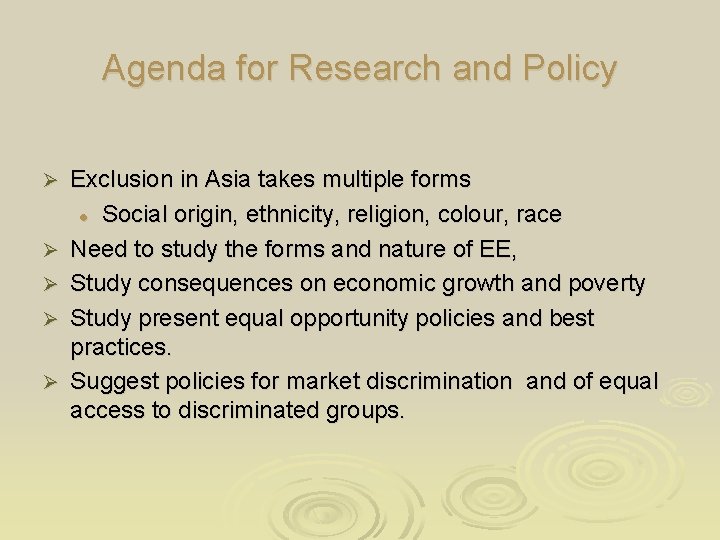
Agenda for Research and Policy Ø Ø Ø Exclusion in Asia takes multiple forms l Social origin, ethnicity, religion, colour, race Need to study the forms and nature of EE, Study consequences on economic growth and poverty Study present equal opportunity policies and best practices. Suggest policies for market discrimination and of equal access to discriminated groups.