Dynamics of Intelligence Module 62 Aging Intelligence Study


- Slides: 9
Dynamics of Intelligence Module 62
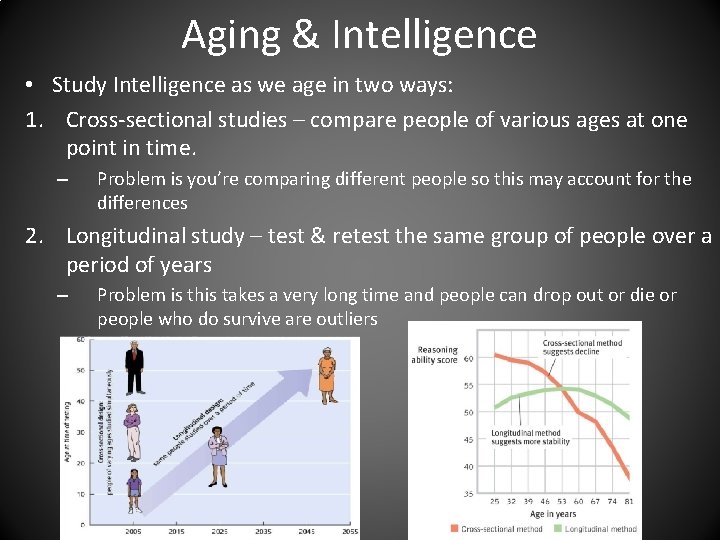
Aging & Intelligence • Study Intelligence as we age in two ways: 1. Cross-sectional studies – compare people of various ages at one point in time. – Problem is you’re comparing different people so this may account for the differences 2. Longitudinal study – test & retest the same group of people over a period of years – Problem is this takes a very long time and people can drop out or die or people who do survive are outliers
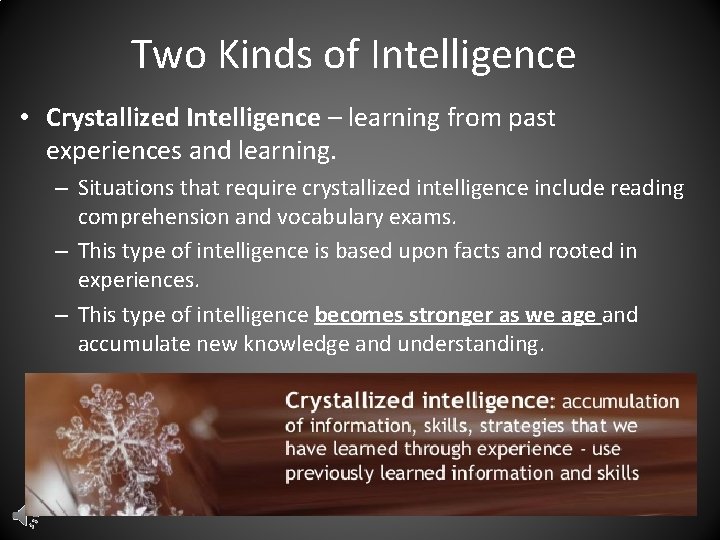
Two Kinds of Intelligence • Crystallized Intelligence – learning from past experiences and learning. – Situations that require crystallized intelligence include reading comprehension and vocabulary exams. – This type of intelligence is based upon facts and rooted in experiences. – This type of intelligence becomes stronger as we age and accumulate new knowledge and understanding.
Two Kinds of Intelligence • Fluid Intelligence - the ability to think and reason abstractly and solve problems. – This ability is considered independent of learning, experience, and education. – Examples: solving puzzles and coming up with problem solving strategies. – Both types of intelligence increase throughout childhood and adolescence. – Fluid intelligence peaks in adolescence and begins to decline progressively beginning around age 30 or 40.
Stability of Intelligence • By age 4, intelligence tests begin to predict adolescent and adult scores. • Consistency of scores increases as a person ages • Verbal & Math scores on the SAT positively correlate (+. 86) with verbal and math scores on the GRE 4 -5 years later.
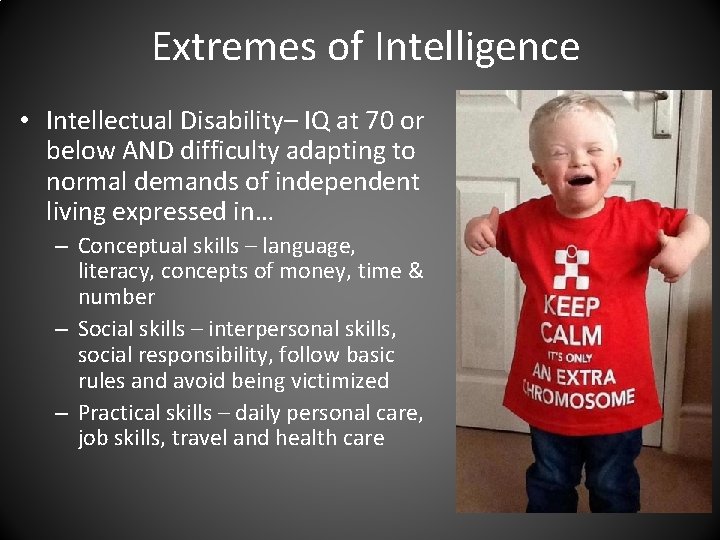
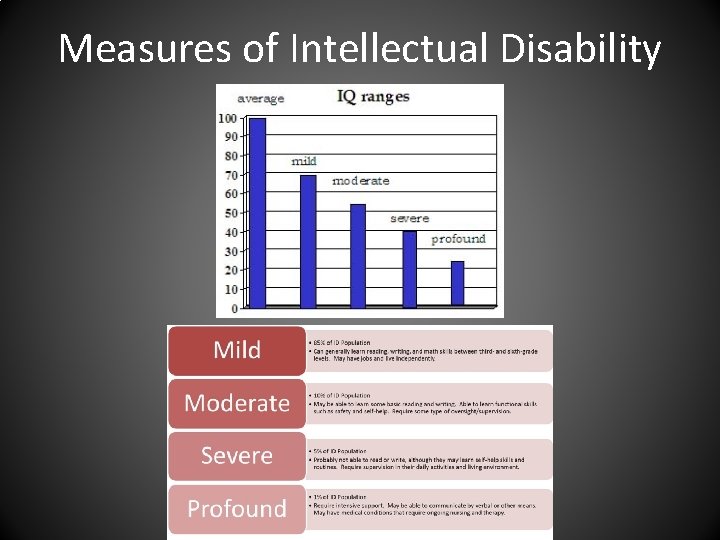
Extremes of Intelligence • Intellectual Disability– IQ at 70 or below AND difficulty adapting to normal demands of independent living expressed in… – Conceptual skills – language, literacy, concepts of money, time & number – Social skills – interpersonal skills, social responsibility, follow basic rules and avoid being victimized – Practical skills – daily personal care, job skills, travel and health care
Measures of Intellectual Disability
Extremes of Intelligence • Intellectually gifted - IQ of 135 or higher – Most grow up to be well-adjusted and successful academically • Should we have “gifted” programs in school? – Does tracking promote segregation & prejudice?