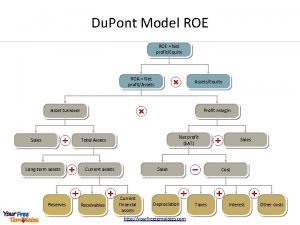
Du Pont model of Profit Analysis AGEC 489



- Slides: 14
Du. Pont model of Profit Analysis AGEC 489 -689 Spring 2010
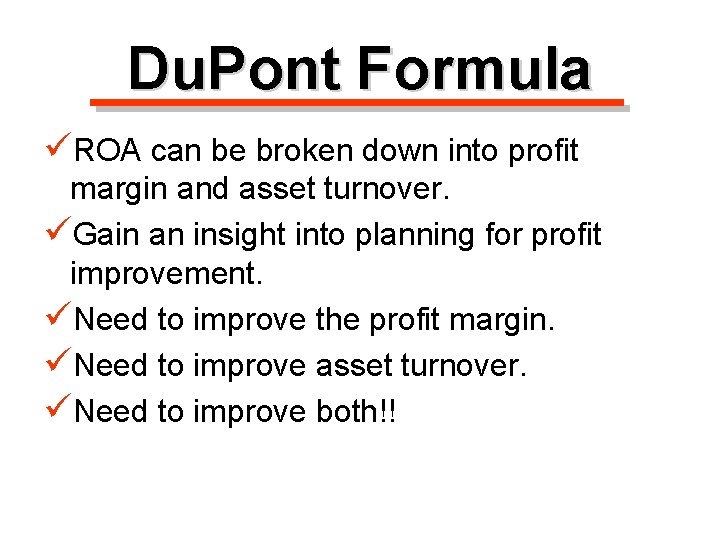
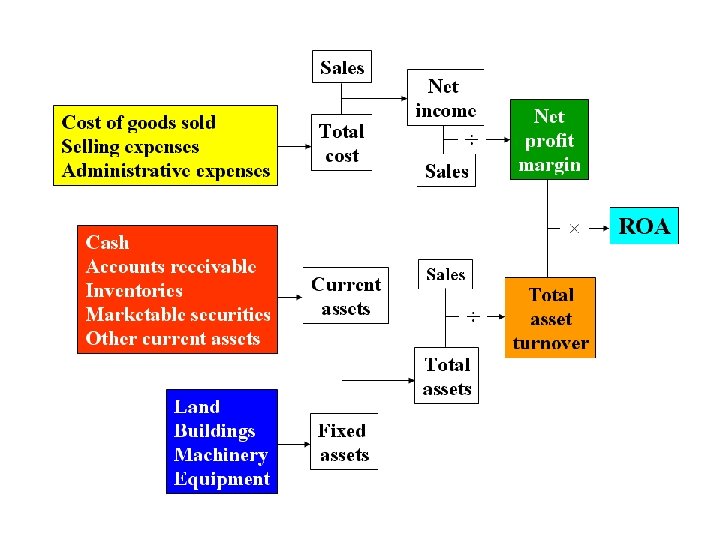
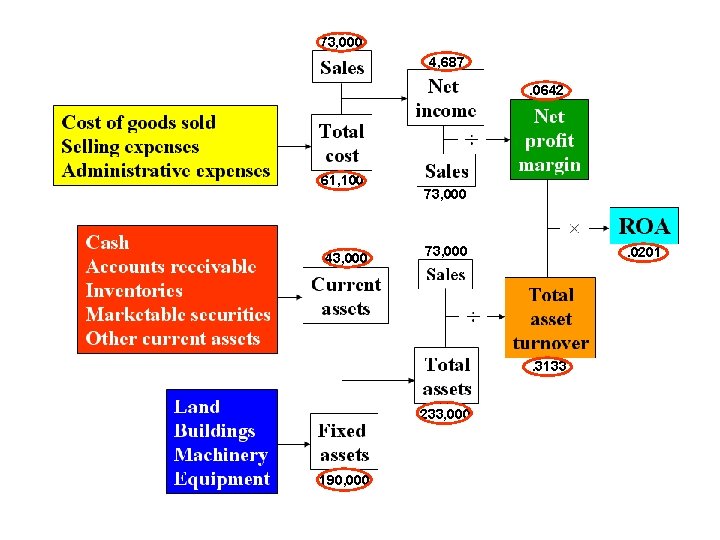
Du. Pont Formula üROA can be broken down into profit margin and asset turnover. üGain an insight into planning for profit improvement. üNeed to improve the profit margin. üNeed to improve asset turnover. üNeed to improve both!!
Improving Profit Margin üReducing expenses: § Using less costly materials. § Automation to improve productivity. § Review fixed costs (advertising, R&D, management development programs, etc. ). üRaising prices: § Requires pricing power. § Also requires brand loyalty. § Easier for firms with unique high quality goods.
Improve Asset Turnover üIncrease sales while holding investment in assets relatively constant: § Dispose of obsolete and redundant assets. § Speed up collections of receivables. § Evaluate credit terms and policies. § Identify unused fixed assets. üUse idle cash to repay outstanding debts or invest in profit producing activities.
73, 000 4, 687. 0642 61, 100 43, 000 73, 000 . 0201 . 3133 233, 000 190, 000
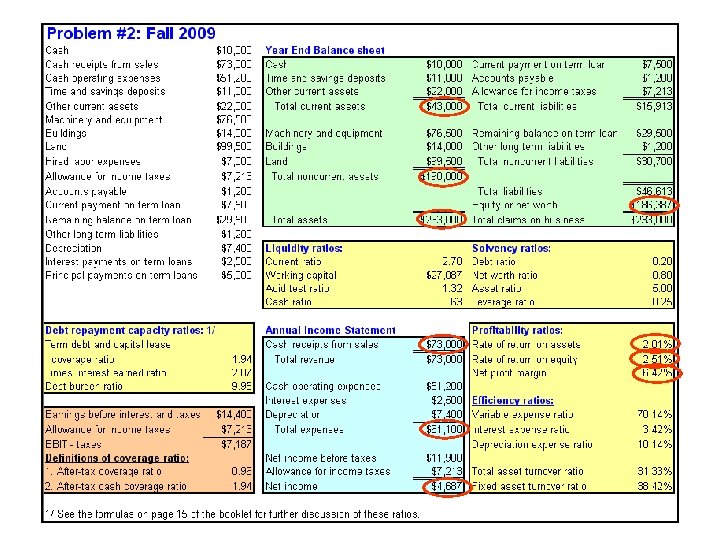
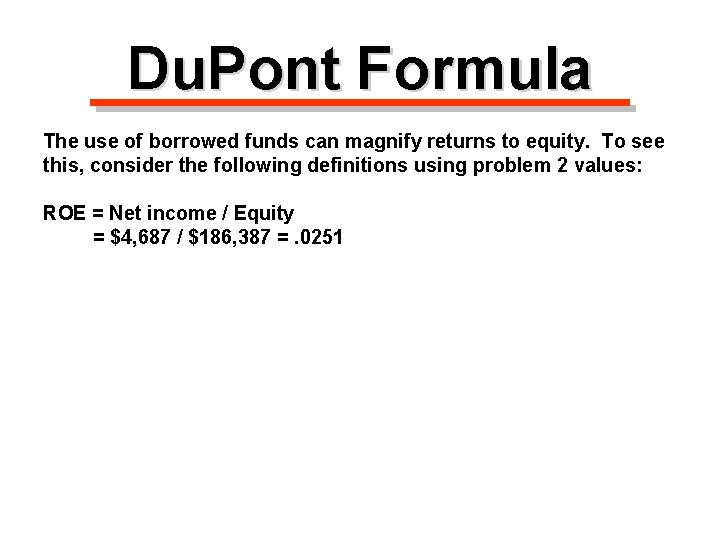
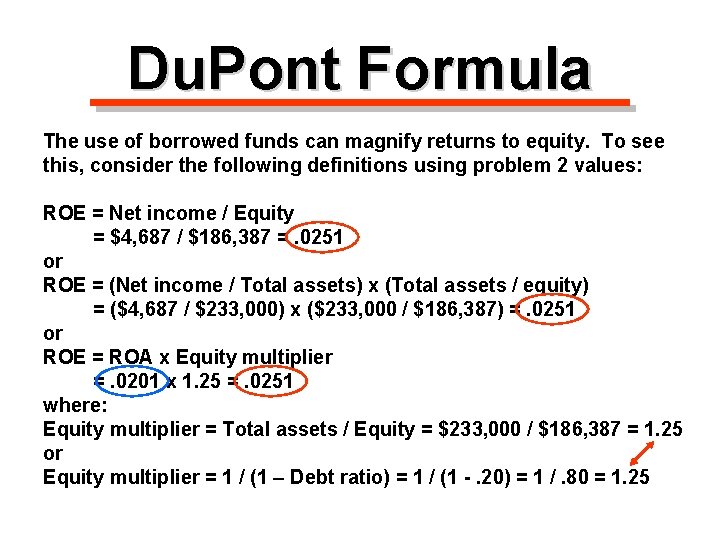
Du. Pont Formula The use of borrowed funds can magnify returns to equity. To see this, consider the following definitions using problem 2 values: ROE = Net income / Equity = $4, 687 / $186, 387 =. 0251
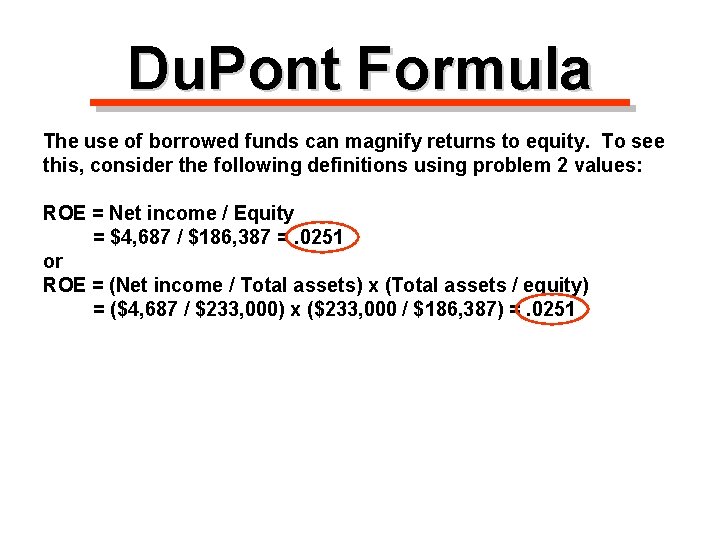
Du. Pont Formula The use of borrowed funds can magnify returns to equity. To see this, consider the following definitions using problem 2 values: ROE = Net income / Equity = $4, 687 / $186, 387 =. 0251 or ROE = (Net income / Total assets) x (Total assets / equity) = ($4, 687 / $233, 000) x ($233, 000 / $186, 387) =. 0251
Du. Pont Formula The use of borrowed funds can magnify returns to equity. To see this, consider the following definitions using problem 2 values: ROE = Net income / Equity = $4, 687 / $186, 387 =. 0251 or ROE = (Net income / Total assets) x (Total assets / equity) = ($4, 687 / $233, 000) x ($233, 000 / $186, 387) =. 0251 or ROE = ROA x Equity multiplier =. 0201 x 1. 25 =. 0251 where: Equity multiplier = Total assets / Equity = $233, 000 / $186, 387 = 1. 25 or Equity multiplier = 1 / (1 – Debt ratio) = 1 / (1 -. 20) = 1 /. 80 = 1. 25
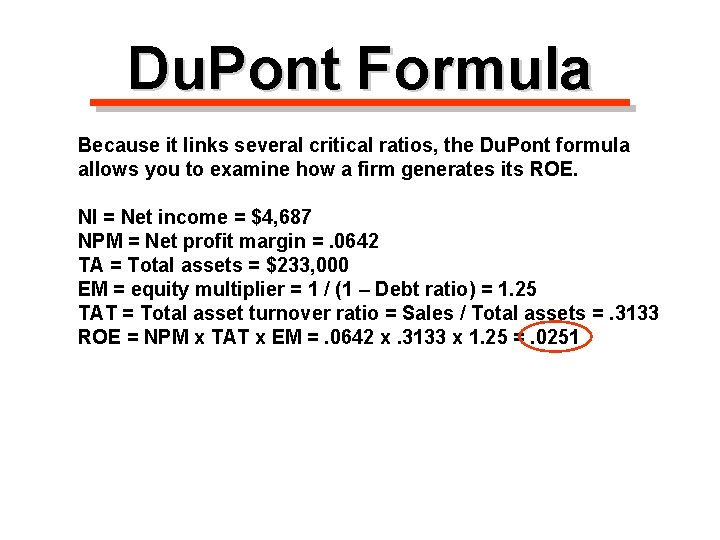
Du. Pont Formula Because it links several critical ratios, the Du. Pont formula allows you to examine how a firm generates its ROE. NI = Net income = $4, 687 NPM = Net profit margin =. 0642 TA = Total assets = $233, 000 EM = equity multiplier = 1 / (1 – Debt ratio) = 1. 25 TAT = Total asset turnover ratio = Sales / Total assets =. 3133 ROE = NPM x TAT x EM =. 0642 x. 3133 x 1. 25 =. 0251
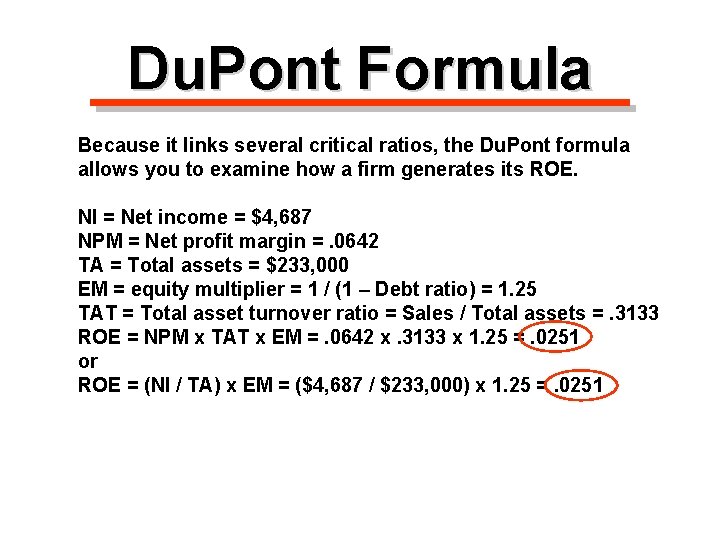
Du. Pont Formula Because it links several critical ratios, the Du. Pont formula allows you to examine how a firm generates its ROE. NI = Net income = $4, 687 NPM = Net profit margin =. 0642 TA = Total assets = $233, 000 EM = equity multiplier = 1 / (1 – Debt ratio) = 1. 25 TAT = Total asset turnover ratio = Sales / Total assets =. 3133 ROE = NPM x TAT x EM =. 0642 x. 3133 x 1. 25 =. 0251 or ROE = (NI / TA) x EM = ($4, 687 / $233, 000) x 1. 25 =. 0251
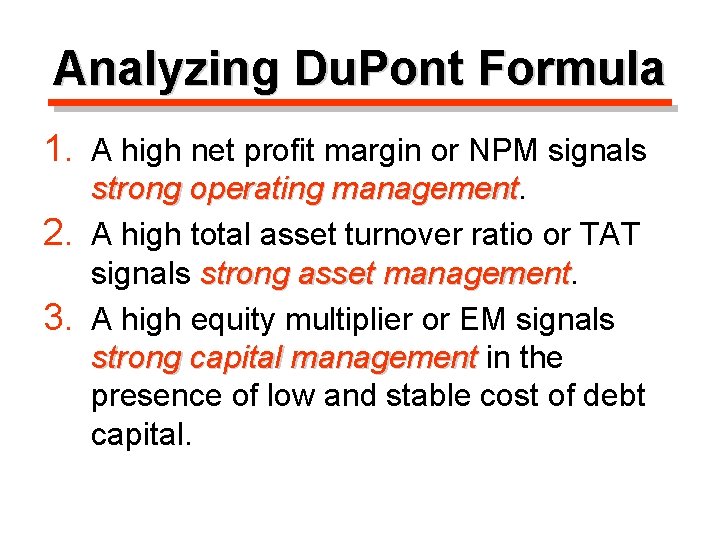
Analyzing Du. Pont Formula 1. A high net profit margin or NPM signals strong operating management 2. A high total asset turnover ratio or TAT signals strong asset management 3. A high equity multiplier or EM signals strong capital management in the presence of low and stable cost of debt capital.
Examining an Economic Growth Model