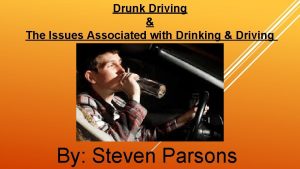
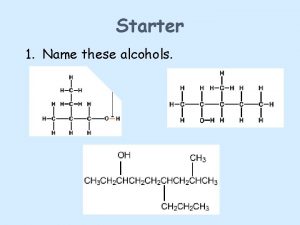
DRINKING DRIVING Alcohol related statistics n n n
- Slides: 17
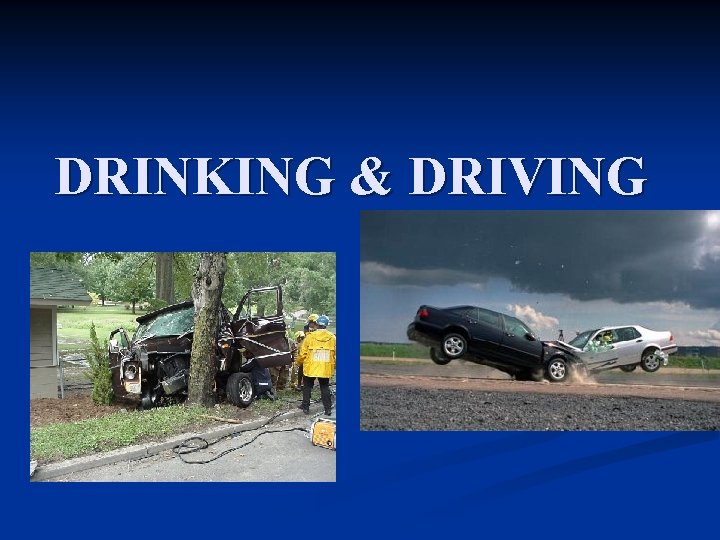
DRINKING & DRIVING
Alcohol related statistics n n n n Every day in America, another 28 people die as a result of drunk driving crashes. In 2012, 29. 1 million people admitted to driving under the influence of alcohol - that’s more than the population of Texas. High school students who use alcohol or other substances are five times more likely to drop out of school. Kids who start drinking young are seven times more likely to be in an alcohol-related crash. Car crashes are the leading cause of death for teens, and about a quarter of those crashes involve an underage drinking driver Teen alcohol use kills 4, 700 people each year - that’s more than all illegal drugs combined On average, two in three people will be involved in a drunk driving crash in their lifetime
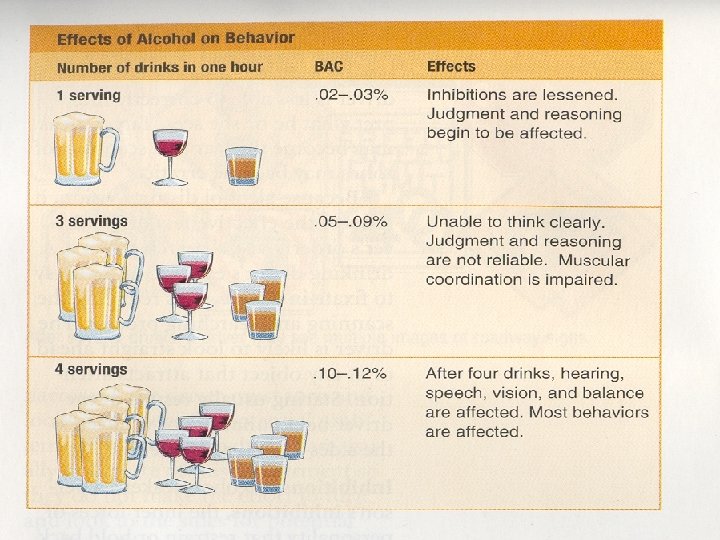
DRINKING AND DRIVING n Blood Alcohol Concentration (BAC) What is it? n What affects a persons BAC? n n Zero Tolerance Law What is it? n What states have it? n Implied Consent n DUI n
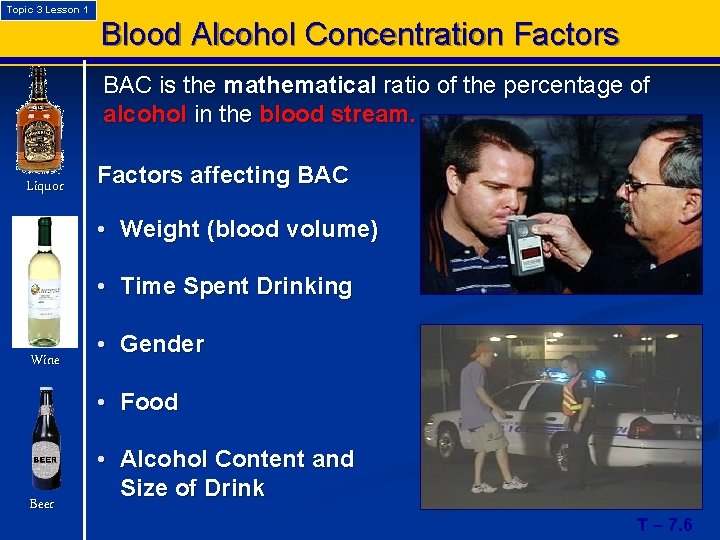
Topic 3 Lesson 1 Blood Alcohol Concentration Factors BAC is the mathematical ratio of the percentage of alcohol in the blood stream. Liquor Factors affecting BAC • Weight (blood volume) • Time Spent Drinking Wine • Gender • Food Beer • Alcohol Content and Size of Drink T – 7. 6
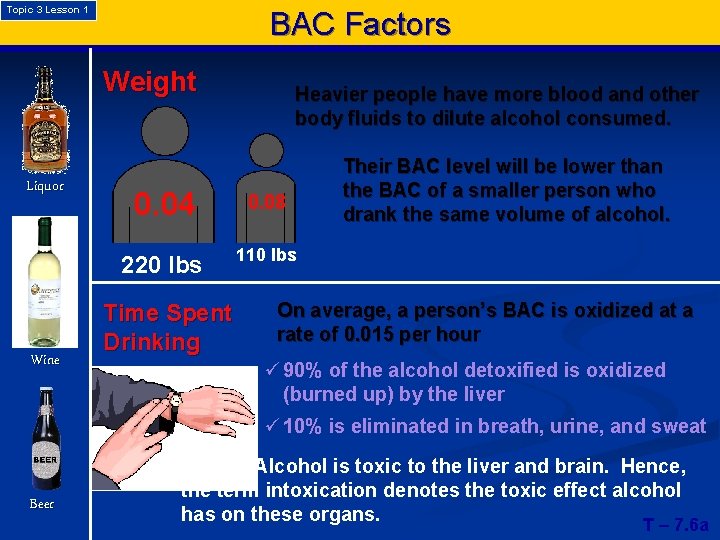
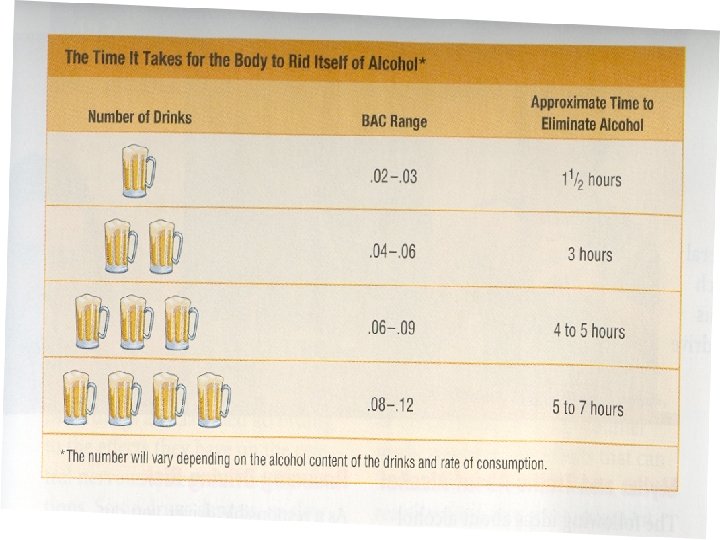
Topic 3 Lesson 1 BAC Factors Weight Liquor Wine Heavier people have more blood and other body fluids to dilute alcohol consumed. 0. 04 0. 08 220 lbs 110 lbs Time Spent Drinking Their BAC level will be lower than the BAC of a smaller person who drank the same volume of alcohol. On average, a person’s BAC is oxidized at a rate of 0. 015 per hour ü 90% of the alcohol detoxified is oxidized (burned up) by the liver ü 10% is eliminated in breath, urine, and sweat Beer NOTE: Alcohol is toxic to the liver and brain. Hence, the term intoxication denotes the toxic effect alcohol has on these organs. T – 7. 6 a
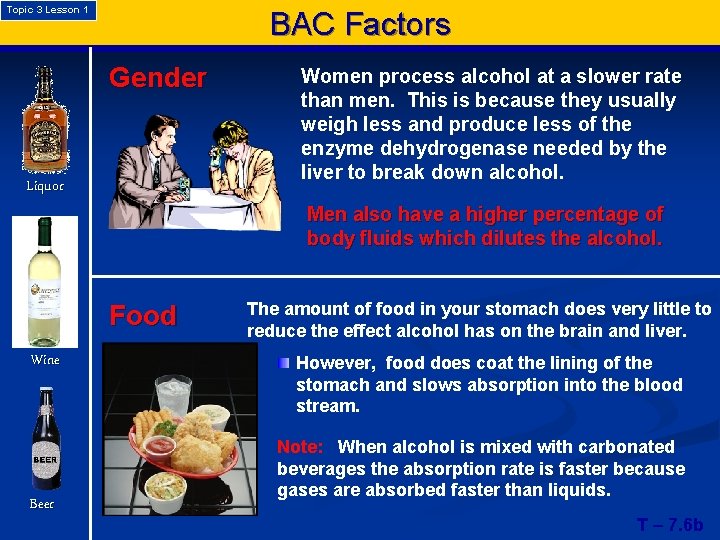
Topic 3 Lesson 1 BAC Factors Gender Liquor Men also have a higher percentage of body fluids which dilutes the alcohol. Food Wine Beer Women process alcohol at a slower rate than men. This is because they usually weigh less and produce less of the enzyme dehydrogenase needed by the liver to break down alcohol. The amount of food in your stomach does very little to reduce the effect alcohol has on the brain and liver. However, food does coat the lining of the stomach and slows absorption into the blood stream. Note: When alcohol is mixed with carbonated beverages the absorption rate is faster because gases are absorbed faster than liquids. T – 7. 6 b
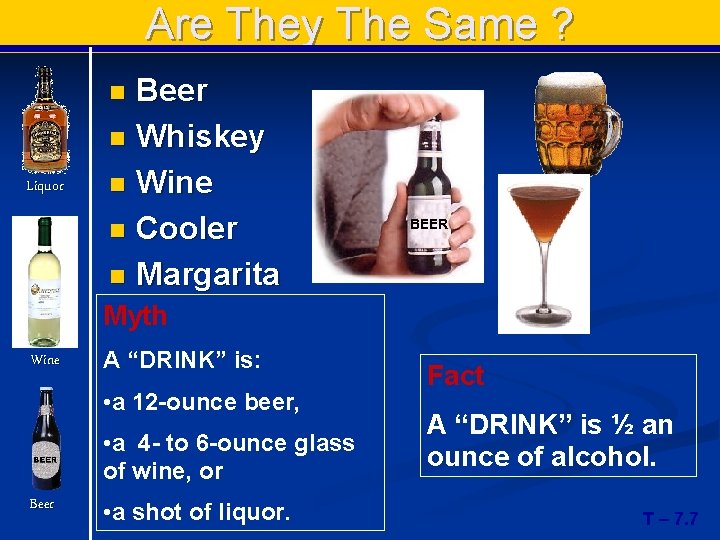
Are They The Same ? Beer n Whiskey n Wine n Cooler n Margarita n Liquor Myth Wine A “DRINK” is: • a 12 -ounce beer, • a 4 - to 6 -ounce glass of wine, or Beer • a shot of liquor. Fact A “DRINK” is ½ an ounce of alcohol. T – 7. 7
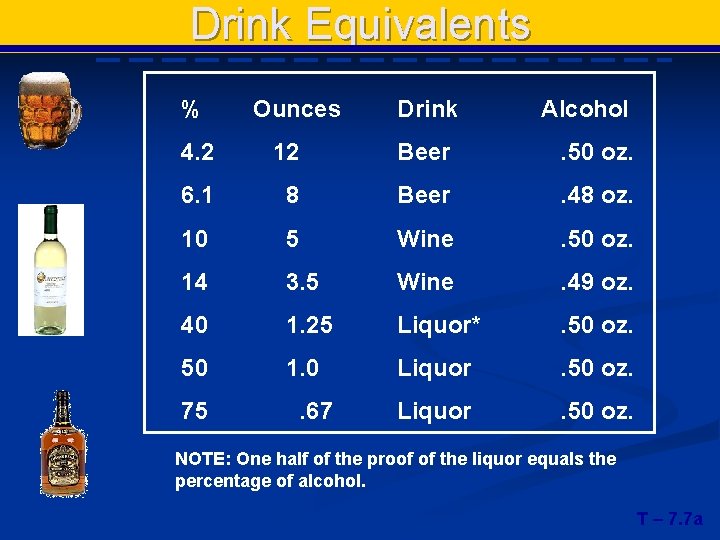
Drink Equivalents % Ounces Drink Alcohol 4. 2 12 Beer . 50 oz. 6. 1 8 Beer . 48 oz. 10 5 Wine . 50 oz. 14 3. 5 Wine . 49 oz. 40 1. 25 Liquor* . 50 oz. 50 1. 0 Liquor . 50 oz. 75 . 67 NOTE: One half of the proof of the liquor equals the percentage of alcohol. T – 7. 7 a
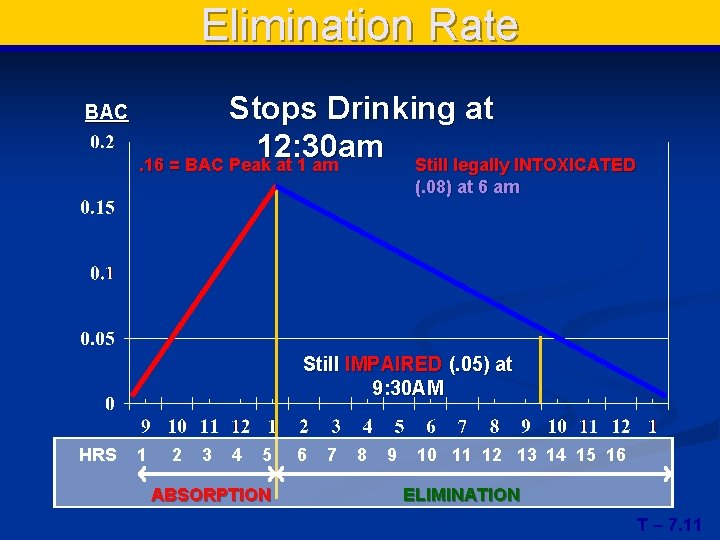
Elimination Rate BAC Stops Drinking at 12: 30 am Still legally INTOXICATED. 16 = BAC Peak at 1 am (. 08) at 6 am Still IMPAIRED (. 05) at 9: 30 AM HRS 1 2 3 4 5 ABSORPTION 6 7 8 9 10 11 12 13 14 15 16 ELIMINATION T – 7. 11
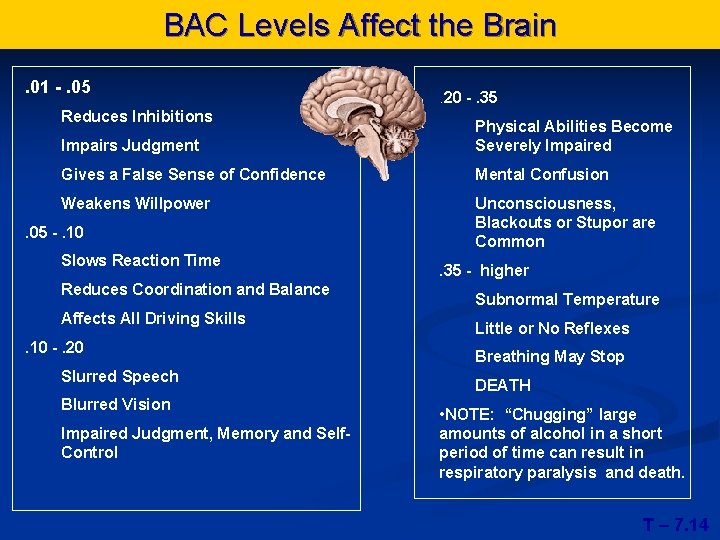
BAC Levels Affect the Brain. 01 -. 05 Reduces Inhibitions . 20 -. 35 Impairs Judgment Physical Abilities Become Severely Impaired Gives a False Sense of Confidence Mental Confusion Weakens Willpower Unconsciousness, Blackouts or Stupor are Common . 05 -. 10 Slows Reaction Time Reduces Coordination and Balance Affects All Driving Skills. 10 -. 20 Slurred Speech Blurred Vision Impaired Judgment, Memory and Self. Control . 35 - higher Subnormal Temperature Little or No Reflexes Breathing May Stop DEATH • NOTE: “Chugging” large amounts of alcohol in a short period of time can result in respiratory paralysis and death. T – 7. 14
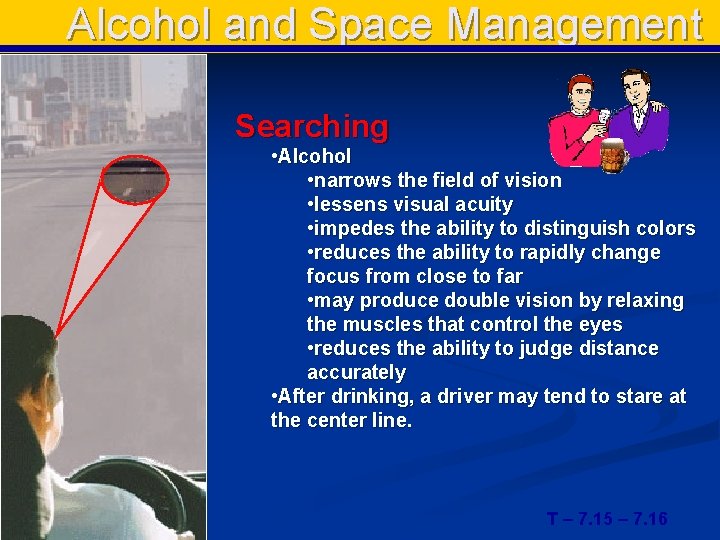
Alcohol and Space Management Searching • Alcohol • narrows the field of vision • lessens visual acuity • impedes the ability to distinguish colors • reduces the ability to rapidly change focus from close to far • may produce double vision by relaxing the muscles that control the eyes • reduces the ability to judge distance accurately • After drinking, a driver may tend to stare at the center line. T – 7. 15 – 7. 16
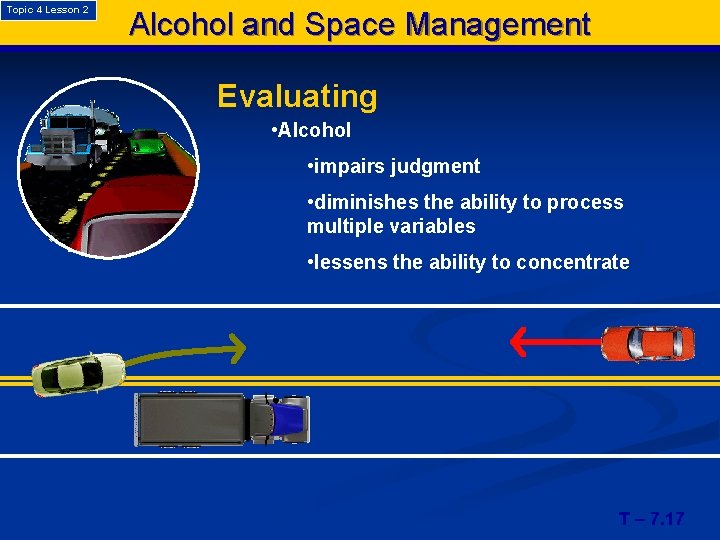
Topic 4 Lesson 2 Alcohol and Space Management Evaluating • Alcohol • impairs judgment • diminishes the ability to process multiple variables • lessens the ability to concentrate T – 7. 17
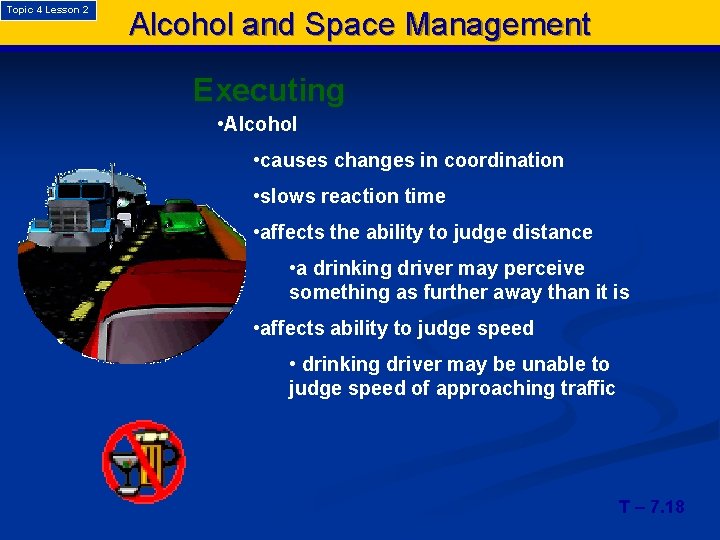
Topic 4 Lesson 2 Alcohol and Space Management Executing • Alcohol • causes changes in coordination • slows reaction time • affects the ability to judge distance • a drinking driver may perceive something as further away than it is • affects ability to judge speed • drinking driver may be unable to judge speed of approaching traffic T – 7. 18
DRINKING AND DRIVING MYTHS n n n A few drinks DOES NOT affect a person’s driving As long as I follow the standards in the BAC chart, I’m ok to drive. Alcohol doesn’t affect a person until the BAC of. 08 I can sober up by drinking black coffee or taking a shower I will not be affected because I’m only drinking beer A young person cannot become a problem
DRINKING AND DRIVING FACTS n Alcohol affects your memory, emotions, aggression, tolerance, and attention span. n If your BAC is over. 08 you will lose your license automatically for 7 days. n If you are 13 – 17 and caught with alcohol, you can loose your drivers license for 6 months or lose the right to apply for a license until you are the age of 18. n Drinking alcohol on school grounds can result in 1, 000 fine or a jail sentence as long as 6 months. n Drunk Driving: 2. 1 million students between the ages of 18 and 24 drove under the influence of alcohol last year n Death: 1, 700 college students between the ages of 18 and 24 die each year from alcohol-related unintentional injuries, including motor vehicle crashes