Dr Jason E Adolf Endowed Associate Professor of

- Slides: 20
Dr. Jason E. Adolf Endowed Associate Professor of Marine Science Monmouth University Biology Department March 15, 2019
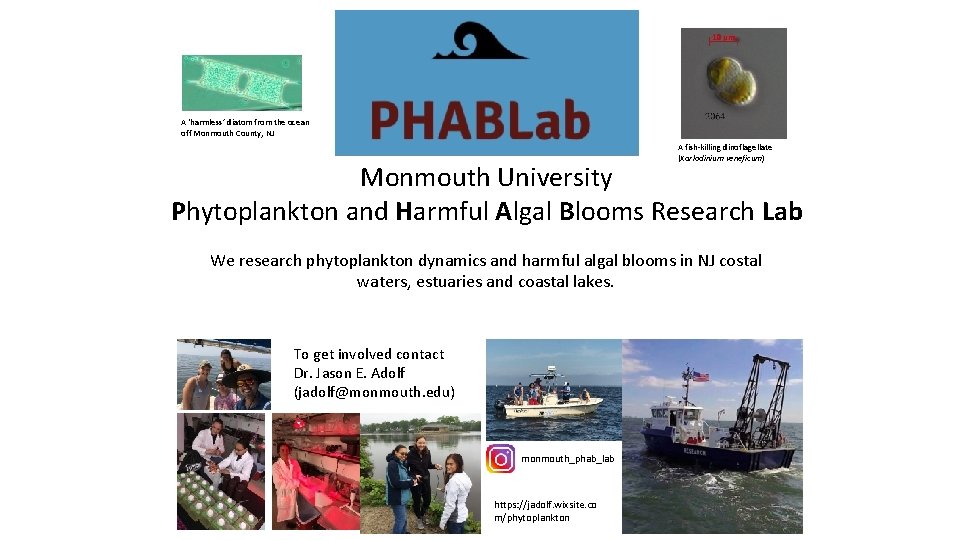
A ‘harmless’ diatom from the ocean off Monmouth County, NJ A fish-killing dinoflagellate (Karlodinium veneficum) Monmouth University Phytoplankton and Harmful Algal Blooms Research Lab We research phytoplankton dynamics and harmful algal blooms in NJ costal waters, estuaries and coastal lakes. To get involved contact Dr. Jason E. Adolf (jadolf@monmouth. edu) monmouth_phab_lab https: //jadolf. wixsite. co m/phytoplankton
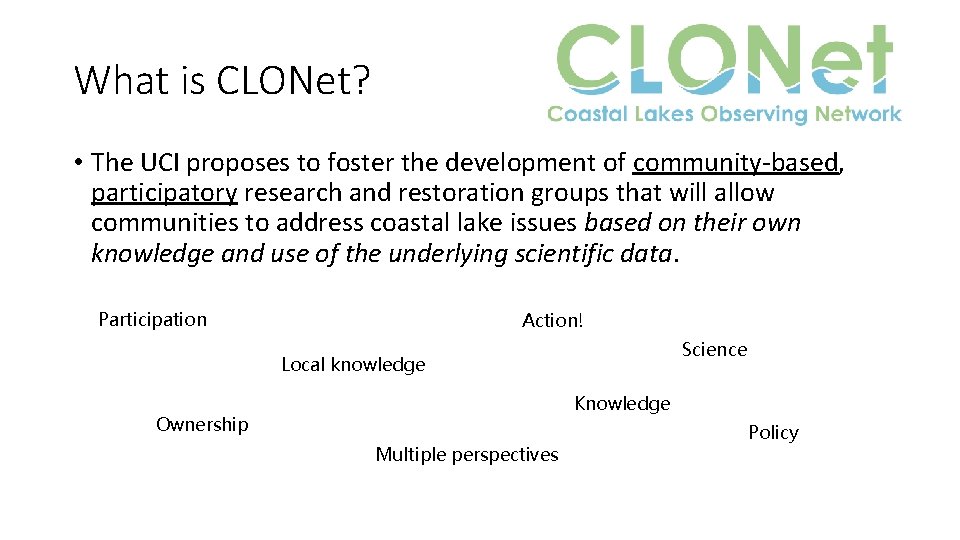
What is CLONet? • The UCI proposes to foster the development of community-based, participatory research and restoration groups that will allow communities to address coastal lake issues based on their own knowledge and use of the underlying scientific data. Participation Action! Science Local knowledge Knowledge Ownership Multiple perspectives Policy
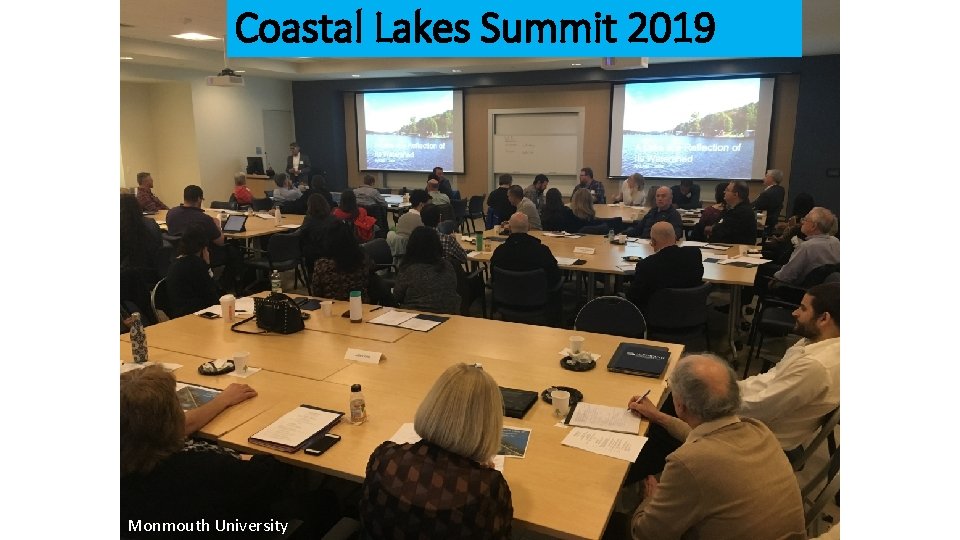
Coastal Lakes Summit 2019 Monmouth University
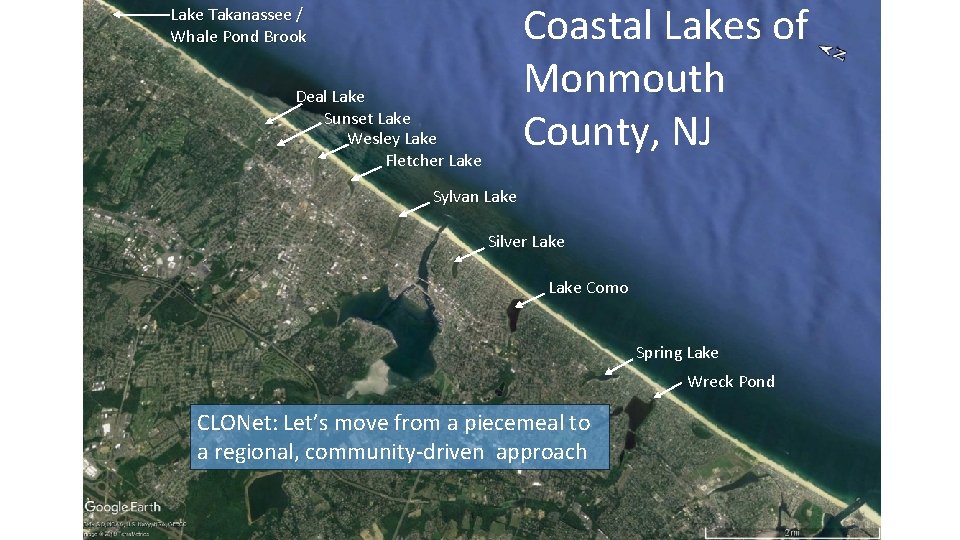
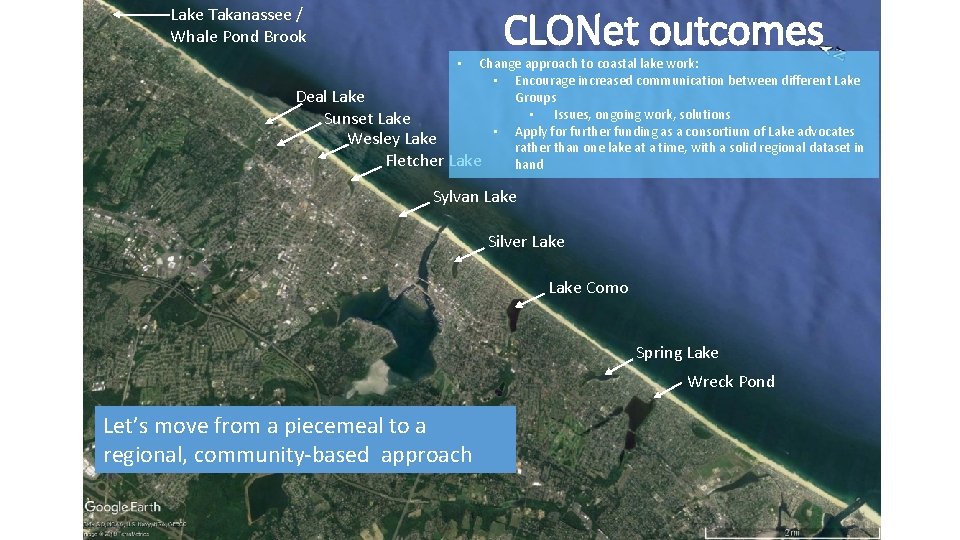
Coastal Lakes of Monmouth County, NJ Lake Takanassee / Whale Pond Brook Deal Lake Sunset Lake Wesley Lake Fletcher Lake Sylvan Lake Silver Lake Como Spring Lake Wreck Pond CLONet: Let’s move from a piecemeal to a regional, community-driven approach
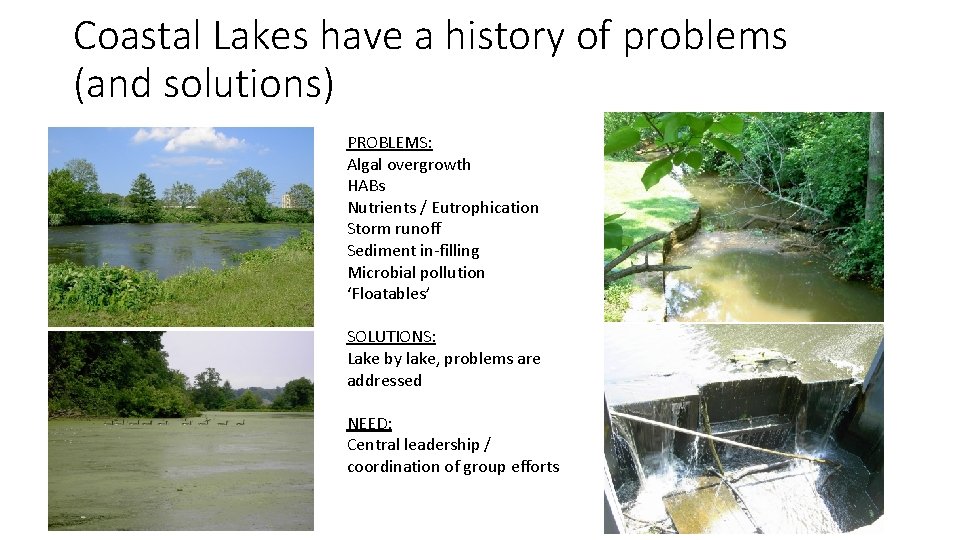
Coastal Lakes have a history of problems (and solutions) PROBLEMS: Algal overgrowth HABs Nutrients / Eutrophication Storm runoff Sediment in-filling Microbial pollution ‘Floatables’ SOLUTIONS: Lake by lake, problems are addressed NEED: Central leadership / coordination of group efforts
Citizen science has a history in New Jersey and the nation as an effective approach to environmental issues • Barnegat Bay Partnership – ‘…work together with the communities of the Barnegat Bay watershed to help restore, protect, and enhance the natural resources of the Barnegat Bay ecosystem. ’ • Clean Ocean Action – Coordination of Rally for the Navesink, a collection of Groups dedicated to improving water quality in the Navesink River
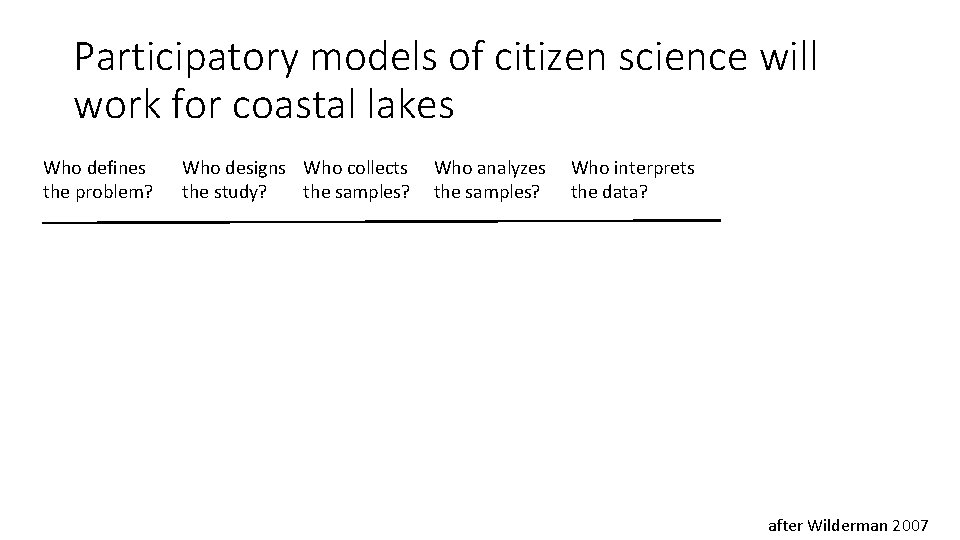
Participatory models of citizen science will work for coastal lakes Who defines the problem? Who designs Who collects the study? the samples? Who analyzes the samples? Who interprets the data? Community Community Professional scientists Professional scientists after Wilderman 2007
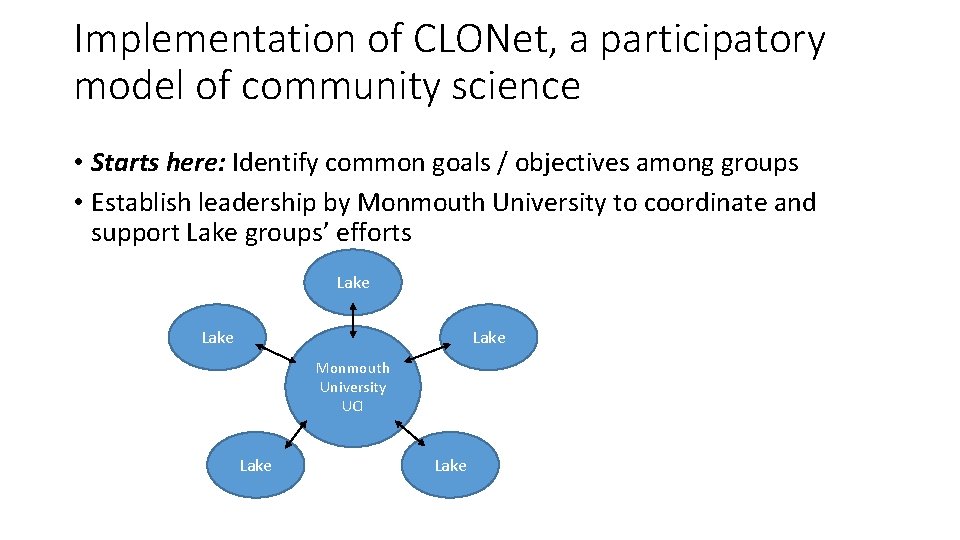
Implementation of CLONet, a participatory model of community science • Starts here: Identify common goals / objectives among groups • Establish leadership by Monmouth University to coordinate and support Lake groups’ efforts Lake Monmouth University UCI Lake
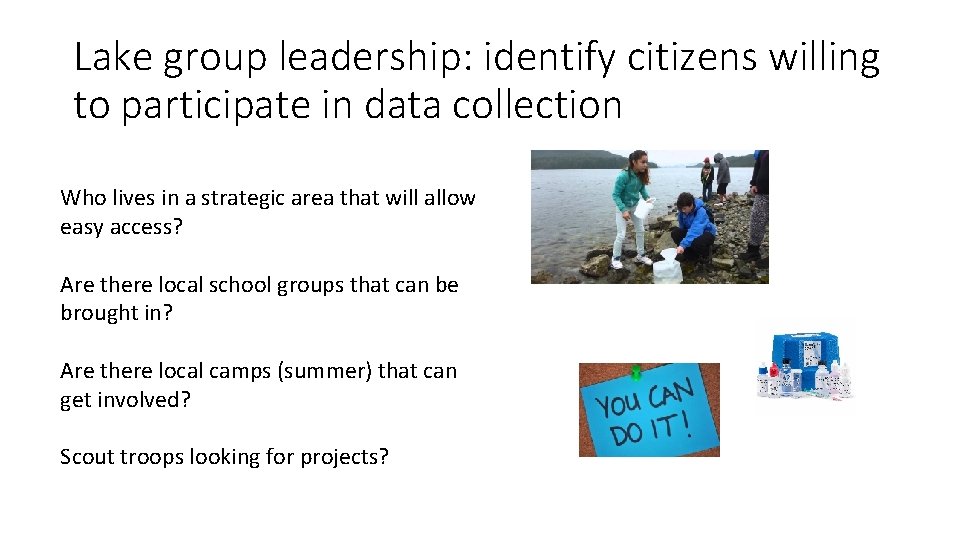
Lake group leadership: identify citizens willing to participate in data collection Who lives in a strategic area that will allow easy access? Are there local school groups that can be brought in? Are there local camps (summer) that can get involved? Scout troops looking for projects?
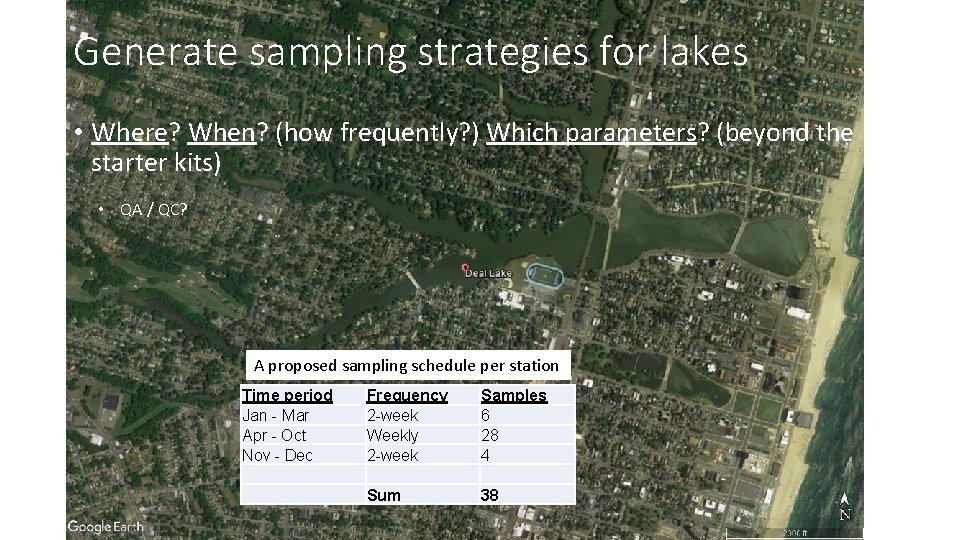
Generate sampling strategies for lakes • Where? When? (how frequently? ) Which parameters? (beyond the starter kits) • QA / QC? A proposed sampling schedule per station Time period Jan - Mar Apr - Oct Nov - Dec Frequency 2 -week Weekly 2 -week Samples 6 28 4 Sum 38
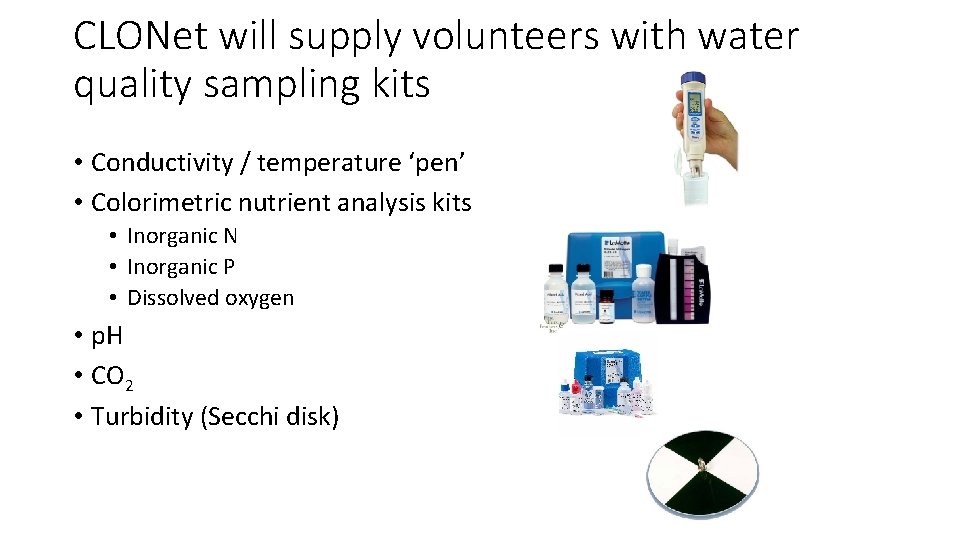
CLONet will supply volunteers with water quality sampling kits • Conductivity / temperature ‘pen’ • Colorimetric nutrient analysis kits • Inorganic N • Inorganic P • Dissolved oxygen • p. H • CO 2 • Turbidity (Secchi disk)
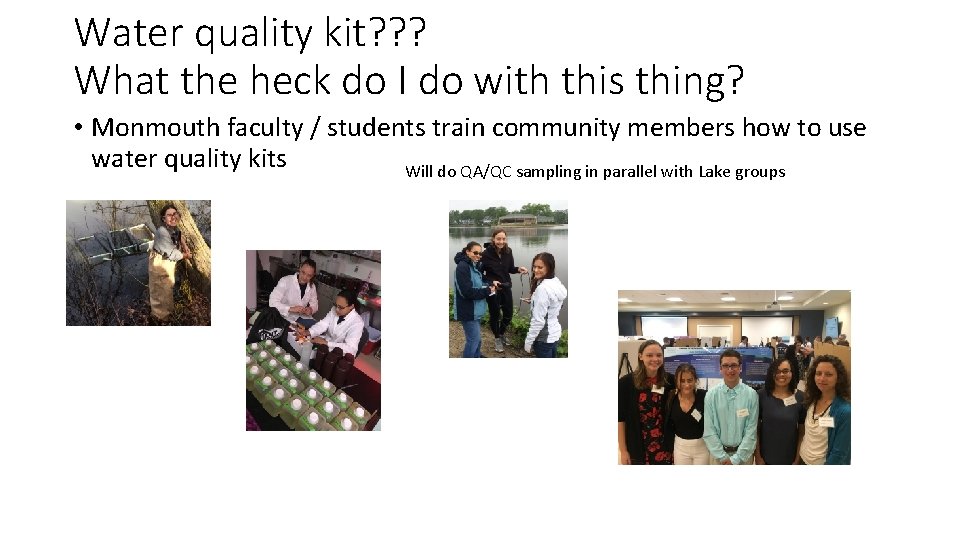
Water quality kit? ? ? What the heck do I do with this thing? • Monmouth faculty / students train community members how to use water quality kits Will do QA/QC sampling in parallel with Lake groups
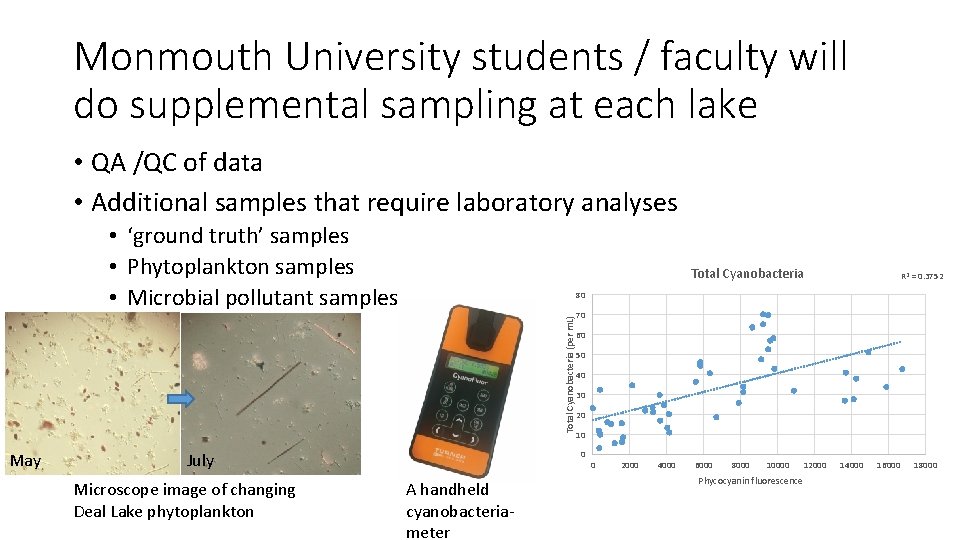
Monmouth University students / faculty will do supplemental sampling at each lake • QA /QC of data • Additional samples that require laboratory analyses • ‘ground truth’ samples • Phytoplankton samples • Microbial pollutant samples Total Cyanobacteria R 2 = 0. 3752 80 Total Cyanobacteria (per m. L) 70 60 50 40 30 20 10 May 0 July Microscope image of changing Deal Lake phytoplankton A handheld cyanobacteriameter 0 2000 4000 6000 8000 10000 Phycocyanin fluorescence 12000 14000 16000 18000
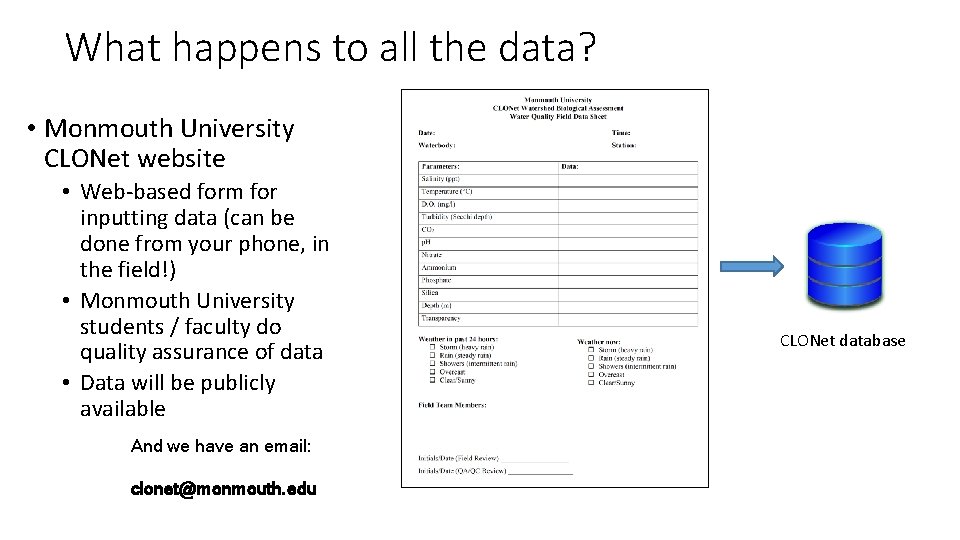
What happens to all the data? • Monmouth University CLONet website • Web-based form for inputting data (can be done from your phone, in the field!) • Monmouth University students / faculty do quality assurance of data • Data will be publicly available And we have an email: clonet@monmouth. edu CLONet database
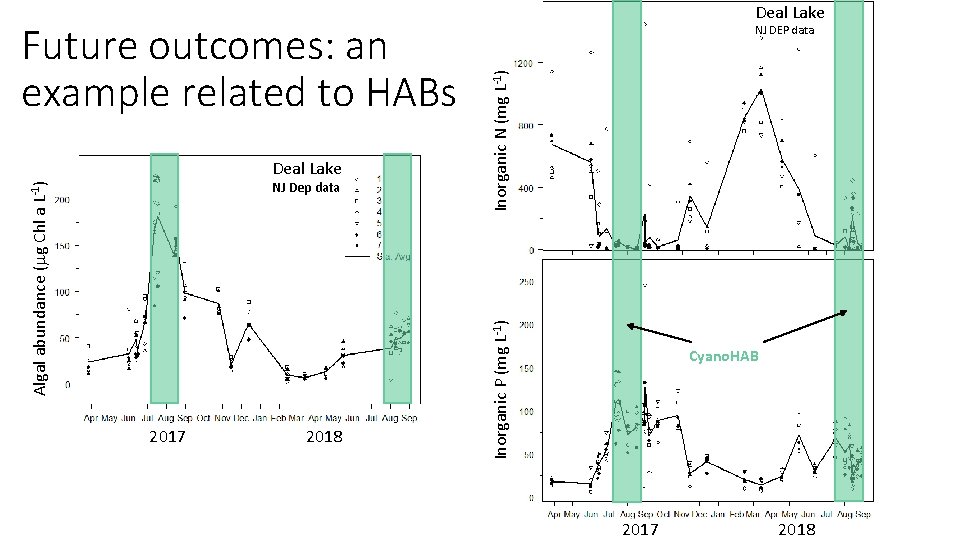
Algal abundance (mg Chl a L-1) NJ Dep data 2017 2018 Inorganic N (mg L-1) Deal Lake NJ DEP data Inorganic P (mg L-1) Future outcomes: an example related to HABs Deal Lake Cyano. HAB 2017 2018
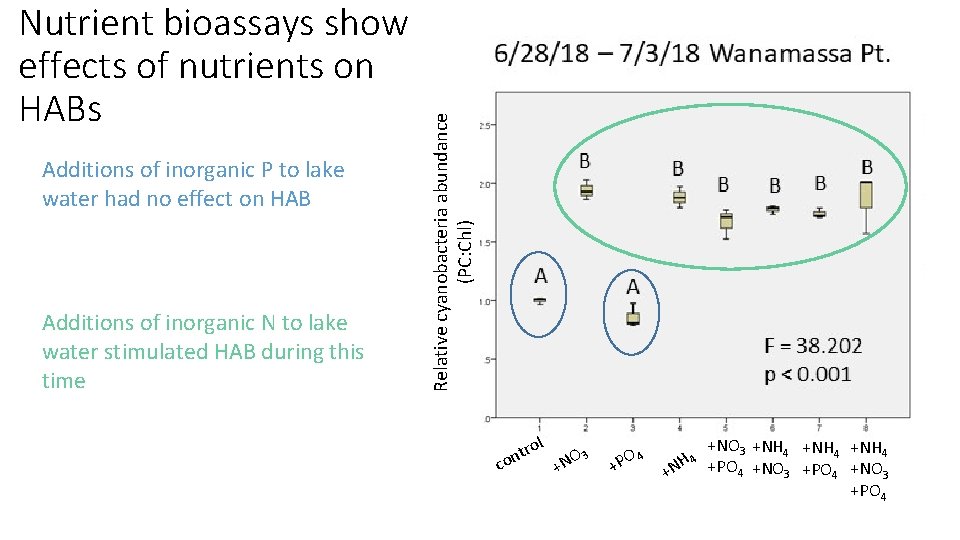
Additions of inorganic P to lake water had no effect on HAB Additions of inorganic N to lake water stimulated HAB during this time Relative cyanobacteria abundance (PC: Chl) Nutrient bioassays show effects of nutrients on HABs ol tr n o c + 3 NO O 4 +P +NO 3 +NH 4 +N +PO 4 +NO 3 +PO 4
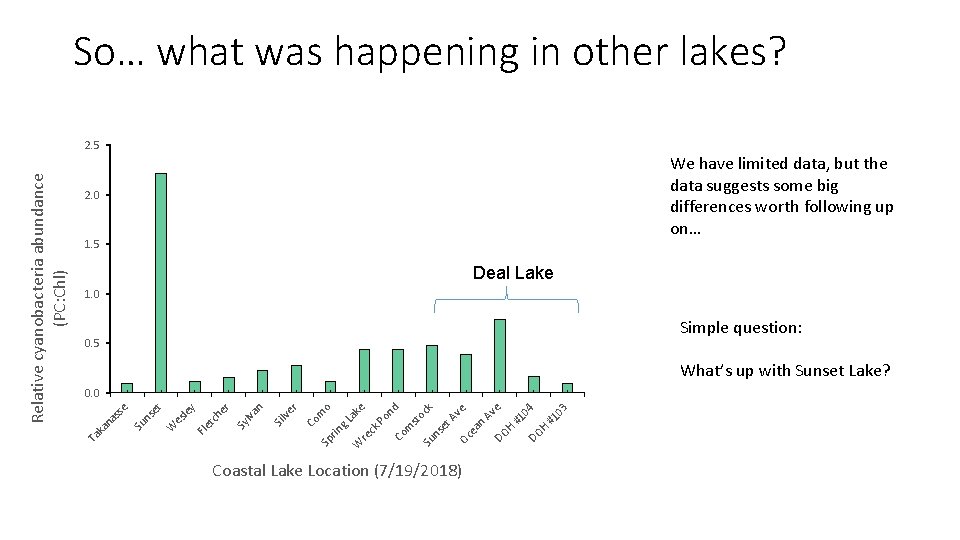
So… what was happening in other lakes? We have limited data, but the data suggests some big differences worth following up on… 2. 0 1. 5 Deal Lake 1. 0 Simple question: 0. 5 What’s up with Sunset Lake? Coastal Lake Location (7/19/2018) 03 #1 04 DO H #1 Av e DO H . an Av e Oc e ns et st oc k Su Co m Po nd e ck W re g. L ak o m Sp rin Co ve r Sil n lva Sy r he Fle tc es le y W et ns Su ka na ss e 0. 0 Ta Relative cyanobacteria abundance (PC: Chl) 2. 5
Lake Takanassee / Whale Pond Brook CLONet outcomes Change approach to coastal lake work: • Encourage increased communication between different Lake Deal Lake Groups • Issues, ongoing work, solutions Sunset Lake • Apply for further funding as a consortium of Lake advocates Wesley Lake rather than one lake at a time, with a solid regional dataset in Fletcher Lake hand • Sylvan Lake Silver Lake Como Spring Lake Wreck Pond Let’s move from a piecemeal to a regional, community-based approach
Acknowledgements • Thank you to the Jules L. Plangere, Jr. Family Foundation for a grant to the Monmouth University Urban Coast Institute supporting our CLONet project! • Thanks to all of you for your enthusiasm, support and participation! Questions? Discussion?