
Chapter 15 Section 1 World War 1 Causes
- Slides: 39
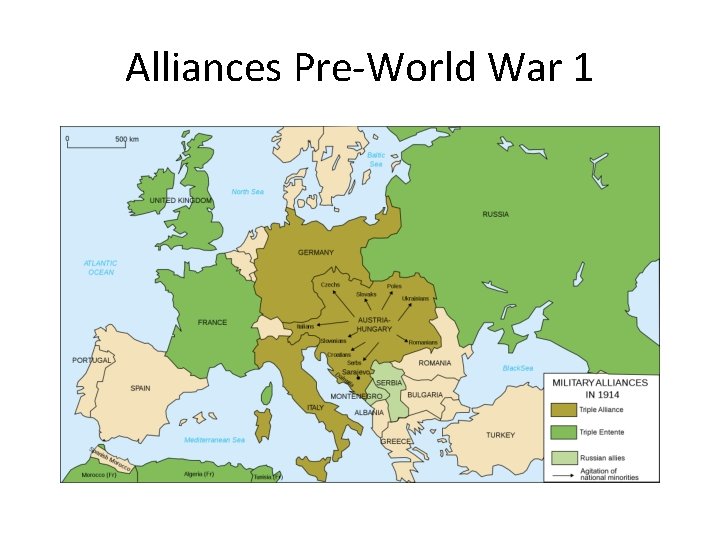
Chapter 15, Section 1; World War 1 • Causes of WW 1 1. Nationalism-devotion and loyalty to one’s country 2. Competion for land resources 3. Wanting to show strength, rivalry 4. Alliances created: List the alliances in chronological order. Date Alliance Description
Alliances Pre-World War 1
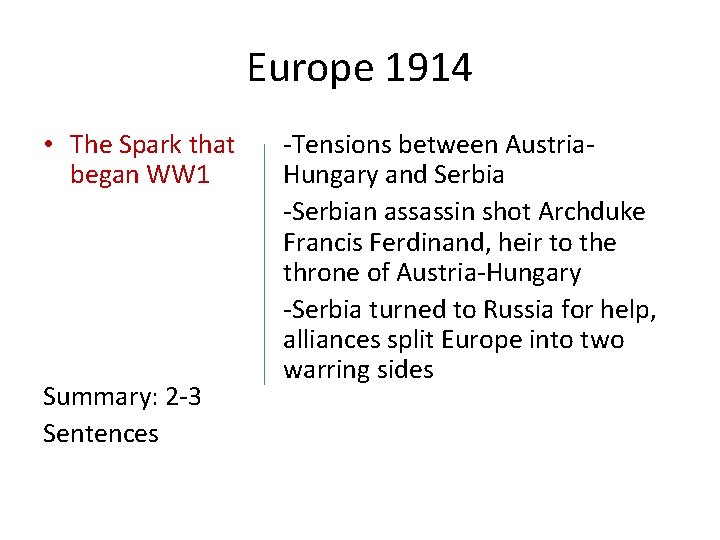
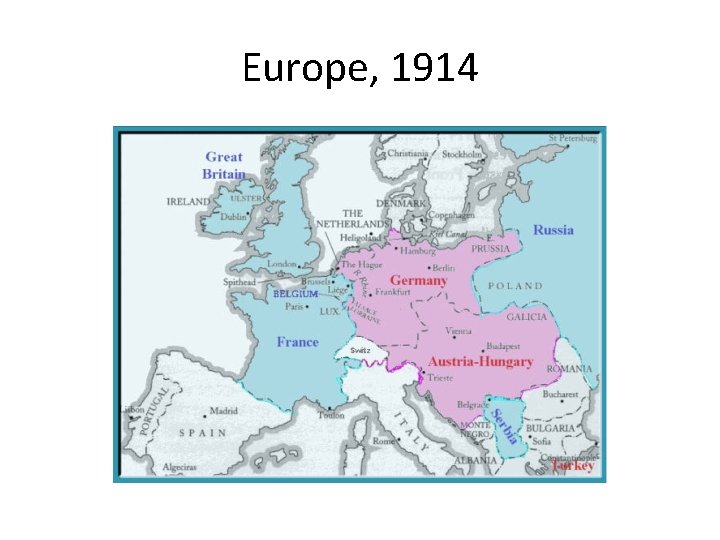
Europe 1914 • The Spark that began WW 1 Summary: 2 -3 Sentences -Tensions between Austria. Hungary and Serbia -Serbian assassin shot Archduke Francis Ferdinand, heir to the throne of Austria-Hungary -Serbia turned to Russia for help, alliances split Europe into two warring sides
Europe, 1914
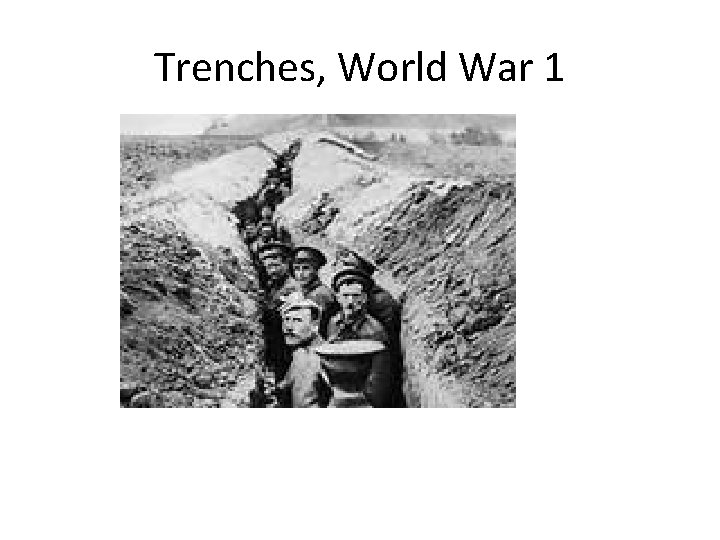
World War 1, 1914 -1918 • New Military Strategy • Trench life • Results Trench warfare-a style of fighting in which each side fights from deep ditches or trenches dug into the ground. cold, hungry, diseases Cost millions of lives No one could advance The war was at a stalemate for 3 years.
Trenches, World War 1
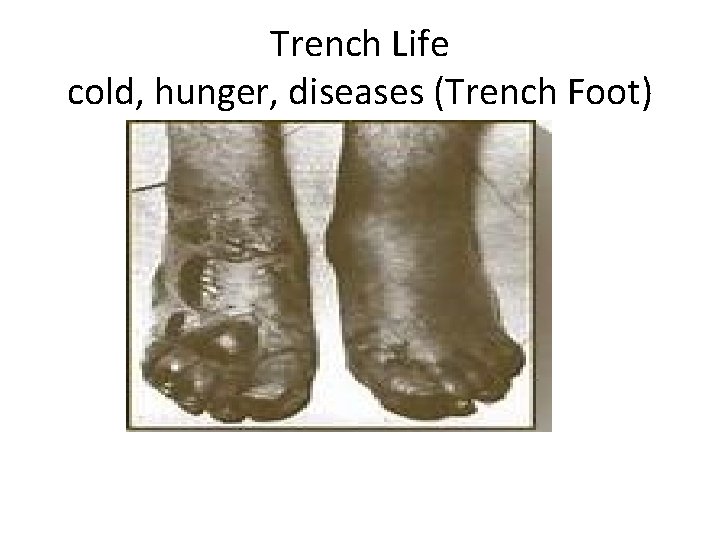
Trench Life cold, hunger, diseases (Trench Foot)
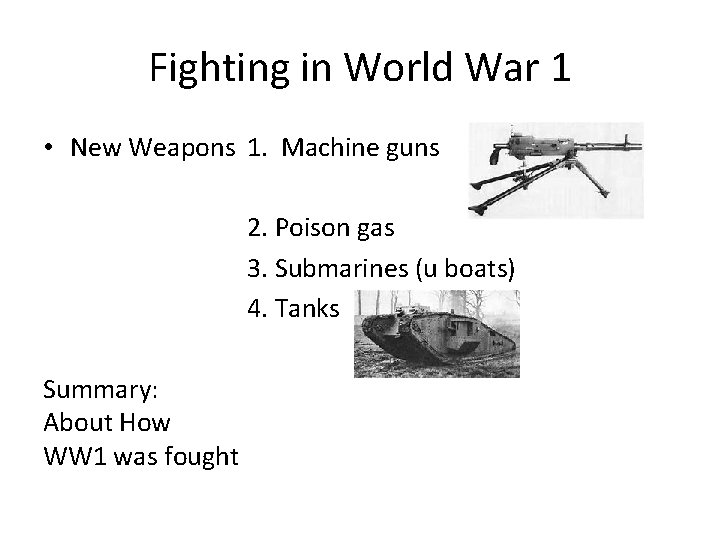
Fighting in World War 1 • New Weapons 1. Machine guns 2. Poison gas 3. Submarines (u boats) 4. Tanks Summary: About How WW 1 was fought
U. S enters the war/Russia leaves • United States enters the war. • When? • Why? • Russia 1917 U. S. enters the war in 1917 with giving a fresh advantage to the Allies German U boats were sinking American ships sending supplies to Britain Pulls out of the war, exhausted
The End of World War 1 • When? • Who won? • Results: • Peace 1918 Allied Powers- U. S. , France, and Great Britain 8. 5 million soldiers killed 20 million soldiers wounded Millions of civilians of Europe killed President Wilson wanted a “just peace”-peace with Germany without punishment or blame
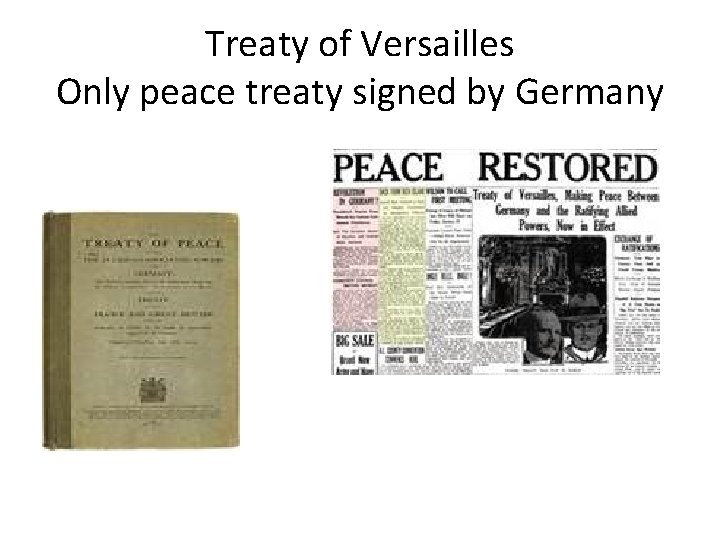
Peace • Peace settlement Treaty of Versailles Results: • Signed November 11, 1918 • Forced Germany to accept blame for starting the war • Reduced German army • Germany must give up colonies over seas • Pay billions in damages • Devastated Germany, left in poverty and ruin
A New Europe • Effects of World War 1 • Russia -changed borders and governments -Revolution, forced czar (emperor) to give up power -Vladimir Lenin took control of government -Established Communist government. Communism is a political system in which government owns all property and controls all aspects of life in a country.
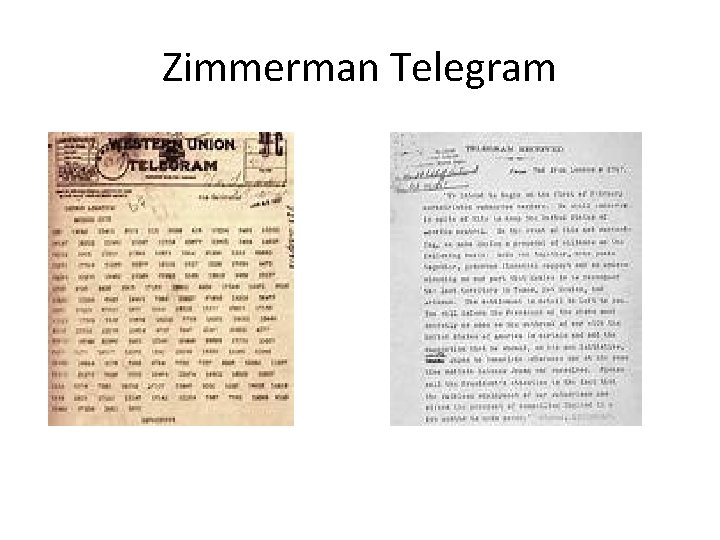
Zimmerman Telegram
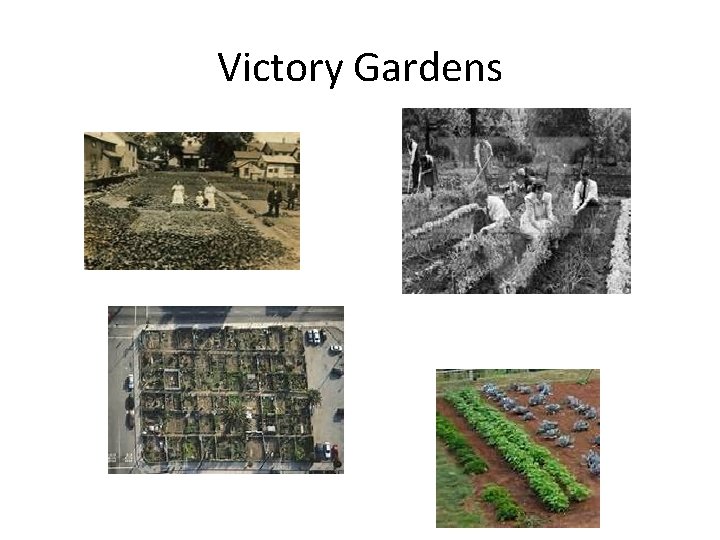
Victory Gardens
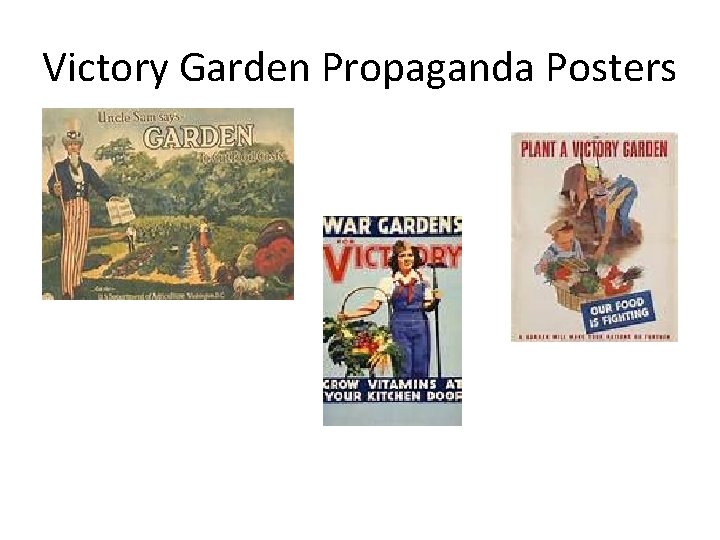
Victory Garden Propaganda Posters
Treaty of Versailles Only peace treaty signed by Germany
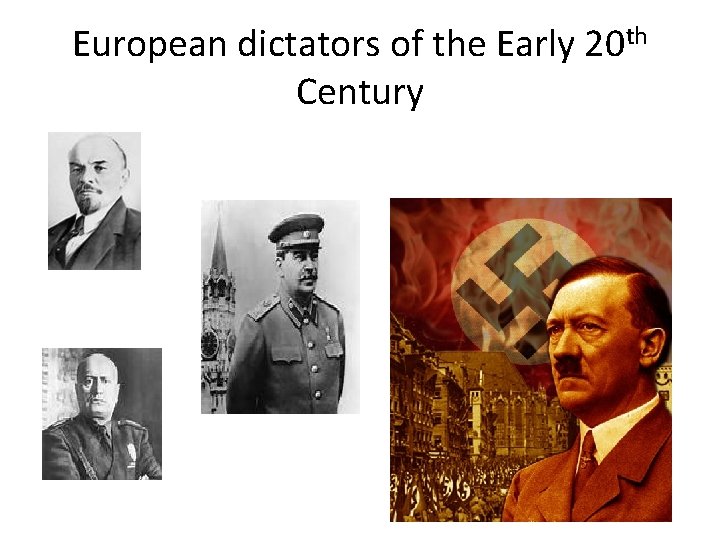
World War 2: ch 15, section 2 pages 382 -387 • Causes for WW 2 • European dictators 1. The Great Depression-global economic crisis of the 1930 s 2. Rise of dictators in Europe-a dictator is a ruler who has total control. -Joseph Stalin-Vladimir Lenin (Russia) -Benito Mussolini (Italy) -Adolf Hitler (Germany)
European dictators of the Early 20 th Century
World War 2 begins • Causes for the outbreak of war. --Aggression!!! 1. Mussolini ordered Italian troops to invade Ethiopia in East Africa. 2. Mussolini and Hitler formed an alliance called the Rome-Berlin Axis. 3. Hitler broke the Treaty of Versailles and added Austria and Czechoslovakia to German Territory. 4. On September 1, 1939, Germany attacked Poland. France and Great Britain declare war on Germany on September 3, 1939
Alliances • Axis Powers • Allies World War 2 Events of WW 2 (19401941) Germany, Italy and Japan France, Great Britain-several other countries 1. 1940, Germany invades and defeats France-Becomes German territory 2. Germany begins repeated attacks against Great Britain, does not surrender 3. German troops invade Eastern Europe. 4. 1941 -Germans invade Soviet Union, Japanese attack Pearl Harbor on December 7, 1941. U. S. enters the war.
Bell Ringer, page 384 World War 2 map of Europe, 1941 • Label the locations of the following countries Great Britain, France, Italy Germany, Soviet Union • Color Axis Powers/Axis controlled land-Red • Color Allies-Green • Color neutral lands yellow • Title map Europe, 1941
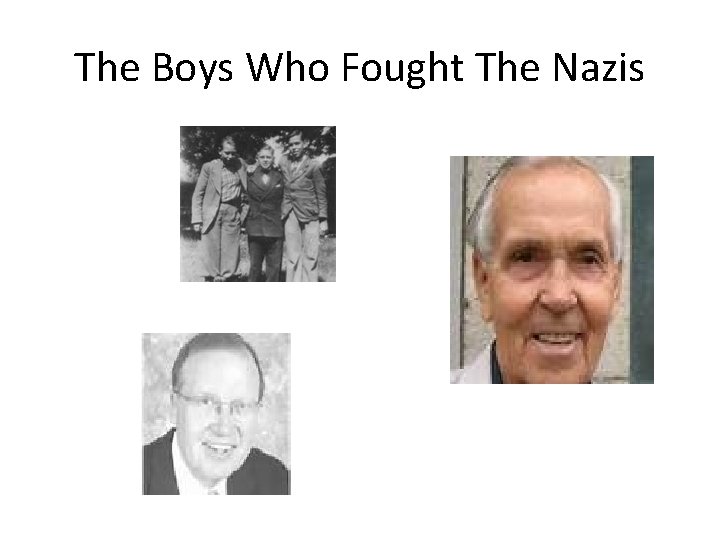
The Boys Who Fought The Nazis
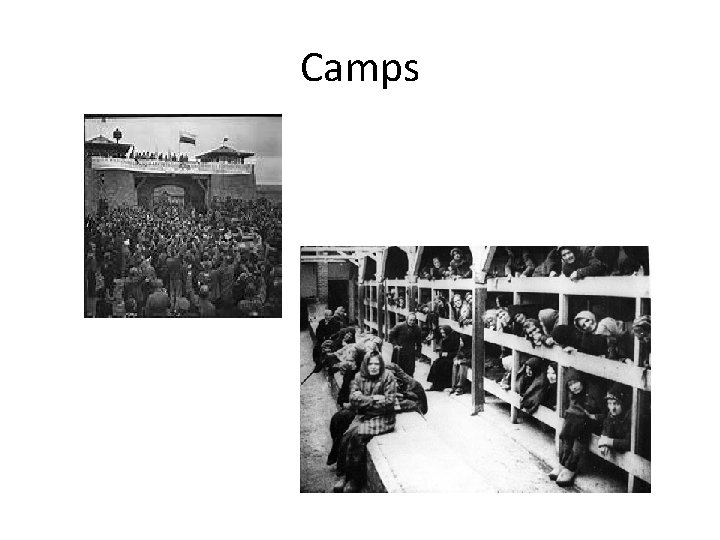
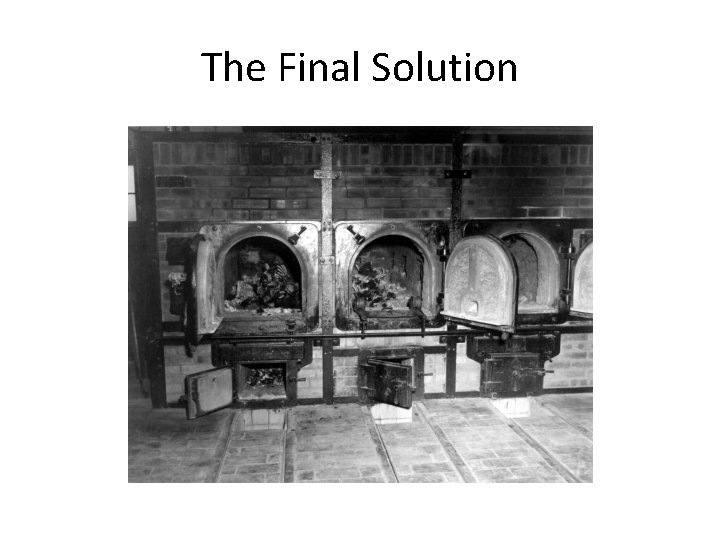
The Holocaust • What was the Holocaust? • How did it begin? • Results • German Resistance The attempt by the Nazi government during World War 2 to eliminate European Jews. 1. Nuremburg Laws 2. Est. ghettos 3. Containment-Concentration camps 4. Extermination-Poland death camp. Auschwitz -Over 6 million European Jews were murdered (two thirds of Europe’s Jews) -German businessman-Oskar Schindler, saved Jews by employing them in factories
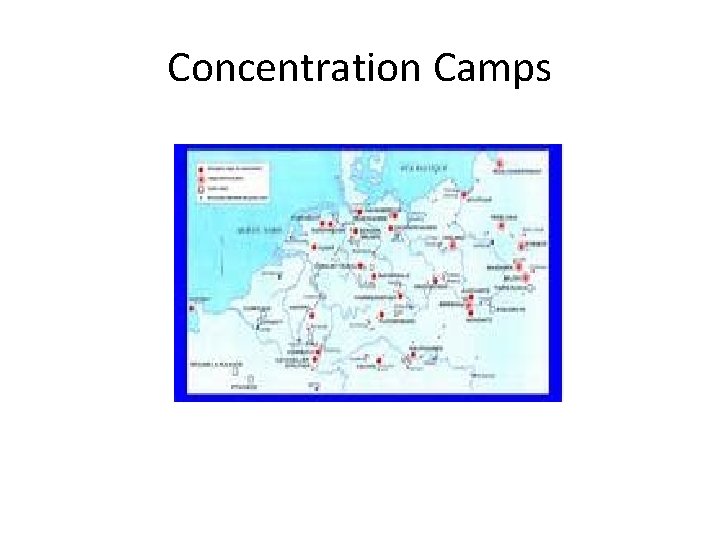
Concentration Camps
Camps
The Final Solution
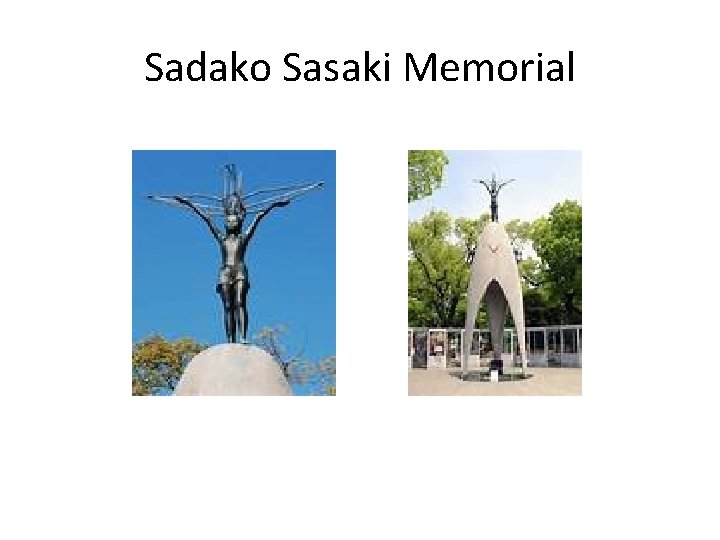
End of the War • Allies are victorious -1943 -U. S. and British forces control N. Africa, Mussolini (Italy) surrenders. -June, 1944 -D-Day, Invasion of Normandy, France -Spring 1945, Allied troops invade German territory. -May 1945, German surrender-Hitler commits suicide -August 1945, Japan surrenders after 2 nuclear bombs dropped by the U. S. over the Japanese cities of Nagasaki and Hiroshima.
Sadako Sasaki Memorial
Europe since 1945 Chapter 15, section 3 • Results of the war • Cold War -53 million people killed, millions more wounded -deadliest conflict in history -U. S. and Soviet Union(formally Russia) most powerful countries in the world -creation of the United Nations-peace keeping organization of over 50 nations. A period of tense rivalry between the United States and the Soviet Union.
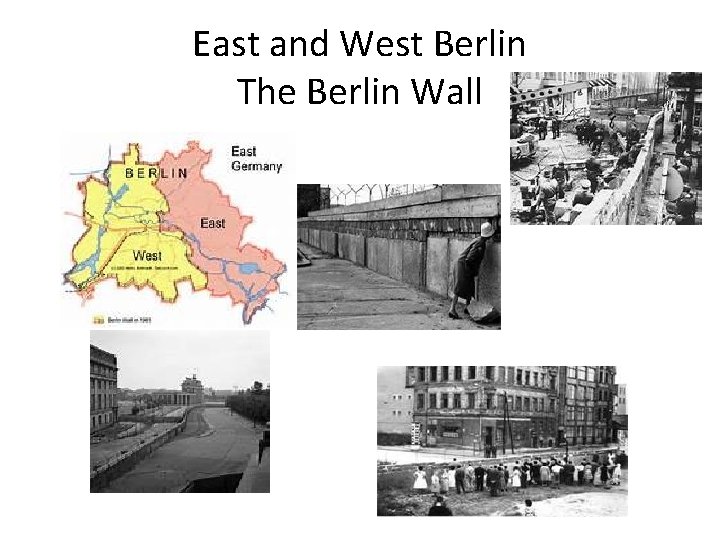
A Divided Europe • Why? • After World War 2 The United States and other European nations were democracies, The Soviet Union was communistic. 1. Germany was divided into 4 zones. 2. By 1948, Western allies united their zones, Soviet Union did not. EST. German Democratic Republic, or East Germany. 3. Berlin, located in East Germany was divided into East and West by the Berlin Wall.
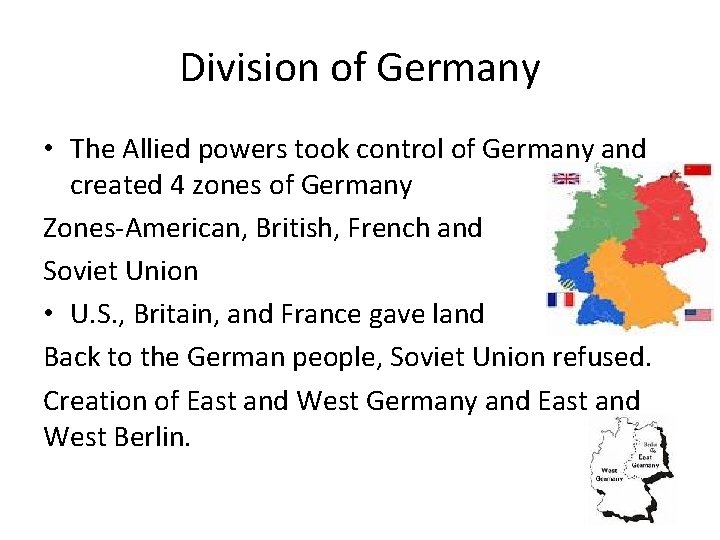
Division of Germany • The Allied powers took control of Germany and created 4 zones of Germany Zones-American, British, French and Soviet Union • U. S. , Britain, and France gave land Back to the German people, Soviet Union refused. Creation of East and West Germany and East and West Berlin.
East and West Berlin The Berlin Wall
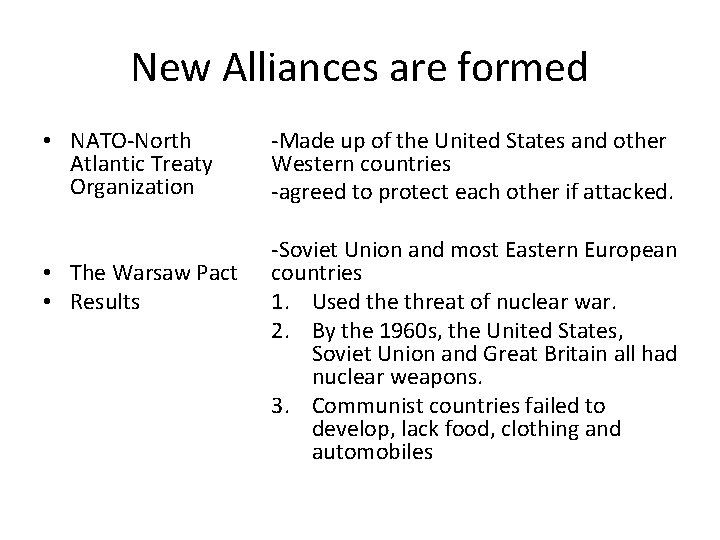
New Alliances are formed • NATO-North Atlantic Treaty Organization • The Warsaw Pact • Results -Made up of the United States and other Western countries -agreed to protect each other if attacked. -Soviet Union and most Eastern European countries 1. Used the threat of nuclear war. 2. By the 1960 s, the United States, Soviet Union and Great Britain all had nuclear weapons. 3. Communist countries failed to develop, lack food, clothing and automobiles
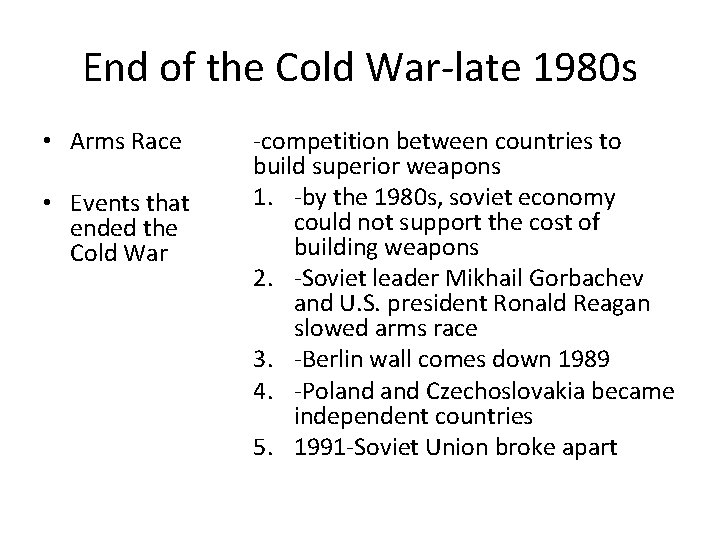
End of the Cold War-late 1980 s • Arms Race • Events that ended the Cold War -competition between countries to build superior weapons 1. -by the 1980 s, soviet economy could not support the cost of building weapons 2. -Soviet leader Mikhail Gorbachev and U. S. president Ronald Reagan slowed arms race 3. -Berlin wall comes down 1989 4. -Poland Czechoslovakia became independent countries 5. 1991 -Soviet Union broke apart
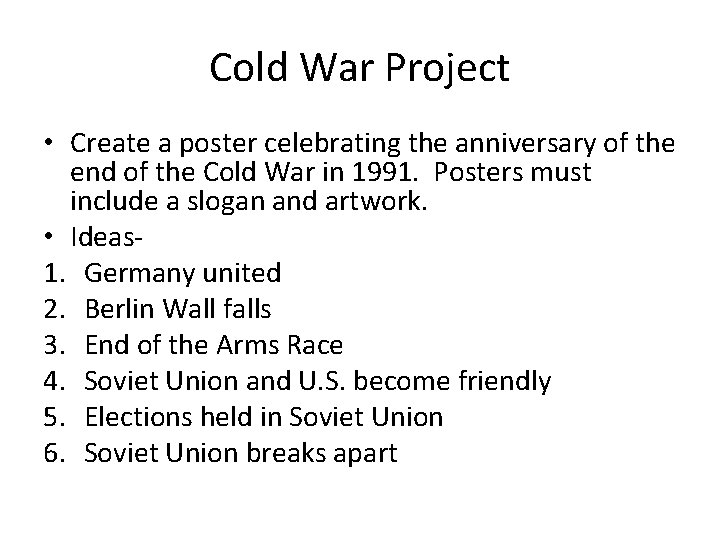
Cold War Project • Create a poster celebrating the anniversary of the end of the Cold War in 1991. Posters must include a slogan and artwork. • Ideas 1. Germany united 2. Berlin Wall falls 3. End of the Arms Race 4. Soviet Union and U. S. become friendly 5. Elections held in Soviet Union 6. Soviet Union breaks apart
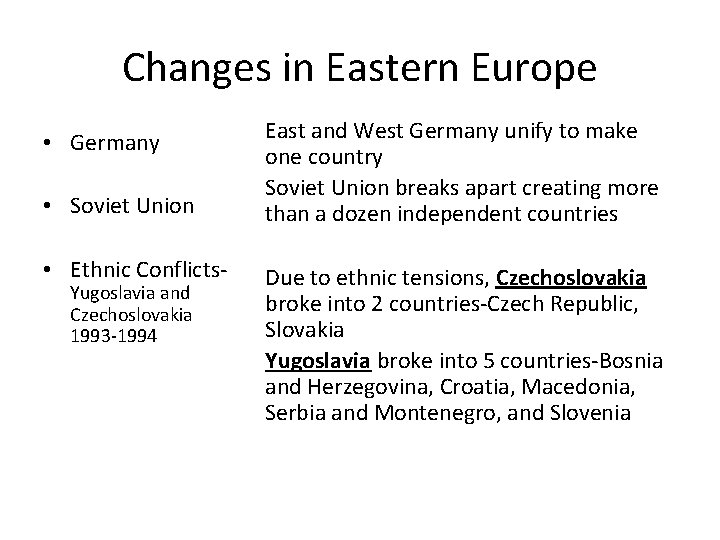
Changes in Eastern Europe • Germany • Soviet Union • Ethnic Conflicts. Yugoslavia and Czechoslovakia 1993 -1994 East and West Germany unify to make one country Soviet Union breaks apart creating more than a dozen independent countries Due to ethnic tensions, Czechoslovakia broke into 2 countries-Czech Republic, Slovakia Yugoslavia broke into 5 countries-Bosnia and Herzegovina, Croatia, Macedonia, Serbia and Montenegro, and Slovenia
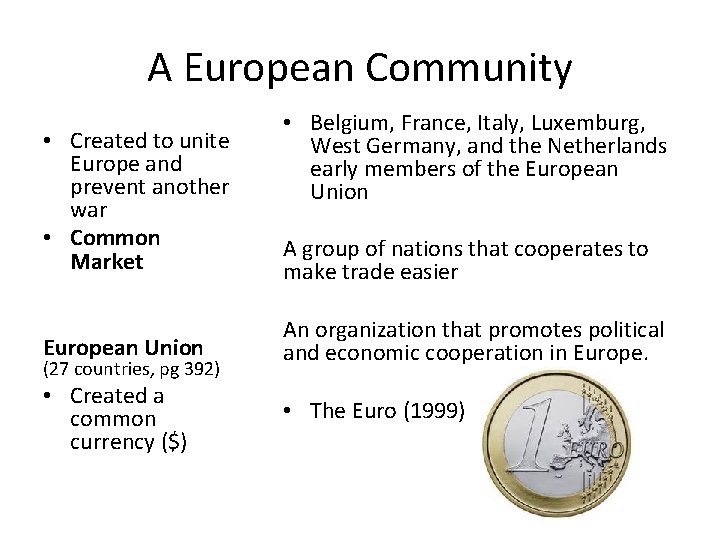
A European Community • Created to unite Europe and prevent another war • Common Market • Belgium, France, Italy, Luxemburg, West Germany, and the Netherlands early members of the European Union A group of nations that cooperates to make trade easier European Union An organization that promotes political and economic cooperation in Europe. • Created a common currency ($) • The Euro (1999) (27 countries, pg 392)
Timeline Writing Prompt Which event of the 20 th century do you believe is the most historic and why? Write a paragraph about the most historic event of the 20 th century and why you choose that event. Make sure to include details about the event, including what happened, when did the event occur, who was involved in the event and the impact the result of the event had to the world and it’s people. Conclude your paragraph explaining why you choose this specific event.
Russian Geography On the map provided, complete the following activities 1. Label the following regions: Siberia, Georgia, Armenia, Azerbaijan 2. Draw and label the Volga, Lena and Ob Rivers 3. Label the Ural Mts, Caspian Sea, Arctic Ocean, Sea of Japan, Bering Strait, Bering Sea, The Sea of Okhotsk, Pacific Ocean, Kamchatka Peninsula 4. Draw and label Lake Baikal 5. Locate St. Petersburg and Moscow 6. Draw and label the Arctic Circle