Document and Standardize Six Sigma Continuous Improvement Training

- Slides: 21
Document and Standardize Six Sigma Continuous Improvement Training Six Sigma Simplicity
Key Learning points Vital part of project closure s Agree on a written record - what has been done and share with all Associates s To sustain the gain - link the new procedure to formal Quality Management System or Internal Audits s
Document Flowserve’s Continuous Improvement Process
Documentation Plan s Documenting agreed changes is an important part of building acceptance, changing processes and working through conflict s A Documentation Plan is more than a schedule for all documents. s It is helpful to define the Scope Schedule for creation Ownership Circulation Storage/disposal 1. 2. 3. 4. 5.
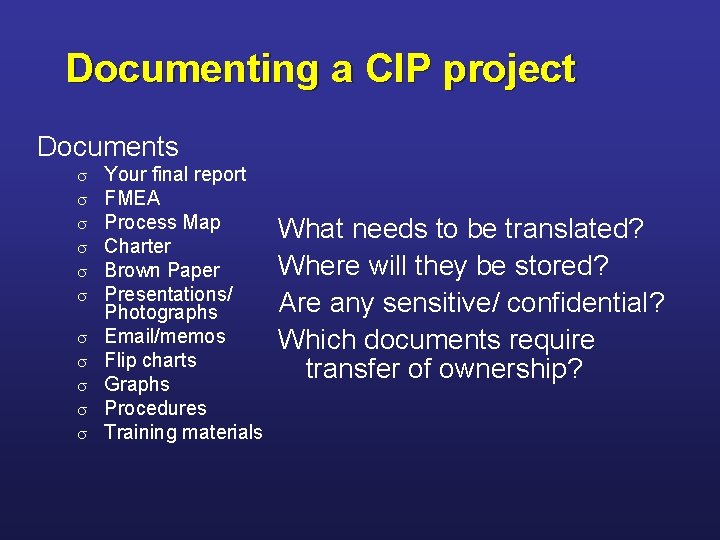
Documenting a CIP project Documents s s Your final report FMEA Process Map Charter Brown Paper Presentations/ Photographs Email/memos Flip charts Graphs Procedures Training materials What needs to be translated? Where will they be stored? Are any sensitive/ confidential? Which documents require transfer of ownership?
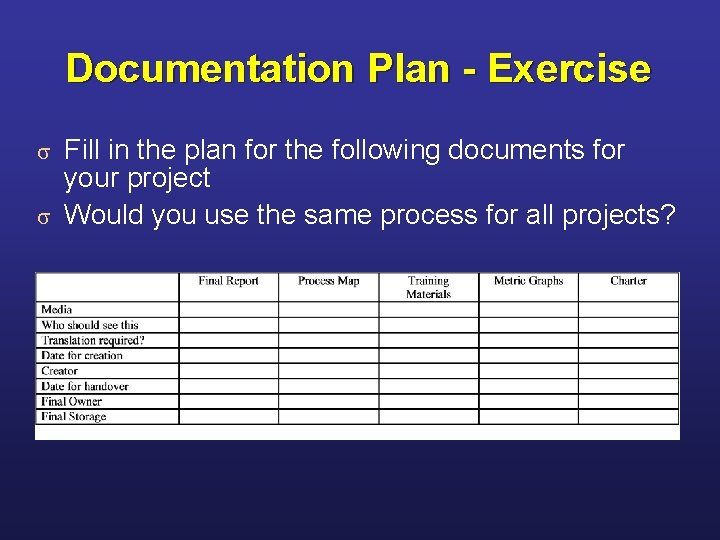
Documentation Plan - Exercise Fill in the plan for the following documents for your project s Would you use the same process for all projects? s
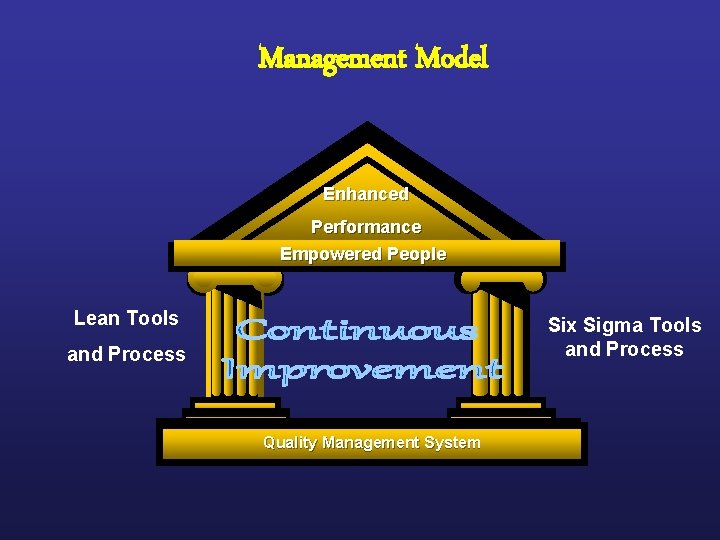
Management Model Enhanced Performance Empowered People Lean Tools Six Sigma Tools and Process Management System 5 S Quality Workplace Organisation
s What is Quality? ISO 9001: 2000 s CIP Strategy & ISO 9001 s s Sustaining the Gain via the QMS
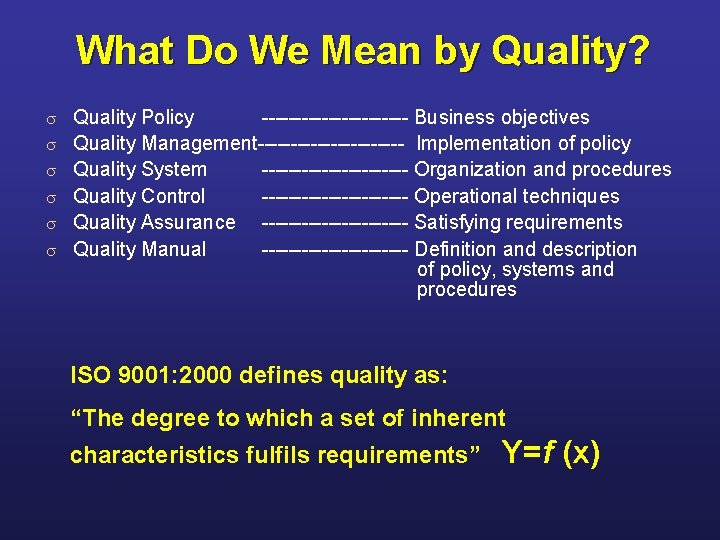
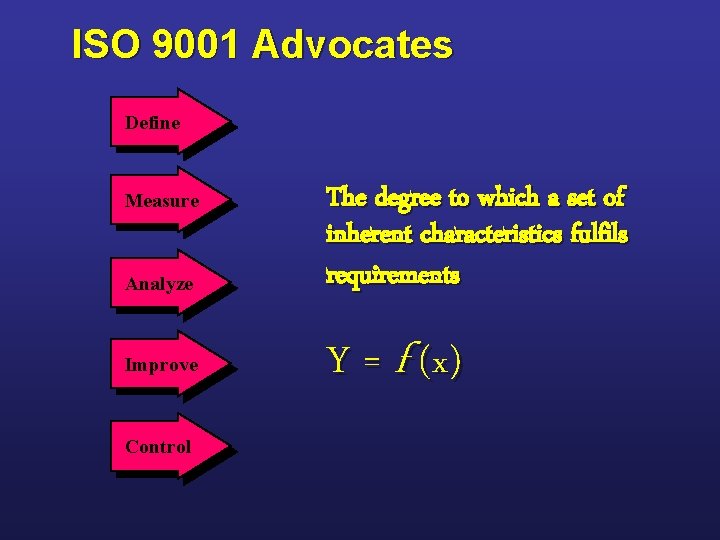
What Do We Mean by Quality? s s s Quality Policy ----------- Business objectives Quality Management----------- Implementation of policy Quality System ----------- Organization and procedures Quality Control ----------- Operational techniques Quality Assurance ----------- Satisfying requirements Quality Manual ----------- Definition and description of policy, systems and procedures ISO 9001: 2000 defines quality as: “The degree to which a set of inherent characteristics fulfils requirements” Y=f (x)
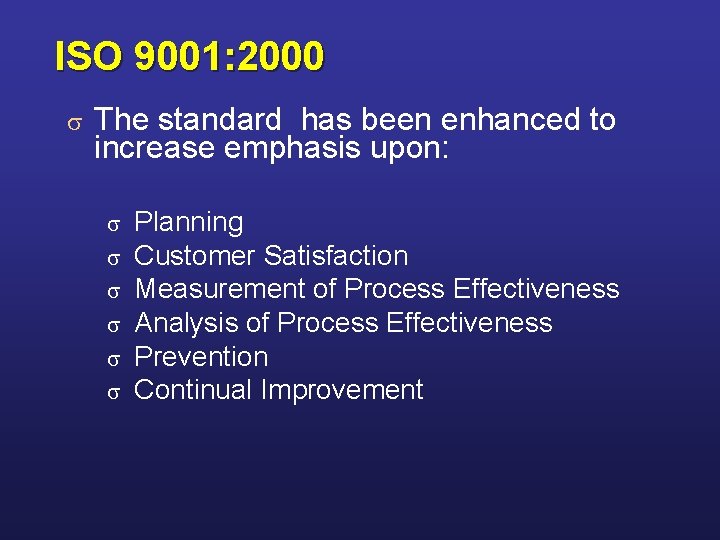
ISO 9001: 2000 s The standard has been enhanced to increase emphasis upon: s s s Planning Customer Satisfaction Measurement of Process Effectiveness Analysis of Process Effectiveness Prevention Continual Improvement
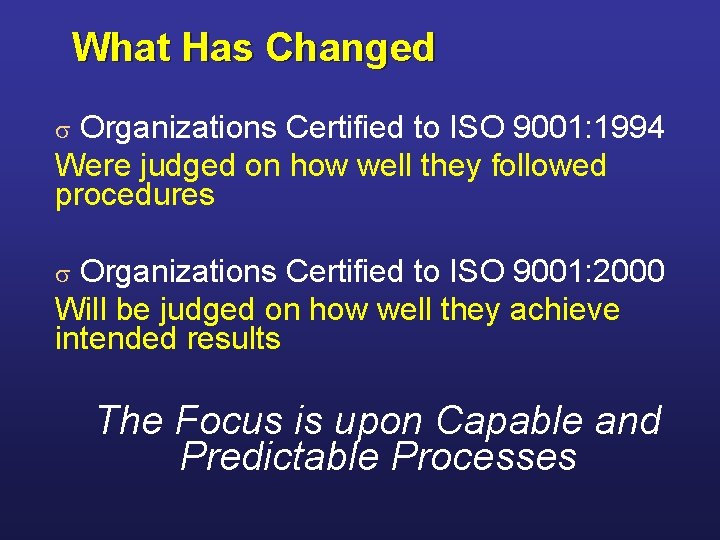
What Has Changed Organizations Certified to ISO 9001: 1994 Were judged on how well they followed procedures s Organizations Certified to ISO 9001: 2000 Will be judged on how well they achieve intended results s The Focus is upon Capable and Predictable Processes
Standardize Flowserve’s Continuous Improvement Process
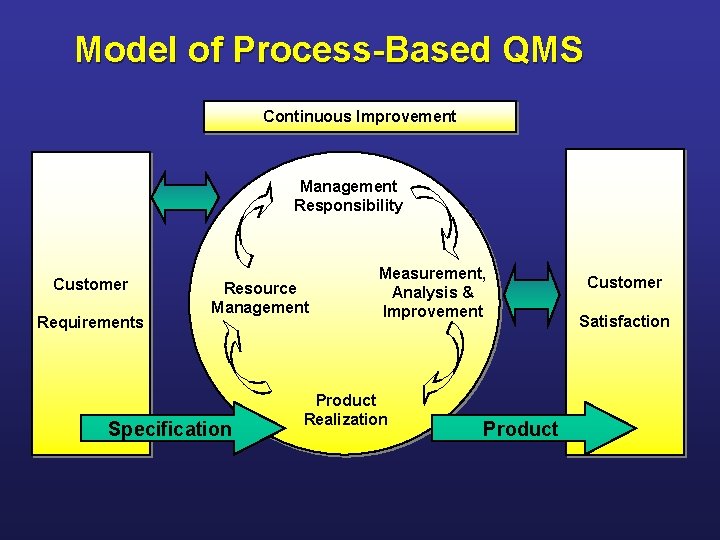
Model of Process-Based QMS Continuous Improvement Management Responsibility Customer Requirements Resource Management Specification Measurement, Analysis & Improvement Product Realization Product Customer Satisfaction
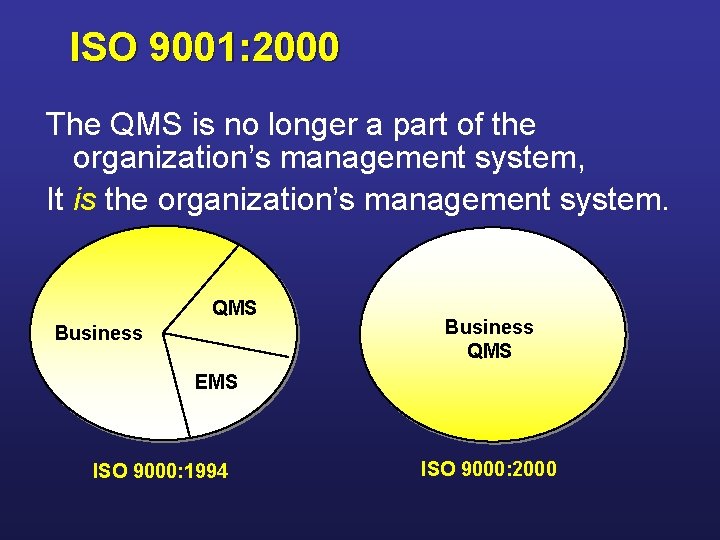
ISO 9001: 2000 The QMS is no longer a part of the organization’s management system, It is the organization’s management system. QMS Business QMS EMS ISO 9000: 1994 ISO 9000: 2000
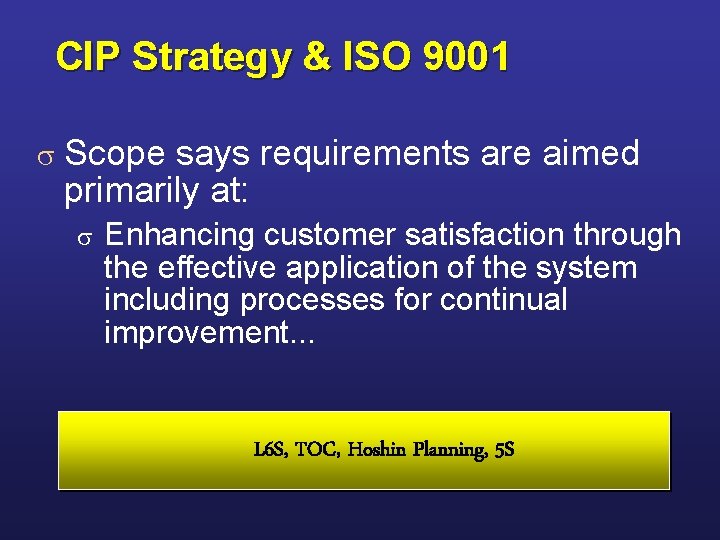
CIP Strategy & ISO 9001 s Scope says requirements are aimed primarily at: s Enhancing customer satisfaction through the effective application of the system including processes for continual improvement. . . L 6 S, TOC, Hoshin Planning, 5 S
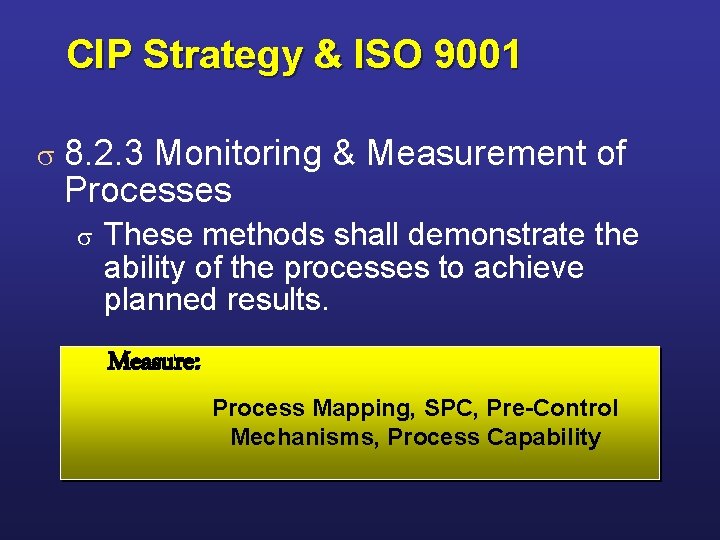
CIP Strategy & ISO 9001 s 8. 2. 3 Monitoring & Measurement of Processes s These methods shall demonstrate the ability of the processes to achieve planned results. Measure: Process Mapping, SPC, Pre-Control Mechanisms, Process Capability
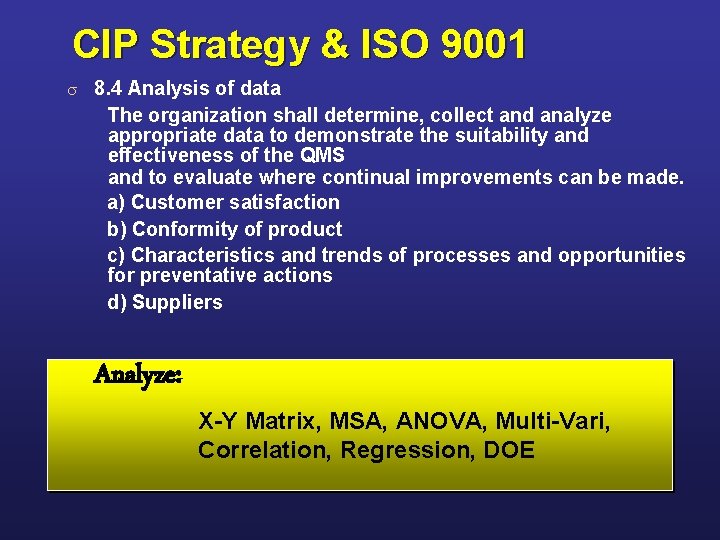
CIP Strategy & ISO 9001 s 8. 4 Analysis of data The organization shall determine, collect and analyze appropriate data to demonstrate the suitability and effectiveness of the QMS and to evaluate where continual improvements can be made. a) Customer satisfaction b) Conformity of product c) Characteristics and trends of processes and opportunities for preventative actions d) Suppliers Analyze: X-Y Matrix, MSA, ANOVA, Multi-Vari, Correlation, Regression, DOE
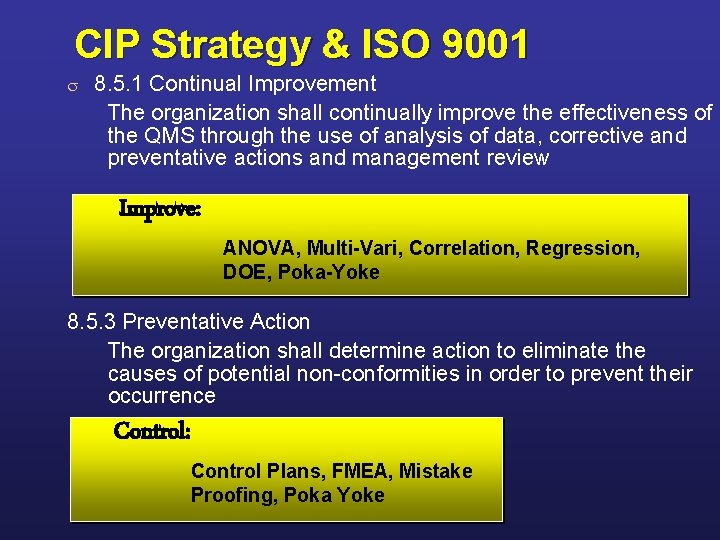
CIP Strategy & ISO 9001 s 8. 5. 1 Continual Improvement The organization shall continually improve the effectiveness of the QMS through the use of analysis of data, corrective and preventative actions and management review Improve: ANOVA, Multi-Vari, Correlation, Regression, DOE, Poka-Yoke 8. 5. 3 Preventative Action The organization shall determine action to eliminate the causes of potential non-conformities in order to prevent their occurrence Control: Control Plans, FMEA, Mistake Proofing, Poka Yoke
ISO 9001 Advocates Define Measure Analyze Improve Control The degree to which a set of inherent characteristics fulfils requirements Y = f ( x)
Advantages of Using Quality System s Makes the change company policy Makes everyone aware of the change s Provides clear definition of procedures and responsibilities s Provides control and management of the change s Audits effectiveness and discipline s s Sustains the gain!
Document and Standardize Six Sigma Continuous Improvement Training