Diagnostic Applications of FourDimensional Digital Analysis of Handwriting


- Slides: 20
Diagnostic Applications of Four-Dimensional Digital Analysis of Handwriting James Marshall Graphometrist
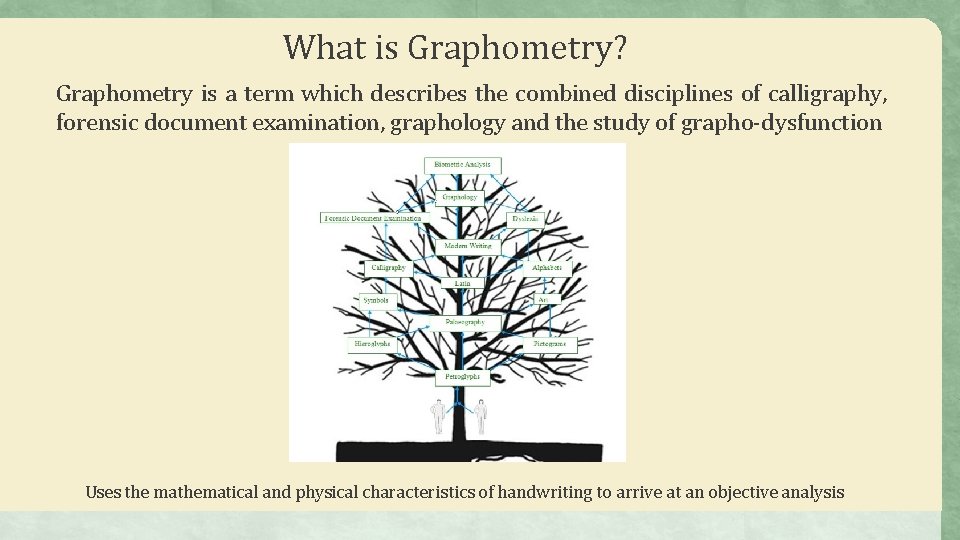
What is Graphometry? Graphometry is a term which describes the combined disciplines of calligraphy, forensic document examination, graphology and the study of grapho-dysfunction Uses the mathematical and physical characteristics of handwriting to arrive at an objective analysis
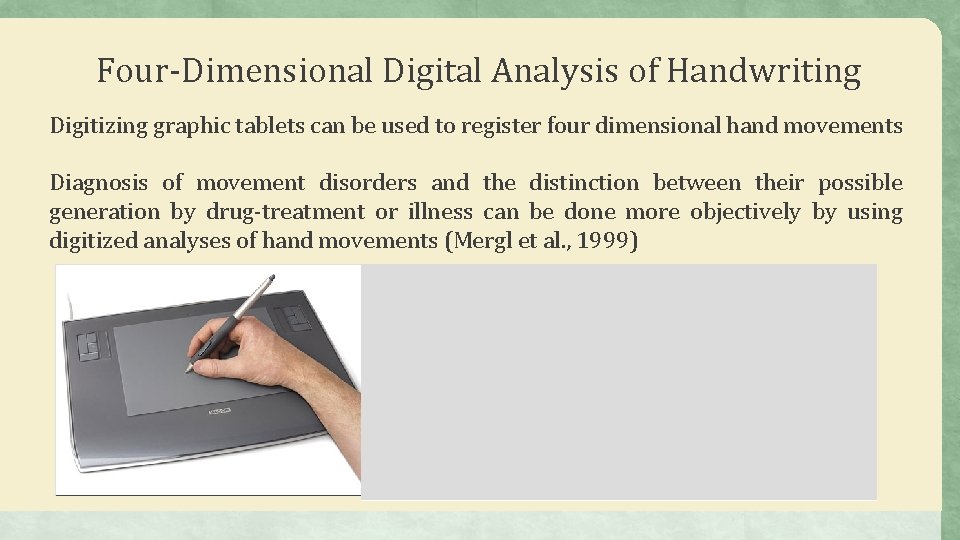
Four-Dimensional Digital Analysis of Handwriting Digitizing graphic tablets can be used to register four dimensional hand movements Diagnosis of movement disorders and the distinction between their possible generation by drug-treatment or illness can be done more objectively by using digitized analyses of hand movements (Mergl et al. , 1999)
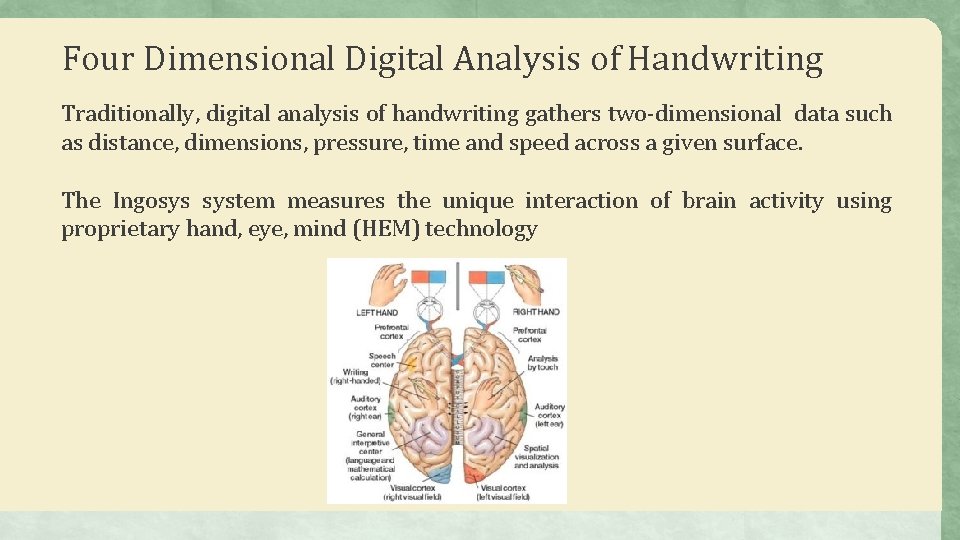
Four Dimensional Digital Analysis of Handwriting Traditionally, digital analysis of handwriting gathers two-dimensional data such as distance, dimensions, pressure, time and speed across a given surface. The Ingosys system measures the unique interaction of brain activity using proprietary hand, eye, mind (HEM) technology
Healthcare Applications • • Predicting and calculating a care plan and costs Early warning of action needed Drug/medication performance before and after evaluation Collect quantitative data for increased accuracy Monitoring remotely (over internet) or onsite. Real time results given instantaneously Monitoring of deterioration or improvement Critical data sharing with health care professionals
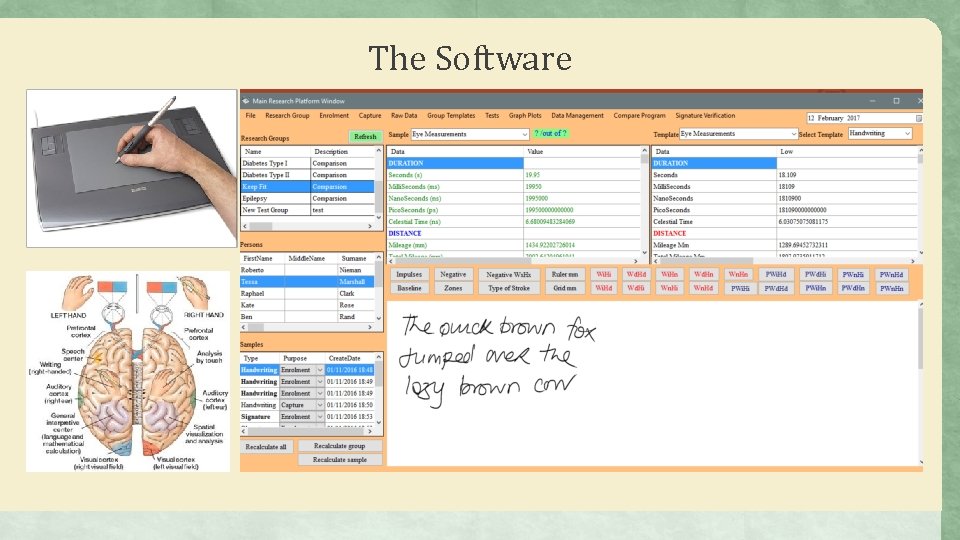
The Software
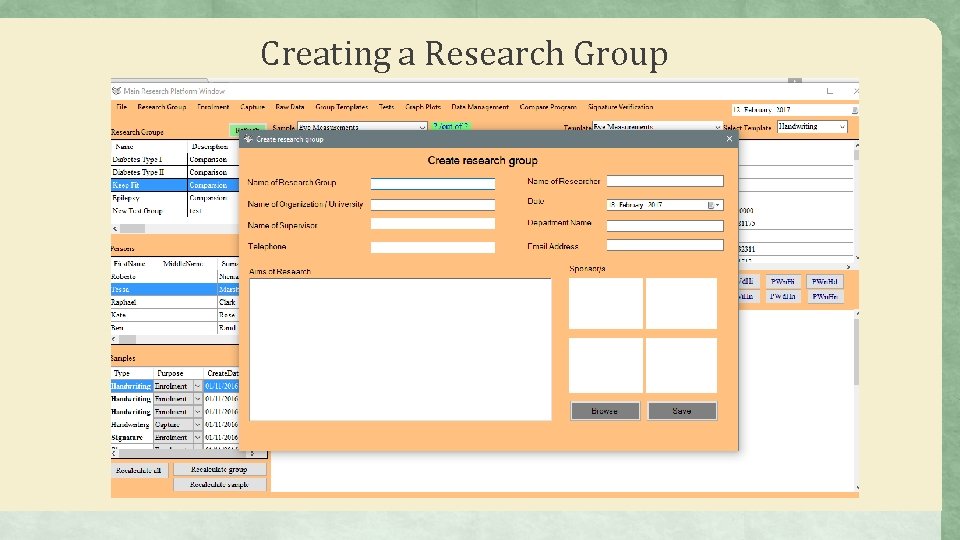
Creating a Research Group
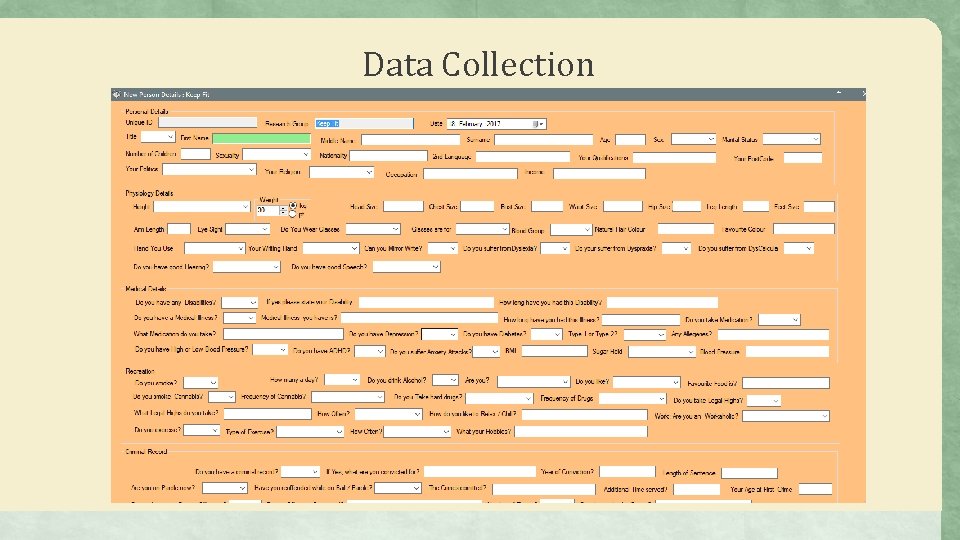
Data Collection
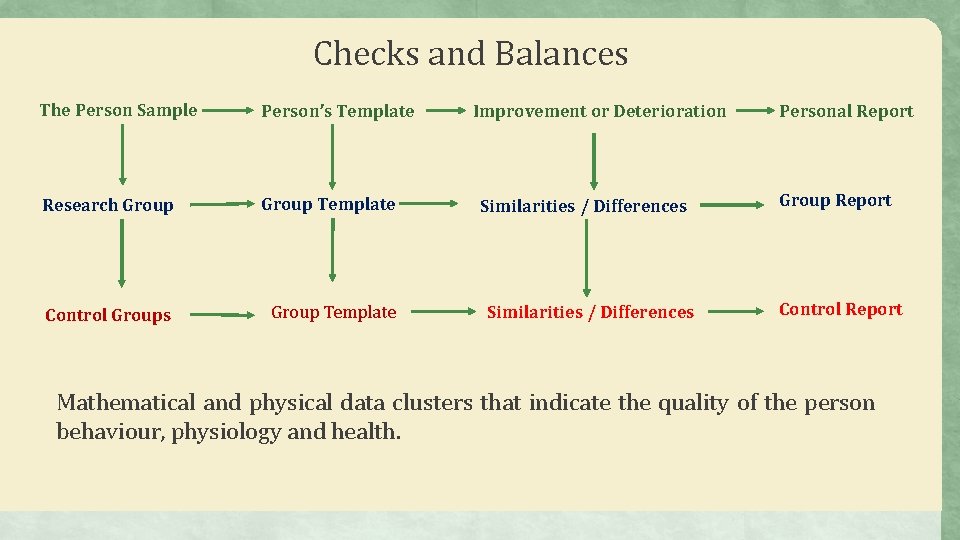
Checks and Balances The Person Sample Person’s Template Research Group Template Control Groups Group Template Improvement or Deterioration Similarities / Differences Personal Report Group Report Control Report Mathematical and physical data clusters that indicate the quality of the person behaviour, physiology and health.
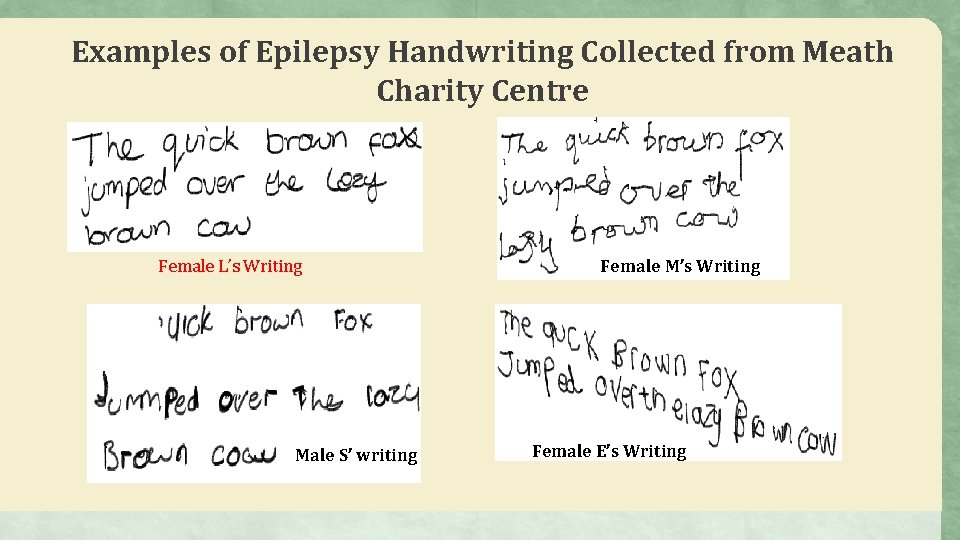
Examples of Epilepsy Handwriting Collected from Meath Charity Centre Female L’s Writing Male S’ writing Female M’s Writing Female E’s Writing
Handwriting Samples from Healthy Female Volunteers Collected from a Public Gym Kate’s Writing Tess’ Writing Maria’s Writing Claudia’s Writing Johanna’s Writing
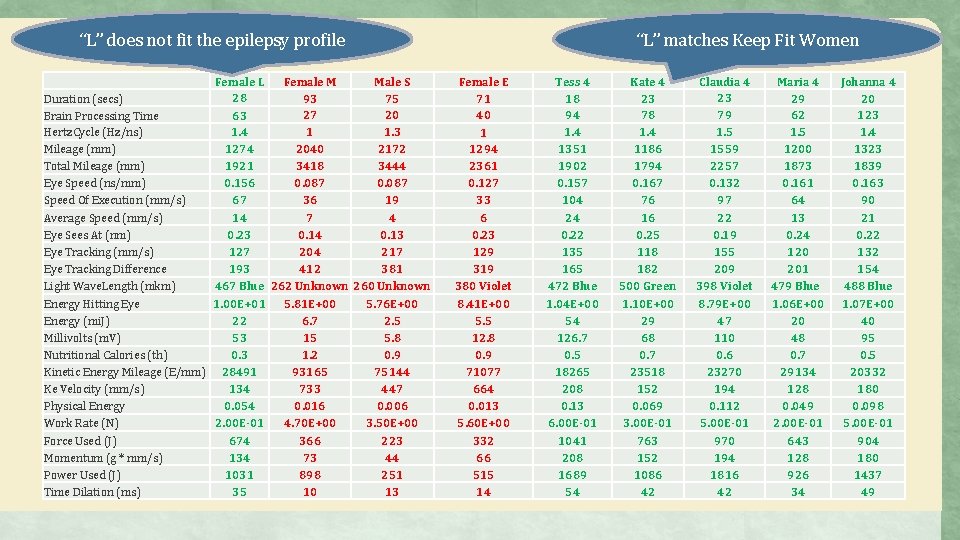
“L” does not fit the epilepsy profile Female L 28 Female M Male S Duration (secs) 93 75 27 20 Brain Processing Time 63 Hertz. Cycle (Hz/ns) 1. 4 1 1. 3 Mileage (mm) 1274 2040 2172 Total Mileage (mm) 1921 3418 3444 Eye Speed (ns/mm) 0. 156 0. 087 Speed Of Execution (mm/s) 67 36 19 Average Speed (mm/s) 14 7 4 Eye Sees At (nm) 0. 23 0. 14 0. 13 Eye Tracking (mm/s) 127 204 217 Eye Tracking Difference 193 412 381 Light Wave. Length (mkm) 467 Blue 262 Unknown 260 Unknown Energy Hitting Eye 1. 00 E+01 5. 81 E+00 5. 76 E+00 Energy (mi. J) 22 6. 7 2. 5 Millivolts (m. V) 53 15 5. 8 Nutritional Calories (th) 0. 3 1. 2 0. 9 Kinetic Energy Mileage (E/mm) 28491 93165 75144 Ke Velocity (mm/s) 134 733 447 Physical Energy 0. 054 0. 016 0. 006 Work Rate (N) 2. 00 E-01 4. 70 E+00 3. 50 E+00 Force Used (J) 674 366 223 Momentum (g * mm/s) 134 73 44 Power Used (J) 1031 898 251 Time Dilation (ms) 35 10 13 “L” matches Keep Fit Women Female E 71 40 1 1294 2361 0. 127 33 6 0. 23 129 319 380 Violet 8. 41 E+00 5. 5 12. 8 0. 9 71077 664 0. 013 5. 60 E+00 332 66 515 14 Tess 4 18 94 1. 4 1351 1902 0. 157 104 24 0. 22 135 165 472 Blue 1. 04 E+00 54 126. 7 0. 5 18265 208 0. 13 6. 00 E-01 1041 208 1689 54 Kate 4 23 78 1. 4 1186 1794 0. 167 76 16 0. 25 118 182 500 Green 1. 10 E+00 29 68 0. 7 23518 152 0. 069 3. 00 E-01 763 152 1086 42 Claudia 4 23 79 1. 5 1559 2257 0. 132 97 22 0. 19 155 209 398 Violet 8. 79 E+00 47 110 0. 6 23270 194 0. 112 5. 00 E-01 970 194 1816 42 Maria 4 29 62 1. 5 1200 1873 0. 161 64 13 0. 24 120 201 479 Blue 1. 06 E+00 20 48 0. 7 29134 128 0. 049 2. 00 E-01 643 128 926 34 Johanna 4 20 123 1. 4 1323 1839 0. 163 90 21 0. 22 132 154 488 Blue 1. 07 E+00 40 95 0. 5 20332 180 0. 098 5. 00 E-01 904 180 1437 49
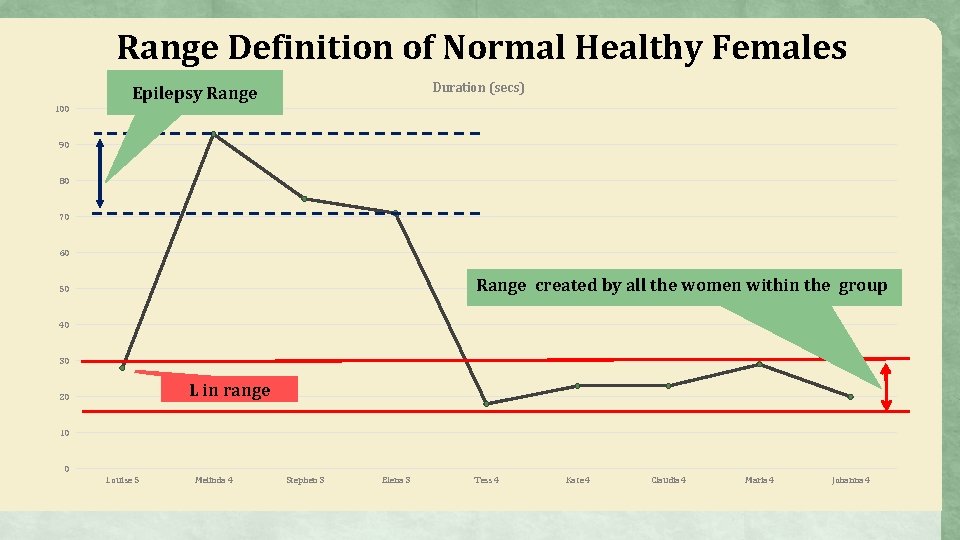
Range Definition of Normal Healthy Females Duration (secs) Epilepsy Range 100 90 80 70 60 Range created by all the women within the group 50 40 30 L in range 20 10 0 Louise 5 Melinda 4 Stephen 3 Elena 3 Tess 4 Kate 4 Claudia 4 Maria 4 Johanna 4
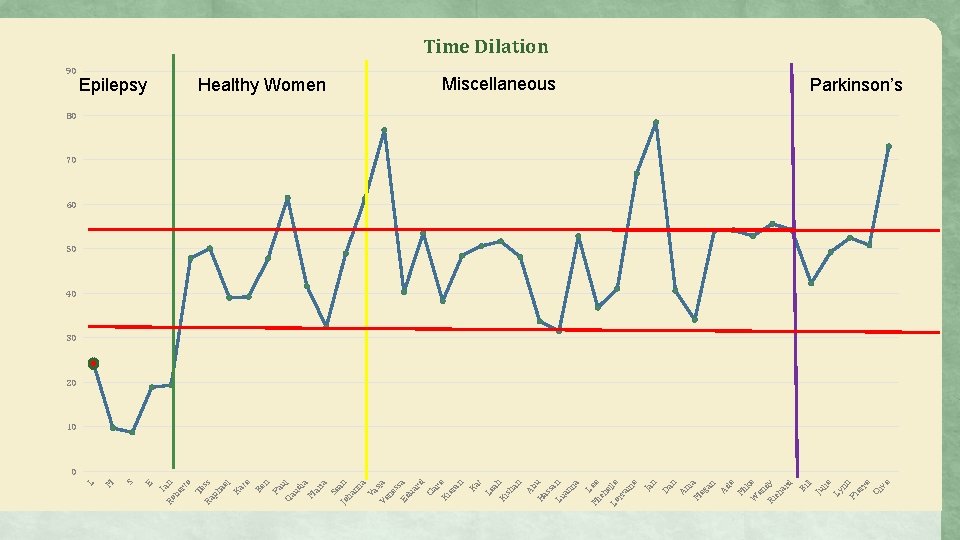
ia n n er r nn lie e Cl iv e Pi Ly ll Miscellaneous Ju Bi an Ad e M ik W e en d Ri y ch ar d eg M An Da Ja Ab Ha u ss a Lu n an na L M ee ic he Lo lle rr ai ne an sh Ki t ah Healthy Women Le Epilepsy Ka Ro n be rt o Te Ra ss ph ae l Ka te Be n Pa Cl ul au di a M ar ia Se Jo an ha nn a Va s Ve ia ne ss Ed a ua rd Cl ar Ki e er an Ia E S M 90 L Time Dilation Parkinson’s 80 70 60 50 40 30 20 10 0
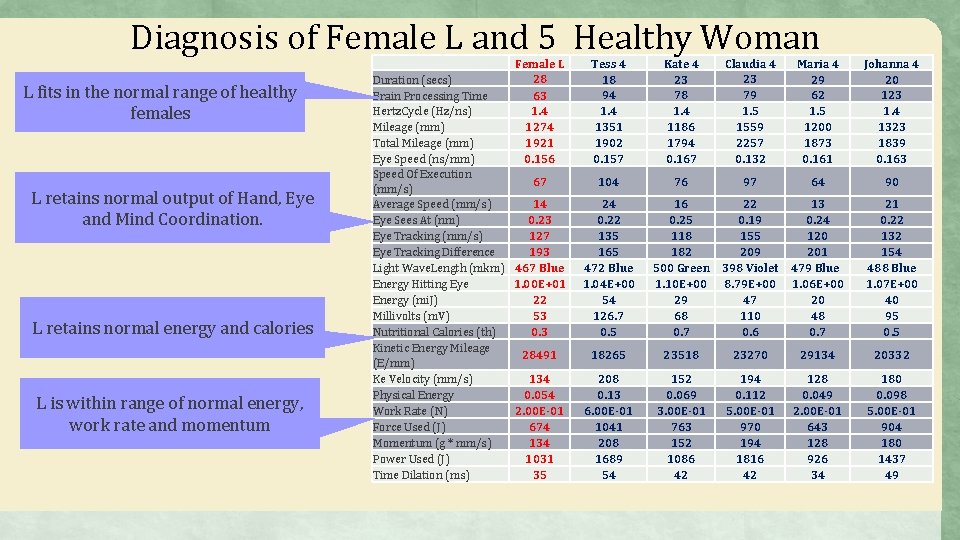
Diagnosis of Female L and 5 Healthy Woman L fits in the normal range of healthy females L retains normal output of Hand, Eye and Mind Coordination. L retains normal energy and calories L is within range of normal energy, work rate and momentum Female L 28 63 1. 4 1274 1921 0. 156 Duration (secs) Brain Processing Time Hertz. Cycle (Hz/ns) Mileage (mm) Total Mileage (mm) Eye Speed (ns/mm) Speed Of Execution 67 (mm/s) Average Speed (mm/s) 14 Eye Sees At (nm) 0. 23 Eye Tracking (mm/s) 127 Eye Tracking Difference 193 Light Wave. Length (mkm) 467 Blue Energy Hitting Eye 1. 00 E+01 Energy (mi. J) 22 Millivolts (m. V) 53 Nutritional Calories (th) 0. 3 Kinetic Energy Mileage 28491 (E/mm) Ke Velocity (mm/s) 134 Physical Energy 0. 054 Work Rate (N) 2. 00 E-01 Force Used (J) 674 Momentum (g * mm/s) 134 Power Used (J) 1031 Time Dilation (ms) 35 Tess 4 18 94 1. 4 1351 1902 0. 157 Kate 4 23 78 1. 4 1186 1794 0. 167 Claudia 4 23 79 1. 5 1559 2257 0. 132 Maria 4 29 62 1. 5 1200 1873 0. 161 Johanna 4 20 123 1. 4 1323 1839 0. 163 104 76 97 64 90 24 0. 22 135 165 472 Blue 1. 04 E+00 54 126. 7 0. 5 16 0. 25 118 182 500 Green 1. 10 E+00 29 68 0. 7 22 0. 19 155 209 398 Violet 8. 79 E+00 47 110 0. 6 13 0. 24 120 201 479 Blue 1. 06 E+00 20 48 0. 7 21 0. 22 132 154 488 Blue 1. 07 E+00 40 95 0. 5 18265 23518 23270 29134 20332 208 0. 13 6. 00 E-01 1041 208 1689 54 152 0. 069 3. 00 E-01 763 152 1086 42 194 0. 112 5. 00 E-01 970 194 1816 42 128 0. 049 2. 00 E-01 643 128 926 34 180 0. 098 5. 00 E-01 904 180 1437 49
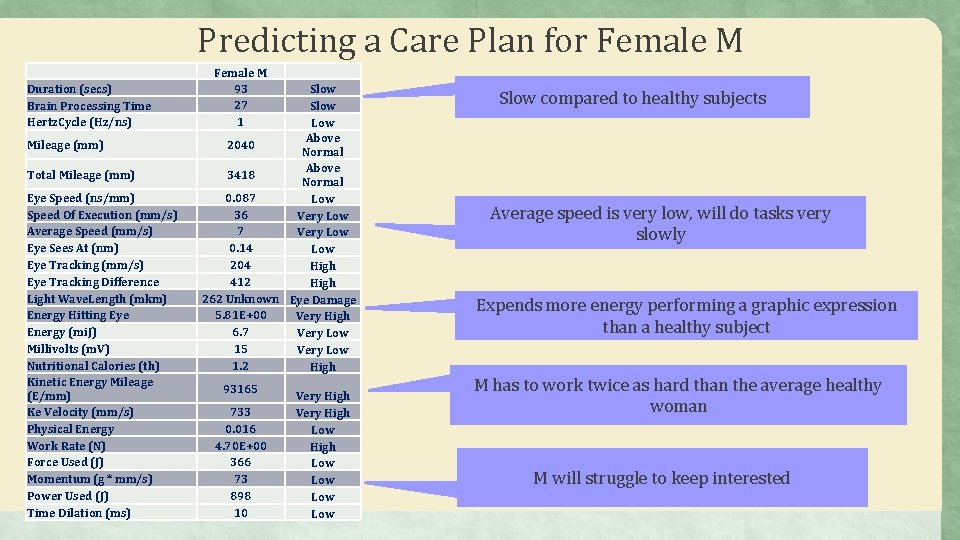
Predicting a Care Plan for Female M Duration (secs) Brain Processing Time Hertz. Cycle (Hz/ns) Mileage (mm) Total Mileage (mm) Eye Speed (ns/mm) Speed Of Execution (mm/s) Average Speed (mm/s) Eye Sees At (nm) Eye Tracking (mm/s) Eye Tracking Difference Light Wave. Length (mkm) Energy Hitting Eye Energy (mi. J) Millivolts (m. V) Nutritional Calories (th) Kinetic Energy Mileage (E/mm) Ke Velocity (mm/s) Physical Energy Work Rate (N) Force Used (J) Momentum (g * mm/s) Power Used (J) Time Dilation (ms) Female M 93 27 1 Slow Low Above 2040 Normal Above 3418 Normal 0. 087 Low 36 Very Low 7 Very Low 0. 14 Low 204 High 412 High 262 Unknown Eye Damage 5. 81 E+00 Very High 6. 7 Very Low 15 Very Low 1. 2 High 93165 733 0. 016 4. 70 E+00 366 73 898 10 Very High Low Low Slow compared to healthy subjects Average speed is very low, will do tasks very slowly Expends more energy performing a graphic expression than a healthy subject M has to work twice as hard than the average healthy woman M will struggle to keep interested
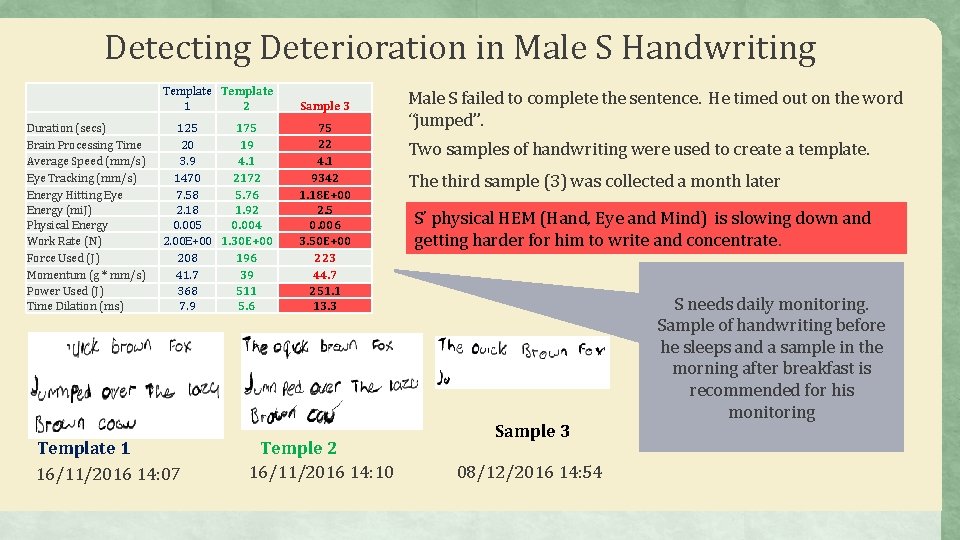
Detecting Deterioration in Male S Handwriting Template 1 2 Sample 3 Duration (secs) Brain Processing Time Average Speed (mm/s) Eye Tracking (mm/s) Energy Hitting Eye Energy (mi. J) Physical Energy Work Rate (N) Force Used (J) Momentum (g * mm/s) Power Used (J) Time Dilation (ms) 125 175 20 19 3. 9 4. 1 1470 2172 7. 58 5. 76 2. 18 1. 92 0. 005 0. 004 2. 00 E+00 1. 30 E+00 208 196 41. 7 39 368 511 7. 9 5. 6 75 22 4. 1 9342 1. 18 E+00 2. 5 0. 006 3. 50 E+00 223 44. 7 251. 1 13. 3 Template 1 16/11/2016 14: 07 Temple 2 16/11/2016 14: 10 Male S failed to complete the sentence. He timed out on the word “jumped”. Two samples of handwriting were used to create a template. The third sample (3) was collected a month later S’ physical HEM (Hand, Eye and Mind) is slowing down and getting harder for him to write and concentrate. Sample 3 08/12/2016 14: 54 S needs daily monitoring. Sample of handwriting before he sleeps and a sample in the morning after breakfast is recommended for his monitoring
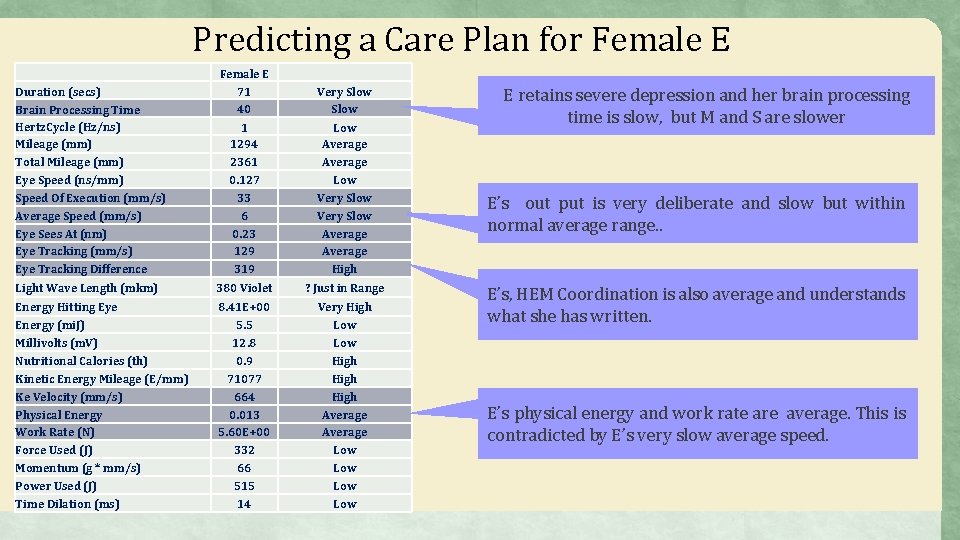
Predicting a Care Plan for Female E 71 40 Very Slow 1 1294 2361 0. 127 33 6 0. 23 129 319 Low Average Low Very Slow Average High Light Wave Length (mkm) 380 Violet ? Just in Range Energy Hitting Eye 8. 41 E+00 Very High Energy (mi. J) Millivolts (m. V) Nutritional Calories (th) Kinetic Energy Mileage (E/mm) Ke Velocity (mm/s) Physical Energy Work Rate (N) Force Used (J) Momentum (g * mm/s) Power Used (J) Time Dilation (ms) 5. 5 12. 8 0. 9 71077 664 0. 013 5. 60 E+00 332 66 515 14 Low High Average Low Low Duration (secs) Brain Processing Time Hertz. Cycle (Hz/ns) Mileage (mm) Total Mileage (mm) Eye Speed (ns/mm) Speed Of Execution (mm/s) Average Speed (mm/s) Eye Sees At (nm) Eye Tracking (mm/s) Eye Tracking Difference E retains severe depression and her brain processing time is slow, but M and S are slower E’s out put is very deliberate and slow but within normal average range. . E’s, HEM Coordination is also average and understands what she has written. E’s physical energy and work rate are average. This is contradicted by E’s very slow average speed.
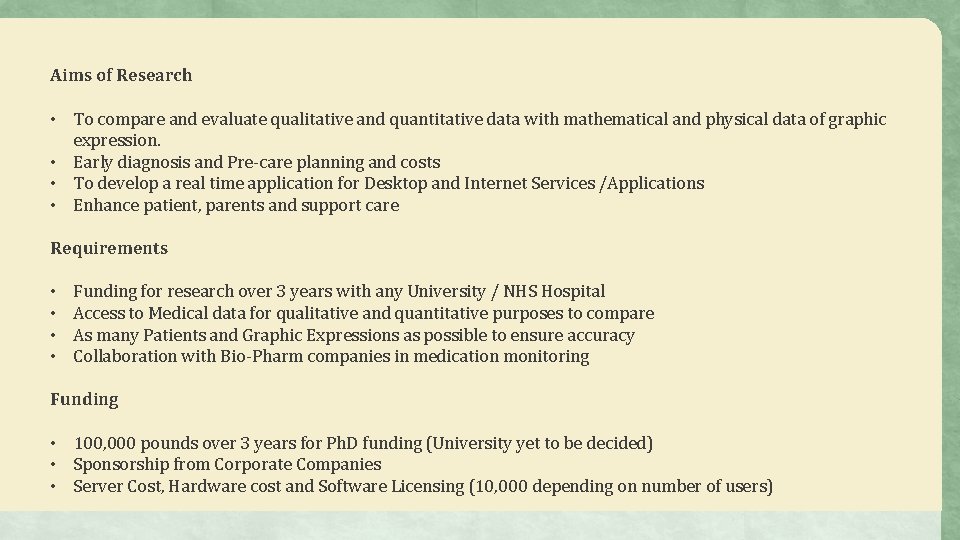
Aims of Research • To compare and evaluate qualitative and quantitative data with mathematical and physical data of graphic expression. • Early diagnosis and Pre-care planning and costs • To develop a real time application for Desktop and Internet Services /Applications • Enhance patient, parents and support care Requirements • • Funding for research over 3 years with any University / NHS Hospital Access to Medical data for qualitative and quantitative purposes to compare As many Patients and Graphic Expressions as possible to ensure accuracy Collaboration with Bio-Pharm companies in medication monitoring Funding • 100, 000 pounds over 3 years for Ph. D funding (University yet to be decided) • Sponsorship from Corporate Companies • Server Cost, Hardware cost and Software Licensing (10, 000 depending on number of users)
References and Selected Research • Marquardt, C. and Mai, N. (1994). A computational procedure for movement analysis in handwriting. Journal of Neuroscience Methods, 52(1), pp. 39 -45. • Mavrogiorgou, P. (2001). Kinematic analysis of handwriting movements in patients with obsessivecompulsive disorder. Journal of Neurology, Neurosurgery & Psychiatry, 70(5), pp. 605 -612. • Mergl, R. , Juckel, G. , Rihl, J. , Henkel, V. , Karner, M. , Tigges, P. , Schroter, A. and Hegerl, U. (2004). Kinematical analysis of handwriting movements in depressed patients. Acta Psychiatrica Scandinavica, 109(5), pp. 383 -391. • Mergl, R. , Tigges, P. , Schröter, A. , Möller, H. and Hegerl, U. (1999). Digitized analysis of handwriting and drawing movements in healthy subjects: methods, results and perspectives. Journal of Neuroscience Methods, 90(2), pp. 157 -169. • Schröter, A. , Mergl, R. , Bürger, K. , Hampel, H. , Möller, H. and Hegerl, U. (2003). Kinematic Analysis of Handwriting Movements in Patients with Alzheimer’s Disease, Mild Cognitive Impairment, Depression and Healthy Subjects. Dementia and Geriatric Cognitive Disorders, 15(3), pp. 132 -142. • Tigges, P. , Mergl, R. , Frodl, T. , Meisenzahl, E. , Gallinat, J. , Schröter, A. , Riedel, M. , Müller, N. , Möller, H. and Hegerl, U. (2000). Digitized analysis of abnormal hand–motor performance in schizophrenic patients. Schizophrenia Research, 45(1 -2), pp. 133 -143.