DHIS 2 V 2 30 Implementation Contents 1


- Slides: 13
DHIS 2 V 2. 30 Implementation
Contents 1. Historical Overview 2. Data Reporting 3. Why Upgrade 4. Implementation Status 5. Outcome 6. Challenges 7. way forward
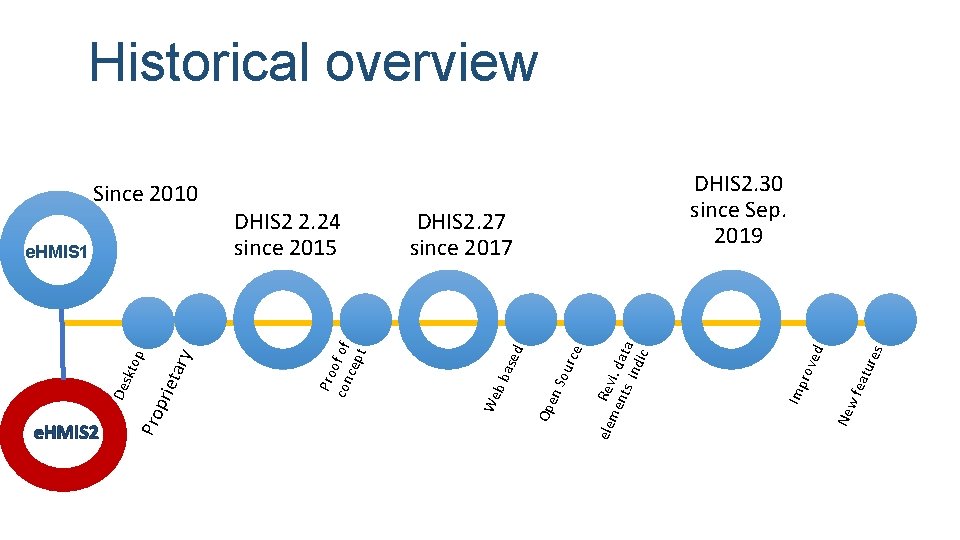
Historical overview es tur fea New ed rov Imp R me evi. d nts ata ind ic ele rce Sou en bb ase d DHIS 2. 27 since 2017 We ary riet DHIS 2. 30 since Sep. 2019 Op e. HMIS 2 Pro p Des kto p e. HMIS 1 DHIS 2 2. 24 since 2015 Pro con of of cep t Since 2010
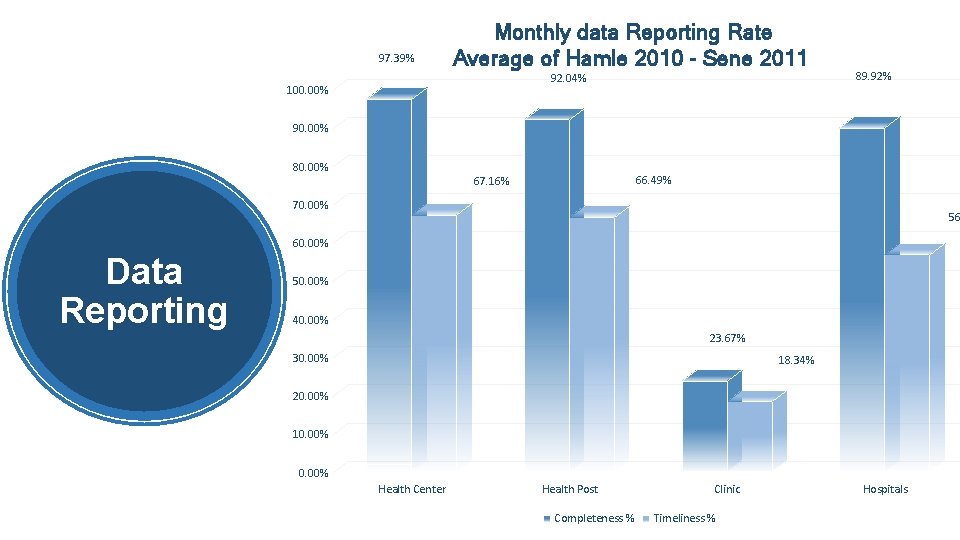
97. 39% Monthly data Reporting Rate Average of Hamle 2010 - Sene 2011 92. 04% 100. 00% 89. 92% 90. 00% 80. 00% 66. 49% 67. 16% 70. 00% 56 60. 00% Data Reporting 50. 00% 40. 00% 23. 67% 30. 00% 18. 34% 20. 00% 10. 00% Health Center Health Post Completeness % Clinic Timeliness % Hospitals
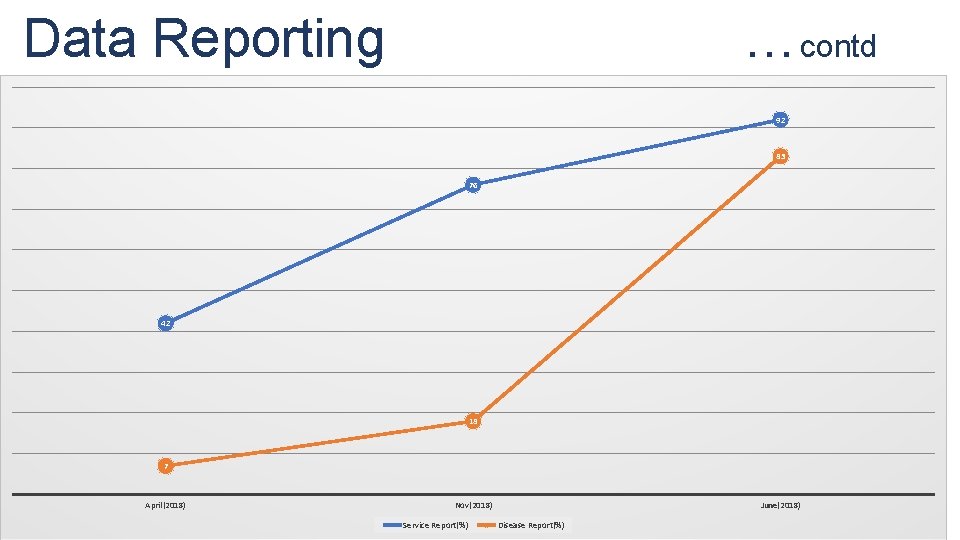
Data Reporting …contd 92 83 76 42 18 7 April(2018) Nov(2018) Service Report(%) June(2018) Disease Report(%)
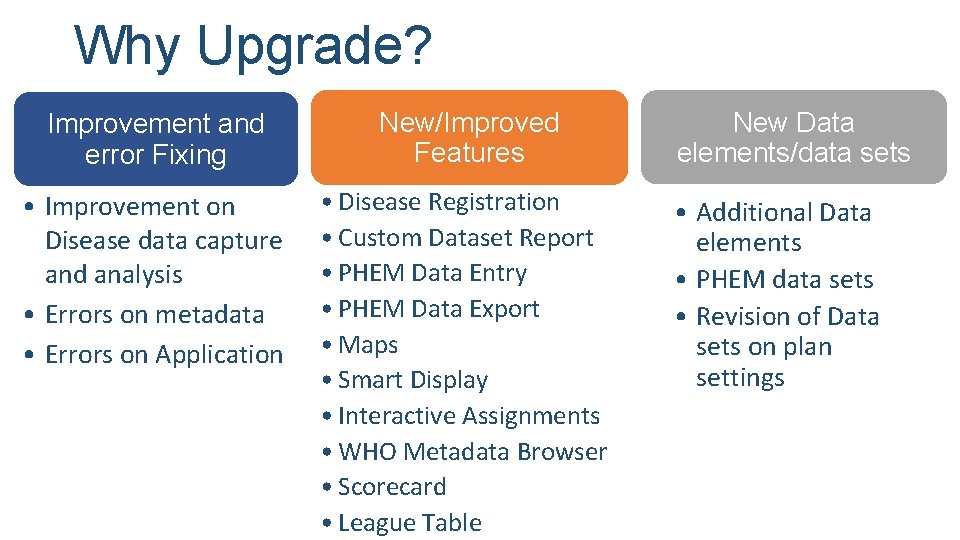
Why Upgrade? Improvement and error Fixing New/Improved Features • Improvement on Disease data capture and analysis • Errors on metadata • Errors on Application • Disease Registration • Custom Dataset Report • PHEM Data Entry • PHEM Data Export • Maps • Smart Display • Interactive Assignments • WHO Metadata Browser • Scorecard • League Table New Data elements/data sets • Additional Data elements • PHEM data sets • Revision of Data sets on plan settings
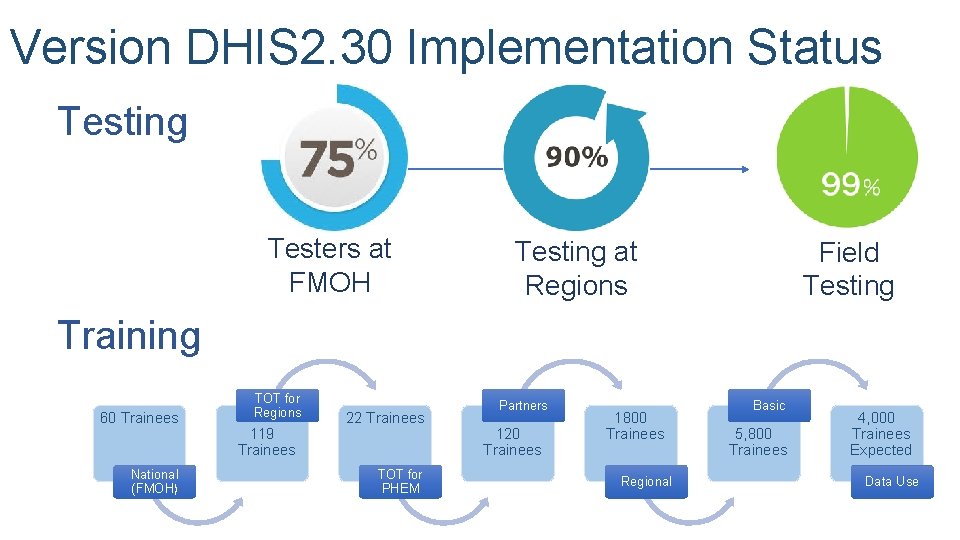
Version DHIS 2. 30 Implementation Status Testing Testers at FMOH Testing at Regions Field Testing Training 60 Trainees National (FMOH) TOT for Regions 119 Trainees 22 Trainees TOT for PHEM Partners 120 Trainees 1800 Trainees Regional Basic 5, 800 Trainees 4, 000 Trainees Expected Data Use
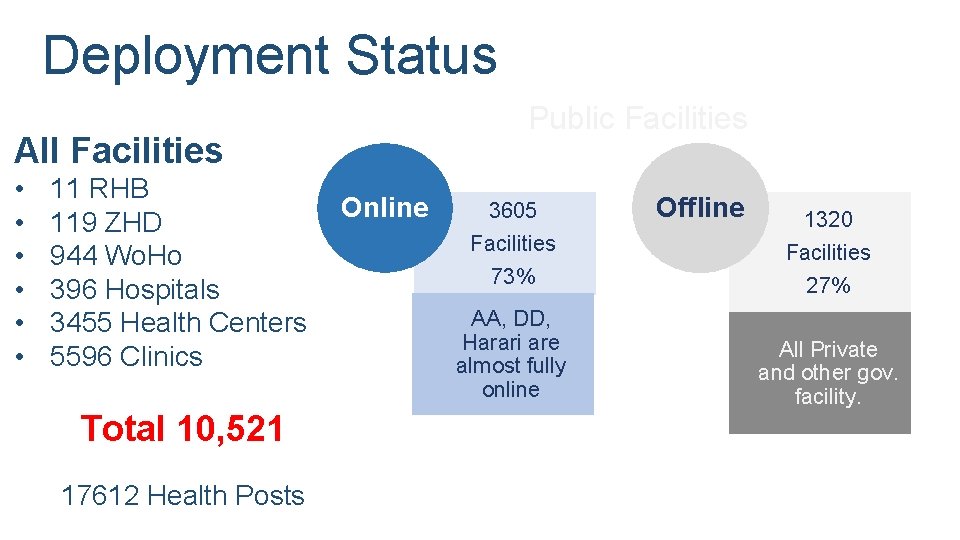
Deployment Status Public Facilities All Facilities • • • 11 RHB 119 ZHD 944 Wo. Ho 396 Hospitals 3455 Health Centers 5596 Clinics Total 10, 521 17612 Health Posts Online 3605 Facilities 73% AA, DD, Harari are almost fully online Offline 1320 Facilities 27% All Private and other gov. facility.
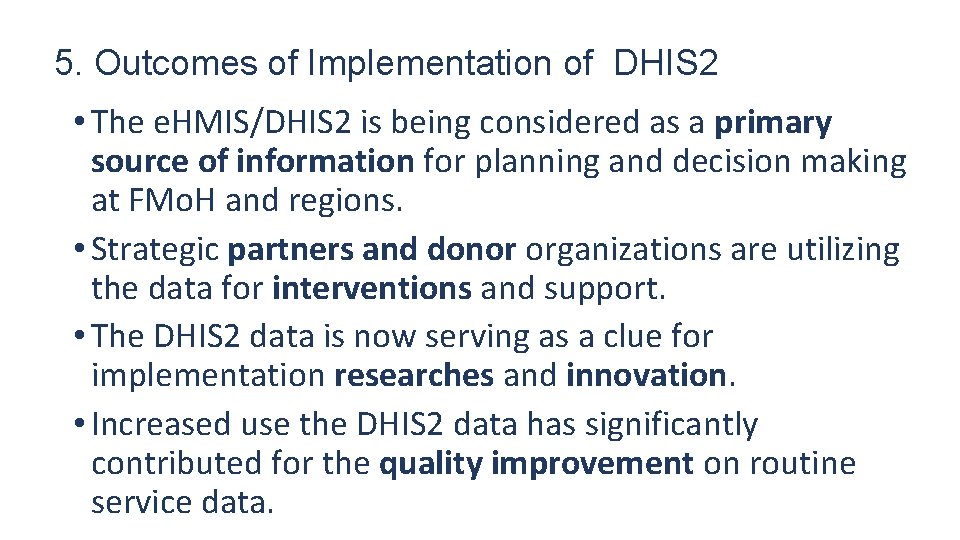
5. Outcomes of Implementation of DHIS 2 • The e. HMIS/DHIS 2 is being considered as a primary source of information for planning and decision making at FMo. H and regions. • Strategic partners and donor organizations are utilizing the data for interventions and support. • The DHIS 2 data is now serving as a clue for implementation researches and innovation. • Increased use the DHIS 2 data has significantly contributed for the quality improvement on routine service data.
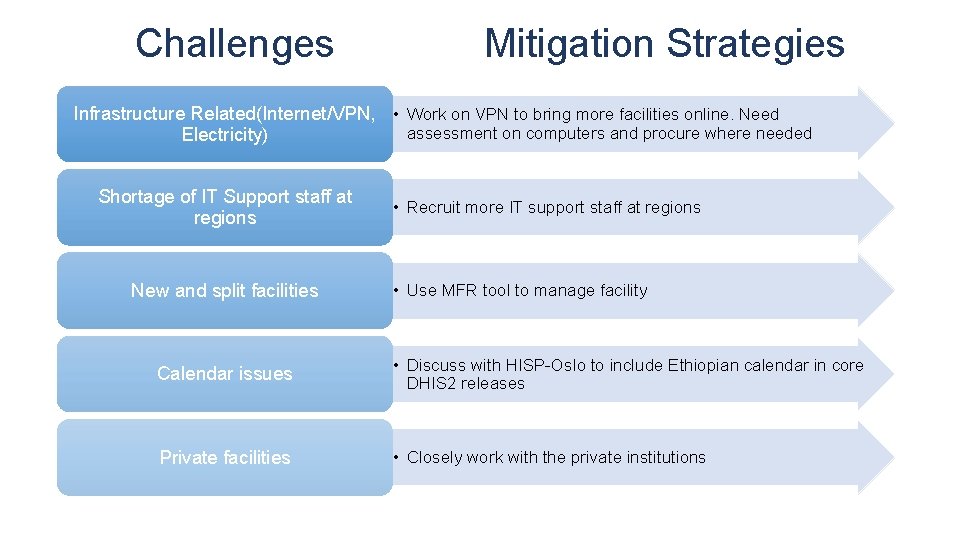
Challenges Mitigation Strategies Infrastructure Related(Internet/VPN, • Work on VPN to bring more facilities online. Need assessment on computers and procure where needed Electricity) Shortage of IT Support staff at regions New and split facilities • Recruit more IT support staff at regions • Use MFR tool to manage facility Calendar issues • Discuss with HISP-Oslo to include Ethiopian calendar in core DHIS 2 releases Private facilities • Closely work with the private institutions
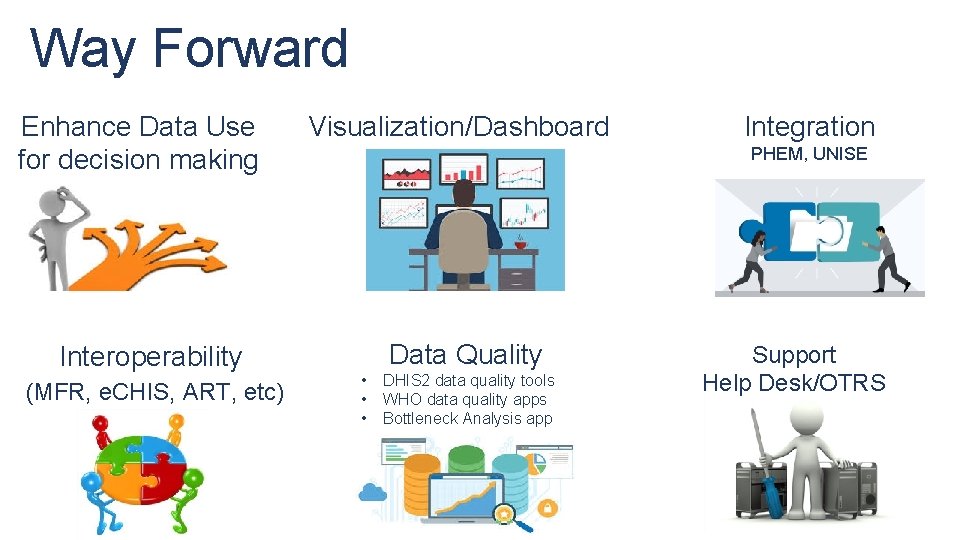
Way Forward Enhance Data Use for decision making Interoperability (MFR, e. CHIS, ART, etc) Visualization/Dashboard Integration PHEM, UNISE Data Quality • • • DHIS 2 data quality tools WHO data quality apps Bottleneck Analysis app Support Help Desk/OTRS
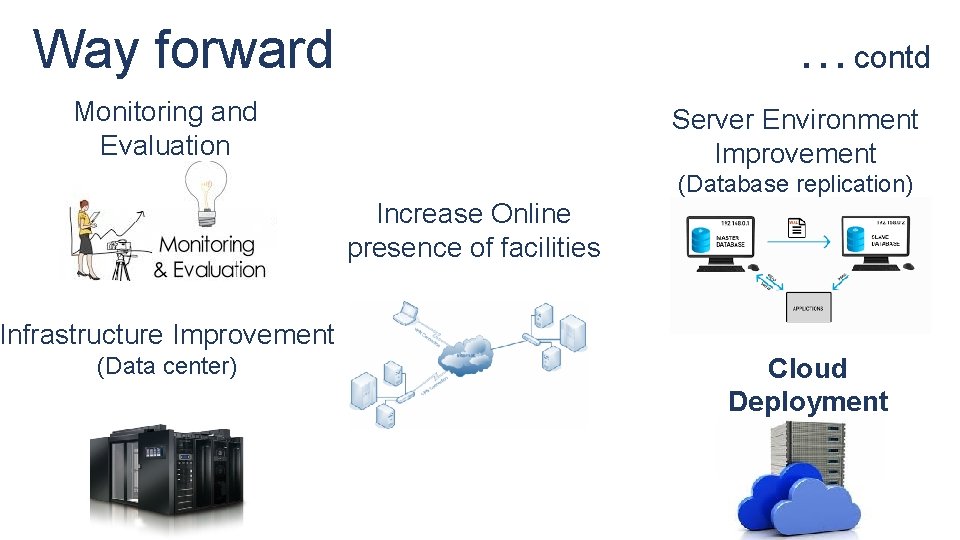
Way forward …contd Monitoring and Evaluation Server Environment Improvement (Database replication) Increase Online presence of facilities Infrastructure Improvement (Data center) Cloud Deployment
Thank You!