Denise Coffey MSN RN Skin Assessment Review AP
- Slides: 16
Denise Coffey MSN, RN Skin Assessment
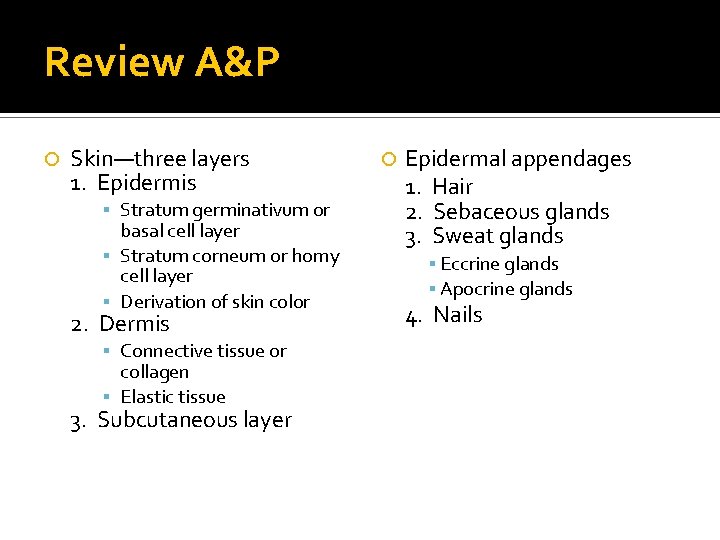
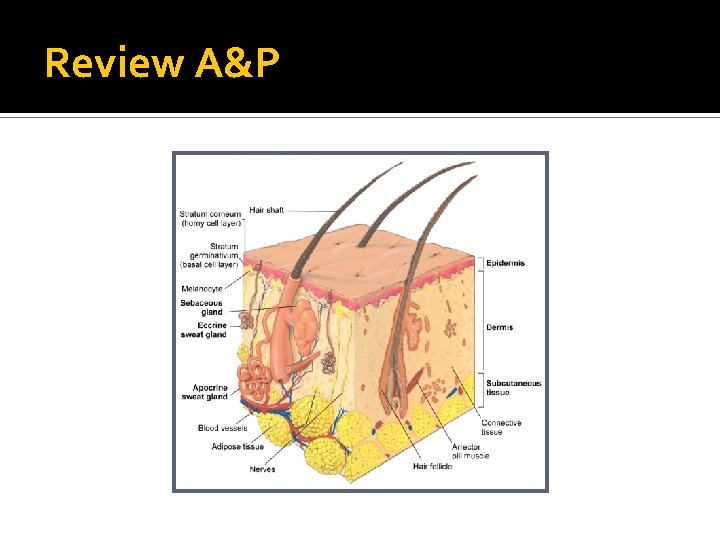
Review A&P Skin—three layers 1. Epidermis Stratum germinativum or basal cell layer Stratum corneum or horny cell layer Derivation of skin color 2. Dermis Connective tissue or collagen Elastic tissue 3. Subcutaneous layer Epidermal appendages 1. Hair 2. Sebaceous glands 3. Sweat glands Eccrine glands Apocrine glands 4. Nails
Review A&P
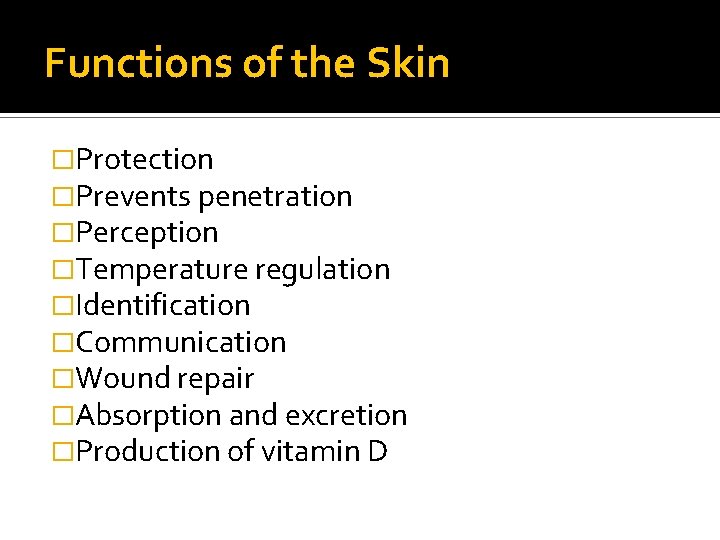
Functions of the Skin �Protection �Prevents penetration �Perception �Temperature regulation �Identification �Communication �Wound repair �Absorption and excretion �Production of vitamin D
Subjective Data �Previous history of skin disease (allergies, hives, psoriasis, or eczema) �Change in mole �Change in pigmentation (size or color) �Excessive dryness or moisture �Pruritus �Excessive bruising
Objective Data �Skin—Inspect and palpate �Color General pigmentation Widespread color change ▪ Pallor ▪ Erythema ▪ Cyanosis ▪ Jaundice
Objective Data �Skin—Inspect and palpate (cont. ) �Temperature Hypothermia Hyperthermia �Moisture Diaphoresis Dehydration
�Skin—Inspect and palpate (cont. ) �Texture �Thickness �Edema �Mobility and turgor �Vascularity or bruising
Objective Data �Skin—Inspect and palpate (cont. ) �Lesions Color Elevation Pattern or shape Size Location and distribution on body Exudate
�Promoting health and self-care �Teach skin self-examination, using the ABCDE rule A—asymmetry B—border C—color D—diameter E—elevation and enlargement
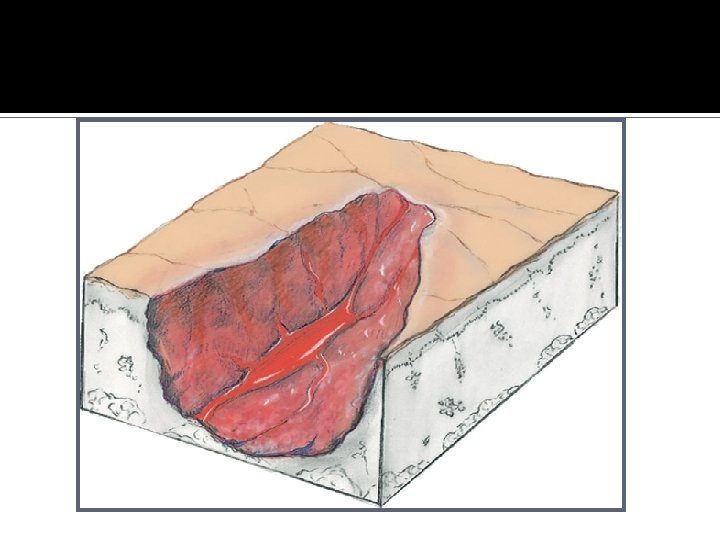
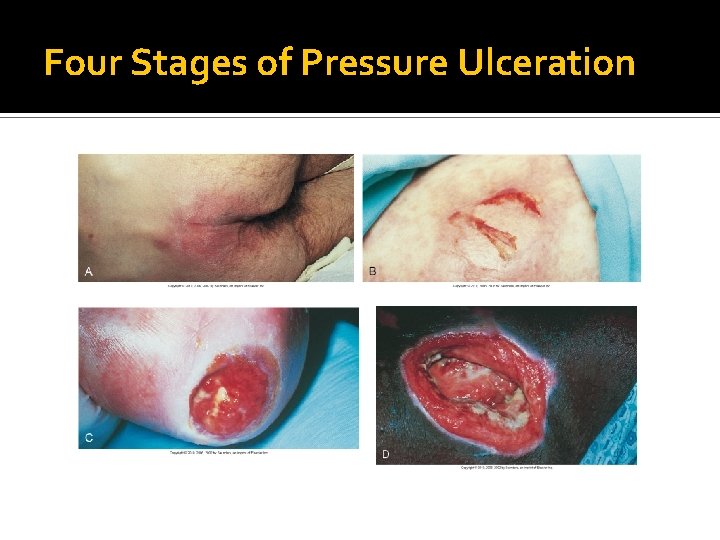
Four Stages of Pressure Ulceration
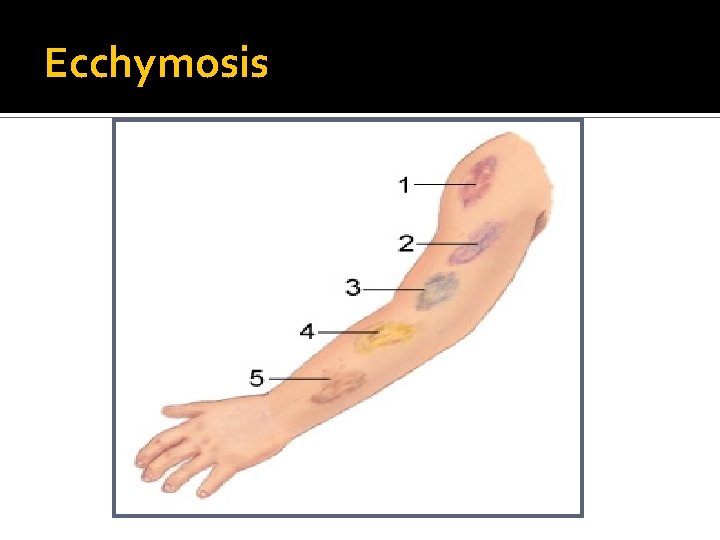
Ecchymosis
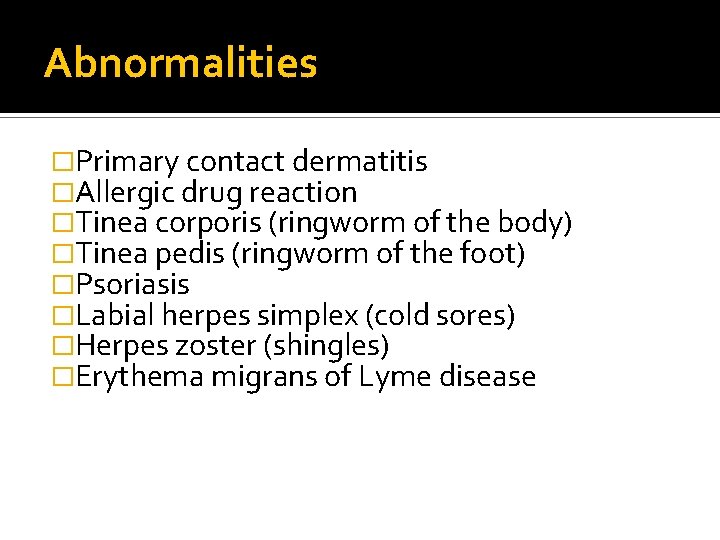
Abnormalities �Primary contact dermatitis �Allergic drug reaction �Tinea corporis (ringworm of the body) �Tinea pedis (ringworm of the foot) �Psoriasis �Labial herpes simplex (cold sores) �Herpes zoster (shingles) �Erythema migrans of Lyme disease
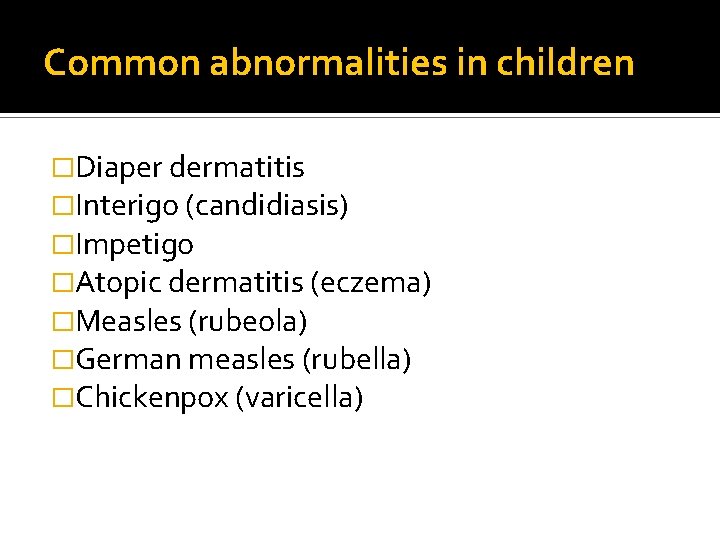
Common abnormalities in children �Diaper dermatitis �Interigo (candidiasis) �Impetigo �Atopic dermatitis (eczema) �Measles (rubeola) �German measles (rubella) �Chickenpox (varicella)
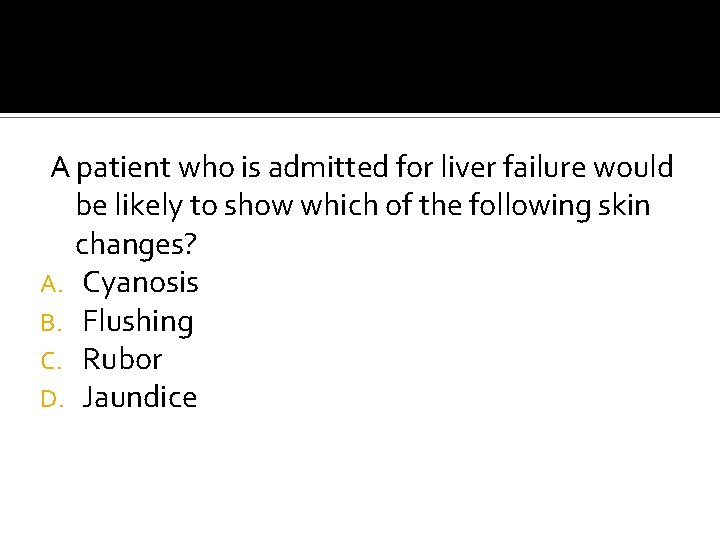
A patient who is admitted for liver failure would be likely to show which of the following skin changes? A. Cyanosis B. Flushing C. Rubor D. Jaundice







![Msn]](https://slidetodoc.com/wp-content/uploads/2020/12/3305482_b48b1a63b3813712ffceded1012692e7-300x225.jpg "Msn]")