Deconstruction Environmental Concerns and Real Life Lessons Learned


- Slides: 25
Deconstruction Environmental Concerns and Real Life Lessons Learned Jeff Cooper AECC & Andrew Erickson Home Headquarters
Topics for discussion �What is “deconstruction”? �Choosing the right deconstruction site �Hazardous � 2014 �Q Material 101 Deconstruction Pilot project &A
Deconstruction (definition): In the context of physical construction, deconstruction is the selective dismantlement of building components, specifically for re-use, recycling, and waste management. It differs from demolition where a site is cleared of its building by the most expedient means.
Why deconstruction? Diverts material from entering local landfills through recycling and creative reuse. • Creates jobs and job training opportunities for both urban cores and rural areas alike. • Provides an opportunity for small businesses to emerge and thrive. • Provides the same end result as traditional demolition, a vacant lot. •
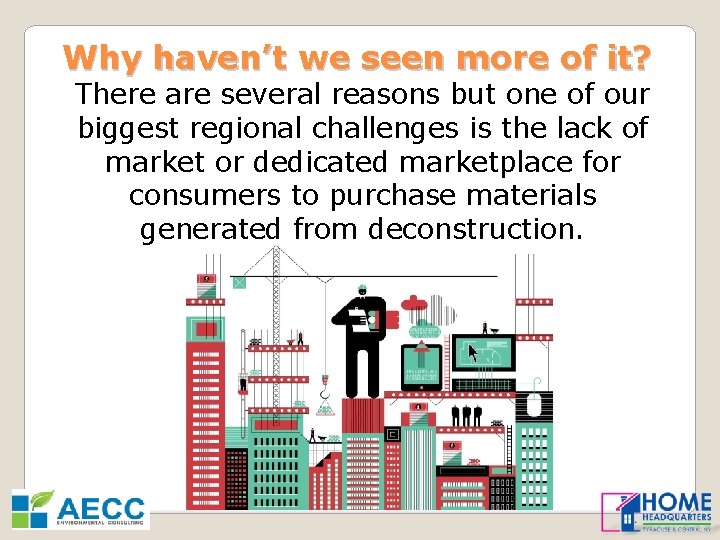
Why haven’t we seen more of it? There are several reasons but one of our biggest regional challenges is the lack of market or dedicated marketplace for consumers to purchase materials generated from deconstruction.
Know how to pick a winner! Start with Safety Is the building safe to enter? Can your contractors safely perform their jobs? Would you work inside? Perform an Environmental Assessment Know what to look for and commit to sampling suspect materials. Understand what building materials have value Architectural features, hardwoods, other valuable building materials make deconstruction worth it.
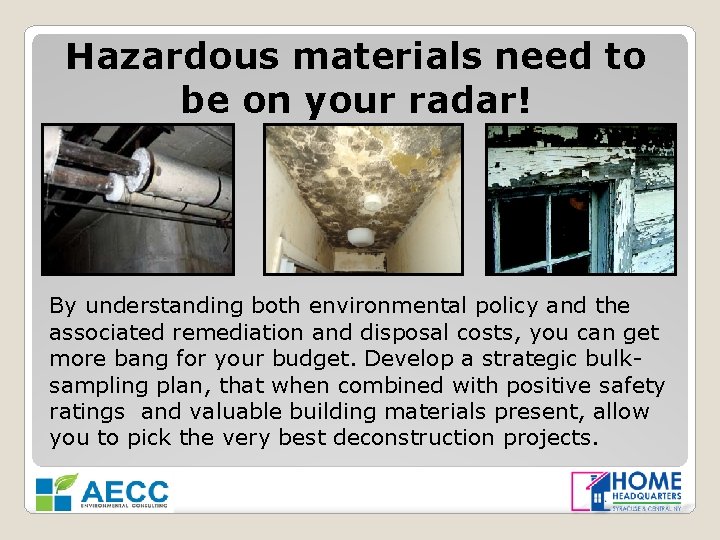
Hazardous materials need to be on your radar! By understanding both environmental policy and the associated remediation and disposal costs, you can get more bang for your budget. Develop a strategic bulksampling plan, that when combined with positive safety ratings and valuable building materials present, allow you to pick the very best deconstruction projects.
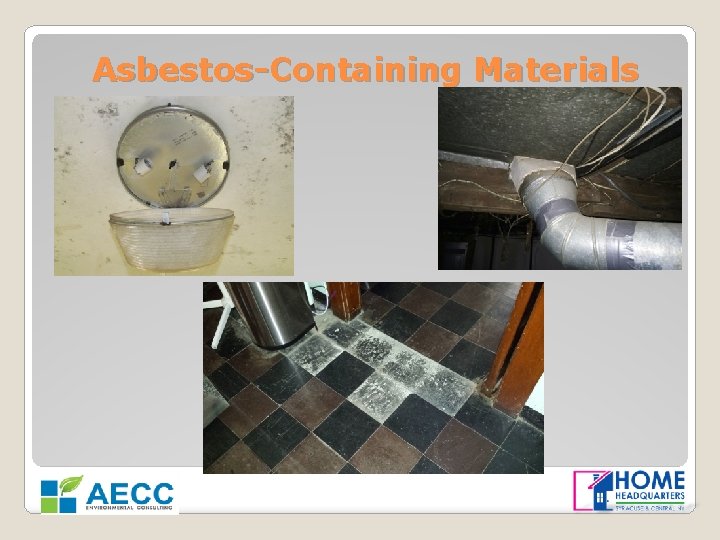
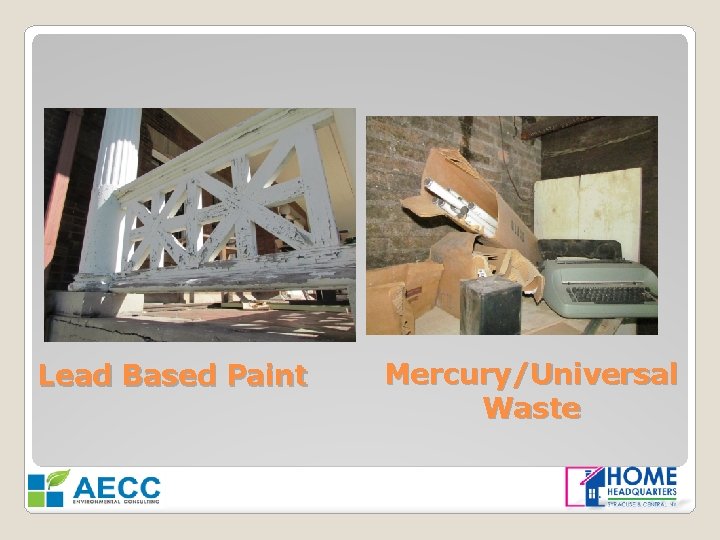
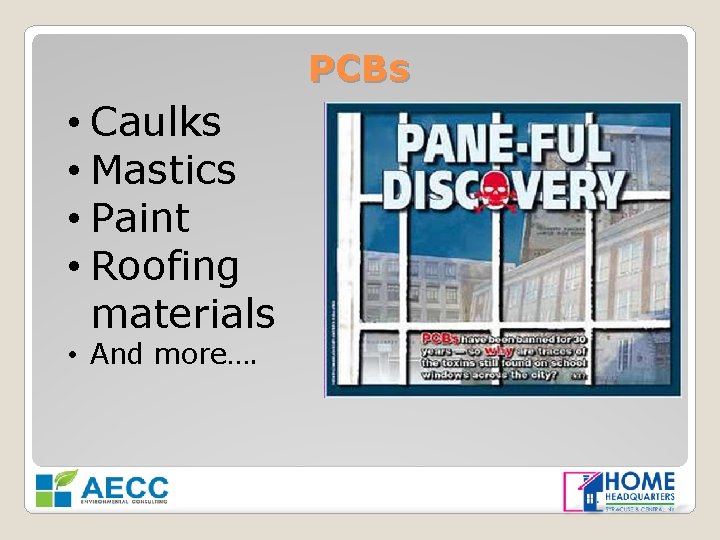
Commonly Found “Hazmats” �Asbestos �Lead-based Paint �Polychlorinated Biphenyls (PCBs) �Mercury �And much more….
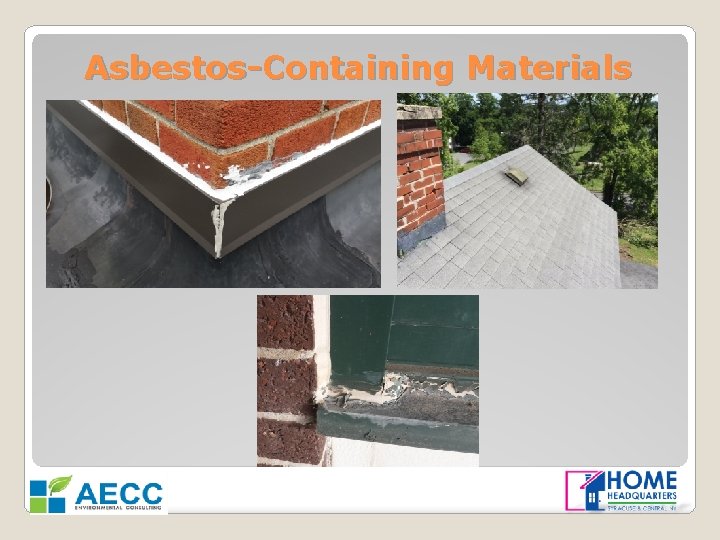
Asbestos-Containing Materials
Asbestos-Containing Materials
Lead Based Paint Mercury/Universal Waste
PCBs • Caulks • Mastics • Paint • Roofing materials • And more….
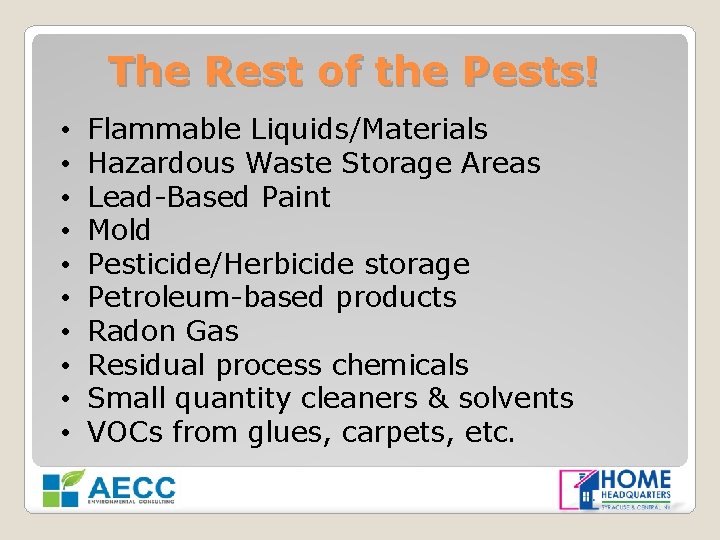
The Rest of the Pests! • • • Flammable Liquids/Materials Hazardous Waste Storage Areas Lead-Based Paint Mold Pesticide/Herbicide storage Petroleum-based products Radon Gas Residual process chemicals Small quantity cleaners & solvents VOCs from glues, carpets, etc.
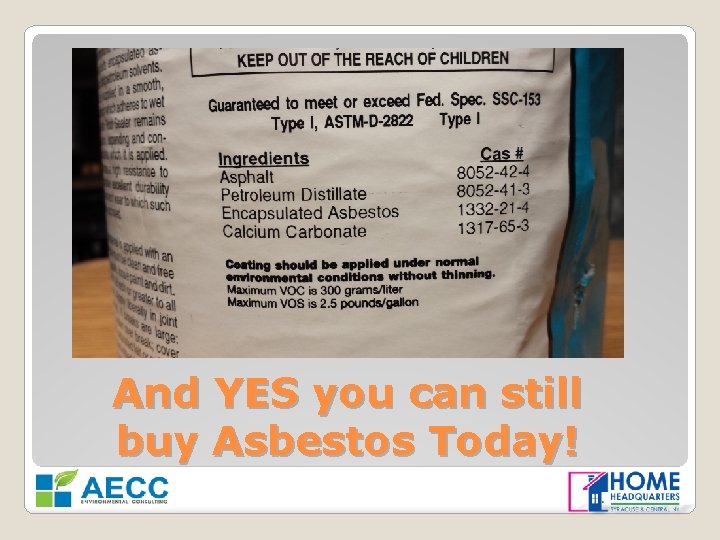
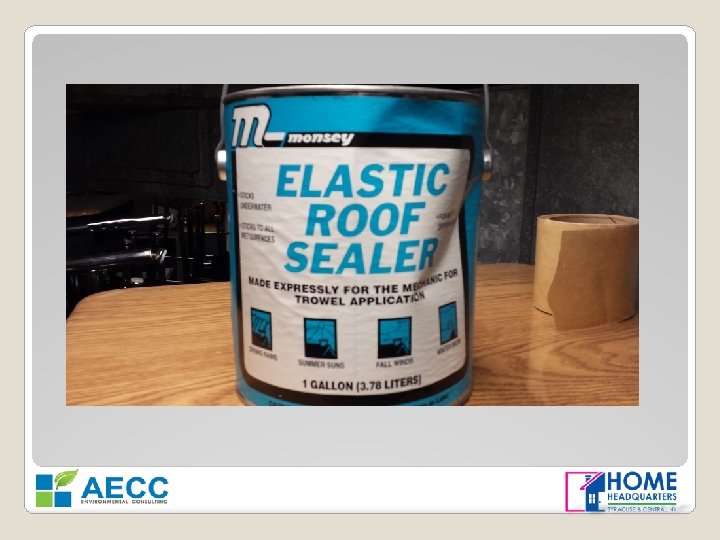
And YES you can still buy Asbestos Today!
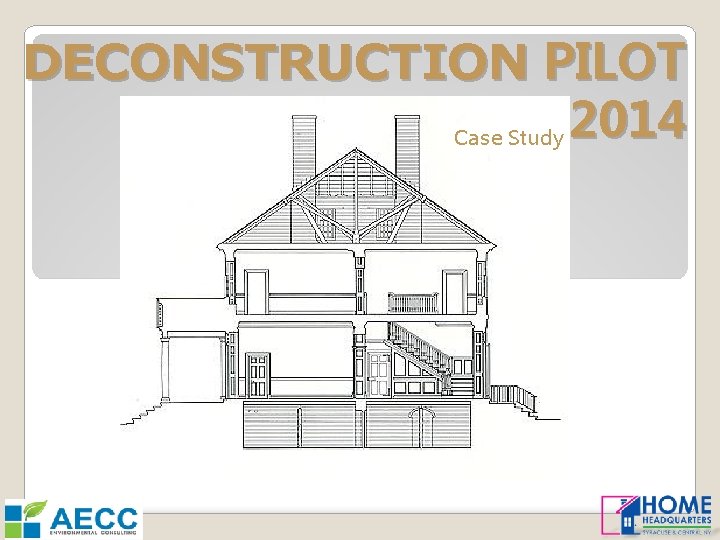
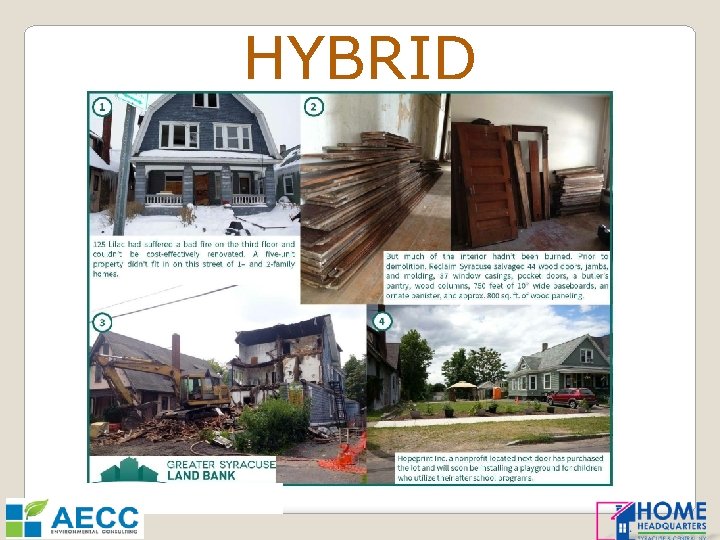
DECONSTRUCTION PILOT Case Study 2014
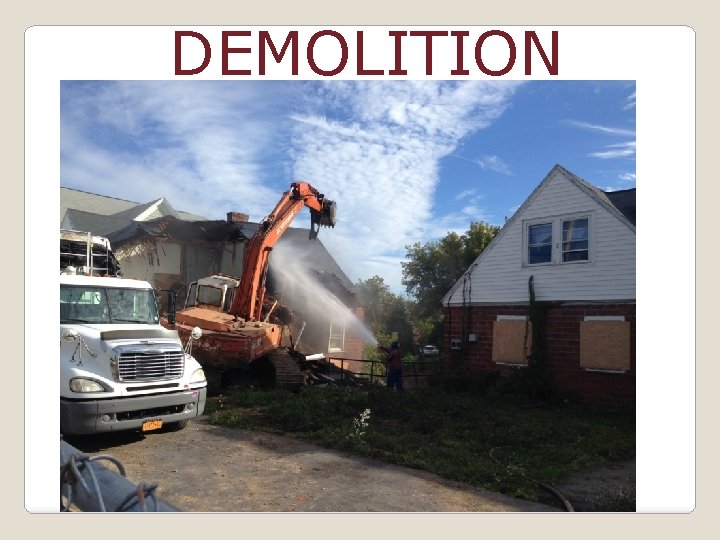
DEMOLITION
HYBRID
DECONSTRUCTION
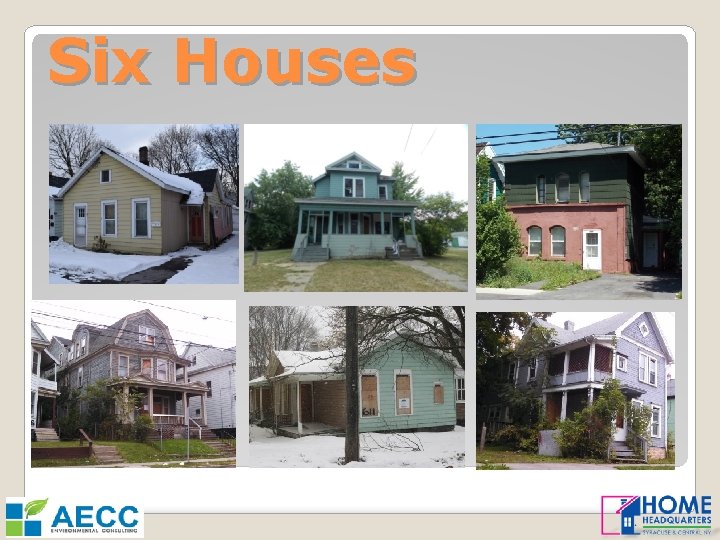
Six Houses
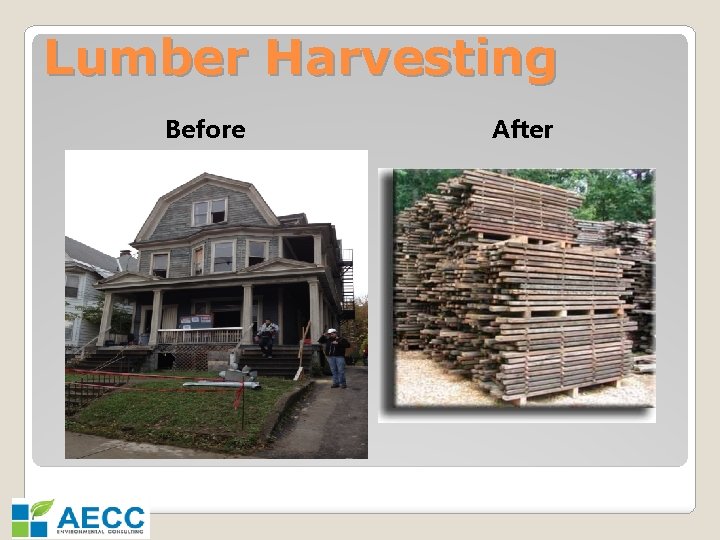
Lumber Harvesting Before After
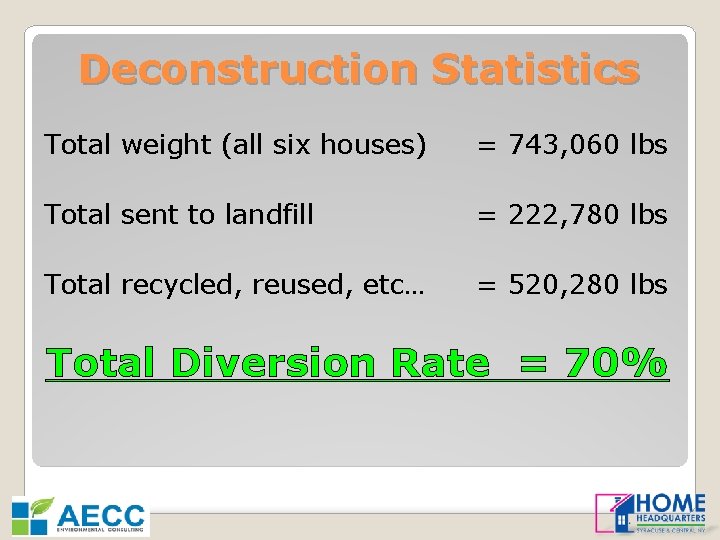
Deconstruction Statistics Total weight (all six houses) = 743, 060 lbs Total sent to landfill = 222, 780 lbs Total recycled, reused, etc… = 520, 280 lbs Total Diversion Rate = 70%
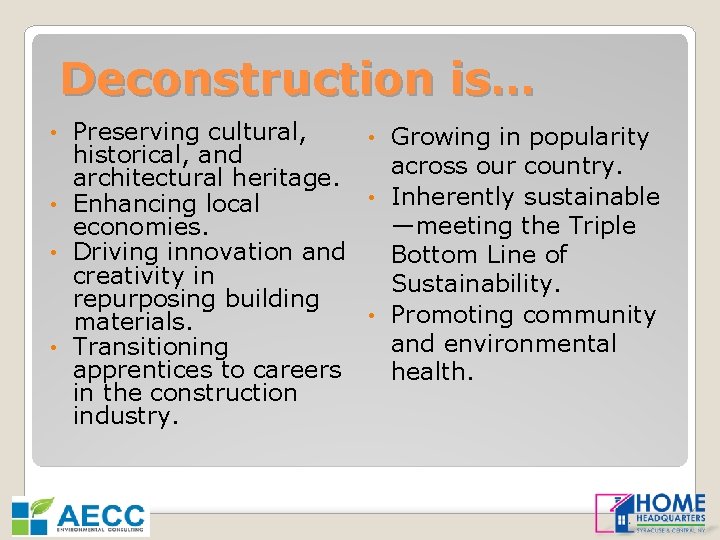
Deconstruction is… Preserving cultural, • Growing in popularity historical, and across our country. architectural heritage. • Inherently sustainable • Enhancing local —meeting the Triple economies. • Driving innovation and Bottom Line of creativity in Sustainability. repurposing building • Promoting community materials. and environmental • Transitioning apprentices to careers health. in the construction industry. •
Who’s Next? Building materials reclaimed from deconstruction projects are supporting new small businesses, creating jobs, and fostering innovation. Take a look at one of our area’s most recent success stories: https: //vimeo. com/81351854