
TAC 19 Ion Source And LEBT commissioning Lessons

TAC 19 Ion Source And LEBT commissioning Lessons Learned Saeed Haghtalab Karl Vestin www. europeanspallationsource. se 2019 -04 -12
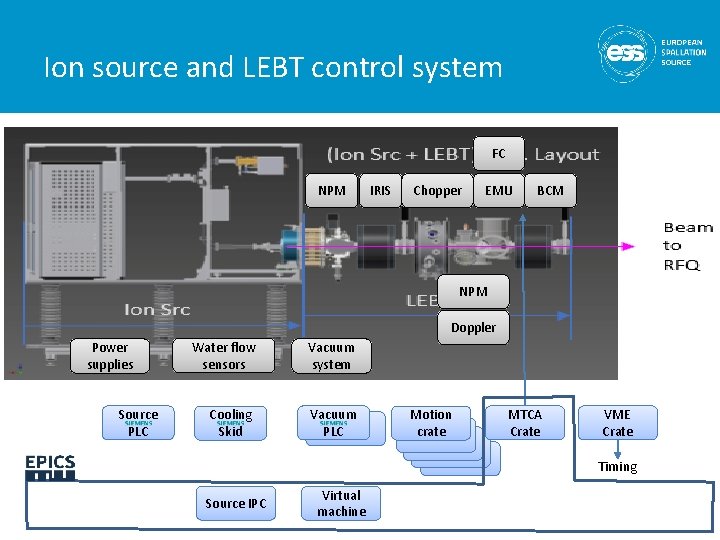
Ion source and LEBT control system FC NPM IRIS Chopper EMU BCM NPM Doppler Power supplies Source PLC Water flow sensors Vacuum system Cooling Skid Vacuum PLC Motion crate MTCA Crate VME Crate Timing Source IPC Virtual machine
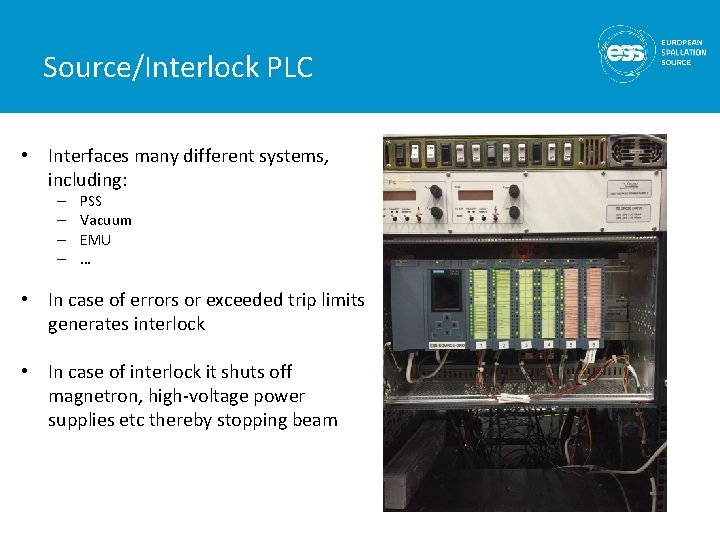
Source/Interlock PLC • Interfaces many different systems, including: – – PSS Vacuum EMU … • In case of errors or exceeded trip limits generates interlock • In case of interlock it shuts off magnetron, high-voltage power supplies etc thereby stopping beam
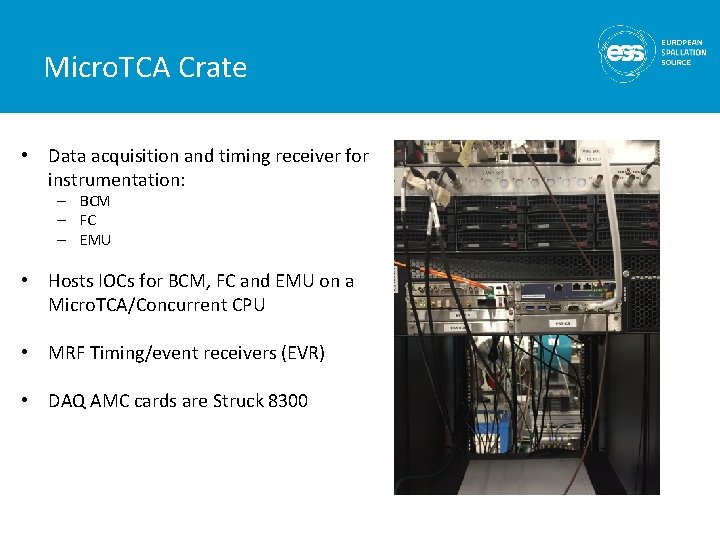
Micro. TCA Crate • Data acquisition and timing receiver for instrumentation: – BCM – FC – EMU • Hosts IOCs for BCM, FC and EMU on a Micro. TCA/Concurrent CPU • MRF Timing/event receivers (EVR) • DAQ AMC cards are Struck 8300
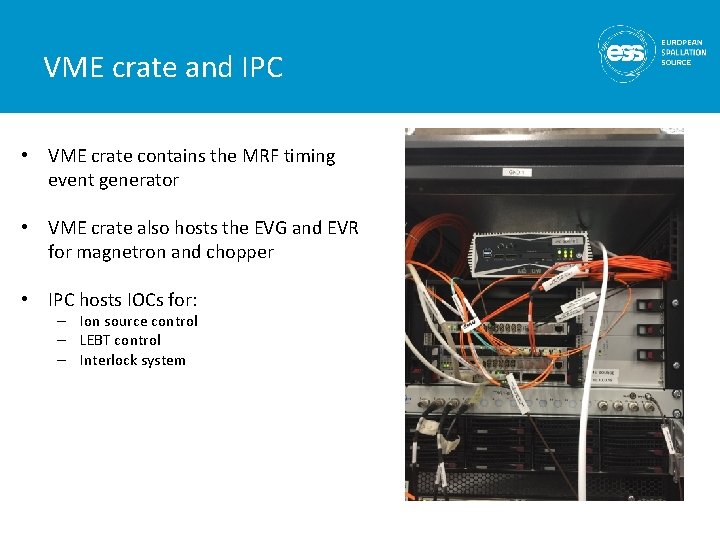
VME crate and IPC • VME crate contains the MRF timing event generator • VME crate also hosts the EVG and EVR for magnetron and chopper • IPC hosts IOCs for: – Ion source control – LEBT control – Interlock system
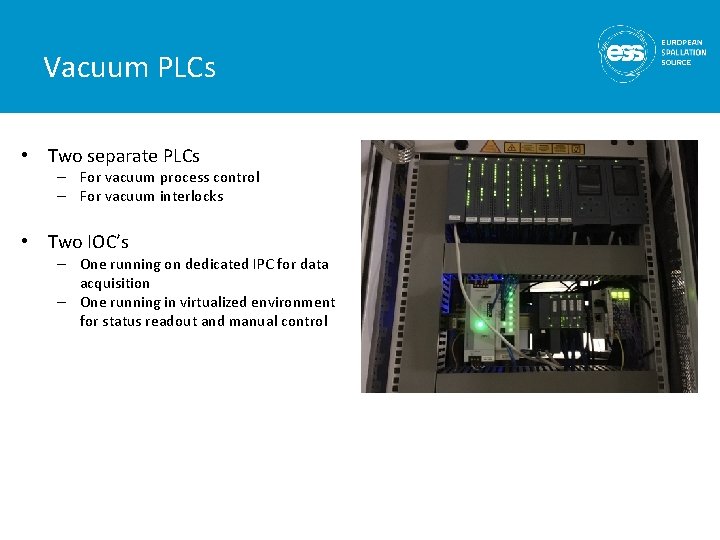
Vacuum PLCs • Two separate PLCs – For vacuum process control – For vacuum interlocks • Two IOC’s – One running on dedicated IPC for data acquisition – One running in virtualized environment for status readout and manual control
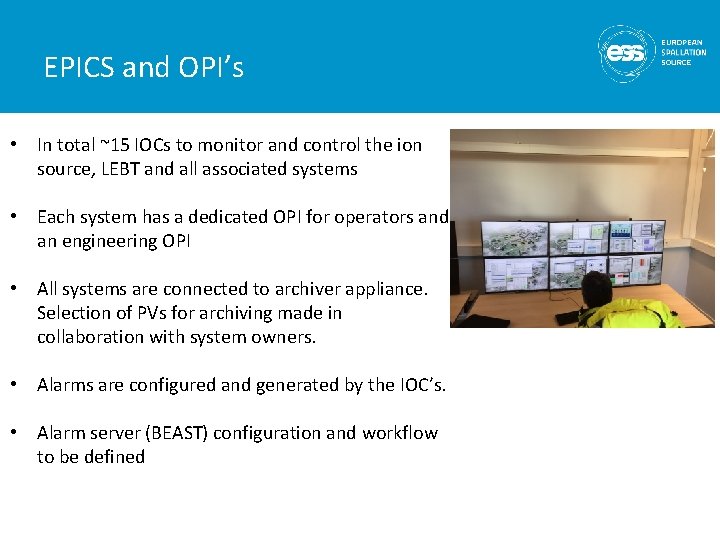
EPICS and OPI’s • In total ~15 IOCs to monitor and control the ion source, LEBT and all associated systems • Each system has a dedicated OPI for operators and an engineering OPI • All systems are connected to archiver appliance. Selection of PVs for archiving made in collaboration with system owners. • Alarms are configured and generated by the IOC’s. • Alarm server (BEAST) configuration and workflow to be defined
Delivery from in-kind Reinforce • Ion source, LEBT and associated control systems delivered as a consistent and tested unit • Constant work to clarify tasks with in-kind partner in a constructive and friendly manner Improve • The configuration used for testing during the Factory Acceptance Test (FAT) was not fully documented • Site Acceptance Test (SAT) should be conducted using a configuration matching the FAT configuration • The testing conducted during the FAT could have been more comprehensive. Ensure close interaction with in-kind partner prior to delivery to ensure fully documented configuration and comprehensive well-documented factory acceptance tests
Organization and planning Reinforce • Regular follow-up meetings in the cross-division commissioning team • Clear leadership for the commissioning planning • Agile and flexible approach to enable rapidly changing priorities Improve • Clarity in role and responsibility distribution • Planning of commissioning activities • Clarify role and responsibility for the “Declaration of Conformity” subproject Address commissioning as one cross-division “core team” with clearly defined roles and responsibilities. Engage proactively with the rest of the commissioning team to ensure better coordination of activities.
Installation Reinforce • Onsite presence of in-kind personnel during installation • Visibility and active participation to AD weekly meetings, specific NCL, SCL, AD project support meeting, commissioning coordination: we are often the last contributor to the final installation Improve • Avoid overlap of installation and commissioning activities • If critical installation activities (water/power) are significantly delayed the commissioning project needs to be re-planned, not just nudged a few days Follow installation progress and adjust commissioning plans to ensure realistic and relevant planning when the hectic commissioning period starts.
Commissioning Reinforce • We did get beam in the end. This was an accomplishment of ESS working as a team, all differences and arguments set aside. This should be commended and reinforced. Improve • Verification of control systems before commissioning. We had too many unexpected problems. • Establish a prioritized list for control systems early in order to allow for correct planning of work. • Avoid underestimating time and effort required for commissioning Work with in-kind contributors the reinforce verification and documentation of deliverables. Work with “core team” to have a clear prioritization of tasks. Do verification in controlled environments before commissioning.
- Slides: 11