DAFT SUPERVISION WORKSHOP Friday KATH WILLIAMSON AND LESLEY


- Slides: 23
DAFT SUPERVISION WORKSHOP Friday KATH WILLIAMSON AND LESLEY NOVELLE
What did we promise? • As practitioners we are all supervisees. Some of us are supervisors as well. This workshop will explore what we can do in supervision to make it work for us and develop good outcomes. There will be chance to practice techniques that can make the supervision experience more creative.
Aims • To explore ideas about and habits in supervision • To consider what are supervisors and supervisees responsibilities in supervision • To have some fun and play with the ideas you may take to supervision. • Learn from each other.
Supervisor/Supervisee? • Which position did you come with an interest in hearing about? • What attracted you to this workshop? • Introduce yourself and say what interested you about this workshop. (10 minutes)
Supervisor/Supervisee Exercise • Arrange into two groups • As supervisors or supervisees • Have discussion about the role and responsibilities of the group you are in (5 minutes) • Feedback key themes (10 minutes)
Supervisee Perspective • Identify practice issues with which you might need help • Become increasingly able to share freely (relationship? ) • Identify what response you want • Become more aware of organisational context which impacts on practice • Be open to feedback • Monitor tendencies to justify, explain or defend • Develop an ability to discriminate what feedback is useful Adapted from Hawkins and Shoet (2006)
questions/ 10 top tips • Should I prepare for supervision if so how? linked to function and purpose of supervision. • What is the purpose of supervision , i. e. training, peer, live, retrospective. • Is supervision therapy? • How is it contracted? • How is it recorded? • What do you tell clients about supervision? • How is quality considered and maintained?
What is Systemic Supervision • Contextually based • Contemporarily based • Looks at patterning in relationships and the influences on behaviour and beliefs. • It is reflexive and based on examining ones own relationships. • It focuses on inner and outer conversations and the importance/emphasis placed on these. Gorell Barnes, Gill and Mc. Cann, Damien (2000) A portable guide for supervision training
What is supervision concerned with? • The Association of Family Therapy has developed guidelines for supervision which highlight four key areas with which supervision is concerned: – Practice – Personal Development – Theory – Ethics (AFT red book, AFT code of conduct for Supervisors).
Function and Purpose Carroll (1996) invites us to think about both the function and purpose of supervision: • The primary purpose of supervision can be considered as “ensuring the welfare of clients and enhancing the development of the supervisee in work”. • Its functions could be described as “ providing education, support and evaluation against the norms and standards of the profession and society. • Considering the context of the supervision is important
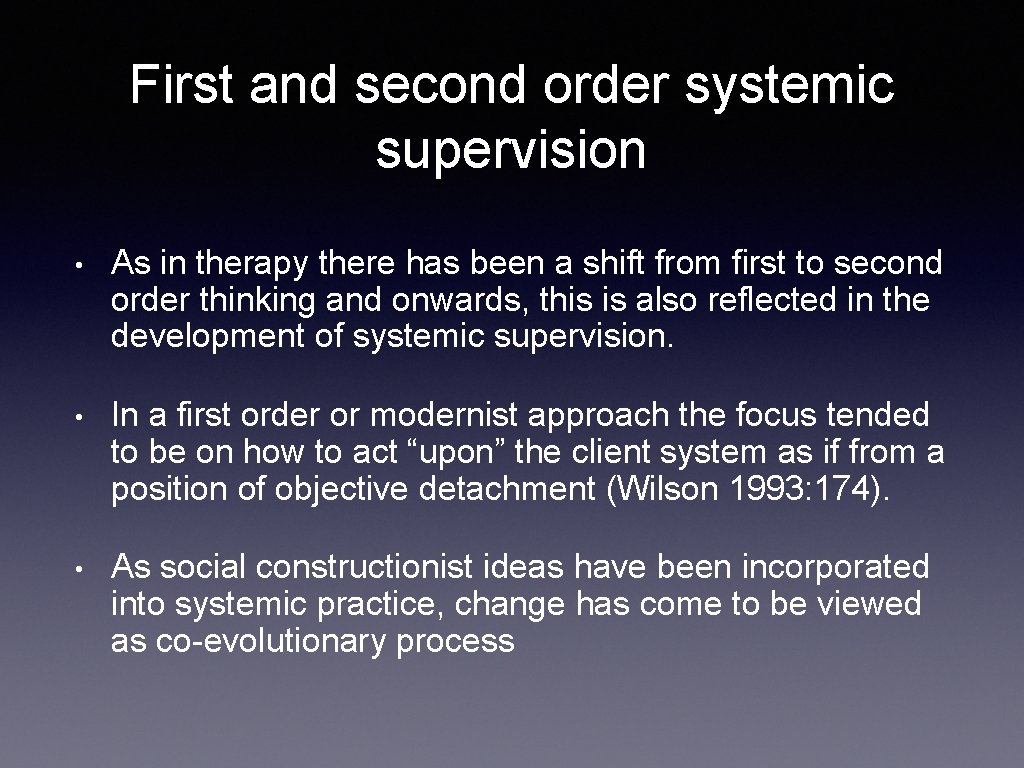
First and second order systemic supervision • As in therapy there has been a shift from first to second order thinking and onwards, this is also reflected in the development of systemic supervision. • In a first order or modernist approach the focus tended to be on how to act “upon” the client system as if from a position of objective detachment (Wilson 1993: 174). • As social constructionist ideas have been incorporated into systemic practice, change has come to be viewed as co-evolutionary process
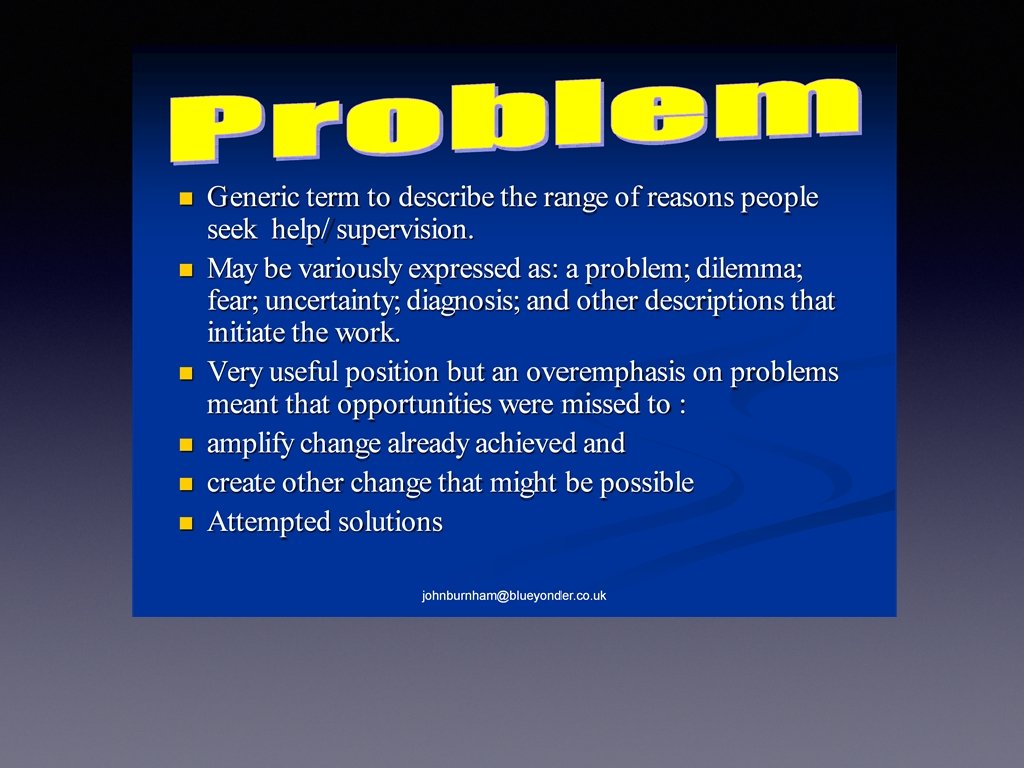
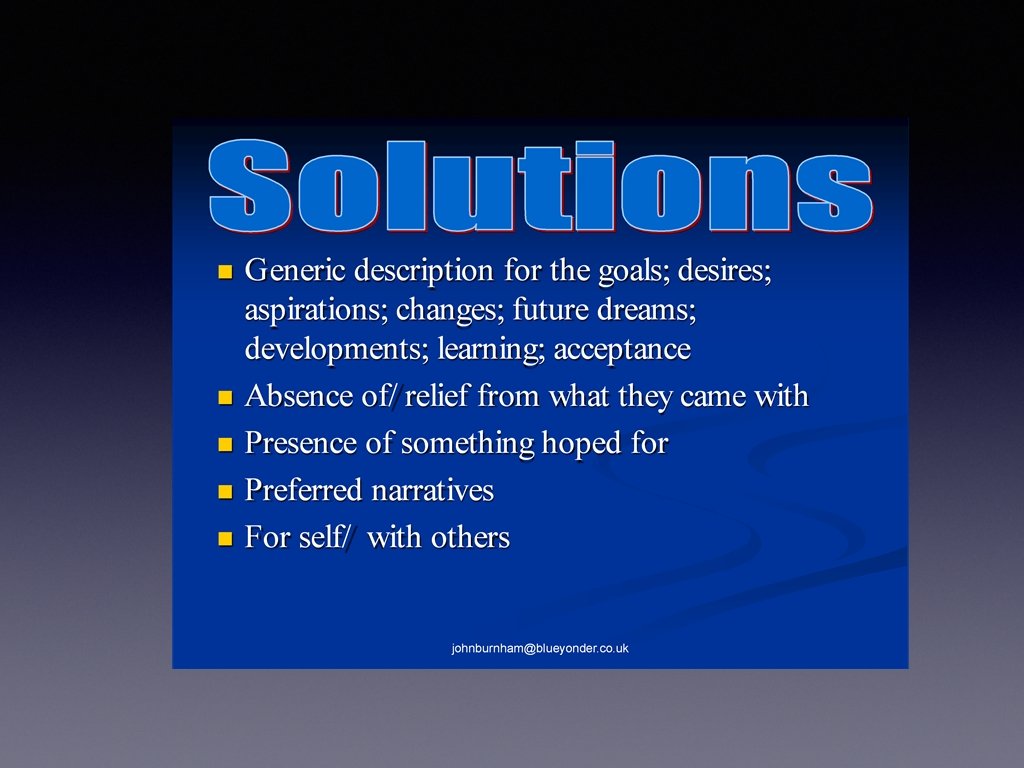
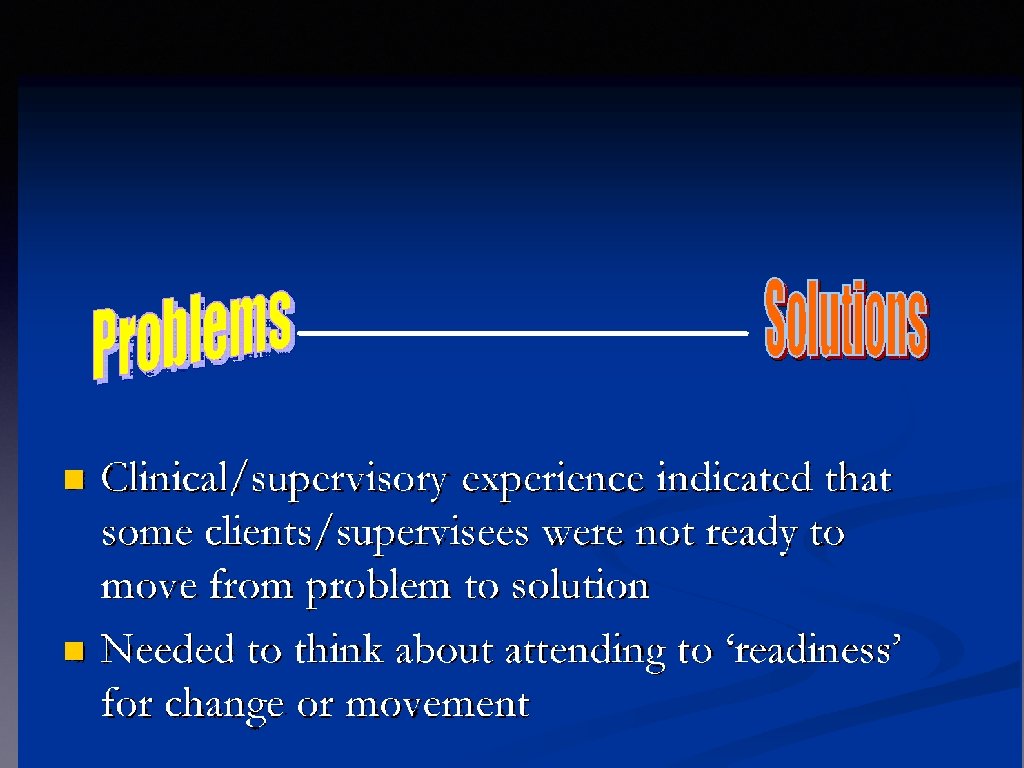
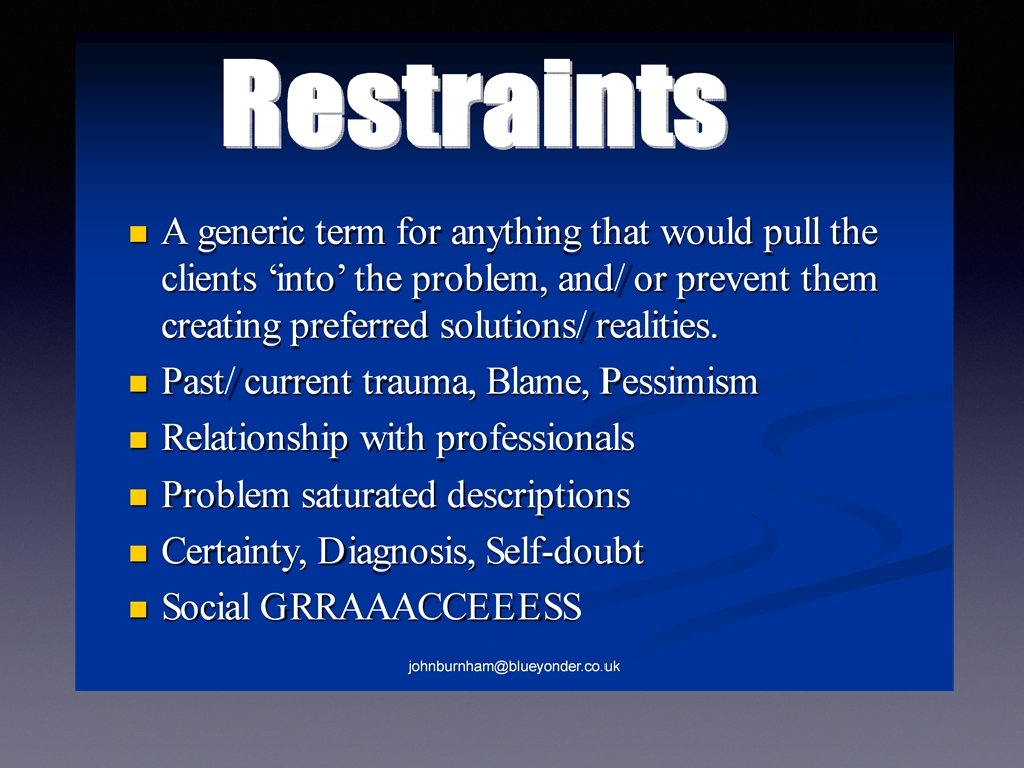
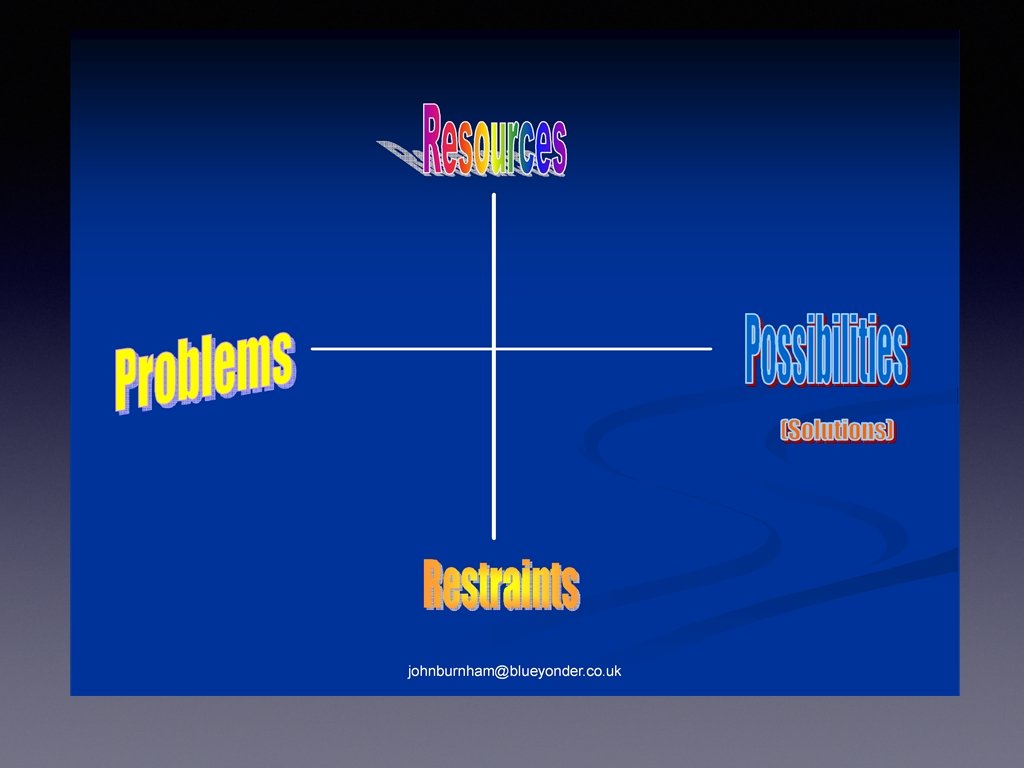
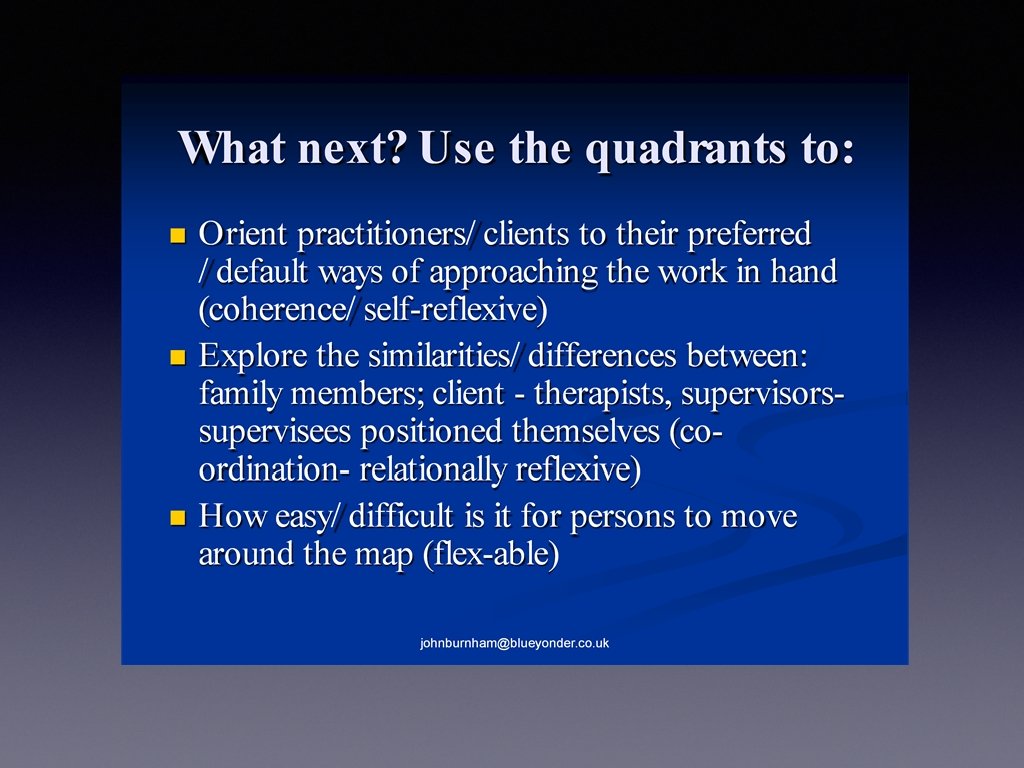
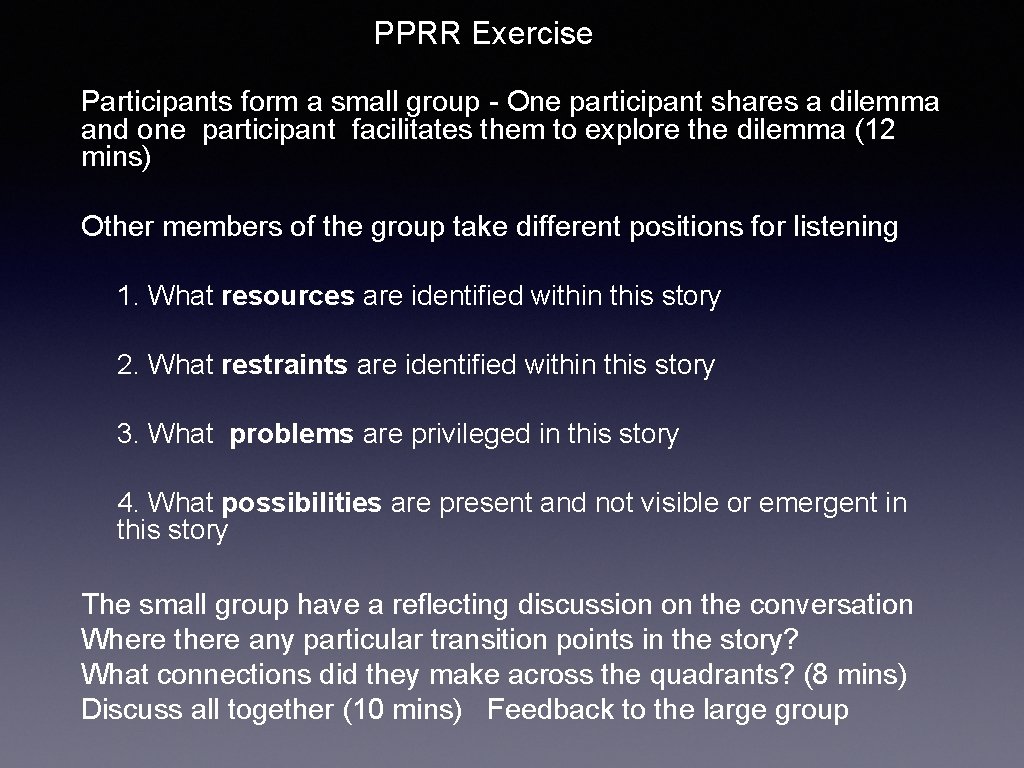
Exploring Problems, Possibilities, Restraints and Resources in Supervision PPRR
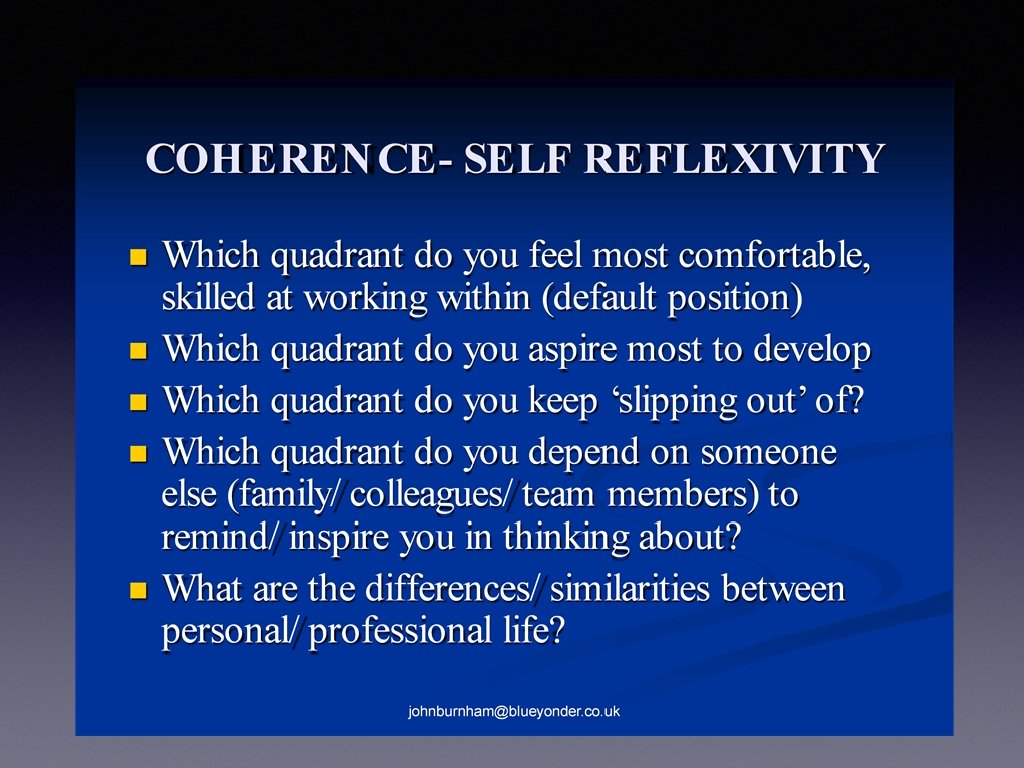
PPRR Exercise Participants form a small group - One participant shares a dilemma and one participant facilitates them to explore the dilemma (12 mins) Other members of the group take different positions for listening 1. What resources are identified within this story 2. What restraints are identified within this story 3. What problems are privileged in this story 4. What possibilities are present and not visible or emergent in this story The small group have a reflecting discussion on the conversation Where there any particular transition points in the story? What connections did they make across the quadrants? (8 mins) Discuss all together (10 mins) Feedback to the large group
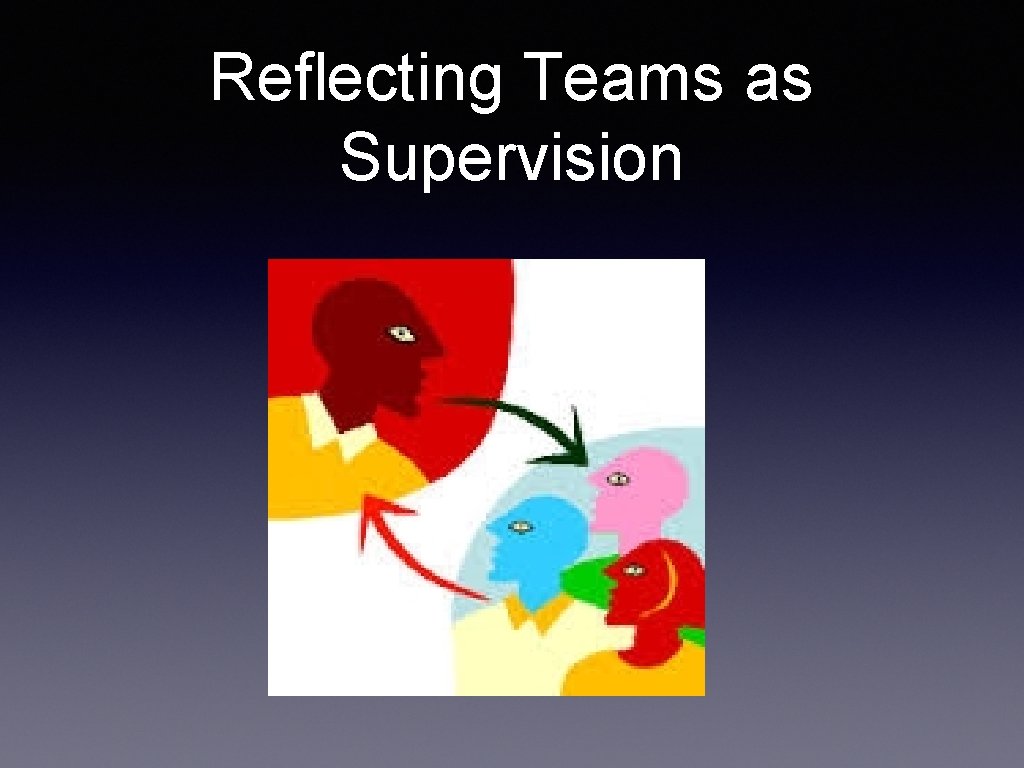
Reflecting Teams as Supervision
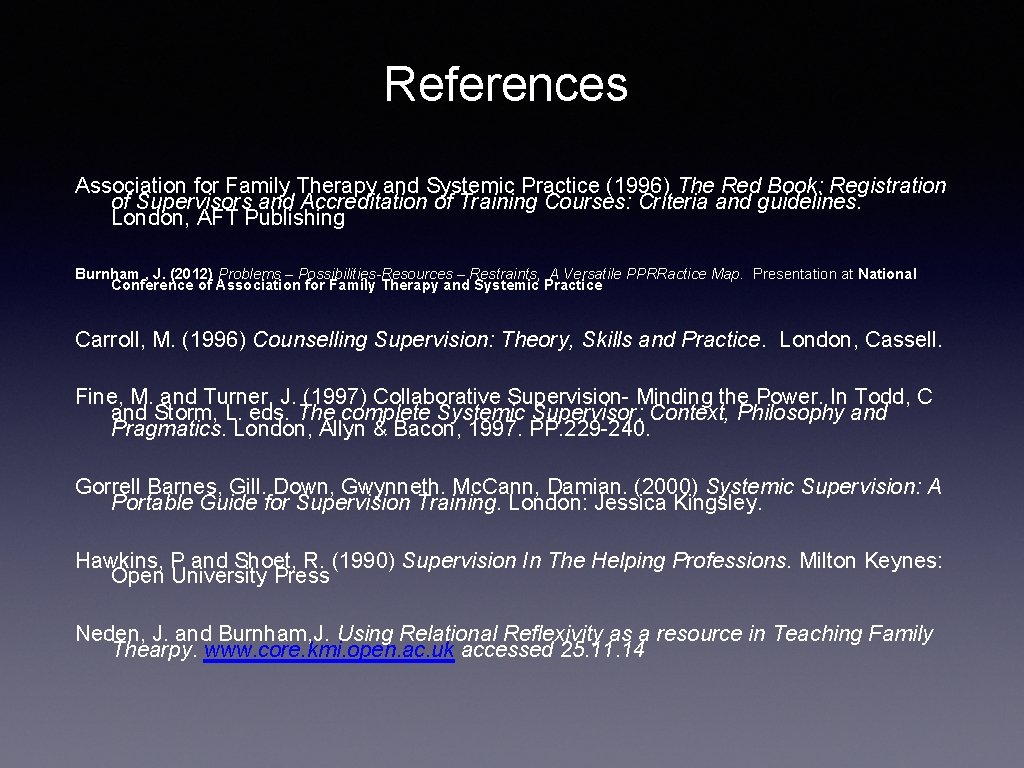
References Association for Family Therapy and Systemic Practice (1996) The Red Book: Registration of Supervisors and Accreditation of Training Courses: Criteria and guidelines. London, AFT Publishing Burnham , J. (2012) Problems – Possibilities-Resources – Restraints, A Versatile PPRRactice Map. Presentation at National Conference of Association for Family Therapy and Systemic Practice Carroll, M. (1996) Counselling Supervision: Theory, Skills and Practice. London, Cassell. Fine, M. and Turner, J. (1997) Collaborative Supervision- Minding the Power. In Todd, C and Storm, L. eds. The complete Systemic Supervisor: Context, Philosophy and Pragmatics. London, Allyn & Bacon, 1997. PP. 229 -240. Gorrell Barnes, Gill. Down, Gwynneth. Mc. Cann, Damian. (2000) Systemic Supervision: A Portable Guide for Supervision Training. London: Jessica Kingsley. Hawkins, P and Shoet, R. (1990) Supervision In The Helping Professions. Milton Keynes: Open University Press Neden, J. and Burnham, J. Using Relational Reflexivity as a resource in Teaching Family Thearpy. www. core. kmi. open. ac. uk accessed 25. 11. 14