Cyrus the Great 2 Conquest of Lydia Greek




- Slides: 9
Cyrus the Great 2. Conquest of Lydia
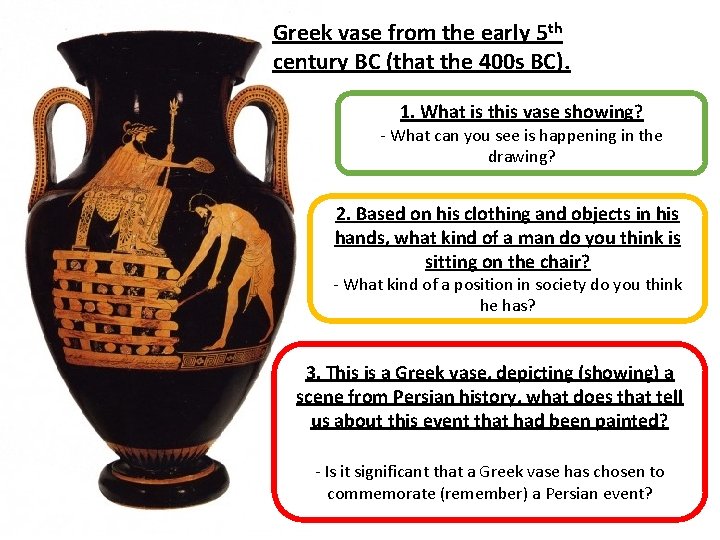
Greek vase from the early 5 th century BC (that the 400 s BC). 1. What is this vase showing? - What can you see is happening in the drawing? 2. Based on his clothing and objects in his hands, what kind of a man do you think is sitting on the chair? - What kind of a position in society do you think he has? 3. This is a Greek vase, depicting (showing) a scene from Persian history, what does that tell us about this event that had been painted? - Is it significant that a Greek vase has chosen to commemorate (remember) a Persian event?
Title: The Conquest of Lydia Lesson Objectives: L. O. to understand the reasons why Croesus decided to attack Persia. L. O. to explain the events of the conquest. L. O. to analyse the character of Cyrus. February 2021 RRR: how did Cyrus conquer Lydia?
We are going to be looking at the conquest of the area of Lydia, which took Cyrus’ Persian empire right up to the shores of the Aegean sea.
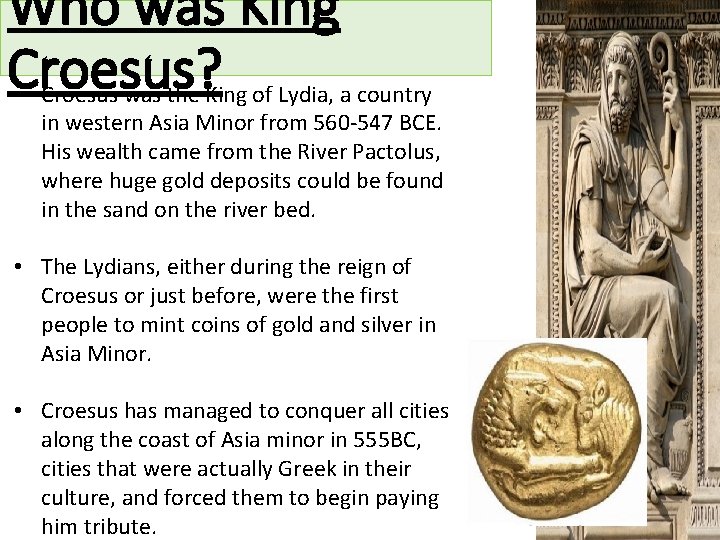
Who was King Croesus? • Croesus was the King of Lydia, a country in western Asia Minor from 560 -547 BCE. His wealth came from the River Pactolus, where huge gold deposits could be found in the sand on the river bed. • The Lydians, either during the reign of Croesus or just before, were the first people to mint coins of gold and silver in Asia Minor. • Croesus has managed to conquer all cities along the coast of Asia minor in 555 BC, cities that were actually Greek in their culture, and forced them to begin paying him tribute.
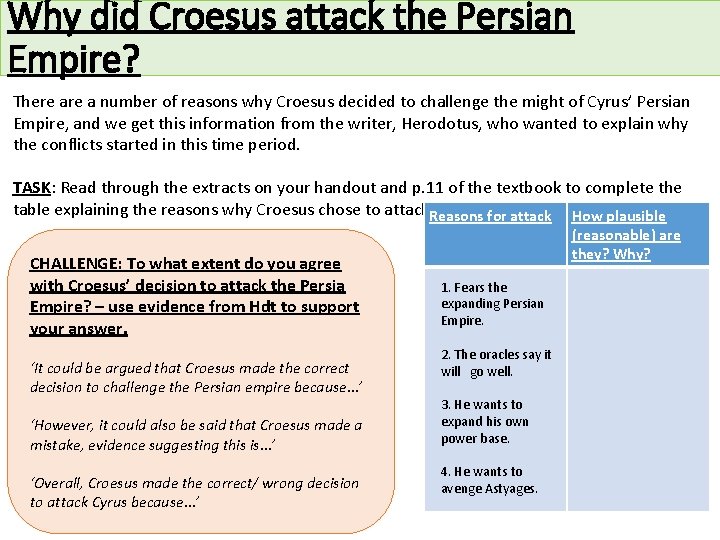
Why did Croesus attack the Persian Empire? There a number of reasons why Croesus decided to challenge the might of Cyrus’ Persian Empire, and we get this information from the writer, Herodotus, who wanted to explain why the conflicts started in this time period. TASK: Read through the extracts on your handout and p. 11 of the textbook to complete the table explaining the reasons why Croesus chose to attack. Reasons the Persia for Empire. attack How plausible CHALLENGE: To what extent do you agree with Croesus’ decision to attack the Persia Empire? – use evidence from Hdt to support your answer. ‘It could be argued that Croesus made the correct decision to challenge the Persian empire because…’ ‘However, it could also be said that Croesus made a mistake, evidence suggesting this is…’ ‘Overall, Croesus made the correct/ wrong decision to attack Cyrus because…’ (reasonable) are they? Why? 1. Fears the expanding Persian Empire. 2. The oracles say it will go well. 3. He wants to expand his own power base. 4. He wants to avenge Astyages.
The conquest of Lydia Read the flow chart of the progress of the conquest of Lydia and answer the flowing questions; 1. Which would you argue are three most significant events in the conquest? 2. What is the turning point in the conquest, when Cyrus’ win becomes inevitable (couldn’t be avoided)? 3. Which factor was most important in Croesus losing to Cyrus? – why did Croesus lose? CHALLENGE: What does the conquest of Lydia tell us about Cyrus as a leader, and how he helped the Persian empire expand? ‘The conquest of Lydia demonstrates that as a King, Cyrus was…’ ‘His leadership as king helped the Persian empire expand because…’
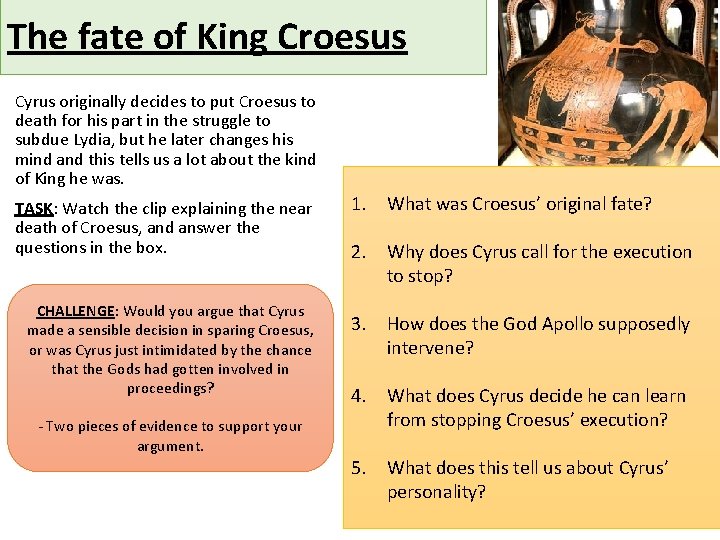
The fate of King Croesus Cyrus originally decides to put Croesus to death for his part in the struggle to subdue Lydia, but he later changes his mind and this tells us a lot about the kind of King he was. TASK: Watch the clip explaining the near death of Croesus, and answer the questions in the box. CHALLENGE: Would you argue that Cyrus made a sensible decision in sparing Croesus, or was Cyrus just intimidated by the chance that the Gods had gotten involved in proceedings? - Two pieces of evidence to support your argument. 1. What was Croesus’ original fate? 2. Why does Cyrus call for the execution to stop? 3. How does the God Apollo supposedly intervene? 4. What does Cyrus decide he can learn from stopping Croesus’ execution? 5. What does this tell us about Cyrus’ personality?
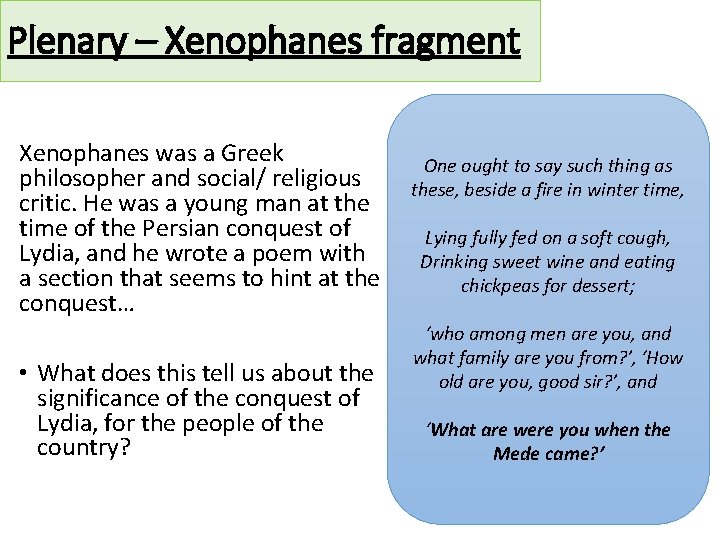
Plenary – Xenophanes fragment Xenophanes was a Greek philosopher and social/ religious critic. He was a young man at the time of the Persian conquest of Lydia, and he wrote a poem with a section that seems to hint at the conquest… • What does this tell us about the significance of the conquest of Lydia, for the people of the country? One ought to say such thing as these, beside a fire in winter time, Lying fully fed on a soft cough, Drinking sweet wine and eating chickpeas for dessert; ‘who among men are you, and what family are you from? ’, ‘How old are you, good sir? ’, and ‘What are were you when the Mede came? ’