Current Trends in Athletic Training Heather Harvey MA


- Slides: 27
Current Trends in Athletic Training Heather Harvey, MA, ATC Mike Fernandez, ATC, PTA, ITAT Chase Paulson, MS, ATC
Athletic Training Today Introduction What an Athletic Trainer Can Do for You Emergencies in Athletics Implementing Health and Safety Laws in Athletics
Certified Athletic Trainer Education Clinical Skills Athletic Training Today www. bocatc. org www. nata. org Nationally vs. in California Regulation Advocacy www. ca-at. org www. Atyourownrisk. org
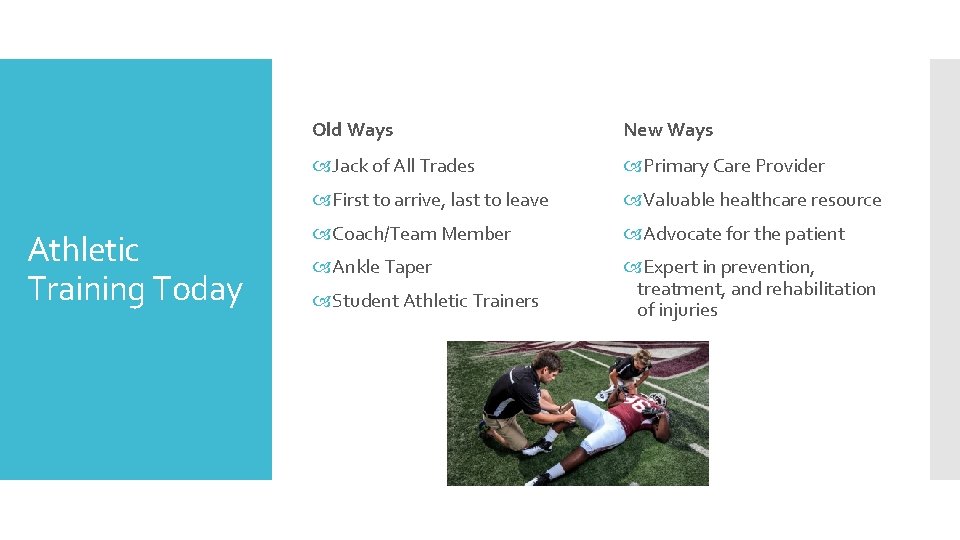
Athletic Training Today Old Ways New Ways Jack of All Trades Primary Care Provider First to arrive, last to leave Valuable healthcare resource Coach/Team Member Advocate for the patient Ankle Taper Expert in prevention, treatment, and rehabilitation of injuries Student Athletic Trainers
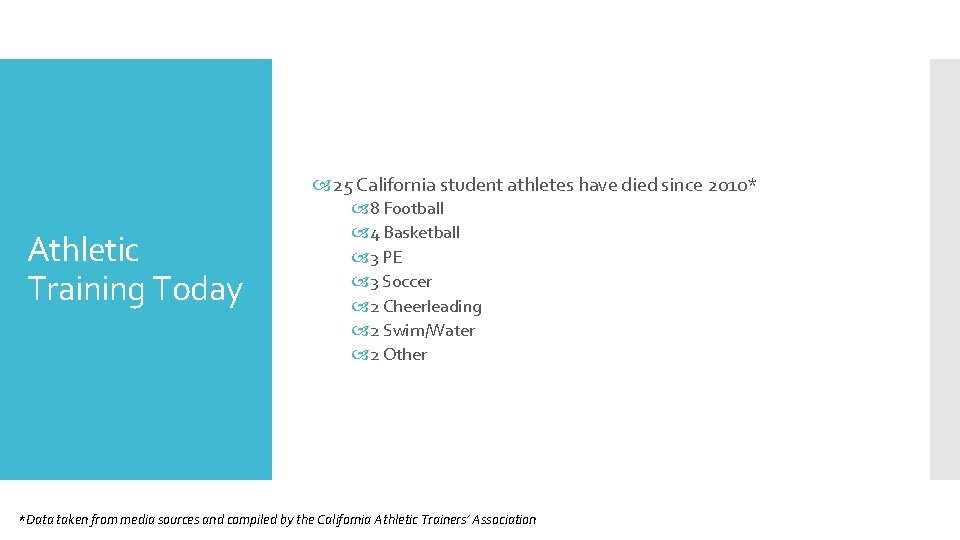
25 California student athletes have died since 2010* Athletic Training Today 8 Football 4 Basketball 3 PE 3 Soccer 2 Cheerleading 2 Swim/Water 2 Other *Data taken from media sources and compiled by the California Athletic Trainers’ Association
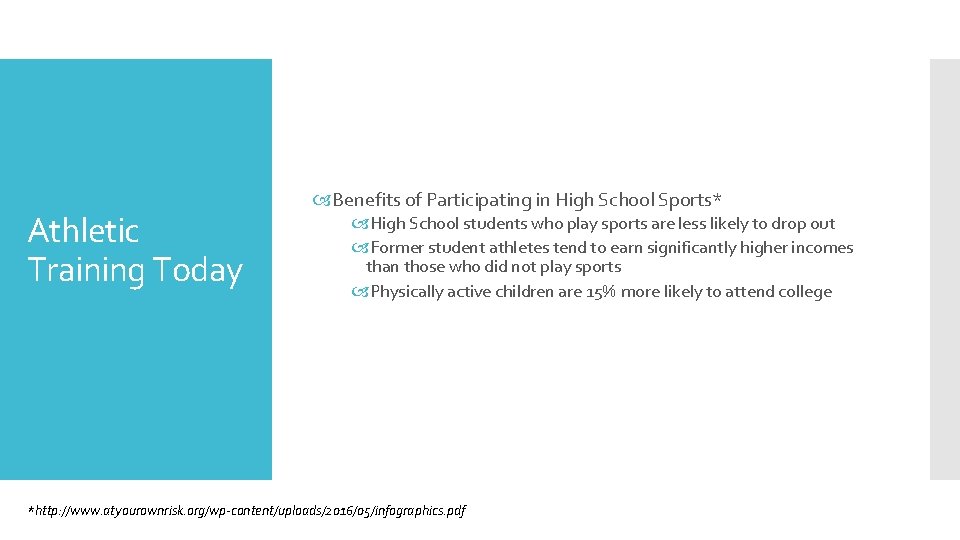
Athletic Training Today Benefits of Participating in High School Sports* High School students who play sports are less likely to drop out Former student athletes tend to earn significantly higher incomes than those who did not play sports Physically active children are 15% more likely to attend college *http: //www. atyourownrisk. org/wp-content/uploads/2016/05/infographics. pdf
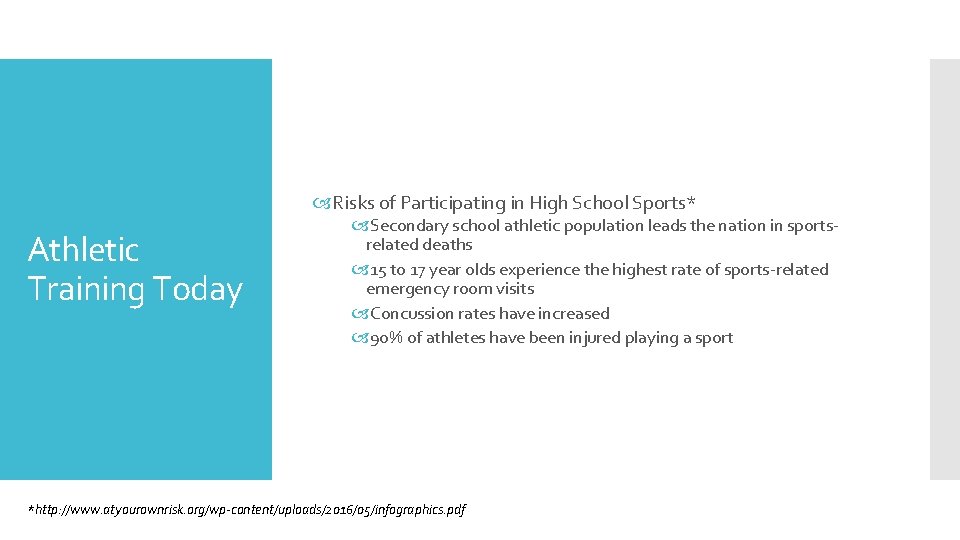
Risks of Participating in High School Sports* Athletic Training Today Secondary school athletic population leads the nation in sportsrelated deaths 15 to 17 year olds experience the highest rate of sports-related emergency room visits Concussion rates have increased 90% of athletes have been injured playing a sport *http: //www. atyourownrisk. org/wp-content/uploads/2016/05/infographics. pdf
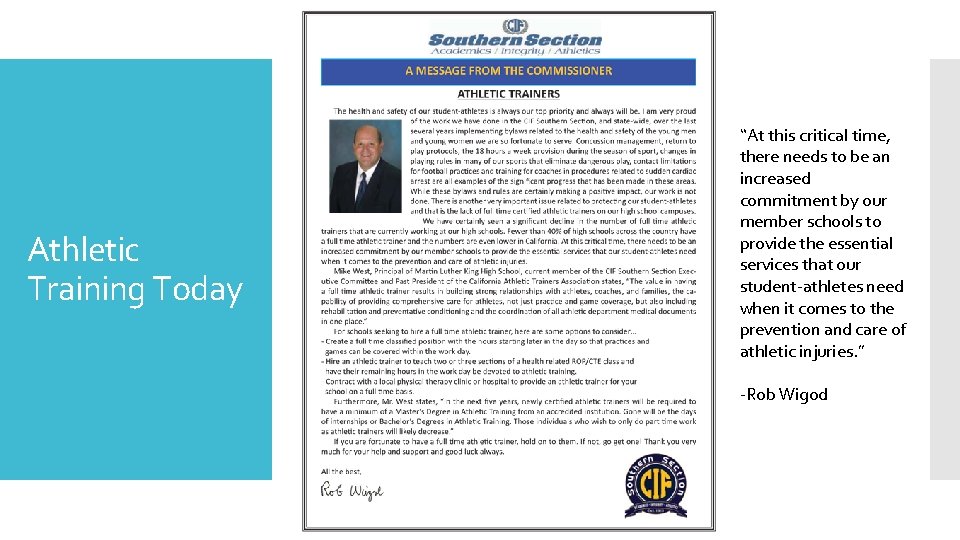
Athletic Training Today “At this critical time, there needs to be an increased commitment by our member schools to provide the essential services that our student-athletes need when it comes to the prevention and care of athletic injuries. ” -Rob Wigod
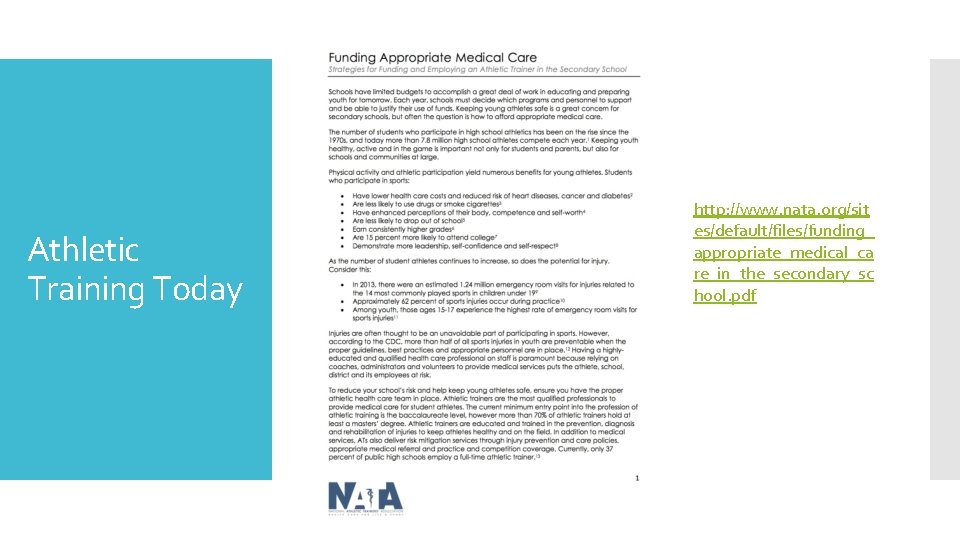
Athletic Training Today http: //www. nata. org/sit es/default/files/funding_ appropriate_medical_ca re_in_the_secondary_sc hool. pdf
http: //www. nata. org /sites/default/files/se condary-schoolpositionimprovementguide. pdf Athletic Training Today http: //www. nata. o rg/sites/default/file s/secondary-school -position-proposalguide. pdf
What an AT Can Do For You Increase the value of the Athletic Department Risk mitigation Decrease insurance premiums Increase overall safety of student athletes https: //www. youtube. com/watch? v=G 4 e 5 ZNjv. Bg. U
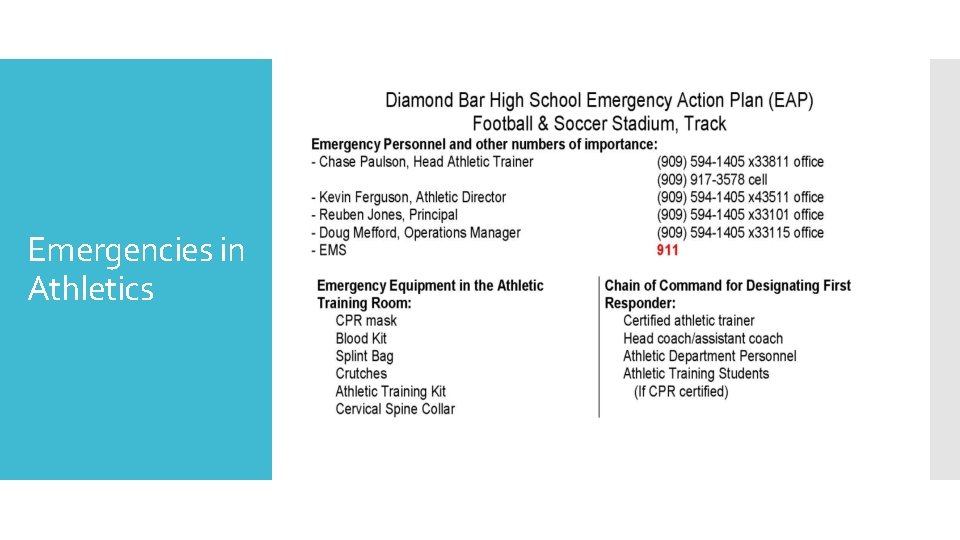
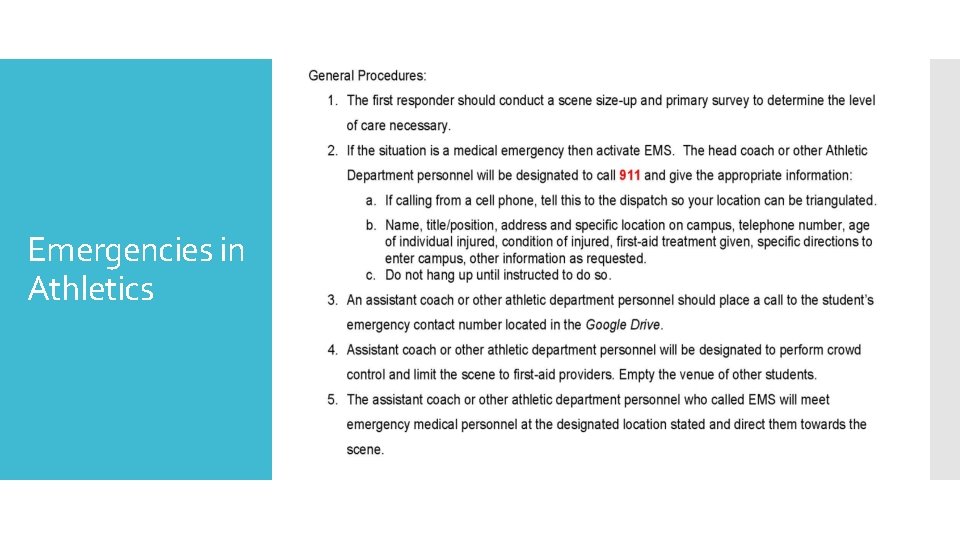
Plan for Emergencies in Athletics Emergency Action Plans (EAPs) What an AT Can Do For You What is it? Why is it necessary? How does it help me? Components of the Plan Personnel Chain of Command Duties Emergency Equipment
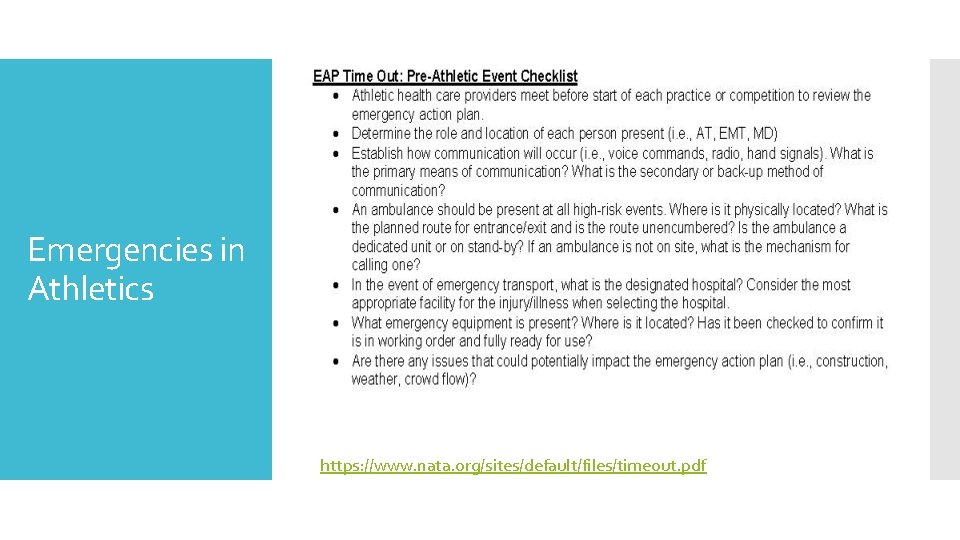
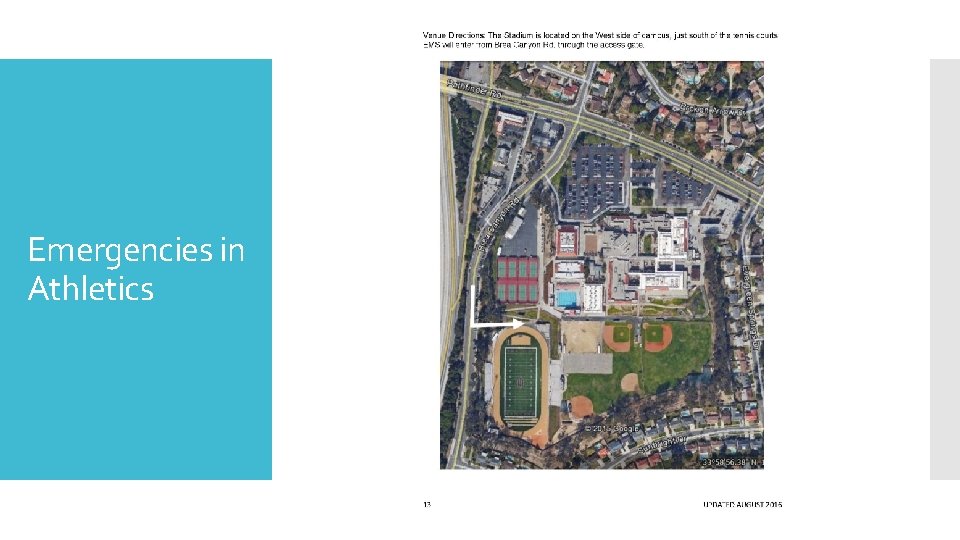
Emergency Action Plans, cont. Emergencies in Athletics Communication Planning Transportation and access Documentation Review
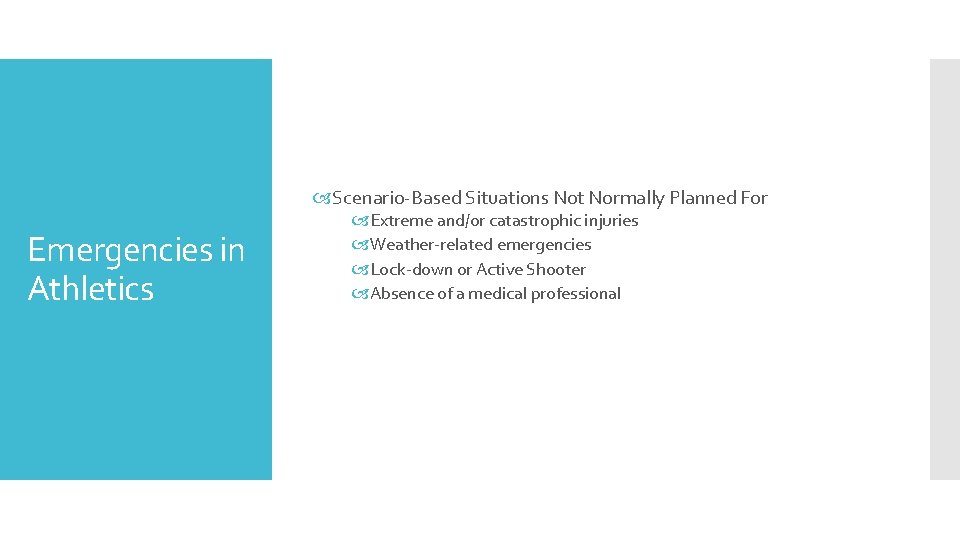
Scenario-Based Situations Not Normally Planned For Emergencies in Athletics Extreme and/or catastrophic injuries Weather-related emergencies Lock-down or Active Shooter Absence of a medical professional
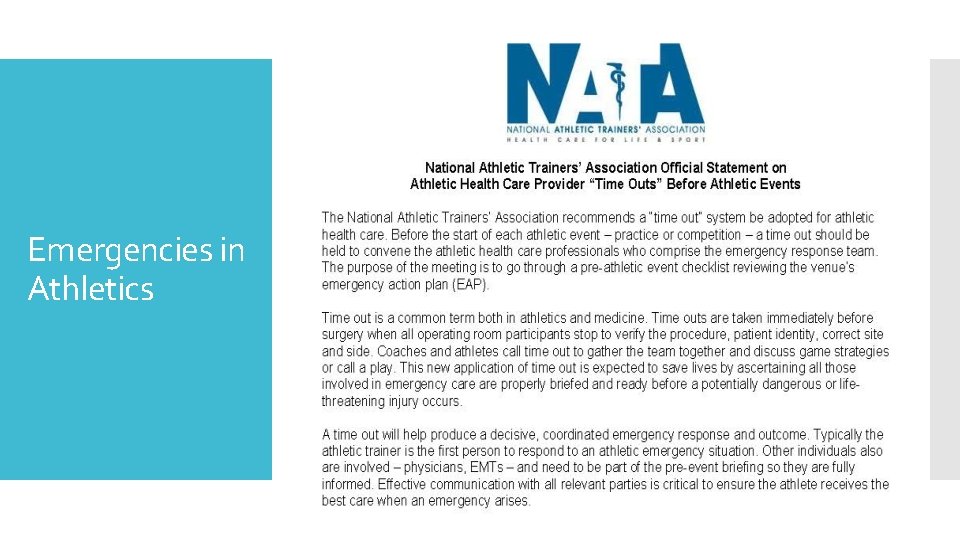
Emergencies in Athletics
Emergencies in Athletics https: //www. nata. org/sites/default/files/timeout. pdf
Emergencies in Athletics
Emergencies in Athletics
Emergencies in Athletics
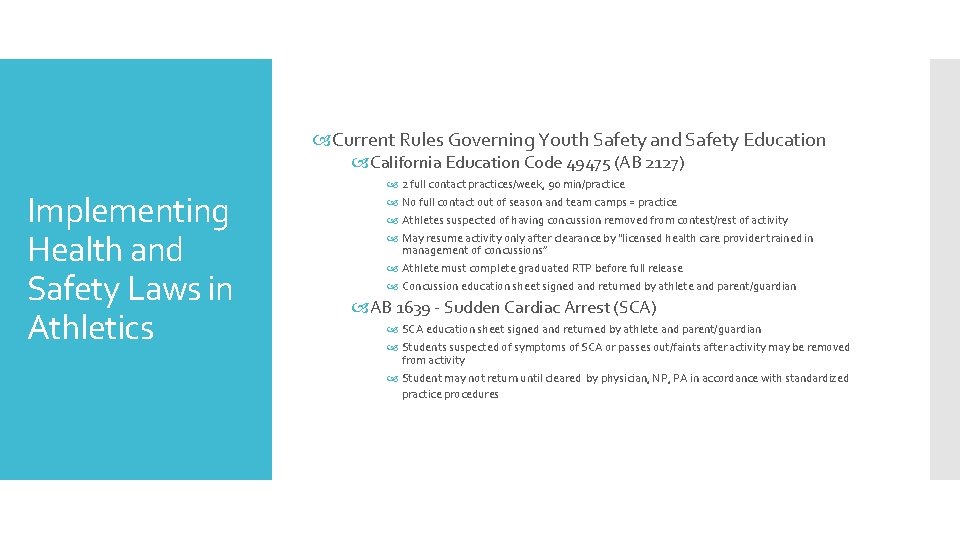
Current Rules Governing Youth Safety and Safety Education California Education Code 49475 (AB 2127) Implementing Health and Safety Laws in Athletics 2 full contact practices/week, 90 min/practice No full contact out of season and team camps = practice Athletes suspected of having concussion removed from contest/rest of activity May resume activity only after clearance by “licensed health care provider trained in management of concussions” Athlete must complete graduated RTP before full release Concussion education sheet signed and returned by athlete and parent/guardian AB 1639 - Sudden Cardiac Arrest (SCA) SCA education sheet signed and returned by athlete and parent/guardian Students suspected of symptoms of SCA or passes out/faints after activity may be removed from activity Student may not return until cleared by physician, NP, PA in accordance with standardized practice procedures
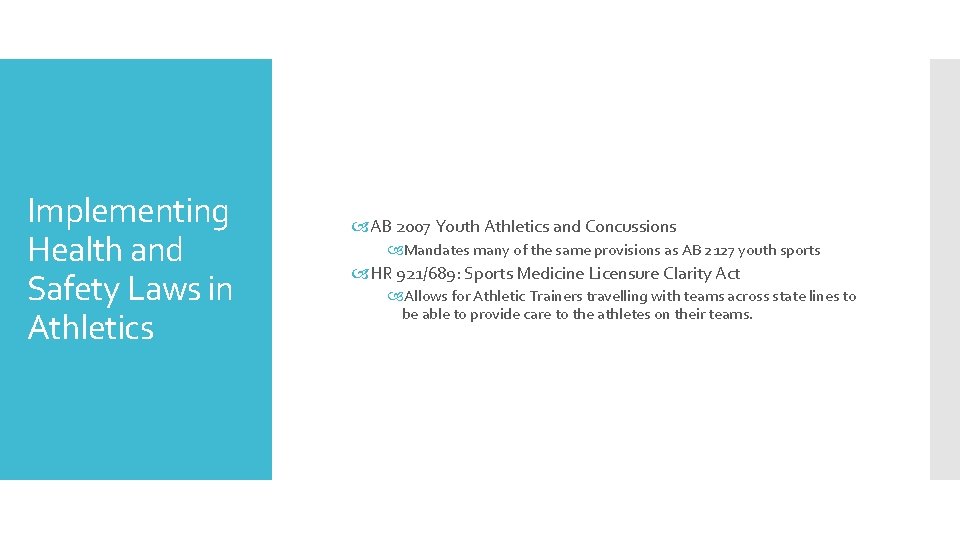
Implementing Health and Safety Laws in Athletics AB 2007 Youth Athletics and Concussions Mandates many of the same provisions as AB 2127 youth sports HR 921/689: Sports Medicine Licensure Clarity Act Allows for Athletic Trainers travelling with teams across state lines to be able to provide care to the athletes on their teams.
Implementing Health and Safety Laws in Athletics HR 112/ S 83: Secondary School Student Athletes’ Bill of Rights Whereas the Secondary School Student Athletes’ Bill of Rights sets forth that secondary school student athletes have the right to: Be coached by individuals who are well-trained in sport-specific safety and to be monitored by athletic health care team members; Quality, regular pre-participation examinations and each athlete has the right to participate under a comprehensive concussion management plan; Participate in sporting activities on safe, clean playing surfaces, in both indoor and outdoor facilities;
HR 112/ S 83: Secondary School Student Athletes’ Bill of Rights Implementing Health and Safety Laws in Athletics Whereas the Secondary School Student Athletes’ Bill of Rights sets forth that secondary school student athletes have the right to: Utilize equipment and uniforms that are safe, fitted appropriately, and routinely maintained, and to appropriate personnel trained in proper removal of equipment in case of injury; Participate safely in all environmental conditions where play follows approved guidelines and medical policies and procedures, with a hydration plan in place; A safe playing environment with venue-specific emergency action plans that are coordinated by the athletic health care team and regularly rehearsed with local emergency personnel; Privacy of health information and proper referral for medical, psychosocial, and nutritional counseling;
HR 112/ S 83: Secondary School Student Athletes’ Bill of Rights Implementing Health and Safety Laws in Athletics Whereas the Secondary School Student Athletes’ Bill of Rights sets forth that secondary school student athletes have the right to: Participate in a culture that finds “playing through pain” unacceptable unless there has been a medical assessment; Immediate, on-site injury assessments with decisions made by qualified sports medicine professionals Along with their parents, the latest information about the benefits and potential risks of participation in competitive sports, including access to statistics on fatalities and catastrophic injuries to youth athletes; and Whereas the Secondary School Student Athletes’ Bill of Rights, which sets forth goals and ideals to improve the health, well-being, and athletic experience of secondary school students, can serve as a valuable resource to reduce injury, promote athlete safety, and encourage well-being
Implementing Health and Safety Laws in Athletics Concussions 101 - A Review for Athletics
Importance of School Administration’s Knowledge of Concussions Implementing Health and Safety Laws in Athletics The Principal has been identified as a main key player in assisting students with concussion injuries What is the schools response plan to assist students with concussion injuries? Who is the point person to be the advocate for the injured athlete at your school? Who makes up your intervention team? “Return to Learn” vs. “Return to Play” Each case will be different RTL starts from day 1 post injury – Can the student tolerate a full day of school? What are physician recommended adjustments? Can the student continue/tolerate adjusted association w/ team activities What will be the plan for management of students school day, week, month Once student able to tolerate a full school day, they may proceed to RTP is hopefully going to be much shorter in duration as long as RTL is managed correctly
Questions?