
CULTURE AND COMMON TRAITS OF RUSSIA Culture and



- Slides: 26
CULTURE AND COMMON TRAITS OF RUSSIA
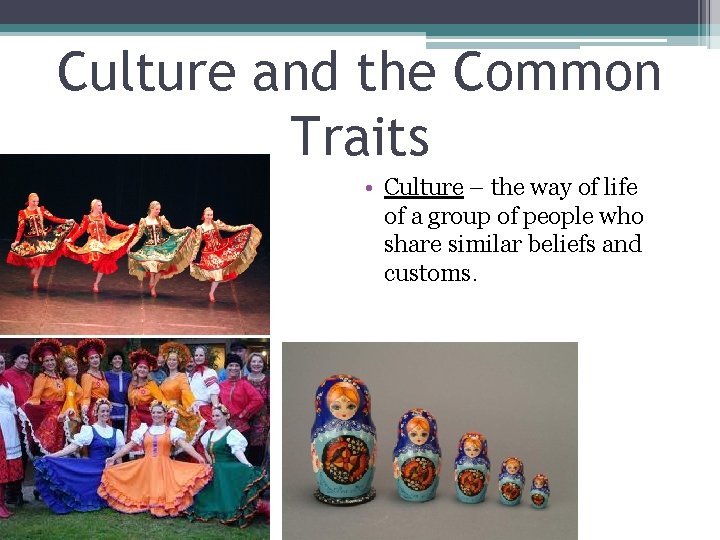
Culture and the Common Traits • Culture – the way of life of a group of people who share similar beliefs and customs.
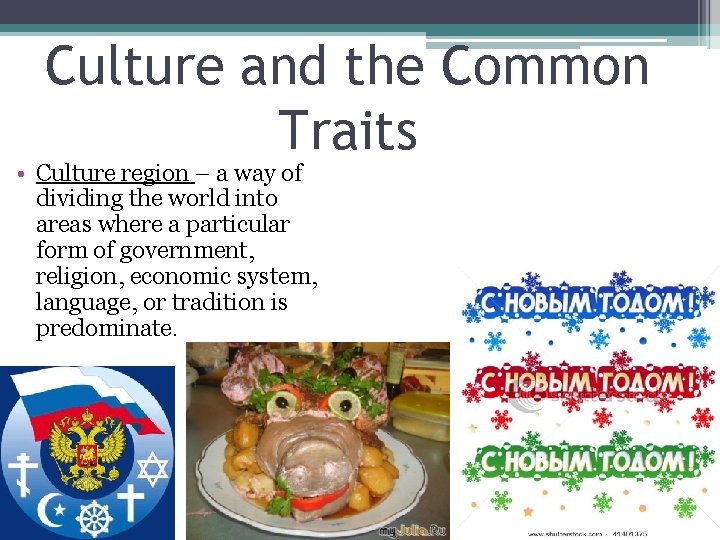
Culture and the Common Traits • Culture region – a way of dividing the world into areas where a particular form of government, religion, economic system, language, or tradition is predominate.
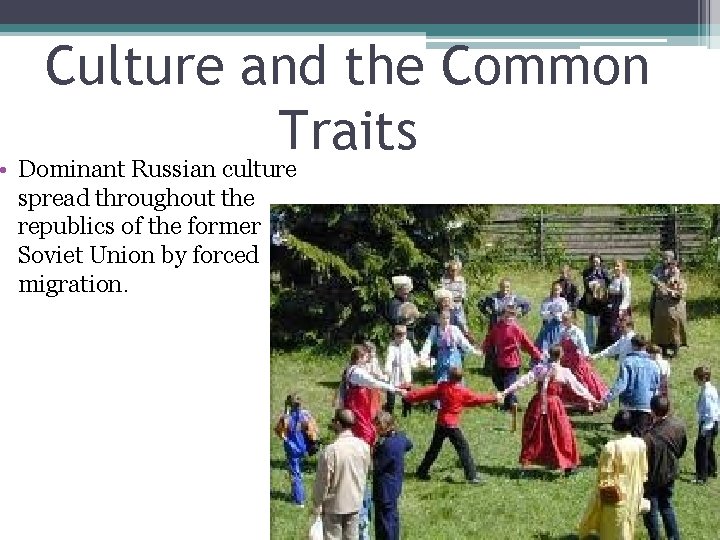
Culture and the Common Traits • Dominant Russian culture spread throughout the republics of the former Soviet Union by forced migration.
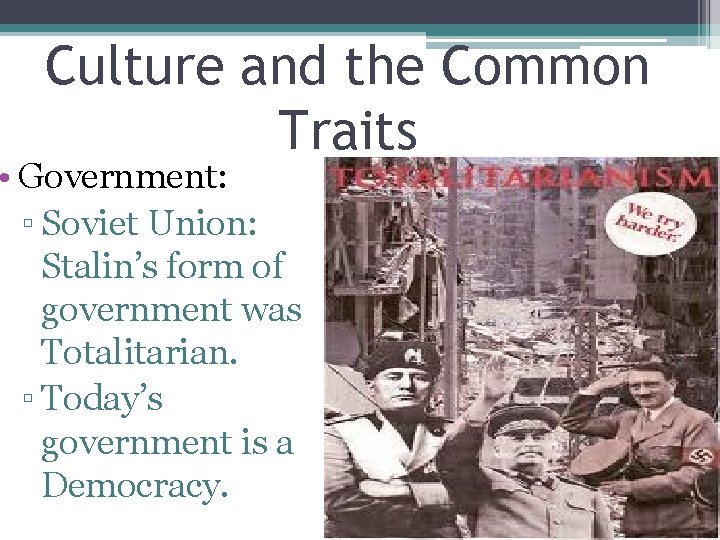
Culture and the Common Traits • Government: ▫ Soviet Union: Stalin’s form of government was Totalitarian. ▫ Today’s government is a Democracy.
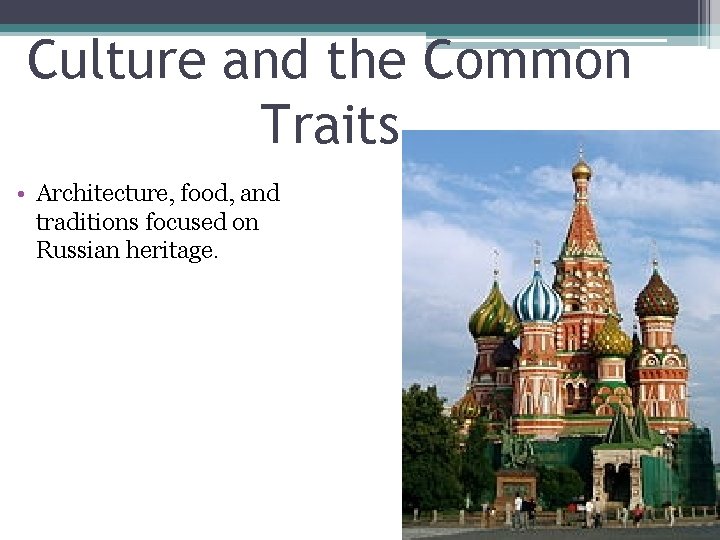
Culture and the Common Traits • Architecture, food, and traditions focused on Russian heritage.
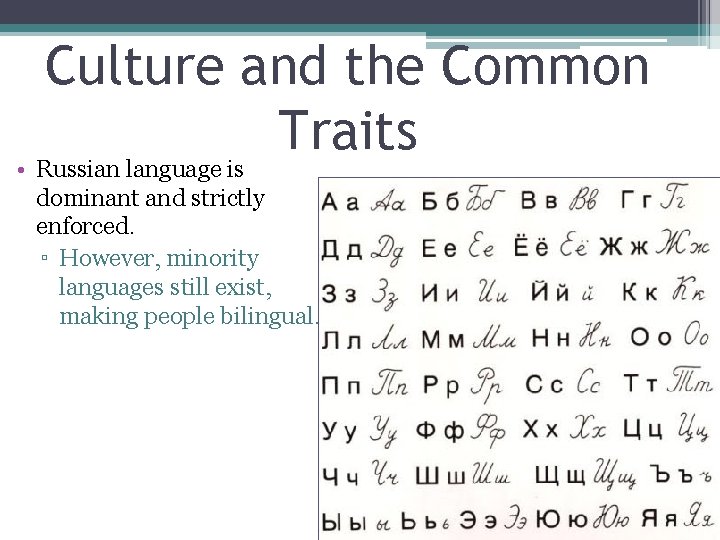
Culture and the Common Traits • Russian language is dominant and strictly enforced. ▫ However, minority languages still exist, making people bilingual.
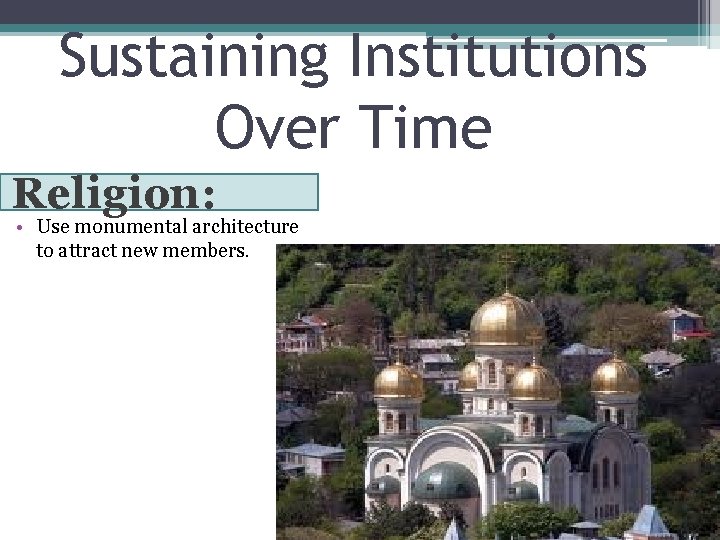
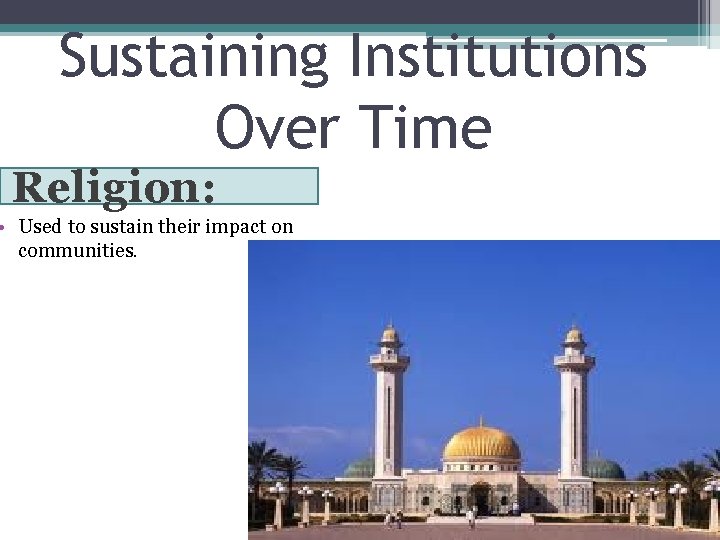
Sustaining Institutions Over Time Religion: • Use monumental architecture to attract new members.
Sustaining Institutions Over Time Religion: • Used to sustain their impact on communities.
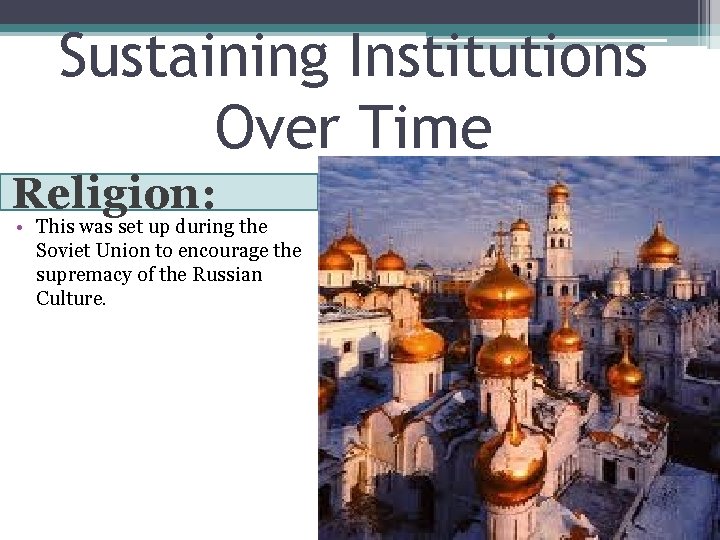
Sustaining Institutions Over Time Religion: • This was set up during the Soviet Union to encourage the supremacy of the Russian Culture.
Sustaining Institutions Over Time Education: • Education changes with time.
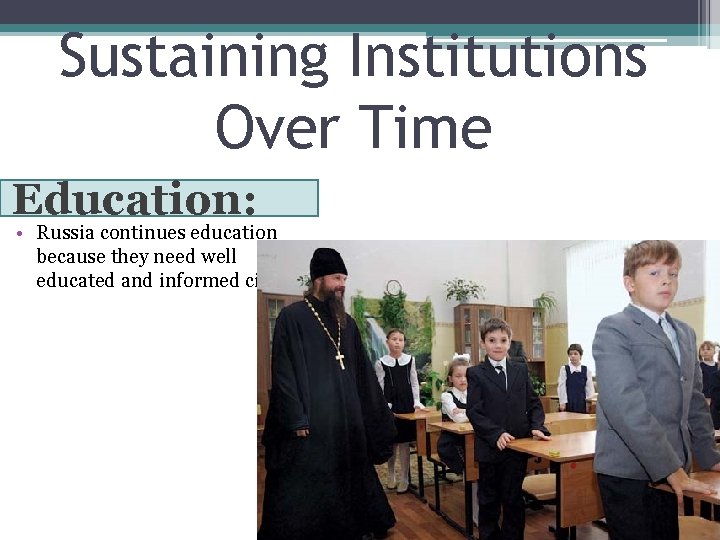
Sustaining Institutions Over Time Education: • Russia continues education because they need well educated and informed citizens.
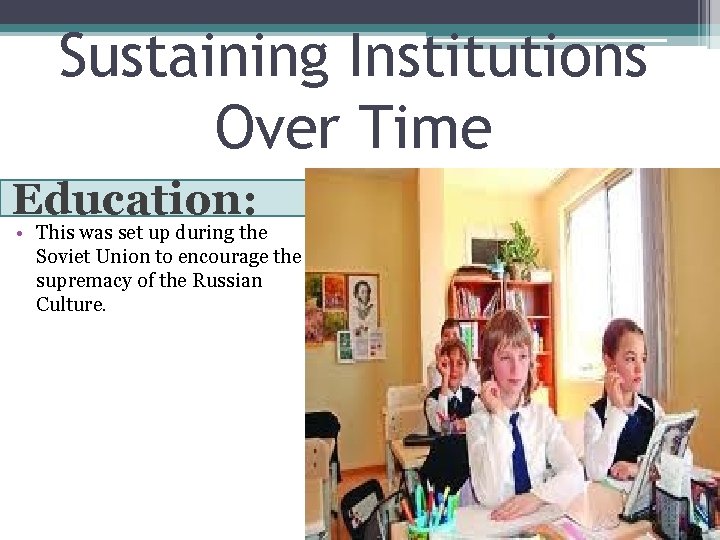
Sustaining Institutions Over Time Education: • This was set up during the Soviet Union to encourage the supremacy of the Russian Culture.
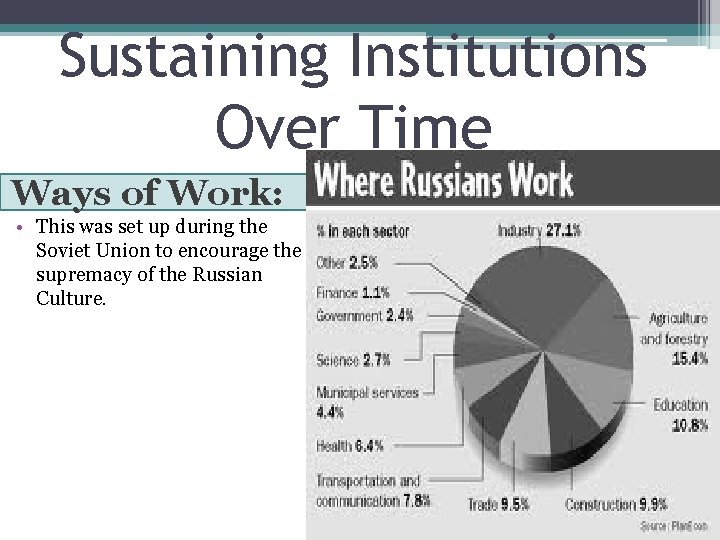
Sustaining Institutions Over Time Ways of Work: • Sustain the institution because individuals need jobs so they can earn money and survive.
Sustaining Institutions Over Time Ways of Work: • Government changes the way work is completed. ▫ Farmers: �Soviet Union – Farmers worked for Government �Russia – Farmers make decisions for themselves.
Sustaining Institutions Over Time Ways of Work: • This was set up during the Soviet Union to encourage the supremacy of the Russian Culture.
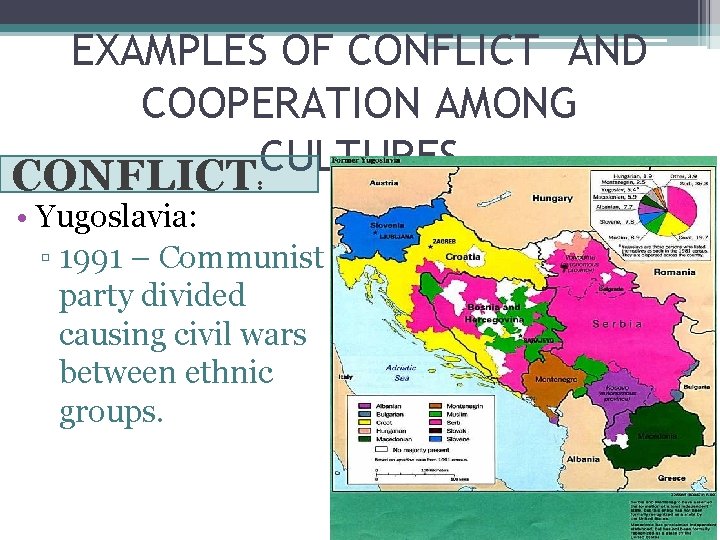
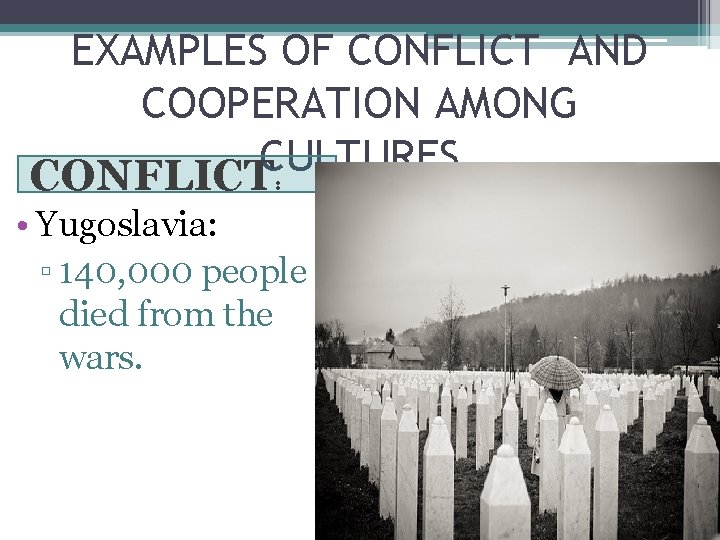
EXAMPLES OF CONFLICT AND COOPERATION AMONG CULTURES CONFLICT: • Yugoslavia: ▫ 1991 – Communist party divided causing civil wars between ethnic groups.
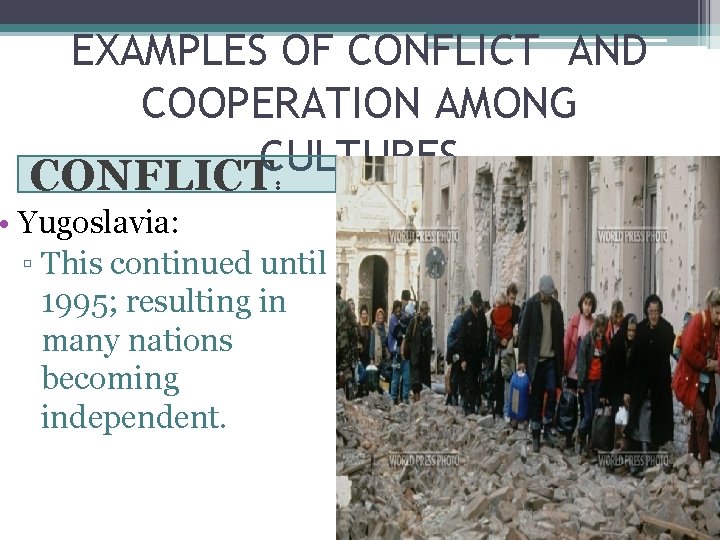
EXAMPLES OF CONFLICT AND COOPERATION AMONG CULTURES CONFLICT: • Yugoslavia: ▫ This continued until 1995; resulting in many nations becoming independent.
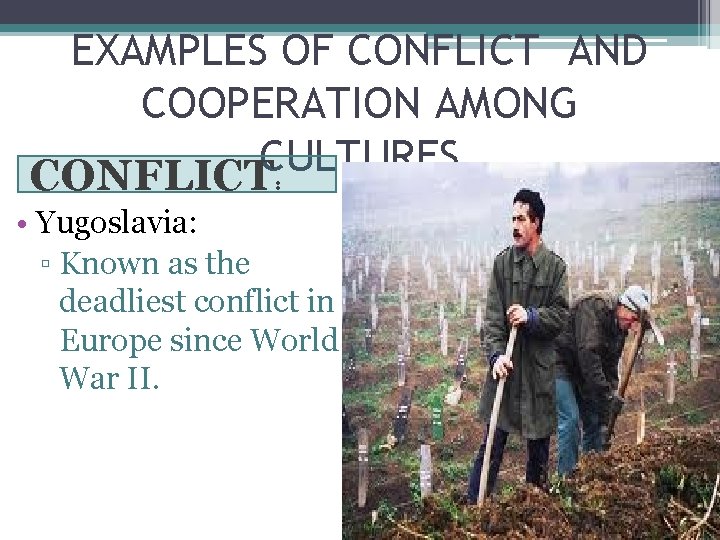
EXAMPLES OF CONFLICT AND COOPERATION AMONG CULTURES CONFLICT: • Yugoslavia: ▫ Known as the deadliest conflict in Europe since World War II.
EXAMPLES OF CONFLICT AND COOPERATION AMONG CULTURES CONFLICT: • Yugoslavia: ▫ 140, 000 people died from the wars.
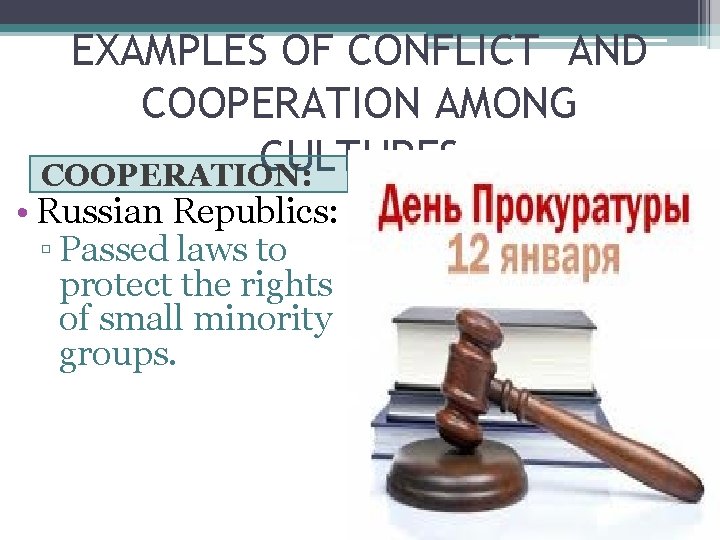
EXAMPLES OF CONFLICT AND COOPERATION AMONG CULTURES COOPERATION: • Russian Republics: ▫ Passed laws to protect the rights of small minority groups.
EXAMPLES OF CONFLICT AND COOPERATION AMONG CULTURES COOPERATION: • Russian Republics: ▫ Teach school in multiple languages, supplying minority language textbooks.
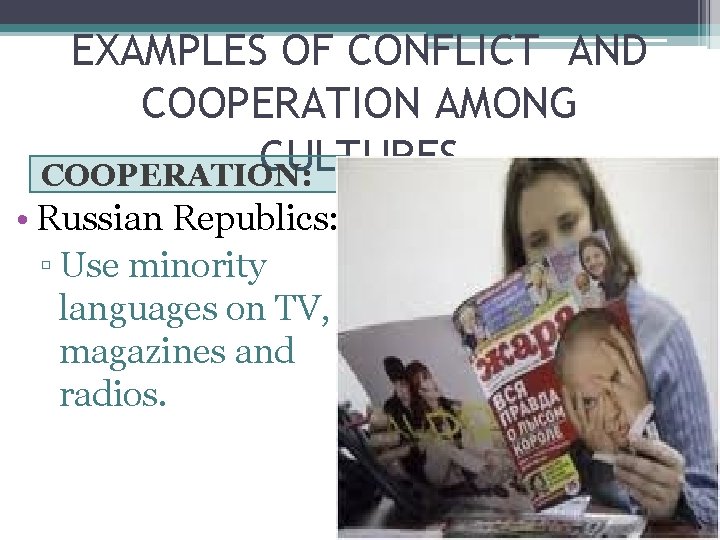
EXAMPLES OF CONFLICT AND COOPERATION AMONG CULTURES COOPERATION: • Russian Republics: ▫ Use minority languages on TV, magazines and radios.
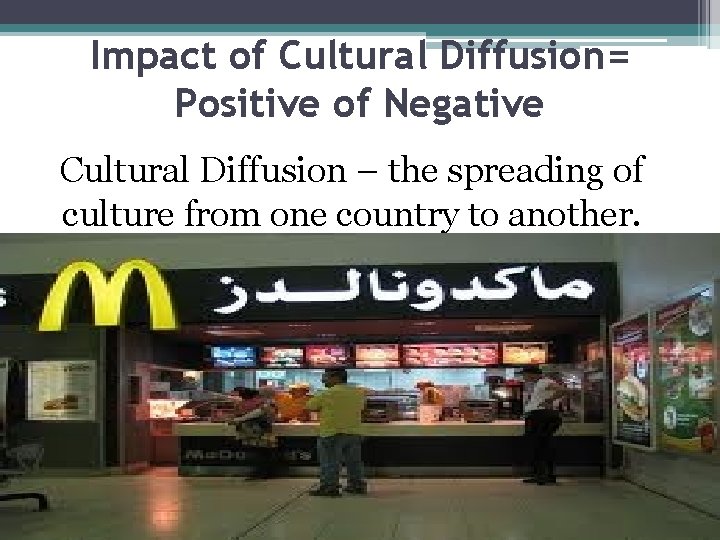
Impact of Cultural Diffusion= Positive of Negative Cultural Diffusion – the spreading of culture from one country to another.
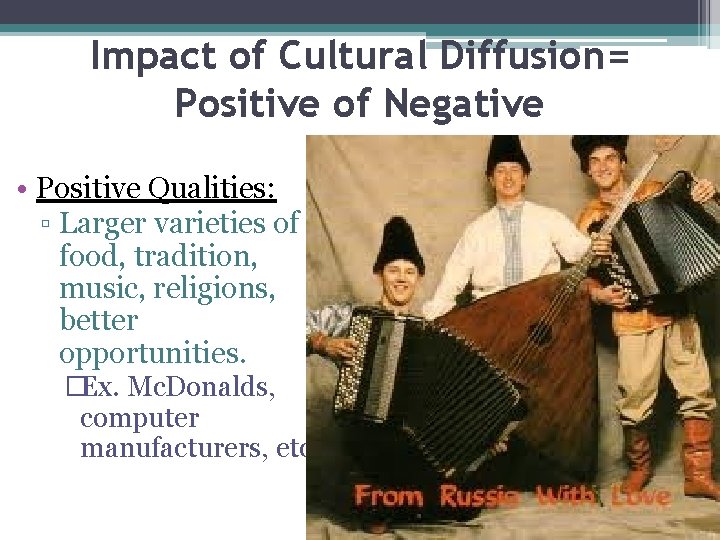
Impact of Cultural Diffusion= Positive of Negative • Positive Qualities: ▫ Larger varieties of food, tradition, music, religions, better opportunities. �Ex. Mc. Donalds, computer manufacturers, etc.
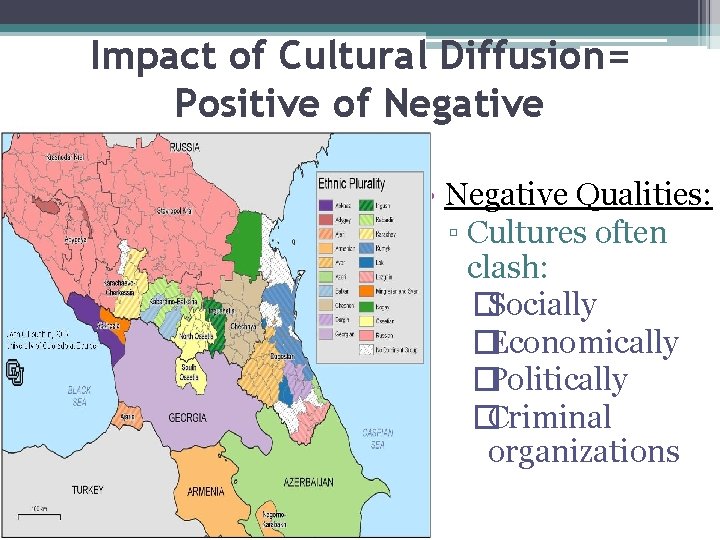
Impact of Cultural Diffusion= Positive of Negative • Negative Qualities: ▫ Cultures often clash: �Socially �Economically �Politically �Criminal organizations