cs 2220 Engineering Software Class 2 Introduction Java

- Slides: 28
cs 2220: Engineering Software Class 2: Introduction Java Fall 2010 University of Virginia David Evans
Course Announcements Assistant Teacher: Robbie Hott Help for PS 1: Friday, 2: 30 -3: 30 pm (Thornton Stacks) Office Hours Extended Thursday to be 11 am-12: 30 pm Extended Monday to be 1: 30 -3: 30 pm Added Wednesday, noon-1 pm My door is (almost) always open – feel free to stop by outside of office hours
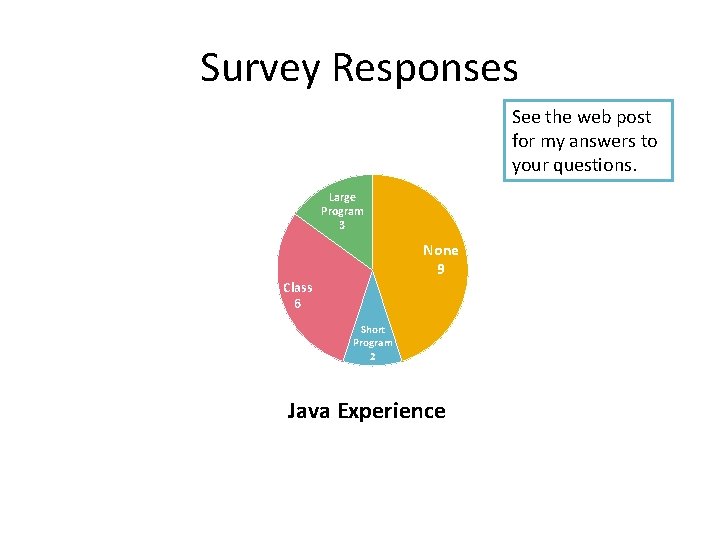
Survey Responses See the web post for my answers to your questions. Large Program 3 None 9 Class 6 Short Program 2 Java Experience
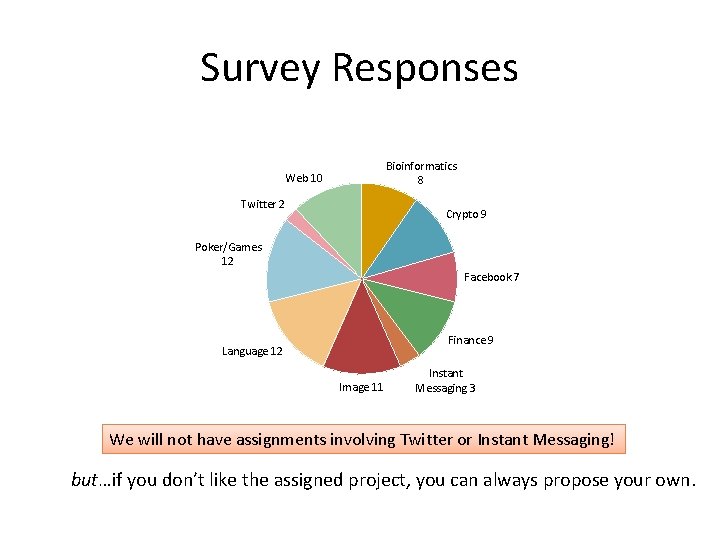
Survey Responses Bioinformatics 8 Web 10 Twitter 2 Crypto 9 Poker/Games 12 Facebook 7 Finance 9 Language 12 Image 11 Instant Messaging 3 We will not have assignments involving Twitter or Instant Messaging! but…if you don’t like the assigned project, you can always propose your own.
Late Policy
Why Java?
Why learn a new language?
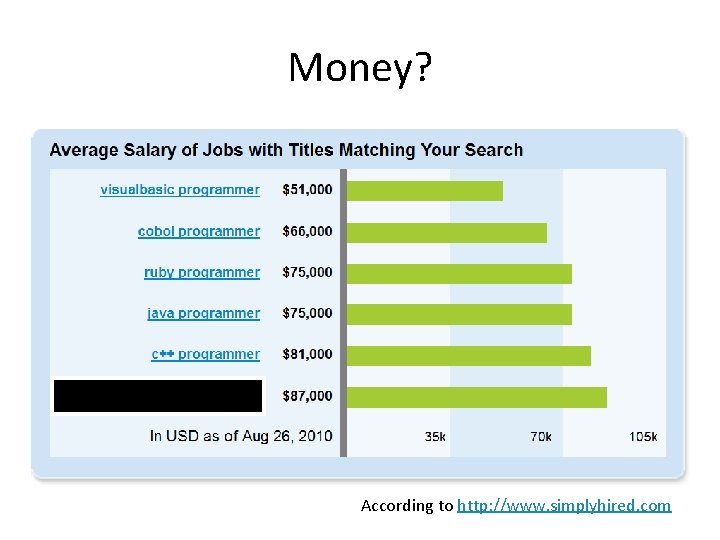
Money? According to http: //www. simplyhired. com
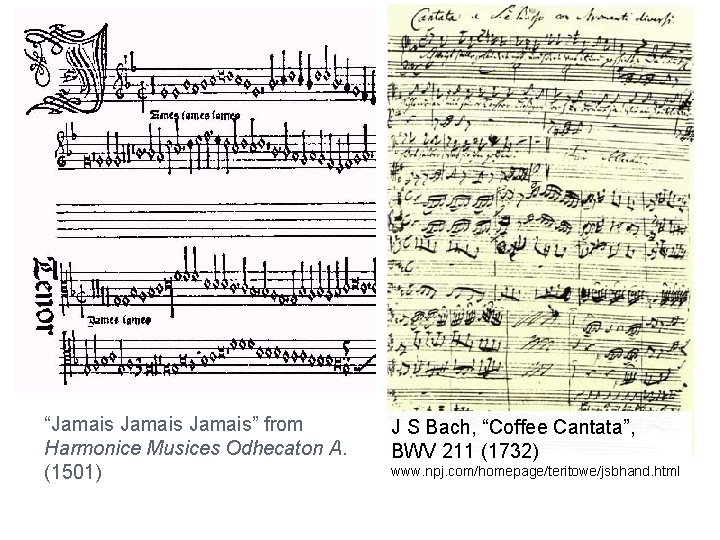
New Ways of Thinking
“Jamais” from Harmonice Musices Odhecaton A. (1501) J S Bach, “Coffee Cantata”, BWV 211 (1732) www. npj. com/homepage/teritowe/jsbhand. html
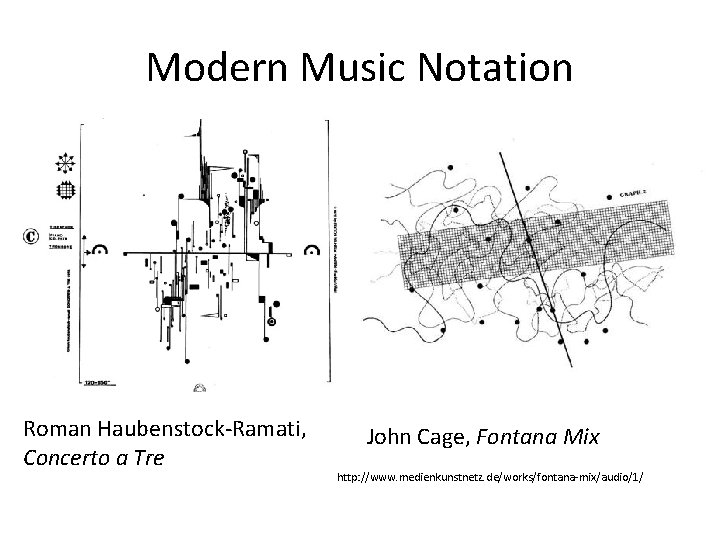
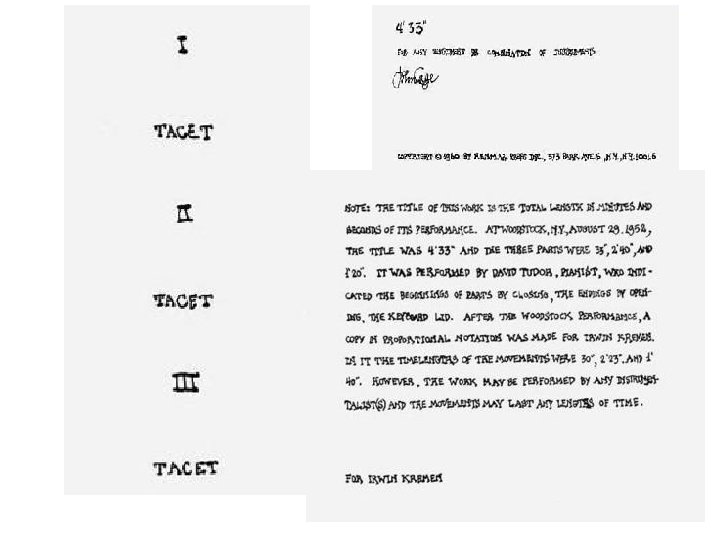
Modern Music Notation Roman Haubenstock-Ramati, Concerto a Tre John Cage, Fontana Mix http: //www. medienkunstnetz. de/works/fontana-mix/audio/1/
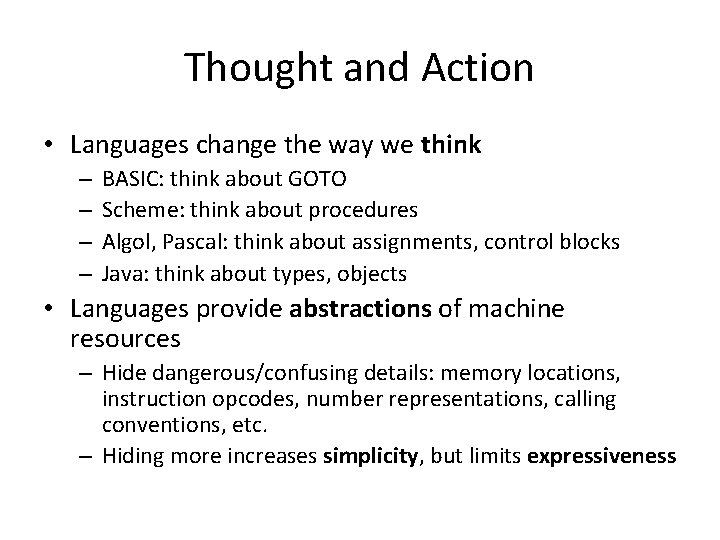
Thought and Action • Languages change the way we think – – BASIC: think about GOTO Scheme: think about procedures Algol, Pascal: think about assignments, control blocks Java: think about types, objects • Languages provide abstractions of machine resources – Hide dangerous/confusing details: memory locations, instruction opcodes, number representations, calling conventions, etc. – Hiding more increases simplicity, but limits expressiveness
Why so many programming languages?
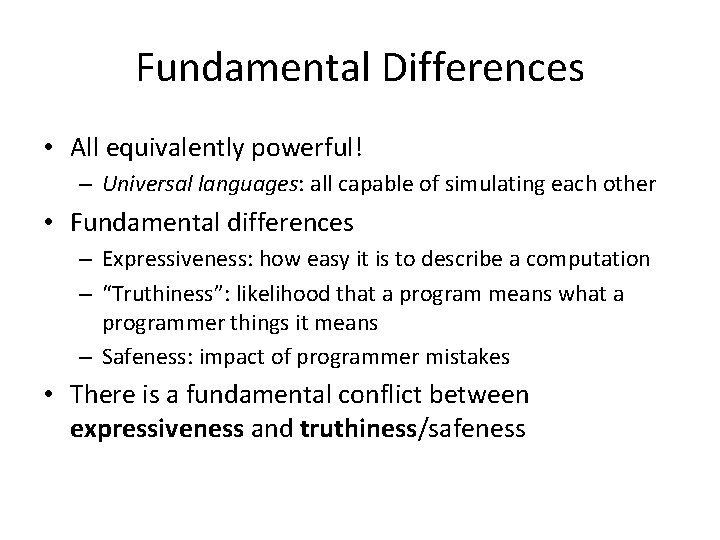
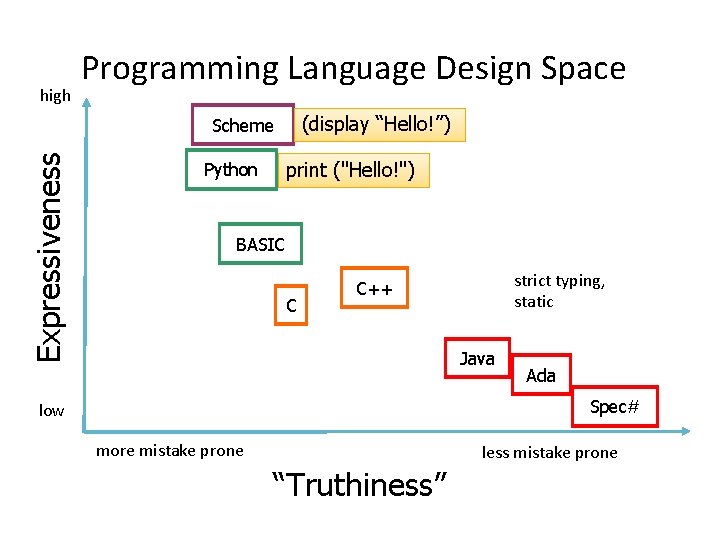
Fundamental Differences • All equivalently powerful! – Universal languages: all capable of simulating each other • Fundamental differences – Expressiveness: how easy it is to describe a computation – “Truthiness”: likelihood that a program means what a programmer things it means – Safeness: impact of programmer mistakes • There is a fundamental conflict between expressiveness and truthiness/safeness
high Programming Language Design Space (display “Hello!”) Expressiveness Scheme print ("Hello!") Python BASIC C strict typing, static C++ Java Ada Spec# low more mistake prone less mistake prone “Truthiness”
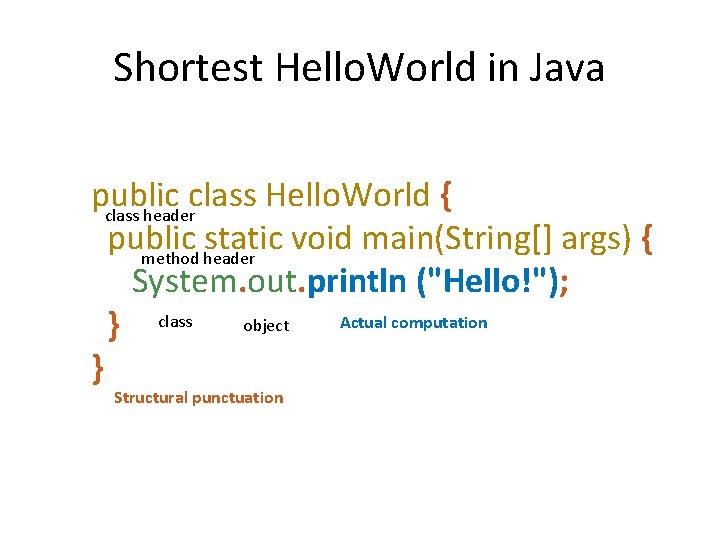
Shortest Hello. World in Java public class Hello. World { class header public static void main(String[] args) { method header System. out. println ("Hello!"); } class object Actual computation } Structural punctuation
Pragmatic Differences • • • Performance of available compilers, interpreters Tools available Libraries Portability Availability/cost of programmers
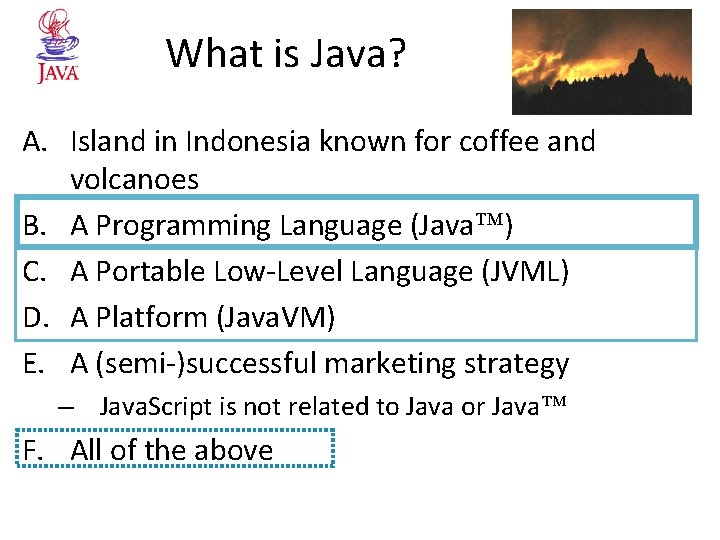
What is Java? A. Island in Indonesia known for coffee and volcanoes B. A Programming Language (Java ) C. A Portable Low-Level Language (JVML) D. A Platform (Java. VM) E. A (semi-)successful marketing strategy – Java. Script is not related to Java or Java F. All of the above
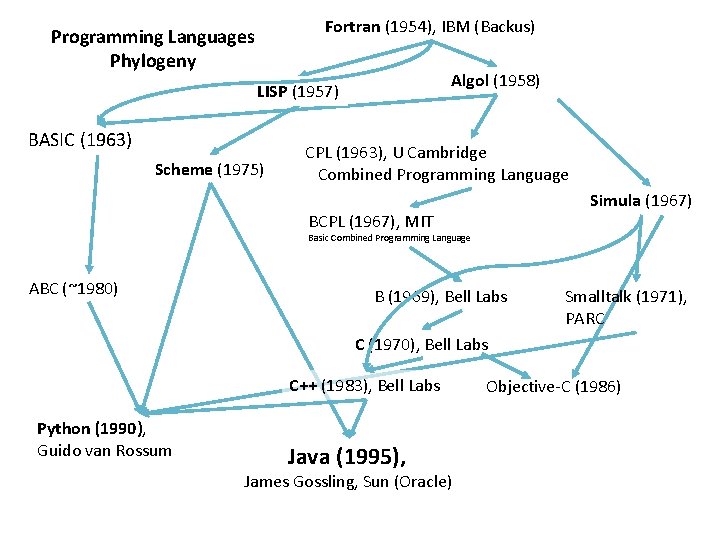
Fortran (1954), IBM (Backus) Programming Languages Phylogeny Algol (1958) LISP (1957) BASIC (1963) Scheme (1975) CPL (1963), U Cambridge Combined Programming Language Simula (1967) BCPL (1967), MIT Basic Combined Programming Language ABC (~1980) B (1969), Bell Labs Smalltalk (1971), PARC C (1970), Bell Labs C++ (1983), Bell Labs Python (1990), Guido van Rossum Java (1995), James Gossling, Sun (Oracle) Objective-C (1986)
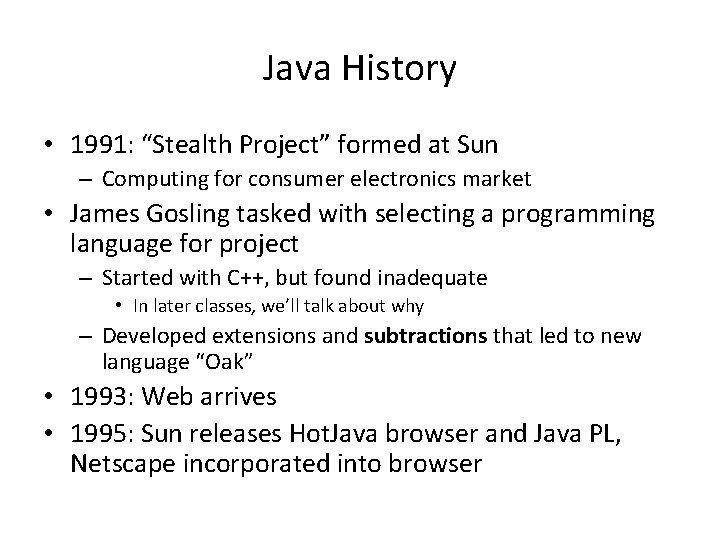
Java History • 1991: “Stealth Project” formed at Sun – Computing for consumer electronics market • James Gosling tasked with selecting a programming language for project – Started with C++, but found inadequate • In later classes, we’ll talk about why – Developed extensions and subtractions that led to new language “Oak” • 1993: Web arrives • 1995: Sun releases Hot. Java browser and Java PL, Netscape incorporated into browser
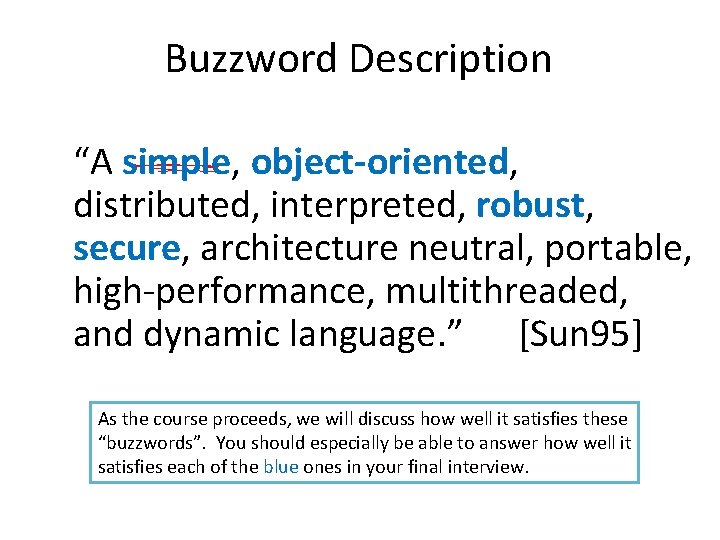
Buzzword Description “A simple, object-oriented, distributed, interpreted, robust, secure, architecture neutral, portable, high-performance, multithreaded, and dynamic language. ” [Sun 95] As the course proceeds, we will discuss how well it satisfies these “buzzwords”. You should especially be able to answer how well it satisfies each of the blue ones in your final interview.
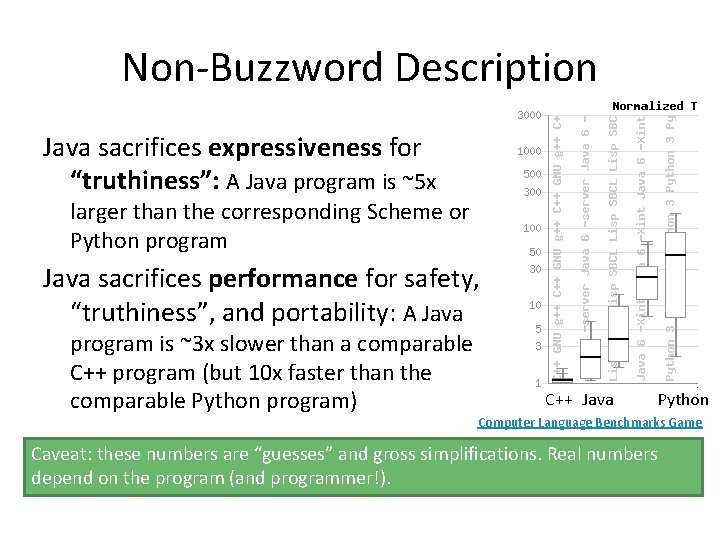
Non-Buzzword Description Java sacrifices expressiveness for “truthiness”: A Java program is ~5 x larger than the corresponding Scheme or Python program Java sacrifices performance for safety, “truthiness”, and portability: A Java program is ~3 x slower than a comparable C++ program (but 10 x faster than the comparable Python program) C++ Java Python Computer Language Benchmarks Game Caveat: these numbers are “guesses” and gross simplifications. Real numbers depend on the program (and programmer!).
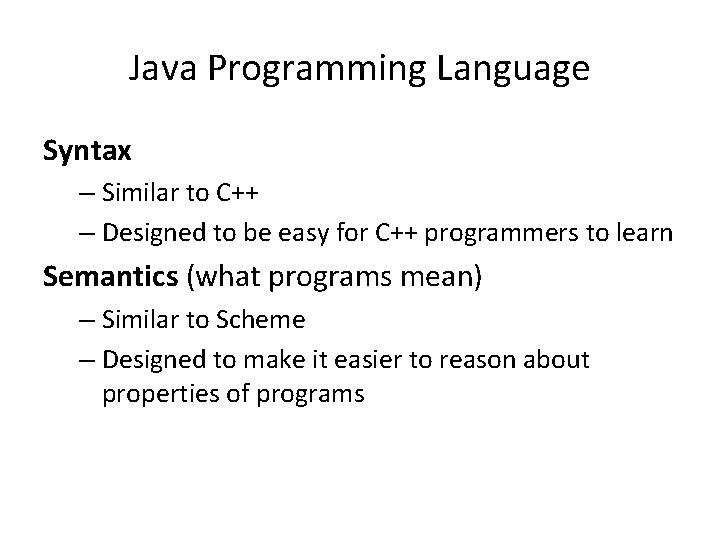
Java Programming Language Syntax – Similar to C++ – Designed to be easy for C++ programmers to learn Semantics (what programs mean) – Similar to Scheme – Designed to make it easier to reason about properties of programs
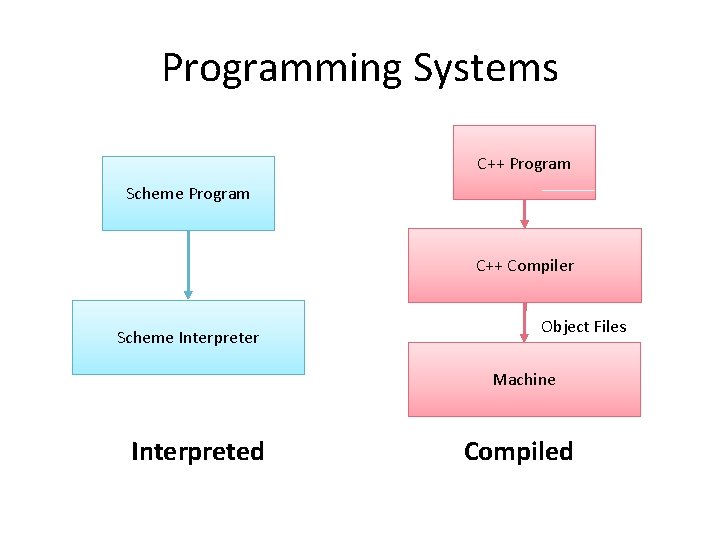
Programming Systems C++ Program Scheme Program C++ Compiler Scheme Interpreter Object Files Machine Interpreted Compiled
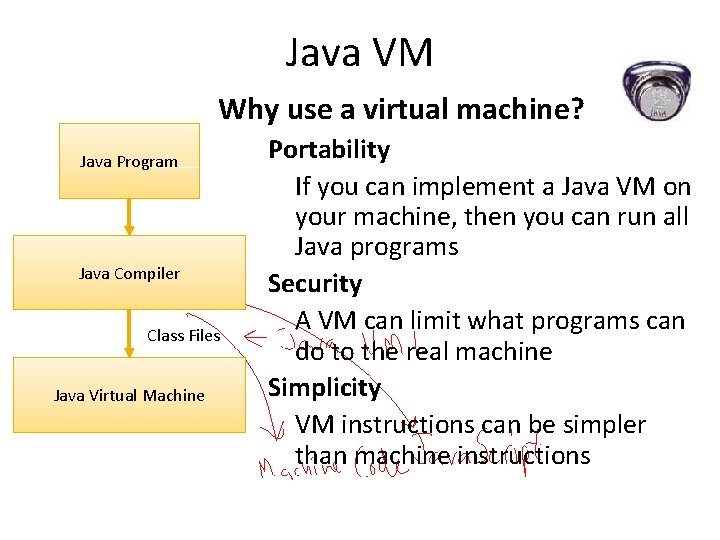
Java VM Why use a virtual machine? Java Program Java Compiler Class Files Java Virtual Machine Portability If you can implement a Java VM on your machine, then you can run all Java programs Security A VM can limit what programs can do to the real machine Simplicity VM instructions can be simpler than machine instructions
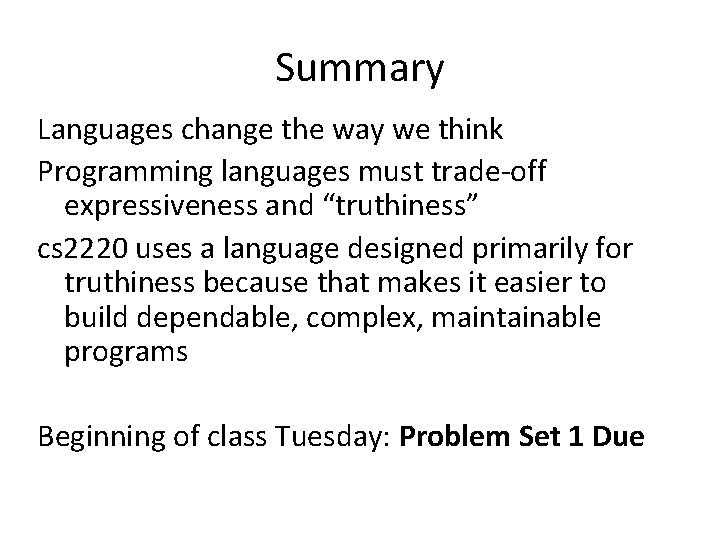
Summary Languages change the way we think Programming languages must trade-off expressiveness and “truthiness” cs 2220 uses a language designed primarily for truthiness because that makes it easier to build dependable, complex, maintainable programs Beginning of class Tuesday: Problem Set 1 Due