CQC Inspections 30 Minute Presentation with Kate Hodkinson
- Slides: 20
CQC Inspections 30 Minute Presentation with Kate Hodkinson Training Business Manager
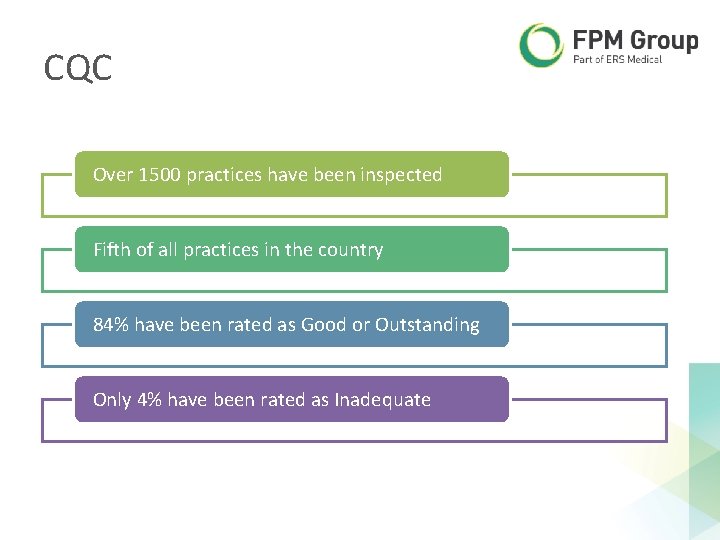
CQC Over 1500 practices have been inspected Fifth of all practices in the country 84% have been rated as Good or Outstanding Only 4% have been rated as Inadequate
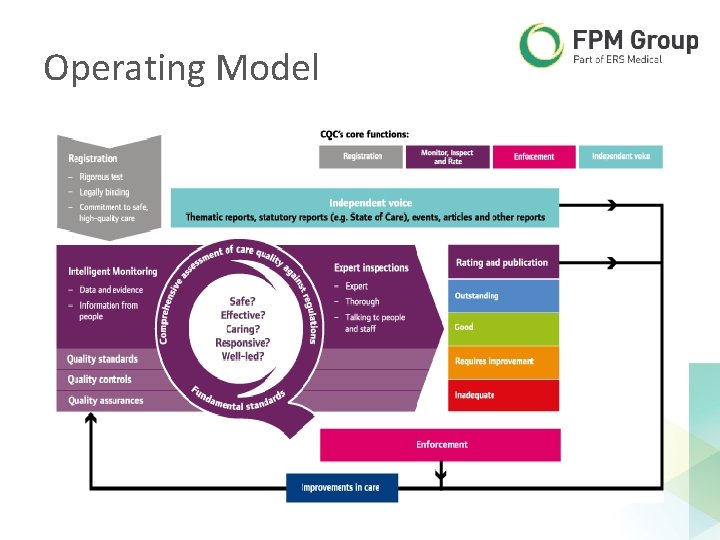
Operating Model
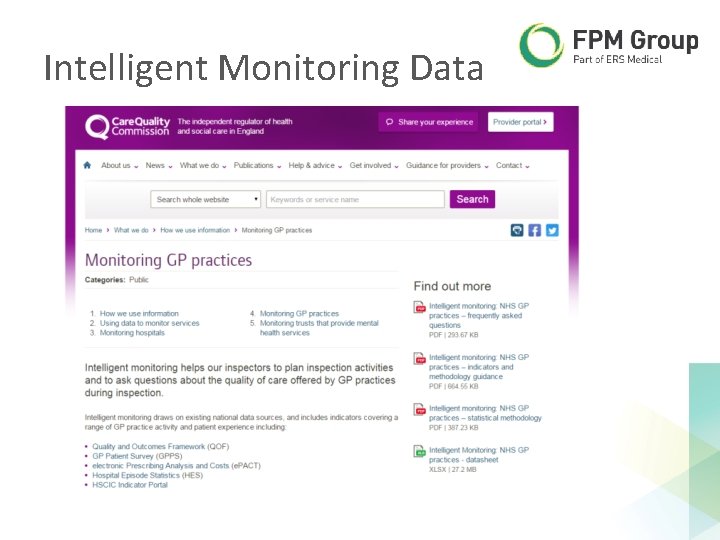
Intelligent Monitoring Data
The 30 Minute Presentation
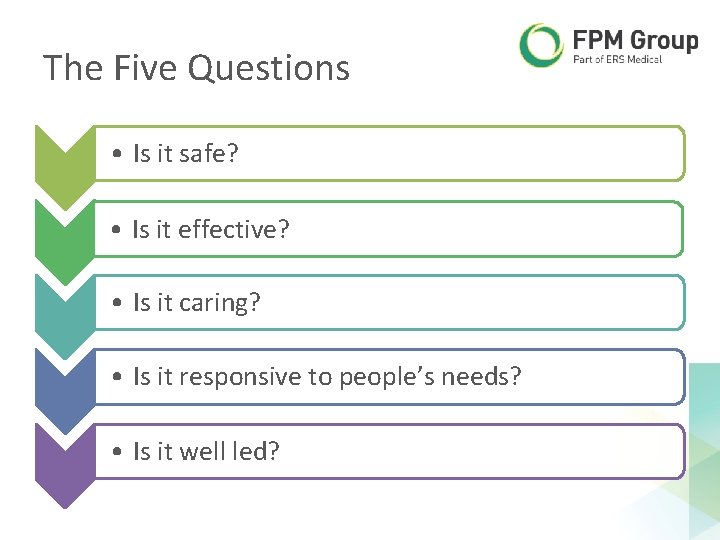
The Five Questions • Is it safe? • Is it effective? • Is it caring? • Is it responsive to people’s needs? • Is it well led?
6 Key Population Groups
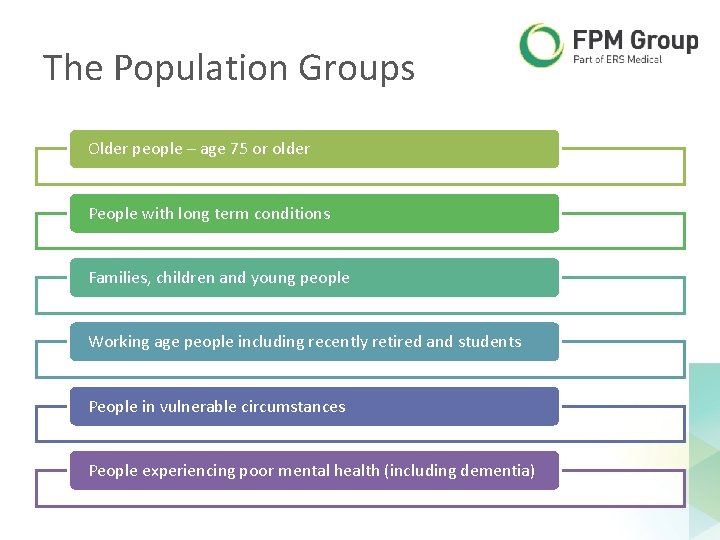
The Population Groups Older people – age 75 or older People with long term conditions Families, children and young people Working age people including recently retired and students People in vulnerable circumstances People experiencing poor mental health (including dementia)
Presentation Preparation
Initial Presentation At the start of the visit we ask GP Practices to present to the inspection team their own view of their performance, particularly in relation to the five key questions and six population groups and to include any examples of outstanding care and practice. There is no specified format or media for this briefing – the provider can choose whichever format suits them. This should take no longer than 30 minutes.
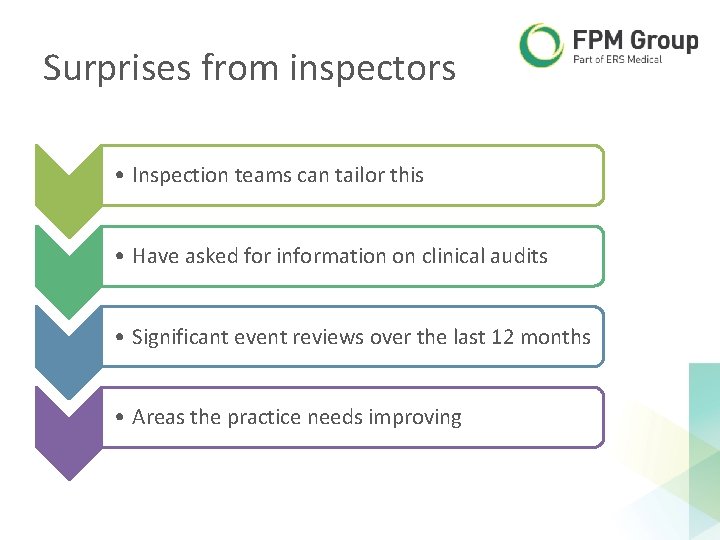
Surprises from inspectors • Inspection teams can tailor this • Have asked for information on clinical audits • Significant event reviews over the last 12 months • Areas the practice needs improving
Make the most of it • This is a great opportunity to set the scene for the day and to highlight the brilliant services you are offering to your patients. • It can also be a way to influence what the inspection team may look at on the day. • CQC have been flexible with the way you can deliver this presentation so you can do whatever you think you best conveys the ethos of your practice.
How to impress A CQC inspector will expect the Practice Manager and the Registered Manager to know all about the process. To impress the inspector make sure the whole team knows about the process and can talk freely about how they deliver a great service.
Who to take part? Choose someone from each of the main teams; a GP, a nurse, an admin member. The Practice Manager can do an opening and summary. Doesn’t have to be a formal Power. Point presentation at an informal level more team member will be happier to talk.
What they’ll know • The inspectors will already know about the practice population so numbers, statistics, age/sex breakdown • Spend the time to discuss how you’re delivering a great service…
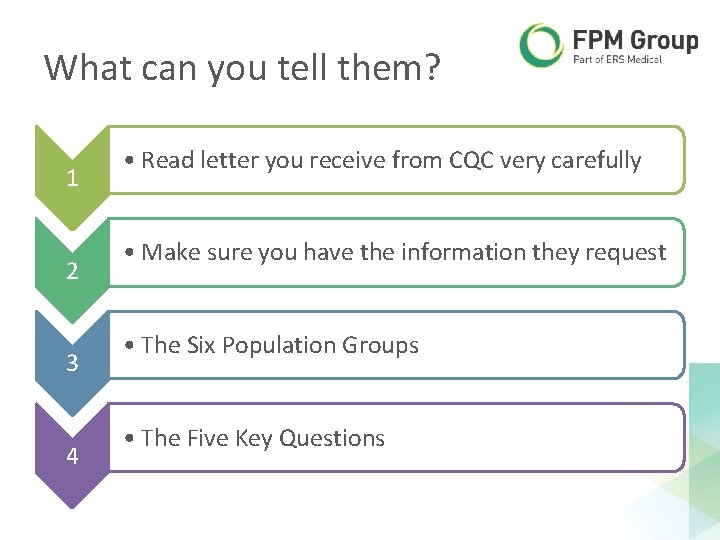
What can you tell them? 1 2 3 4 • Read letter you receive from CQC very carefully • Make sure you have the information they request • The Six Population Groups • The Five Key Questions
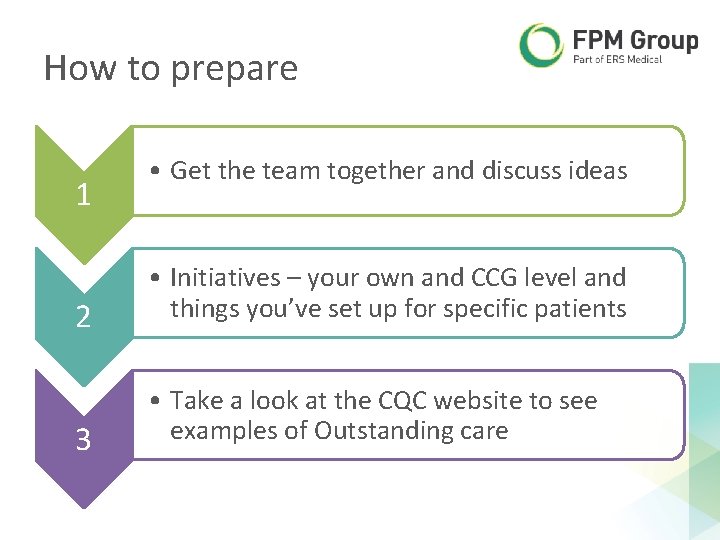
How to prepare 1 • Get the team together and discuss ideas 2 • Initiatives – your own and CCG level and things you’ve set up for specific patients 3 • Take a look at the CQC website to see examples of Outstanding care
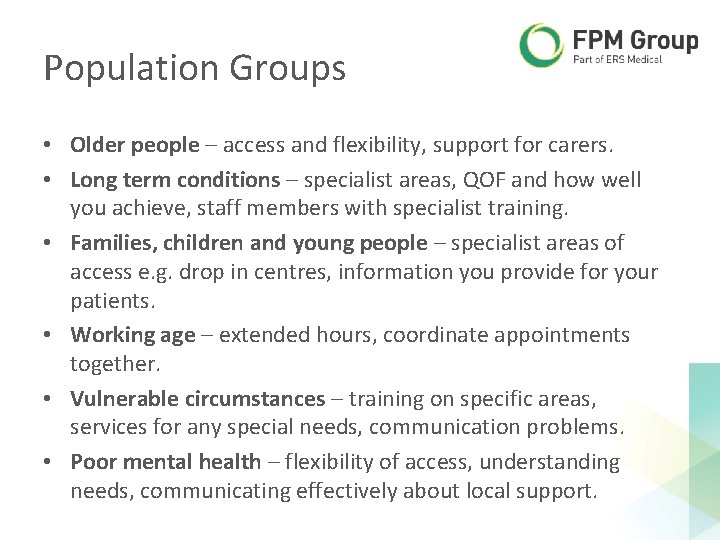
Population Groups • Older people – access and flexibility, support for carers. • Long term conditions – specialist areas, QOF and how well you achieve, staff members with specialist training. • Families, children and young people – specialist areas of access e. g. drop in centres, information you provide for your patients. • Working age – extended hours, coordinate appointments together. • Vulnerable circumstances – training on specific areas, services for any special needs, communication problems. • Poor mental health – flexibility of access, understanding needs, communicating effectively about local support.
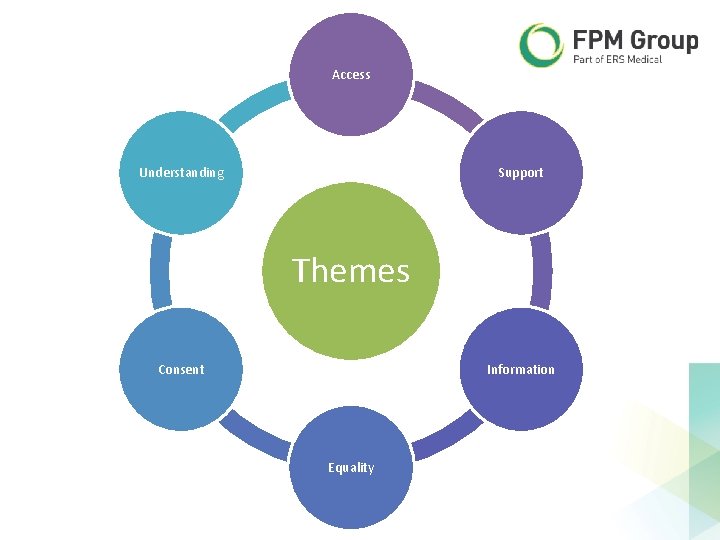
Access Understanding Support Themes Consent Information Equality
Thank you for watching! For further information please visit our website: www. firstpracticemanagement. co. uk Or for details on Thornfields’ training courses visit: www. thornfields. co. uk