Computer Supported Cooperative Work CSCW and Computer Mediated
- Slides: 13
Computer Supported Cooperative Work (CSCW) and Computer Mediated Communication (CMC)
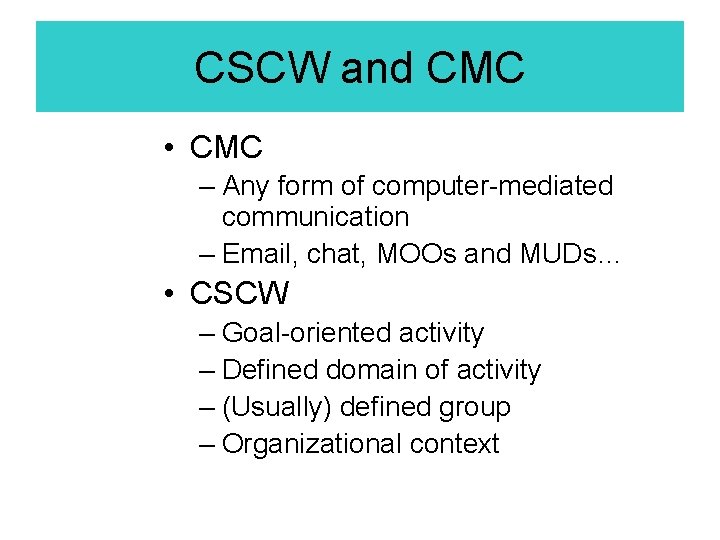
CSCW and CMC • CMC – Any form of computer-mediated communication – Email, chat, MOOs and MUDs… • CSCW – Goal-oriented activity – Defined domain of activity – (Usually) defined group – Organizational context
Types of CSCW systems • • Meeting support Shared drawing, collaborative writing Awareness Workflow Organizational memory Toolkits Computer supported collaborative learning Other computer mediated communication (email etc. )
CSCW Issues • Designers: Designing effective systems • Organizations: – Choosing systems appropriate to task & org – Choosing tasks appropriate to CSCW & technology – Ensuring adoption and effective use of systems – Making needed organizational changes to ensure adoption and use – More generally, understanding how organizational change comes about, is effectively managed
CSCW Research • Technologists – Systems design • Social scientists – What social science can contribute to designing systems that work well and will be used – What soc sci can contribute to organizational understanding and action -- how do work, social relations change with collaborative tech? – What CSCW reveals about collaboration • Collaboration between them – Crossing the “divide” between social and technical
Issues in CSCW Research • Understanding cooperative work – Offline – and implications for online • How do we manage interactions offline? • Supported existing effective work AND social practices • Helping in transition to, use of new technology – Online • Implications for design • Implications for organizational practices, policies • Understanding collaborative activity online • Designing groupware – Technical issues – Social, organizational issues
Concerns of CSCW/CMC Users • Trust • Credit, intellectual ownership • The workload of making information available to others • Reward systems/incentives • Privacy • Accountability: – Being held responsible for one’s actions – outcomes, rewards, penalties – Needing to account for one’s actions – explanation, justification
Dimensions of Collaborative Work • Co-located vs. remote • Synchronous vs. asynchronous • Degree/type of interdependence of work – Serial, parallel dependence; interdependence… • Nature of the task • Tools required (e. g. drawing, visualization)
Participants • Shared goals • Power relations • Similarity – Culture, experience, age, sex, profession, education… • Degree of closeness, acquaintance – Work history, experience working together – Informal interaction • Perceived trustworthiness – Capability • Training, qualifications; prior experience together – Reliability
Technology • Sociotechnical systems – Fit with practices, understandings… – Process vs. practice • Adaptability, flexibility • Medium richness • Support for informal interaction, social negotiation, emerging norms – “back channels” • Ability to handle exceptions • Awareness • Control over visibility of communications exchanges/info • Reliability! • Durability (may be preferred or not – how easy to convert if don’t like it? )
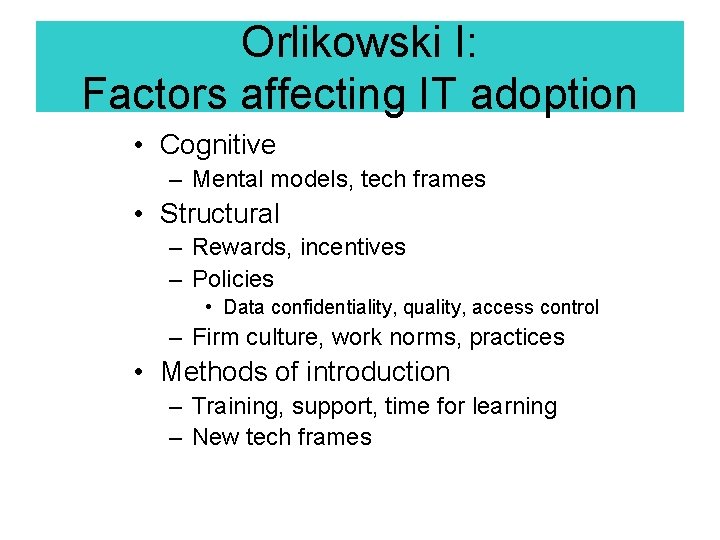
Orlikowski I: Factors affecting IT adoption • Cognitive – Mental models, tech frames • Structural – Rewards, incentives – Policies • Data confidentiality, quality, access control – Firm culture, work norms, practices • Methods of introduction – Training, support, time for learning – New tech frames
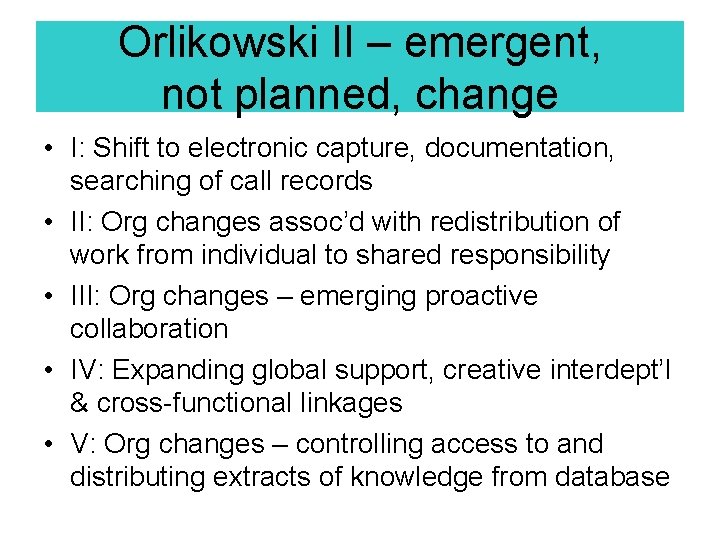
Orlikowski II – emergent, not planned, change • I: Shift to electronic capture, documentation, searching of call records • II: Org changes assoc’d with redistribution of work from individual to shared responsibility • III: Org changes – emerging proactive collaboration • IV: Expanding global support, creative interdept’l & cross-functional linkages • V: Org changes – controlling access to and distributing extracts of knowledge from database
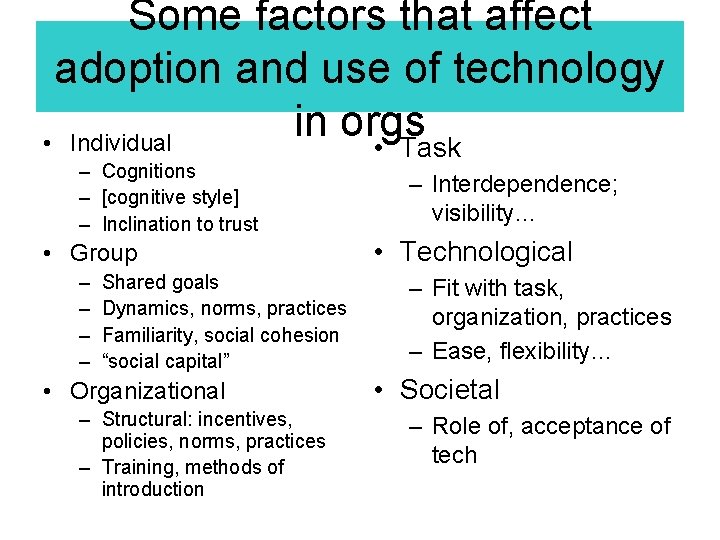
Some factors that affect adoption and use of technology in orgs • Individual • Task – Cognitions – [cognitive style] – Inclination to trust • Group – – Shared goals Dynamics, norms, practices Familiarity, social cohesion “social capital” • Organizational – Structural: incentives, policies, norms, practices – Training, methods of introduction – Interdependence; visibility… • Technological – Fit with task, organization, practices – Ease, flexibility… • Societal – Role of, acceptance of tech