COMPONENTS OF THE PROGRAM IN ITS UNIT ON
- Slides: 17
COMPONENTS OF THE PROGRAM IN ITS UNIT ON EDUCATION WITH FOCUS ON LABOR COMPETENCES Consejo de Normalización y Certificación de Competencia Laboral
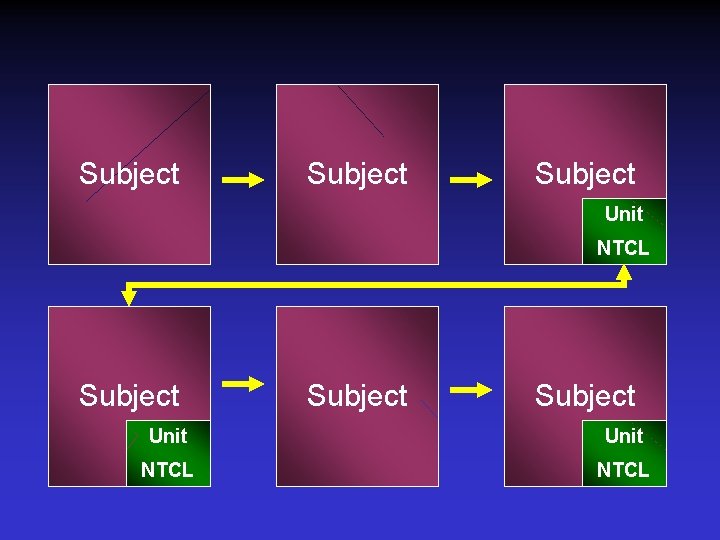
Subject Subject Unit NTCL
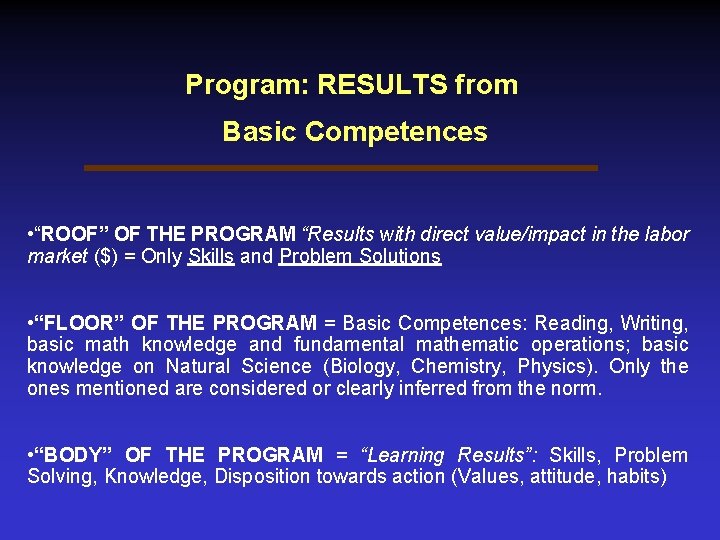
Program: RESULTS from Basic Competences • “ROOF” OF THE PROGRAM “Results with direct value/impact in the labor market ($) = Only Skills and Problem Solutions • “FLOOR” OF THE PROGRAM = Basic Competences: Reading, Writing, basic math knowledge and fundamental mathematic operations; basic knowledge on Natural Science (Biology, Chemistry, Physics). Only the ones mentioned are considered or clearly inferred from the norm. • “BODY” OF THE PROGRAM = “Learning Results”: Skills, Problem Solving, Knowledge, Disposition towards action (Values, attitude, habits)
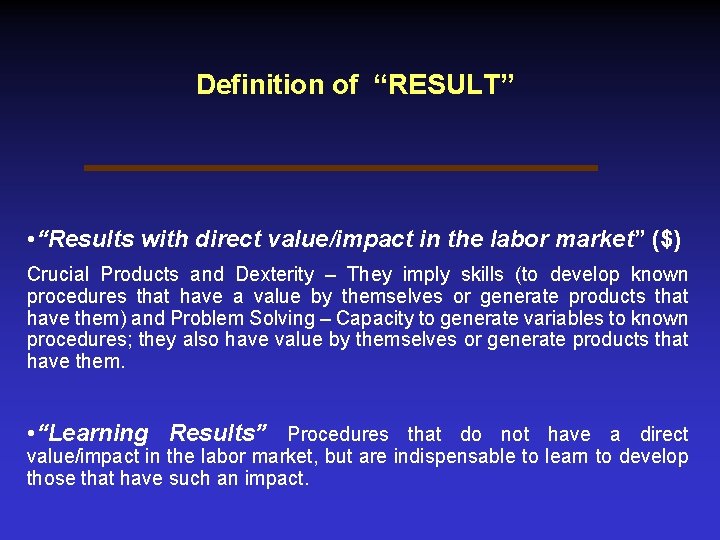
Definition of “RESULT” • “Results with direct value/impact in the labor market” ($) Crucial Products and Dexterity – They imply skills (to develop known procedures that have a value by themselves or generate products that have them) and Problem Solving – Capacity to generate variables to known procedures; they also have value by themselves or generate products that have them. • “Learning Results” Procedures that do not have a direct value/impact in the labor market, but are indispensable to learn to develop those that have such an impact.
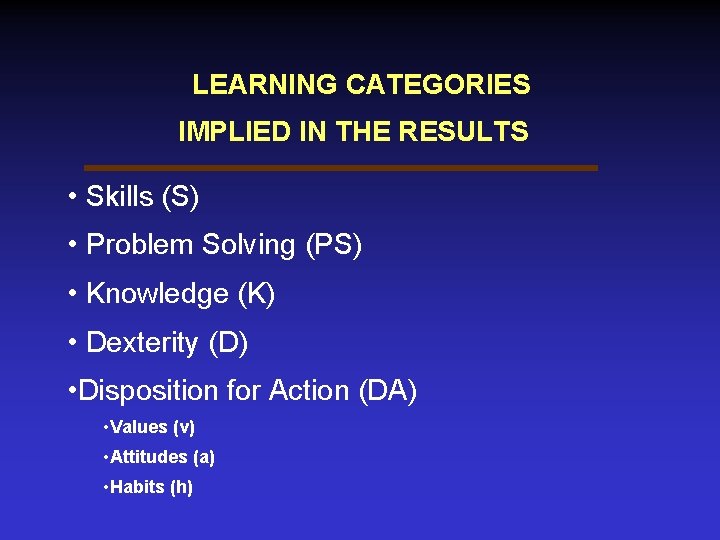
LEARNING CATEGORIES IMPLIED IN THE RESULTS • Skills (S) • Problem Solving (PS) • Knowledge (K) • Dexterity (D) • Disposition for Action (DA) • Values (v) • Attitudes (a) • Habits (h)
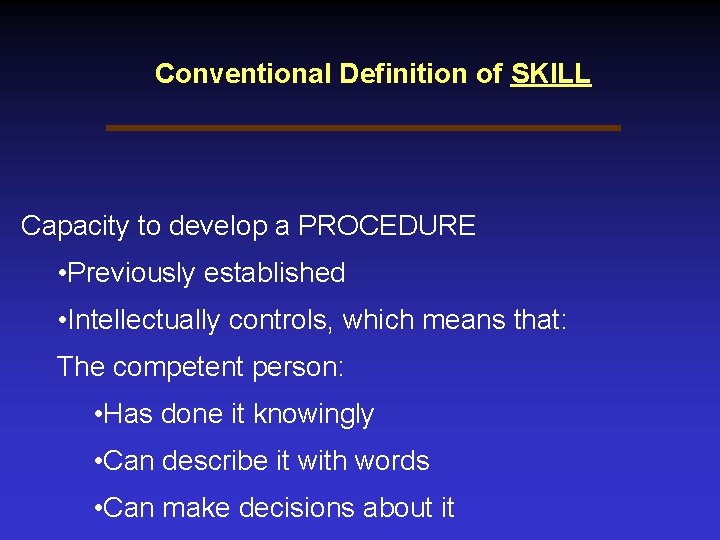
Conventional Definition of SKILL Capacity to develop a PROCEDURE • Previously established • Intellectually controls, which means that: The competent person: • Has done it knowingly • Can describe it with words • Can make decisions about it
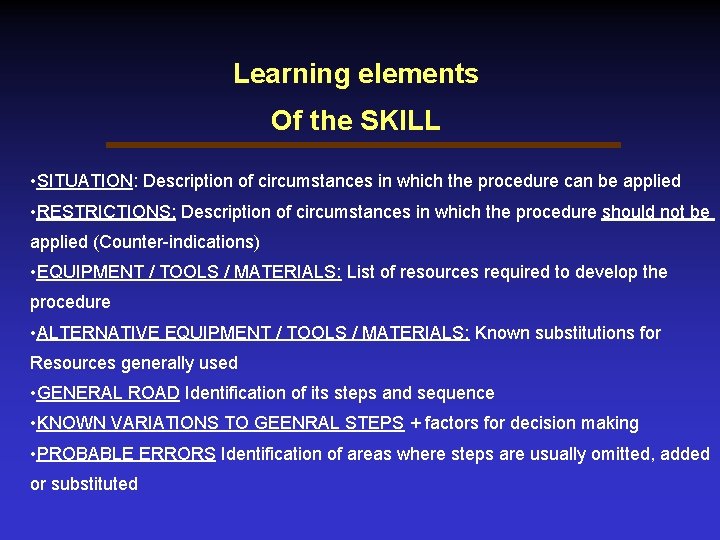
Learning elements Of the SKILL • SITUATION: Description of circumstances in which the procedure can be applied • RESTRICTIONS: Description of circumstances in which the procedure should not be applied (Counter-indications) • EQUIPMENT / TOOLS / MATERIALS: List of resources required to develop the procedure • ALTERNATIVE EQUIPMENT / TOOLS / MATERIALS: Known substitutions for Resources generally used • GENERAL ROAD Identification of its steps and sequence • KNOWN VARIATIONS TO GEENRAL STEPS + factors for decision making • PROBABLE ERRORS Identification of areas where steps are usually omitted, added or substituted
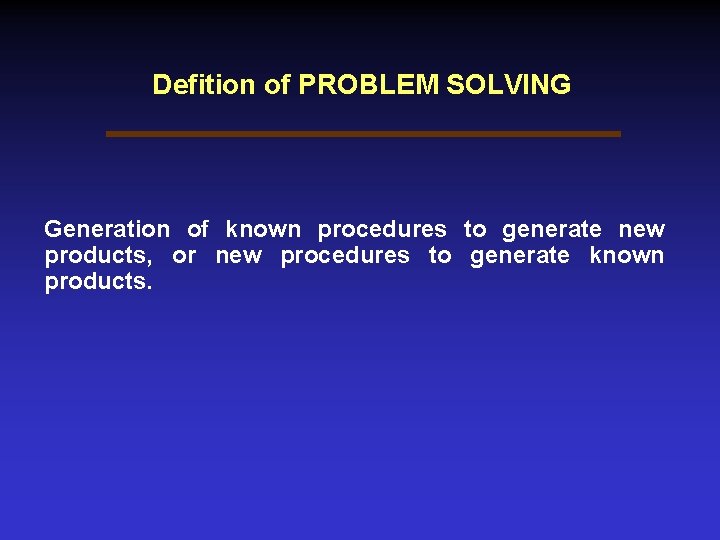
Defition of PROBLEM SOLVING Generation of known procedures to generate new products, or new procedures to generate known products.
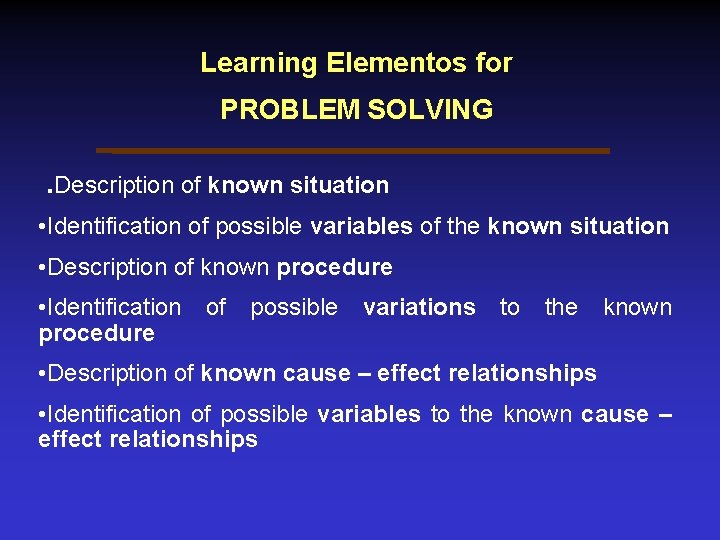
Learning Elementos for PROBLEM SOLVING. Description of known situation • Identification of possible variables of the known situation • Description of known procedure • Identification of possible variations to the known procedure • Description of known cause – effect relationships • Identification of possible variables to the known cause – effect relationships
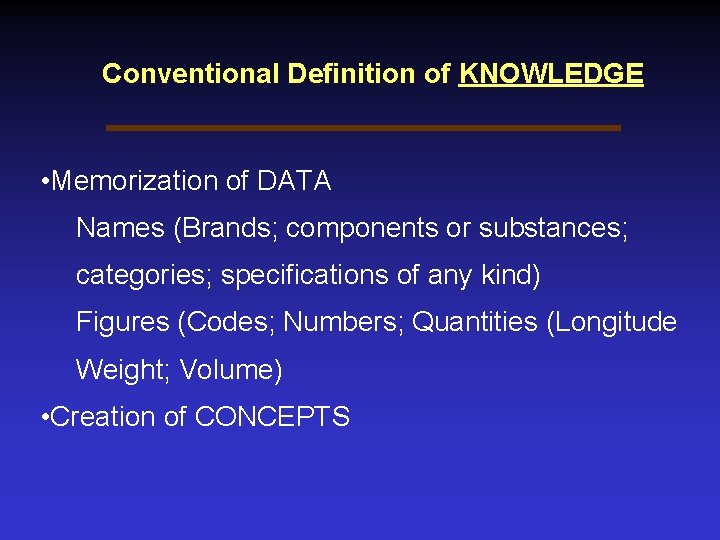
Conventional Definition of KNOWLEDGE • Memorization of DATA Names (Brands; components or substances; categories; specifications of any kind) Figures (Codes; Numbers; Quantities (Longitude Weight; Volume) • Creation of CONCEPTS
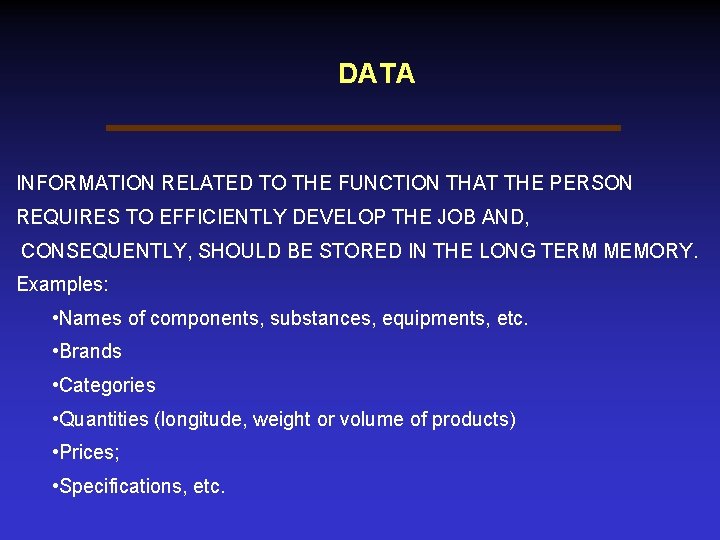
DATA INFORMATION RELATED TO THE FUNCTION THAT THE PERSON REQUIRES TO EFFICIENTLY DEVELOP THE JOB AND, CONSEQUENTLY, SHOULD BE STORED IN THE LONG TERM MEMORY. Examples: • Names of components, substances, equipments, etc. • Brands • Categories • Quantities (longitude, weight or volume of products) • Prices; • Specifications, etc.
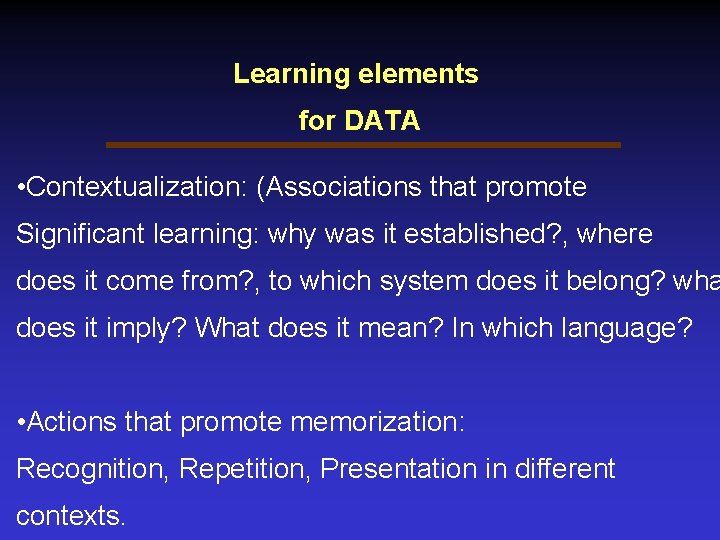
Learning elements for DATA • Contextualization: (Associations that promote Significant learning: why was it established? , where does it come from? , to which system does it belong? wha does it imply? What does it mean? In which language? • Actions that promote memorization: Recognition, Repetition, Presentation in different contexts.
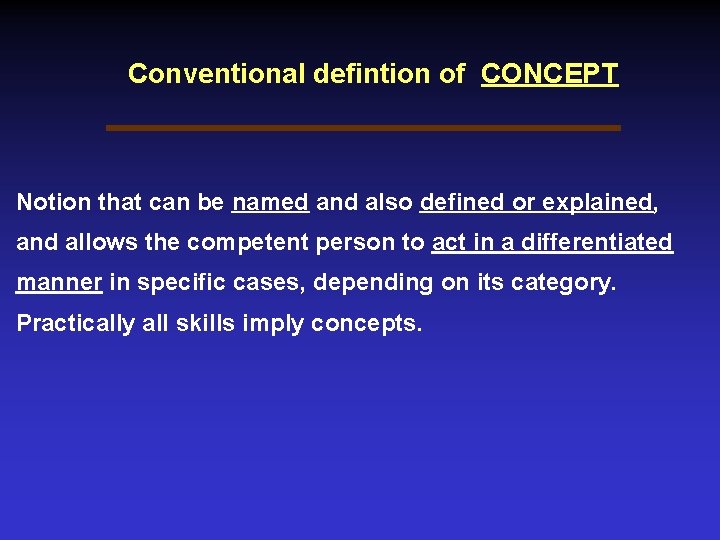
Conventional defintion of CONCEPT Notion that can be named and also defined or explained, and allows the competent person to act in a differentiated manner in specific cases, depending on its category. Practically all skills imply concepts.
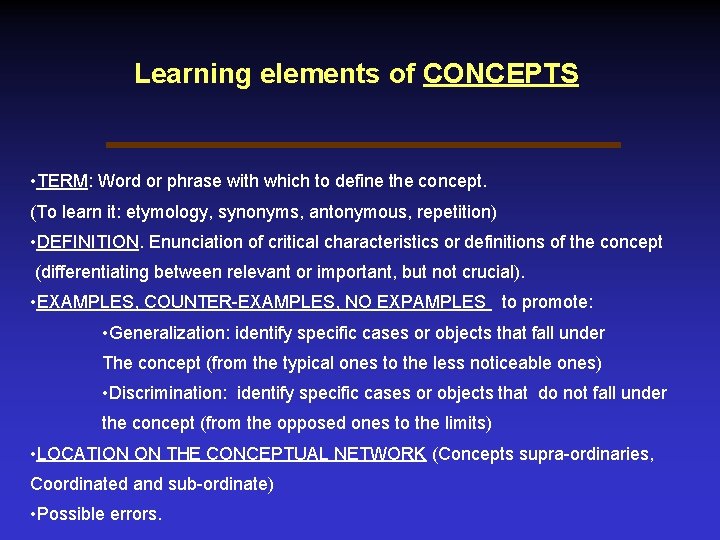
Learning elements of CONCEPTS • TERM: Word or phrase with which to define the concept. (To learn it: etymology, synonyms, antonymous, repetition) • DEFINITION. Enunciation of critical characteristics or definitions of the concept (differentiating between relevant or important, but not crucial). • EXAMPLES, COUNTER-EXAMPLES, NO EXPAMPLES to promote: • Generalization: identify specific cases or objects that fall under The concept (from the typical ones to the less noticeable ones) • Discrimination: identify specific cases or objects that do not fall under the concept (from the opposed ones to the limits) • LOCATION ON THE CONCEPTUAL NETWORK (Concepts supra-ordinaries, Coordinated and sub-ordinate) • Possible errors.
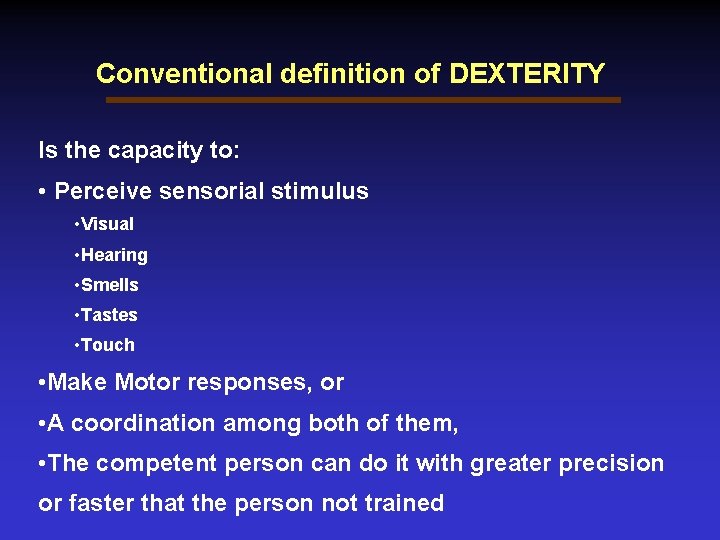
Conventional definition of DEXTERITY Is the capacity to: • Perceive sensorial stimulus • Visual • Hearing • Smells • Tastes • Touch • Make Motor responses, or • A coordination among both of them, • The competent person can do it with greater precision or faster that the person not trained
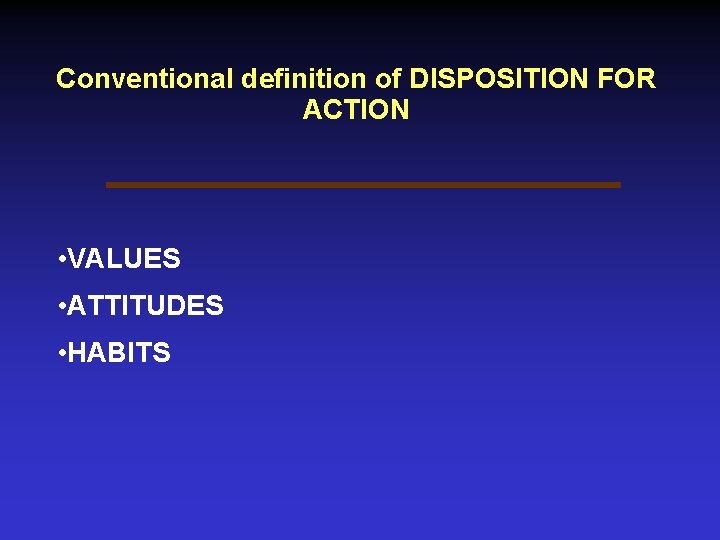
Conventional definition of DISPOSITION FOR ACTION • VALUES • ATTITUDES • HABITS
Organization certified in ISO 9001 by: Consejo de Normalización y Certificación de Competencia Laboral Address: Av. Constituyentes No. 810 Col. Lomas Altas C. P. 11950 Delegación Miguel Hidalgo Teléfono: 5261 -58 -00 01 800 708 2000 Internet: http: //www. conocer. org. mx e-mail: info@conocer. org. mx