Chapter 7 Life Span Development Introduction Human develop

- Slides: 33
Chapter 7 Life Span Development
Introduction • Human develop throughout their lives. • EMTs must be aware of the physical changes a person undergoes at various stages of life. – May alter the approach to patient care
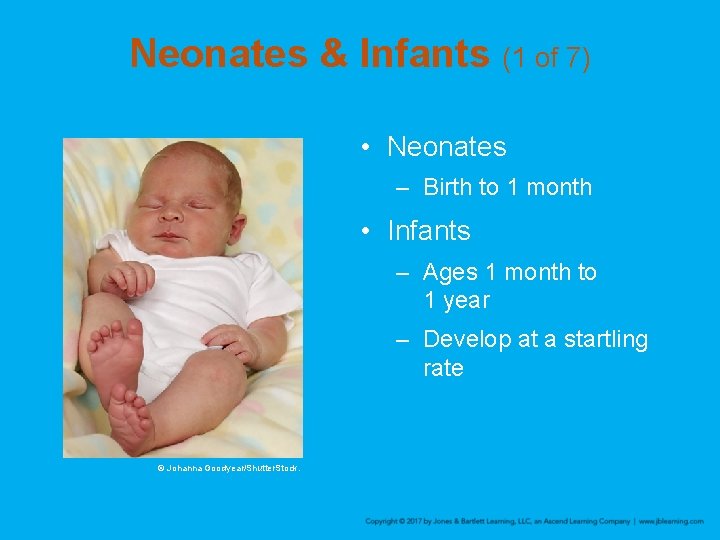
Neonates & Infants (1 of 7) • Neonates – Birth to 1 month • Infants – Ages 1 month to 1 year – Develop at a startling rate © Johanna Goodyear/Shutter. Stock.
Neonates & Infants (2 of 7) • Vital signs – The younger the person, the faster the pulse rate and respirations – Blood pressure directly corresponds to the patient’s weight and typically increases with age • Weight – Neonate weighs 6 to 8 lb (3 to 3. 5 kg) at birth. – Growth of about 30 g per day
Neonates & Infants (3 of 7) • Cardiovascular system – At birth, neonate makes transition from fetal to independent circulation. • Pulmonary system – Infants younger than 6 months are prone to nasal congestion. – Infants have larger tongues and shorter, narrower airways, so airway obstruction is more common.
Neonates & Infants (4 of 7) • Nervous system – Continues to evolve after birth – Moro reflex – Palmar grasp – Rooting reflex – Sucking reflex
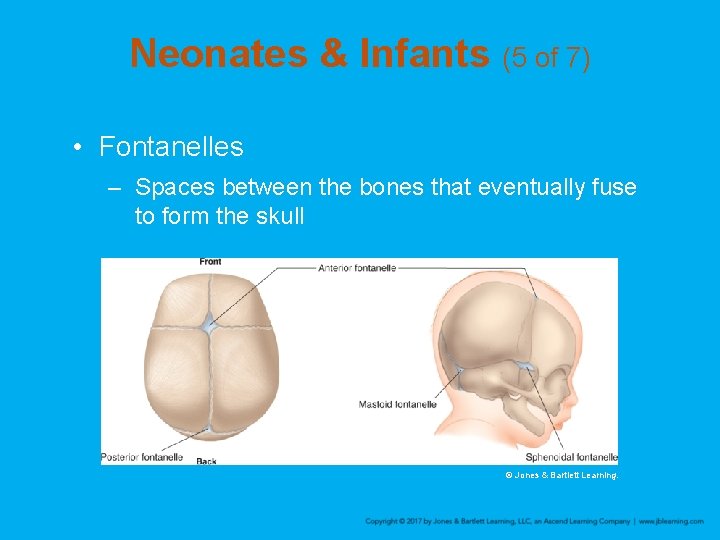
Neonates & Infants (5 of 7) • Fontanelles – Spaces between the bones that eventually fuse to form the skull © Jones & Bartlett Learning.
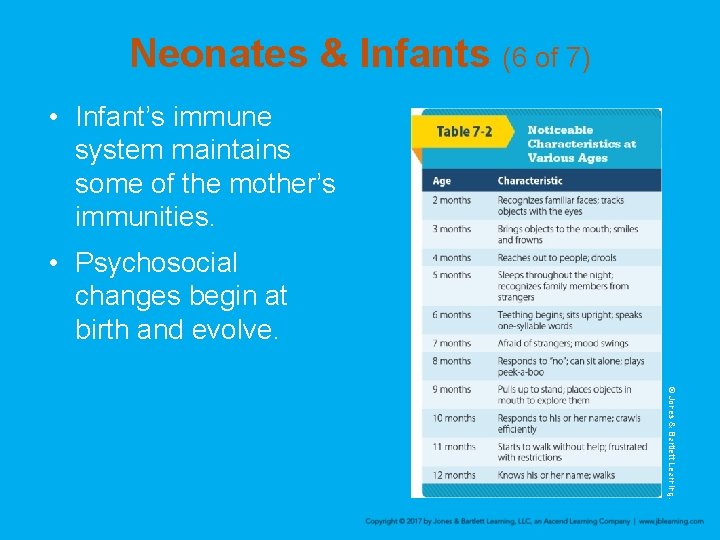
Neonates & Infants (6 of 7) • Infant’s immune system maintains some of the mother’s immunities. • Psychosocial changes begin at birth and evolve. © Jones & Bartlett Learning.
Neonates & Infants (7 of 7) • Psychosocial changes (cont’d) – Crying is the main method of communicating. – Bonding is based on a secure attachment. – Separation anxiety is common in older infants. – Trust and mistrust involves needs being met.
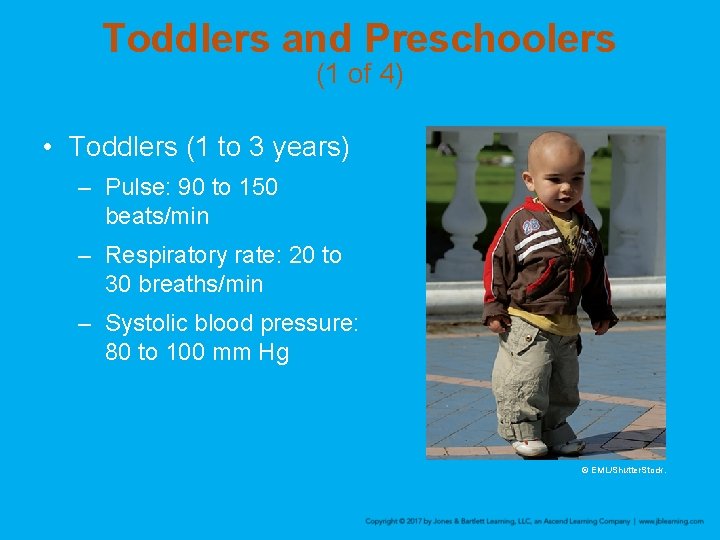
Toddlers and Preschoolers (1 of 4) • Toddlers (1 to 3 years) – Pulse: 90 to 150 beats/min – Respiratory rate: 20 to 30 breaths/min – Systolic blood pressure: 80 to 100 mm Hg © EML/Shutter. Stock.
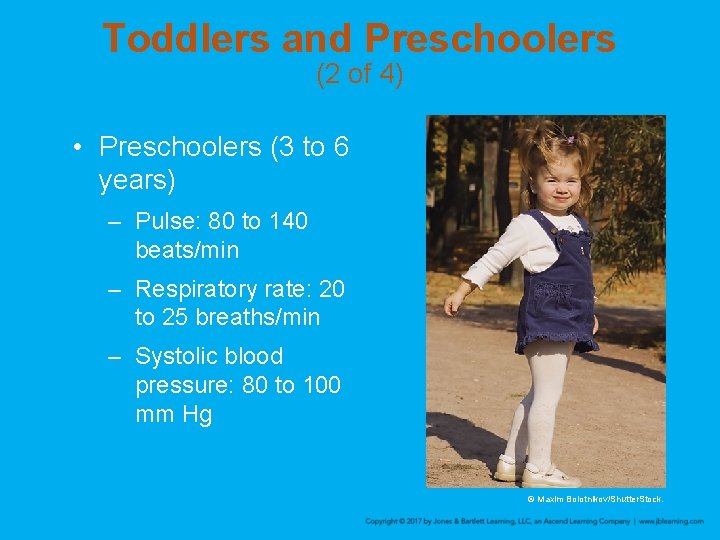
Toddlers and Preschoolers (2 of 4) • Preschoolers (3 to 6 years) – Pulse: 80 to 140 beats/min – Respiratory rate: 20 to 25 breaths/min – Systolic blood pressure: 80 to 100 mm Hg © Maxim Bolotnikov/Shutter. Stock.
Toddlers and Preschoolers (3 of 4) • Do not have well-developed lung musculature • Passive immunity is lost. • Neuromuscular growth makes considerable progress. • Average for completion of toilet training is 28 months of age
Toddlers and Preschoolers (4 of 4) • Psychosocial changes – Learn to speak and express themselves – Master basic language – Interact and play games with other children – Begin to understand cause and effect
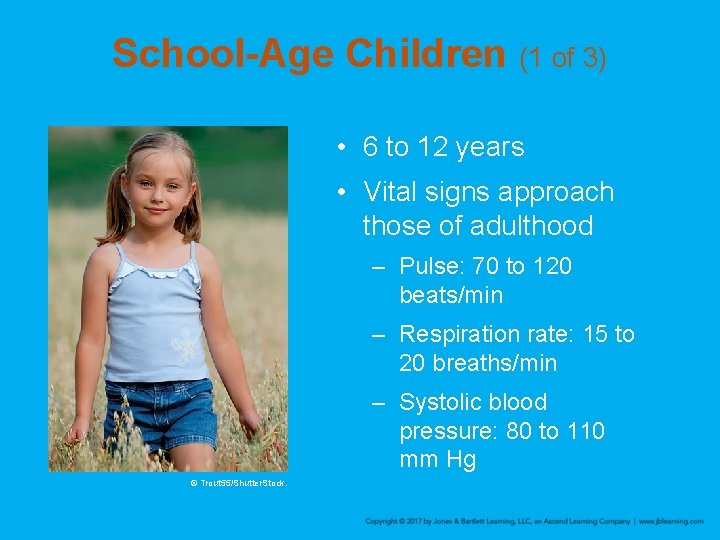
School-Age Children (1 of 3) • 6 to 12 years • Vital signs approach those of adulthood – Pulse: 70 to 120 beats/min – Respiration rate: 15 to 20 breaths/min – Systolic blood pressure: 80 to 110 mm Hg © Trout 55/Shutter. Stock.
School-Age Children (2 of 3) • Obvious physical traits and body function changes become apparent. • Growth of 4 lb and 2. 5″ each year • Permanent teeth come in. • Brain activity increases in both hemispheres.
School-Age Children (3 of 3) • Psychosocial changes – Preconventional reasoning: act to avoid punishment and get what they want – Conventional reasoning: look for approval from peers and society – Postconventional reasoning: make decisions guided by their conscience – Self-concept and self-esteem develop.
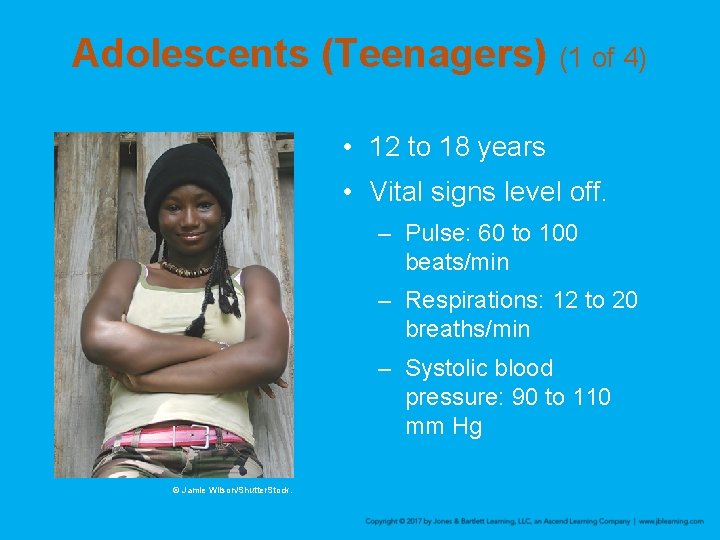
Adolescents (Teenagers) (1 of 4) • 12 to 18 years • Vital signs level off. – Pulse: 60 to 100 beats/min – Respirations: 12 to 20 breaths/min – Systolic blood pressure: 90 to 110 mm Hg © Jamie Wilson/Shutter. Stock.
Adolescents (Teenagers) (2 of 4) • 2 - to 3 -year growth spurt – Girls finish by 16 years, boys by 18 years. • Reproductive system matures. – Secondary sexual development takes place. – Voices start to change. – Menstruation begins.
Adolescents (Teenagers) (3 of 4) • Psychosocial changes – Adolescents and their families often deal with conflict. – Privacy becomes an issue. – Self-consciousness increases. – Adolescents may struggle to create their own identity.
Adolescents (Teenagers) (4 of 4) • Psychosocial changes (cont’d) – Antisocial behavior and peer pressure peak at age 14 to 16 years. • Smoking, illicit drug use, unprotected sex • Eating disorders – Code of ethics develops. – High risk of suicide and depression
Early Adults • Ages 19 to 40 years • Vital signs do not vary greatly. • From 19 to 25 years, the body should be functioning at its optimal level. • Psychosocial changes – Life centers on work, family, and stress. – Settling down, love, childbirth – One of the more stable periods of life
Middle Adults (1 of 2) • Ages 41 to 60 years • Vital signs remain the same. • Vulnerable to vision and hearing loss • Cancer incidence increases. • Menopause occurs in late 40 s or early 50 s • Diabetes, hypertension, weight problems • Exercise and healthy diet are important.
Middle Adults (2 of 2) • Psychosocial changes – Focus on achieving life goals – Readjust lifestyle as children leave home – Generally have the physical, emotional, and spiritual reserves to handle life’s issues – May be caring for children leaving for college, along with aging parents
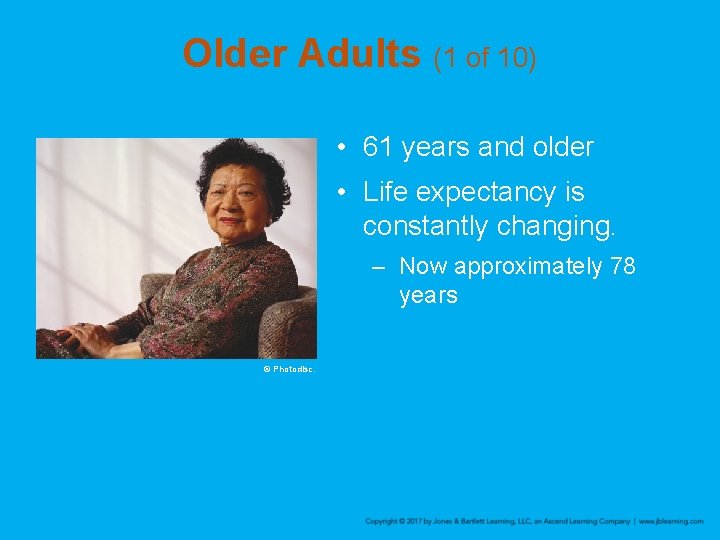
Older Adults (1 of 10) • 61 years and older • Life expectancy is constantly changing. – Now approximately 78 years © Photodisc.
Older Adults (2 of 10) • Vital signs depend on: – Overall health – Medical conditions – Medications taken • Older adults are often able to overcome numerous medical problems but may need multiple medications.
Older Adults (3 of 10) • Cardiovascular system – Declines with age largely due to atherosclerosis – Heart rate and cardiac output decrease. – Vascular system becomes stiff. – Ability to replace blood cells declines, as does blood volume.
Older Adults (4 of 10) • Respiratory system – Size of airway increases. – Surface area of alveoli decrease. – Natural elasticity of the lungs decreases. • Breathing becomes more labor intense. – Aspiration and obstruction become more likely. – Vital capacity decreases. – Residual volume increases.
Older Adults (5 of 10) • Endocrine system – Insulin production drops off. – Metabolism decreases. – Physical activity slows, but often there is no decrease in food intake. – Hormone production for both sexes gradually decreases. – Sexual desire may diminish, but does not cease.
Older Adults (6 of 10) • Digestive system – Taste sensations decrease. – Saliva secretion decreases. – Ability of intestines to contract and move food diminishes.
Older Adults (7 of 10) • Renal system – Filtration function declines. – Kidney mass decreases by 20%. – Decreased ability to clear wastes from the body – Decreased ability to conserve fluids when needed
Older Adults (8 of 10) • Nervous system – Motor and sensory neural networks slow down. – Neurons are lost. – Sleep patterns change. – Peripheral nerve sensation diminishes. – Brain mass decreases.
Older Adults (9 of 10) • Sensory changes – Most older adults can see and hear well. – May need glasses or hearing aids – Visual distortions are common. – Hearing loss is four times more common than vision loss.
Older Adults (10 of 10) • Psychosocial changes – Most people retain high brain function until about 5 years before death. – Statistics indicate that 95% of the elderly live at home. – Financial limitations may restrict access to health care or medications. – Isolation and depression can be challenges.