
Chapter 3 Section 2 Hinduism and Buddhism Develop

Chapter 3, Section 2 Hinduism and Buddhism Develop
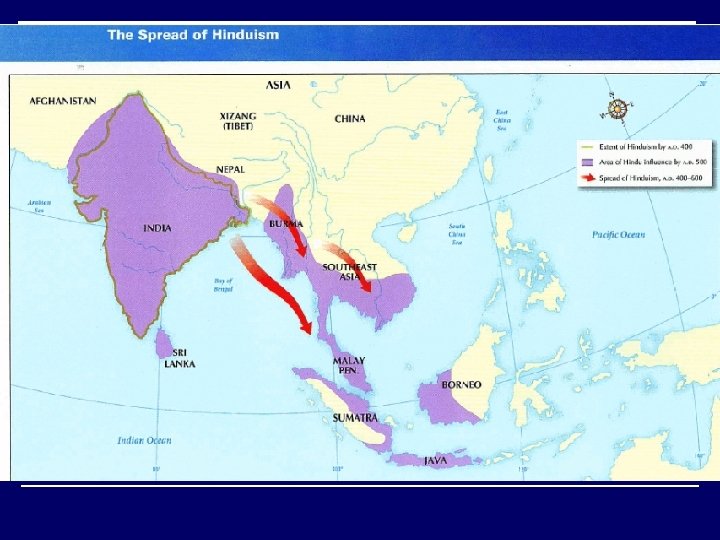
Hinduism Evolves Over Centuries o. Hinduism n Collection of religious beliefs that developed slowly over time n No one founder with a single set of ideas
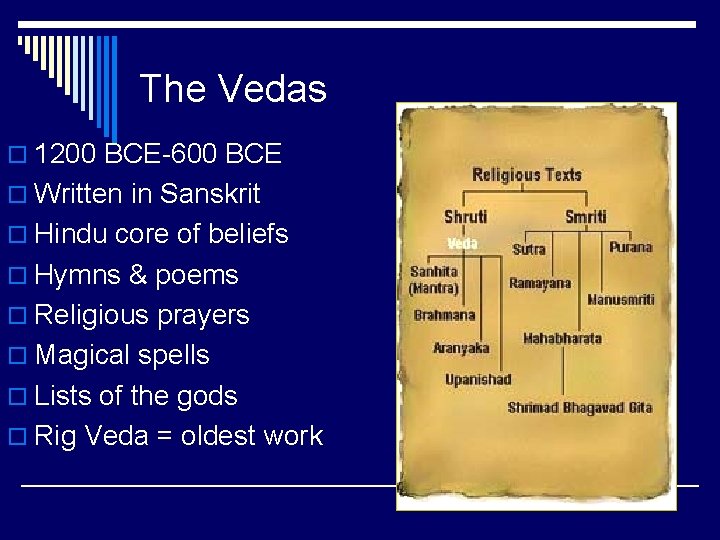
The Vedas o 1200 BCE-600 BCE o Written in Sanskrit o Hindu core of beliefs o Hymns & poems o Religious prayers o Magical spells o Lists of the gods o Rig Veda = oldest work
o Origins and Beliefs n 750 -500 BC, Hindu teachers create Upanishads-texts of teachings n Each person has atman-soul united with all others in Brahman n In reincarnation, people reborn to new lives n A soul’s good and bad deeds, karma, determines course of new life
o Hinduism Changes and Develops n Over last 2, 500 years different forms of god grow in importance n Today, Hindus choose own path to moksha-a state of perfect understanding o Hinduism and Society n Hinduism strengthened the caste system
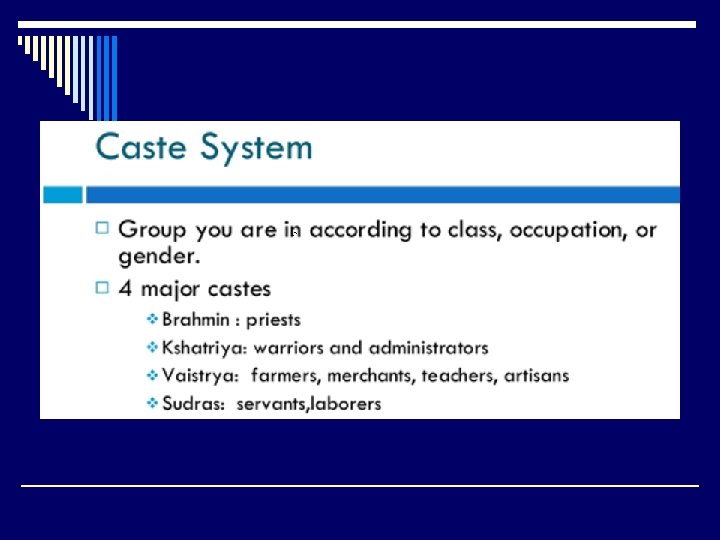
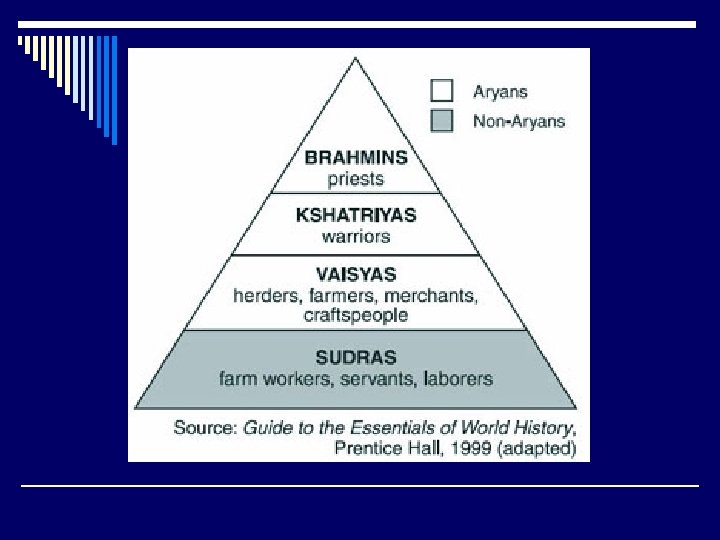

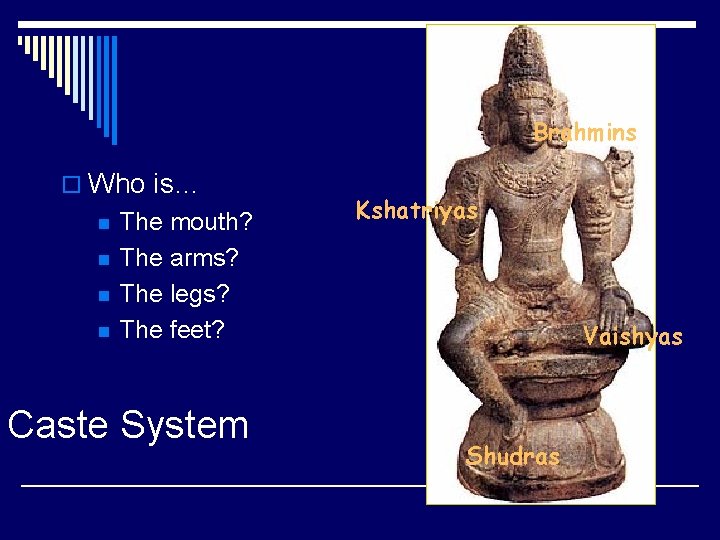
Brahmins o Who is… n n The mouth? The arms? The legs? The feet? Caste System Kshatriyas Vaishyas Shudras
o. New Religions Arise n Jainism, a new religion, arises in 500 s BC n Jains will not harm any creature n They work in trade, commerce; practice religious tolerance
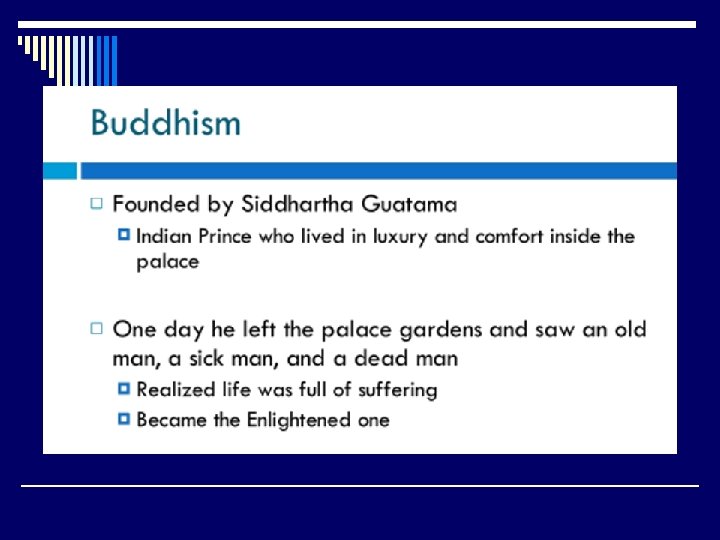
The Buddha Seeks Enlightenment o. Siddhartha Gautama n Founder of Buddhism; priests prophesized his greatness
o Siddhartha's Quest n Raised in isolation, Siddhartha Gautama wants to learn about world n Seeks enlightenment (wisdom), how to escape human suffering n Tries many methods; gains enlightenment by meditating n Becomes the Buddha, the “enlightened one”

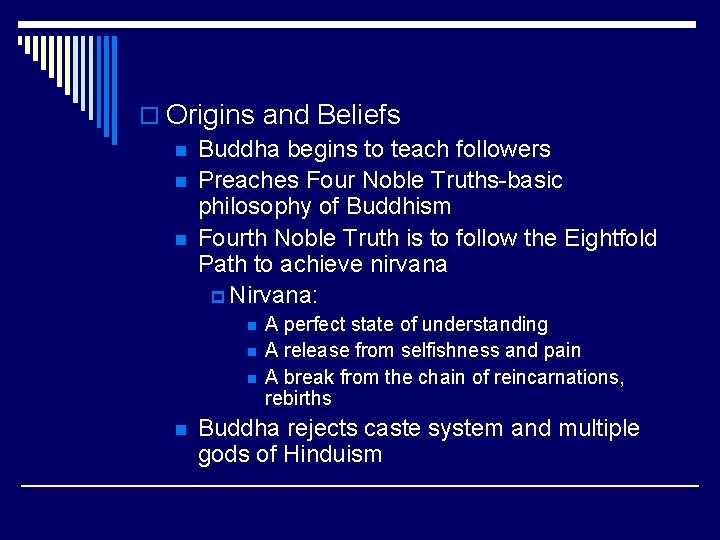
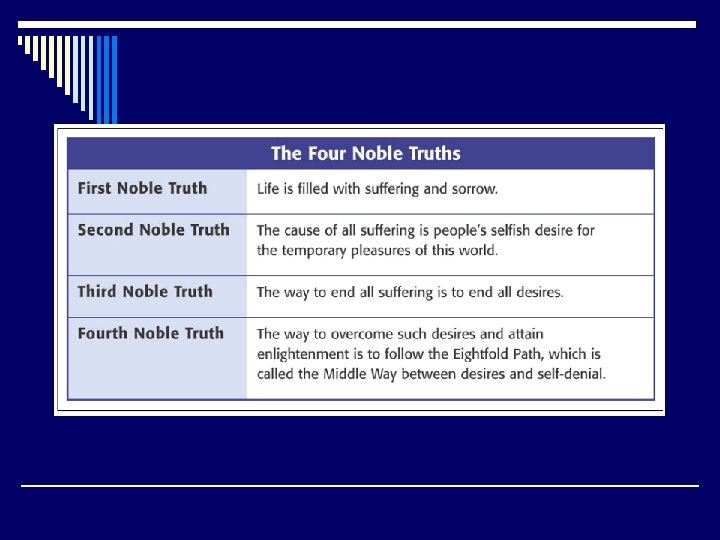
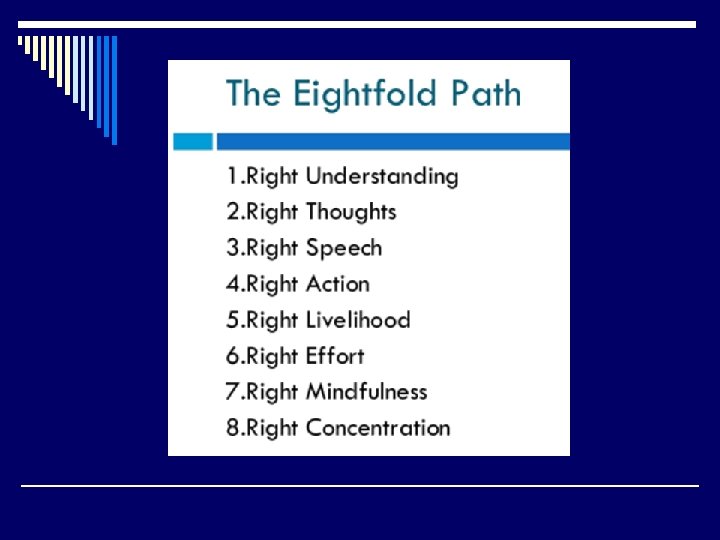
o Origins and Beliefs n Buddha begins to teach followers n Preaches Four Noble Truths-basic philosophy of Buddhism n Fourth Noble Truth is to follow the Eightfold Path to achieve nirvana p Nirvana: n n A perfect state of understanding A release from selfishness and pain A break from the chain of reincarnations, rebirths Buddha rejects caste system and multiple gods of Hinduism
o. The Religious Community n Some followers devote lives to religion, become monks and nuns n Three bases of Buddhism: p. Buddha preligious community pteachings
o. Buddhism and Society n Many followers at first among poor and lower caste n Monks and nuns spread Buddha’s teachings n Teachings written to become sacred literature

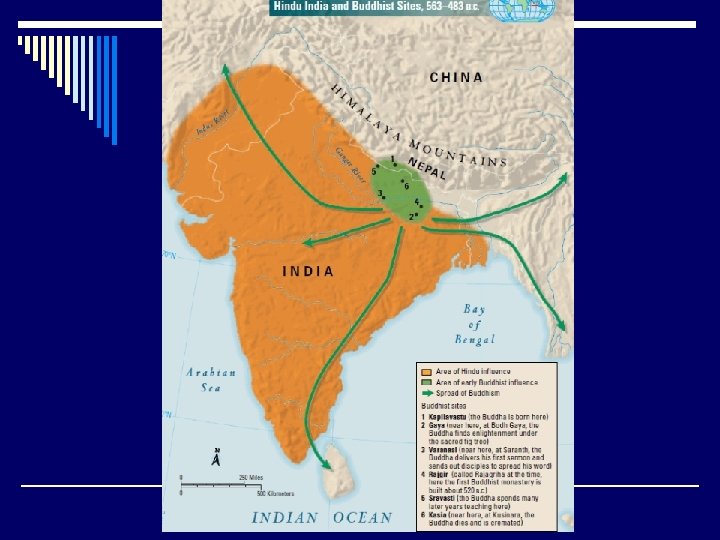
o. Buddhism in India n Spreads to other parts of Asia n Never gains firm hold in India; Hinduism remains strong n Buddhist pilgrims often visit India
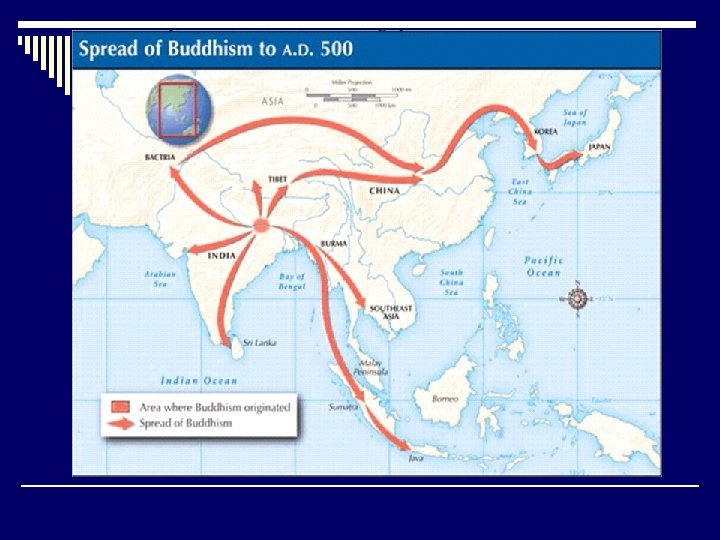
o. Trade and the Spread of Buddhism n Buddhism p. Sri spreads by traders to Lanka, Burma, Thailand, Sumatra p. China, Korea, Japan
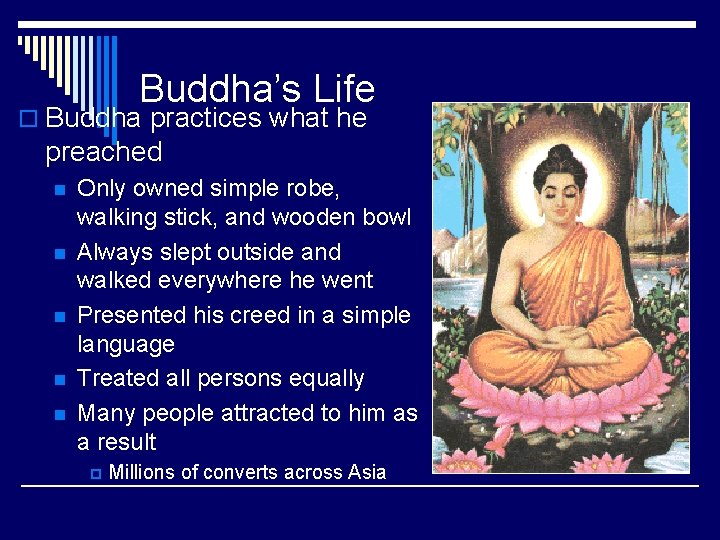
Buddha’s Life o Buddha practices what he preached n n n Only owned simple robe, walking stick, and wooden bowl Always slept outside and walked everywhere he went Presented his creed in a simple language Treated all persons equally Many people attracted to him as a result p Millions of converts across Asia

Spread of Buddhism o Convents and Monasteries: The Buddha had many followers, both men and women. He did not discriminate based on gender. o Death of the Buddha: He died of food poisoning at the home of a friend. o Scriptures: His teachings were collected in the Tripitika, or three baskets of wisdom.
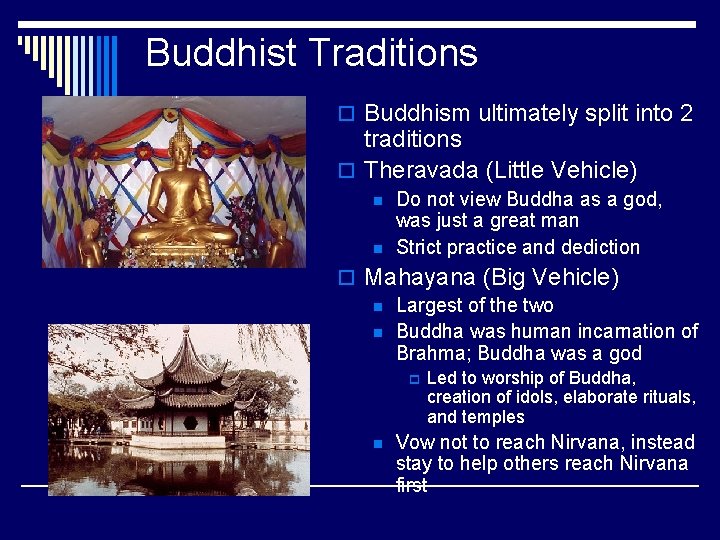
Buddhist Traditions o Buddhism ultimately split into 2 traditions o Theravada (Little Vehicle) n n Do not view Buddha as a god, was just a great man Strict practice and dediction o Mahayana (Big Vehicle) n Largest of the two n Buddha was human incarnation of Brahma; Buddha was a god p n Led to worship of Buddha, creation of idols, elaborate rituals, and temples Vow not to reach Nirvana, instead stay to help others reach Nirvana first
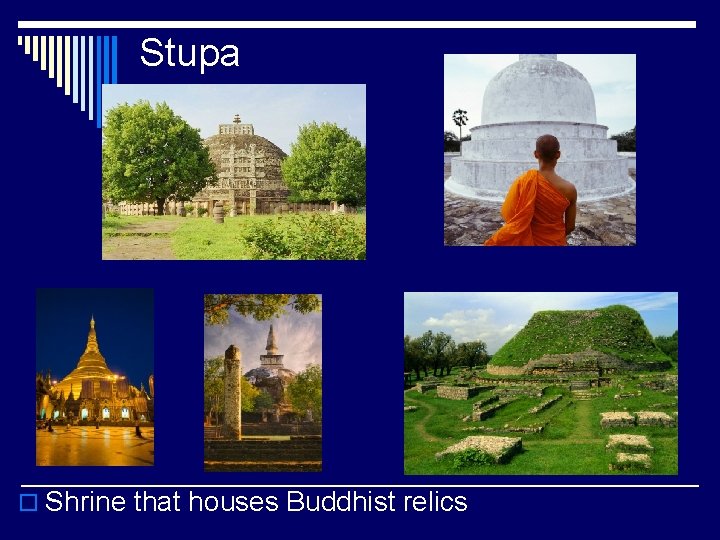
Stupa o Shrine that houses Buddhist relics

- Slides: 29