CHAPTER 6 Valuing Organizational Information Learning Outcomes n
- Slides: 13
CHAPTER 6 Valuing Organizational Information
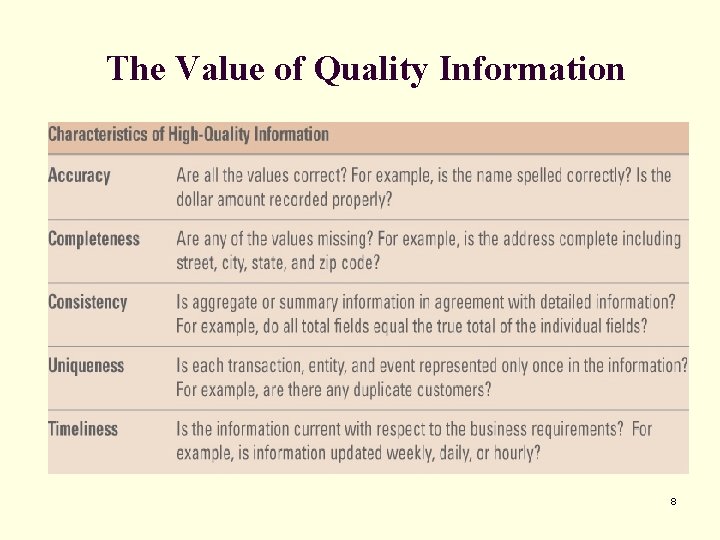
Learning Outcomes n Describe the broad levels, formats, and granularities of information n Differentiate between transactional and analytical information n List, describe, and provide an example of each of the five characteristics of highquality information n Assess the impact of low-quality information on an organization and the benefits of highquality information on an organization 2
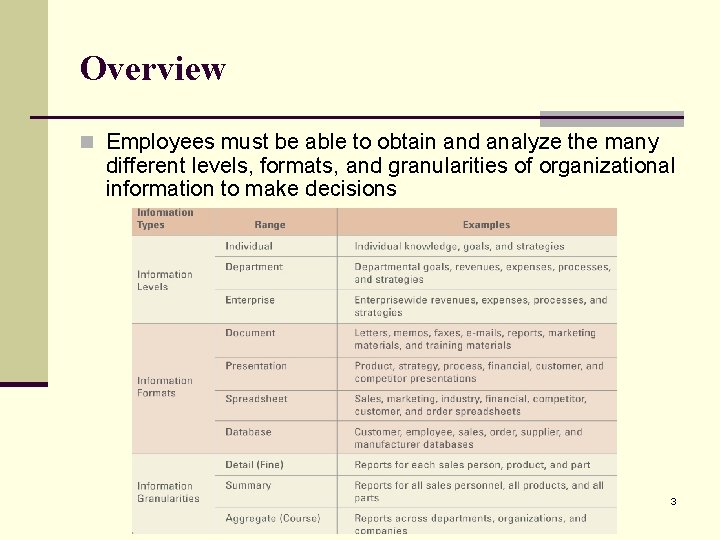
Overview n Employees must be able to obtain and analyze the many different levels, formats, and granularities of organizational information to make decisions 3
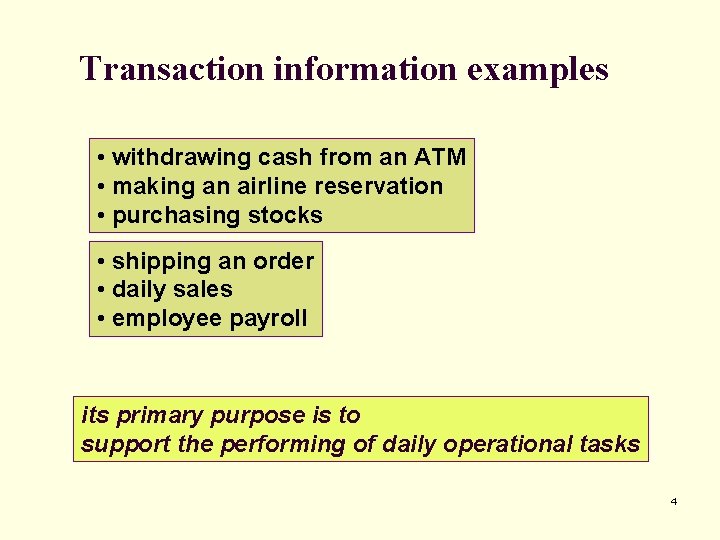
Transaction information examples • withdrawing cash from an ATM • making an airline reservation • purchasing stocks • shipping an order • daily sales • employee payroll its primary purpose is to support the performing of daily operational tasks 4
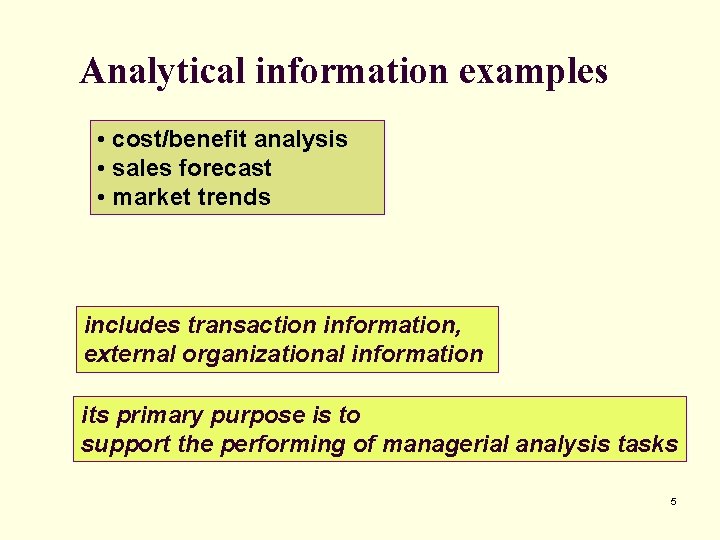
Analytical information examples • cost/benefit analysis • sales forecast • market trends includes transaction information, external organizational information its primary purpose is to support the performing of managerial analysis tasks 5
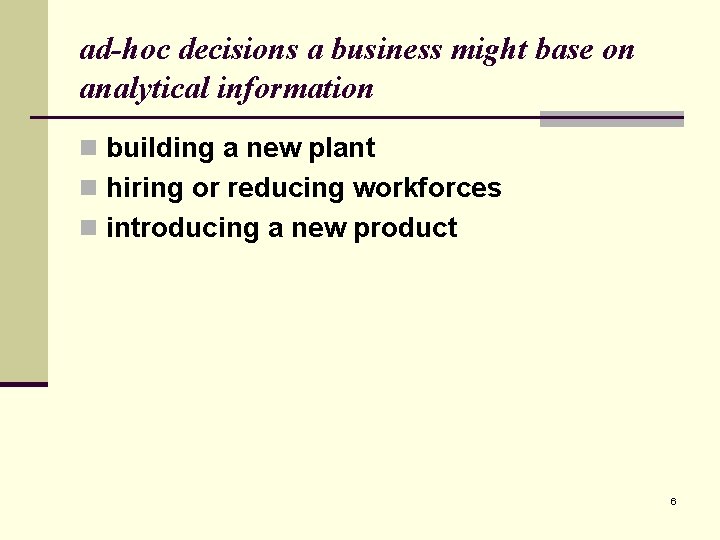
ad-hoc decisions a business might base on analytical information n building a new plant n hiring or reducing workforces n introducing a new product 6
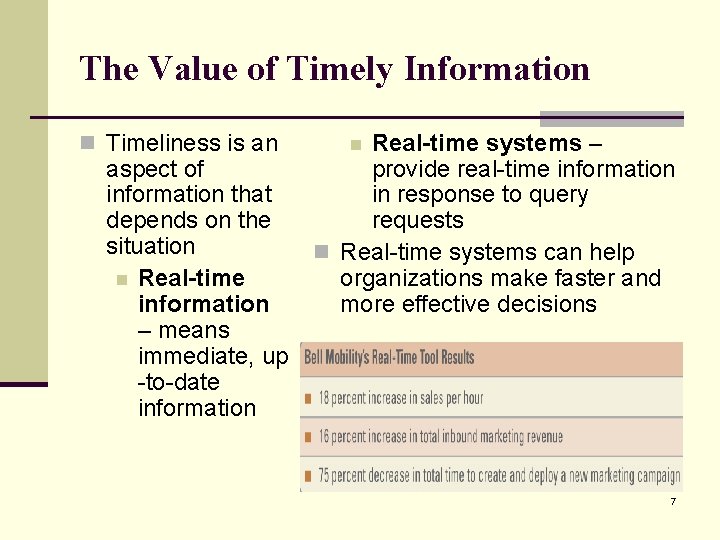
The Value of Timely Information n Timeliness is an aspect of information that depends on the situation n Real-time information – means immediate, up -to-date information Real-time systems – provide real-time information in response to query requests n Real-time systems can help organizations make faster and more effective decisions n 7
The Value of Quality Information 8
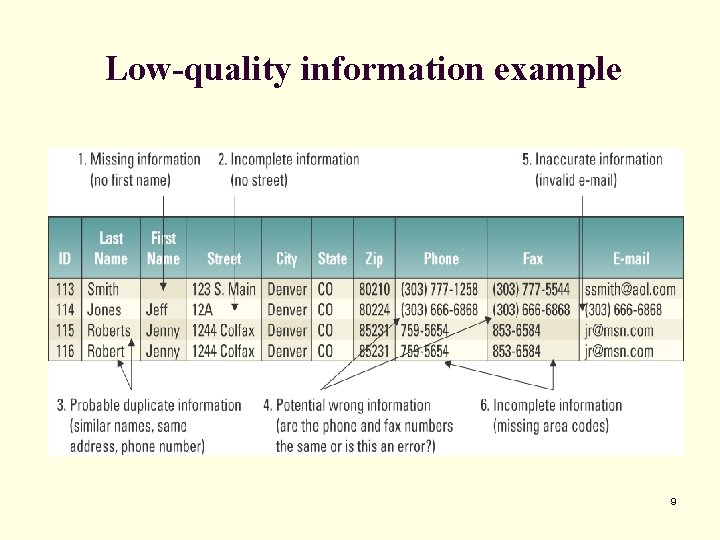
Low-quality information example 9
The four primary sources of lowquality information 1. Online customers intentionally enter inaccurate information to protect their privacy 2. Information from different systems that have different information entry standards and formats 3. Call center operators enter abbreviated or erroneous information by accident or to save time 4. Third party and external information contains inconsistencies, inaccuracies, and errors 10
Potential business effects resulting from lowquality information n Inability to accurately track customers n Difficulty identifying valuable customers n Inability to identify selling opportunities n Marketing to nonexistent customers n Difficulty tracking revenue due to inaccurate invoices n Inability to build strong customer relationships – which increases buyer power 11
The Benefits of High-Quality Information n High-quality information can significantly improve the chances of making a good decision n Good decisions can directly impact an organization's bottom line 12
Opening Case Questions: Searching for Revenue - Google Determine if Google’s search results are examples of transactional information or analytical information 2. Describe the ramifications on Google’s business if the search information it presented to its customers was of low-quality 3. Review the five common characteristics of highquality information and rank them in order of importance to Google’s business 4. Explain how the Web site Rate. My. Professors. com solved its problem of low-quality information 1. 13