Chapter 24 Section 1 Notes The Nixon Presidency
- Slides: 18
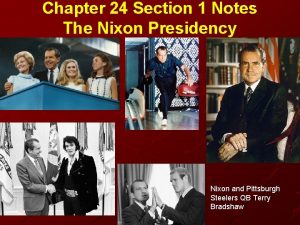
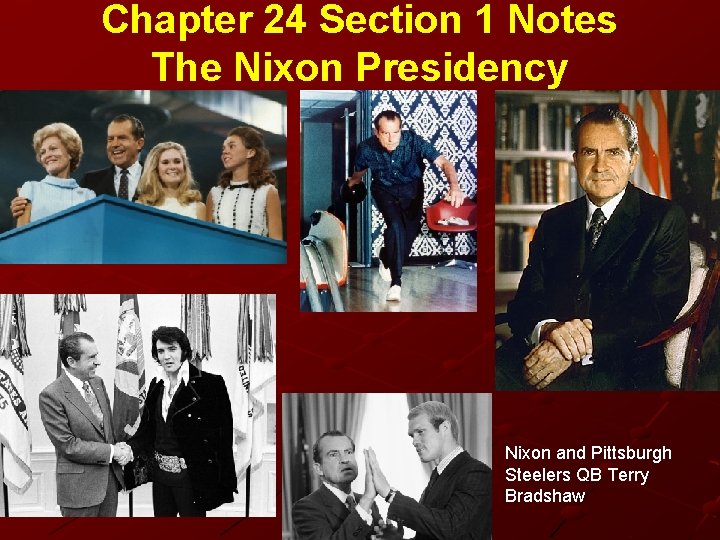
Chapter 24 Section 1 Notes The Nixon Presidency Nixon and Pittsburgh Steelers QB Terry Bradshaw
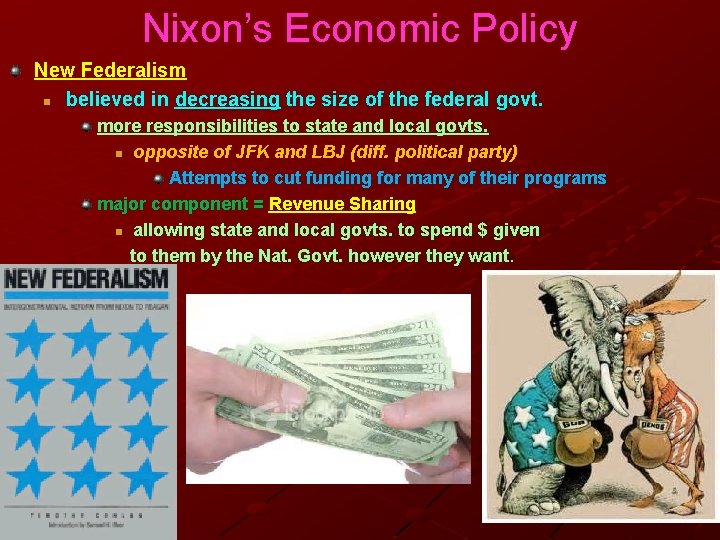
Nixon’s Economic Policy New Federalism n believed in decreasing the size of the federal govt. more responsibilities to state and local govts. n opposite of JFK and LBJ (diff. political party) Attempts to cut funding for many of their programs major component = Revenue Sharing n allowing state and local govts. to spend $ given to them by the Nat. Govt. however they want.
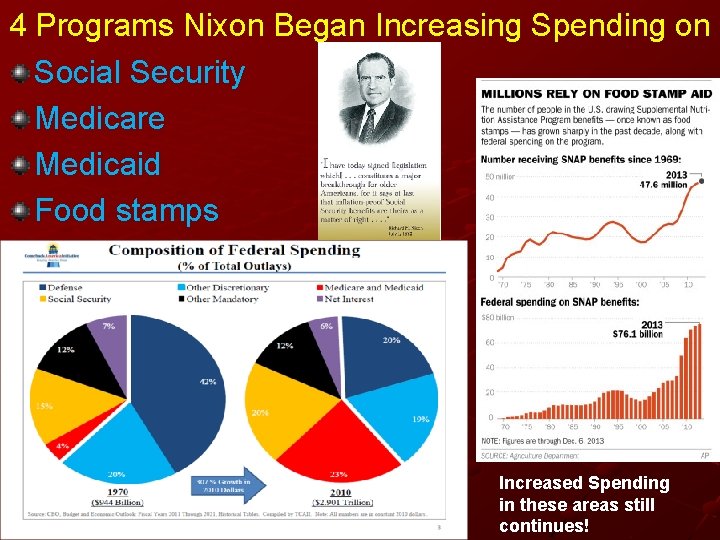
4 Programs Nixon Began Increasing Spending on Social Security Medicare Medicaid Food stamps Increased Spending in these areas still continues!
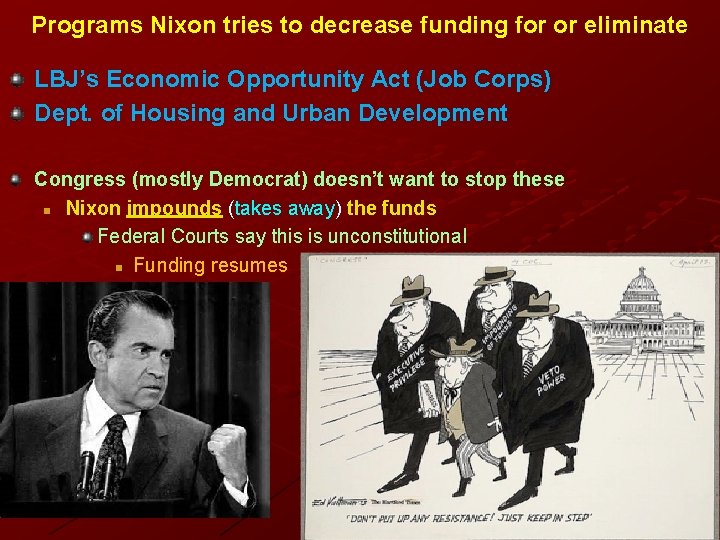
Programs Nixon tries to decrease funding for or eliminate LBJ’s Economic Opportunity Act (Job Corps) Dept. of Housing and Urban Development Congress (mostly Democrat) doesn’t want to stop these n Nixon impounds (takes away) the funds Federal Courts say this is unconstitutional n Funding resumes
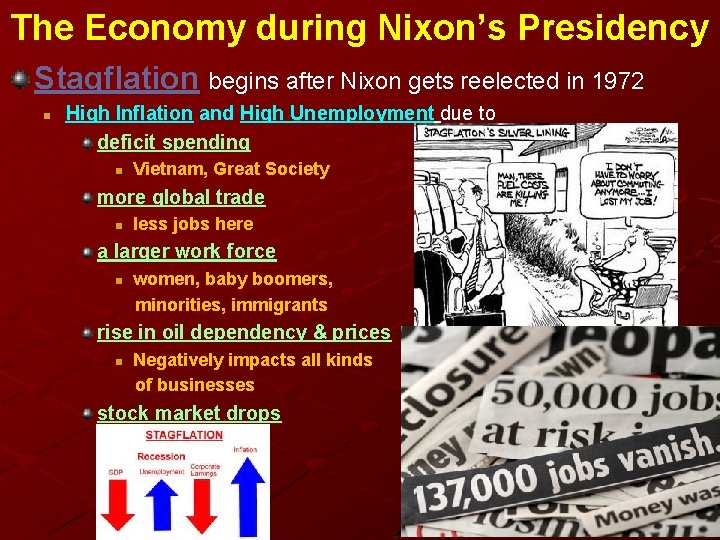
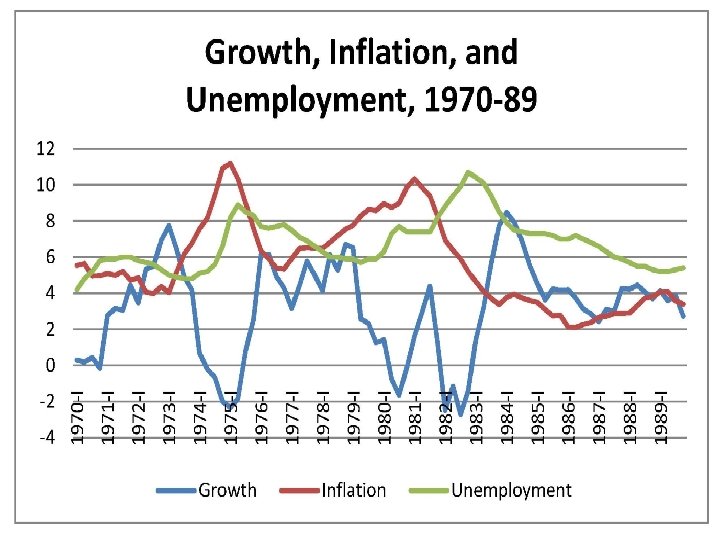
The Economy during Nixon’s Presidency Stagflation begins after Nixon gets reelected in 1972 n High Inflation and High Unemployment due to deficit spending n Vietnam, Great Society more global trade n less jobs here a larger work force n women, baby boomers, minorities, immigrants rise in oil dependency & prices n Negatively impacts all kinds of businesses stock market drops
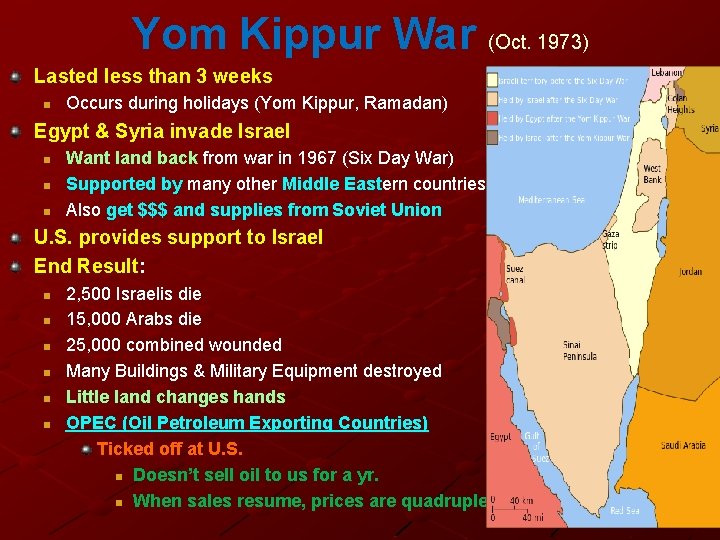
Yom Kippur War (Oct. 1973) Lasted less than 3 weeks n Occurs during holidays (Yom Kippur, Ramadan) Egypt & Syria invade Israel n n n Want land back from war in 1967 (Six Day War) Supported by many other Middle Eastern countries Also get $$$ and supplies from Soviet Union U. S. provides support to Israel End Result: n n n 2, 500 Israelis die 15, 000 Arabs die 25, 000 combined wounded Many Buildings & Military Equipment destroyed Little land changes hands OPEC (Oil Petroleum Exporting Countries) Ticked off at U. S. n Doesn’t sell oil to us for a yr. n When sales resume, prices are quadrupled
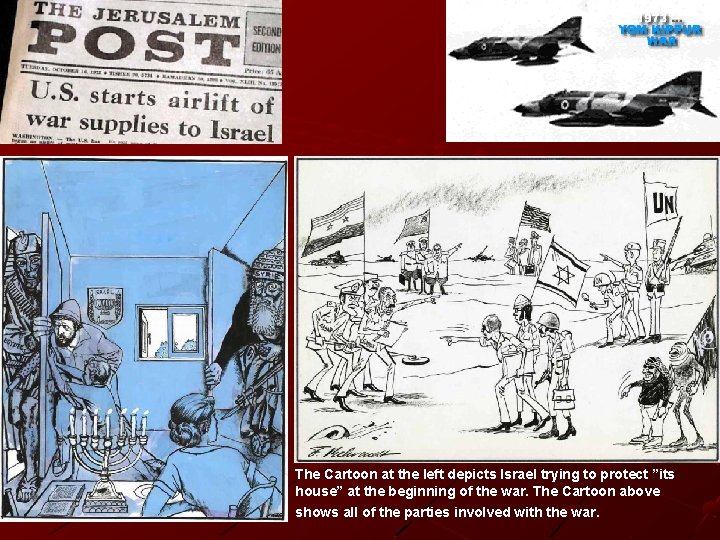
The Cartoon at the left depicts Israel trying to protect ”its house” at the beginning of the war. The Cartoon above shows all of the parties involved with the war.
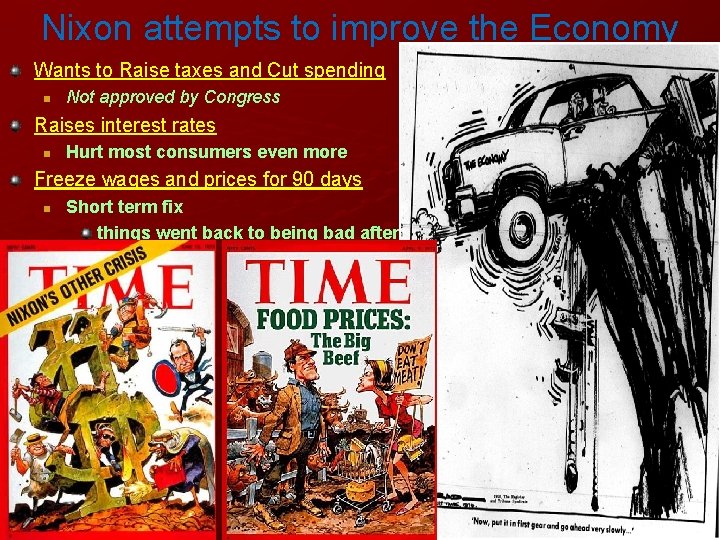
Nixon attempts to improve the Economy Wants to Raise taxes and Cut spending n Not approved by Congress Raises interest rates n Hurt most consumers even more Freeze wages and prices for 90 days n Short term fix things went back to being bad after
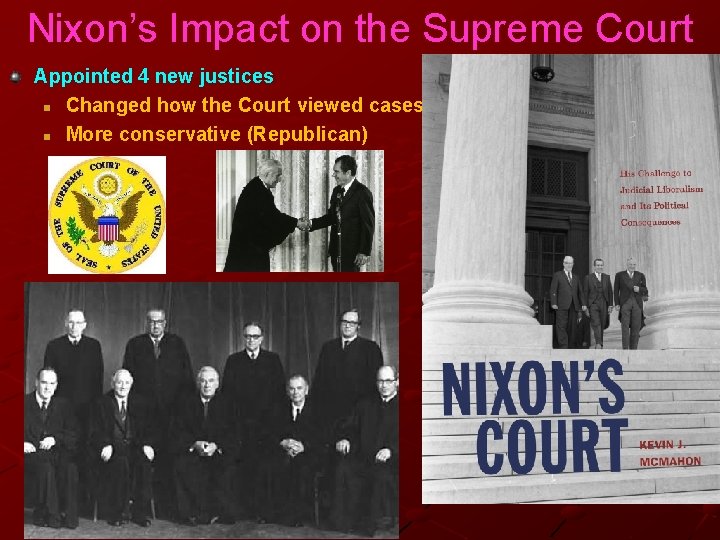
Nixon’s Impact on the Supreme Court Appointed 4 new justices n Changed how the Court viewed cases n More conservative (Republican)
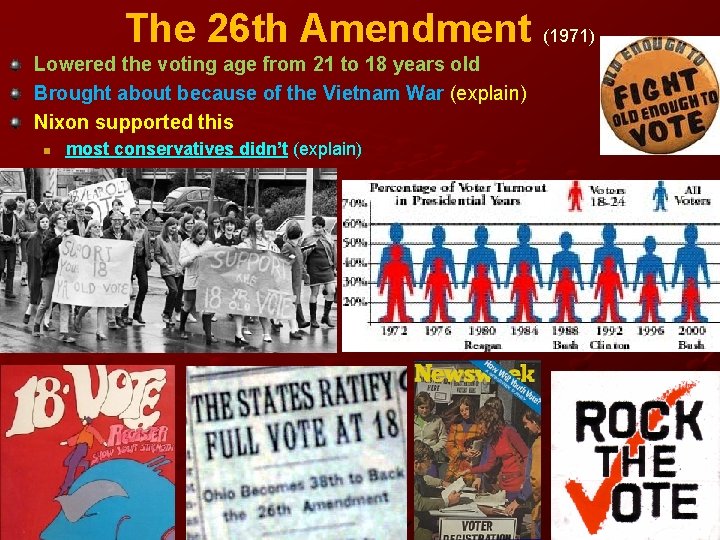
The 26 th Amendment (1971) Lowered the voting age from 21 to 18 years old Brought about because of the Vietnam War (explain) Nixon supported this n most conservatives didn’t (explain)
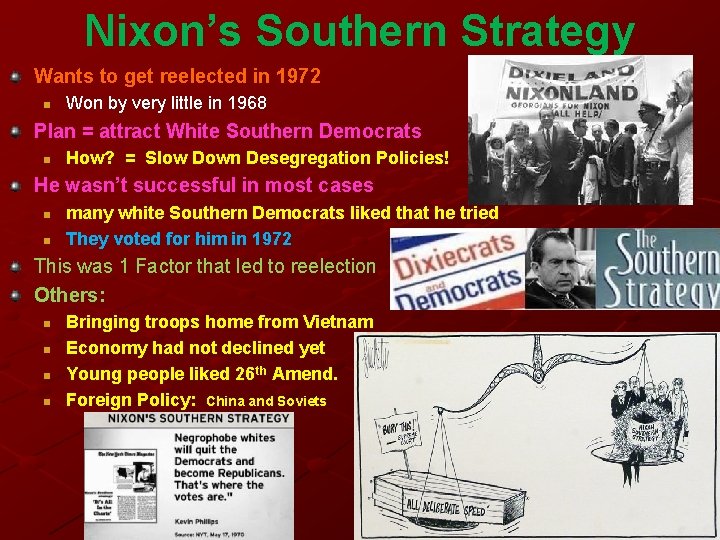
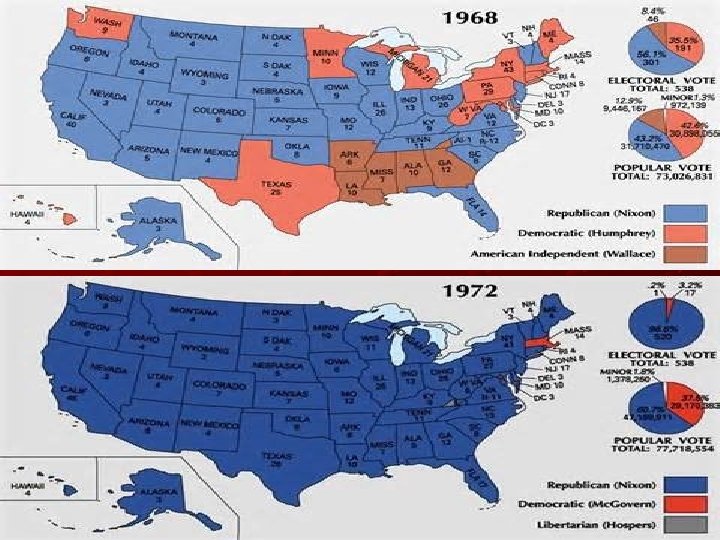
Nixon’s Southern Strategy Wants to get reelected in 1972 n Won by very little in 1968 Plan = attract White Southern Democrats n How? = Slow Down Desegregation Policies! He wasn’t successful in most cases n n many white Southern Democrats liked that he tried They voted for him in 1972 This was 1 Factor that led to reelection Others: n n Bringing troops home from Vietnam Economy had not declined yet Young people liked 26 th Amend. Foreign Policy: China and Soviets
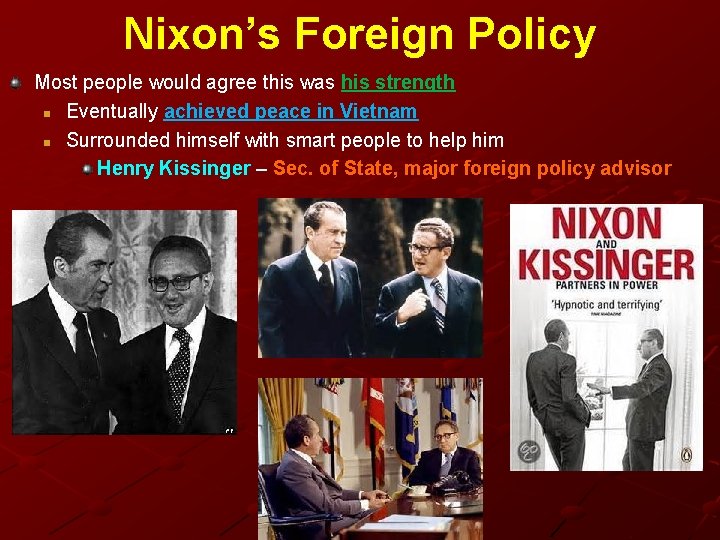
Nixon’s Foreign Policy Most people would agree this was his strength n Eventually achieved peace in Vietnam n Surrounded himself with smart people to help him Henry Kissinger – Sec. of State, major foreign policy advisor
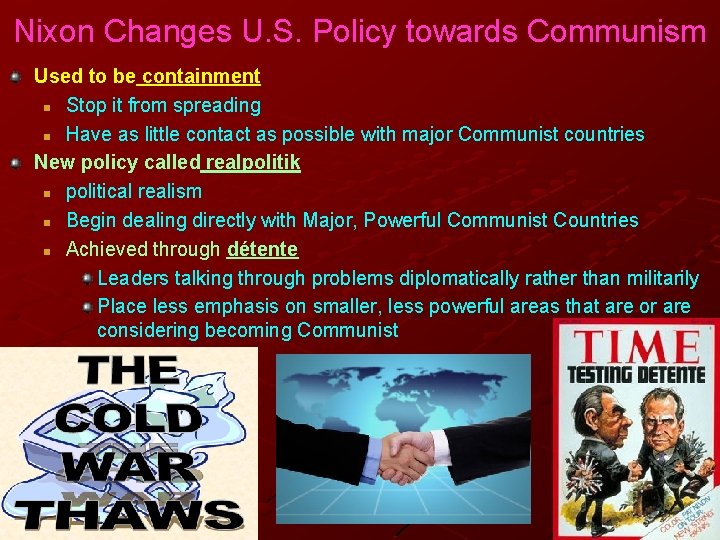
Nixon Changes U. S. Policy towards Communism Used to be containment n Stop it from spreading n Have as little contact as possible with major Communist countries New policy called realpolitik n political realism n Begin dealing directly with Major, Powerful Communist Countries n Achieved through détente Leaders talking through problems diplomatically rather than militarily Place less emphasis on smaller, less powerful areas that are or are considering becoming Communist
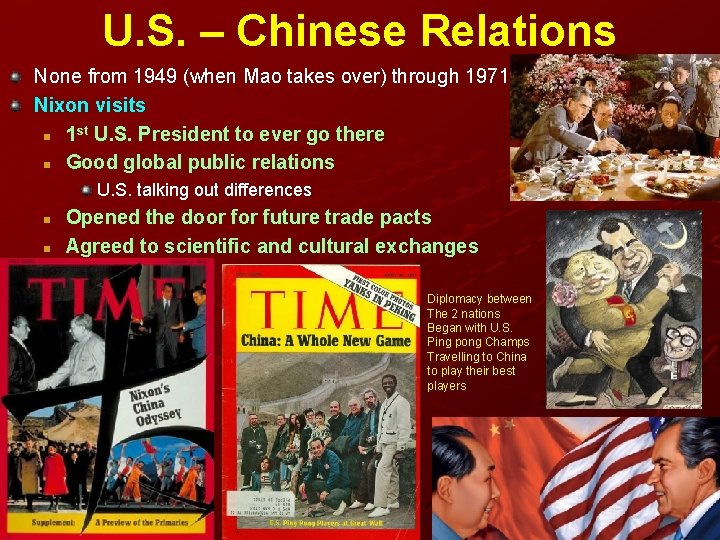
U. S. – Chinese Relations None from 1949 (when Mao takes over) through 1971 Nixon visits st U. S. President to ever go there n 1 n Good global public relations U. S. talking out differences n n Opened the door future trade pacts Agreed to scientific and cultural exchanges Diplomacy between The 2 nations Began with U. S. Ping pong Champs Travelling to China to play their best players
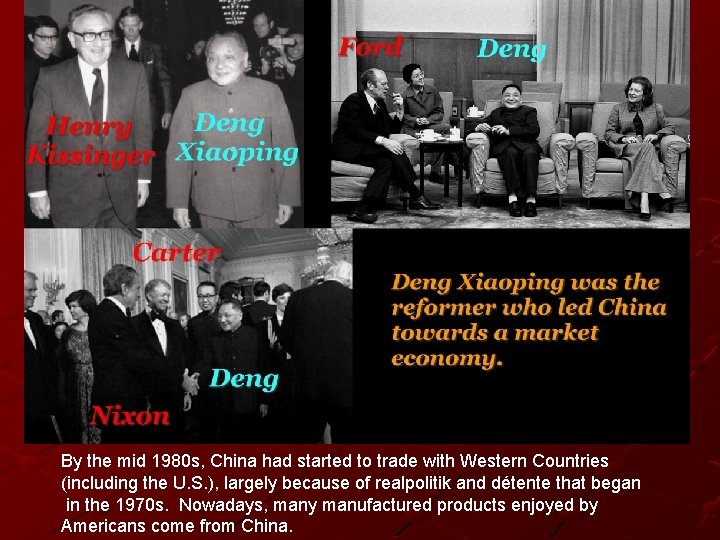
By the mid 1980 s, China had started to trade with Western Countries (including the U. S. ), largely because of realpolitik and détente that began in the 1970 s. Nowadays, many manufactured products enjoyed by Americans come from China.
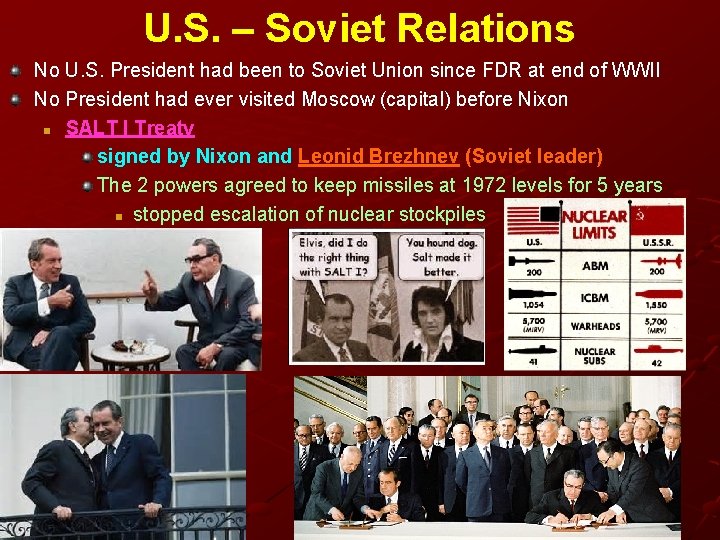
U. S. – Soviet Relations No U. S. President had been to Soviet Union since FDR at end of WWII No President had ever visited Moscow (capital) before Nixon n SALT I Treaty signed by Nixon and Leonid Brezhnev (Soviet leader) The 2 powers agreed to keep missiles at 1972 levels for 5 years n stopped escalation of nuclear stockpiles